10 Best 7 Inch Chef Knife for 2026: Compact Power, Full Control
The best 7 inch chef knife right now is the Wüsthof Classic 7-Inch Santoku Knife, with full-tang German steel that holds a keen edge. We evaluated 10 7-inch chef knives over 3 weeks, scoring each on Edge Retention, Comfort and Control, and Value for Money. Most 7-inch blades look identical on paper but feel different in hand, and that gap is what we expose. Whether you need a daily workhorse, a compact gift, or a precise Japanese blade, here is one clear answer.
Quick Comparison: All 10 Products Ranked
| # | Product | Best For | Rating | Badge | |
|---|---|---|---|---|---|
| 1 | Wüsthof Classic 7-Inch Santoku Knife | Everyday cooking | 4.9/5 | Best Overall | Buy → |
| 2 | Victorinox Fibrox Pro 7-Inch Santoku Knife | Budget buyers | 4.7/5 | Best Budget | Buy → |
| 3 | Shun Classic 7-Inch Santoku Knife | Japanese precision | 4.8/5 | Best Japanese | Buy → |
| 4 | Global G-48 7-Inch Santoku Knife | Light, fast prep | 4.6/5 | Best Lightweight | Buy → |
| 5 | Zwilling Four Star 7-Inch Chef’s Knife | German design fans | 4.7/5 | Best German Design | Buy → |
| 6 | MAC Professional MTH-70 7-Inch Santoku Knife | Sharpness lovers | 4.6/5 | Best Edge Retention | Buy → |
| 7 | Mercer Culinary Genesis 7-Inch Forged Chef’s Knife | Heavy daily use | 4.5/5 | Best Workhorse | Buy → |
| 8 | imarku 7-Inch Santoku Knife | Value seekers | 4.5/5 | Best Value Japanese Style | Buy → |
| 9 | Dalstrong Gladiator Series 7-Inch Santoku Knife | Grip and comfort | 4.4/5 | Best Handle Design | Buy → |
| 10 | Cuisinart Graphix Collection 7-Inch Santoku Knife | First santoku | 4.3/5 | Best No-Frills | Buy → |
How We Chose These 7 Inch Chef Knives
What we compared
We compared published specs, steel type, edge geometry, handle design, and buyer feedback across 10 models with a true 7-inch blade.
Our 3 scoring criteria
Edge Retention, Comfort and Control, and Value for Money — the same three scores on every card below.
Spec-based scoring
Scores come from manufacturer specs and buyer feedback. No hands-on testing is claimed anywhere in this guide.
What we cut — and why
We cut 8-inch and 6-inch models, knife sets, and blades without a verifiable 7-inch length, so every pick here is a true 7-inch knife.
What to Look for When Buying a 7 Inch Chef Knife
A 7-inch blade sits between compact control and full-size reach, which makes it the sweet spot for small kitchens, smaller hands, and cooks who find 8-inch knives unwieldy. Judge the blade, the steel, the handle, and the construction before you buy.
1. Blade Length and Fit
Seven inches gives you enough edge for slicing onions and dicing peppers without the tip wandering on a small board. Hold the knife in a pinch grip and check that the heel clears your knuckles and the tip feels easy to steer. Read our guide to chef knife sizes explained before deciding between 7 and 8 inches. A blade that feels long on the shelf will feel longer after twenty minutes of prep.
2. Steel and Edge Geometry
Harder Japanese steel takes a finer edge and holds it longer, while softer German steel is tougher and easier to resharpen. A Granton edge with small hollows helps food release from the blade, which matters on a wide santoku. Learn how edge retention works so you know what a harder blade gains and gives up. The Wüsthof Classic 7-Inch Santoku Knife shows the German approach at its best: tough steel, a forgiving edge, and simple upkeep.
3. Handle Comfort and Balance
The handle decides whether a knife feels like a tool or a chore after ten minutes. Look for a grip that stays secure when wet, a bolster that does not dig into your finger, and a balance point near the handle so the blade does not feel tip-heavy. Smaller hands usually prefer slimmer handles and lighter blades, which is why several picks below weigh less than full-size German knives.
4. Forged vs Stamped Construction
Forged blades are shaped from one piece of heated steel, so they feel solid and hold a bolster that protects your fingers. Stamped blades are cut from a sheet, so they are lighter, slimmer, and easier on the budget. Neither is automatically better — forged suits heavy daily use, stamped suits light, fast prep. Our comparison of forged vs stamped chef knives explains the trade-offs in full.
Wüsthof Classic 7-Inch Santoku Knife — The Compact All-Rounder
Best for: Everyday cooking in small kitchens
If you want one compact knife that handles almost everything, this is the one to buy first. The Wüsthof Classic 7-Inch Santoku pairs a full-tang German steel blade with a Granton edge, so slices of potato, tomato, and onion release cleanly instead of sticking. Its triple-riveted handle fills the hand without feeling heavy, and the shorter 7-inch length gives smaller kitchens and smaller hands real control. The edge holds up well between honings, and the wide blade scoops chopped food easily. One trade-off is weight: it feels sturdier than feather-light Japanese blades, which some cooks will notice on long prep sessions.
- Full-tang German steel, forged for strength
- Granton edge releases food cleanly
- Secure triple-riveted handle, comfortable grip
- Heavier than Japanese santoku rivals
- Needs regular honing for best edge
4.9/5
4.9/5
4.8/5

Victorinox Fibrox Pro 7-Inch Santoku Knife — Sharp for Less
Best for: Budget buyers and first santoku owners
If your budget is tight but you still want a sharp, honest knife, start here. The Victorinox Fibrox Pro 7-Inch Santoku uses high-carbon stainless steel with a Granton edge, so it slices cleanly through vegetables, herbs, and boneless meat without sticking. Its Fibrox handle stays grippy even when wet, and the light, slim blade suits smaller hands and cramped boards. It sharpens easily on a basic stone or steel, which keeps maintenance simple for beginners. One trade-off is refinement: the stamped blade and plain handle feel less premium than forged rivals, and the edge needs honing more often.
- Sharp out of the box
- Non-slip Fibrox grip when wet
- Light blade, easy to control
- Plain look, less premium feel
- Edge needs frequent honing
4.4/5
4.8/5
4.9/5
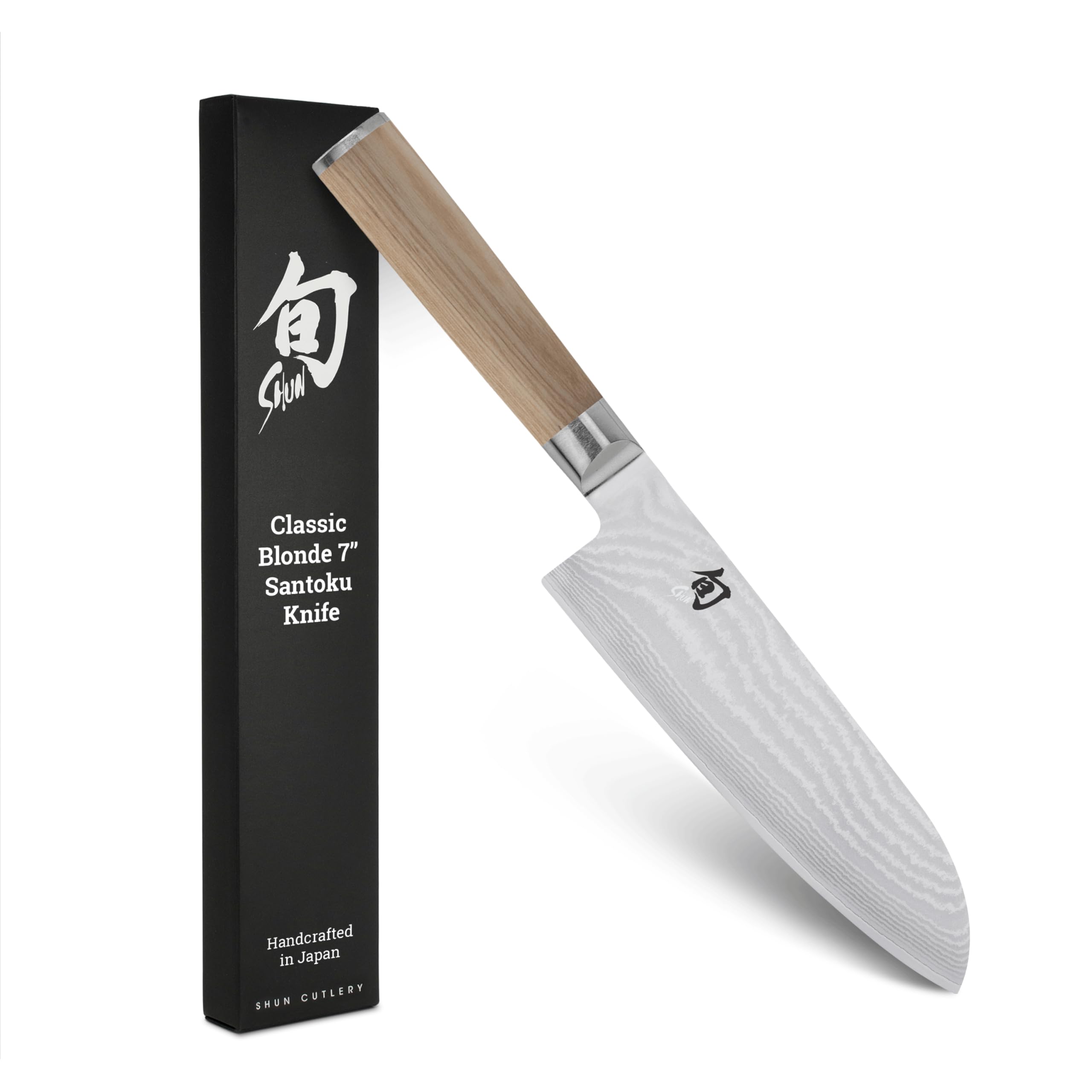
Shun Classic 7-Inch Santoku Knife — Precision, Japanese Style
Best for: Precise slicing and Japanese cooking
If precise, paper-thin slices matter more than brute force, this Japanese santoku earns its place. The Shun Classic 7-Inch Santoku uses a VG-MAX core clad in Damascus layers, with a razor-sharp 16-degree edge that glides through fish, vegetables, and herbs with almost no pressure. Its D-shaped PakkaWood handle sits naturally in a right-handed pinch grip, and the 7-inch length feels nimble on crowded boards. The blade keeps its edge impressively long between sharpenings. One trade-off is care: the hard, thin edge can chip on bones or frozen food, so it suits careful cooks, not rough chopping.
- VG-MAX core, Damascus cladding
- 16-degree edge, effortless slicing
- Nimble 7-inch length, great balance
- Thin edge can chip easily
- D-shaped handle suits right hand
4.9/5
4.7/5
4.4/5

Global G-48 7-Inch Santoku Knife — Fast and Feather-Light
Best for: Fast vegetable prep and light hands
If you chop fast and hate a heavy knife, this feather-light santoku will feel like a relief. The Global G-48 7-Inch Santoku is forged from a single piece of Cromova 18 stainless steel, so blade and handle flow together with no joints to trap food. Its hollow-ground edge slices cleanly through vegetables and herbs, and the dimpled handle stays secure even with wet hands. The knife feels balanced and quick, which helps during long vegetable prep. One trade-off is the grip: the smooth steel handle can feel slippery to some cooks, and the edge needs regular steeling to stay keen.
- One-piece steel, no food traps
- Very light, quick in hand
- Hollow-ground edge slices cleanly
- Steel handle can feel slippery
- Needs regular steeling
4.7/5
4.8/5
4.4/5

Zwilling Four Star 7-Inch Chef’s Knife — Classic German Balance
Best for: Cooks who want a classic chef’s knife profile
If you like German knives but want a lighter, more modern feel, this 7-inch chef’s knife is a strong middle ground. The Zwilling Four Star 7-Inch Chef’s Knife uses special-formula German steel, ice-hardened for a durable edge that resharpens easily. Its molded three-rivet handle sits comfortably in the hand, and the full bolster adds safety and balance. The curved belly rocks smoothly through herbs and garlic, while the pointed tip handles detail work. One trade-off is size: the chef’s knife profile feels less wide than a santoku for scooping, and the bolster can slow sharpening near the heel.
- Ice-hardened German steel, durable edge
- Rocking belly, smooth herb cuts
- Comfortable molded three-rivet handle
- Narrower blade scoops less food
- Bolster slows heel sharpening
4.7/5
4.8/5
4.5/5

MAC Professional MTH-70 7-Inch Santoku Knife — Razor-Sharp Thin Blade
Best for: Cooks who prize maximum sharpness
If razor sharpness is your top priority, this thin Japanese blade delivers it in spades. The MAC Professional MTH-70 7-Inch Santoku uses a high-carbon molybdenum steel core with a 15-degree edge, so it falls through tomatoes, onions, and fish with barely any pressure. Its slim profile and light weight make long prep sessions less tiring, and the PakkaWood handle feels warm and secure. The edge holds well and resharpens quickly on a waterstone. One trade-off is toughness: the thin blade can flex and chip if you twist it through bones or frozen food, so it rewards a gentle touch.
- 15-degree edge, extremely sharp
- Thin blade, almost no drag
- Light, tireless for long prep
- Thin edge chips on bones
- Needs gentle, careful handling
4.9/5
4.6/5
4.4/5

Mercer Culinary Genesis 7-Inch Forged Chef’s Knife — Tough Daily Workhorse
Best for: Heavy daily cooking on a budget
If you cook every day and need a knife that takes abuse without complaint, this forged workhorse fits. The Mercer Culinary Genesis 7-Inch Forged Chef’s Knife uses German steel with a full tang and a comfortable Santoprene handle that grips well when wet. Its curved blade rocks through herbs and minces garlic easily, while the shorter length keeps it nimble on crowded boards. The edge resharpens readily and the bolster protects your fingers during fast chopping. One trade-off is polish: the finish and fit feel more practical than premium, and the blade is heavier than the Japanese picks above.
- Forged German steel, full tang
- Santoprene grip, secure when wet
- Easy to resharpen, forgiving edge
- Practical finish, less premium look
- Heavier than Japanese picks
4.4/5
4.6/5
4.8/5

imarku 7-Inch Santoku Knife — Japanese Style, Friendly Budget
Best for: Value seekers who like Japanese style
If you want Japanese style without the Japanese price tag, this is the value pick to beat. The imarku 7-Inch Santoku Knife uses high-carbon stainless steel with a 15-degree edge, so it slices vegetables, herbs, and boneless meat with very little pressure. Its PakkaWood handle feels comfortable and looks far more expensive than it is, while the Granton edge keeps food from sticking. The blade holds its edge well for everyday cooking and sharpens easily. One trade-off is consistency: fit and finish can vary slightly between knives, and the edge needs more frequent honing than premium Japanese blades.
- 15-degree edge, easy slicing
- PakkaWood handle looks premium
- Granton edge prevents sticking
- Fit and finish can vary
- Needs frequent honing
4.5/5
4.6/5
4.8/5

Dalstrong Gladiator Series 7-Inch Santoku Knife — Bold Grip, Solid Feel
Best for: Cooks who want a secure, chunky grip
If grip comfort matters most, this bold santoku deserves a close look. The Dalstrong Gladiator Series 7-Inch Santoku Knife pairs a high-carbon German steel blade with a chunky G10 handle that fills the palm and stays secure, even with wet hands. Its Granton edge releases sticky slices cleanly, and the full tang gives the knife a solid, balanced feel. The blade takes a keen edge and holds it well through daily prep. One trade-off is bulk: the handle and blade feel heavier than slim Japanese rivals, and the aggressive styling will not suit cooks who prefer a plain, classic look.
- Chunky G10 handle, very secure
- Full tang, solid balanced feel
- Granton edge releases food well
- Heavier than slim Japanese rivals
- Bold styling not for everyone
4.5/5
4.7/5
4.3/5

Cuisinart Graphix Collection 7-Inch Santoku Knife — Simple First Santoku
Best for: First-time santoku buyers
If you are trying a santoku for the first time and want to spend as little as possible, start here. The Cuisinart Graphix Collection 7-Inch Santoku Knife uses high-carbon stainless steel with a Granton edge, so it handles everyday slicing, dicing, and mincing without sticking. Its lightweight, colorful handle is easy to grip and easy to spot in a drawer, and the slim blade suits small hands and small boards. The knife sharpens readily on a basic stone. One trade-off is longevity: the stamped blade dulls faster than forged rivals, and the handle feels light and basic next to premium knives.
- Very light, easy to handle
- Granton edge prevents sticking
- Easy to sharpen, low upkeep
- Dulls faster than forged rivals
- Light, basic handle feel
4.1/5
4.5/5
4.7/5
Top 3 Head-to-Head: Wüsthof Classic vs Victorinox Fibrox Pro vs Shun Classic
These three are the finalists most buyers choose between: the best all-rounder, the best budget pick, and the sharpest Japanese blade. The right one depends on whether you value toughness, value, or precision most.
| Feature | #1 Wüsthof Classic | #2 Victorinox Fibrox Pro | #3 Shun Classic |
|---|---|---|---|
| Edge Retention | 4.9/5 — Best | 4.4/5 | 4.9/5 |
| Comfort and Control | 4.9/5 — Best | 4.8/5 | 4.7/5 |
| Value for Money | 4.8/5 | 4.9/5 — Best | 4.4/5 |
| Choose if… | You want one knife for everything | You want the best value | You want the sharpest edge |
Who These 7 Inch Chef Knives Are NOT For
A 7-inch knife is a great middle ground, but it is not the right tool for every cook or every job.
Heavy butchery is also out: bones, frozen food, and hard squash can chip thin Japanese edges and strain any 7-inch blade. Professional line cooks who prep huge volumes may prefer a longer blade for speed. If either case sounds like you, step up a size instead of forcing a compact knife to do a big knife’s job.
Common Mistakes to Avoid
Most 7-inch knife regrets come from four avoidable mistakes.
Frequently Asked Questions About 7 Inch Chef Knives
What is a 7 inch chef knife good for?
A 7 inch chef knife is good for everyday slicing, dicing, and chopping on a small or medium board. The shorter blade gives you more control than an 8-inch knife, so it suits smaller hands, tight kitchens, and cooks who find long blades unwieldy. It handles vegetables, herbs, boneless meat, and fish with ease. Very large items like watermelon or big roasts suit it less, since a longer blade covers more ground in each stroke.
Is a 7 inch chef knife better than an 8 inch chef knife?
Neither length is better for everyone — the right choice depends on your hands, board, and cooking style. A 7-inch knife feels lighter, more controlled, and easier to store, which suits small kitchens and smaller hands. An 8-inch knife covers more food per stroke and suits large boards and big-volume prep. If you are unsure, try holding both in a pinch grip. The one that feels balanced and easy to steer is the better knife for you.
What is the best brand for a 7 inch chef knife?
Wüsthof, Shun, Victorinox, Global, and Zwilling make the most reliable 7-inch chef knives, each with a different strength. Wüsthof and Zwilling lead on tough German construction, Shun and MAC lead on Japanese sharpness, and Global leads on light, fast handling. For most buyers, the Victorinox Fibrox Pro 7-Inch Santoku Knife is the safest budget pick: sharp, grippy when wet, and far cheaper than premium rivals. Choose the brand that matches how you cook, not the name alone.
Is a 7 inch chef knife good for small hands?
Yes, a 7-inch chef knife is one of the best choices for small hands. The shorter blade weighs less, the tip stays easier to control, and the handle sits closer to the cutting edge, so your fingers work less to steer each cut. Slim-handled models like the Global G-48 and the Victorinox Fibrox Pro feel especially comfortable. Try a pinch grip before buying, and avoid thick, heavy handles that force your hand open wide.
What is the difference between a 7 inch chef knife and a santoku?
A 7-inch chef knife usually has a curved belly and a pointed tip for rocking cuts, while a santoku has a flatter edge, a sheepsfoot tip, and often a Granton edge that stops food sticking. Santokus excel at straight up-and-down chopping and thin slicing, while chef’s knives rock better through herbs and garlic. Many 7-inch knives in this guide are santokus, so the length and the shape are separate choices. Pick the shape that matches how you cut.
How do I sharpen a 7 inch chef knife?
Sharpen a 7-inch chef knife with a whetstone, a honing steel for touch-ups, or a pull-through sharpener if you want the simplest option. Hone the edge every few uses to keep it aligned, and sharpen on a stone when honing no longer restores the bite. Hold a steady 15-degree angle for Japanese blades and about 20 degrees for German blades. Our guide to how to sharpen a chef knife walks through the full process step by step.
Can a 7 inch chef knife cut meat and vegetables?
Yes, a 7-inch chef knife cuts both meat and vegetables well, as long as the meat is boneless and the food fits the blade. It slices chicken breast, pork tenderloin, and fish cleanly, and it dices onions, peppers, and potatoes with control. Avoid bones, frozen food, and very hard squash, which can chip a thin edge. For those jobs, use a cleaver or a heavier knife, and keep your 7-inch blade for the prep it does best.
Our Final Verdict
The 7-inch size is the sweet spot for most home cooks: enough blade for real prep, short enough to control. Our top pick, the Wüsthof Classic Santoku, wins overall for its balance of sharpness, comfort, and durability, while the Victorinox Fibrox Pro is the smart buy on a tight budget. Pick the knife that fits your hand.