Are Titanium Cutting Boards Good? Pros, Cons, and Honest Verdict
Quick Answer
Are titanium cutting boards good? Yes, they offer excellent corrosion resistance, a nonporous cutting surface, and easy cleaning. However, titanium boards can dull kitchen knives faster than wood, rubber, or plastic. Independent cutting board tests highlight significant knife-edge wear, making titanium a less practical choice for frequent chopping.
Key Advantages and Disadvantages
- Easy cleaning: A smooth, nonporous surface does not absorb food juices.
- Excellent durability: Solid titanium resists rust, moisture damage, and corrosion.
- Plastic-free surface: Genuine solid titanium eliminates plastic contact with the cutting surface.
- Knife dulling: Hard metal contact can wear down sharp knife edges quickly.
- Higher cost: Authentic titanium generally costs more than conventional cutting board materials.
- Hard cutting feel: Metal can feel noisy, slippery, and unforgiving during chopping.
My Recommendation
- Choose titanium: If a nonporous, corrosion-resistant metal surface is your highest priority.
- Choose wood or rubber: If protecting expensive knives and enjoying comfortable chopping matter most.
- Choose plastic: If you want an affordable, lightweight, washable board for everyday preparation.
Titanium cutting boards sound almost perfect. They’re durable, resist corrosion, and promise a cleaner kitchen surface without traditional plastic.
But there’s an important question behind the marketing: what happens to your knives when you chop against solid metal?
I’ll explain where titanium performs well, where it struggles, and which cutting board materials make more sense for everyday cooking.
What Is a Titanium Cutting Board?
A titanium cutting board is a food preparation surface made from titanium metal or a product marketed as containing titanium. Genuine solid titanium boards use the metal throughout their cutting surface.
Titanium is a lightweight, corrosion-resistant metal used in industries ranging from aerospace to medical equipment. Its durability makes it an interesting material for kitchen accessories.
However, not every product advertised as titanium uses solid titanium.
Pure Titanium vs. Titanium-Coated Cutting Boards
 Save
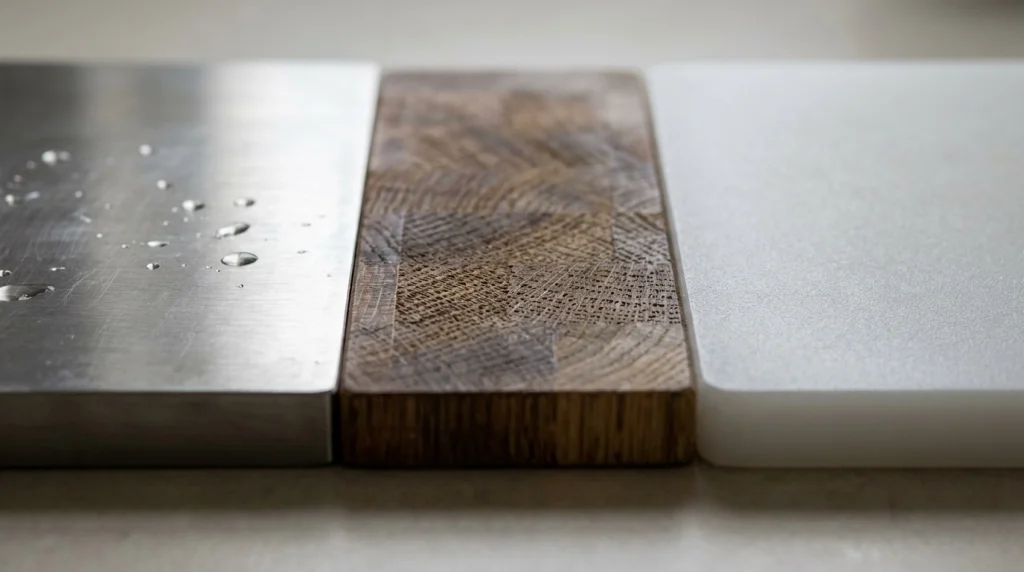
Understanding construction matters before buying. A titanium coating over another material is different from a board made entirely from titanium.
- Solid titanium: The cutting surface consists of titanium throughout its thickness.
- Titanium-coated metal: A base metal has a surface coating that may wear with repeated cutting.
- Stainless steel: Some metal boards resemble titanium visually but use a different material.
- Composite boards: These combine multiple materials and may not have a fully titanium cutting surface.
For buyers, the important details are the actual material, thickness, construction, and food-contact documentation. An attractive product photograph cannot establish metal purity.
What Are the Benefits of Titanium Cutting Boards?
Genuine titanium provides several useful properties. Its strongest advantages involve cleaning, corrosion resistance, and avoiding a plastic cutting surface.
1. Nonporous Surface
Solid titanium does not absorb liquids like porous materials can. This makes it relatively simple to remove surface moisture and food residue.
Still, nonporous does not mean automatically sterile. Bacteria can remain on a dirty titanium surface until you clean it properly.
2. Excellent Resistance to Rust
Titanium forms a protective oxide layer that helps resist corrosion. This property makes it suitable for repeated exposure to water and common kitchen moisture.
Unlike wooden boards, solid titanium does not need mineral oil conditioning. It also will not swell from water absorption.
3. No Plastic Cutting Surface
Some shoppers consider titanium because they want to reduce plastic contact during food preparation. A genuine solid titanium board contains no plastic in its cutting surface.
However, avoiding plastic does not prove titanium is healthier than every alternative. Food safety also depends on material quality, cleanliness, and handling practices.
4. Long-Lasting Construction
Titanium resists many forms of moisture-related damage. It will not rot or develop the same water-related swelling associated with neglected wood.
The surface can still develop scratches. Durability should not be confused with being scratch-proof.
5. Easy Routine Cleaning
A smooth titanium board can usually be washed with dish soap and warm water. There is no need to apply wood-conditioning oils.
Dishwasher compatibility depends on the complete product construction. Check the manufacturer’s instructions before using a dishwasher.
What Are the Disadvantages of Titanium Cutting Boards?
The biggest disadvantages are knife-edge wear, a hard cutting feel, noise, and uncertain product labeling. These problems can outweigh the material’s appealing properties.
1. Titanium Can Dull Knives Quickly
Knife-edge damage is the most important concern. Wood and rubber provide some cushioning when a sharp blade contacts the board.
Metal surfaces offer much less give. Repeated chopping can accelerate edge deformation and wear.
In published testing by Prudent Reviews, titanium produced greater knife-edge sharpness loss than the tested wood, plastic, and rubber boards. Those results provide a practical reason to approach metal cutting surfaces cautiously.
2. The Surface Feels Hard
Chopping vegetables on titanium feels different from slicing on end-grain maple. The knife contacts a rigid surface rather than a material with noticeable cushioning.
This may feel uncomfortable during long food preparation sessions. It can also make controlled rocking cuts less pleasant.
3. Metal Boards Can Be Noisy
Metal-to-metal contact produces a distinctive chopping sound. It can be noticeably louder than working on rubber or wood.
If you prepare large meals regularly, that sound may become irritating.
4. Titanium Is Not Scratch-Proof
A sharp knife can mark a titanium surface. The extent of scratching depends on the alloy, finish, and cutting technique.
Surface scratches do not automatically mean the board is unsafe. Deep damage, peeling coatings, or rough areas deserve closer inspection.
5. Authentic Titanium Can Be Expensive
Pure titanium is generally more expensive to produce than common plastic or wooden cutting boards. This can make a genuine titanium model a significant kitchen purchase.
Low-priced products advertised as pure titanium deserve additional scrutiny. Request clear material specifications before buying.
Do Titanium Cutting Boards Dull Knives?
Yes. Titanium cutting boards can dull knives considerably faster than softer cutting surfaces, especially during repeated chopping.
Even if a particular titanium alloy is softer than hardened knife steel, that does not guarantee good knife-edge protection. Cutting performance depends on impact, surface rigidity, blade geometry, and repeated contact.
What Do Independent Cutting Tests Show?
 Save
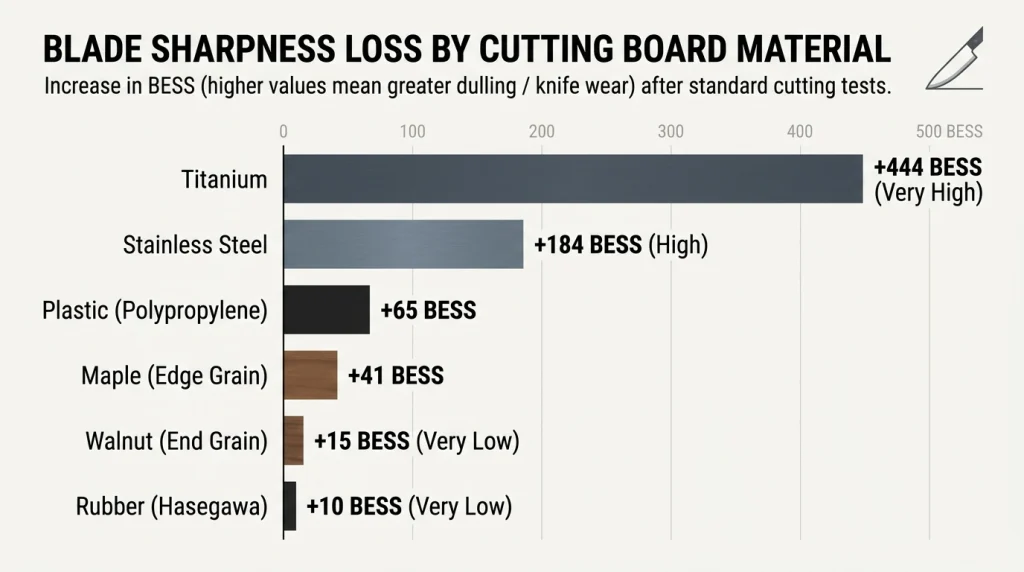
Prudent Reviews published an independent comparison using a blade sharpness testing system. Its results showed substantial sharpness loss on titanium compared with wood and rubber.
The following measurements describe changes in BESS sharpness scores under that review’s testing conditions. A larger increase indicates greater loss of sharpness.
| Cutting Board Material | BESS Score Increase | Relative Knife Wear |
|---|---|---|
| Titanium | 444 | Very high |
| Stainless steel | 184 | High |
| Plastic (polypropylene) | 65 | Lower |
| Maple (edge grain) | 41 | Low |
| Walnut (end grain) | 15 | Very low |
| Rubber (Hasegawa) | 10 | Very low |
Source: Prudent Reviews cutting board testing. These are results from one reviewer’s controlled comparisons, not universal wear rates for every board and knife.
The practical takeaway is clear. If you use sharp, expensive kitchen knives, a quality wood or rubber board is usually the better partner.
Are Titanium Cutting Boards Safe for Food?
A properly manufactured titanium board intended for food contact can provide a suitable food preparation surface. However, its safety depends on the exact alloy, coatings, manufacturing quality, and maintenance.
Pure titanium’s corrosion resistance is a useful characteristic. It does not eliminate the need for appropriate food-contact documentation.
Can Bacteria Grow on Titanium?
Yes. Bacteria can contaminate virtually any food preparation surface, including titanium.
A nonporous board may be easier to wash, but it does not automatically kill microorganisms. Proper cleaning and separation of raw and ready-to-eat foods remain essential.
The FoodSafety.gov food safety guidance recommends cleaning equipment and keeping raw animal products separate from foods eaten without cooking.
Can Titanium Release Metal Particles?
Any cutting surface may experience wear during repeated knife contact. Titanium can scratch, and the possibility of surface abrasion should not be ignored.
There is insufficient evidence to promise that every titanium board releases zero particles. Likewise, visible scratches alone cannot establish a harmful exposure level.
Choose reputable manufacturers that identify their materials and provide meaningful food-contact information.
Does Titanium Contain BPA or Microplastics?
Pure solid titanium does not contain BPA or plastic polymers. Therefore, an uncoated titanium cutting surface does not shed plastic fragments from the metal itself.
That distinction does not automatically apply to plastic-backed or coated products. Examine the complete construction before purchasing.
Titanium vs. Wood vs. Plastic vs. Stainless Steel Cutting Boards
No cutting board material wins every category. The best choice depends on knife care, cleaning preferences, budget, and cooking habits.
| Material | Knife Friendliness | Cleaning | Main Drawback | Best Use |
|---|---|---|---|---|
| Titanium | Poor | Easy | Accelerated knife wear | Specialized metal surface |
| Wood | Excellent | Hand cleaning preferred | Requires maintenance | Everyday chopping |
| Plastic | Good | Often dishwasher-safe | Grooves and wear | Affordable food preparation |
| Rubber | Excellent | Model-dependent | Higher price on premium models | Knife-focused cooking |
| Stainless steel | Poor | Easy | Rigid and noisy | Metal preparation surface |
Is Titanium Better Than Wood?
Titanium is more resistant to water absorption and requires no conditioning oil. Wood is generally more comfortable for chopping and far gentler on knife edges.
For most home kitchens, I’d favor maple or walnut over titanium as the primary cutting board.
Is Titanium Better Than Plastic?
Titanium avoids having a plastic cutting surface and resists corrosion. Plastic is usually cheaper, quieter, and more forgiving to knives.
Well-maintained plastic boards remain a practical option. Replace them when heavy wear creates grooves that are difficult to clean.
Is Titanium Better Than Stainless Steel?
Titanium generally provides lower density and excellent corrosion resistance. Stainless steel is often less expensive and more widely available.
Neither material offers the cushioning of wood or rubber. For knife protection, both have meaningful disadvantages.
Are Titanium Cutting Boards Good for Raw Meat?
A properly specified, food-contact-safe titanium board can be used to prepare raw meat. Its nonporous surface is relatively straightforward to wash.
However, safe meat preparation depends more on hygiene than metal choice. Raw chicken, beef, pork, and seafood can contaminate a cutting surface.
- Use a dedicated board for raw meat when practical.
- Wash the board thoroughly after handling raw animal products.
- Keep raw meat juices away from fresh vegetables and cooked food.
- Sanitize when appropriate, following product and food-safety instructions.
- Dry the board before storing it.
The USDA cross-contamination guidance recommends separate boards for produce and raw animal products whenever possible.
How Do You Clean a Titanium Cutting Board?
Routine cleaning is simple for an uncoated, solid titanium board. Use warm water, mild dish soap, and a soft sponge or suitable cleaning brush.
- Remove food scraps: Clear visible food particles immediately after use.
- Wash thoroughly: Use warm water and ordinary dish detergent.
- Inspect the surface: Check for trapped residue, damaged coatings, or unusually rough areas.
- Sanitize when needed: Follow an appropriate food-contact sanitizer’s label directions.
- Dry completely: Allow the surface to dry before storage.
Avoid assuming every metal board belongs in the dishwasher. Adhesives, coatings, rubber feet, and handles may have different care requirements.
For additional guidance, see the University of Minnesota Extension’s food preparation recommendations.
How Can You Tell Whether a Titanium Cutting Board Is Real?
Start by checking the manufacturer’s exact material specifications. Marketing terms such as titanium-style or titanium technology do not establish solid titanium construction.
A trustworthy listing should clearly identify what touches the food.
- Material grade: Look for a clearly identified titanium grade or alloy.
- Construction: Confirm whether the board is solid titanium, coated metal, or a composite.
- Weight and dimensions: Compare these with the density expected for the claimed metal.
- Food-contact information: Request manufacturer documentation rather than relying on promotional slogans.
- Coating details: Check whether any protective or decorative surface layer may wear during cutting.
- Seller reputation: Favor manufacturers offering clear specifications and reliable support.
Pure titanium is much less dense than typical stainless steel. Weight can therefore provide a useful clue when dimensions and thickness are known.
A magnet test may help identify some ferromagnetic steels, but it cannot confirm titanium purity. Many stainless steel alloys are also weakly magnetic or nonmagnetic.
Who Should Buy a Titanium Cutting Board?
Titanium can make sense for shoppers who specifically want an uncoated metal preparation surface. Still, it is not the strongest choice for every kitchen.
Titanium May Be Worth Considering If:
- You strongly prefer a solid, plastic-free metal surface.
- You value corrosion resistance and easy washing.
- You mainly use the board for light food preparation.
- You accept increased knife sharpening requirements.
- You can verify the manufacturer’s material claims.
Consider Another Material If:
- You regularly use premium Japanese or thin-edged knives.
- You spend long periods chopping vegetables.
- You dislike hard, metallic chopping sounds.
- You want a low-cost, replaceable cutting surface.
- You prioritize knife comfort over metal construction.
For a typical home kitchen, I would choose a quality wooden or rubber board for most chopping. A plastic board can be useful for messy preparation and easy cleanup.
What Should You Look for Before Buying a Cutting Board?
Regardless of material, a board needs to remain stable and provide enough cutting space. A board that slides during chopping creates an avoidable safety problem.
Use the following buying checklist to compare options.
- Stable base: Choose nonslip feet or use a damp, clean towel underneath when appropriate.
- Usable dimensions: An approximately 12-by-18-inch surface works for many everyday chopping tasks.
- Appropriate thickness: Avoid boards that flex excessively during cutting.
- Safe surface: Look for food-contact suitability and a finish without peeling material.
- Comfortable cutting feel: Consider the knives and chopping motions you use most.
- Practical cleaning: Select a board that fits your maintenance routine.
Don’t choose based on appearance alone. A beautiful board becomes frustrating when it slips, damages knives, or is difficult to clean.
Recommended Cutting Boards for Everyday Kitchens
 Save
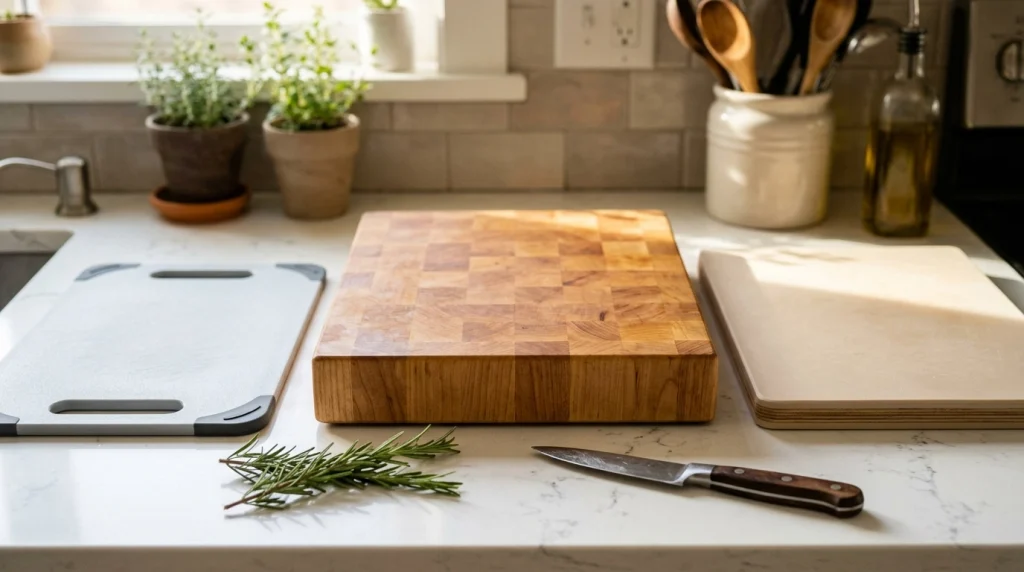
If you’re choosing a practical cutting board, these established products are worth comparing. The recommendations emphasize different needs rather than claiming one material is perfect for everyone.
The following are editorial picks based on published product characteristics and material performance, not personal hands-on testing.
🏆 Best for Easy Cleaning
OXO Good Grips Carving & Cutting Board
★★★★☆ Editorial fit: 4.5/5
This polypropylene board offers a reversible design, juice groove, nonslip feet, and dishwasher-safe construction. I favor its practical feature set for busy kitchens that need simple cleanup.
🌳 Best Traditional Wood Choice
The Boardsmith Maple End Grain Cutting Board
★★★★★ Editorial fit: 4.8/5
End-grain maple offers a forgiving cutting surface suitable for regular knife work. This is my preferred material style when edge retention and comfortable chopping are the main priorities.
🔪 Best for Knife Protection
Hasegawa Wood-Core Rubber Cutting Board
★★★★★ Editorial fit: 4.8/5
This specialized board combines a rubber cutting surface with a supportive core. Its more forgiving contact surface makes it an appealing option for cooks focused on maintaining sharp knife edges.
Note: Editorial scores reflect suitability for the stated use cases, not verified customer-review ratings. Product pricing, specifications, and availability may change.
Frequently Asked Questions About Titanium Cutting Boards
Are titanium cutting boards worth the money?
Titanium boards may be worth buying if you specifically want a corrosion-resistant, nonporous metal surface. For everyday chopping, however, wood, plastic, and rubber often deliver better value because they are generally gentler on knife edges.
Are titanium cutting boards better than wooden cutting boards?
Titanium is easier to maintain in some ways because it does not absorb water or require conditioning oil. Wood generally provides a more comfortable cutting experience and better knife-edge protection. The better choice depends on your priorities.
Do titanium cutting boards scratch easily?
Yes, titanium can develop visible knife marks during normal cutting. Scratch resistance depends on the alloy and surface finish. A scratched solid titanium board is not necessarily unsafe, but deep damage or peeling coatings should be investigated.
Can you put titanium cutting boards in the dishwasher?
Some genuine titanium boards are dishwasher-safe, but this depends on the entire construction. Coatings, adhesives, handles, and nonslip components may have special cleaning requirements. Always follow the manufacturer’s care instructions.
Are titanium cutting boards good for Japanese knives?
Generally, titanium is not my preferred cutting surface for thin, hard Japanese knife edges. Repeated contact with rigid metal can accelerate wear or damage. End-grain wood and suitable rubber boards provide more forgiving alternatives for delicate knives.
Final Verdict: Should You Buy a Titanium Cutting Board?
Titanium cutting boards offer genuine advantages. They’re corrosion-resistant, nonporous, durable, and relatively easy to clean.
However, those benefits come with important trade-offs. Accelerated knife wear, a rigid cutting feel, noise, and higher prices make titanium less appealing for everyday chopping.
My recommendation is to prioritize your cooking habits over the material’s marketing appeal. Choose a quality wooden or rubber cutting board if you regularly prepare meals with sharp knives.
If you still prefer titanium, look for clearly documented solid-metal construction, food-contact suitability, and reliable manufacturer information.
The bottom line: Titanium can be a good specialty cutting surface, but it is not the best all-around cutting board for most home cooks.

