Are Stone Cutting Boards Good? Pros, Cons, and Better Alternatives
Quick Answer
Stone cutting boards are good for serving food, rolling pastry, and creating an attractive kitchen display. However, they are not the best choice for everyday chopping because their rigid surfaces can dull knife blades, cause chips, and make cutting less comfortable. According to University of Maine Cooperative Extension, stone and marble boards are relatively easy to clean but may wear down knives faster than softer cutting surfaces.
Key Advantages
- Attractive appearance: Natural patterns make stone boards excellent serving pieces.
- Easy surface cleaning: Smooth, properly maintained stone surfaces can be wiped and washed effectively.
- Pastry preparation: Marble provides a useful surface for rolling dough.
- Solid construction: Thick stone boards resist ordinary surface movement when properly supported.
Important Disadvantages
- Knife damage: Hard, unforgiving surfaces accelerate edge wear.
- Heavy weight: Large stone slabs are difficult to lift and wash.
- Chipping risk: Stone can crack or chip if dropped or struck.
- Slippery surfaces: Smooth boards may allow food to slide during preparation.
Stone cutting boards look impressive on a kitchen countertop, but appearance doesn’t always translate into practical performance. If you’re considering marble, granite, or another stone board, understanding how these materials affect your knives matters.
I prefer evaluating cutting boards by how well they protect knife edges, support food safety, and handle daily kitchen tasks. This guide explains where stone boards work well, where they struggle, and which alternatives make more sense.
What Is a Stone Cutting Board?
A stone cutting board is a food preparation or serving surface made from natural stone, such as marble, granite, or slate. These boards typically feature polished or honed surfaces and decorative natural patterns.
Despite their name, many stone cutting boards function better as serving trays or pastry surfaces. Their rigidity makes them less suitable for repetitive knife work.
Common Types of Stone Cutting Boards
- Marble cutting boards: Popular for pastry preparation, cheese serving, and decorative kitchen displays.
- Granite cutting boards: Heavy, rigid surfaces that resist everyday scratching but are harsh on knife edges.
- Slate serving boards: Often used for cheese, appetizers, and presentation rather than chopping.
- Other natural stone boards: Specialty serving surfaces whose performance depends on the stone and finish.
Not every stone board has the same properties. Surface finish, porosity, thickness, and manufacturer instructions can affect how safely you use and clean it.
Are Stone Cutting Boards Good for Everyday Cutting?
Stone cutting boards are generally poor choices for everyday slicing, dicing, and chopping. Their greatest weakness is the lack of cushioning beneath a sharp knife edge.
Wood and many plastic boards have a little flexibility or give during cutting. A stone surface barely yields, exposing delicate cutting edges to repeated hard impacts.
Why Stone Boards Are Hard on Knives
 Save
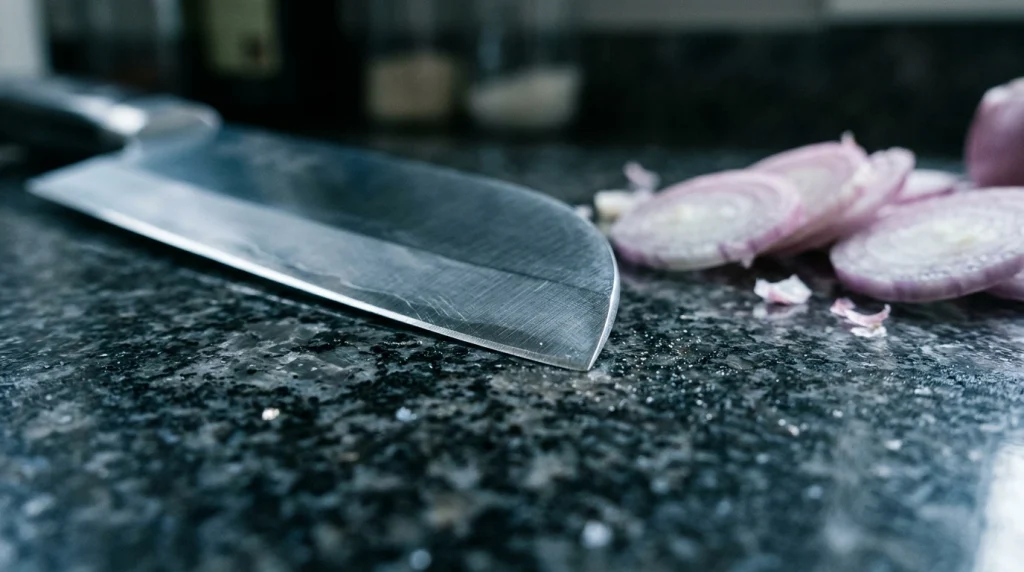
A sharp kitchen knife has a thin cutting edge that requires careful maintenance. Striking a rigid stone surface repeatedly can bend, wear, or chip that edge.
The harder you chop, the greater the potential damage. Delicate Japanese-style knives with thin edges can be especially vulnerable.
- Frequent chopping: Repeated impacts can shorten the time between sharpening sessions.
- Thin knife edges: Fine blades may experience microscopic edge damage.
- Heavy cutting pressure: Forceful chopping increases stress on the knife and board.
- Hard stone surfaces: Granite and similarly rigid materials provide little protection for the blade.
For everyday vegetable preparation, I would choose a quality wooden or plastic cutting board instead. Both are more practical surfaces for normal knife work.
What Are the Advantages of Stone Cutting Boards?
Stone boards still offer useful benefits when you match them with suitable kitchen tasks. Their strengths are mostly connected to presentation, stability, and certain types of food preparation.
1. Attractive Kitchen Appearance
Natural stone features unique colors, mineral patterns, and veining. A marble board can complement modern, traditional, or minimalist kitchen designs.
It can also serve as a display surface for fruit, cheese, or small appetizers. This is where stone often delivers the most value.
2. Useful for Pastry Preparation
Marble is particularly useful for pastry work because it conducts heat effectively and feels cool to the touch. A cool work surface can help reduce butter softening while handling dough.
However, stone does not generate coldness. A marble board eventually approaches the temperature of its surroundings.
For butter-rich pastry, I would consider a marble slab as a dedicated rolling surface. I would still use a separate cutting board for chopping ingredients.
3. Convenient for Serving Food
Stone boards provide an attractive base for cheese, crackers, fruit, and desserts. Their weight can also help them remain stationary on a stable countertop.
Choose food-contact-safe stone and avoid damaged or improperly sealed surfaces. Decorative stone products are not automatically suitable for serving food.
4. Smooth Surfaces Can Be Easy to Clean
Many polished stone boards have relatively smooth surfaces that simplify wiping away food residue. Unlike grooved cutting surfaces, an undamaged polished board may have fewer places where debris collects.
However, marble and some natural stones are porous. Proper cleaning and maintenance remain essential.
What Are the Disadvantages of Stone Cutting Boards?
The disadvantages become noticeable when stone replaces a normal chopping board. Knife wear, handling difficulties, and possible surface damage are the biggest concerns.
1. They Can Dull Kitchen Knives
Knife dulling is the main reason I don’t recommend stone as an everyday cutting surface. Repeated blade contact with rigid stone increases edge wear.
Sharpening more frequently also creates unnecessary maintenance. A knife-friendly board is usually a better long-term investment.
2. Stone Boards Are Heavy
A thick marble or granite board can weigh considerably more than a similarly sized plastic board. This makes moving, washing, and storing it less convenient.
Heavy boards also require careful handling around fragile sinks and countertops. Dropping one can damage surrounding surfaces.
3. They Can Crack or Chip
Stone feels solid, but it isn’t indestructible. A dropped board can crack, while accidental impacts may chip its edges.
A damaged food-contact surface may become difficult to clean. Replace boards that develop unsafe chips or cracks.
4. Some Stone Surfaces Can Stain
Marble and other porous stones can absorb certain liquids, particularly when their finish or protective treatment is compromised. Coffee, wine, and strongly colored foods may leave discoloration.
Acidic ingredients can also etch calcium-based stones such as marble. Lemon juice and vinegar deserve extra caution.
5. They May Be Slippery
Smooth polished stone can allow wet food to slide during cutting. A board without stable feet may also move on a smooth countertop.
Reduced control increases the possibility of knife accidents. Stability matters more than appearance during food preparation.
Stone vs. Wood vs. Plastic Cutting Boards: Which Is Better?
 Save
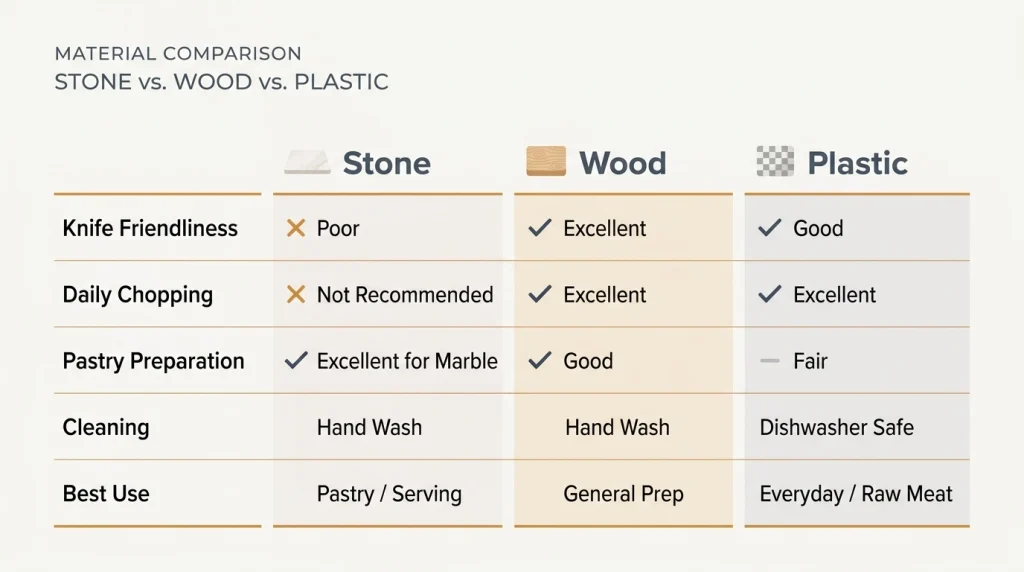
Wood and plastic generally outperform stone for daily chopping. Stone performs better when appearance and specialized pastry work are the main priorities.
The table below compares practical characteristics rather than laboratory measurements. Exact performance varies with product construction and maintenance.
| Feature | Stone | Wood | Plastic |
|---|---|---|---|
| Knife friendliness | Poor | Excellent | Good |
| Daily chopping | Not recommended | Excellent | Excellent |
| Pastry preparation | Excellent for marble | Good | Fair |
| Cleaning | Usually hand wash | Usually hand wash | Often dishwasher safe |
| Weight | Heavy | Moderate to heavy | Usually lightweight |
| Serving appearance | Excellent | Excellent | Functional |
| Best use | Pastry and serving | General food preparation | Everyday cutting and raw-food prep |
For most kitchens, I recommend keeping a wooden board for general food preparation and a washable plastic board for tasks involving raw meat. A stone board makes sense as an optional third surface.
Are Stone Cutting Boards Hygienic and Safe?
Stone cutting boards can be hygienic when they are food-safe, undamaged, and cleaned correctly. However, their safety depends on the specific stone, surface treatment, and maintenance practices.
Food safety involves more than material alone. Dirty boards of any type can contribute to cross-contamination.
Does Stone Harbor Bacteria?
Smooth stone surfaces may be straightforward to wash, but natural stone is not universally nonporous. Some types absorb moisture or develop tiny surface imperfections.
The USDA Food Safety and Inspection Service emphasizes proper cleaning and replacing cutting boards that become excessively worn or difficult to clean.
Natural marble can have small pores and fissures. Cleaning instructions should therefore follow the specific board manufacturer’s recommendations.
Can You Cut Raw Meat on a Stone Board?
A suitable food-safe stone board can contact raw meat, but it is not my preferred surface. Its weight, knife-dulling properties, and material-specific cleaning restrictions make it inconvenient.
A dedicated, dishwasher-safe plastic cutting board is often easier to manage. Always prevent raw meat juices from contacting ready-to-eat foods.
The University of Illinois Extension recommends using separate cutting boards to reduce cross-contamination.
Are Marble Cutting Boards Better Than Granite?
Marble is generally more useful for pastry preparation, while granite offers a hard, durable stone surface. Neither material is ideal for repeated chopping with sharp knives.
Marble Cutting Boards
Marble works well for rolling pastry, presenting cheese, and displaying food. Its smooth texture and elegant appearance make it popular in baking areas.
However, marble can react with acidic ingredients and may develop stains or etching. It also requires careful washing.
Granite Cutting Boards
Granite is often more resistant to surface scratching than marble. Its rigid surface can still be extremely unforgiving to knife edges.
For serving or display, granite may be attractive. For chopping vegetables, wood remains the more sensible option.
How Do You Clean a Stone Cutting Board?
Clean stone cutting boards with a method approved for their specific material. For many natural marble products, mild dish soap, water, and careful drying are appropriate.
Step-by-Step Cleaning Instructions
- Remove food residue: Wipe away crumbs and debris with a soft cloth or sponge.
- Use mild dish soap: Clean the surface gently with water and a nonabrasive sponge.
- Rinse thoroughly: Remove detergent without leaving the board submerged.
- Dry immediately: Wipe with a clean towel to reduce retained moisture.
- Inspect the board: Check for cracks, chips, damaged finishes, and other problems.
- Store securely: Keep the board on a stable surface where it cannot fall.
Never assume natural stone is dishwasher safe. High temperatures, detergents, and handling can damage some stone products.
Cleaning Mistakes to Avoid
- Using vinegar or lemon juice on marble and other acid-sensitive stones.
- Scrubbing polished surfaces with abrasive pads.
- Soaking a natural stone board for extended periods.
- Using an unapproved stone sealer on food-contact surfaces.
- Ignoring cracks, chipped edges, or damaged protective treatments.
If the surface touched raw meat, follow an appropriate food-contact sanitizing method approved for that stone. Do not apply bleach or other disinfectants without checking compatibility and label directions.
When Should You Use a Stone Cutting Board?
Stone boards make sense when you need a stable pastry surface or an attractive serving platform. They are less practical when a recipe requires extensive knife work.
Best Uses for Stone Boards
- Rolling pastry: Marble provides a useful worktop for pie crusts and other butter-rich doughs.
- Serving cheese: A polished, food-safe stone surface creates an attractive presentation.
- Displaying appetizers: Stone complements fruit, bread, and small snacks.
- Kitchen decoration: Natural patterns add visual interest to a countertop.
- Chocolate work: Suitable marble surfaces can assist certain temperature-sensitive preparation tasks.
When to Avoid Stone Boards
- Chopping onions and vegetables repeatedly.
- Cutting meat with expensive kitchen knives.
- Using thin or delicate knife blades.
- Heavy cleaver work.
- Preparing food on cracked or damaged stone.
- Tasks that require a lightweight, easily moved cutting surface.
How Can You Choose a Good Stone Cutting Board?
Choose a board according to its intended use, not appearance alone. A beautiful serving slab may lack the features needed for safe kitchen preparation.
Important Buying Considerations
- Food-safe construction: Confirm that the material and finish are suitable for direct food contact.
- Surface condition: Look for a smooth finish without cracks, sharp chips, or visible damage.
- Suitable dimensions: Choose enough workspace without making the board difficult to handle.
- Stable support: Protective, nonslip feet can help prevent sliding and countertop scratches.
- Cleaning requirements: Review maintenance directions before purchasing.
- Intended purpose: Select marble for pastry and serving rather than frequent knife work.
As of 2026, my recommendation remains to treat stone as a specialty kitchen surface. A separate knife-friendly board handles daily cutting more efficiently.
Recommended Cutting Boards and Alternatives
 Save
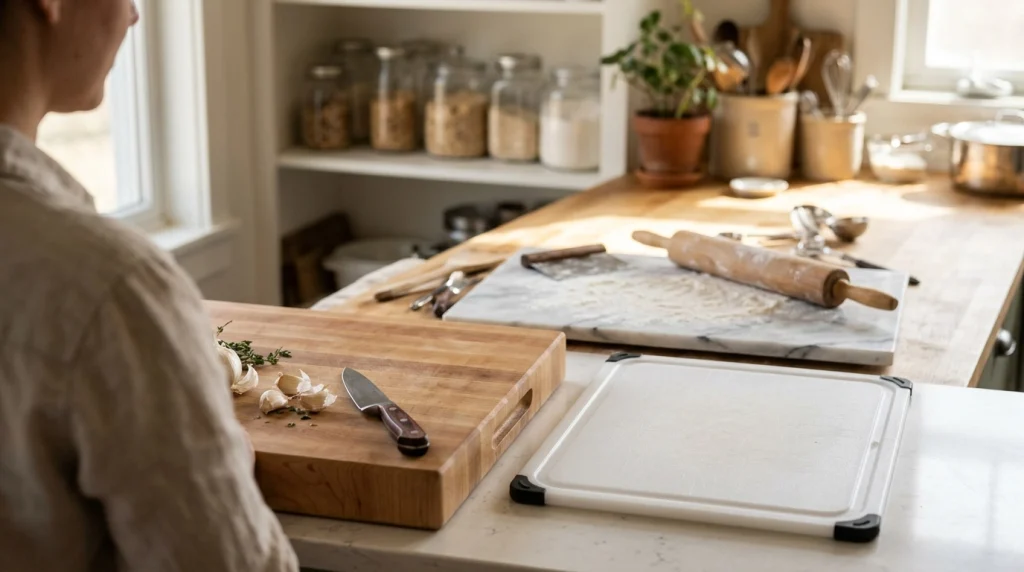
If you’re deciding what to buy, I would prioritize the task you perform most frequently. These three real products serve different kitchen needs.
Best for everyday chopping
OXO Good Grips Carving & Cutting Board
★★★★★
This polypropylene board features a double-sided design, nonslip feet, and a grooved side for collecting juices. At approximately 21.1 by 14.5 inches, it offers useful preparation space. It’s my practical pick for households that want straightforward cleaning and everyday convenience.
Best wooden alternative
John Boos Maple R02 Cutting Board
★★★★☆
This reversible edge-grain maple board measures 24 by 18 by 1.5 inches. Its generous chopping area and durable construction suit frequent cooking. I would choose it for dedicated home cooks who value knife protection and are comfortable with regular wood maintenance.
Best for pastry preparation
Fox Run White Marble Pastry Board
★★★★☆
This marble pastry board offers a smooth surface for rolling dough and preparing baked goods. A 12-by-16-inch version includes protective feet. I would select it for baking and serving rather than as a replacement for a wooden chopping board.
Note: The star ratings above are editorial suitability assessments, not verified customer review averages. Product availability and specifications may change.
Frequently Asked Questions
Do stone cutting boards ruin knives?
Stone cutting boards can damage knife edges through repeated contact with their rigid surfaces. Frequent chopping may cause faster dulling, edge deformation, or small chips, particularly on delicate knives.
Wood or suitable plastic is a better choice for preserving sharp edges during routine preparation.
Are marble cutting boards safe for food?
Marble cutting boards can be safe for food when specifically manufactured for food contact and properly maintained. However, marble can stain, absorb certain liquids, and react with acidic ingredients.
Use manufacturer-approved cleaning methods and avoid damaged surfaces.
Can you put a stone cutting board in the dishwasher?
Most natural marble cutting boards should not go in the dishwasher unless the manufacturer explicitly approves it. Aggressive detergents, high temperatures, and repeated moisture exposure may damage finishes or weaken certain stone products.
Hand washing with mild soap is generally the safer approach.
Is stone better than wood for cutting boards?
Stone is generally not better than wood for everyday chopping because it is much harder on knife edges. Wood provides a more forgiving surface and works well for vegetables, fruit, and general food preparation.
Stone is more useful for decorative serving and specialized pastry tasks.
Are granite cutting boards good for knives?
Granite cutting boards are not ideal for knife care. Their extremely rigid surfaces provide little cushioning when a blade makes contact.
For frequent cutting, a hardwood or appropriate plastic cutting board is a more practical alternative.
Final Verdict: Are Stone Cutting Boards Worth It?
Stone cutting boards are worth considering for pastry preparation, food presentation, and kitchen decoration. They provide attractive surfaces and can serve specialized purposes effectively.
However, I wouldn’t recommend using one as your primary chopping board. The potential for knife wear, heavy weight, and special cleaning requirements outweigh the benefits for routine food preparation.
For most households, a quality wooden or plastic cutting board is the smarter everyday investment. Add a marble board only when baking or serving needs justify it.
My recommendation: Protect your knives with a forgiving cutting surface, and reserve stone for the tasks it handles best.

