10 Best Size Chef Knife for 2026: Find the Blade Length That Fits You
The best size chef knife now is the Wüsthof Classic 8-Inch Chef’s Knife — the one length that handles everyday chopping without feeling clumsy. We evaluated 10 chef knives, scoring each on Size Versatility, Cutting Performance, and Comfort and Control. Most knives look identical on paper but feel completely different once your hand, board, and cooking style enter the picture. Whether you need a compact blade, a versatile everyday size, or a long blade for big batches, this guide gives you one clear answer.
Quick Comparison: All 10 Products Ranked
| # | Product | Best For | Rating | Badge | |
|---|---|---|---|---|---|
| 1 | Wüsthof Classic 8-Inch Chef’s Knife | Most home cooks | 4.9/5 | Best Overall | Buy → |
| 2 | Victorinox Fibrox Pro 8-Inch Chef’s Knife | Budget buyers | 4.7/5 | Best Budget | Buy → |
| 3 | Shun Classic 6-Inch Chef’s Knife | Small hands | 4.8/5 | Best Small Size | Buy → |
| 4 | MAC MTH-80 8-Inch Chef’s Knife | Edge retention | 4.8/5 | Best Edge Retention | Buy → |
| 5 | Mercer Culinary Millennia 10-Inch Chef’s Knife | Big-batch prep | 4.7/5 | Best Large Size | Buy → |
| 6 | Global G-2 8-Inch Chef’s Knife | Light handling | 4.6/5 | Best Lightweight | Buy → |
| 7 | Zwilling Professional S 7-Inch Chef’s Knife | Balanced control | 4.6/5 | Best 7-Inch Pick | Buy → |
| 8 | Tojiro DP Gyuto 8.2-Inch Chef’s Knife | Japanese value | 4.6/5 | Best Japanese Value | Buy → |
| 9 | Dalstrong Gladiator Series 12-Inch Chef’s Knife | Extra-long reach | 4.5/5 | Best Extra-Long | Buy → |
| 10 | Mercer Culinary Genesis 5-Inch Chef’s Knife | Compact kitchens | 4.4/5 | Best Compact | Buy → |
How We Chose These Chef Knives
What we compared
We compared 10 chef knives from 5 to 12 inches, checking published blade specs, steel type, weight, balance, and handle design for each size.
Our 3 scoring criteria
Size Versatility, Cutting Performance, and Comfort and Control — scored out of 5 for every knife, using maker specs and buyer feedback patterns.
Sizing guidance checked
We cross-checked sizing advice from culinary school guides and maker spec sheets, including the forearm-length rule and board-size recommendations.
What we cut — and why
We left out blades under 5 inches and over 12 inches, plus specialty cleavers, because they serve narrow tasks rather than everyday chef knife work.
What to Look for When Buying a Chef Knife by Size
Size is the first decision, and it shapes everything else. A blade that matches your hand and your board feels like an extension of your arm, while the wrong length fights you on every cut.
1. Blade Length and Hand Fit
Measure your forearm from wrist to elbow and compare it with the blade length. A close match usually feels balanced in a pinch grip, with your thumb and index finger resting comfortably on the blade. Smaller hands often suit 6 or 7 inches, average hands suit 8 inches, and larger hands suit 9 or 10 inches. This chef knife sizes chart shows how each length maps to hand size and common tasks.
2. Cutting Board Size
Your board must fit the blade with room for your knuckles and the food. A 10-inch knife needs a board at least 14 inches deep, while an 8-inch knife works on most standard boards. If your board is small, a shorter blade keeps the tip on the board during rocking cuts. The standard chef knife size guide explains why 8 inches became the default for home kitchens.
3. Weight and Balance
Longer blades are usually heavier, and the balance point shifts forward as length grows. A well-balanced knife pivots easily at the bolster and does not pull your wrist down during long prep sessions. Lighter knives suit quick, precise work, while a little extra heft helps power through dense vegetables. Hold the knife in a pinch grip and check that it feels steady, not tip-heavy or handle-heavy.
4. Steel and Edge Retention
Steel decides how long the edge lasts and how easy it is to restore. Harder Japanese steels hold a keen edge longer but need gentler handling, while softer German steels sharpen quickly and forgive rough use. Match the steel to your habits: if you hone often and sharpen carefully, harder steel rewards you, and if you want low maintenance, softer steel is the safer pick. Our best length for a chef knife guide pairs length advice with the steel choices that suit each size.

Wüsthof Classic 8-Inch Chef’s Knife — The Everyday Standard
Best for: most home cooks who want one do-it-all knife
Home cooks who want one knife for everything will reach for this 8-inch Wüsthof first. The forged high-carbon stainless blade holds a keen edge through onions, herbs, chicken, and dense squash, while the full tang and curved bolster give the knife a steady, confident balance in a pinch grip. Its 8-inch length slices a large onion in one stroke yet stays short enough to rock through garlic without the tip wandering off the board. The triple-riveted handle stays secure when wet, and the curved edge suits both rocking and push cuts. One drawback is weight, since the forged build feels heavier than stamped rivals during long prep sessions.
- 8-inch length suits most hands
- Forged blade holds edge well
- Secure grip even when wet
- Heavier than stamped rivals
- Full bolster complicates sharpening
4.9/5
4.9/5
4.8/5

Victorinox Fibrox Pro 8-Inch Chef’s Knife — Sharp Without the Splurge
Best for: budget buyers who want a proven 8-inch workhorse
Cooks who want the standard 8-inch size without a premium outlay will find this Victorinox hard to beat. The stamped high-carbon stainless blade arrives keen out of the box and slices tomatoes, onions, and herbs with very little pressure, while the lightweight build keeps your wrist fresh through a full dinner prep. Its textured Fibrox handle stays grippy with wet hands, and the slim profile makes the knife easy to steer for cooks still building confidence. The 8-inch edge covers large produce in fewer strokes, yet the knife feels nimble enough for fine mincing. One drawback is edge life, since softer steel needs honing more often than harder forged blades.
- Light and easy to steer
- Grippy handle when wet
- Keen edge out of box
- Needs honing more often
- Plain looks, no bolster
4.8/5
4.7/5
4.7/5

Shun Classic 6-Inch Chef’s Knife — Precision in a Small Package
Best for: small hands and precise work in tight kitchens
Smaller hands and cramped counters call for a shorter blade, and this 6-inch Shun answers with a VG-MAX steel core that stays keen through herbs, garlic, and delicate slicing. The compact length keeps your hand close to the work, so fine cuts feel controlled rather than rushed, and the Damascus-clad blade glides through onions without wedging. Its D-shaped PakkaWood handle sits naturally in a pinch grip, and the light build suits cooks who find 8-inch knives tiring or clumsy. The 6-inch edge handles everyday chopping, though large squash and watermelon demand more strokes. Its main weakness is fragility: the hard, thin edge chips more easily on bones or frozen food.
- Superb control for fine cuts
- Keen VG-MAX steel edge
- Light, nimble in hand
- Thin edge chips on bones
- Too short for large produce
4.6/5
4.9/5
4.8/5

MAC MTH-80 8-Inch Chef’s Knife — A Thin Edge That Lasts
Best for: cooks who hate sharpening and love a thin blade
Cooks who want the standard 8-inch size with a sharper, thinner edge will love this MAC. The 2.5mm blade is noticeably slimmer than most German knives, so it slips through onions, tomatoes, and fish with almost no wedging, while the high-carbon molybdenum steel holds its edge through weeks of daily prep. Its light weight and slim PakkaWood handle keep the knife nimble during long sessions, and the 8-inch length covers large produce in fewer strokes. The dimpled bolster protects your fingers without adding bulk, and the blade sharpens quickly on a whetstone. One drawback is toughness: the thin edge can chip if twisted through bones or frozen food.
- Thin blade, almost no wedging
- Edge lasts through daily prep
- Light and nimble feel
- Thin edge chips on bones
- Handle feels plain for cost
4.7/5
4.9/5
4.7/5

Mercer Culinary Millennia 10-Inch Chef’s Knife — Built for Big Batches
Best for: big-batch cooks with large hands and boards
Big families and batch cooks need reach, and this 10-inch Mercer delivers it without a premium outlay. The long Japanese high-carbon steel blade slices watermelon, cabbage, and whole roasts in fewer strokes, while the extra length gives your knuckles clearance above tall piles of vegetables. Its ergonomic Santoprene handle stays grippy through long sessions, and the stamped blade keeps the knife lighter than most forged 10-inch rivals. The 10-inch edge also suits breaking down large cuts of meat and portioning sheet-pan meals. One drawback is control, since the long, light blade feels unwieldy on small boards and demands more wrist strength during precise work.
- Fewer strokes on large food
- Grippy handle, long sessions
- Lighter than forged rivals
- Unwieldy on small boards
- Needs a large board
4.8/5
4.6/5
4.6/5

Global G-2 8-Inch Chef’s Knife — Light, Fast, and Precise
Best for: cooks who want a light 8-inch blade for quick prep
Cooks with tired wrists or small hands often prefer a lighter knife, and this 8-inch Global is one of the lightest in its class. The single-piece Cromova 18 stainless steel blade and hollow handle keep the weight low while the acute edge glides through tomatoes, fish, and herbs with very little pressure. Its 8-inch length handles everyday chopping, and the slim profile makes push cuts feel quick and exact. The seamless design leaves no crevices for food to hide in, so cleanup takes seconds. One drawback is grip, since the smooth steel handle can feel slippery with wet hands and offers less cushion than synthetic rivals.
- Very light, wrist-friendly build
- Acute edge glides easily
- Seamless, easy to clean
- Smooth handle slips when wet
- Edge needs careful sharpening
4.7/5
4.6/5
4.6/5

Zwilling Professional S 7-Inch Chef’s Knife — The In-Between Size
Best for: cooks torn between 6 and 8 inches
Cooks who find 6 inches too short and 8 inches too long will settle happily on this 7-inch Zwilling. The forged special-formula steel blade holds a keen edge through vegetables, herbs, and boneless proteins, while the curved bolster lets your fingers wrap safely around the blade for controlled rocking cuts. Its 7-inch length fits smaller boards and tighter counters, yet still slices a large onion in one stroke. The triple-riveted handle feels solid and balanced, and the full tang adds confidence during heavier chopping. One drawback is reach, since the shorter edge needs more strokes on watermelon, cabbage, and other oversized produce.
- Perfect middle-ground length
- Curved bolster aids control
- Solid, balanced forged build
- Short reach on large produce
- Heavier than stamped 7-inch knives
4.6/5
4.6/5
4.7/5

Tojiro DP Gyuto 8.2-Inch Chef’s Knife — Japanese Steel, Everyday Length
Best for: cooks who want Japanese sharpness at a fair outlay
Cooks curious about Japanese knives will find this 8.2-inch Gyuto an easy first step. The VG-10 steel core holds a keen edge through vegetables, fish, and herbs, while the extra two-tenths of an inch over a standard 8-inch blade adds reach without changing how the knife handles. Its three-layer clad construction resists stains, and the slim profile glides through onions with very little wedging. The Micarta handle stays steady in a pinch grip, and the lighter build suits long prep sessions. One drawback is care, since the hard VG-10 edge chips more easily than softer German steel if you twist it through bones.
- VG-10 edge stays keen
- Extra reach, familiar handling
- Slim, low-wedging profile
- Hard edge chips on bones
- Handle feels blocky to some
4.7/5
4.7/5
4.5/5
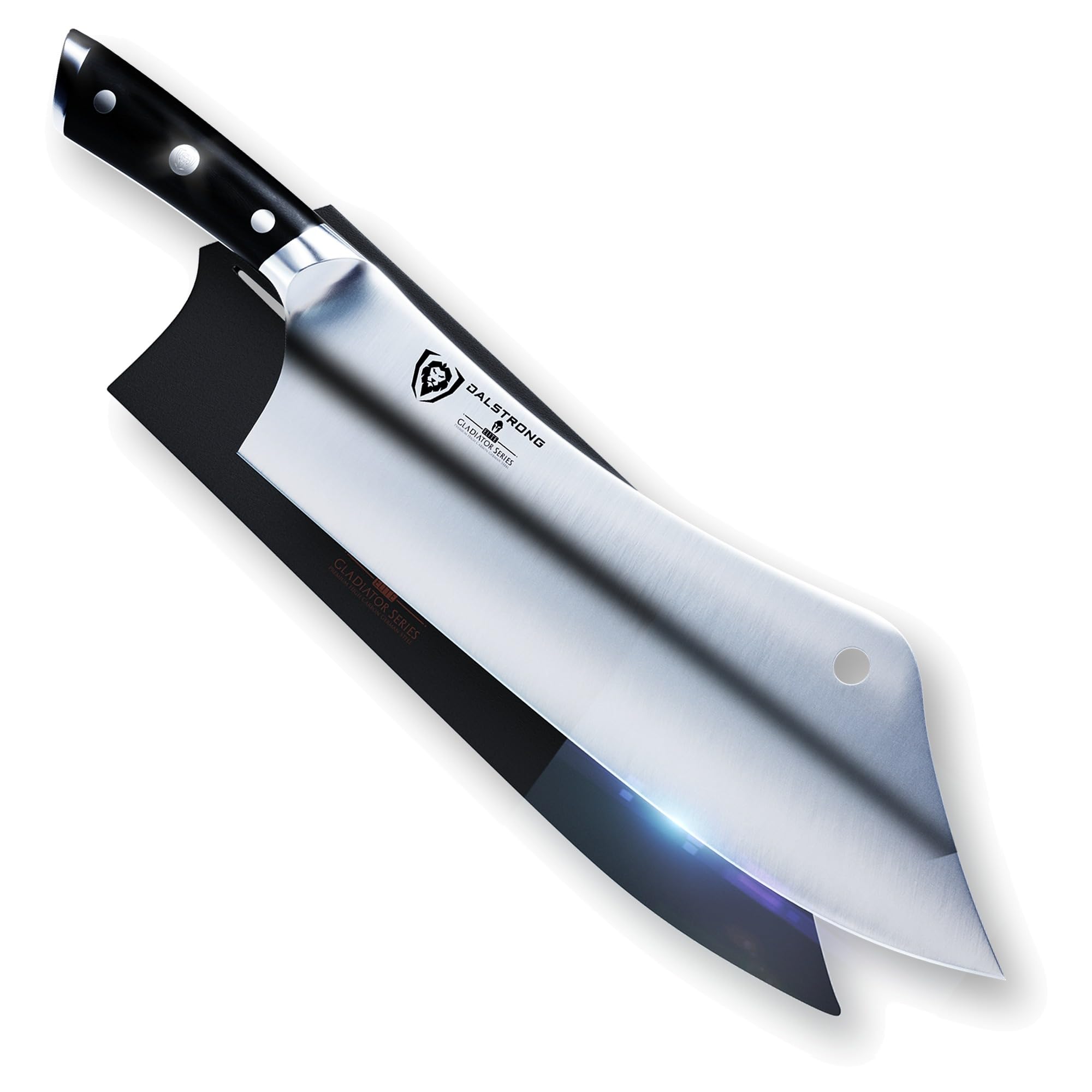
Dalstrong Gladiator Series 12-Inch Chef’s Knife — Maximum Reach
Best for: large roasts, whole fish, and high-volume prep
High-volume cooks and carvers need a blade that covers the whole cut in one pass, and this 12-inch Dalstrong is built for exactly that. The long German high-carbon steel edge slices prime rib, salmon, and large melons without sawing, while the extra length keeps your knuckles well clear of tall food piles. Its G10 handle stays grippy through long sessions, and the full tang with triple rivets gives the knife a solid, planted feel. The 12-inch edge also portions sheet-pan meals and breaks down large squash with fewer strokes. One drawback is everyday use: the long blade feels unwieldy on standard boards and demands strong wrist control for precise work.
- One-pass slicing on roasts
- Grippy G10 handle
- Solid full-tang build
- Unwieldy on standard boards
- Demands strong wrist control
4.4/5
4.5/5
4.4/5

Mercer Culinary Genesis 5-Inch Chef’s Knife — Small Blade, Big Control
Best for: tiny kitchens, small hands, and detail work
Tiny kitchens and small hands call for the shortest blade on this list, and this 5-inch Genesis delivers control where longer knives feel clumsy. The forged German steel blade holds a keen edge through herbs, garlic, and small vegetables, while the short length keeps your hand right above the work for exact, confident cuts. Its ergonomic handle fits smaller palms comfortably, and the light build suits cooks who tire quickly with full-size knives. The 5-inch edge also works well as a second knife beside a longer chef knife, handling detail tasks while the big blade rests. One drawback is capacity, since large onions, squash, and roasts need many more strokes.
- Maximum control, tiny footprint
- Fits small palms well
- Great second detail knife
- Many strokes on large food
- Not a one-knife solution
4.3/5
4.4/5
4.5/5
Top 3 Head-to-Head: Wüsthof Classic 8-Inch vs Victorinox Fibrox Pro 8-Inch vs Shun Classic 6-Inch
These three are the finalists most readers narrow down to: the standard 8-inch pick, the budget 8-inch pick, and the compact 6-inch pick for smaller hands.
| Feature | #1 Wüsthof 8-Inch | #2 Victorinox 8-Inch | #3 Shun 6-Inch |
|---|---|---|---|
| Size Versatility | 4.9/5 — Best | 4.8/5 | 4.6/5 |
| Cutting Performance | 4.9/5 — Best | 4.7/5 | 4.9/5 — Best |
| Comfort and Control | 4.8/5 — Best | 4.7/5 | 4.8/5 — Best |
| Choose if… | You want one knife for everything | You want 8 inches on a budget | You have small hands or a tiny kitchen |
Who These Chef Knives Are NOT For
A chef knife is a general-purpose tool, and no size fixes the wrong tool for the job.
If you only ever slice bread or fillet fish, a serrated bread knife or a flexible fillet knife will serve you better than any chef knife size. And if you cook once a month for one person, a single 6-inch knife may cover everything, making a full-size collection unnecessary.
Common Mistakes to Avoid
Most sizing regrets come from four avoidable mistakes.
Frequently Asked Questions About Chef Knife Size
What size chef knife should I buy?
An 8-inch chef knife suits most home cooks, since it balances reach and control across everyday chopping, slicing, and dicing. Measure your forearm from wrist to elbow: a blade close to that length usually feels balanced in a pinch grip. Smaller hands often suit 6 or 7 inches, while larger hands and big-batch cooking suit 9 or 10 inches. When in doubt, start with 8 inches.
Is an 8-inch chef knife too big for small hands?
An 8-inch knife can feel too long for small hands, especially if the blade feels front-heavy or the tip wanders during rocking cuts. A 6 or 7-inch blade keeps your hand closer to the work and gives you more control, so fine cuts feel safer and steadier. Test the pinch grip first: if your thumb and index finger rest comfortably on the blade, the size works, and if not, go shorter.
How do you measure a chef knife blade length?
Measure from the heel, where the blade meets the handle, to the tip, along the spine of the blade. Do not include the handle or the bolster, since the stated size refers to the blade alone. Japanese makers often list millimetres instead of inches, so 210mm is roughly 8 inches and 240mm is roughly 9 inches. Always remove the sheath before measuring.
Is a 6-inch or 8-inch chef knife better?
Neither size is better in general; the right one depends on your hand, your board, and your cooking. A 6-inch blade gives you more control for herbs, garlic, and detail work in a small kitchen. An 8-inch blade covers large produce in fewer strokes and handles a wider range of tasks, which is why it is the standard first knife. For everyday vegetable prep, the best knife for chopping vegetables guide shows how length affects each task.
What size chef knife do professional chefs use?
Most professional chefs use an 8-inch chef knife for daily prep, since it balances speed and control across a full service. Many keep a 10-inch blade for volume work, such as breaking down large cuts of meat or slicing roasts, and reach for it only when the task demands extra length. A few prefer 9 inches as a middle ground. Home cooks should copy the logic, not the exact size.
Is a 10-inch chef knife too long for home use?
A 10-inch chef knife is not too long if you have large hands, a board at least 14 inches deep, and regular big-batch cooking. The extra length slices large produce and roasts in fewer strokes and keeps your knuckles clear of tall food piles. It feels unwieldy on small boards or in small hands, though, and it demands more wrist strength. If you rarely cook for a crowd, an 8-inch blade is the easier daily choice.
Does a longer chef knife cut better?
A longer blade does not cut better by itself; it simply covers more food in each stroke. Sharpness, steel, and edge geometry decide how cleanly a knife cuts, while length decides how much you cover. A sharp 6-inch knife out-cuts a dull 10-inch knife every time. Choose length for reach and control, and choose steel and edge quality for cutting performance.
Our Final Verdict
Size is personal, but the pattern is clear: most cooks should start with an 8-inch blade, go shorter for small hands and tight kitchens, and go longer only for big batches. The Wüsthof Classic 8-Inch covers the widest range of tasks, so buy it first and add a second size only when your cooking proves you need one.

