How to Mince With a Chef Knife: Easy Steps
Quick Answer
To mince with a chef knife, place the ingredient on a stable cutting board, hold the knife securely, and keep your fingertips curled under your guiding hand. Cut the ingredient into manageable pieces, then use a controlled rocking motion to chop repeatedly until the pieces reach your desired size. Keep the knife tip near the board when rocking, use steady movements, and stop to gather scattered pieces as needed.
Mincing with a chef knife is a useful kitchen skill that helps you prepare garlic, onions, herbs, ginger, chilies, and many other ingredients. The goal is to cut food into very small, relatively even pieces without crushing it unnecessarily or sacrificing control.
You do not need an advanced knife technique to get started. A sharp chef knife, a stable cutting board, and the right hand positions are enough to help you mince ingredients safely and consistently.
What You Need Before You Start
Gather your equipment and prepare the ingredient before cutting. A few simple adjustments make mincing easier and reduce the chance of the knife slipping.
- A chef knife: Use a comfortable, sharp knife that you can control. A dull blade may require extra force and can slip more easily.
- A stable cutting board: Place it on a flat surface. If it moves, put a damp kitchen towel underneath it to help hold it in place.
- A suitable ingredient: Remove inedible skins, stems, roots, or damaged portions as needed.
- A clean work area: Keep the board free of unnecessary utensils, packaging, and scraps that could interfere with your cutting motion.
Wash produce when appropriate and dry ingredients such as herbs before mincing. Excess moisture can make small pieces clump together and may make the cutting board slippery.
How to Mince With a Chef Knife: Step-by-Step
 Save
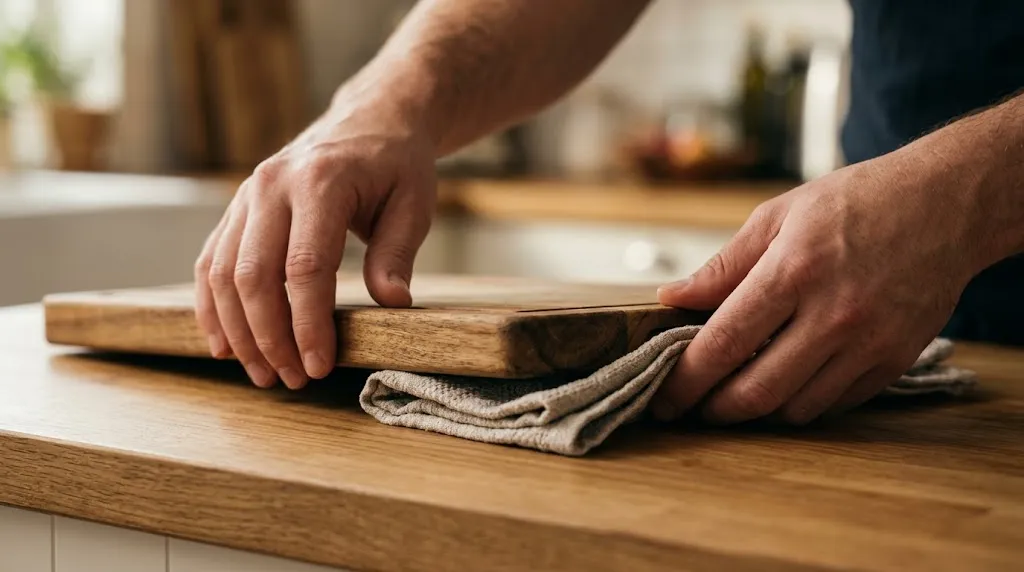
Step 1: Position the Cutting Board Securely
Set your cutting board on a flat, steady countertop. A board that shifts while you cut makes precise knife work harder and increases the risk of injury.
If the board slides, place a damp, folded kitchen towel underneath it. Check that the board remains stable before bringing the knife into position.
Step 2: Prepare the Ingredient
Trim away roots, tough stems, damaged sections, or other parts you do not intend to eat. Peel ingredients when necessary, and cut large items into smaller sections that are easier to control.
For example, peel garlic cloves and remove their tough root ends if desired. Cut an onion into manageable sections, or divide a large piece of ginger into smaller chunks. Preparing the ingredient first helps you maintain control during the actual mincing process.
Step 3: Hold the Chef Knife Correctly
Grip the knife handle firmly but comfortably. Avoid squeezing so tightly that your wrist and forearm become tense. Your grip should give you control over the blade without making the movement stiff.
Some cooks use a pinch grip, placing the thumb and index finger on opposite sides of the blade near the handle while wrapping the remaining fingers around the handle. If this grip feels unfamiliar, begin with a secure handle grip and practise slowly before trying a different position.
Keep your wrist aligned comfortably with your forearm. Do not force the knife through the ingredient; a sharp, well-maintained blade should do most of the cutting work.
Step 4: Use the Claw Grip With Your Guiding Hand
Your non-knife hand steadies the ingredient and guides the cut. Curl your fingertips inward so that the fingertips and nails are tucked away from the blade. Let your knuckles guide the side of the knife when appropriate.
Keep the ingredient stable rather than holding it loosely in your fingertips. Move your guiding hand backward gradually as you cut, keeping your fingers curled throughout the process.
Work slowly at first. Speed should come only after you can maintain consistent cuts and keep your fingertips safely positioned.
Step 5: Cut the Ingredient Into Smaller Pieces
Before using a rocking motion, cut the ingredient into smaller pieces or thin slices. The exact preparation depends on what you are mincing.
- Garlic: Peel the clove and cut it into thin slices before chopping.
- Onion or shallot: Halve the onion, remove the dry outer skin, and make controlled cuts while keeping the root end intact when that helps hold the layers together.
- Fresh herbs: Remove tough stems when needed, then gather the leaves into a loose pile.
- Ginger: Peel if desired, slice across the grain when practical, and cut the slices into smaller pieces.
- Chilies: Remove the stem and any seeds you do not want, then slice the chili into manageable pieces.
Smaller, reasonably uniform pieces are easier to mince evenly. Avoid making large piles that prevent the blade from contacting the board cleanly.
Step 6: Mince With a Controlled Rocking Motion
Place the knife over the prepared ingredient. Keep the tip of the blade close to the cutting board and use a controlled rocking motion to move the edge through the pieces. The heel of the knife rises and falls as the blade rocks, while the tip stays near the board when the knife shape allows it.
Use short, deliberate movements rather than swinging the knife high above the board. Apply only the pressure needed to cut through the ingredient, and keep your guiding hand clear of the blade’s path.
Continue chopping until the pieces reach your preferred size. For a more uniform mince, pause occasionally and gather scattered pieces into a compact pile with the blade kept safely away from your fingers.
Step 7: Gather and Re-Mince as Needed
When the ingredient spreads across the board, stop cutting and use the broad side of the knife to gather the pieces. Keep your fingers away from the sharp edge and avoid dragging the edge sideways across the board, which can dull the blade.
Chop through the gathered pile again with controlled movements. Repeat only as needed; excessive chopping can bruise delicate herbs, release extra moisture, or turn soft ingredients into a paste.
How to Mince Different Ingredients
How to Mince Garlic With a Chef Knife
 Save
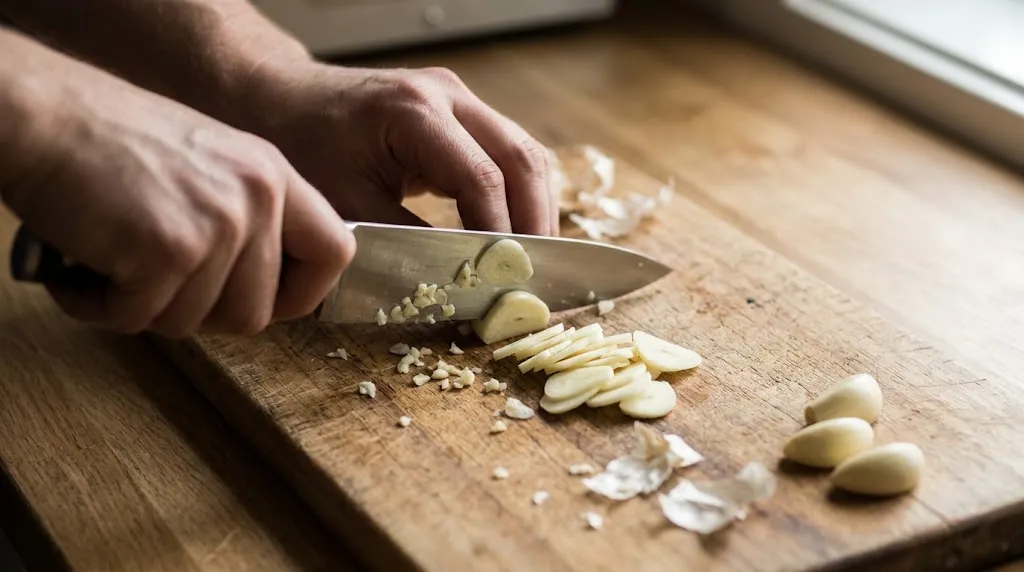
Start by separating a garlic clove from the bulb and removing its papery skin. Trim the root end if necessary, then slice the clove lengthwise or crosswise into thin pieces.
Gather the slices into a small pile and chop through them with a controlled rocking motion. Gather and repeat until the garlic is finely chopped. For a very fine result, use a few additional passes, but stop before the garlic becomes a wet paste unless that texture is what your recipe requires.
Crushing a clove with the flat side of the knife can loosen the skin and make peeling easier. However, crushing changes the texture and may release more juices, so slicing first is useful when you want a more even mince.
For more detail, see our guide to mincing garlic with a chef knife.
How to Mince an Onion or Shallot
Peel the onion and cut it in half through the root. Place one half flat-side down so it rests securely on the board. Make controlled lengthwise cuts, followed by crosswise cuts, using a claw grip and keeping your fingertips tucked away.
For a fine mince, make the pieces smaller before gathering and chopping them again. The root end can help hold the onion layers together while you make the initial cuts, but discard it when you finish.
Shallots can be prepared in the same general way. Because they are usually smaller than onions, use short cuts and take extra care to keep the ingredient stable.
How to Mince Fresh Herbs
Wash fresh herbs when needed and dry them thoroughly. Remove tough stems if your recipe calls for leaves only, then gather the leaves into a loose pile.
Use a light rocking motion to chop the herbs into small pieces. Avoid pressing down excessively or chopping for longer than necessary, especially with delicate herbs such as basil and parsley. Too much handling can bruise the leaves and make them darken more quickly.
For additional guidance, read our article about using a chef knife to cut herbs.
How to Mince Ginger and Chilies
For ginger, remove the skin if desired, slice the root into thin pieces, and cut those pieces into narrow strips. Gather the strips and chop them into small cubes. Cutting across the fibrous strands can make the pieces more pleasant to eat.
For chilies, remove the stem and prepare the inside according to your recipe. Slice the chili lengthwise or crosswise, then chop the slices into small pieces. Avoid touching your eyes while handling hot chilies, and wash your hands and equipment carefully afterward.
How Fine Should a Mince Be?
The ideal size depends on the ingredient and the recipe. Mincing generally means cutting food into very small pieces, but it does not require every piece to be exactly identical.
- Coarse mince: Small, visible pieces that retain some texture. This can work well for ingredients used in rustic sauces or fillings.
- Fine mince: Smaller pieces that distribute more evenly through dressings, sauces, marinades, and cooked dishes.
- Very fine mince: Tiny pieces close to a paste in texture. This may be useful for garlic or ginger in some recipes, but too much chopping can release extra moisture.
Follow the recipe when it specifies a particular texture. If it does not, aim for small, reasonably even pieces so the ingredient mixes well and cooks consistently.
Common Mincing Mistakes and How to Fix Them
Using a Dull Knife
A dull knife may crush ingredients instead of cutting cleanly and can require more force. Keep your knife properly sharpened and use a suitable cutting board. If the blade slips or struggles to cut, stop and address the knife’s condition before continuing.
Chopping Too Quickly
Fast movements are not necessary for a good mince. Rushing can lead to uneven pieces and unsafe finger placement. Slow down, use short controlled strokes, and increase your pace only when you can maintain consistent control.
Keeping Fingers Straight
Leaving fingertips extended beside the blade exposes them to accidental cuts. Use a claw grip, curl your fingertips inward, and move your guiding hand back gradually as the ingredient gets smaller.
Making the Pieces Too Large Before Chopping
Large chunks can roll or shift on the board, making them harder to cut evenly. Divide the ingredient into manageable pieces before mincing, and make sure each piece has a stable position on the board.
Chopping Delicate Herbs for Too Long
Repeated chopping can bruise herbs and release moisture. Use a sharp blade, keep the herbs dry, and stop when the pieces are small enough for the recipe.
Scraping With the Sharp Edge
Dragging the knife’s cutting edge sideways across the board can dull it. Turn the knife so the broad side faces the pile, or use a bench scraper to transfer the minced ingredients to a bowl or pan.
Chef Knife Safety Tips for Mincing
Safe technique matters more than speed. Follow these practices whenever you mince ingredients:
- Keep the cutting board stable before you begin.
- Use a sharp, well-maintained knife that you can control.
- Keep your guiding hand in a claw grip with fingertips curled inward.
- Cut on a stable, flat surface rather than holding ingredients in the air.
- Keep your attention on the blade and the ingredient while cutting.
- Never try to catch a falling knife; move away and let it fall.
- Use the broad side of the blade or a bench scraper to gather ingredients.
- Wash and store the knife safely after use, keeping the blade away from the edge of the counter.
If an ingredient becomes too small to hold securely, stop trying to mince it by hand. Set the knife down safely and use a suitable alternative, or leave the remaining piece rather than risking your fingertips.
When Should You Use Another Knife or Tool?
A chef knife is versatile and works well for most everyday mincing tasks. However, another tool may be more suitable when the ingredient or desired result calls for a different approach.
- Paring knife: Useful for small trimming tasks, peeling, or working with small ingredients when a larger blade feels awkward.
- Herb scissors: Convenient for cutting some herbs directly into a dish, although they may not produce the same texture as knife-minced herbs.
- Garlic press: Useful when a recipe calls for crushed or pressed garlic rather than distinct minced pieces.
- Food processor: Helpful for processing larger quantities, provided you use short pulses and monitor the texture carefully.
- Bench scraper: Helpful for gathering minced ingredients and transferring them without dragging the knife edge across the board.
Choose the tool that gives you the right texture and the best control. For small amounts of garlic, herbs, onions, or ginger, a chef knife is usually enough.
Related Kitchen Tool
A properly maintained knife is easier to control during mincing. If your chef knife struggles to cut cleanly, consider checking its sharpness and using a suitable sharpening tool according to the knife manufacturer’s guidance.
Check Knife Sharpeners on Amazon
As an Amazon Associate, this site may earn from qualifying purchases.
Frequently Asked Questions
What does it mean to mince with a chef knife?
Mincing means cutting an ingredient into very small pieces. With a chef knife, you usually prepare the ingredient into manageable sections, chop it with controlled movements, and gather and re-chop the pieces until they reach the desired size.
Should I use the tip or the heel of the chef knife when mincing?
Many cooks use a rocking motion that keeps the tip near the cutting board while the heel rises and falls. The exact motion depends on the knife’s shape and the ingredient, so prioritize controlled cuts rather than forcing a particular technique.
How do I mince garlic without turning it into a paste?
Peel the clove, slice it thinly, and chop the slices into small pieces. Stop when the garlic reaches the texture you want, because repeated chopping and crushing can release more moisture and create a paste-like result.
Can I mince herbs with a chef knife?
Yes. Dry the herbs, remove tough stems if needed, gather the leaves into a loose pile, and chop them with a light rocking motion. Stop when the pieces are small enough for your recipe to avoid unnecessary bruising.
Why is my minced food uneven?
Uneven pieces often result from starting with chunks of different sizes, using an unstable board, or chopping too quickly. Cut the ingredient into manageable pieces first, gather the pile between passes, and use short, controlled movements.
Is a sharp knife safer for mincing?
A properly sharpened knife generally cuts more predictably and requires less force than a dull one. However, sharp knives can still cause serious injuries, so use a stable board, a secure grip, a claw grip, and attentive cutting technique.
Final Thoughts
Learning how to mince with a chef knife comes down to preparation, control, and consistency. Secure the cutting board, prepare the ingredient into manageable pieces, keep your fingertips curled, and use a controlled rocking motion to chop until the texture suits your recipe.
Practise slowly with easy ingredients such as garlic or herbs before moving on to more challenging cuts. With a sharp, well-maintained knife and safe technique, you can make mincing a reliable part of your everyday cooking routine

