Can You Use a Chef Knife to Cut Herbs? Yes—Here’s How
Quick Answer
Yes. A sharp chef’s knife is one of the best all-purpose tools for cutting fresh herbs. Use smooth slicing or controlled rocking motions, keep the herbs dry, and avoid repeatedly pounding the blade through delicate leaves. For basil, mint, and similar broad leaves, chiffonade gives clean ribbons; for parsley, cilantro, and sturdier herbs, a light chop or mince works well.
You do not need a special herb knife for everyday cooking. A chef’s knife has enough length to handle a bunch of parsley, enough control for fine slicing, and a curved edge that works well for chopping and mincing. The bigger issue is how you use it. A dull edge or aggressive up-and-down chopping can crush herbs instead of cutting them cleanly.
The Institute of Culinary Education’s herb-cutting guidance demonstrates chiffonade, chopping, and slicing with smooth knife motions rather than repeatedly pressing through the leaves. That approach is useful whether you are preparing basil for garnish, parsley for a sauce, or chives for finishing a dish.
Why a Chef’s Knife Works Well for Herbs
A chef’s knife is designed for general kitchen prep, including slicing, chopping, and mincing. Its broad blade gives you room to guide the knife, while the curved belly on many Western-style chef’s knives supports a rocking motion. That combination makes one knife useful for several herb-preparation styles.
If you already use a chef’s knife for vegetables and aromatics, there is usually no reason to switch tools just because herbs are delicate. The same knife can handle them well as long as the edge is sharp and the cutting motion matches the herb.
If you want a broader explanation of what the blade is built to do, the site’s guide to chef’s knife uses, grip, and limits explains where this all-purpose knife performs well and where a specialized blade is more suitable.
The Real Issue Is Sharpness, Not a Special Herb Blade
Fresh herbs are thin and easily compressed. A sharp edge passes through them with less force, while a dull edge makes you press harder. That extra pressure can mash the leaves against the board, leave ragged cuts, and turn a neat pile of herbs into a damp clump.
This matters most with tender herbs such as basil, cilantro, dill, mint, and parsley. You want the knife to cut through the leaves rather than squeeze them before the edge reaches the board.
Key Insight
If your chef’s knife drags, folds leaves, or requires several forceful passes, changing to a specialized herb tool will not solve the underlying problem as effectively as restoring a clean, sharp edge.
For practical maintenance, see the guide on how to clean, sharpen, and maintain kitchen knives. You do not need to sharpen before every herb-prep session, but the knife should be able to make a clean slice without excessive pressure.
How to Cut Different Herbs With a Chef’s Knife
 Save
SaveThe best motion changes with the shape and texture of the herb. Treating every herb as a pile to be aggressively minced is one of the easiest ways to get uneven cuts.
Basil and Mint: Use Chiffonade for Ribbons
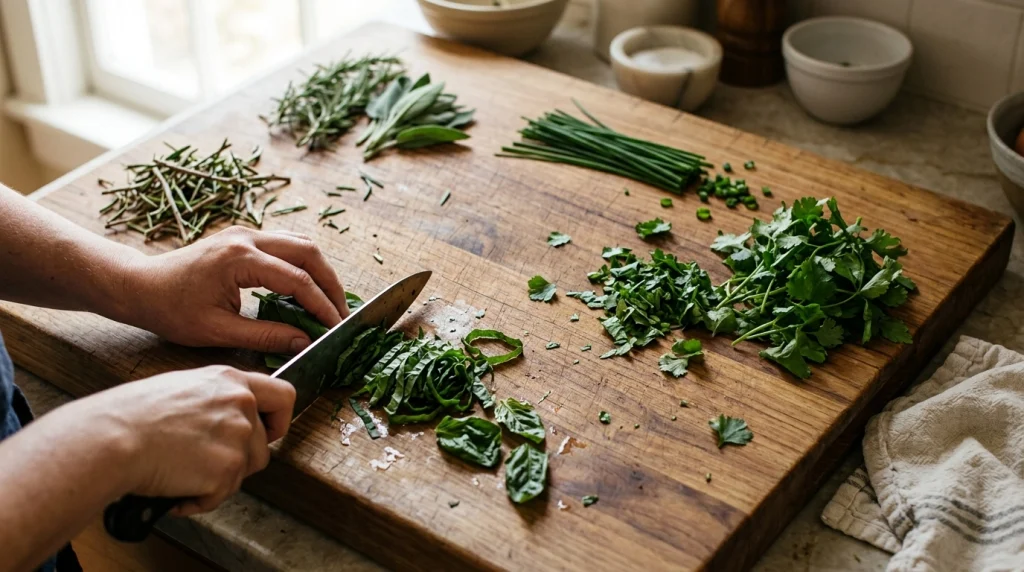
For broad, tender leaves, stack several leaves, roll them gently into a loose cylinder, and slice across the roll. Use smooth strokes and avoid squeezing the bundle tightly. The result is thin ribbons that work well as a garnish or as a last-minute addition to a dish.
Do not keep chopping the ribbons unless the recipe needs smaller pieces. Extra passes increase bruising without adding much value.
Parsley and Cilantro: Gather, Slice, Then Refine
Remove any tough lower stems you do not want, gather the herbs into a compact pile, and make a series of controlled slices. If the recipe calls for a finer chop, regroup the herbs and make a few additional passes.
The goal is not to race the knife back and forth. Stop when the pieces are small enough for the dish. A salsa may need a rougher chop than a smooth herb sauce.
Rosemary, Sage, and Other Sturdier Herbs: Strip and Chop
Woody herbs need slightly different preparation. Strip rosemary leaves from the tough stem before chopping. Sage leaves can be stacked and sliced or chopped more finely depending on the recipe. Because these leaves are sturdier than basil or dill, they tolerate more chopping, but a sharp edge still makes the work cleaner.
Chives: Slice With a Forward Motion
Line the chives up, hold them gently with your guide hand, and make small, even slices. A smooth forward-and-down motion is better than pounding straight down. If you only need a few chives over a finished dish, clean kitchen shears can also be convenient, but they are optional.
A Simple Step-by-Step Method for Clean Herb Cuts
- Wash the herbs if needed, then dry them thoroughly. Damp leaves stick together, cling to the blade, and move around on the board.
- Use a stable cutting board. If the board slides, secure it before cutting so you can guide the knife without compensating for movement.
- Remove stems according to the herb. Tender cilantro or parsley stems may be usable in many dishes, while woody rosemary stems are normally removed before chopping.
- Gather or stack the herbs without crushing them. Keep the pile compact enough to control, but do not squeeze delicate leaves into a dense ball.
- Choose the right motion. Slice for chiffonade and chives; use controlled rocking or repeated slicing for parsley, cilantro, and herbs that need mincing.
- Stop as soon as the cut is fine enough. More knife passes are not automatically better. Repeated chopping can turn delicate herbs wet and ragged.
Tip
When chopped herbs spread across the board, gather them with a bench scraper or the spine of the knife instead of dragging the cutting edge sideways across the board. That helps preserve the edge.
Common Mistakes That Bruise or Mash Herbs
- Using a dull knife: you compensate by pressing harder, which crushes delicate leaves.
- Cutting herbs while they are wet: moisture makes the pile harder to control and encourages sticking.
- Chopping far longer than necessary: repeated passes create smaller pieces, but they also increase physical damage to the leaves.
- Using a straight pounding motion for every herb: many herbs cut more cleanly when the blade also travels forward or backward through the leaf.
- Overloading the board: an oversized mound is difficult to cut evenly. Work in smaller batches when needed.
- Scraping the cutting edge sideways: use the spine of the knife or a scraper to move the herbs instead.
These mistakes explain why two people can use the same chef’s knife and get very different results. Knife choice matters, but edge condition, preparation, and motion usually matter more.
Should You Rock-Chop or Slice Herbs?
Both methods can work. Use the motion that fits the herb and the result you want.
Rock-chopping is useful when you have a mound of parsley, cilantro, rosemary leaves, or another herb that needs to be chopped relatively fine. Keep the movement controlled rather than repeatedly hammering the blade into the board.
Slicing is better when the appearance of the cut matters or the herb is especially delicate. Basil chiffonade, mint ribbons, and evenly cut chives benefit from clean, directional slices.
A useful rule is simple: if the leaves are becoming dark, wet, or mashed before you reach the texture you want, reduce the number of passes and use more slicing action.
When Another Tool May Be More Convenient
 Save
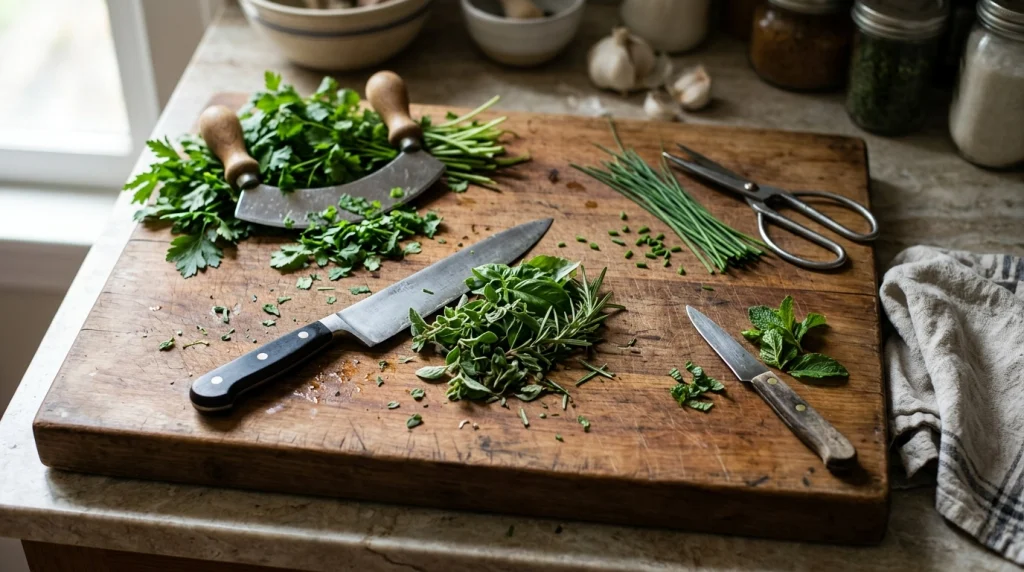
SaveA chef’s knife is versatile, but convenience can justify another tool in a few situations. Kitchen shears are handy for snipping a small amount of chives directly over a dish. A mezzaluna can make sense for someone who regularly processes large piles of herbs. A smaller utility or paring knife may feel easier for a tiny garnish.
None of these tools is necessary for ordinary herb preparation. If you already own a comfortable, sharp chef’s knife, learning two or three cutting motions will cover most jobs without adding another specialized tool to the drawer.
After use, wash and dry the knife and store it so the edge is protected. The site’s guide to safe kitchen-knife storage covers common options such as blocks, magnetic storage, and blade protection.
Frequently Asked Questions
Can a Chef’s Knife Mince Herbs Finely?
Yes. A chef’s knife can mince herbs finely, especially when it has a sharp edge and enough blade curve for controlled rocking. Chop only until the texture suits the recipe; excessive passes can mash delicate herbs.
Is a Chef’s Knife Too Big for Basil?
No. A chef’s knife works well for basil. Stack the leaves, roll them gently, and slice across the roll to make a chiffonade. The long blade can actually help you make smooth, consistent cuts.
Can You Cut Herbs With a Dull Chef’s Knife?
You can, but the result is usually worse. A dull edge requires more pressure and is more likely to crush or tear tender leaves. Sharpen or maintain the edge before doing fine herb work.
Should Herbs Be Dry Before Chopping?
Yes. Dry herbs are easier to control and less likely to stick together or smear across the board. After washing, remove excess water before you begin cutting.
Are Herb Scissors Better Than a Chef’s Knife?
Not generally. Herb scissors can be convenient for quick snipping, especially with chives, but a sharp chef’s knife offers more control over cut size and works across a wider range of herbs.
Do You Need a Special Cutting Board for Herbs?
No. Use a clean, stable cutting board that gives the knife enough room to move safely. The most important points are stability, cleanliness, and avoiding a surface that is excessively hard on the knife edge.
Conclusion
A chef’s knife is not just acceptable for cutting herbs; for most home cooks, it is the most practical tool for the job. Keep the edge sharp, dry the herbs before cutting, and match the motion to the ingredient: slice tender leaves, chiffonade broad herbs such as basil, and use controlled chopping or rocking when you need a finer texture. Specialized herb tools can be convenient, but they are optional. Good technique with the chef’s knife you already own will usually produce cleaner, more consistent herb prep.