Why Food Sticks to Your Chef Knife and How to Stop It
Quick Answer
Food sticks to a chef knife mainly because moisture, starch, or fat creates a thin clinging film between a flat blade and a fresh cut surface. Use a sharp knife, make one long drawing slice instead of pressing straight down, and wipe the blade clean between batches. A Granton edge, hammered finish, or thinner blade can reduce sticking, but none removes it completely.
Sticking is rarely a sign that you bought the wrong knife. The same knife that slices a carrot cleanly may hold on to a potato, an onion, or a piece of cheese. The difference is usually the food, the cut, and the condition of the blade at that moment.
Why Food Clings to a Chef Knife Blade
 Save
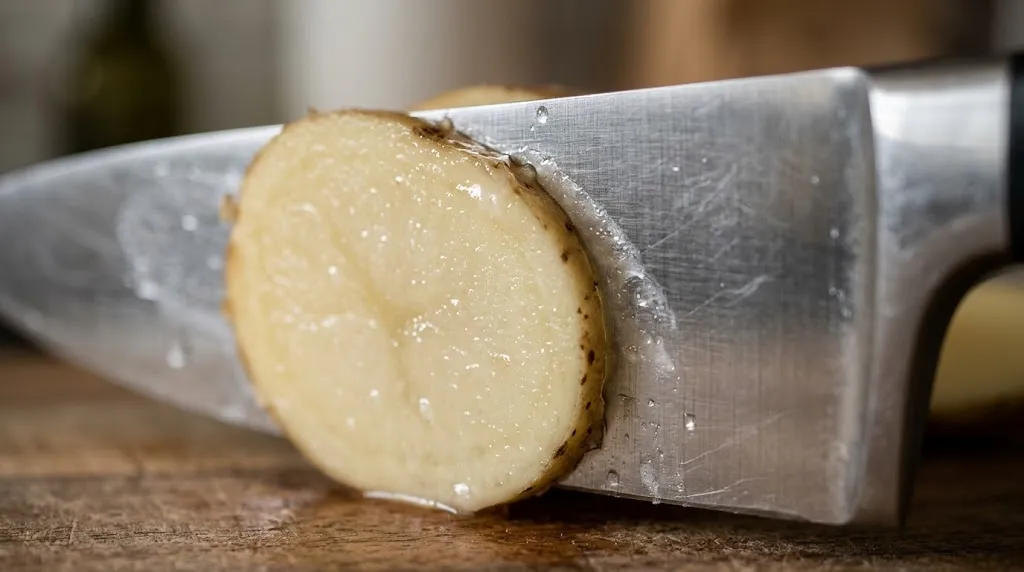
The simplest explanation is contact. A chef knife has a wide, flat side, and a fresh slice has a flat, moist face. When those surfaces meet, very little air can get between them. The thin film of juice or water on the food acts like weak glue, holding the slice against the steel.
Starch makes that film stronger. Potatoes are the classic example: cutting releases starch and moisture together, and the mixture can feel almost pasty on the blade. Fat behaves similarly with cheese and some meats, while onions, cucumbers, and tomatoes give wet slices plenty of surface to cling to. A dry, firm food such as a carrot has less free moisture on the cut face, so it usually falls away more easily.
Blade shape and motion change how much of the slice touches steel. A thick, flat blade gives it a large area to grip, while a thinner blade, a curved convex profile, or a dimpled surface gives it less continuous contact. Pressing straight down also traps the slice for the whole cut, while a drawing motion helps peel it away.
Which Foods Stick Most, and Why
Not every sticky food sticks for the same reason. The table below separates the usual culprits by what is actually holding them to the blade.
| Food | Why it sticks | What helps most |
|---|---|---|
| Potatoes | Starch plus moisture forms a pasty film | Drawing slice; wipe blade often |
| Onions, cucumbers | Wet, flat slices seal against flat steel | Long slice; let the piece fall away |
| Soft cheese | Fat and soft texture smear on the blade | Chill the cheese; use a thin, sharp blade |
| Garlic | Tiny pieces and sticky juices cling in a thin layer | Sharp knife; wipe, do not re-chop the pile |
| Raw fish, meat | Moisture and soft texture grip a wide blade | One smooth pull; keep food cold, blade clean |
If the food is wet, focus on breaking contact at the end of the cut. If it is starchy, keep the blade clean, because residue from one cut becomes the starting point for the next.
Is Sticking a Sign Your Knife Is Dull?
Sometimes, but not always. A sharp knife can still hold a wet potato slice, and a dull knife can still cut a dry carrot without much sticking. Look at the cut instead: a sharp edge should separate food with little tearing, and the slice should look clean rather than crushed or ragged.
A dull edge can make sticking worse because it crushes instead of cutting, squeezing out more juice and starch. If your knife slides over tomato skin, tears herbs, or needs heavy pressure for an onion, sharpening is likely to help more than a new blade shape. If it cuts cleanly but wet slices still ride up the blade, the problem is probably contact and technique. Our guide to how often to sharpen a chef knife explains the signs that usually mean the edge needs attention, and common chef knife sharpening mistakes covers errors that can leave an edge feeling rough or draggy.
The Fastest Fixes You Can Use Right Now
Start with technique, because it works with the knife you already own. The goal is simple: cut cleanly, break contact at the end of the stroke, and keep residue from building up.
- Use a drawing slice for wet and starchy foods. Place the heel near the food, then draw the knife forward or pull it back as it moves down. A straight up-and-down chop traps the slice; a long slice lets it peel away.
- Finish the cut and let the slice fall. As the blade reaches the board, give it a slight forward tilt instead of lifting straight up with the slice attached. Keep your guiding hand in a claw shape, with fingertips tucked back.
- Wipe the blade between batches. Use a damp cloth, wipe away from the edge, and dry the blade before the next batch. A thin layer of potato starch or cheese fat will grab the next slice much faster than a clean blade will.
- Cut thinner, steadier slices when sticking is worst. A very thick, wet slice has more surface area pressing it against the blade. Thinner slices release more easily, especially with potatoes and onions.
- Keep the food and board stable. A flat cut surface, a board that does not slide, and a steady guiding hand reduce the corrections that crush food and smear juice across the blade.
Practise the motion slowly before trying to go faster. Our guide to how to slice with a chef knife covers grip and stroke in more detail, and the same principle applies when you chop with a chef knife.
Tip
If slices keep piling up on the blade, stop and wipe it clean rather than pushing through a sticky stack.
Blade Features That Reduce Sticking
 Save
If technique helps but does not solve the problem, blade geometry is the next place to look. These features do not change the food, but they change how much of it touches the blade.
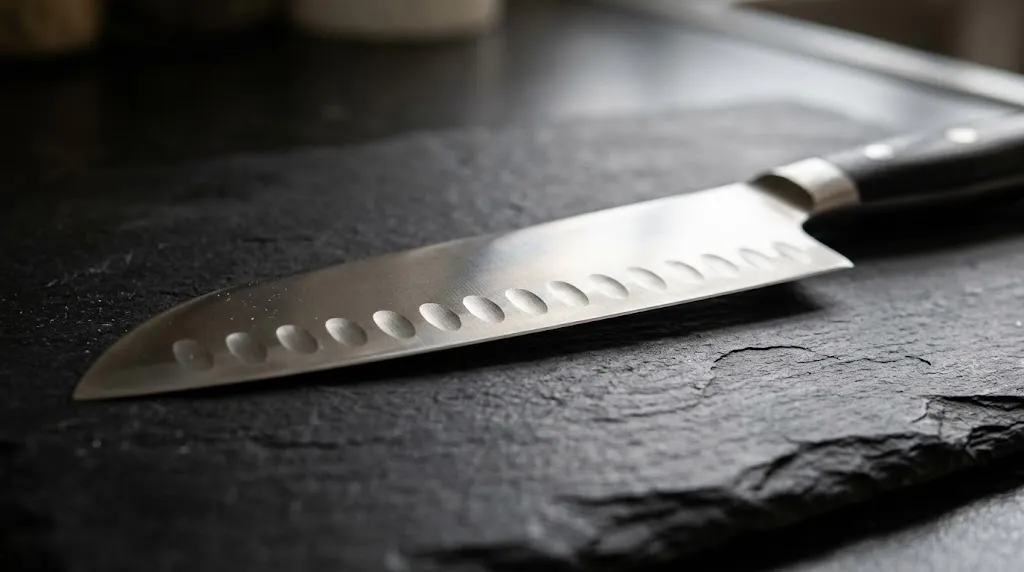
Granton edge, also called kullenschliff. This is the row of shallow oval hollows ground into the side of the blade, above the edge. The hollows break up the flat face so air can reach parts of the slice, reducing the sealed contact that holds wet food in place. The Messermeister description of a kullenschliff santoku puts it plainly: the alternating hollows reduce drag and help prevent items from sticking to the blade. Treat that as help, not a guarantee.
Hammered, or tsuchime, finish. Small hammer marks create a lightly uneven surface, again reducing continuous contact. Like Granton hollows, the effect is partial, and it works best on wet vegetables rather than on soft cheese, where fat can smear into the texture.
Convex grind and thinner blades. A convex blade curves gently from spine toward edge instead of staying flat, so the slice meets less steel as it moves up the blade. Our guide to a convex grind chef knife explains how that shape changes cutting feel. A thin, narrow blade also wedges food apart less and leaves less surface for a slice to grip, which is one reason a santoku or slicing knife often feels less sticky than a wide, thick chef knife. Length can help too, because a longer blade allows a longer drawing stroke, but length alone will not fix a straight-down chop.
Choose the feature that matches the food you cut most often, rather than assuming one finish solves every kind of sticking.
What Not to Do When Food Keeps Sticking
Do not scrape stuck food off sideways with the cutting edge, because dragging the edge across the board dulls it and can chip a thin edge. To move chopped food, turn the knife over and use the spine, or use a bench scraper. Do not reach in front of the blade to peel a slice off while the knife is moving. Stop the stroke, set the blade down safely, and then clear it.
Cooking spray is also a weak shortcut. It may change how a slice releases for a moment, but it can leave a film on the blade and the food, and it does nothing about a dull edge or a crushing chop.
Warning
Never free a stuck slice by flicking the knife or pulling food toward the edge with your fingers. Stop, keep the blade still and pointed away from your guiding hand, and wipe it clean before you continue.
When a Different Knife Makes More Sense
Most sticking can be managed with the chef knife you already have. A different knife is worth considering when one kind of food dominates your prep and keeps causing the same problem despite good technique and a clean, sharp edge. A santoku, often thinner and fitted with Granton hollows, suits frequent vegetable slicing, while a narrow slicing knife suits long, smooth cuts through roasts and fish.
Before buying, ask whether the new knife will change the contact, the cut, or both. A knife that keeps the same wide, flat face and straight-down chop will disappoint, and care still matters afterwards, as our guide to how to clean a chef knife shows.
Related Product
Granton-Edge Chef Knife
A Granton-edge chef knife is the most direct next step if wet, starchy vegetables keep clinging to a flat blade despite a clean edge and a drawing slice.
As an Amazon Associate, we earn from qualifying purchases.
Frequently Asked Questions
Why does food stick to my chef knife even when it is sharp?
A sharp edge cuts cleanly, but it does not change the flat side of the blade. A wet slice can still seal against that surface through moisture and surface tension. Sharpness reduces crushed, juicy cuts, but contact, food moisture, and cutting motion still decide whether a slice falls away.
Does a Granton edge stop food from sticking completely?
No. Granton hollows, or kullenschliff, break up the flat blade face and let air reach parts of the slice, reducing drag and sticking for many wet foods. Very starchy or fatty foods can still cling, and residue in the hollows can reduce the effect until the blade is wiped clean.
Should I wet the blade to stop food from sticking?
Adding more water is not a reliable fix, because extra moisture can add to the film that holds a slice in place. Wiping the blade clean and dry between batches usually helps more, especially for potatoes and cheese.
Why do potatoes stick more than carrots?
Potatoes release both moisture and starch when cut, forming a pasty film on the blade. Carrots are firmer and drier on the cut face, so the slice has less to grip with. Thinner slices, a drawing cut, and frequent wiping make the biggest difference with potatoes.
Is it safe to wipe the blade while I am cutting?
Yes, if you stop first. Set the blade down or hold it still with the edge pointed away from you, then wipe away from the edge with a cloth. Never wipe, peel, or flick food off a moving blade.
Should I buy a new knife just because food sticks?
Usually not as a first step. Try a drawing slice, thinner cuts, and wiping the blade clean first, and check whether the edge is actually sharp. Buy a different blade only when one food keeps sticking despite those fixes, and choose it for a clear reason, such as a thinner profile or a Granton edge for frequent vegetable slicing.
Conclusion
Food sticks when a moist, flat slice meets a flat blade and nothing breaks that contact. The most useful fixes are practical: keep the edge sharp, use a long drawing slice, let each piece fall away, and wipe residue off before it builds up. A Granton edge, hammered finish, or convex grind can help, but they work best alongside good technique, not instead of it. Change the cut first, then decide whether a thinner or dimpled blade is worth it for the food you cut most.

