How to Chop with a Chef Knife: Proper Technique & Safety
Quick Answer
To chop with a chef’s knife safely and efficiently, anchor the tip of the blade to the cutting board, curl your non-dominant hand’s fingers inward into a “claw” grip with knuckles guiding the side of the blade, and use a smooth, rocking motion where the knife lifts only slightly off the board.
Understanding the Proper Grip and Stance
 Save
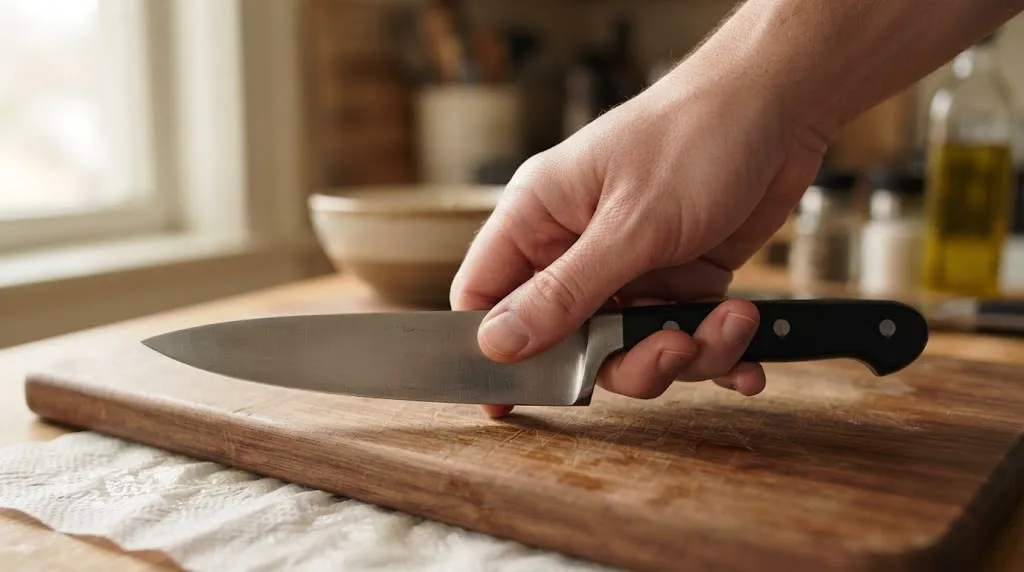
Mastering how to chop with a chef’s knife begins before the blade ever touches the cutting board. Proper knife handling starts with a secure, balanced grip known as the pinch grip. Instead of wrapping all your fingers tightly around the handle like a tennis racket, place your thumb and index finger directly on the sides of the blade just forward of the bolster, while your remaining three fingers wrap comfortably around the lower handle.
This pinch grip provides superior control, reduces hand fatigue, and prevents the knife from twisting in your hand during repetitive chopping tasks. Pair this grip with a stable cutting board—place a damp paper towel underneath the board to prevent slipping—and stand with your feet shoulder-width apart, positioned slightly to the side of the board so your dominant shoulder aligns naturally with your cutting path.
Mastering the Guide Hand and the “Claw” Grip
While your dominant hand controls the knife, your non-dominant hand—known as the guide hand—plays an equally critical role in safety and precision. The standard technique used by professional chefs is the claw grip, which protects your fingertips from accidental cuts.
Curve the fingers of your non-dominant hand inward toward your palm, resembling a cat’s paw. Rest your fingertips gently on top of the ingredient you are cutting, and use your knuckles as a flat guide surface for the flat of the knife blade. As you slice through vegetables like carrots, onions, or celery, your knuckles slide backward incrementally, while your fingertips remain safely tucked behind them out of the blade’s path.
The Rocking Motion vs. the Push Cut
Different chopping tasks call for different knife movements. The two primary techniques are the rocking motion and the push cut, each suited for specific ingredients and kitchen tasks.
The Rocking Motion
The rocking motion is ideal for herbs, garlic, and smaller vegetables like mushrooms or shallots. Keep the tip of the chef’s knife in constant contact with the cutting board while lifting the back heel of the blade up and down in a smooth, continuous rhythm. Guide the ingredients underneath the blade with your free hand.
The Push Cut
The push cut is best for harder vegetables like potatoes, squash, and carrots. Instead of rocking the tip, lift the entire blade slightly off the board, bring it forward and down through the food in a single smooth diagonal motion, and return it to the starting position. This method prevents food from wedging tightly against the side of a deep blade.
Tip
Let the weight of a sharp chef’s knife do most of the cutting work. Pushing down with excessive force leads to hand fatigue and increases the risk of the blade slipping off uneven food surfaces.
Preparing Ingredients for Safe Cutting
Before you begin chopping, safety and stability depend heavily on how you prep your ingredients. Round or rolling items like onions, potatoes, and tomatoes present a slipping hazard if placed directly on the board as-is.
Always slice round ingredients in half first to create a flat, stable surface. Place the flat side down securely against the cutting board before proceeding with slicing, dicing, or mincing. This simple habit eliminates unwanted wobbling and ensures uniform piece sizes for even cooking.
Common Mistakes to Avoid When Using a Chef’s Knife
 Save
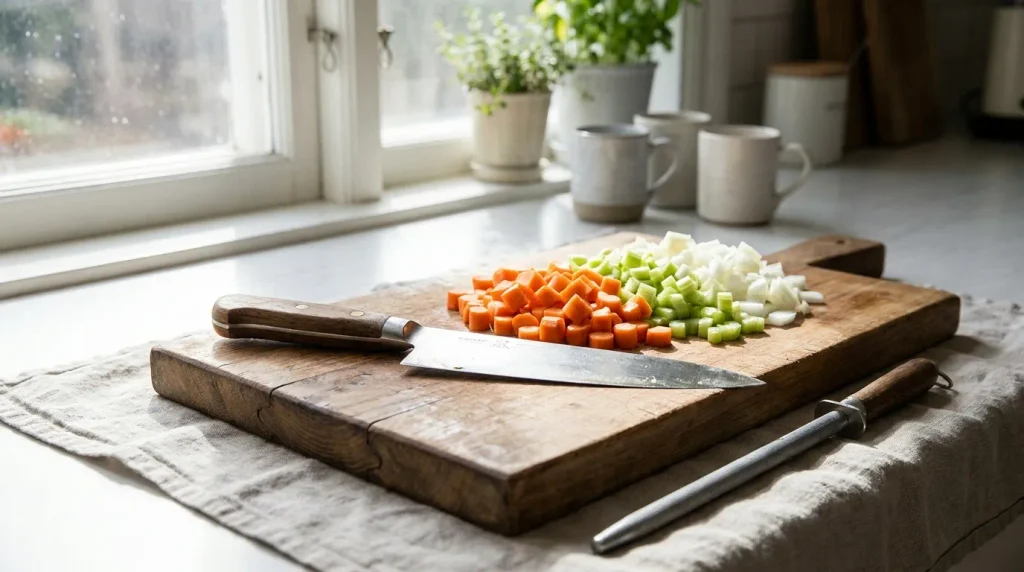
Developing efficient knife skills also means breaking bad habits that slow you down or create safety hazards in the kitchen. Recognizing these common errors helps build better muscle memory.
- Pointing the index finger along the spine: While some cooks prefer this for delicate work, extending your index finger all the way down the spine reduces lateral stability and control during heavy chopping.
- Lifting the knife too high: Raising the blade high off the board wastes energy and reduces accuracy. Keep the knife close to the board for better control.
- Working with a dull blade: A dull knife requires more pressure to cut, increasing the likelihood that it will slip off food surfaces and cause injury.
- Rushing the rhythm: Speed develops naturally through consistent, deliberate practice. Focus on smooth mechanics and accuracy before attempting to chop quickly.
Relevant Product
Chef’s Knife Sharpening Stone
Maintaining a sharp edge on your chef’s knife ensures clean cuts, reduces effort, and improves overall kitchen safety.
As an Amazon Associate, we earn from qualifying purchases.
Frequently Asked Questions
Should the tip of a chef’s knife always stay on the board?
Not necessarily. While the tip stays down during a rocking motion for mincing herbs and garlic, it lifts off the board during push cuts and standard vertical chopping.
How can I keep my cutting board from sliding around?
Place a damp paper towel, a non-slip silicone mat, or a damp dishcloth flat underneath your cutting board to lock it securely to the countertop.
Is a heavier chef’s knife better for chopping?
Knife weight is largely a matter of personal preference. Heavier knives use gravity to assist with dense root vegetables, while lighter knives offer greater agility for intricate cutting tasks.
How do I know when my chef’s knife needs sharpening?
If your knife squishes tomatoes rather than slicing through them smoothly, or if it requires noticeable downward pressure to cut onions, the edge has dulled and needs maintenance.
What is the safest way to carry a chef’s knife in the kitchen?
Hold the knife vertically down by your side with the blade facing backward and down toward the floor, keeping the sharp edge away from your body and others.
How should I clean my chef’s knife after use?
Wash your knife immediately by hand using warm soapy water and a soft sponge, then dry it thoroughly with a towel. Avoid putting high-quality chef’s knives in the dishwasher.
Conclusion
Properly chopping with a chef’s knife combines ergonomic grip mechanics, safe guide-hand positioning, and fluid cutting motions. By anchoring your blade, maintaining a protective claw grip, and choosing the right cutting technique for your ingredients, you can improve both your kitchen efficiency and overall safety. Consistent practice with these core fundamentals will quickly build natural confidence and precision.

