How to Slice with a Chef Knife: Safe & Precise Technique
Quick Answer
To slice with a chef knife efficiently and safely, use a proper pinch grip on the handle, curl the fingers of your non-dominant hand into a “claw” to protect your fingertips, and use a smooth, rocking motion where the blade glides forward and downward through the food.
Understanding the Basics of Chef Knife Control
Mastering how to slice with a chef knife transforms your cooking preparation, making it faster, safer, and more precise. The chef knife is the workhorse of the kitchen, designed to handle everything from dicing onions to slicing meats.
However, poor technique leads to jagged cuts, hand fatigue, and increased risk of slips. Proper control relies on three foundational elements: a stable cutting surface, a secure grip, and a safe guiding hand.
Step 1: Establishing the Correct Grip
 Save
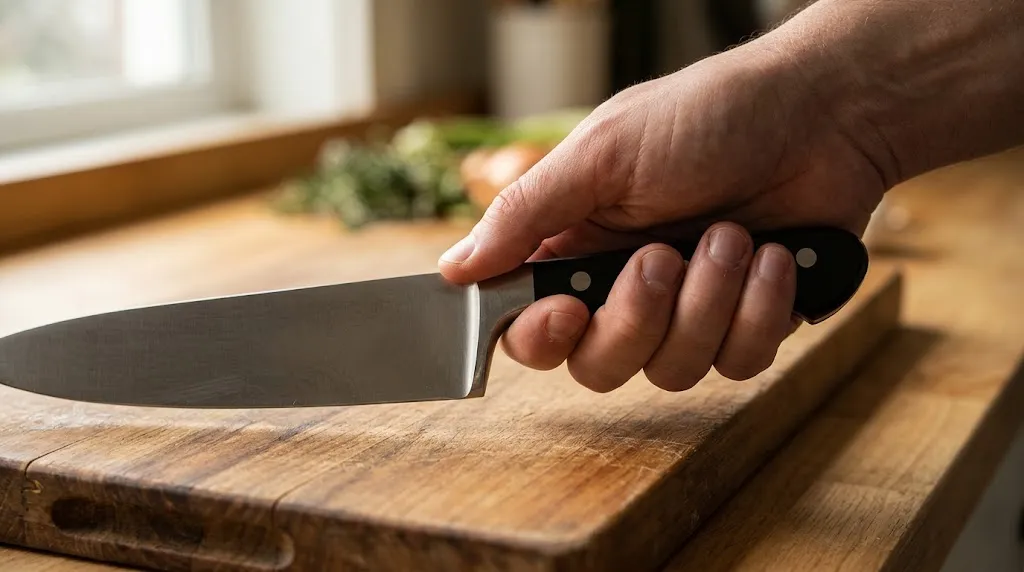
How you hold your knife determines your control and power. Many beginners grasp the knife handle like a hammer, which reduces maneuverability and increases wrist strain.
Instead, use the professional pinch grip:
- Place your thumb and index finger on the sides of the blade right where it meets the handle (the bolster).
- Wrap your remaining three fingers securely around the bottom of the handle.
- This grip places your hand’s center of gravity directly over the blade, giving you maximum stability.
Tip
If your hand feels cramped after a few minutes of prep work, you are likely gripping the handle too tightly. Keep your hold firm but relaxed.
Step 2: Positioning Your Guiding Hand
Your non-dominant hand plays an equally important role in safe slicing. It holds the food steady and controls the thickness of each slice.
Form the claw grip:
- Curl your fingertips inward toward your palm, resembling a cat’s paw.
- Rest your fingertips lightly on the food item.
- Press your knuckles slightly outward so they act as a guide for the flat side of the knife blade.
- Keep your thumb tucked safely behind your fingers.
This positioning ensures that even if the knife slips, it meets the hard knuckle of your finger rather than a vulnerable fingertip.
Step 3: Mastering the Slicing Motion
The motion you use depends on what you are cutting, but the standard slicing technique involves a fluid rocking motion.
Instead of pressing straight down like a guillotine—which can crush delicate ingredients or cause the blade to slip—let the length of the blade do the work:
- Place the tip of the knife on the cutting board at the beginning of the item.
- Push the blade forward and downward simultaneously so it glides through the food.
- Finish the cut as the heel of the blade reaches the board.
- Lift the blade slightly, slide your guiding hand back to measure the next slice, and repeat.
Common Mistakes to Avoid
Even with a good grip, certain habits can compromise your safety and efficiency in the kitchen.
- Extending the index finger along the spine: While some chefs do this for fine scoring work, it drastically reduces your side-to-side stability during heavy slicing.
- Looking away while cutting: Always keep your eyes on the blade and the food, especially when working quickly.
- Using a dull knife: A dull blade requires excessive downward force, making it much more likely to slip off the food and cause an injury.
- Cutting on hard surfaces: Glass, marble, or ceramic cutting boards ruin knife edges instantly. Stick to wood or high-density plastic boards.
Warning
Never try to catch a falling knife. Step back immediately and let it hit the floor to prevent severe hand injuries.
Maintaining Your Knife for Better Performance
 Save
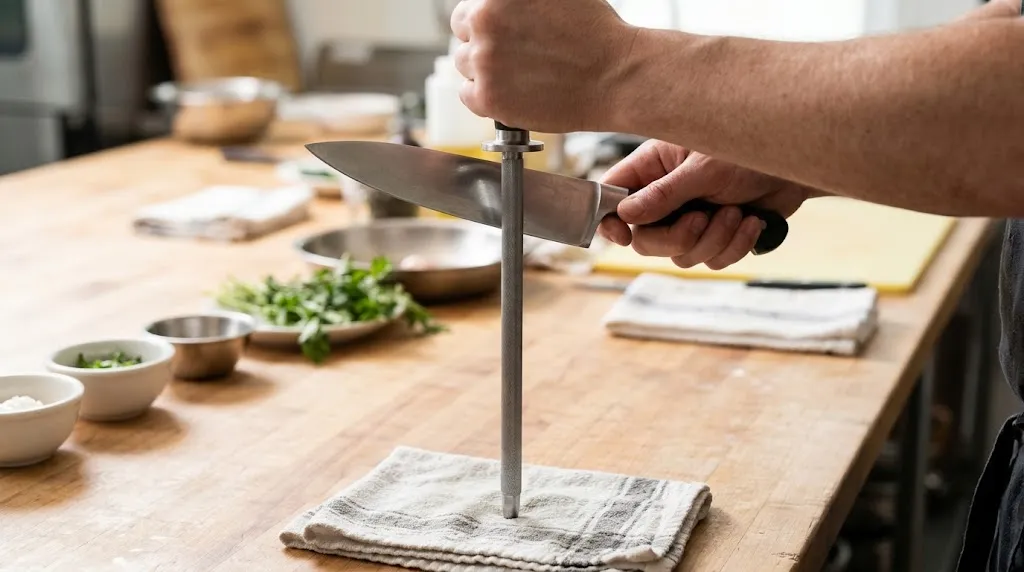
Clean and sharp tools make proper technique much easier to execute. Honing your knife with a steel rod realigns the microscopic teeth of the blade edge between sharpenings.
Wash your chef knife by hand immediately after use with warm, soapy water, and dry it thoroughly with a towel. Storing a chef knife loose in a drawer can dull the edge and create safety hazards; use a knife block, magnetic strip, or edge guard instead.
Related Product
Knife Sharpening Stones
Keep your kitchen knives performing at their best with a reliable whetstone set for consistent blade maintenance.
As an Amazon Associate, we earn from qualifying purchases.
Frequently Asked Questions
Should I use a push cut or a pull cut when slicing?
Both methods work well, but a push cut (moving the blade forward and down simultaneously) is standard for most soft and medium vegetables, while a pull cut can be useful for fibrous or tougher meats.
How fast should I slice?
Speed comes naturally with muscle memory and practice. Focus entirely on maintaining your claw grip and smooth blade motion first; speed will increase safely over time.
Why does my knife slip off round foods like onions or tomatoes?
Round foods can roll easily on the cutting board. Slice the food in half first to create a flat, stable base resting securely on the board before proceeding with further slices.
How often should I hone my chef knife?
Honing your knife briefly before every major cooking session helps keep the edge aligned and sharp between professional sharpenings.
Can I put my chef knife in the dishwasher?
No. Dishwasher detergents are abrasive, and the high heat can warp wooden handles and dull the blade as it rattles against other utensils.
What is the best board material to protect my knife edge?
End-grain or edge-grain wooden cutting boards are ideal because they are gentle on steel and allow the blade to bite slightly without dulling prematurely.
Conclusion
Properly slicing with a chef knife is an essential culinary skill that improves both safety and kitchen efficiency. By establishing a secure pinch grip, protecting your fingers with a steady claw hand, and utilizing a smooth rocking motion, you can achieve clean, uniform cuts with minimal effort. Consistent practice and proper knife maintenance will ensure your tool remains reliable for every meal preparation task.

