What Is a Wa Handle on a Chef Knife? Design & Benefits Explained
Quick Answer
A “wa” handle on a chef knife refers to a traditional Japanese-style handle, typically featuring an octagonal, D-shaped, or oval cross-section made from wood with a horn or composite ferrule. Unlike Western handles that are permanently riveted to a full tang, wa handles are fitted with a hidden partial tang secured by a bamboo pin (mekugi), making them lighter, forward-balanced, and easily replaceable.
What Is a Wa Handle on a Chef Knife?
In the world of cutlery, handle styles are generally split into two categories: Western and Japanese. A “wa” handle is the traditional Japanese handle design found on knives like the santoku, gyuto, and nakiri. The term “wa” simply means Japanese, contrasting with “yo,” which means Western.
Traditional wa handles are lightweight and crafted to shift the balance point of the knife closer to the pinch grip. This design philosophy prioritizes nimble control, precision cutting, and reduced wrist fatigue during long prep sessions. While traditionally paired with Japanese steel, wa handles have grown increasingly popular on hybrid and Western-profile chef knives due to their ergonomic advantages.
Key Structural Differences Between Wa and Western Handles
 Save
Understanding how a wa handle differs from a standard Western handle helps clarify why many professional chefs and home cooks prefer them. The distinctions lie in tang construction, geometry, weight distribution, and maintenance requirements.
Tang Construction and Security
A Western chef knife typically features a full tang that runs the entire length and width of the handle, secured by heavy rivets, bolts, or epoxy. A wa handle uses a hidden, partial tang (often called a rat-tail or stick tang). The narrow metal spike of the blade is inserted into a pre-burned hole in the wooden handle and secured with wood glue or a small bamboo pin known as a mekugi. This allows the handle to be easily removed or replaced if it ever cracks or wears out over time.
Handle Geometry and Ergonomics
Western handles are contoured, rounded, and symmetrical to fit tightly into a full palm grasp. In contrast, wa handles feature geometric cross-sections that provide natural tactile indexing without locking the hand into a single position. The most common shapes include:
- Octagonal (Hakkaku): Features eight flat sides, offering a secure, slip-resistant grip for various hand sizes.
- D-Shaped: Rounded on one side and slightly flattened on the other, designed traditionally to favor right-handed users.
- Oval (Enkei): A traditional, symmetrical shape that provides a familiar feel for cooks transitioning from Western knives.
Materials Commonly Used in Wa Handles
The materials chosen for a wa handle impact both aesthetics and longevity. Traditional Japanese handles prioritize lightweight woods that prevent the knife from feeling handle-heavy.
Common handle woods include ho wood (magnolia), which is soft, moisture-resistant, and gentle on the hand. High-end custom knives frequently utilize stabilized exotic hardwoods such as ebony, burl maple, ironwood, or walnut. These are often paired with a ferrule—the collar at the base of the handle near the blade—made from buffalo horn, pakkawood, copper, or synthetic resin to protect the wood from moisture infiltration where the tang enters.
Benefits of Using a Wa-Handled Chef Knife
 Save
Cooks choose wa-handled chef knives for several performance and comfort advantages:
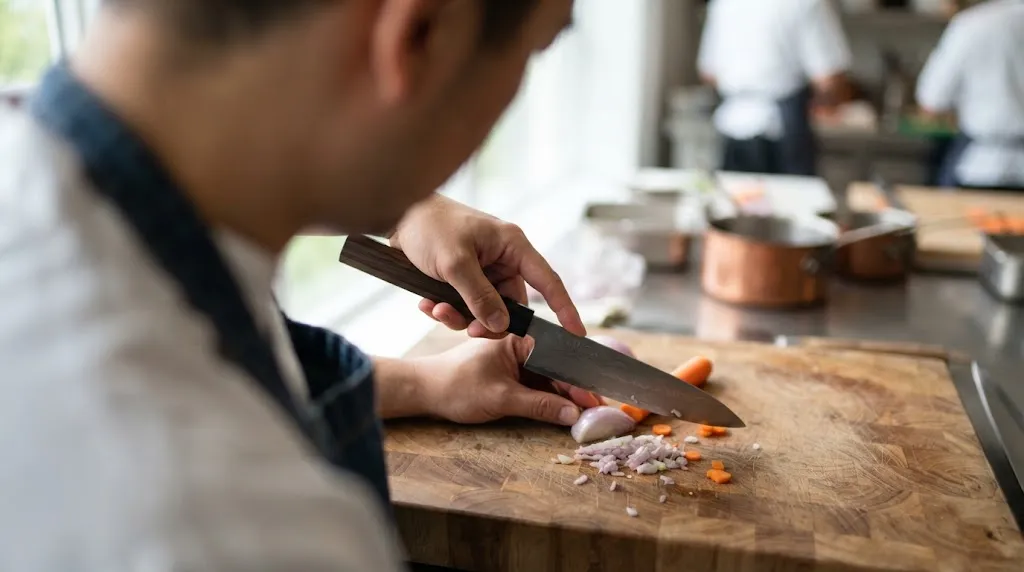
- Forward Balance: Because the handle is significantly lighter than a riveted Western handle, the knife’s balance point moves forward onto the blade. This makes chopping, push-cutting, and rocking motions feel effortless.
- Pinch Grip Compatibility: The slim profile near the bolster allows for a comfortable, secure pinch grip where the thumb and index finger pinch the blade itself.
- Reduced Fatigue: The lightweight construction minimizes wrist strain during high-volume commercial food preparation.
- Easy Maintenance: The ability to steam-remove and replace a damaged wooden handle extends the functional lifespan of the blade indefinitely.
Tip
If your wa handle feels slightly loose after months of use, check if water has penetrated the tang hole. Applying a small amount of food-safe beeswax or mineral oil to the junction where the blade enters the ferrule helps seal out moisture and prevents swelling or loosening.
Potential Drawbacks and Care Considerations
While wa handles offer exceptional performance, they require specific care habits compared to synthetic Western handles.
Traditional wood handles are porous and susceptible to water damage if left soaking in a sink or put through a dishwasher. Prolonged exposure to moisture can cause the wood to expand, crack, or loosen around the tang. Additionally, buffalo horn ferrules can dry out and shrink in very arid environments, sometimes developing a small ridge that requires light sanding to smooth out.
Related Product
Japanese Chef Knife Sharpening Stones & Maintenance Kits
Keep your high-performance Japanese blades razor-sharp and maintain your wooden wa handles with specialized mineral oils and sharpening stones.
As an Amazon Associate, we earn from qualifying purchases.
Frequently Asked Questions
Are wa handles only for right-handed cooks?
Symmetrical octagonal and oval wa handles work equally well for right- and left-handed users. However, traditional D-shaped handles curve outward on one side to fit the right hand’s fingers more snugly. Left-handed cooks should look for symmetrical shapes or left-specific D-handles.
Can a loose wa handle be repaired?
Yes. Because wa handles use a hidden partial tang rather than permanent rivets, a loose handle can often be repaired by removing the retaining pin, pulling the handle off, cleaning out old adhesive, and re-securing the tang with fresh epoxy or wood glue.
Do wa handles require special cleaning?
Wa handles should be hand-washed with mild soap and dried immediately with a towel. Never submerge a wooden-handled knife in water or place it in a dishwasher, as high heat and moisture will warp the wood and ruin the ferrule.
Why do Japanese knives feel so light in the hand?
The combination of a lightweight wooden wa handle and a thinner, tapered blade shifts the overall center of gravity forward. This reduces hand fatigue and makes the knife feel like a natural extension of your arm during precise cutting tasks.
What is the ferrule on a wa handle for?
The ferrule sits at the top of the handle where the blade enters the wood. It reinforces the opening, prevents the wood from splitting when the tang is inserted, and seals out moisture and food debris.
How do I choose between an octagonal and an oval handle?
Octagonal handles provide sharper tactile edges that help prevent rotation in wet or greasy conditions, making them favored by professional chefs. Oval handles offer a smooth, classic grip that many home cooks find more comfortable for general everyday prep work.
Conclusion
A wa handle represents a centuries-old tradition of Japanese cutlery engineering focused on balance, agility, and user comfort. By utilizing lightweight woods, geometric cross-sections, and hidden partial tangs, these handles shift the knife’s weight forward to optimize precision cutting. Whether you are upgrading your kitchen tools or simply curious about traditional knife anatomy, understanding the construction and care of a wa handle ensures you can maintain your cutlery for years of reliable use.

