
Can You Use Cypress for Cutting Board? Safety, Pros, Cons, and Better Woods
Quick Answer
Yes, you can use certain types of cypress for a cutting board, especially Japanese hinoki cypress made specifically for food preparation. However, American bald cypress is usually a less practical choice because its softer surface can develop knife marks quickly. For everyday heavy chopping, hard maple is generally more durable. The FDA Food Code specifically identifies hard maple or equivalently hard, close-grained wood as suitable for cutting boards in regulated food establishments.
What You Should Know
- Hinoki cypress: A traditional Japanese cutting board material with a softer, knife-friendly surface.
- Bald cypress: Relatively soft wood that is not my first choice for heavy chopping.
- Food-contact safety: Confirm the wood species, treatment history, and intended use before preparing food.
- Surface durability: Soft wood may accumulate grooves and dents faster than harder alternatives.
- Best alternative: Hard maple offers an excellent balance of durability and practical maintenance.
My Recommendation
- For Japanese knives: Consider a purpose-made hinoki cutting board.
- For everyday cooking: Choose a quality hard maple board.
- For raw meat preparation: Consider a separate, dishwasher-safe plastic cutting board.
Have you found a beautiful piece of cypress wood and wondered whether it could become a cutting board? It’s an understandable question because cypress is attractive, lightweight, and commonly used in woodworking.
However, not all cypress wood behaves the same way. I’ll explain which varieties make practical cutting boards, which ones deserve caution, and how to choose a safer everyday cutting surface.
Is Cypress Wood Good for Cutting Boards?
Cypress can be a good cutting board material in specific circumstances, but the species and construction matter. Japanese hinoki has a long history of kitchen use, while American bald cypress is generally less suitable for demanding chopping tasks.
The important distinction is between a purpose-built food preparation board and ordinary lumber. A board suitable for furniture or outdoor construction isn’t automatically appropriate for direct food contact.
What Exactly Is Cypress Wood?
Cypress is a common name applied to several different groups of coniferous trees. Their physical properties, aromas, natural extractives, and traditional uses can vary.
Two examples deserve particular attention:
- Bald cypress (Taxodium distichum): A North American conifer often used for siding, exterior construction, furniture, and other woodworking projects.
- Japanese hinoki (Chamaecyparis obtusa): A Japanese conifer traditionally used for architectural woodwork and specially manufactured kitchen cutting boards.
Other products sold as cypress may come from different species. Never assume their suitability simply because the label says “cypress.”
For a broader explanation of choosing kitchen-safe timber, read my guide on whether you can use any wood for a cutting board.
Can You Use Japanese Hinoki Cypress for a Cutting Board?
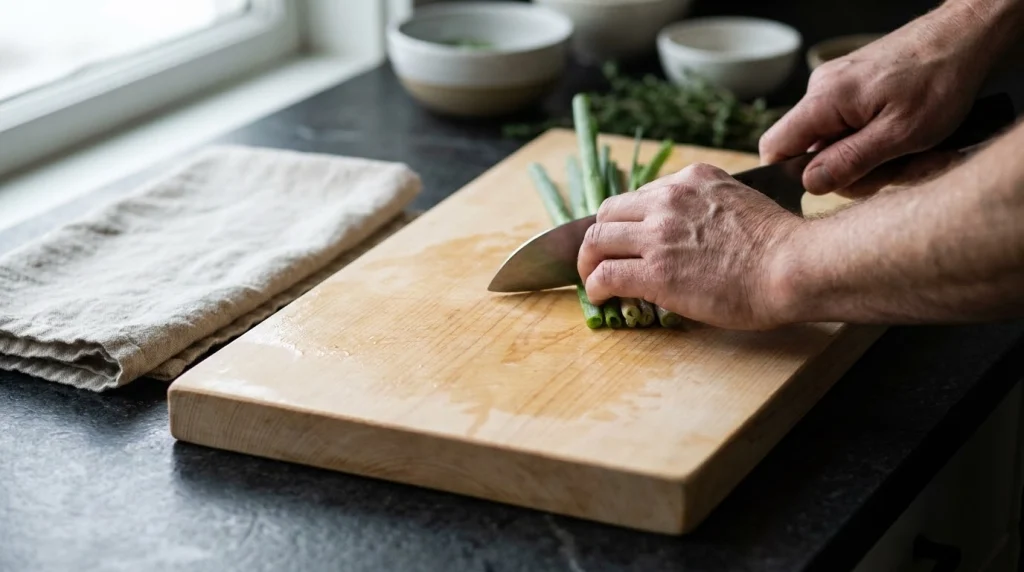
Yes, Japanese hinoki is an established cutting board material. Several Japanese knife and kitchenware manufacturers produce boards specifically from this wood.
Hinoki is moderately soft and offers some give beneath a knife edge. That quality makes it appealing for delicate slicing and certain Japanese kitchen knives.
Shun, for example, manufactures hinoki cutting boards and recommends them for its knives. The brand emphasizes their forgiving surface and proper cleaning practices.
Benefits of Hinoki Cutting Boards
- Knife-friendly feel: A slightly yielding surface reduces the harsh impact associated with stone or glass boards.
- Lightweight construction: Many hinoki boards are easier to lift and reposition than thick hardwood butcher blocks.
- Traditional craftsmanship: Hinoki has a recognized history in Japanese kitchens.
- Natural fragrance: The wood has a characteristic scent that some cooks enjoy.
- Useful sizes: Manufacturers offer compact preparation boards and larger general-purpose models.
These advantages do not mean hinoki is indestructible. Its softer surface can also develop knife marks, stains, and dents.
Disadvantages of Hinoki Cutting Boards
Hinoki needs careful handling and regular cleaning. It is not the best match for someone who wants a low-maintenance, dishwasher-safe board.
- Deep chopping pressure may create visible cuts.
- Strongly colored ingredients can leave stains.
- Improper drying can contribute to warping.
- The natural scent may be noticeable, especially when wet.
- Dishwasher cleaning is generally inappropriate unless the exact manufacturer explicitly permits it.
Another important detail is finishing. Some hinoki manufacturers recommend leaving the board untreated rather than applying conventional cutting board oil.
For example, Shun recommends wetting its hinoki boards before use, handwashing them, and drying them thoroughly. Always prioritize instructions for your particular product.
Can You Use Bald Cypress for a Cutting Board?
American bald cypress is not my preferred material for an everyday cutting board. Its relatively low hardness makes it more vulnerable to repeated knife damage.
According to The Wood Database’s bald cypress profile, the wood has a Janka hardness of approximately 510 pounds-force.
Janka hardness measures resistance to indentation. Although it doesn’t directly measure knife-cut resistance, it helps compare the durability of different woods.
Why Is Bald Cypress Less Suitable?
- Lower hardness: Frequent chopping may create deeper marks than on hard maple.
- Surface maintenance: Worn grooves can become harder to clean effectively.
- Wood variation: Naturally occurring knots, defects, and uneven grain can complicate board construction.
- Unknown treatments: Construction lumber may contain preservatives or finishes unsuitable for direct food contact.
- Limited advantage: Its outdoor durability does not establish that it is a better food preparation surface.
Bald cypress is valued for its resistance to decay in certain environments. However, outdoor durability and cutting board hygiene are different properties.
I would choose a conventional hardwood rather than make a daily chopping board from unidentified cypress lumber.
Is Cypress Wood Safe for Food Contact?
Food-contact suitability depends on the exact wood species, treatment, surface condition, and intended use. It cannot be established from the name “cypress” alone.
A commercially manufactured hinoki cutting board provides a clearer starting point than an unidentified workshop offcut. The manufacturer can identify its material and provide cleaning instructions.
Are Natural Cypress Oils Dangerous?
Cypress species contain different natural extractives that contribute to their distinctive aromas and other properties. This doesn’t automatically mean every cypress board is toxic or food-safe.
A strong smell, unusual residue, or sticky surface is a reason to investigate the material. I would not use unidentified or contaminated timber for preparing food.
Natural antibacterial claims also require caution. Even when wood contains compounds with laboratory antimicrobial activity, regular washing and sanitation remain necessary.
What About FDA Food Safety Guidance?
The FDA Food Code identifies hard maple and equivalently hard, close-grained wood for cutting boards and certain other food preparation equipment. This guidance is especially relevant to regulated foodservice operations.
It does not mean every softwood cutting board sold for home use is automatically prohibited. Household product suitability and commercial food code requirements should be evaluated separately.
My practical rule is simple: choose a board with clearly identified materials and instructions appropriate for its intended use.
Cypress vs. Maple vs. Walnut vs. Cherry Cutting Boards
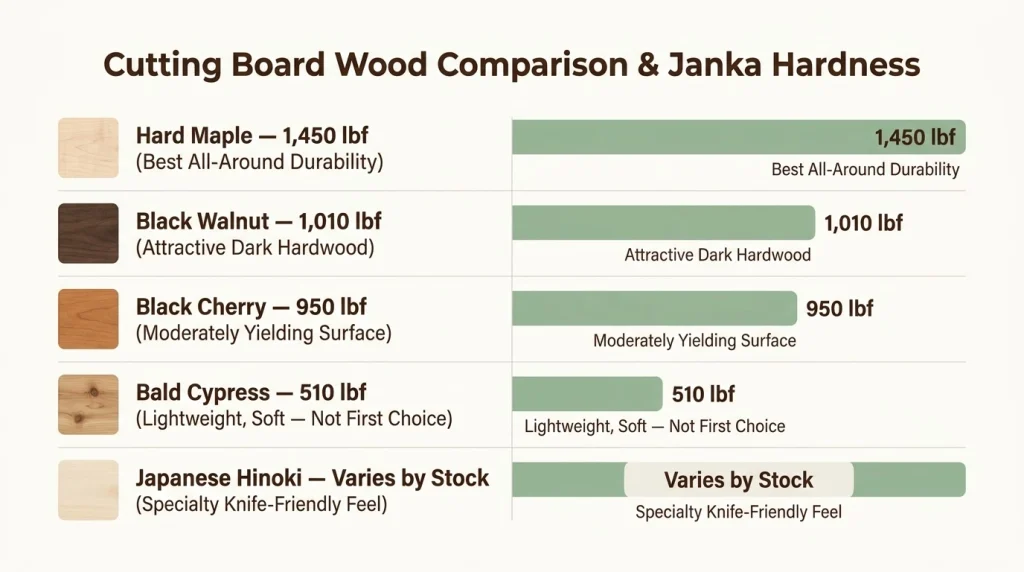
Comparing common cutting board woods helps explain why material selection matters. Hardness is useful, but cleaning, construction, grain, and maintenance are important too.
The following Janka values are approximate species averages rather than guarantees about an individual board.
| Wood | Janka Hardness | Main Advantage | My Assessment |
|---|---|---|---|
| Bald Cypress | 510 lbf | Lightweight timber | Not my first choice |
| Hard Maple | 1,450 lbf | Strong everyday durability | Best all-around choice |
| Black Walnut | 1,010 lbf | Attractive dark wood | Good hardwood alternative |
| Black Cherry | 950 lbf | Moderately yielding surface | Good with proper care |
| Japanese Hinoki | Varies by source and stock | Forgiving cutting feel | Specialty knife-friendly choice |
Hard maple offers substantially greater indentation resistance than bald cypress. That makes maple a dependable starting point for regular kitchen prep.
Hinoki represents a different tradeoff. Its softer feel is a deliberate feature of many Japanese cutting boards, not simply a manufacturing defect.
For a wider comparison, see my article explaining the best wood for a cutting board.
What Are the Pros and Cons of Cypress Cutting Boards?
Cypress boards can offer genuine benefits when manufacturers select and prepare the right species. The drawbacks become more important when the wood is unknown or used for heavy chopping.
Potential Advantages
- Comfortable cutting feel: Purpose-made hinoki offers a yielding surface for slicing.
- Lower weight: Some cypress boards are easier to handle than thick butcher blocks.
- Attractive appearance: Light wood tones complement many kitchen styles.
- Traditional application: Hinoki has an established place in Japanese food preparation.
Potential Disadvantages
- Visible wear: Softer cypress varieties can show cuts and dents quickly.
- Regular drying: Poor storage and moisture management can damage wooden boards.
- Variable sourcing: Products labeled cypress may use different tree species.
- Uncertain treatments: Reclaimed wood may contain unwanted chemicals or residues.
- Cleaning demands: Wooden surfaces cannot be treated as maintenance-free.
For me, the deciding factor is the type of cooking. Gentle slicing calls for different priorities than repeated chopping with a heavy knife.
Can You Make a DIY Cutting Board From Cypress?
You can make a DIY board from suitable, untreated cypress stock, but it isn’t always a wise material choice. First confirm the botanical species and whether the wood is appropriate for direct food contact.
I would be cautious about using scraps from construction projects. Their treatment history may be difficult or impossible to verify.
Checklist Before Starting
- Identify the species: Ask the supplier for the botanical name rather than relying only on a common name.
- Verify the source: Avoid pressure-treated, painted, stained, or chemically preserved lumber.
- Inspect the grain: Reject pieces with loose knots, cavities, cracks, or decayed areas.
- Check moisture: Use properly seasoned wood suitable for indoor woodworking.
- Plan the construction: Use appropriate food-contact-suitable adhesives when laminating pieces.
- Choose the finish: Follow product-specific guidance for direct food contact and repeated knife use.
For a beginner woodworking project, I would typically select hard maple instead. It provides better resistance to everyday chopping damage.
My end-grain cutting board tutorial explains another construction method for suitable hardwoods.
Can You Use Cypress for an End-Grain Cutting Board?
An end-grain board presents the ends of wood fibers as the cutting surface. This arrangement can make a suitable wood board more forgiving under repeated knife contact.
However, end-grain construction does not automatically solve every limitation of soft cypress. Species suitability, surface wear, adhesive choice, and cleanability still matter.
A finished board also needs stable glued joints and an even cutting surface. Building a complex end-grain pattern from unknown lumber introduces unnecessary uncertainty.
Edge Grain vs. End Grain
- Edge grain: The long wood fibers run along the board surface, usually allowing simpler construction.
- End grain: Fiber ends face upward, creating a more elaborate cutting surface.
- Best DIY approach: Start with a verified hardwood and a construction method appropriate for your skills.
How Do You Clean a Cypress Cutting Board Safely?
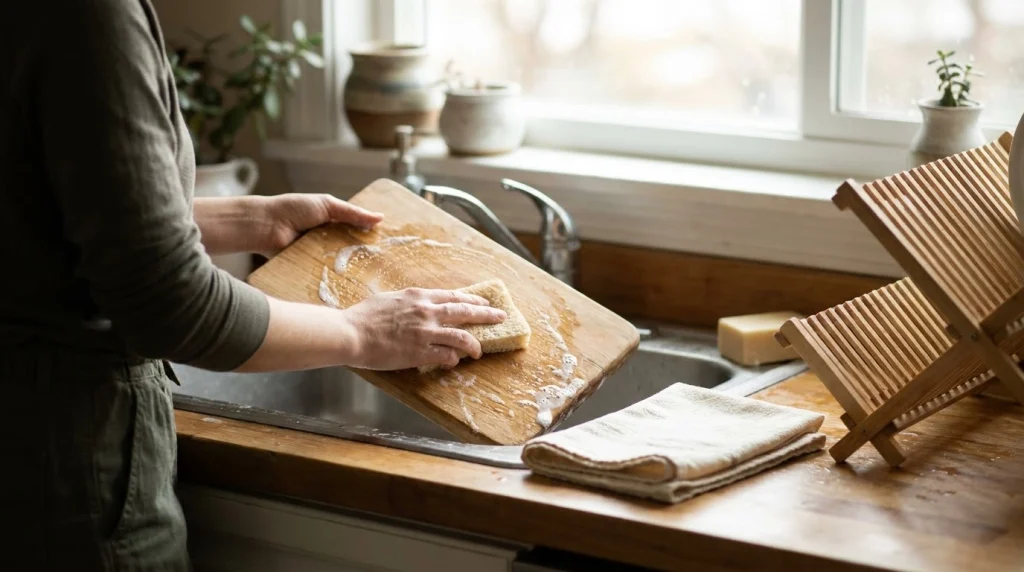
Wash the board after food preparation, remove moisture promptly, and allow thorough air circulation while drying. Follow the manufacturer’s instructions when they specify additional steps.
Proper cleaning is essential regardless of claims about a wood’s natural oils.
Step-by-Step Cleaning Method
- Remove food debris: Scrape away loose ingredients before washing.
- Wash the surface: Use mild dish soap, water, and a suitable soft brush or sponge.
- Clean every side: Pay attention to edges, corners, and any grooves.
- Rinse thoroughly: Remove visible soap and food residue.
- Sanitize when necessary: Follow applicable food safety guidance and the manufacturer’s instructions.
- Dry immediately: Wipe away standing moisture with a clean towel.
- Air-dry completely: Stand the board where air can reach both surfaces.
The USDA Food Safety and Inspection Service recommends cleaning food preparation surfaces before appropriate sanitation. Its guidance includes a correctly diluted unscented chlorine bleach solution for suitable surfaces.
A sanitizer should be prepared and used exactly as directed. Never mix bleach with other cleaning chemicals.
Should You Cut Raw Meat on Cypress?
I prefer a separate, easy-to-sanitize board for raw meat and poultry. This reduces the chance of transferring raw juices to ready-to-eat ingredients.
A dishwasher-safe plastic board can be convenient when its manufacturer allows machine cleaning. For further details, see my comparison of wood vs. plastic cutting boards.
Should You Oil a Cypress Cutting Board?
Whether to oil a cypress cutting board depends on the specific product and its manufacturer’s care instructions. Do not assume all wooden cutting boards require identical treatments.
Some purpose-made hinoki boards are intended to remain untreated. Their manufacturers may advise wetting the surface before food preparation and drying it after washing.
Other wooden cutting boards commonly use food-grade mineral oil or approved board conditioners.
When Food-Grade Mineral Oil Is Appropriate
- Confirm that the manufacturer permits oiling.
- Clean and dry the board before applying oil.
- Use only a conditioner labeled for cutting boards and direct food contact.
- Apply a thin layer according to product directions.
- Wipe away excess oil before using the board again.
The University of Maine Cooperative Extension recommends food-safe mineral oil or beeswax for the maintenance of suitable wooden cutting boards.
For a complete explanation, read my guide on how to oil a wooden cutting board.
How Long Does a Cypress Cutting Board Last?
There is no reliable universal lifespan for cypress cutting boards. Longevity depends on species, construction, washing habits, drying conditions, and cutting frequency.
A lightly used hinoki board may remain serviceable for a considerable period with proper care. Heavy chopping can produce faster wear, especially on softer surfaces.
Signs That a Board Needs Replacing
- Deep knife grooves that cannot be cleaned thoroughly.
- Open cracks that trap moisture or food.
- Loose or separated glued joints.
- Persistent contamination or visible mold.
- Severe warping that makes cutting unstable.
- Splinters or loose fibers around the cutting area.
A light surface scratch does not necessarily require replacement. Damage that prevents effective cleaning is a more serious concern.
What Is the Best Alternative to Cypress for a Cutting Board?
For most home cooks, I recommend hard maple as the first alternative. It offers a useful combination of strength, manageable maintenance, and established cutting board use.
Hard Maple
Maple is my preferred general-purpose choice for repeated chopping and meal preparation. Its relatively hard, close-grained surface offers more resistance to everyday damage than bald cypress.
Black Walnut
Walnut offers a rich, dark appearance and useful cutting surface properties. It can be an attractive option when appearance matters alongside everyday kitchen performance.
Black Cherry
Cherry is softer than hard maple but remains a familiar cutting board wood. A well-made cherry board can be useful when maintained properly.
Quality Plastic
Plastic is particularly convenient when easy cleaning and separate raw-protein preparation are priorities. Choose a sturdy board with suitable manufacturer instructions, and replace it when deeply damaged.
Recommended Cutting Boards to Consider
If you’re deciding whether to purchase a cypress board or choose another material, these three products offer different practical advantages. The scores below are my feature-based editorial suitability assessments, not verified customer ratings or hands-on test results.
Affiliate disclosure: As an Amazon Associate, this website may earn from qualifying purchases.
Best for Everyday Chopping
John Boos Chop-N-Slice Hard Maple Cutting Board
★★★★★ Editorial suitability: 5/5
The Chop-N-Slice series features hard maple, edge-grain construction, and a reversible cutting surface. I’d choose the 18-by-12-inch option for regular chopping when durability matters more than the light feel of cypress.
Best Cypress Option for Japanese Knives
Shun Hinoki Cutting Board
★★★★☆ Editorial suitability: 4/5
Shun uses Japanese hinoki wood to provide a more forgiving surface for fine knife edges. I’d consider this specialty board for careful slicing, while accepting its additional cleaning and maintenance requirements.
Best for Easy Cleaning
OXO Good Grips Utility Cutting Board
★★★★☆ Editorial suitability: 4/5
This nonporous, dishwasher-safe cutting board offers a convenient alternative to traditional wood. I’d favor it for a separate raw-meat preparation station where straightforward cleaning is a priority.
Frequently Asked Questions
Is cypress wood toxic for cutting boards?
You cannot determine the food-contact safety of every cypress species from its common name. Purpose-made Japanese hinoki boards are commercially sold for kitchen use, but unidentified cypress lumber deserves caution. Always verify the wood species, treatment history, and manufacturer’s food-contact guidance before use.
Is Japanese cypress better than maple for cutting boards?
Japanese hinoki and hard maple suit different preferences. Hinoki offers a softer cutting feel that appeals to some Japanese knife users. Maple provides greater resistance to dents and everyday chopping damage. For a general-purpose family kitchen, I would normally choose hard maple.
Can you use cypress wood for a charcuterie board?
A cypress serving board may be appropriate when its manufacturer confirms food-contact suitability and the surface is clean and undamaged. However, serving crackers and cheese is different from repeated knife chopping. Avoid unknown finishes and heavily scented or chemically treated lumber.
Can you put a cypress cutting board in the dishwasher?
Do not put a cypress cutting board in the dishwasher unless its manufacturer explicitly approves that cleaning method. Shun advises handwashing and air-drying its hinoki boards. Excessive water exposure, heat, and uneven drying can contribute to damage or warping in wooden products.
Does cypress wood damage kitchen knives?
A properly made hinoki cutting board provides a yielding surface that can be gentle on knife edges. However, the performance of other cypress species may differ. Wood impurities, surface damage, cutting technique, and knife maintenance can also influence edge wear.
Final Verdict: Should You Use Cypress for a Cutting Board?
Yes, you can use cypress for a cutting board when you choose the right species and a product designed for food preparation. Japanese hinoki is a legitimate specialty choice, particularly for cooks who value a softer cutting surface.
American bald cypress is a different story. Its lower hardness makes it less appealing for regular, heavy chopping, and unidentified lumber presents additional questions about treatments and cleanliness.
My preference for most kitchens remains a quality hard maple cutting board. If you specifically want cypress, choose a purpose-made hinoki product from a reputable manufacturer and follow its care instructions.
Ultimately, the best board isn’t simply the most attractive wood. It’s one that matches your knives, cooking habits, and cleaning routine.

