Can You Use Avocado Oil on a Cutting Board? A Complete Guide
Quick Answer
Yes, you can put avocado oil on a wooden cutting board, but I don’t recommend it for regular maintenance. Although avocado oil is edible, it can oxidize over time, causing unpleasant odors or residue. Food-grade mineral oil is a more reliable alternative because it doesn’t become rancid like cooking oils. For proper application, follow this wooden cutting board oiling guide.
Five Things You Should Know
- Food-contact safety: Pure edible avocado oil isn’t automatically hazardous when accidentally applied to wood.
- Rancidity risk: Its unsaturated fats can deteriorate through oxidation.
- Surface problems: Excess oil may leave a greasy or tacky finish.
- Better alternative: Use food-grade mineral oil or a suitable cutting board conditioner.
- Existing application: Wash away excess avocado oil and inspect the board before reconditioning.
My Recommendation
- For routine maintenance: Choose a product specifically labeled for wooden cutting boards and food contact.
Avocado oil is a popular cooking ingredient, so using it to condition a wooden cutting board might seem reasonable. However, an oil that’s excellent for cooking isn’t necessarily suitable for protecting wood.
I’ll explain the potential problems, how avocado oil compares with other finishes, and what to do if you’ve already used it.
Can You Really Use Avocado Oil on a Wooden Cutting Board?
Avocado oil can physically coat and penetrate unfinished wood, but it isn’t my preferred cutting board treatment. Its main disadvantage is that it can deteriorate over time.
A small accidental application doesn’t automatically make a cutting board unsafe. The bigger concern involves the oil’s stability after repeated exposure to air, moisture, and cleaning.
What Exactly Is Avocado Oil?
Avocado oil is an edible plant oil extracted from avocado fruit pulp. It contains mostly monounsaturated fatty acids, including oleic acid.
These fats make avocado oil useful for cooking. However, they can still react with oxygen and gradually break down.
Avocado oil also varies by processing method. Refined and unrefined versions may differ in color, smell, flavor, and oxidation stability.
Why Does a Wooden Cutting Board Need Oil?
Wood naturally absorbs and releases moisture as surrounding conditions change. Repeated washing can contribute to swelling, shrinking, roughness, and cracking.
Cutting board conditioning means applying a suitable food-contact-safe treatment to exposed wood to help manage moisture absorption.
A well-chosen conditioner supports the board’s appearance and maintenance. It doesn’t replace washing or make damaged wood permanently waterproof.
The USDA Forest Products Laboratory explains how wood finishes can help reduce moisture-related changes in its guidance on finishes for food-contact wooden items.
Why Isn’t Avocado Oil Recommended for Cutting Boards?
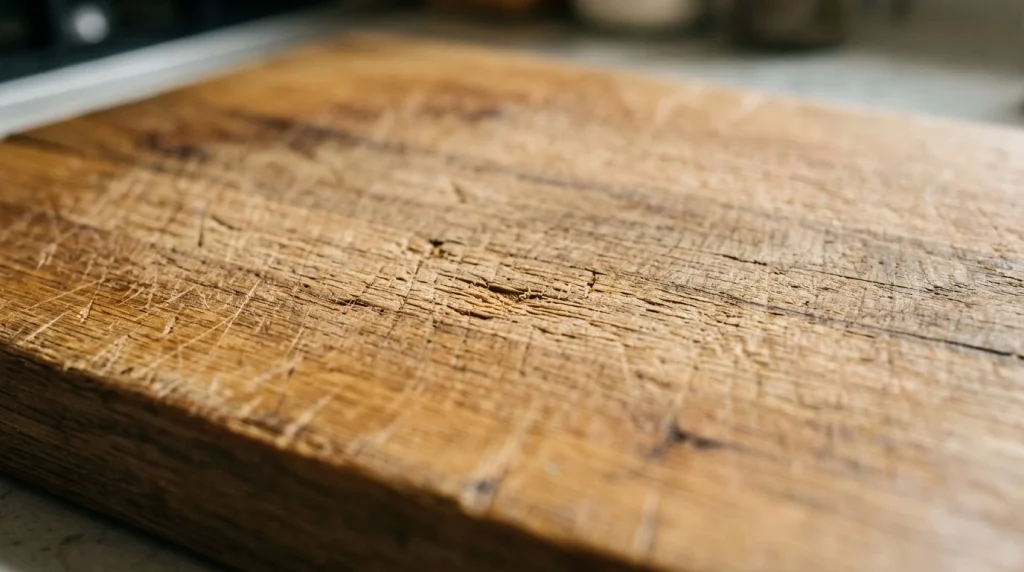
The main problem is oxidation. Avocado oil can eventually develop unwanted odors or changes in texture after prolonged exposure to air.
Not every board develops problems immediately. However, purpose-made conditioners offer more predictable performance.
1. Avocado Oil Can Become Rancid
Rancidity occurs when fats deteriorate through chemical reactions, including oxidation. Oxygen, heat, light, and storage conditions can influence this process.
Avocado oil contains unsaturated fatty acids that can oxidize. Even though it’s generally more oxidation-resistant than some highly polyunsaturated cooking oils, it isn’t immune.
When oil remains inside a wooden surface, removing every trace becomes difficult. An unpleasant smell may persist after ordinary cleaning.
2. It May Leave a Greasy or Sticky Surface
Applying too much avocado oil can leave excess fat on the wood. This may make the cutting surface unpleasant to handle.
Over time, oxidation can also change an oil’s consistency. Certain residues may become tacky and harder to remove.
For everyday chopping, I prefer a board that feels clean rather than oily. A conditioner shouldn’t leave a noticeable greasy coating after proper application.
3. Unwanted Odors Can Affect Food Preparation
Wooden boards frequently contact foods with delicate flavors. Apples, bread, and fresh vegetables can pick up unwanted smells from a poorly maintained surface.
Rancid cooking oil may contribute an unpleasant odor. This is especially frustrating when the board appears clean.
My practical rule is simple: don’t use a conditioning oil that could eventually make the board smell like old cooking fat.
4. It Doesn’t Provide Reliable Long-Term Protection
Fresh avocado oil can temporarily darken wood and make the grain look attractive. However, that appearance doesn’t prove long-term suitability.
Purpose-made board oils are selected for stability and ease of maintenance. They also help avoid complications associated with spoiled cooking oils.
5. It Can Complicate Future Maintenance
Once cooking oil soaks into a board, replacing it isn’t as simple as wiping the surface. Deeply absorbed residues may remain.
Repeated applications can make the problem worse. I recommend switching to an appropriate conditioner instead of adding more avocado oil.
Avocado Oil vs. Mineral Oil: Which Is Better for Cutting Boards?
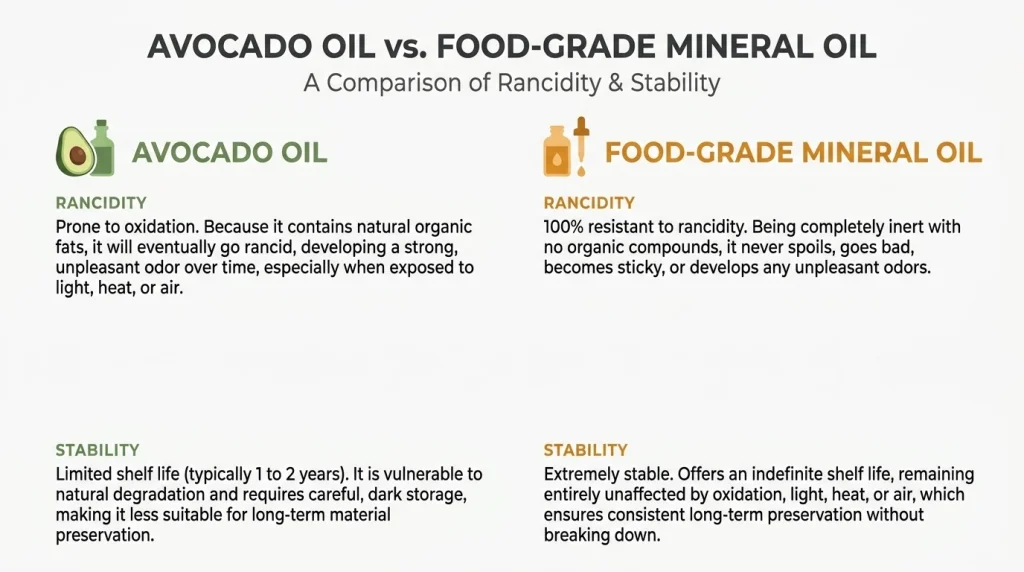
Food-grade mineral oil is the better general-purpose choice for most unfinished wooden cutting boards. It doesn’t undergo the same rancidity process as edible plant oils.
Mineral oil also has little or no noticeable smell when properly refined. That makes it practical for cutting surfaces used with different foods.
The comparison below focuses on board maintenance rather than cooking performance.
| Oil or Conditioner | Rancidity Concern | Main Benefit | My Recommendation |
|---|---|---|---|
| Avocado oil | Yes | Readily available and edible | Avoid for routine conditioning |
| Food-grade mineral oil | No cooking-oil rancidity | Stable and easy to reapply | Best everyday option |
| Olive or vegetable oil | Yes | Common pantry ingredients | Not preferred |
| Ordinary coconut oil | Possible, formulation-dependent | Relatively oxidation-resistant | Choose a board-specific formula instead |
| Mineral oil and beeswax conditioner | Low with suitable formulation | Conditioning plus surface water resistance | Excellent compatible option |
Food-grade mineral oil is highly refined mineral oil intended for specified food-contact applications. You should still choose a product expressly labeled for cutting boards.
U.S. regulations address suitable white mineral oil under 21 CFR 172.878. These requirements don’t mean every industrial mineral oil product belongs on a cutting board.
For a broader comparison of pantry cooking oils, read my guide on using vegetable oil on a cutting board.
What Should You Do If You Already Used Avocado Oil?
If you’ve already applied avocado oil, don’t assume the board must be discarded. A small, recent application can often be addressed with ordinary cleaning.
Check the surface before deciding whether additional treatment is necessary.
Step 1: Remove Excess Oil
Start by wiping the board with a clean paper towel or lint-free cloth. Pay attention to greasy areas and any oil collected around the edges.
Don’t add another type of oil yet. First, remove as much surface residue as reasonably possible.
Step 2: Wash With Mild Dish Soap
Wash the board using warm water, mild dish soap, and a clean sponge. Gently scrub areas where oil remains visible.
Rinse thoroughly without soaking the board. Extended water exposure can damage many wooden cutting boards.
Step 3: Dry the Wood Completely
Wipe the board with a clean towel immediately after rinsing. Stand it upright where air can circulate around both faces.
Let the board dry completely before further treatment. Don’t put a wet wooden board into a closed cabinet.
Step 4: Check for Odor and Residue
Once dry, inspect the surface and smell the board. A clean board shouldn’t have a persistent rancid odor or sticky finish.
If the odor remains, repeat gentle cleaning once. Avoid using strong solvents or household degreasers not approved for food-contact surfaces.
Step 5: Recondition When Appropriate
If the board feels clean, dry, and sound, use food-grade mineral oil according to its instructions. A light application is usually enough for normal maintenance.
Severely contaminated or damaged wood may require professional refinishing or replacement. See my guide on how to refinish a cutting board for suitable restoration methods.
How Do You Oil a Cutting Board Correctly?
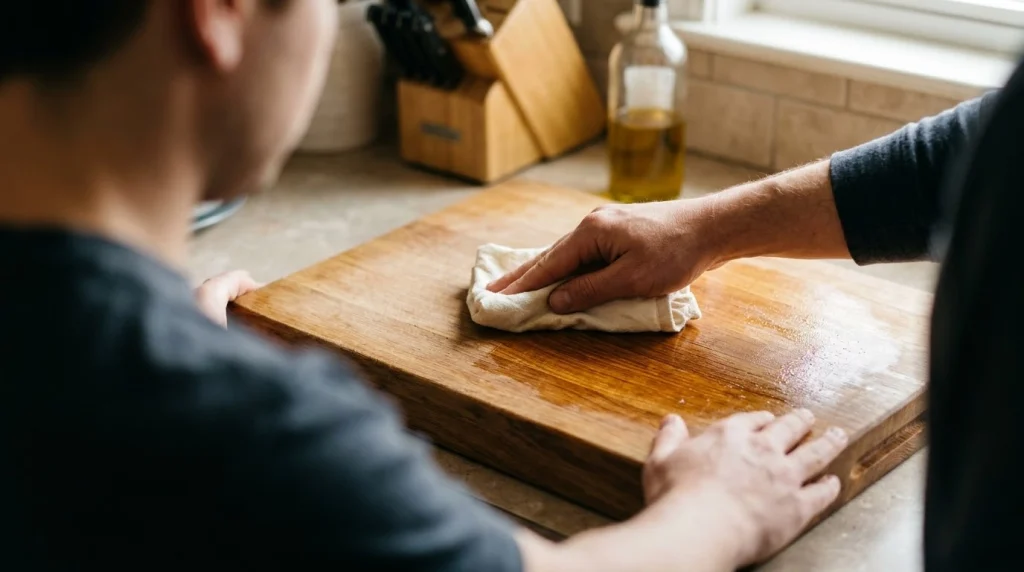
Proper oiling starts with a clean, completely dry wooden surface. The goal is to condition exposed fibers without leaving excess oil behind.
I recommend using a clearly labeled food-grade mineral oil or manufacturer-approved board conditioner.
What You’ll Need
- Food-grade cutting board mineral oil
- Clean, lint-free cotton cloth or paper towels
- Mild dish soap
- Clean water
- Drying rack or clean, ventilated surface
- Optional food-contact-safe board wax
Step-by-Step Oiling Instructions
- Clean the board: Wash away food residue with mild dish soap and warm water.
- Dry completely: Allow moisture to escape before applying oil.
- Apply mineral oil: Pour a small amount onto a clean cloth and spread it evenly.
- Cover all surfaces: Treat both faces, sides, corners, and exposed end grain.
- Allow absorption: Follow the product directions, which may recommend several hours or overnight.
- Remove excess oil: Buff the surface with a clean cloth until it no longer feels greasy.
A particularly dry board may need another coat. However, additional oil is useful only if the wood still absorbs it.
Howard’s product directions, for example, recommend allowing sufficient absorption and wiping away excess oil before use.
Should You Add Beeswax After Mineral Oil?
Beeswax can provide additional surface water resistance when used in a suitable cutting board conditioner. It’s an optional finishing step rather than a cleaning treatment.
Choose a food-contact-safe formula and follow the manufacturer’s directions. Don’t assume every furniture wax is appropriate for food preparation.
How Often Should You Oil a Wooden Cutting Board?
About once a month is a reasonable starting point for many regularly used, oil-finished wooden boards. The actual interval depends on washing frequency, wood type, and environmental conditions.
Instead of relying entirely on a calendar, inspect the board’s appearance and texture.
Signs Your Cutting Board May Need Conditioning
- Pale appearance: The wood looks noticeably drier than usual.
- Rough texture: The surface feels dry or slightly raised.
- Rapid moisture absorption: Water darkens exposed wood quickly.
- Uneven appearance: Frequently washed sections look dry compared with protected areas.
These signs suggest that a compatible conditioner may help. However, oil cannot repair serious cracks or separated glue joints.
The University of Maine Cooperative Extension’s cutting board guidance also discusses cleaning and conditioning wooden cutting surfaces.
Can You Use Avocado Oil on Bamboo Cutting Boards?
Avocado oil isn’t my recommended conditioner for bamboo cutting boards either. Bamboo surfaces can experience similar problems with deteriorating cooking oils.
Bamboo is technically a grass, although manufacturers construct it into rigid boards. Many products contain bonded strips and factory-applied finishes.
That construction makes manufacturer instructions particularly important.
What Oil Works Better for Bamboo?
Many unfinished or oil-maintained bamboo boards can benefit from food-grade mineral oil. However, some finished bamboo products may require different care.
Before applying anything, check the original instructions. A prefinished surface might not need additional oil.
For detailed application advice, see my guide on how to oil a bamboo cutting board.
Does Avocado Oil Work on Every Type of Cutting Board?
No. Different cutting board materials require different maintenance methods, and some don’t need conditioning oil at all.
Using the wrong treatment can leave a slippery surface without improving durability.
Material-Specific Recommendations
- Unfinished hardwood: Use food-grade mineral oil or an approved conditioner.
- Bamboo: Follow the manufacturer’s finish and conditioning instructions.
- Plastic: Clean thoroughly; routine wood oiling isn’t necessary.
- Glass: Wash appropriately; conditioning oil provides no useful maintenance benefit.
- Composite boards: Follow the specific manufacturer’s care guidance.
- Factory-sealed wood: Don’t add oil unless the finish instructions allow it.
My first step is always identifying the material and its finish. That matters more than choosing an oil based only on kitchen availability.
How Do You Keep an Oiled Cutting Board Clean and Safe?
Cutting board oil doesn’t sanitize wood or eliminate harmful microorganisms. Cleaning and conditioning are separate maintenance tasks.
Always wash the cutting surface after preparing food. Take extra care when switching between raw animal products and foods eaten without cooking.
Daily Cleaning Routine
- Remove food scraps immediately after use.
- Wash with dish soap and warm water.
- Rinse away soap and loosened debris.
- Dry with a clean towel.
- Store where air circulates freely.
Hand washing is the safest default for most wooden and glued cutting boards. Unless the manufacturer specifically approves dishwasher cleaning, avoid exposing them to dishwasher heat and prolonged moisture.
What About Raw Meat and Poultry?
I recommend keeping separate boards for raw meat and ready-to-eat foods whenever practical. This lowers the chance of transferring harmful microorganisms between ingredients.
After preparing raw meat, follow appropriate cleaning and sanitizing guidance. The USDA guidance on preventing cutting board cross-contamination explains the importance of cleaning between food-preparation tasks.
What Mistakes Should You Avoid When Conditioning a Cutting Board?
Even a good cutting board conditioner can perform poorly when applied incorrectly. These mistakes are worth avoiding.
- Using pantry oils repeatedly: Avocado, olive, and ordinary vegetable oils can deteriorate over time.
- Applying oil to wet wood: Trapped moisture can interfere with proper maintenance.
- Leaving excess oil: A greasy surface offers no useful advantage during food preparation.
- Using scented baby oil: Fragrances and additives may make it unsuitable for food contact.
- Using industrial finishes: Never apply unidentified furniture oils or solvent-containing coatings to an active cutting surface.
- Ignoring the edges: Exposed edges also experience moisture-related changes.
- Oiling instead of cleaning: Conditioning cannot replace proper washing and sanitizing.
For wood that begins bending or cupping, proper moisture management matters more than adding heavy layers of oil. My guide on preventing a cutting board from warping explains the broader maintenance steps