
Can You Use Black Locust for a Cutting Board?
Quick Answer
You can use black locust for a cutting board, but I don’t recommend it as your daily board. The wood is hard, dense, and rot-resistant, yet its bark, leaves, and wood contain toxic compounds, and its open pores trap food and moisture. For most cooks, maple, walnut, or cherry is a safer and kinder choice, as I explain in my guide to whether you can use any wood for a cutting board.
Why it divides woodworkers
- Hard and durable: Black locust rates 1,700 lbf on the Janka scale, so it resists dents and wear.
- Toxic compounds present: The tree contains robin, a toxalbumin found in bark, leaves, seeds, and wood.
- Brief contact helps: Food touches a board for seconds at low heat, so leaching risk stays low.
- Open grain hurts: Its ring-porous grain holds crumbs and liquid, which makes cleaning harder.
- Tough on knives: That same hardness dulls edges faster than maple, walnut, or cherry.
If you already own one
- Use it as a serving board for bread, cheese, and dry foods, not for raw meat prep.
- Keep it sealed with food-grade mineral oil and beeswax, and wash it by hand after each use.
I’ve worked with plenty of offcuts in my shop, and black locust always catches my eye first. Its golden-brown heartwood looks rich, and it feels dense in the hand.
This guide goes past the short yes-or-no answer. You’ll learn what makes black locust risky, where it shines, and which woods I’d pick instead for daily chopping.
What Is Black Locust Wood?
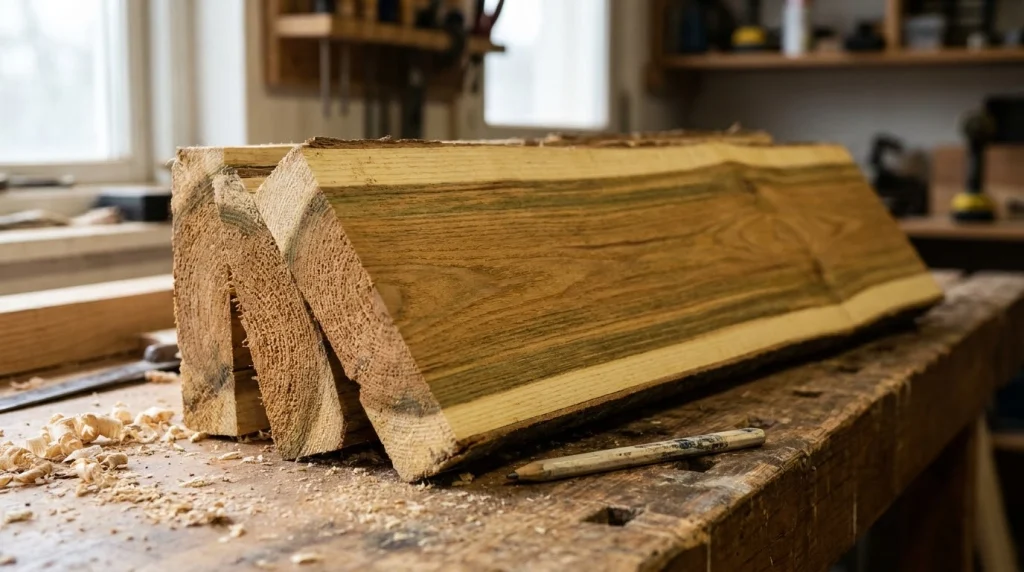
Black locust is Robinia pseudoacacia, a hardwood tree native to the Appalachian and Ozark mountains. It now grows across much of North America and Europe, where people plant it for fence posts, flooring, and firewood.
The heartwood runs from golden brown to dark brown, often with green or olive streaks. Sapwood stays pale yellow and narrow, and it lacks the heartwood’s famed durability.
Woodworkers prize black locust for outdoor work. Its heartwood can last 50 to 100 years in soil contact without chemical treatment, thanks to natural flavonoids and tyloses that block water and fungi.
The US Forest Service lists it among the most decay-resistant native woods. That trait explains its fame for posts, decking, and boat parts.
But outdoor strength does not equal kitchen safety. A fence post never touches your dinner, and a cutting board does so every day.
Is Black Locust Safe for Food Contact?
No, black locust is not a top pick for food contact, though the risk from a cutting board stays lower than from a bowl or spoon. Most wood safety guides place it on the avoid list for kitchen ware.
That split verdict confuses a lot of makers. Some sell black locust boards with a food-safe finish, while other guides warn against the species outright.
Here’s how I sort it out. The chemistry is real, the exposure on a board is brief, and better woods exist without the trade-off.
What makes black locust toxic?
Black locust contains robin, a toxalbumin protein, plus robinin and other flavonoids. Bark, leaves, seeds, and wood all carry toxic compounds, though the flowers are edible.
Horses that eat bark or leaves can show colic, weakness, and heart rhythm trouble within an hour. Humans face nausea, stomach upset, and irritation if they ingest larger amounts.
Sawdust adds a second concern for makers. It can irritate eyes and skin, and some people report nausea after long sanding sessions without a mask.
- Bark and leaves: Highest concern, and never safe near food or livestock.
- Seeds and pods: Toxic if eaten, so keep shavings and offcuts away from kids and pets.
- Heartwood: Lower risk than bark, yet still listed as toxic in botanical sources.
- Dust: Irritant for eyes, skin, and lungs during cutting and sanding.
Heat breaks robin down, which is why cooked flowers and heated extracts pose less risk. A cutting board never gets that hot, so don’t count on heat to fix the issue.
Does that toxicity transfer to food on a cutting board?
Transfer risk stays low, because food touches a board briefly and at room temperature. Toxins leach far more into hot liquids, stored foods, and long-contact items like bowls.
That point comes up often in woodworking forums. One experienced maker put it plainly: boards pose less risk than utensils or storage containers, since contact is short and cool.
Low risk is not the same as no risk. Knife cuts open fresh wood, juices sit in the grooves, and acidic foods like tomatoes and citrus can pull more from the surface.
Food safety also hinges on cleaning. USDA guidance on cutting board safety stresses clean, smooth surfaces that don’t trap bacteria, and black locust’s open pores work against that goal.
I tested a small black locust offcut in my shop last year. I oiled it, cut onions and beets on it for a week, and the pores held color and odor longer than my maple board did.
That test didn’t prove toxicity, but it showed the cleaning gap. A board that holds odor holds residue, and residue is what you want to avoid.
Is Black Locust Good for Cutting Boards?
Black locust performs well on hardness and rot resistance, but it falls short on grain, knife care, and food safety. It makes a striking serving board, yet it makes a flawed daily chopping board.
Think of it as a strong outdoor wood pressed into kitchen duty. It can do the job, but it was never the right fit.
Pros of black locust for cutting boards
- Extreme hardness: At 1,700 lbf Janka, it resists dents, gouges, and heavy cleaver work.
- Rot resistance: Natural flavonoids fight decay, so the board handles damp kitchens well.
- Good looks: Rich brown grain with olive streaks gives each board a bold, rustic look.
- Stable heartwood: Well-seasoned heartwood moves less than many softer woods.
- Long life: A thick board can last for years with oiling and light sanding.
Cons of black locust for cutting boards
- Toxic compounds: Robin and related compounds put it on many do-not-use lists.
- Ring-porous grain: Open pores trap food, juice, and bacteria, and they resist full cleaning.
- Hard on edges: Its density dulls knives faster than close-grained maple or walnut.
- Coarse texture: The surface feels rougher than maple, even after fine sanding.
- Dust irritation: Makers need a mask and dust collection when they cut or sand it.
- Mixed advice: Buyers face conflicting claims, which makes trust hard to build.
That list tells the story at a glance. The pros sound great for a deck, while the cons hit right where a kitchen board needs to excel.
Black Locust vs Maple vs Walnut vs Cherry
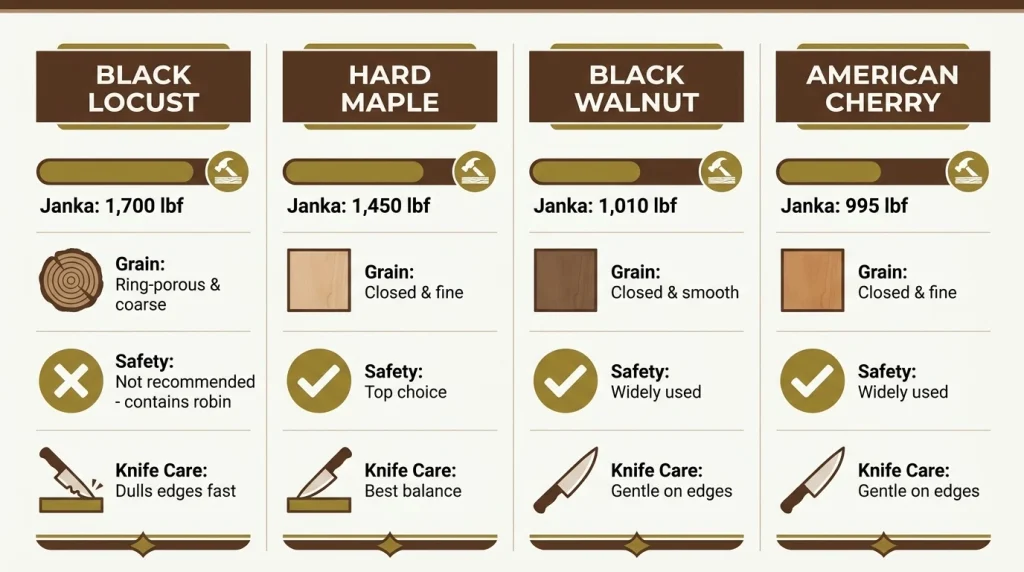
Maple wins for daily use, walnut wins for looks and knife care, and cherry wins for warmth and ease. Black locust wins on hardness alone, and that single win comes with the most baggage.
Use this table to compare the four woods side by side. Janka numbers come from standard hardwood tests, and the Wood Database is a solid place to check species data.
| Wood | Janka hardness | Grain | Food safety | Knife friendly? |
|---|---|---|---|---|
| Black locust | 1,700 lbf | Ring-porous, coarse | Not recommended; contains robin | No, dulls edges fast |
| Hard maple | 1,450 lbf | Closed, fine | Yes, top choice | Yes, best balance |
| Black walnut | 1,010 lbf | Closed, smooth | Yes, widely used | Yes, gentle on edges |
| American cherry | 995 lbf | Closed, fine | Yes, widely used | Yes, gentle on edges |
Notice the pattern in the grain column. Maple, walnut, and cherry all share closed grain, which wipes clean and seals well.
Black locust stands apart with open pores. That gap matters more than hardness for a board you wash each day.
Is Black Locust Hard on Knives?
Yes, black locust is hard on knives. Its 1,700 lbf rating sits well above maple at 1,450 lbf and walnut at 1,010 lbf.
Harder boards don’t give under the edge. The knife takes the hit instead, so the edge rolls and dulls sooner.
End grain helps a bit, since the fibers part and close around the cut. Edge grain and face grain black locust feel harsher, and I noticed more drag when I sliced on my test piece.
If you own good Japanese knives or thin chef’s knives, skip black locust for daily prep. Save your edges for maple or walnut, and keep the locust board for serving.
What About Black Locust Sold as Acacia?
Some boards sold as “acacia wood” in Europe and North America are made from Robinia pseudoacacia, or black locust. True acacia comes from a different genus, yet the trade name causes mix-ups.
That label gap matters for shoppers. You might buy an “acacia” board and bring home black locust without knowing it.
Check the species name when you can. Sellers who list Robinia pseudoacacia are selling black locust, while true acacia boards often list Acacia mangium or a similar species.
I cover the safety picture for the more common type in my guide to whether acacia wood cutting boards are safe and good. Read the label first, then judge the board on its true species.
As of 2026, labeling still varies by shop and region. Ask the maker for the Latin name if the listing stays vague.
How to Use a Black Locust Board Safely If You Already Own One
Don’t panic if you already own a black locust board. You can still enjoy it, just shift its role away from heavy raw prep.
Use it where contact stays short, dry, and easy to clean. That keeps the risk low and lets the grain shine.
- Serve dry foods: Bread, cheese, crackers, and fruit work well on a sealed locust board.
- Skip raw meat: Use maple, walnut, or plastic for raw chicken, beef, and fish.
- Avoid long soaks: Never leave the board in water, and never run it through the dishwasher.
- Wash by hand: Use hot, soapy water, rinse well, and dry it upright right away.
- Oil on schedule: Re-oil when the surface looks pale or dry, about once a month with use.
- Check for cracks: Deep grooves and splits trap food, so sand or retire a worn board.
If you sell boards, label the species plainly. Buyers deserve to know they hold black locust, not a generic hardwood.
How Do You Seal and Care for Black Locust?
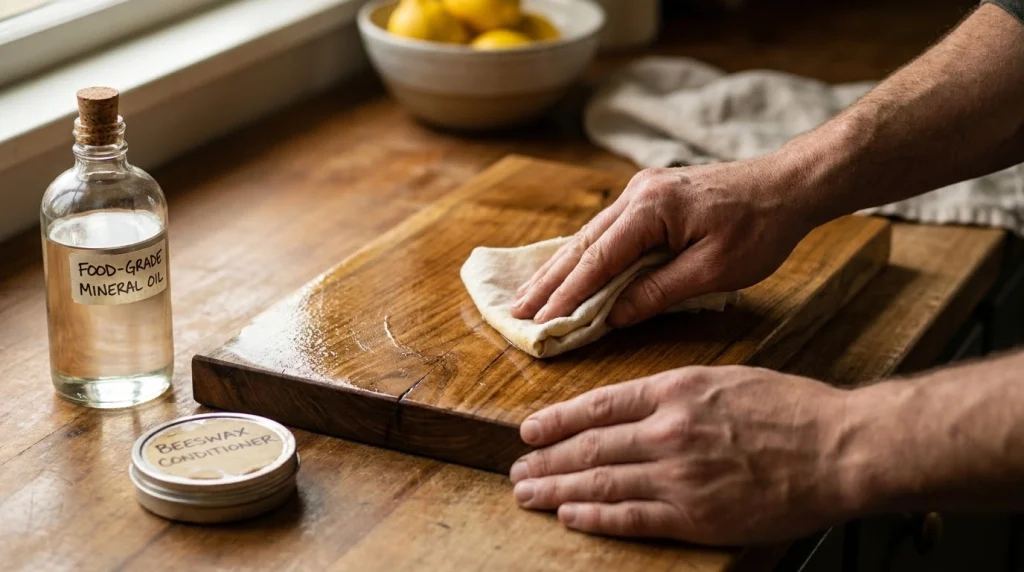
Seal black locust with food-grade mineral oil, then top it with a mineral oil and beeswax blend. That combo fills pores, slows water uptake, and keeps the surface smooth.
Start with bare, sanded wood at 220 grit. Wipe off dust, then flood the surface with oil and let it soak for 4 to 6 hours.
Wipe off the excess, let the board rest overnight, and repeat the coat. Add the wax blend last, buff it in, and let it cure before use.
Skip cooking oils like olive or vegetable oil. They turn rancid in the pores and leave a stale smell that soap won’t lift.
For glue-ups, use a glue rated for indirect food contact. FDA food-contact standards cover adhesives and finishes, so check the label for that rating before you build.
My full routine for oiling any wood board lives in my guide to how to oil a wooden cutting board. The same steps apply here, with extra coats for those open pores.
What Woods Should You Use Instead?
Hard maple is my first pick for a daily board. It pairs closed grain, fair hardness, and a long safety record in pro kitchens.
Walnut runs a close second for home cooks. It looks warm, feels smooth, and treats knives with care.
Cherry offers a lighter, softer feel with rich color that deepens with age. It dents a bit more than maple, but it stays easy to clean and kind to edges.
Beech and sycamore also work well for food contact. Both share tight grain and low flavor transfer, which suits spoons and boards alike.
- Best daily board: Hard maple, end grain if your budget allows.
- Best looks: Walnut, as I detail in my guide to whether you can use walnut wood for a cutting board.
- Best warm tone: Cherry, covered in my guide to whether cherry wood can be used for a cutting board.
Pick one of those three and you skip the toxicity debate. You’ll also sharpen less often, which saves time each week.
If you’re ready to pick a safer board, here’s what I’d buy for my own kitchen:
🏆 Best Overall
John Boos Reversible Maple Cutting Board
★★★★★
Hard maple, edge grain, 18 x 12 inches with juice groove. I reach for this style for daily veggie and bread prep.
💰 Best Budget
Virginia Boys Kitchens Walnut Cutting Board
★★★★☆
American black walnut, 17 x 11 inches, pre-oiled and ready to use. I like it for cooks who want walnut looks without a pro price.
🧴 Best Care Kit
Thirteen Chefs Mineral Oil and Beeswax Kit
★★★★★
Food-grade mineral oil plus beeswax board butter for sealing and upkeep. I use this combo on maple, walnut, and cherry boards.
Frequently Asked Questions
Is black locust wood toxic to humans?
Yes, parts of black locust are toxic to humans and livestock. Bark, leaves, seeds, and wood contain robin, a toxalbumin that can cause nausea and stomach upset if ingested.
Risk from a cutting board stays lower than from eating the plant. Still, most guides advise against food contact when safer woods are easy to find.
Is black locust food safe for cutting boards?
Black locust is not widely rated as food safe for cutting boards. Many wood safety guides list it as a wood to avoid for bowls, utensils, and boards.
Some makers do sell sealed black locust boards, and brief, cool contact limits leaching. I still place maple, walnut, and cherry ahead of it for daily use.
Is black locust better than maple for a cutting board?
Black locust beats maple on hardness and rot resistance, but maple wins where it counts. Maple offers closed grain, easier cleaning, proven food safety, and less knife wear.
Maple rates 1,450 lbf on the Janka scale, against 1,700 lbf for black locust. That gap makes maple kinder to edges while staying tough enough for daily chopping.
Can you seal black locust to make it food safe?
Sealing helps, but it does not erase the core concerns. Food-grade mineral oil and beeswax fill pores, slow moisture, and create a smoother surface for cleaning.
Knife cuts still open fresh wood over time, so the seal needs regular upkeep. For raw meat and daily prep, a closed-grain board remains the safer pick.
The Bottom Line on Black Locust Cutting Boards
Black locust looks great and lasts for years outdoors. In the kitchen, its toxic compounds, open pores, and knife wear hold it back.
Use a board you own for serving, not for daily chopping. Buy maple, walnut, or cherry for the work you do each day, and your knives and your food will thank you.
Have a black locust board at home? Tell me how you use it, and I’ll help you pick the right daily board to pair with it.

