10 Best Japanese Boning Knife Options for Precision Cutting
A boning knife helps remove meat from bones, trim fat, and separate skin from flesh with control. Japanese boning knives are known for sharp edges, balanced designs, and precise cutting, making them useful for preparing poultry, fish, and meat.
The best Japanese boning knife should have a sharp, durable blade, a comfortable handle, and a shape that matches the foods you prepare most often. Blade length, flexibility, steel type, and ease of sharpening also affect how well a knife performs and how long it stays useful.
We compared leading Japanese boning knives for cutting control, edge retention, comfort, and maintenance to find the models that make detailed prep easier.
Best Japanese Boning Knives
We selected the best Japanese boning knives for precise trimming, filleting, and portioning. Our list compares blade quality, handle comfort, balance, and overall value to help us choose the right knife for our kitchen.
HOSHANHO Japanese Fillet Knife
 Save
SaveWe recommend this knife for home cooks who want a sharp, light tool for filleting fish and trimming meat.
Key Pros
- Sharp edge makes clean cuts with little effort
- Slim, flexible blade offers good control
- Comfortable pakkawood handle feels secure
Key Cons
- The blade may feel too flexible for some meat tasks
- The wood handle needs careful hand washing
- It lacks the heft of a larger boning knife
We found the 7-inch blade easy to guide around fish bones and through skin. Its narrow shape helped us remove fillets with little wasted meat, while the flexible steel followed the curves of the fish.
The edge arrived very sharp and handled fish, fat, and smaller cuts of meat smoothly. We also used it for trimming, butterflying, and slicing, though its lighter build felt better suited to fish than dense cuts.
The handle gave us a steady grip during longer prep sessions. We would wash and dry it by hand to protect the pakkawood, and we would expect to sharpen it regularly with continued use. Overall, this knife offers strong control and useful versatility for its price.
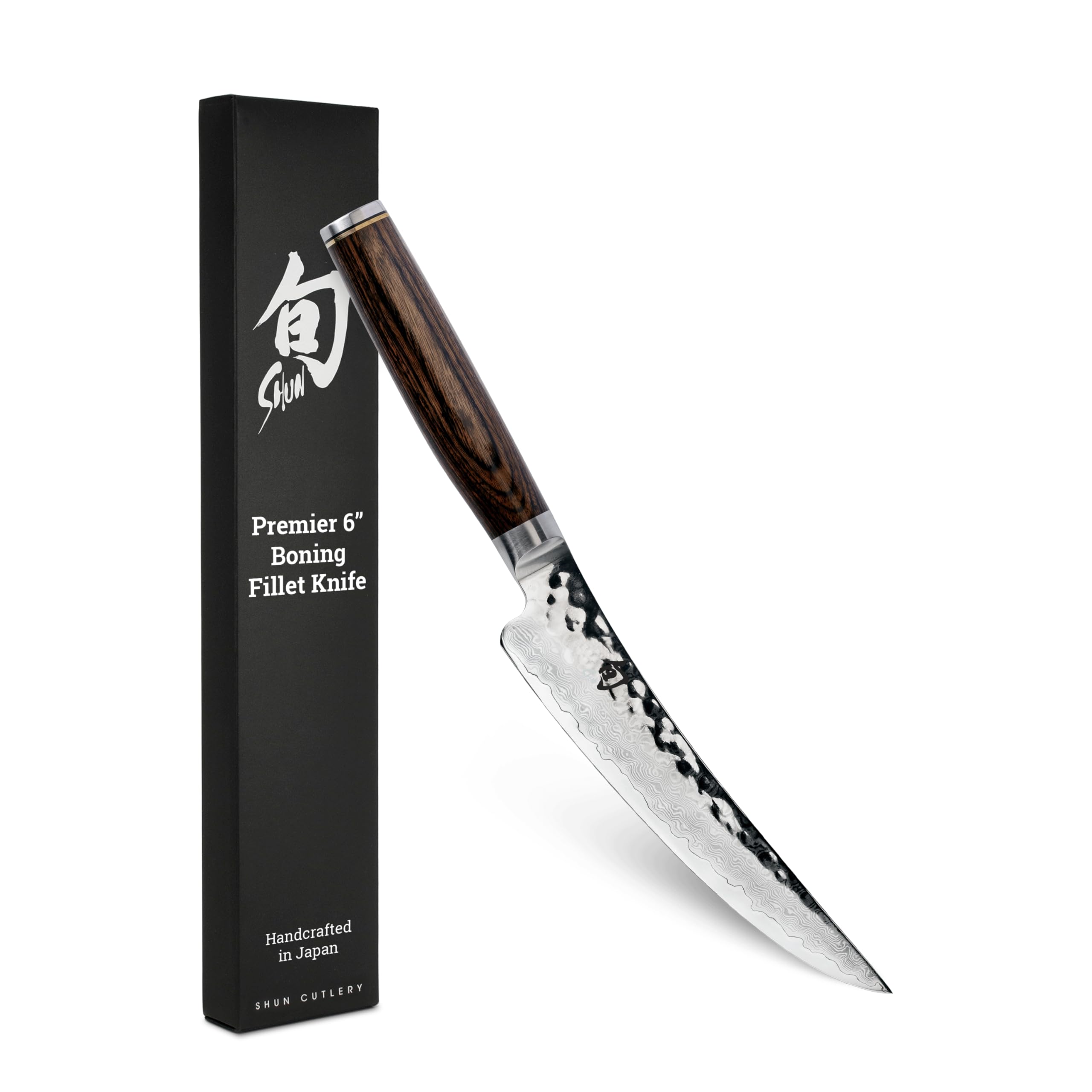
Shun Premier Gokujo 6-Inch Boning Knife
 Save
SaveWe recommend this Japanese boning knife for cooks who want precise control when trimming meat or filleting fish.
Key Pros
- Sharp, narrow blade makes close cuts around bones easier
- Hammered finish helps reduce sticking and drag
- Comfortable handle supports controlled work
Key Cons
- Higher price than basic boning knives
- Thin edge needs careful handling
- A protective sheath is not included
When we used the Shun Premier Gokujo, the curved blade moved smoothly along bones and through silver skin. Its light feel made it easy to guide around joints without removing more meat than needed.
The blade stayed sharp during trimming and fish preparation. The hammered surface also helped reduce drag, though some food still needed to be cleared during longer tasks.
We found the Pakkawood handle comfortable and secure with both wet and dry hands. The knife suits detailed work best, but we would avoid twisting it or using it on hard bones. Its price makes the free sharpening service useful for long-term care.
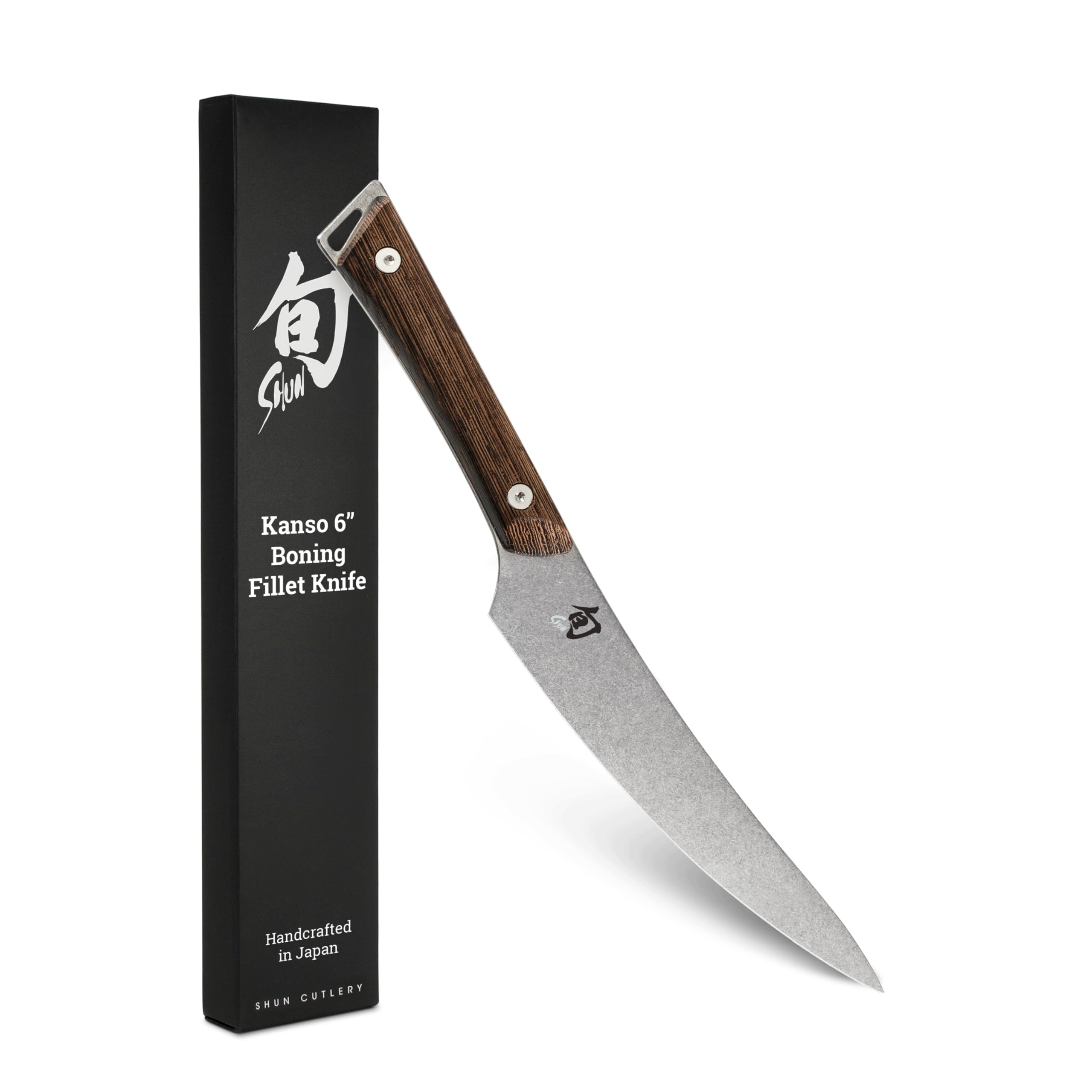
Shun Kanso 6-Inch Boning & Fillet Knife
 Save
SaveWe recommend this Japanese boning knife for cooks who want a sharp, steady blade for trimming meat and filleting smaller fish.
Key Pros
- Sharp blade cuts cleanly through meat and fish
- Comfortable wood handle offers a secure grip
- Holds its edge well with proper care
Key Cons
- The stiff blade may not suit users who prefer more flex
- A protective cover is not included
- The narrow blade takes practice to control
When we used the Shun Kanso, its narrow, curved blade moved smoothly around bones and skin. It handled fish fillets and meat trimming with good control, while the firm construction helped us make precise cuts without the blade feeling weak.
The contoured wood handle felt comfortable during longer prep sessions. Its balanced feel made detailed work easier, and the plain design kept the knife practical rather than flashy. The handle also works for left- and right-handed users.
The AUS10A stainless steel edge arrived very sharp and stayed effective through repeated trimming. We would still wash and dry it by hand, then use careful honing or professional sharpening to protect the edge.
The blade has limited flex, so it works best for controlled boning and trimming instead of tasks that need a highly flexible fillet knife. The missing sheath also means we would store it carefully in a knife block, guard, or drawer insert.
Yoshihiro HGB Sabaki Boning Knife
 Save
SaveWe recommend this compact Japanese boning knife for cooks who want a sturdy, sharp tool for trimming meat and preparing fish.
Key Pros
- Sharp edge handles clean trimming and fish work
- Compact shape offers good control
- Pakkawood handle feels secure in the hand
Key Cons
- Thick blade feels less flexible than some boning knives
- Short length may not suit large cuts
- Alloy steel needs regular care to resist staining
We found the 150 mm blade easy to guide around joints and smaller bones. Its compact size gives us better control than a full chef’s knife, while the thicker build adds strength for daily kitchen tasks.
The knife arrived well packed and felt balanced during use. We also liked the comfortable handle, which stayed steady while we opened and trimmed medium-sized fish.
This Sabaki is not the best choice when we need a very flexible blade for delicate filleting. Still, its solid construction and sharp edge make it a practical option for cooks who want one compact knife for meat and fish preparation.
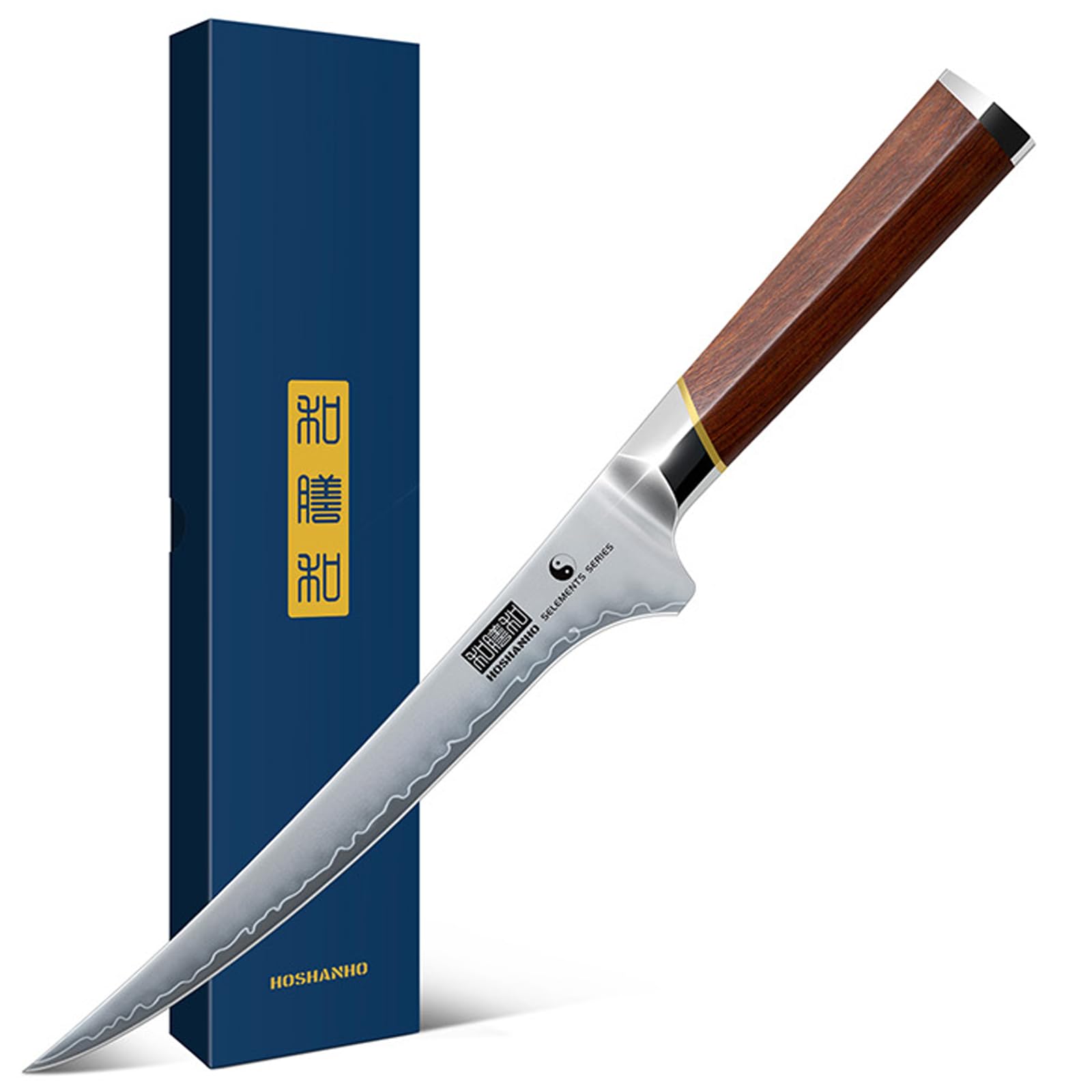
HOSHANHO Japanese Fillet Knife
 Save
SaveWe recommend this knife for cooks who want a sharp, flexible blade for fish, poultry, and meat trimming.
Key Pros
- Sharp edge offers clean, controlled cuts
- Flexible blade handles filleting and deboning well
- Wooden handle feels balanced and secure
Key Cons
- The thin blade needs careful handling
- Wood may require more care than synthetic handles
- It may feel too flexible for heavy bone work
When we used the HOSHANHO 7-inch knife, the narrow blade moved smoothly along fish bones and through poultry joints. Its sharp tip also helped with trimming meat and removing skin without forcing the cut.
The knife felt light and well balanced in hand. We found the red sandalwood handle comfortable during longer prep sessions, though we would still dry it promptly and avoid soaking it.
Its edge arrived very sharp and stayed effective through several cutting tasks. The flexible design suits detailed work best, while tougher jobs around large bones call for a stronger, thicker knife.
Shun Classic 6-Inch Boning & Fillet Knife
 Save
SaveWe recommend this knife for cooks who want a sharp, controlled blade for trimming meat and filleting smaller fish.
Key Pros
- Very sharp and precise for trimming and skinning
- Thin, flexible blade offers good control
- Comfortable handle supports a secure grip
Key Cons
- Costs more than many basic boning knives
- The fine edge needs careful handling
- Its 6-inch length may feel short for large cuts
We found the Shun Classic easy to guide around bones and joints. The curved blade worked especially well when we trimmed fat and removed fish skin, giving us steady control without much pressure.
The handle felt balanced during longer prep sessions. Its shape supported a firm grip, and the knife stayed comfortable while we made small, careful cuts.
The blade arrived very sharp and held its edge well during regular kitchen use. We would still keep it away from bones and hard surfaces, since the thin edge can chip if handled roughly.
This knife suits home cooks who value precision and do not mind paying more for Japanese craftsmanship. For large cuts or heavy-duty work, we would choose a longer, sturdier boning knife.
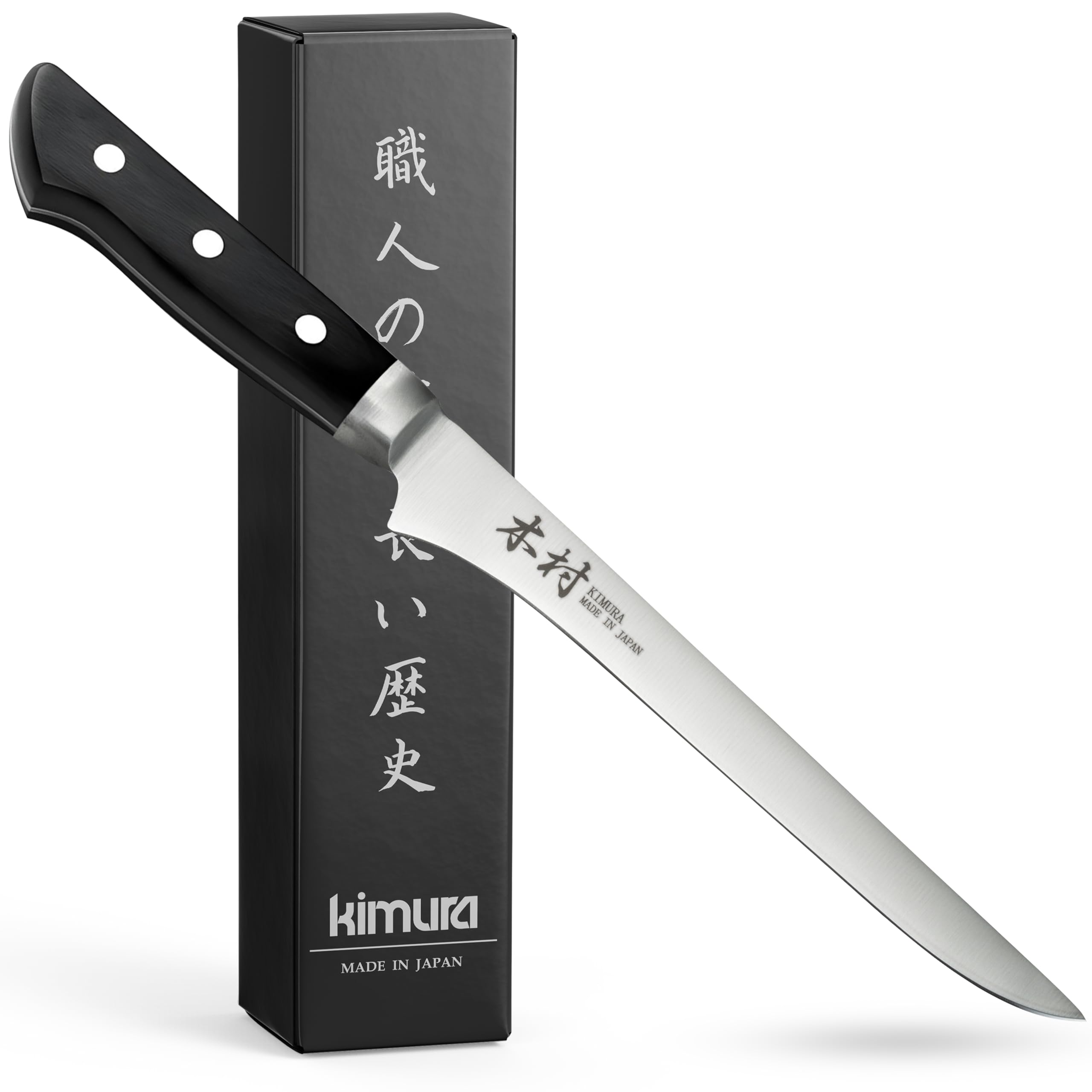
Kimura 6-Inch Japanese Boning Knife
 Save
SaveWe recommend this Japanese-made knife for cooks who want a sharp, flexible blade for fish, poultry, and smaller cuts of meat.
Key Pros
- Sharp edge with good control
- Comfortable, secure handle
- Strong full-tang construction
Key Cons
- Six-inch blade may feel short for large fish
- Flexible blade needs careful handling
- Hand washing is required
We found the blade easy to guide around bones and joints, especially when trimming poultry and filleting smaller fish. Its flexibility helped us make smooth cuts without removing too much meat.
The handle felt secure during wet work, and the full bolster gave us added control. The knife arrived very sharp, but we would still use a cutting board and avoid twisting the blade against hard bones.
This Kimura knife also feels more durable than many inexpensive fillet knives. Its 6-inch size suits detailed work, though we would choose a longer blade for large fish or bigger cuts.
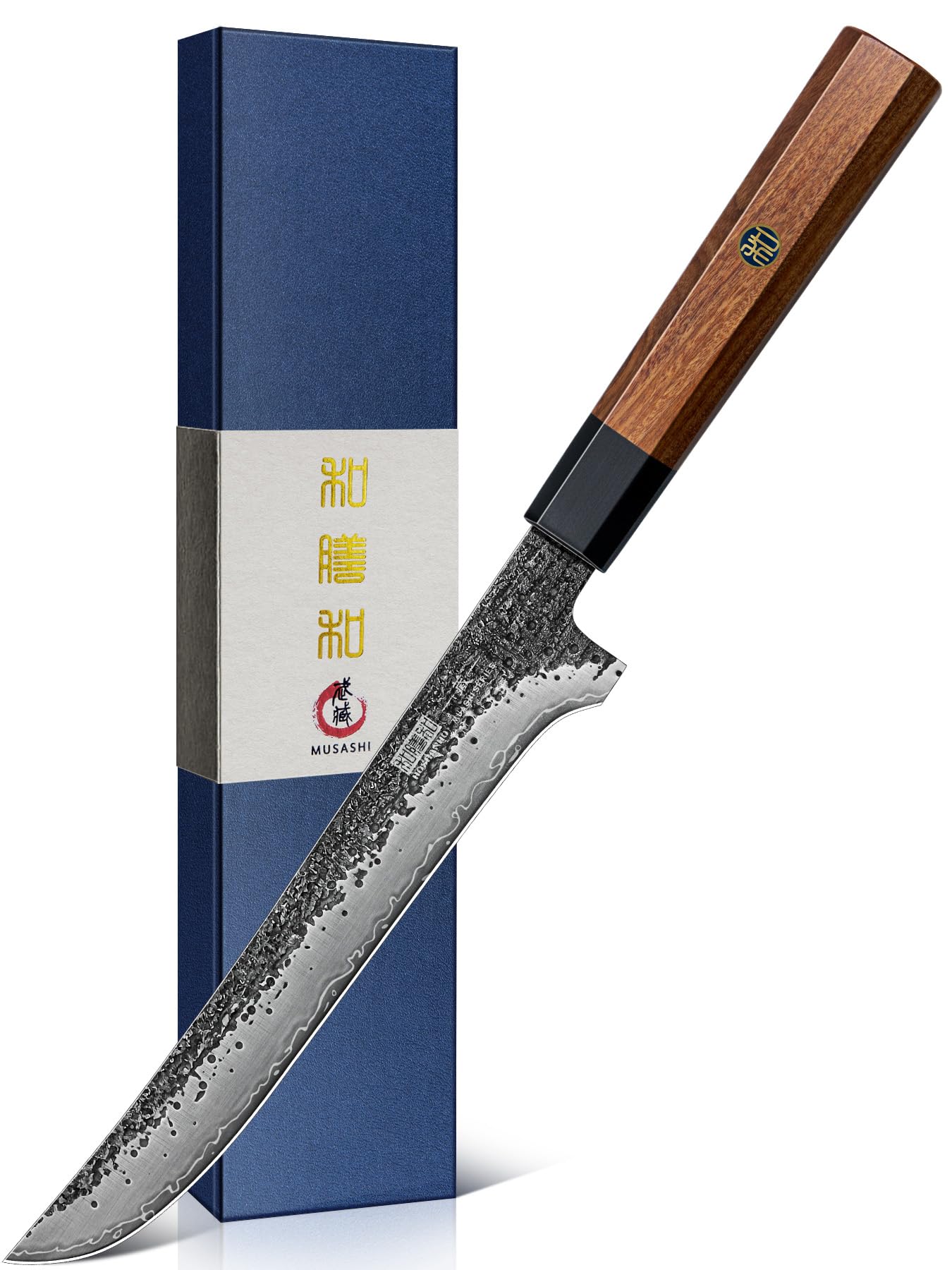
HOSHANHO 7-Inch Japanese Boning Knife
 Save
SaveWe recommend this knife for cooks who want a sharp, flexible blade for fish, meat, and detailed trimming.
Key Pros
- Sharp, precise blade for filleting and slicing
- Comfortable G10 and rosewood handle
- Light, flexible design offers good control
Key Cons
- The blade may arrive slightly curved
- High sharpness requires careful handling
- It needs proper care to maintain its edge
We found the 7-inch blade easy to guide around bones and along fish skin. Its slim profile helped us remove meat cleanly without taking off too much flesh.
The handle felt secure during longer prep sessions, and the light weight made quick cuts easier. The frosted blade surface also helped reduce sticking when we sliced meat and fish.
This knife works well beyond filleting. We used it for trimming proteins and preparing vegetables, although its sharp edge calls for a soft cutting board and careful hand washing.
Some buyers reported slight spine curvature, so quality may vary between units. With careful use, drying, and regular sharpening, the HOSHANHO offers strong value for detailed kitchen work.
HOSHANHO Damascus Fillet Knife
 Save
SaveWe recommend this knife for fish, trimming, and smaller cuts of meat because its sharp, flexible blade offers good control at a reasonable price.
Key Pros
- Sharp blade makes clean cuts with little effort
- Flexible tip works well around fish bones
- Olive wood handle feels comfortable and secure
Key Cons
- Seven-inch blade may feel short for large cuts
- Thin blade can bend more than expected
- “Japanese” styling does not mean Japanese manufacture
We found the blade easy to guide when removing skin and working around smaller bones. Its narrow shape also helped us trim meat close to the bone without taking away too much meat.
The handle gave us a steady grip during longer prep tasks. The knife felt light in the hand, which made it easy to control, though users who prefer a heavier boning knife may want more weight.
Sharpness stands out, but the thin blade needs careful handling. Some users may also want more flex, while others will appreciate the balance between flexibility and control.
This knife works best for fish, ribs, brisket trimming, and other moderate-sized cuts. We would choose a longer blade for large roasts or oversized pieces of meat.
Tojiro Honesuki 6-Inch Boning Knife
 Save
SaveWe recommend this Japanese honesuki for cooks who want a sturdy, precise knife for breaking down poultry and trimming meat.
Key Pros
- Sharp, focused tip for working around joints and bones
- Durable handle and solid, well-balanced feel
- Holds an edge while remaining fairly easy to maintain
Key Cons
- Right-handed design limits its audience
- Thick blade feels less versatile than a flexible boning knife
- Requires careful hand washing and drying
When we used this knife on chicken, the pointed tip made it easy to separate meat from bone without wasting much flesh. Its heavier build also helped with joints and tougher connective tissue.
The blade feels firm rather than flexible, which suits a honesuki’s focused role. We found it especially useful for spatchcocking, trimming thighs, and breaking down smaller poultry.
The laminated wood handle felt secure during longer prep sessions. The smooth junction between the blade and handle also left fewer places for food to collect.
This knife uses a right-handed, asymmetric edge, so left-handed users should choose another model. We also recommend hand washing and drying it after each use to protect the blade and handle. For cooks who mainly prepare poultry, the Tojiro Honesuki offers strong control and lasting value.
Buying Guide
We should match the knife to the cuts we prepare most often. A stiff, narrow blade suits poultry and small joints, while a more flexible blade helps us follow bones and remove meat with less waste.
| Feature | What to look for |
|---|---|
| Blade length | About 5–7 inches gives us good control for most kitchen tasks. |
| Flexibility | Choose moderate flex for curved cuts; select a stiffer blade for heavier work. |
| Blade shape | A narrow, tapered tip helps us reach tight areas around joints. |
| Steel | Look for steel with good edge retention and corrosion resistance. Stainless steel usually needs less care. |
| Handle | Choose a secure, comfortable grip that stays stable with wet hands. |
| Edge style | A plain, sharp edge gives us better control than a serrated edge. |
We should also check the knife’s balance. A handle and blade that feel evenly weighted can reduce hand strain during repeated cuts.
Japanese knives may use thinner blades, so we should avoid twisting them or cutting through hard bones. We should confirm whether the knife suits left- or right-handed use, especially if it has a single-bevel edge.
Maintenance affects the buying decision. We should choose a knife that we can sharpen with suitable equipment and wash by hand when required. A protective sheath can also improve safe storage.
Editor’s Choice
We choose the Misono Swedish Steel Boning Knife for its balance of control, durability, and precise cutting. Its narrow, flexible blade helps us separate meat from bone while reducing waste.
The Swedish carbon steel edge takes a sharp bevel and supports clean cuts through poultry, fish, and smaller cuts of meat. We should dry the blade after use and apply a light coat of food-safe oil when storing it for long periods.
| Feature | Details |
|---|---|
| Blade type | Narrow, flexible |
| Steel | Swedish carbon steel |
| Best for | Poultry, fish, and trimmed meat |
| Main care need | Hand wash and dry promptly |
We recommend this knife for cooks who value a responsive blade and do not mind regular maintenance. Its carbon steel construction can develop a patina over time, but that change does not affect normal cutting performance when we care for it properly.
Conclusion
We should choose a Japanese boning knife based on the cuts we prepare most often, the desired blade flexibility, and our comfort with sharpening. A stiff blade suits larger cuts, while a flexible blade gives us better control around joints and bones.
| Need | Best fit |
|---|---|
| Small, precise cuts | Flexible narrow blade |
| Meat trimming | Medium-flex blade |
| Poultry and larger cuts | Stiffer blade |
| Low maintenance | Stainless steel |
| Maximum edge sharpness | Carbon steel |
We also need to match the handle and blade length to our grip and workspace. A secure handle, balanced weight, and comfortable reach matter as much as the steel type.
With regular honing, careful hand washing, and proper storage, our knife can stay sharp and safe to use. We should avoid twisting the blade, cutting through hard bones, or placing it in the dishwasher.
FAQS
What is a Japanese boning knife used for?
We use a Japanese boning knife to remove meat from bones, trim fat, and separate joints. Its narrow blade offers control in tight areas.
Which blade shape should we choose?
We choose a flexible blade for poultry and fish because it follows curved bones. A stiff blade works better for beef, pork, and tougher cuts.
How long should the blade be?
For most home kitchens, we find a blade between 5 and 7 inches practical. Shorter blades offer more control, while longer blades cover larger cuts.
Should we choose stainless steel or carbon steel?
| Steel type | Main benefit | Care needed |
|---|---|---|
| Stainless steel | Resists rust and stains | Low |
| Carbon steel | Sharpens easily and holds a keen edge | Dry and oil after use |
Can we put a Japanese boning knife in the dishwasher?
We should hand-wash and dry it immediately. Dishwasher heat, detergent, and movement can damage the edge and handle.
How do we keep the knife sharp?
We use a fine whetstone or have the knife professionally sharpened. We avoid cutting on glass, stone, or ceramic surfaces because they can dull the blade.