10 Best Damascus Boning Knife for Precision Meat Preparation
A boning knife helps us remove meat from bones, trim fat, and work around joints with control. A Damascus boning knife combines this narrow, flexible blade style with layered steel, which can offer a sharp edge and a distinctive pattern. Its curved shape can make it useful for poultry, fish, beef, and pork.
The best Damascus boning knife should have a sharp, well-balanced blade, suitable flexibility, a comfortable handle, and reliable construction. We should also check the blade’s core steel, because the Damascus pattern alone does not determine cutting performance or durability. Easy cleaning and careful drying matter too, since carbon steel can stain or rust without proper care.
We compared key features, materials, handling, and user needs to find Damascus boning knives that make trimming and deboning more controlled and efficient.
Best Damascus Boning Knives
We reviewed Damascus boning knives for blade quality, flexibility, sharpness, handle comfort, and overall value. Our list highlights the best options for trimming meat, removing skin, and separating meat from bone.
SHAN ZU Damascus Boning Knife
 Save
SaveWe recommend this knife for cooks who want a sharp, well-balanced boning knife with an attractive Damascus finish.
Key Pros
- Very sharp edge for trimming meat and cutting poultry
- Comfortable, secure G10 handle
- Good balance and strong edge retention
Key Cons
- No protective blade sheath included
- The blade may feel short for larger cuts
- Its sharpness requires careful handling
We found the 7-inch blade easy to control when trimming brisket, lamb, and chicken. Its narrow profile helped us work around joints and remove small pieces of fat without wasting much meat.
The knife felt balanced in our hand, while the textured G10 handle provided a steady grip. The Damascus pattern also looked polished and distinctive rather than printed onto the blade.
This knife arrived very sharp, so we needed to use extra care during the first few cuts. We also recommend storing it safely because the package does not include a protective case. Overall, it suits home cooks and professionals who want a precise boning knife with a solid handle and attractive design.
HexClad Damascus Boning Knife
 Save
SaveWe recommend this knife for home cooks who want a sharp, flexible blade for trimming meat, poultry, and fish.
Key Pros
- Thin, flexible blade supports controlled cuts
- Comfortable handle and balanced feel
- Sharp edge performs well out of the box
Key Cons
- Requires hand washing and regular honing
- The blade may feel small for larger cuts
- Improper care can void the warranty
We found the 6-inch blade easy to guide around bones and joints. Its flexibility helped us separate meat from connective tissue without forcing the edge, while the full tang gave the knife a steady feel in hand.
The Pakkawood handle felt comfortable during longer trimming tasks. The knife also had enough balance for careful work, though cooks who prefer larger boning knives may want more blade length.
The edge stayed sharp through routine use, but we would hand wash and dry it after every session. Regular honing should help maintain its cutting performance. The lifetime warranty covers manufacturing defects, but it excludes dishwasher damage, rust, misuse, and normal wear.
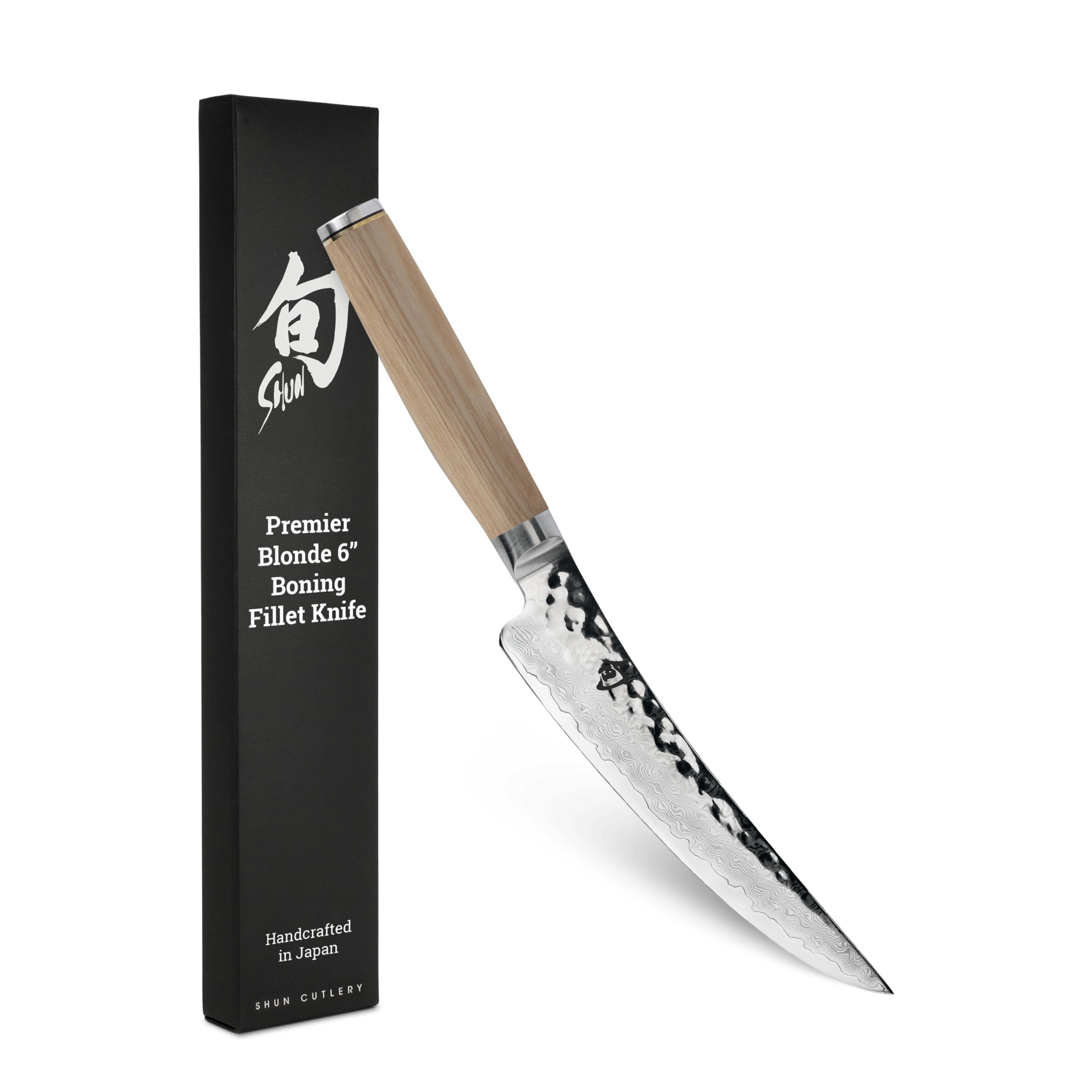
Shun Premier Blonde Boning Knife
 Save
SaveWe recommend this knife for cooks who want a precise, well-balanced blade for trimming meat and filleting fish.
Key Pros
- Slim blade offers strong control around bones and joints
- Hammered finish helps reduce drag and sticking
- Comfortable handle supports detailed prep work
Key Cons
- Premium price may not suit occasional users
- Thin edge needs careful handling and sharpening
- A protective sheath is not included
When we used the Shun Premier Blonde, the narrow, curved blade moved smoothly around bones and through connective tissue. Its balance made it easier to trim pork, beef, and lamb without removing more meat than needed.
The blade felt very sharp out of the box, and the hammered surface helped food release during longer cuts. We also found the blonde Pakkawood handle comfortable during repeated prep, with a secure grip for both left- and right-handed use.
This knife works especially well for home cooks who buy larger cuts or prepare whole fish. We would handle it carefully, wash it by hand, and store it in a blade guard or knife block because the fine edge and polished finish deserve protection.
Shun Classic 6-Inch Boning & Fillet Knife
 Save
SaveWe recommend this knife for cooks who want a sharp, precise blade for trimming meat and filleting smaller fish.
Key Pros
- Very sharp and precise for close trimming
- Comfortable handle with good control
- Damascus design and Japanese craftsmanship
Key Cons
- Costs more than many basic boning knives
- Thin edge needs careful handling
- Six-inch blade may feel short for large cuts
When we used the Shun Classic, the slim, curved blade moved smoothly around bones and joints. It gave us good control while trimming fat and removing fish skin, especially on smaller cuts.
The handle felt secure during longer prep tasks, and the balanced design made detailed work easier. Its sharp edge reduced the effort needed for clean cuts, but we would avoid twisting the blade or using it on hard bones.
This knife suits home cooks who value precision and do not mind paying more for careful construction. We would store it safely, hand-wash it, and maintain the edge with suitable tools to help protect the blade.
HOSHANHO 7-Inch Damascus-Style Fillet Knife
 Save
SaveWe recommend this knife for cooks who want a sharp, light boning knife for fish and smaller meat cuts.
Key Pros
- Very sharp edge with clean, precise cuts
- Comfortable pakkawood handle
- Light, flexible blade offers good control
Key Cons
- The blade may feel too flexible for some users
- Handle care is needed to preserve its finish
- It lacks the heft some cooks prefer for larger cuts
We found the 7-inch blade easy to guide around fish bones and through delicate flesh. Its thin profile helped us remove skin and trim meat without taking away more than necessary.
The edge felt sharp right out of the package, so we did not need to hone it before use. The flexible blade followed the shape of the fish well, although cooks who prefer a rigid boning knife may find it less controlled for tougher tasks.
The pakkawood handle gave us a steady, comfortable grip during longer prep sessions. We would hand-wash and dry this knife after each use to protect the handle and maintain the edge.
HOSHANHO Damascus Boning Knife
 Save
SaveWe recommend this knife for shoppers who want a sharp, lightweight boning and fillet knife with a flexible blade for fish, poultry, and meat.
Key Pros
- Very sharp blade for clean trimming and filleting
- Flexible, pointed tip reaches around bones
- Comfortable olive wood handle with a secure grip
Key Cons
- Seven-inch blade may feel short for large cuts
- Thin blade can flex more than some users prefer
- Requires careful handling because it arrives extremely sharp
We found the blade easy to guide around small bones and tight sections of meat. Its narrow shape worked well for trimming fat, removing fish skin, and making precise cuts without much pressure.
The olive wood handle felt comfortable during longer prep sessions. The knife also stayed light in the hand, which made repeated filleting less tiring.
This knife may not suit anyone who regularly works with large briskets or oversized cuts. The blade has useful flexibility, but some users may want either more bend for delicate fish or a stiffer blade for heavier meat.
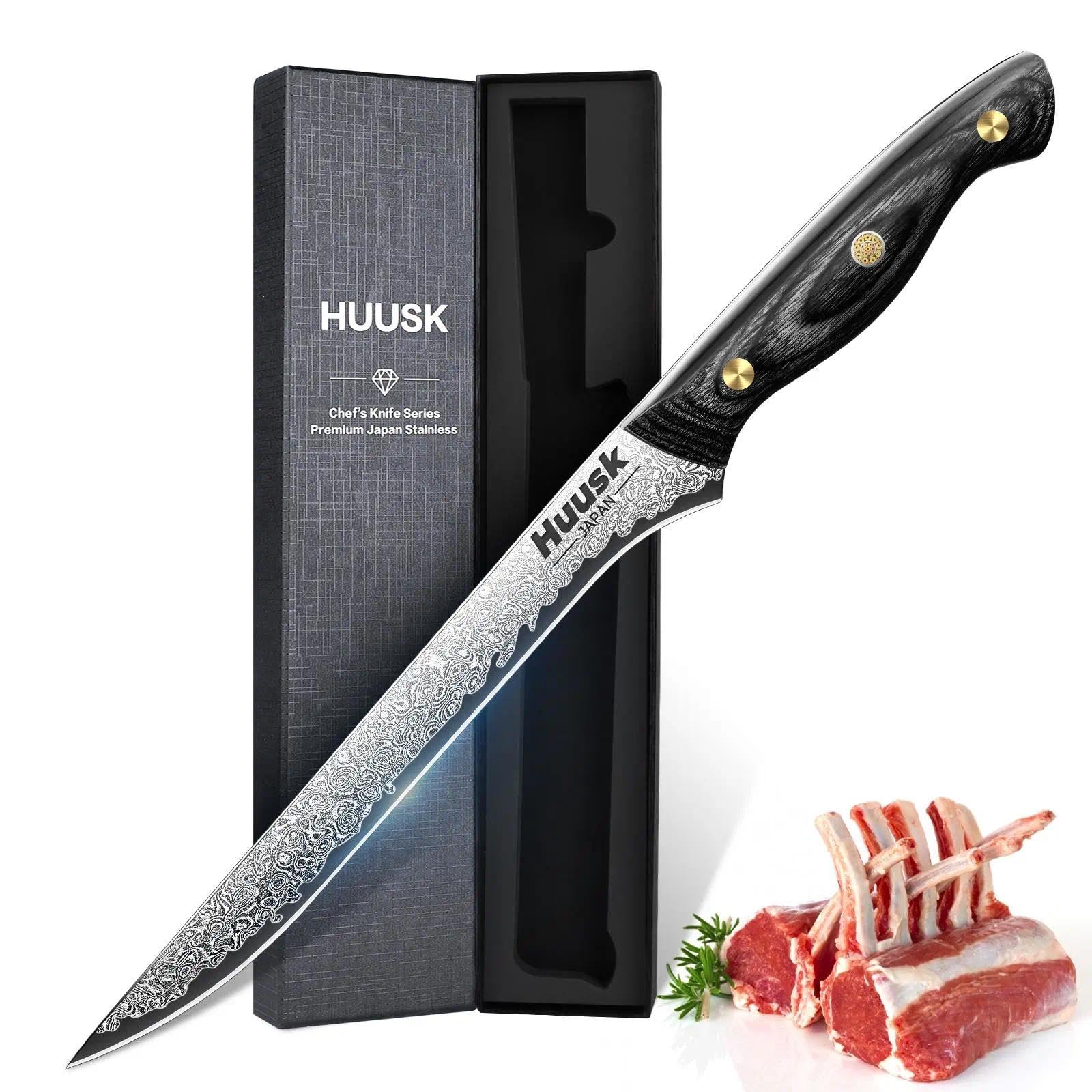
Huusk Damascus Boning Knife
 Save
SaveWe recommend this knife for cooks who want a sharp, well-balanced boning tool with an attractive Damascus-style blade and ebony handle.
Key Pros
- Sharp VG-10 core cuts cleanly through meat and trim.
- Slim blade gives us good control around bones and joints.
- Full-tang handle feels balanced and secure.
Key Cons
- Some handle areas may feel rough around the pins and joints.
- The blade can feel slightly heavy for detailed work.
- Hand washing and careful drying are needed to protect the finish.
We found the 7.7-inch blade useful for trimming brisket, separating meat, and working around chicken bones. Its narrow shape helped us make controlled cuts without removing more meat than needed.
The knife arrived very sharp and handled meat smoothly. The edge also stayed effective through regular prep, although we would still hone it often to maintain clean cutting.
The ebony handle fit comfortably in our hand and gave us steady control. The Damascus pattern adds visual appeal, but the finish may include minor rough spots near the handle hardware. We would choose this knife for home cooks who value both cutting performance and presentation.
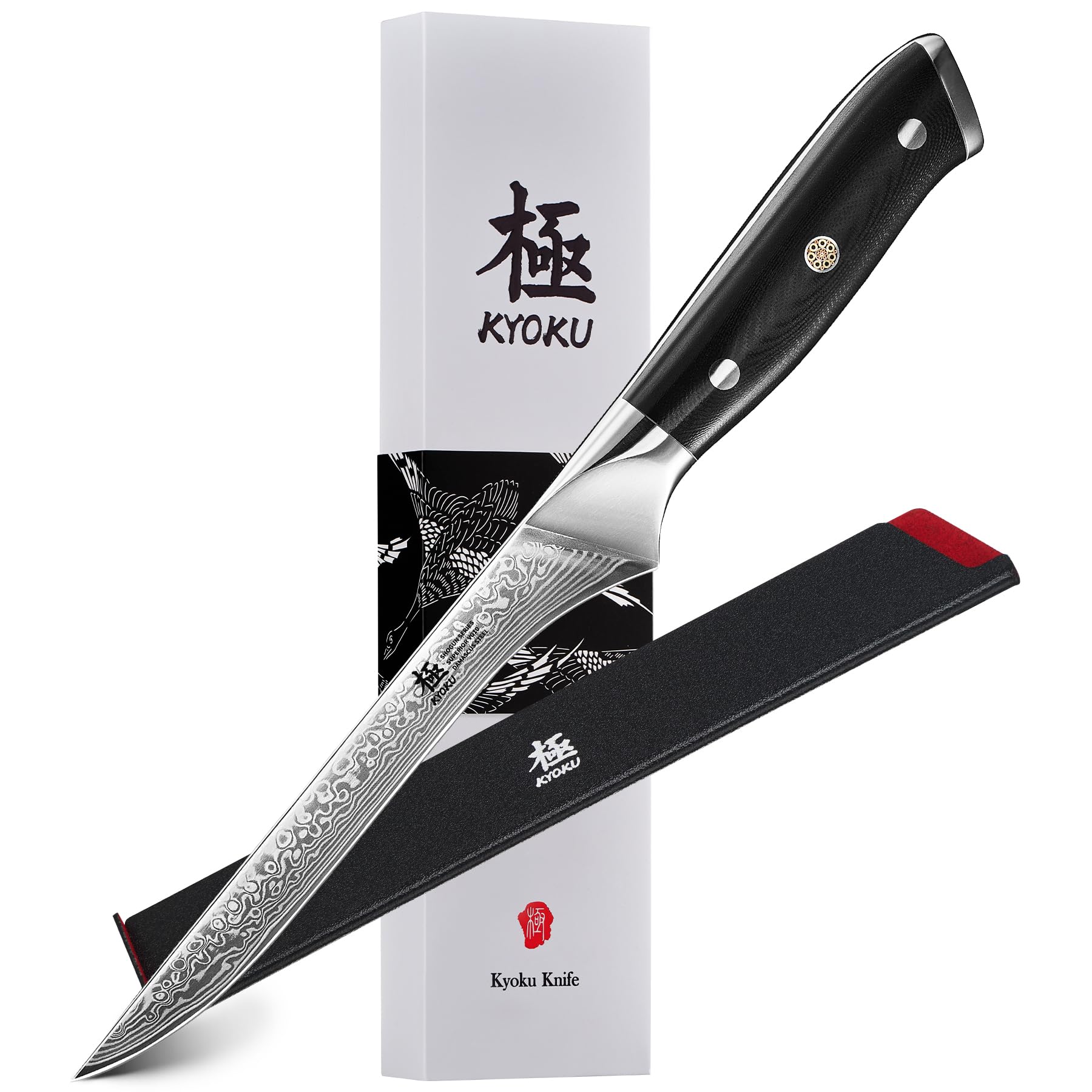
KYOKU Shogun VG-10 Boning Knife
 Save
SaveWe recommend this knife for home cooks and hunters who want a sharp, well-balanced boning knife with a sturdy handle and useful storage accessories.
Key Pros
- Sharp edge works well for trimming, deboning, and skinning
- Balanced G10 handle feels secure during longer prep tasks
- Sheath and case make storage safer and easier
Key Cons
- The sharp edge requires careful handling and regular maintenance
- Its 7-inch blade may feel large for small cuts
- Hand washing takes more care than machine washing
While using the KYOKU Shogun, we found that the blade moved cleanly through meat and gave us good control around joints. Its moderate weight also made it feel steadier than very light boning knives.
The handle stayed comfortable during repeated cuts, and the full-tang design gave the knife a solid feel. The Damascus finish adds visual appeal, though the edge matters more than the pattern during actual food preparation.
We liked having both a sheath and a case for storage. The blade arrived very sharp, so we handled it carefully and washed it by hand. Cooks who want a flexible, lightweight fillet knife may prefer another style, but this model suits users who want a firm, versatile boning knife.
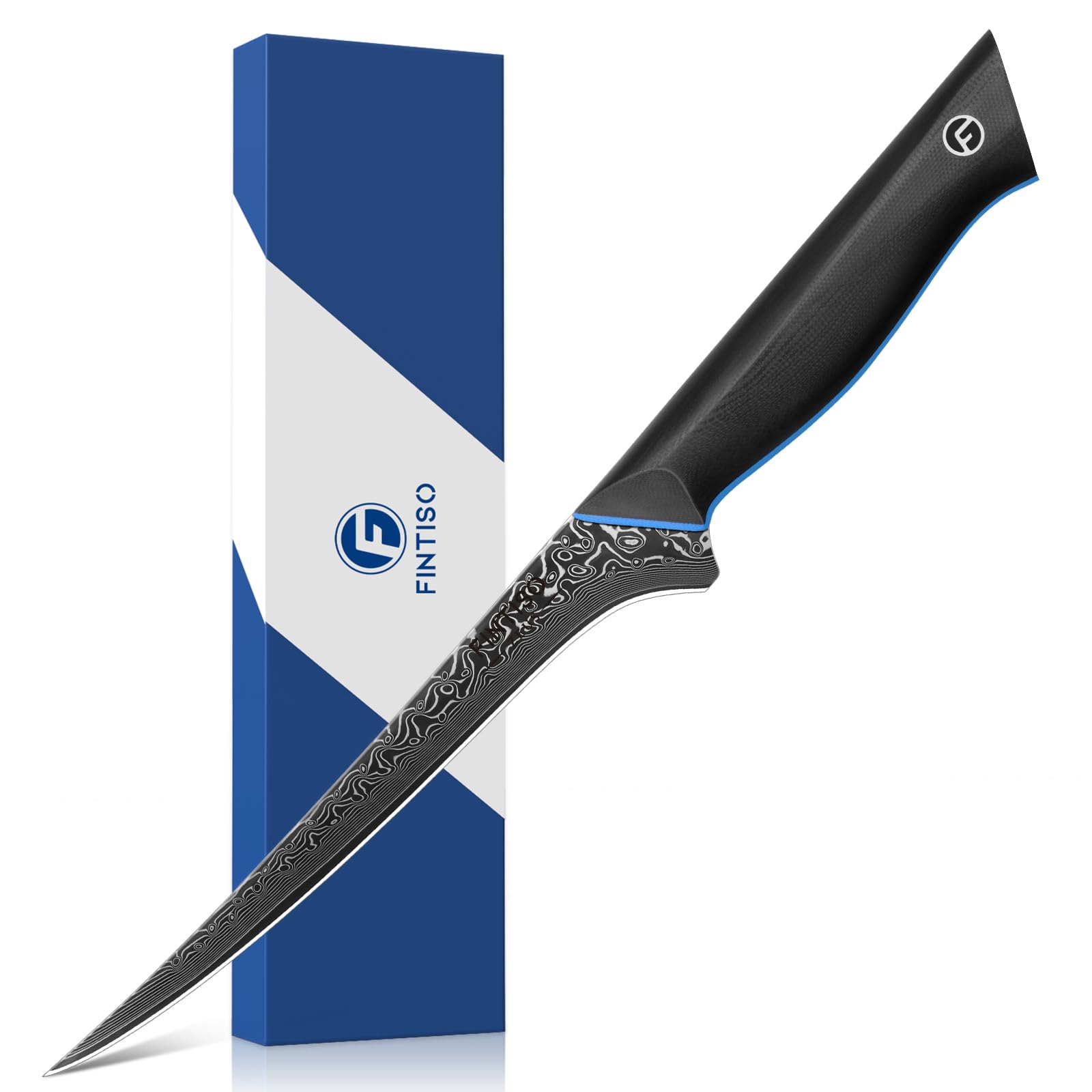
FINTISO 7-Inch Damascus Boning Knife
 Save
SaveWe recommend this knife for cooks who want a sharp, narrow blade for fish, chicken, and careful trimming.
Key Pros
- Sharp edge supports clean, thin cuts
- Grippy G10 handle feels secure when wet
- Balanced design offers good control
Key Cons
- The blade feels stiffer than some flexible fillet knives
- The dark finish may show wear over time
- Hand washing may help preserve its appearance
We found the 7-inch blade easy to guide around bones and along fish fillets. It also sliced chicken breast into thin pieces without much tearing. The edge felt very sharp out of the box.
The G10 handle gave us a steady grip during longer prep tasks. Its shape felt comfortable, and the full-tang design added confidence when trimming firmer cuts.
This knife is more rigid than a traditional flexible fillet knife, so it may not suit cooks who want the blade to bend around every bone. The Damascus pattern looks attractive, although some buyers may question whether the dark surface will keep its original finish.
At 169 grams, it has enough weight to feel stable without becoming tiring. We would choose it for home cooks who need a precise boning and fillet knife at a moderate price.
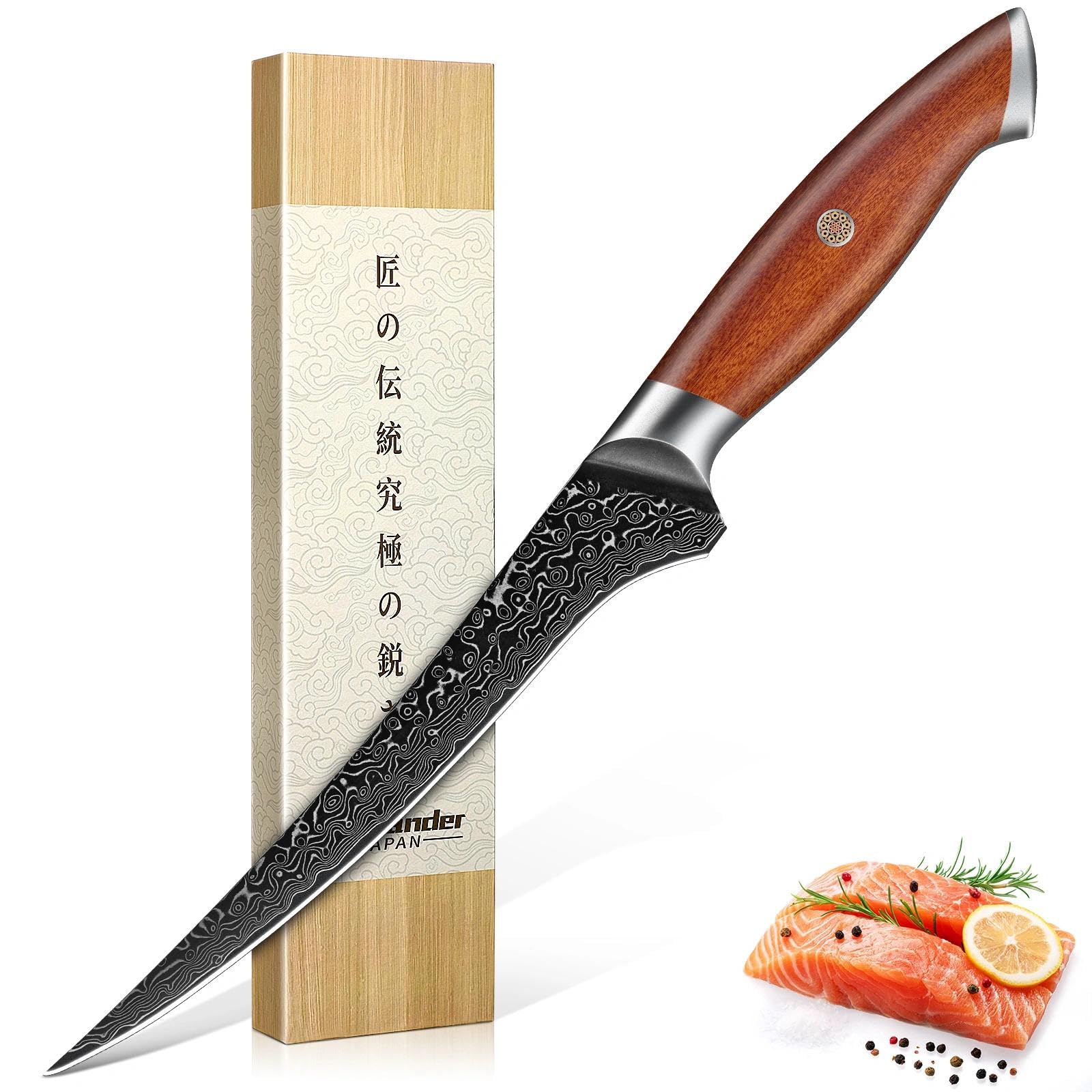
Freelander Damascus Fillet Knife
 Save
SaveWe recommend this knife for shoppers who want a sharp, flexible blade for fish, poultry, and light trimming work.
Key Pros
- Sharp, narrow blade handles clean filleting cuts
- Wood handle feels balanced and comfortable
- Attractive Damascus pattern and gift box
Key Cons
- Wood may need more care than synthetic handles
- Flexibility may not suit heavy bone work
- Limited review volume
We found the 7-inch blade easy to control around fish bones and skin. Its narrow shape also worked well for trimming poultry and removing small areas of fat.
The handle gave us a steady grip during careful cuts, while the balanced feel helped reduce hand strain. However, we would still keep the knife dry and hand-wash it to protect the wood.
The blade’s Damascus pattern adds a refined look, and the presentation box makes the knife suitable for gifting. We would choose it for filleting and precision prep, but use a heavier knife for cutting through joints or dense bones.
Buying Guide
We should start with the knife’s blade shape and flexibility. A narrow, curved blade helps us follow bones and trim meat, while moderate flexibility provides control without bending too easily. Choose a blade length that matches the cuts we prepare most often.
| Feature | What to look for |
|---|---|
| Steel | Corrosion resistance, edge retention, and easy sharpening |
| Damascus construction | Clear details about the steel layers and core |
| Handle | Secure grip, balanced weight, and comfortable shape |
| Edge | Even sharpening and a clean, consistent bevel |
| Sheath | Safe storage and protection for the edge |
We should check whether “Damascus” refers to a true layered construction or only a decorative pattern. Reliable product details should identify the blade’s core steel, layer structure, and manufacturing method. If these details are missing, we should treat the claim carefully.
Handle material matters because boning work requires steady control. We should choose a handle that stays secure when wet and has smooth, sealed surfaces that are easy to clean. A full tang can add strength, but the knife’s balance and construction quality matter more than appearance alone.
We should also consider care needs. Hand washing, prompt drying, and regular honing help protect the blade, while a sharpening method suited to the steel helps maintain the edge. A practical warranty and clear care instructions can support long-term use.
Editor’s Choice
We choose the Shun Classic 6-Inch Boning Knife as our editor’s pick for most home cooks. Its Damascus-clad blade offers good edge retention, while the narrow, curved shape helps us separate meat from bones with controlled cuts.
The knife uses a VG-MAX steel core and a 16-degree edge on each side. We find this angle sharp enough for trimming poultry, beef, and fish, yet manageable for cooks who maintain their knives regularly.
| Feature | Details |
|---|---|
| Blade length | 6 inches |
| Blade type | Narrow, curved boning blade |
| Core steel | VG-MAX |
| Handle | Contoured walnut-colored PakkaWood |
| Best use | Trimming meat and poultry |
We recommend using a fine honing rod and hand-washing the knife after each use. A cutting board with a stable surface also helps protect the thin edge from damage.
This model suits cooks who want a refined Damascus-style finish without choosing an overly flexible blade. We would select a more flexible boning knife for delicate fish work or jobs that require the blade to follow tight curves.
Conclusion
Choosing the best Damascus boning knife depends on our cutting tasks, hand size, and preferred blade shape. We should look for a sharp, flexible blade, a secure handle, and strong corrosion resistance.
Damascus steel can offer an attractive pattern and good edge retention, but the steel type and heat treatment matter more than the pattern alone. We should also check the knife’s balance, handle comfort, and ease of sharpening.
For regular kitchen use, we can prioritize comfort and control over decorative details. A well-made knife with a reliable sheath and simple care needs will serve us better than a lower-quality model with a striking appearance.
Before buying, we should compare:
- Blade length and flexibility
- Steel quality and construction
- Handle grip and balance
- Cleaning and storage needs
- Warranty and return policy
With these points in mind, we can select a Damascus boning knife that supports precise trimming and remains practical for regular use.
FAQs
What is a Damascus boning knife?
We use this knife to separate meat from bones and trim fat with control. Its layered steel pattern is mainly decorative, so we should judge the knife by its edge, handle, and construction.
Which blade shape should we choose?
| Shape | Best use |
|---|---|
| Curved | Following joints and removing meat |
| Flexible | Fish, poultry, and detailed trimming |
| Stiff | Beef, pork, and heavier cuts |
What blade length works best?
We usually choose a 5- to 6-inch blade for general kitchen use. A shorter blade gives us more control, while a longer blade can cover larger cuts more efficiently.
Does Damascus steel stay sharp longer?
It can hold an edge well when the maker uses quality steel and heat treatment. The Damascus pattern alone does not guarantee sharpness or durability.
How should we clean the knife?
We should hand-wash it with mild soap, dry it immediately, and avoid the dishwasher. Moisture can stain the blade and damage the handle or edge.
How do we maintain the edge?
We can use a fine sharpening stone or have a professional sharpen it. A honing rod may realign the edge, but it will not remove enough metal to repair a dull blade.
What safety features matter most?
We should look for a secure grip, a balanced handle, and a blade guard for storage. A nonslip handle helps us maintain control when working with wet meat.