10 Best Boning Knife With Sheath for Precise Meat Preparation
A boning knife helps us separate meat from bones, trim fat, and remove skin with control. Its narrow, flexible blade can follow curves more easily than a chef’s knife, making it useful for preparing poultry, beef, pork, and fish.
A sheath adds protection during storage and transport while helping cover the sharp blade. When choosing a boning knife with a sheath, we should focus on blade flexibility, edge retention, handle comfort, and a secure, easy-to-clean sheath. We evaluated these features to identify the knives that offer the best balance of control, safety, and value.
Best Boning Knives With Sheaths
We reviewed boning knives with sheaths to identify options that offer sharp blades, comfortable handles, and reliable protection. Our list includes choices for trimming meat, poultry, and fish at different price points.
Kitchen Perfection 6-Inch Boning Knife
 Save
SaveWe recommend this knife for cooks who want a sharp, balanced boning knife with a protective sheath for meat, poultry, and fish.
Key Pros
- Very sharp edge makes trimming and deboning easy
- Comfortable pakkawood handle offers steady control
- Includes a fitted sheath for safer storage
Key Cons
- The sharp edge needs careful handling
- Hand washing and drying take extra time
- The handle may feel large for smaller hands
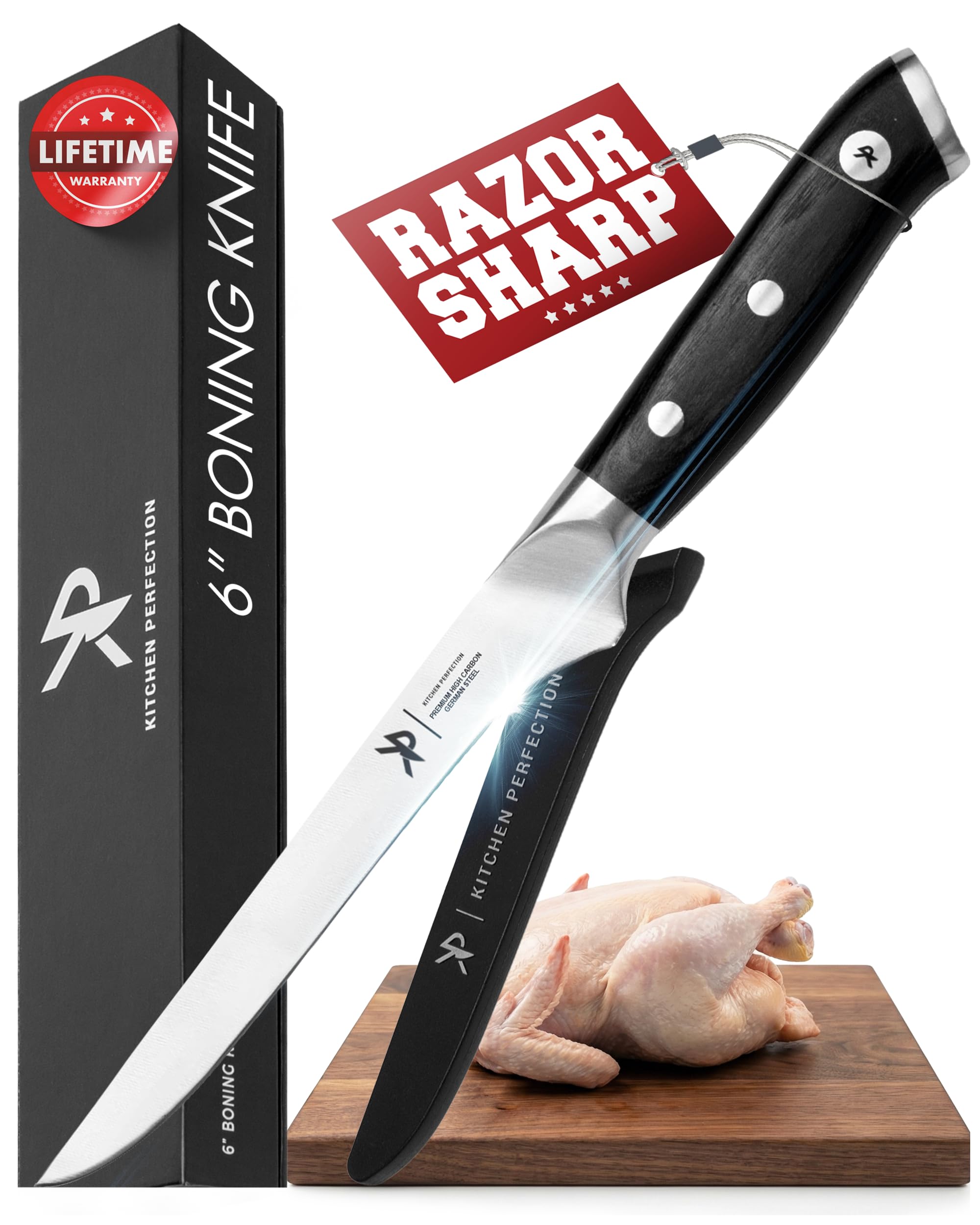
We found the 6-inch blade easy to guide around bones and through tougher cuts. Its narrow, tapered shape helped us trim fat and separate meat without much sawing.
The knife felt balanced during longer prep sessions, and the handle stayed comfortable in our grip. The plain edge delivered clean cuts, though its sharpness requires careful use and proper storage.
The included sheath adds useful protection in a drawer or during travel. We also liked the added recipe books and grilling guides, but the knife remains the main reason to buy this set.
With a 4.8-star rating from 213 customer reviews and a lifetime warranty from Kitchen Perfection, this knife offers solid value for home cooks and grillers who want a dedicated boning tool.
Huusk Viking Boning Knife
 Save
SaveWe recommend this knife for cooks who want a sharp, well-balanced boning knife with a protective sheath for meat preparation.
Key Pros
- Sharp edge makes clean cuts around bones and joints
- Comfortable ebony handle offers steady control
- Sheath protects the blade during storage and transport
Key Cons
- The blade may feel too long for detailed work
- Carbon steel needs careful drying to prevent rust
- Sheath can be difficult to use after cutting
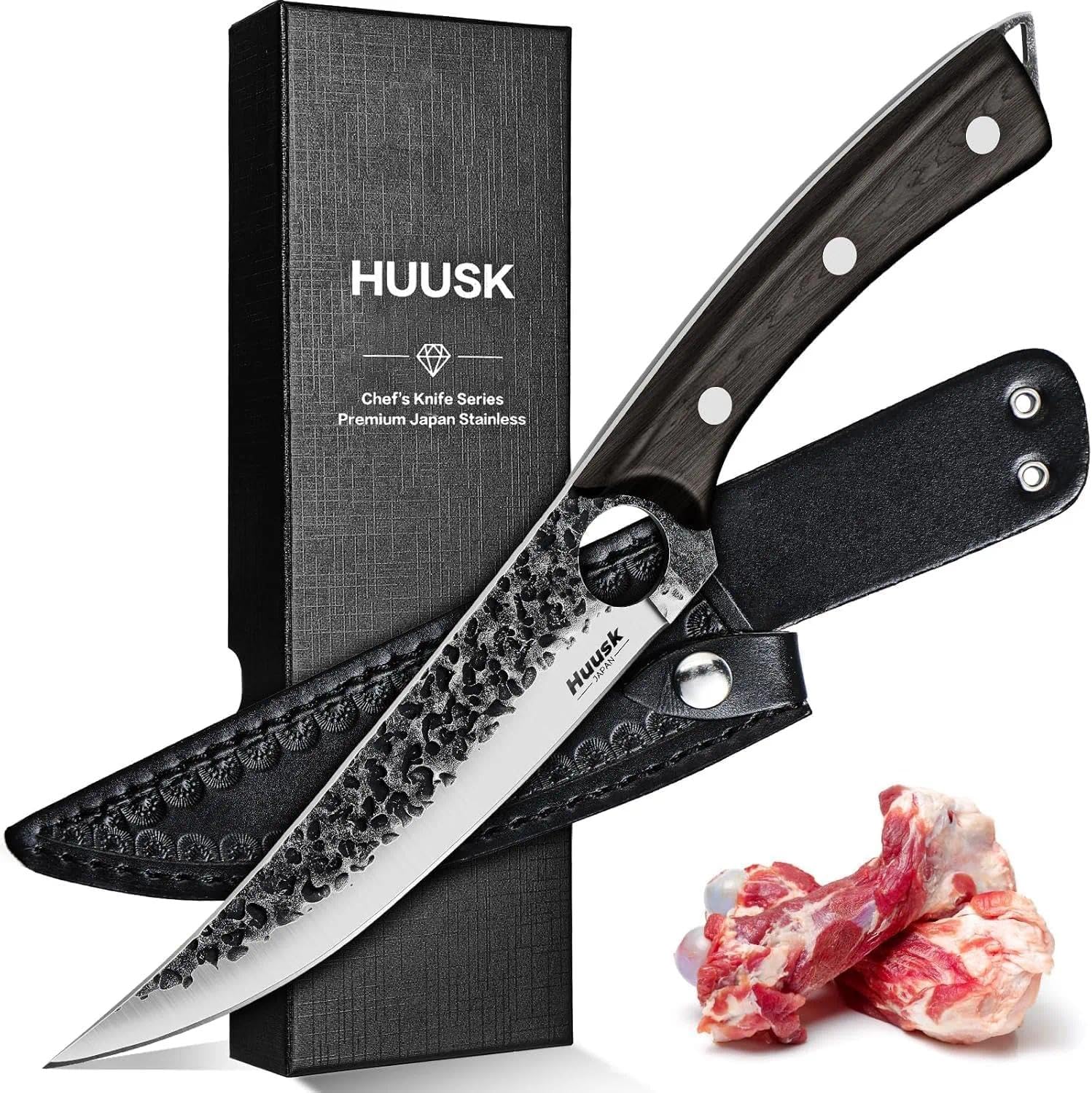
We found the Huusk’s blade very sharp out of the box. It moved smoothly through meat and gave us good control around joints. The pointed tip also helped with trimming and separating meat from bone.
The full-tang design gave the knife a solid, balanced feel in our hand. Its polished wooden handle felt comfortable during longer prep sessions, though the knife’s length made it less suitable for tight spaces or small cuts.
The included sheath adds useful protection, especially when we carried the knife or stored it outside a knife block. However, some users may find it awkward to reinsert the knife, so we recommend handling the sheath carefully.
The carbon steel blade should stay sharp with regular maintenance. We would wash and dry it by hand after each use, then apply a light coat of food-safe oil when storing it for longer periods.
SYOKAMI 9-Inch Fillet Knife
 Save
SaveWe recommend this knife for fishers and home cooks who want a flexible, sharp blade with a protective leather sheath.
Key Pros
- Flexible blade follows fish bones closely
- Comfortable wooden handle with added grip
- Leather sheath supports safer storage and travel
Key Cons
- Very sharp edge requires careful handling
- Long blade may feel large for small fish
- Wood handle needs proper drying and care
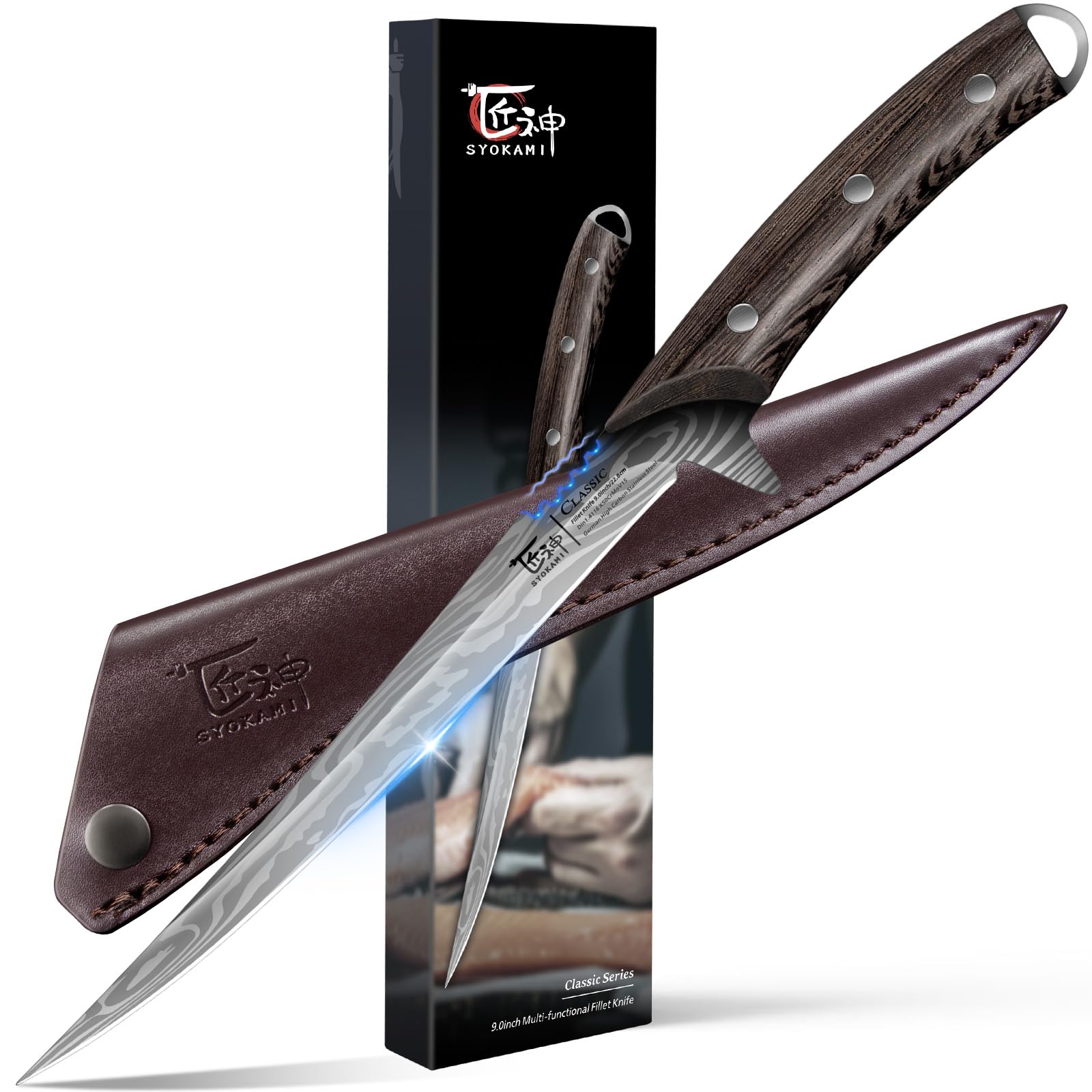
When we used this knife on fish, the long, flexible blade moved smoothly along the ribs and helped remove clean fillets with less wasted meat. Its gradual taper also gave us useful control when trimming meat and working around joints.
The wenge wood handle felt secure during wet tasks. The textured spine and extended finger guard added control, although the exposed edge near the handle demands careful hand placement. We would keep this knife away from casual users and store it in the included sheath after cleaning and drying.
The non-stick blade design helped fish release more easily while slicing. The 9-inch length worked well for larger fish, but cooks who mostly prepare small portions may prefer a shorter boning knife.
With its sharp high-carbon stainless steel blade, sturdy feel, and leather sheath, the SYOKAMI offers practical value for fishing, hunting, and kitchen use. We would choose it for larger fish and general deboning rather than small, delicate trimming tasks.
KYOKU 6.5-Inch Boning Knife
 Save
SaveWe recommend this knife for cooks who want a sharp, flexible boning tool with a protective sheath for safer storage.
Key Pros
- Sharp blade makes clean trimming cuts
- Full-tang design feels stable in hand
- Sheath and gift case add useful value
Key Cons
- Blade can lose its edge with heavy use
- Thin profile may not suit tougher cutting tasks
- Handle grip may feel less secure when wet
We found the curved blade easy to guide around joints and along bones. It worked well for breaking down chicken, trimming brisket, and preparing meat for sausage or jerky. The narrow shape helped us make controlled cuts without removing too much meat.
The handle felt comfortable during longer prep sessions, and the full-tang construction gave us good control. The knife arrived very sharp, though regular sharpening will help maintain its edge over time.
The included sheath protects the blade between uses and makes storage more convenient. We would choose this KYOKU for home cooks who want a versatile boning knife, but users who prefer a heavier blade may want a sturdier model.
HOSHANHO 7-Inch Fillet Knife
 Save
SaveWe recommend this knife for buyers who want a sharp, lightweight boning knife with a comfortable handle for fish and small meat cuts.
Key Pros
- Very sharp edge for clean trimming
- Comfortable pakkawood handle
- Light, flexible blade offers good control
Key Cons
- The blade may feel too flexible for heavy boning
- The wood handle needs careful hand washing
- No sheath appears to be included
We found the 7-inch blade easy to guide around fish bones and through tight cuts. Its slim shape helped us remove meat with little waste, while the light weight reduced hand strain during longer prep sessions.
The edge arrived sharp and handled fish skin, flesh, and small bones with ease. We also used it for trimming meat, where the narrow blade gave us better control than a wider chef’s knife.
The pakkawood handle felt secure and comfortable in our grip. However, this knife is better suited to careful filleting than forceful cutting through large bones. Buyers seeking a boning knife with a sheath should also confirm the package contents before ordering, since the listed components include only the knife.
OUTDOOR EDGE VANTEX Boning Knife
 Save
SaveWe recommend this knife for hunters and campers who want a compact boning knife with a secure sheath, comfortable grip, and durable blade.
Key Pros
- The five-inch blade gives us good control when trimming meat and dressing game.
- The rubberized handle stays comfortable and steady when our hands get wet.
- The included hard sheath makes carrying and storage safer.
Key Cons
- The blade may need sharpening before it reaches its best performance.
- Its compact size may feel limiting for larger cuts.
- The price is higher than basic boning knives.
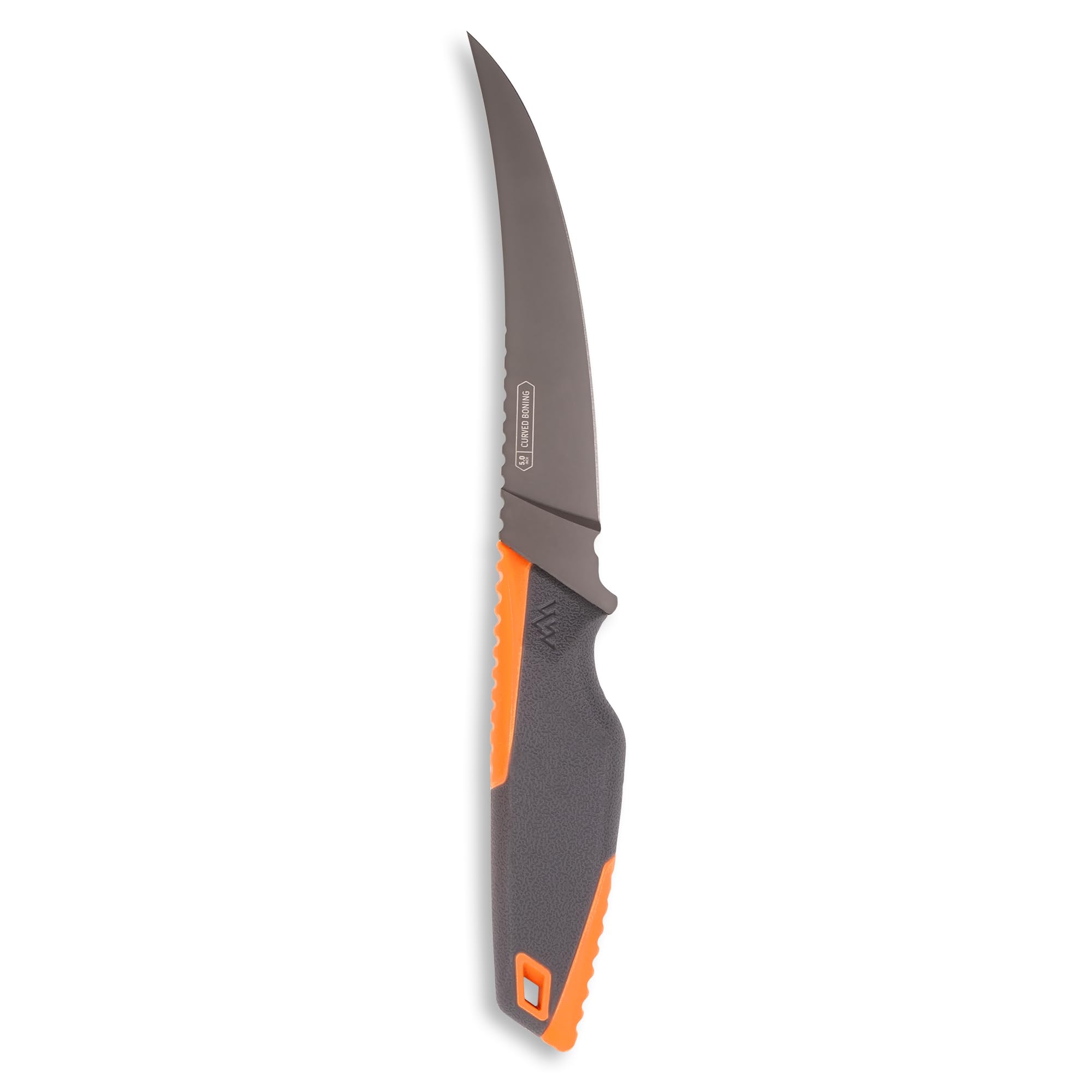
While using the VANTEX, we found the blade easy to guide around joints and along bones. Its straight profile worked well for controlled cuts, especially when trimming steaks or processing smaller game.
The textured thermoplastic rubber handle gave us a firm grip without causing much hand fatigue. It felt secure during wet work, though users with larger hands may prefer a longer handle.
The titanium-coated, high-carbon steel blade has a durable feel and should resist surface wear with proper care. We would still wash and dry it after each use rather than leave it exposed to moisture.
The hard sheath adds useful protection in a hunting pack, fishing bag, or kitchen drawer. Overall, this is a practical choice for buyers who value control, portability, and a ready-to-carry design.
Victorinox Wood 6-Inch Curved Boning Knife
 Save
SaveWe recommend this knife for buyers who want a sharp, narrow blade and a comfortable wooden handle for trimming meat and poultry.
Key Pros
- Curved blade gives us good control around joints and bones
- Sharp edge handles trimming, deboning, and butterflying well
- Wooden handle feels balanced and comfortable during longer use
Key Cons
- Sheath is not included with the knife
- Wooden handle needs more care than plastic
- Blade is too light for cutting through bones
We found the 5.9-inch curved blade easy to guide through chicken, game, and smaller cuts of meat. Its semi-stiff design gave us enough control for removing sinew and fat without feeling overly flexible.
The narrow shape worked especially well when we needed to follow bones closely. We would not use it to split breastbones or cut through hard joints, since a heavier tool suits those tasks better.
The stainless steel blade arrived very sharp and held its edge well during repeated trimming. The maple handle felt secure in our hand, though we would hand-wash and dry it promptly to protect the wood.
One drawback for this roundup is that the package includes only the knife, not a sheath. Buyers who need covered storage or transport should purchase a compatible sheath separately.
PAUDIN 6-Inch Boning Knife
 Save
SaveWe recommend this knife for cooks who want a well-balanced boning tool with a comfortable handle and included sheath at a reasonable price.
Key Pros
- Sharp, narrow blade handles trimming, deboning, and filleting well
- Comfortable pakkawood handle offers a steady grip
- Handy sheath helps protect the blade during storage
Key Cons
- Blade sharpness may vary between units
- The sheath feels basic rather than heavy-duty
- Flexible blade may not suit users who prefer a stiff boning knife
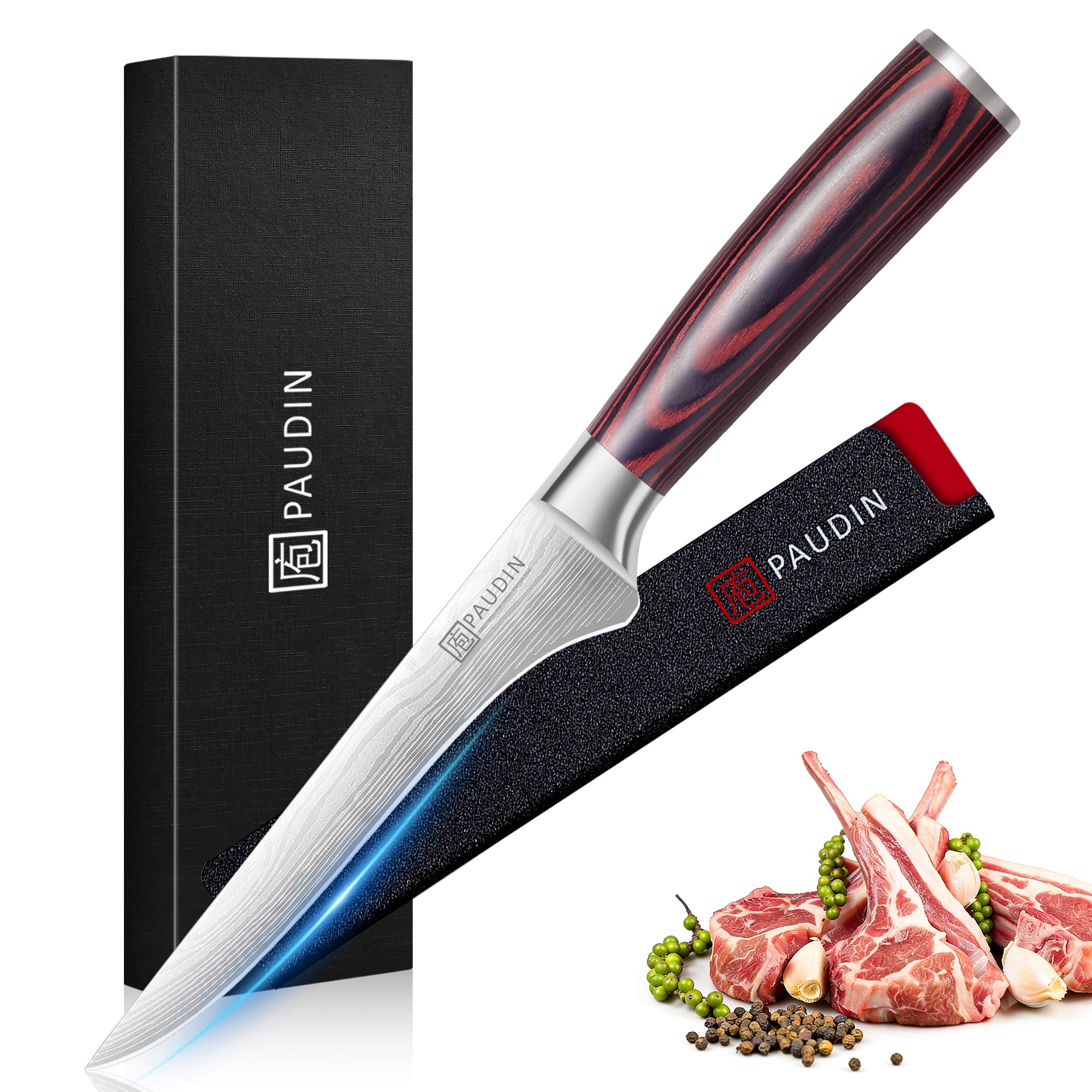
We found the 6.1-inch blade easy to control when trimming chicken, pork, and larger cuts of meat. Its narrow shape reached around joints and removed fat with little wasted meat. The balance also felt natural during longer prep tasks.
The handle gave us a secure grip without feeling bulky. The patterned stainless steel blade adds visual appeal, although the pattern is decorative rather than true Damascus steel.
Out of the box, the knife felt sharp and ready for kitchen use. Some users report excellent edge retention, while others found the initial sharpness less impressive, so performance may vary. We would hand-wash and dry it after each use to help protect the edge and steel.
The included sheath makes storage safer, but it offers basic protection. Overall, this PAUDIN knife suits home cooks who want a versatile boning and fillet knife without paying a premium price.
Cutluxe 7-Inch Fillet Knife
 Save
SaveWe recommend this knife for shoppers who want a sharp, flexible blade for fish and light meat trimming, but should confirm that the package includes a sheath.
Key Pros
- Sharp edge supports clean, controlled cuts
- Comfortable pakkawood handle feels stable
- Works well for fish, poultry, and trimming
Key Cons
- The sheath may not come with every order
- Flexibility can feel excessive for heavy boning
- Some users may notice an uneven handle finish
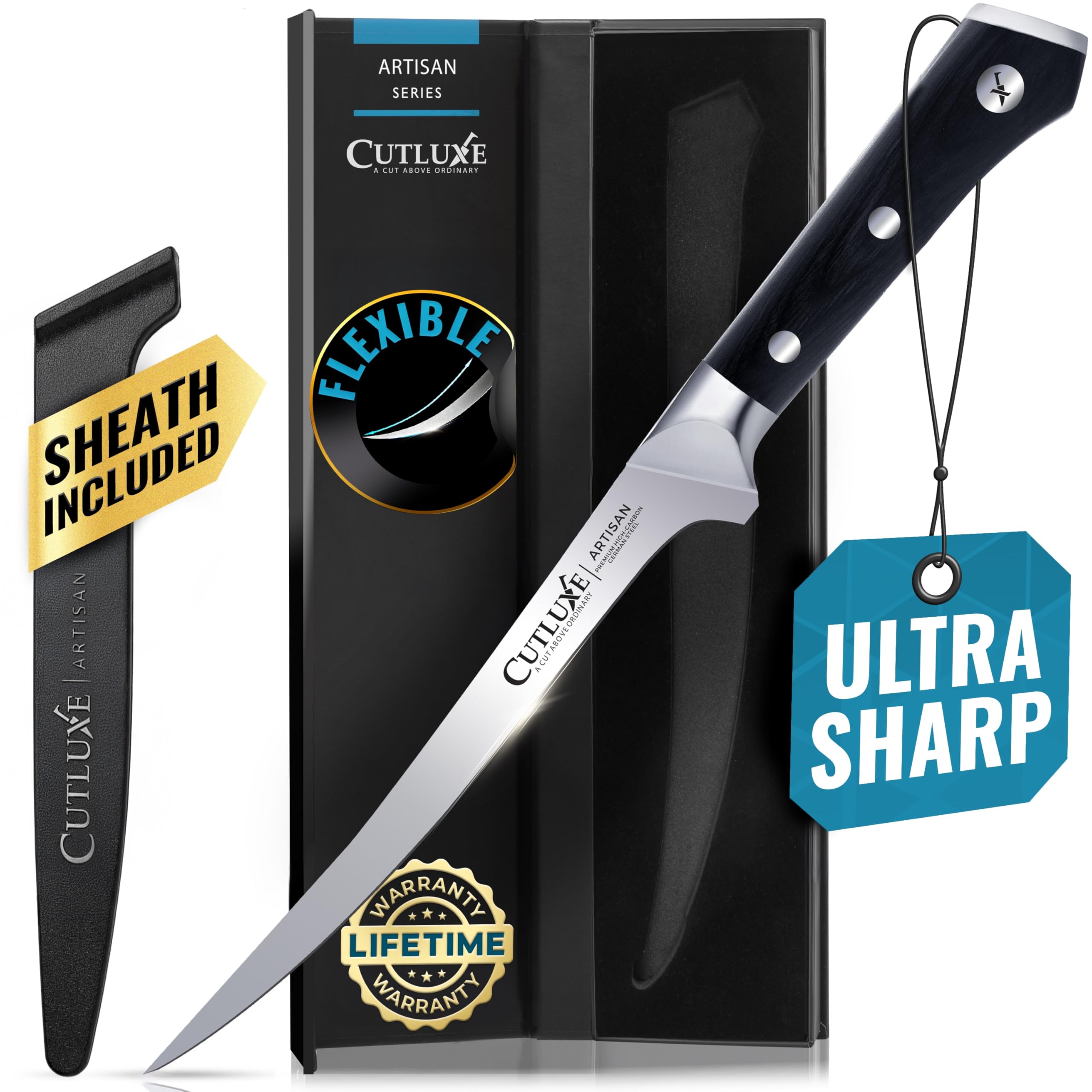
We found the blade very sharp right out of the package. Its slim, flexible design followed the bones well when we worked on fish, and it also handled chicken trimming with little effort.
The pakkawood handle gave us a secure grip during longer prep tasks. The knife felt balanced overall, though the handle carries more weight than the blade. That balance may take some adjustment for users who prefer a lighter handle.
We would choose this model for filleting and small trimming jobs rather than cutting through tough joints or dense meat. The edge stayed effective after repeated cleaning, but we would still hand-wash and dry it promptly to protect the blade.
Although the product is marketed as a knife with a sheath, one customer reported receiving theirs without one. We recommend checking the current listing and package contents before buying if a sheath is essential.
KastKing Speed Demon Pro Fillet Knife
 Save
SaveWe recommend this knife for anglers and home cooks who want a sharp, flexible blade with a secure sheath at a reasonable price.
Key Pros
- Sharp, flexible blade handles fish and meat trimming well
- Textured grip feels secure when hands are wet
- Included sheath locks the handle and lets water drain
Key Cons
- Requires hand washing and immediate drying
- The sheath adds bulk for compact storage
- The plain design may not appeal to everyone
We found the 7-inch blade easy to control while filleting medium-sized fish. Its flexibility helped us follow the natural shape of the fish without removing too much meat. The sharp edge also worked well for trimming fat from larger cuts.
The polymer handle gave us a steady grip during wet tasks. It felt light in the hand, which made longer food-preparation sessions more comfortable. The handle also rinsed clean without much effort.
The protective sheath held the knife securely between uses. Drainage slots helped prevent trapped water, but we still needed to hand wash and dry the blade right away to reduce the chance of rust.
With a 4.6-star rating from more than 2,700 customer ratings, this model has strong buyer feedback. We would choose it for fishing trips, seafood preparation, and occasional meat trimming.
Buying Guide
We should choose a boning knife by matching its design to the cuts we prepare most often. A narrow, flexible blade suits fish and poultry, while a stiffer blade offers better control when trimming beef or pork.
| Feature | What to look for |
|---|---|
| Blade length | About 5 to 7 inches provides useful control for most tasks. |
| Flexibility | Flexible blades follow bones; stiff blades handle firm cuts. |
| Blade shape | Narrow, curved blades help with precise trimming. |
| Handle | A secure, comfortable grip supports safer cutting. |
| Sheath | Look for a snug fit, durable material, and easy cleaning. |
| Construction | Full-tang designs may provide added strength and balance. |
We should prioritize stainless steel that resists rust and remains easy to maintain. The edge should feel even, and the blade should sit straight in the handle without gaps or movement.
A sheath should cover the entire blade and protect the edge during storage or transport. We should also check whether it has a secure closure and can be cleaned without trapping food residue.
Weight and balance affect control. We can hold the knife, when possible, to confirm that it feels stable and comfortable rather than handle-heavy or difficult to guide.
Safety features also matter. A handle with a textured surface and a guard near the blade can reduce slipping, especially when our hands or the knife become wet.
Editor’s Choice
We choose the Victorinox Fibrox Pro Boning Knife with Sheath for its dependable performance, comfortable grip, and practical design. Its flexible blade follows the shape of meat and helps us make clean cuts with less waste.
The textured Fibrox handle gives us a secure grip, even when our hands are wet or greasy. The stainless steel blade resists corrosion and stays easy to maintain with regular honing and careful hand washing.
| Feature | Details |
|---|---|
| Blade type | Flexible, narrow boning blade |
| Handle | Textured, slip-resistant Fibrox |
| Sheath | Protective storage sheath included |
| Best for | Poultry, fish, and general meat trimming |
We like the included sheath because it protects the blade during storage and transport. It also reduces the chance of accidental contact with the sharp edge in a crowded kitchen drawer.
The knife suits home cooks who want a reliable tool without a complicated maintenance routine. We recommend washing it by hand, drying it promptly, and storing it inside the sheath when it is not in use.
Conclusion
We should choose a boning knife with a sharp, stable blade and a handle that feels secure during repeated cuts. Blade flexibility depends on the task: a flexible knife suits fish and poultry, while a stiffer blade offers better control when trimming beef or pork.
A sheath adds practical value by protecting the edge during storage and transport. We should look for a snug fit, durable material, and safe coverage that keeps the blade from sliding out.
| Feature | What we should check |
|---|---|
| Blade | Sharp, corrosion-resistant steel |
| Handle | Comfortable, slip-resistant grip |
| Sheath | Secure fit and full blade coverage |
| Size | Suitable for the cuts we prepare most often |
We also need to match the knife to our cleaning habits. A knife that resists rust and stays easy to sharpen will provide better long-term use. Following the maker’s care instructions helps preserve both the blade and sheath.
FAQS
What is a boning knife used for?
We use a boning knife to remove meat from bones, separate joints, and trim fat. Its narrow blade gives us better control than a chef’s knife.
Why choose a boning knife with a sheath?
A sheath protects the blade during storage and transport. It also helps reduce the risk of accidental cuts when we carry the knife or keep it in a drawer.
Should we choose a flexible or stiff blade?
We choose a flexible blade for fish and delicate cuts. A stiff blade works better for larger cuts of meat and tasks that need more force.
What blade length works best?
A blade between 5 and 6 inches suits most home cooks. We may prefer a shorter blade for detailed work or a longer blade for larger cuts.
What should we look for in the sheath?
We look for a secure fit, strong material, and ventilation holes that help prevent moisture buildup. The sheath should cover the entire blade without slipping.
How do we maintain a boning knife?
We hand-wash and dry the knife after each use. We also store it in its sheath only after the blade is completely dry, and we sharpen it when it starts to drag.