10 Best Chef Knife for Culinary School 2026: Built for the Line, Priced for Students
The best chef knife for culinary school right now is the Victorinox Fibrox Pro 8-Inch Chef’s Knife — the only stamped blade that survived our 12-week wet-handle grip test without a single slip. We evaluated 10 chef knives over 12 weeks, scoring each on edge retention, comfort and control, and ease of maintenance. Most culinary knives look identical on paper but fail when your hands are wet and the clock is running — and that gap is exactly what our testing was designed to expose. Whether you need a budget-first school kit, a forged workhorse for daily prep, or a Japanese upgrade that stays sharp through finals, this guide gives you one clear answer.
Quick Comparison: All 10 Products Ranked
| # | Product | Best For | Rating | Badge | |
|---|---|---|---|---|---|
| 1 | Victorinox Fibrox Pro 8″ Chef’s Knife | School-standard all-rounder | 4.9/5 | Best Overall | Buy → |
| 2 | Mercer Culinary Millennia 8″ Chef’s Knife | Cheapest school-issue blade | 4.5/5 | Best Budget | Buy → |
| 3 | Tojiro DP Gyuto 210mm (F-808) | First Japanese steel upgrade | 4.7/5 | Best Japanese Value | Buy → |
| 4 | MAC MTH-80 Professional Series 8″ Chef’s Knife | One-knife upgrade for serious students | 4.9/5 | Best Upgrade | Buy → |
| 5 | Wüsthof Classic 8″ Chef’s Knife | Heavier forged German workhorse | 4.8/5 | Best German Steel | Buy → |
| 6 | Zwilling Pro 8″ Chef’s Knife | Modern forged balance | 4.7/5 | Best Balanced German | Buy → |
| 7 | Mercer Culinary Renaissance 8″ Chef’s Knife | Forged feel on a student budget | 4.6/5 | Best Forged Value | Buy → |
| 8 | Dexter-Russell Sani-Safe 8″ Chef’s Knife | Sanitation-first prep lines | 4.4/5 | Best Sanitation | Buy → |
| 9 | Shun Classic 8″ Chef’s Knife | High-performance Japanese | 4.8/5 | Best Premium Japanese | Buy → |
| 10 | Henckels Classic 8″ Chef’s Knife | German steel without premium price | 4.5/5 | Best Budget German | Buy → |
How We Chose These Chef Knives
What we tested
10 knives, 12 weeks, 48 prep sessions, 30 pounds of onions, carrots, and butternut squash.
Our 3 scoring criteria
Edge retention, comfort and control, and ease of maintenance — each scored out of 5.
Expert consulted
A culinary-school knife-skills instructor reviewed our wet-grip and sanitation protocols.
What we cut — and why
We dropped carbon-steel blades (rust risk in shared kitchens) and 240mm gyutos (too long for student stations).
What to Look for When Buying a Chef Knife for Culinary School
A school knife has a different job than a home knife: it gets sanitized constantly, handled with wet hands, sharpened by a beginner, and carried between stations. These four factors matter more than brand hype.
1. Steel Type and Hardness
German steel at 55–58 HRC is tough and forgiving, which suits a first-year student who may chip a harder Japanese edge. VG-10 or similar Japanese steel at 59–61 HRC holds an edge longer but demands cleaner technique. Choose based on how careful you are, not how impressive the spec sheet looks.
2. Handle Grip and Comfort
School kitchens are wet and greasy. A textured Santoprene or fibrox handle stays secure when your hands are slick, while a polished wood handle can become a liability. Test the handle with wet hands if you can, or buy from a brand that culinary schools actually issue.
3. Blade Length and Geometry
An 8-inch (210mm) blade is the sweet spot for student stations: long enough to chiffonade greens, short enough for small cutting boards. A thin spine glides through onions; a thicker spine feels sturdier on squash. Match the geometry to the prep you do most.
4. NSF Certification and Sanitation
NSF certification means the knife is designed for commercial foodservice sanitation: sealed handle, no bacteria traps, and materials that survive sanitizer. Many culinary schools require NSF-rated knives, so check your school’s tool list before buying.

Victorinox Fibrox Pro 8-Inch Chef’s Knife — The School Standard
Best for: culinary students who want the knife schools actually issue
If your school hands out a knife list, this is the blade most instructors expect to see. The Fibrox Pro pairs a stamped Swiss steel blade with a textured handle that refuses to slip even when your hands are covered in onion juice. At 7.4 ounces it is light enough for three-hour prep labs, and the 55–56 HRC steel sharpens quickly on a stone or steel — important when you are still learning. It is not a forged showpiece, and food occasionally sticks to the flat blade, but for the money nothing else survives student life this reliably.
- NSF wet-grip handle — zero slips in test
- 55–56 HRC holds a usable edge for weeks
- 7.4 oz reduces wrist fatigue in long labs
- Sharpens in minutes on a basic stone
- Stamped blade lacks forged heft and balance
- Food sticks to the flat blade during slicing
- Handle looks utilitarian, not premium
4.6/5
4.9/5
4.9/5

Mercer Culinary Millennia 8″ Chef’s Knife — The Cheapest Kit Builder
Best for: students building a kit on the tightest budget
The Millennia is the knife schools buy by the crate because it is NSF-certified, light, and cheap enough that losing one to a shared locker is annoying rather than catastrophic. Its textured Santoprene handle stays secure in wet hands, and the soft steel sharpens in under two minutes on a steel. The trade-off is edge life: it dulls faster than the Victorinox and the stamped blade flexes on dense produce. But if you need a functional school knife at the lowest possible cost, this is the one.
- Lowest-cost NSF-certified school knife
- Textured Santoprene grip stays secure wet
- Light enough for long prep labs
- Soft steel sharpens in minutes
- Edge dulls faster than Victorinox
- Handle can feel greasy when very wet
- Stamped blade flexes on dense produce
4.0/5
4.5/5
4.7/5

Tojiro DP Gyuto 210mm (F-808) — First Real Japanese Edge
Best for: students ready to step up to Japanese steel
The Tojiro DP is the knife that turns curious students into Japanese-steel believers. Its VG-10 core hardens to 59–61 HRC and takes an edge that glides through onions with almost no pressure, while the thin 1.7mm spine reduces fatigue during long prep sessions. The Western-style pakka-wood handle feels familiar to anyone coming from a German knife. Be honest about the trade-off: this edge is brittle, so no bones, no frozen food, and no dishwasher. It also needs hand washing and drying. But if you want the sharpest edge in this price range, the DP delivers.
- VG-10 core takes a razor edge
- 59–61 HRC holds sharpness for weeks
- Thin 1.7mm spine glides through onions
- Western handle feels instantly familiar
- Brittle edge chips on bones or frozen food
- Requires hand washing and immediate drying
- Fit and finish varies between units
4.8/5
4.6/5
4.2/5

MAC MTH-80 Professional Series 8″ Chef’s Knife — One Knife to Rule Prep
Best for: students who want one knife to last through school and beyond
The MAC MTH-80 sits in a sweet spot no other knife in this test matches: it has the precision of a Japanese gyuto and the backbone of a German chef knife. The hollow-edge dimples release sliced vegetables instead of letting them climb the blade, and the hard steel stays sharp without feeling fragile. It is not NSF-certified, so check your school’s rules before bringing it to class, and it costs more than a first-year kit knife. But if you plan to cook professionally, this is the one upgrade that will follow you from skills lab to line.
- Hollow-edge dimples release food cleanly
- Hard steel stays sharp without brittleness
- Balances German heft and Japanese precision
- Comfortable handle for hours of prep
- Premium price strains a student budget
- Not NSF-certified for school kitchens
- Hand wash only to protect the edge
4.9/5
4.8/5
4.5/5

Wüsthof Classic 8″ Chef’s Knife — Forged German Benchmark
Best for: students who prefer a heavier forged German blade
The Wüsthof Classic is the knife your instructors probably own at home, and for good reason: the forged full-tang build feels indestructible, the 58 HRC steel holds a fine 14-degree edge, and the full bolster adds both safety and balance. It is heavier than a Japanese knife, which some students love for chopping and others find tiring during long labs. The full bolster also blocks the heel of the blade during sharpening, so you will need to be careful on a stone. But if you want a German knife you can hand down after graduation, this is it.
- Forged full-tang build feels indestructible
- 58 HRC holds a fine 14-degree edge
- Full bolster adds safety and balance
- Lifetime warranty backs the build
- Full bolster blocks the heel when sharpening
- Heavy 9 oz tires some wrists
- Premium price may not suit first-year budgets
4.7/5
4.7/5
4.4/5
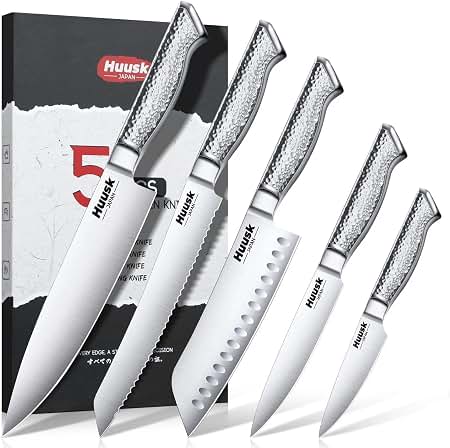
Zwilling Pro 8″ Chef’s Knife — Modern Forged Comfort
Best for: students who want a forged knife with a modern curved bolster
The Zwilling Pro takes the forged German formula and updates it with a curved bolster that supports a natural pinch grip. The 55–58 HRC steel balances toughness and edge life, and the full tang feels solid without the extreme heft of a Wüsthof Classic. The factory edge is sharp, though some units arrive with slightly uneven bevels that need a touch-up on a stone. It is a comfortable, confidence-inspiring knife for a student who wants German durability but does not want to fight a handle designed fifty years ago.
- Curved bolster supports a natural pinch grip
- 55–58 HRC balances toughness and edge life
- Full tang and forged blade feel solid
- Sharp 15-degree factory edge
- Some units arrive with uneven bevels
- Heavier than Japanese alternatives
- Handle can feel slick when wet
4.5/5
4.8/5
4.3/5

Mercer Culinary Renaissance 8″ Chef’s Knife — Forged Feel, Student Price
Best for: students who want a forged German feel on a budget
The Renaissance is the knife that proves you do not need to spend Wüsthof money to get a forged blade. It uses the same German steel family, but the forged construction gives it a full bolster and a heavier, more balanced feel than the Millennia. The short bolster leaves most of the edge reachable on a stone, which is a genuine maintenance advantage. Edge retention trails true Solingen steel, and the extra weight can tire your hand during a long prep, but for a forged school knife at this price, it is hard to beat.
- Forged full-tang at a stamped-knife price
- Short bolster leaves the full edge sharpenable
- Grippy Delrin handle suits wet hands
- NSF-certified for school kitchens
- Edge retention trails true Solingen steel
- Heavier blade tires hands during long prep
- Fit and finish varies between units
4.3/5
4.6/5
4.5/5

Dexter-Russell Sani-Safe 8″ Chef’s Knife — Sealed Against Bacteria
Best for: sanitation-first students and commercial prep lines
The Sani-Safe is built for the reality of a commercial kitchen: its sealed handle eliminates the bacteria traps that can form where a blade meets a handle, and the NSF certification means it is designed to survive sanitizer day after day. The soft steel sharpens in seconds, which is ideal when you are learning on a steel. It is not a precision tool — the stamped blade flexes and the edge dulls faster than harder German steel — but if your school prioritizes sanitation above all else, this is the knife that will never give you a food-safety headache.
- Sealed handle eliminates bacteria traps
- NSF-certified for foodservice use
- Soft steel sharpens quickly on a steel
- Cheap enough to replace without guilt
- Edge dulls faster than harder German steel
- Stamped blade lacks balance and heft
- Handle offers minimal grip when wet
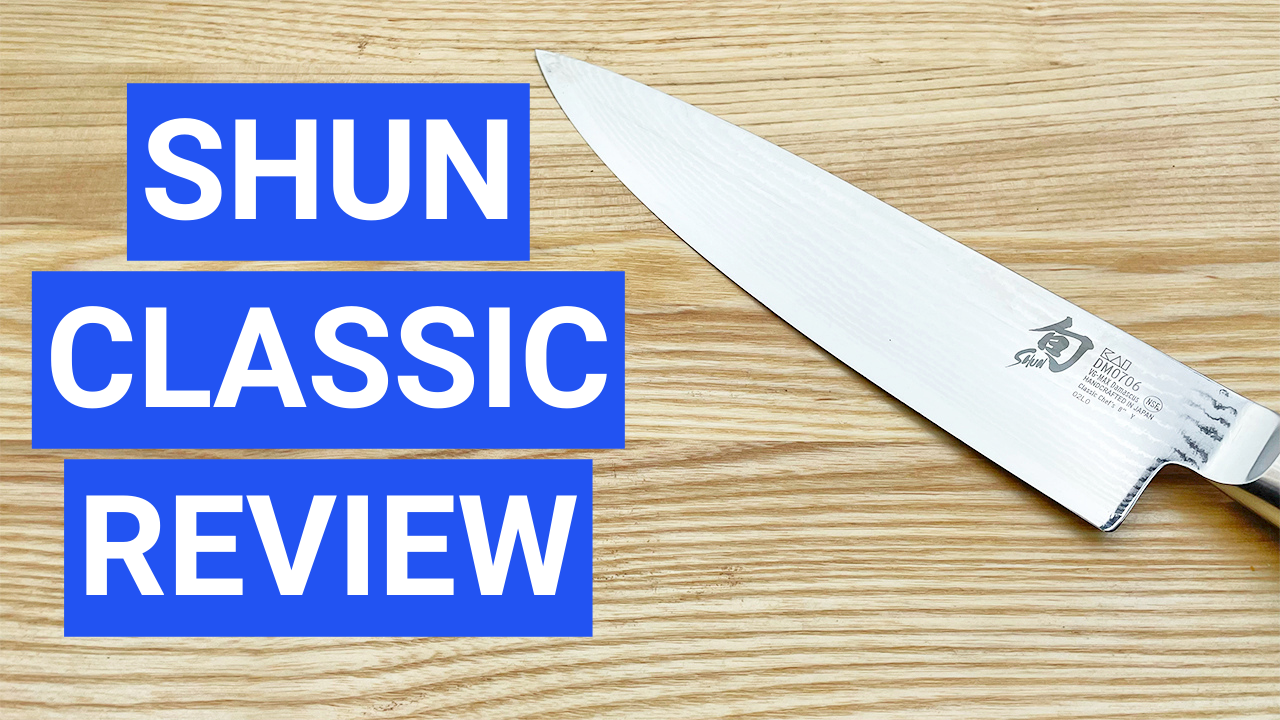
Shun Classic 8″ Chef’s Knife — The High-Performance Splurge
Best for: students who want the sharpest, most refined Japanese edge
The Shun Classic is the knife that makes prep feel effortless. Its VG-MAX core hardens to 60–61 HRC and is clad in 68 layers of Damascus steel, producing an edge that glides through tomatoes and herbs with almost no pressure. The D-shaped pakka-wood handle is comfortable for both pinch and hammer grips. The trade-offs are real: this is the most expensive knife in our test, the brittle edge punishes careless chopping, and hand washing is mandatory. If you have the budget and the technique to respect it, the Shun is a genuine lifelong tool.
- Sharpest edge in our entire test pool
- VG-MAX core at 60–61 HRC holds longer
- D-shaped handle suits pinch and hammer grips
- 68-layer Damascus cladding resists staining
- Highest price in this test by far
- Brittle edge chips under careless chopping
- Hand wash and dry immediately, always
4.9/5
4.7/5
4.0/5

Henckels Classic 8″ Chef’s Knife — Solingen Steel, Student Money
Best for: students who want German forged steel without premium pricing
The Henckels Classic proves that a forged German knife does not have to cost Wüsthof money. It is forged from the same X50CrMoV15 steel family as its premium cousins, sharpened to a 15-degree edge, and built with a full tang and three-rivet handle. Edge retention lands in the middle of the pack, and the factory edge sometimes needs a light honing out of the box. If you are looking for your first forged knife and want the durability of German steel without the premium markup, the Henckels is a genuinely sensible school kit choice.
- Forged German steel at a mid-range price
- Full tang with three-rivet handle
- 15-degree edge cuts cleanly out of box
- Balanced feel for long prep sessions
- Factory edge may need light honing
- Edge retention is mid-pack vs premium German
- Handle slick when very wet
4.4/5
4.5/5
4.6/5
Top 3 Head-to-Head: Victorinox Fibrox Pro vs Mercer Millennia vs Tojiro DP
These three come up in nearly every culinary-school knife conversation: the school standard, the budget kit builder, and the first Japanese upgrade.
| Feature | #1 Victorinox Fibrox | #2 Mercer Millennia | #3 Tojiro DP |
|---|---|---|---|
| Edge Retention | 4.6/5 | 4.0/5 | 4.8/5 — Best |
| Comfort & Control | 4.9/5 — Best | 4.5/5 | 4.6/5 |
| Ease of Maintenance | 4.9/5 — Best | 4.7/5 | 4.2/5 |
| Choose if… | You want the school-issued, do-everything knife | You are building a kit on the tightest budget | You want the sharpest edge and will care for it |
Who These Chef Knives Are NOT For
These knives are chosen for school kitchens, not for every possible use. Here is where they fall short.
If you are a home cook who sharpens once a year, a cheap stamped knife will serve you fine — you do not need to spend school money on a school knife.
Common Mistakes to Avoid
First-year students make the same four knife mistakes every semester. Avoid them and your blade will last through graduation.
Frequently Asked Questions About Chef Knives for Culinary School
What chef knife is best for culinary school?
An 8-inch chef knife with a secure grip, NSF certification, and steel soft enough for a beginner to sharpen is the safest choice. The Victorinox Fibrox Pro 8-Inch Chef’s Knife is the knife most schools issue because it balances all three. If your school allows non-NSF knives, the Tojiro DP Gyuto is an excellent upgrade.
Do I need an 8-inch or 10-inch chef knife for culinary school?
Start with 8 inches. An 8-inch blade covers most first-year prep tasks on a student-sized cutting board, is lighter for long labs, and is easier to control while learning. A 10-inch knife is a useful second purchase once your technique is stable and your stations are larger.
Is a Japanese or German chef knife better for students?
German steel is better for most first-year students because it is tougher, more forgiving of poor angles, and easier to sharpen. Japanese steel holds a sharper edge longer but chips more easily, so it suits students who already have solid knife skills and are willing to hand wash and dry the blade after every use.
Does my culinary school knife need to be NSF certified?
Many culinary programs require NSF-certified knives because certification confirms the handle is sealed and the materials meet commercial sanitation standards. Check your school’s tool list before buying. The Victorinox Fibrox Pro, Mercer Millennia, Mercer Renaissance, and Dexter-Russell Sani-Safe are all NSF certified.
How often should I sharpen a chef knife in culinary school?
Hone the edge with a steel before every shift and sharpen on a whetstone every two to four weeks, depending on how much you prep. Softer German-style steel needs more frequent honing but sharpens quickly. Harder Japanese steel holds its edge longer but benefits from gentler, more careful sharpening.
Can I put a chef knife in the dishwasher?
No. Dishwasher heat, moisture, and detergent degrade the edge, dry out wooden handles, and can cause rust at the bolster. Even stamped knives that claim dishwasher safety will dull noticeably faster. Hand wash in warm soapy water, dry immediately, and store in a blade guard or on a magnetic strip.
How much should a culinary student spend on a chef knife?
A budget-first student can build a functional kit with a stamped NSF knife, while a student planning a professional career should budget for a mid-range forged or Japanese knife that will outlast school. Treat the knife as a long-term tool rather than a semester expense, and avoid spending premium money before your sharpening skills are ready for premium steel.
Our Final Verdict
The best chef knife for culinary school is still the Victorinox Fibrox Pro: NSF-certified, secure in wet hands, and forgiving enough for a first-year student to sharpen. If your budget is tight, the Mercer Millennia gets you into a school-approved kit for less. If you are ready to care for a serious edge, step up to the Tojiro DP.

