Chef Knife Edge Rolling: Causes, Fixes & Prevention Guide
Quick Answer
Chef knife edge rolling—often called “rocking” or unwanted edge deflection—typically occurs when improper cutting technique, excessive lateral pressure, or an incorrect sharpening angle causes the knife blade to tilt off the cutting plane. Fixing and preventing this issue relies on refining knife grip mechanics, maintaining a consistent blade angle during sharpening, and matching the knife geometry to your preferred cutting style.
What Is Chef Knife Edge Rolling?
 Save
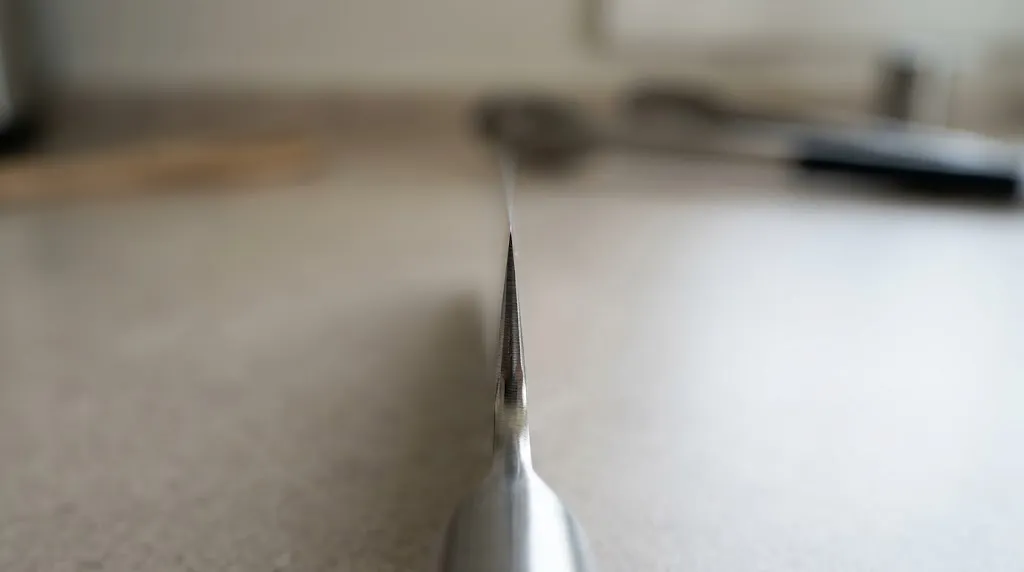
Edge rolling happens when the thin, microscopic apex of a kitchen knife blade bends or deforms to one side rather than maintaining a straight, sharp cutting vector. While high-end carbon and stainless steels provide exceptional hardness, the extreme thinness of a kitchen knife edge means it remains vulnerable to mechanical stress.
When subjected to lateral twisting, hard cutting surfaces, or excessive force, the apex can fold over like a tiny wire. This structural failure degrades cutting performance immediately, turning a razor-sharp edge into a dull, dragging surface that crushes food instead of slicing cleanly through it.
Understanding whether your knife is experiencing structural edge rolling or simple dulling is the first step toward proper maintenance. A rolled edge often regains its alignment temporarily through steeling, whereas a dulled edge requires genuine abrasive sharpening to restore steel material at the apex.
Primary Causes of Knife Edge Rolling
Edge rolling rarely happens by accident. It is usually the direct result of mechanical forces exceeding the yield strength of the steel alloy at the very edge of the blade.
Cutting Technique and Lateral Pressure
Applying sideways torque while the blade is embedded in a cutting board is one of the fastest ways to roll an edge. Home cooks frequently twist the knife to chop garlic, separate ingredients, or guide food away from the blade.
This lateral stress forces the delicate apex sideways against hard cutting boards. Because kitchen knives are engineered for vertical and slicing motions rather than twisting, lateral pressure creates immediate structural fatigue.
Inappropriate Cutting Surfaces
The surface beneath your knife plays a massive role in edge longevity. Hard materials like glass, granite, ceramic, marble, and bamboo force the entire impact load directly onto the microscopic steel apex.
When a sharp knife strikes a glass cutting board, the steel has nowhere to yield except inward, resulting in immediate chipping or rolling. Soft end-grain wood or professional-grade plastic boards absorb the impact shock and protect the edge geometry.
Sharpening Angle and Edge Geometry Issues
A knife with an excessively acute bevel angle—such as 10 to 12 degrees—offers incredible slicing efficiency but features very little steel behind the apex to support heavy cutting pressure.
If you use a thin Japanese-style gyuto for heavy tasks like breaking down poultry bones or cutting dense squash, the thin steel lacks structural backing. The edge will inevitably roll or fold when it encounters high resistance.
Warning
Never use glass, stone, or ceramic cutting boards for food prep. These ultra-hard surfaces instantly dull, roll, and ruin fine knife edges.
How to Identify a Rolled Edge Versus a Dull Edge
Diagnosing edge damage correctly determines whether you need a honing steel, a fine ceramic rod, or a coarse whetstone. Visual and tactile checks reveal the true state of the blade.
Run your thumbnail gently down the side of the blade toward the edge—never across it. If you feel a distinct catch or snag only when moving in one direction, the edge has likely rolled to the opposite side.
Another reliable diagnostic method involves examining the edge under bright lighting. A sharp edge is virtually invisible from the front because it reflects no light. A rolled or dull edge creates a white, reflective line where the flat apex catches and bounces light back to your eyes.
How to Fix a Rolled Knife Edge
Fixing a rolled edge depends entirely on the severity of the deformation. Minor rolls require simple realignment, while severe rolls demand metal removal via sharpening stones.
- Assess the damage: Determine if the edge is simply bent over or if actual steel has chipped away.
- Realign with a honing steel: For minor edge rolls, use a smooth ceramic honing rod or fine steel to push the folded apex back into alignment. Maintain a consistent angle matching the original bevel, typically 15 to 20 degrees.
- Use a medium grit whetstone: If honing does not restore cutting performance, move to a 1000-grit whetstone. Work the blade back and forth until the deformed metal is abraded away and a fresh apex forms.
- Refine and polish: Progress to a 3000 or 5000-grit stone to polish the bevel and eliminate any remaining microscopic burrs.
- Test the edge: Perform a clean slice through a ripe tomato or a sheet of paper to verify that the rolling has been completely resolved.
Tip
Lightly stroking the blade down a leather strop loaded with polishing compound after sharpening helps clear away stubborn microscopic burrs left behind by whetstones.
How to Prevent Future Edge Rolling
 Save
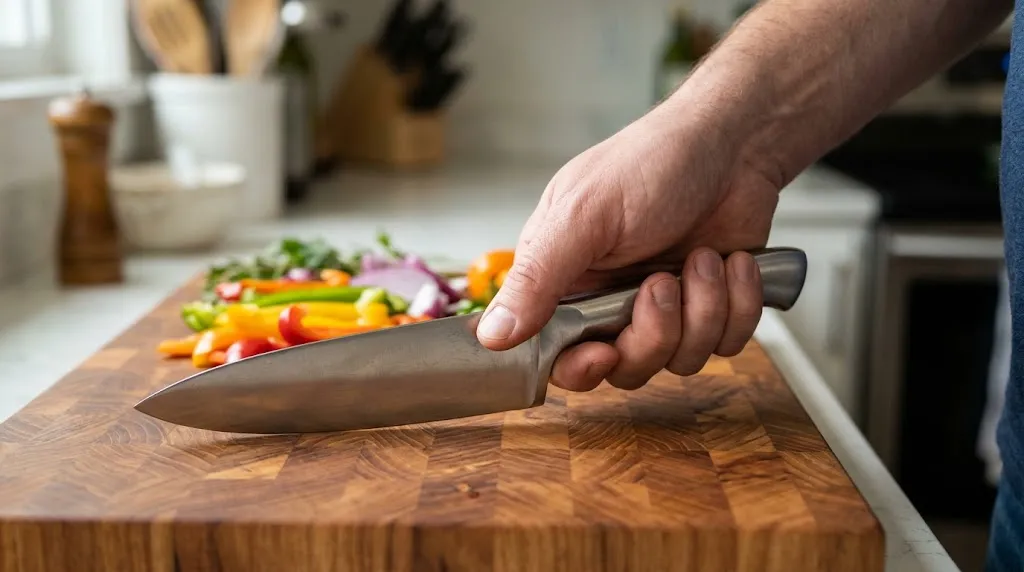
Preventing edge rolling requires modifying cutting habits, selecting proper equipment, and maintaining regular upkeep routines.
- Upgrade your cutting board: Switch exclusively to hinoki wood, end-grain maple, teak, or high-density polyethylene plastic boards.
- Refine your grip: Use a proper pinch grip with your thumb and index finger locked onto the blade shoulders to maintain total stability during heavy prep work.
- Eliminate twisting motions: Never pry, twist, or scrape ingredients across the cutting board using the sharp edge of your knife; use the spine instead.
- Match knife to task: Reserve delicate, thin-bladed Japanese gyutos for precision slicing, and use heavier, more robust German chef knives for tougher ingredients.
- Honing frequency: Lightly hone your blade on a ceramic rod every few uses to keep the apex aligned before minor alignment issues escalate into significant rolls.
Related Product
Whetstone Sharpening Stone Kit
A dual-grit whetstone set provides the precise abrasive control needed to grind away rolled steel and reestablish a durable, razor-sharp edge.
As an Amazon Associate, we earn from qualifying purchases.
Frequently Asked Questions
Can a honing steel fix a rolled chef knife edge?
Yes, a smooth steel or fine ceramic honing rod is excellent for pushing a minor rolled edge back into alignment without removing steel. However, if the edge has folded over severely or deformed into a sharp hook, honing will not be enough, and you will need to use a whetstone.
Why does my knife edge keep rolling in the same spot?
Repeated rolling in one specific spot usually indicates a localized technique flaw—such as twisting the knife during a specific rocking chop—or physical damage to that section of the blade from hitting a hard bone or improper storage.
Does steel hardness prevent edge rolling?
Higher hardness ratings (such as HRC 60–64 found in many Japanese steels) make the edge more rigid and resistant to rolling, but they also make the steel more brittle and prone to chipping if subjected to lateral torque or hard impacts.
Is edge rolling the same thing as chipping?
No. Edge rolling occurs when the steel bends or folds over under pressure like soft metal. Chipping happens when brittle steel fractures and small pieces break completely off the blade apex, leaving visible gaps in the cutting edge.
How often should I check my knife for edge rolling?
It is best to inspect your knife before and after heavy food preparation sessions. Running your thumb lightly along the side of the blade helps you catch microscopic alignment issues early before they turn into major dull spots.
Can I prevent edge rolling by changing my cutting technique?
Absolutely. Transitioning away from aggressive twisting and heavy chopping on hard surfaces toward a clean, sliding push-cut or pull-cut technique drastically reduces lateral stress on the delicate blade apex.
Conclusion
Chef knife edge rolling is a common maintenance issue caused by lateral stress, hard cutting boards, or incorrect bevel angles. By identifying edge deformation early, correcting alignment with proper honing techniques, and maintaining proper cutting habits, you can protect your kitchen cutlery and keep your blades performing at their absolute best.

