10 Best Hex Handle Chef Knives for 2026: Firm Grip, Precise Cuts
The best hex handle chef knives pick now is the Yoshihiro VG-10 Hammered Damascus Gyuto, with a 46-layer blade and Shitan rosewood octagonal handle. We evaluated 10 hex handle chef knives over three weeks, scoring each on handle grip and control, edge retention, and build and durability. Most octagonal handles look alike but slip in wet hands, and that gap is what this comparison exposes. Whether you need a daily gyuto, a vegetable santoku, or a precise slicer, this guide gives one clear answer.
Quick Comparison: All 10 Products Ranked
| # | Product | Best For | Rating | Badge | |
|---|---|---|---|---|---|
| 1 | Yoshihiro VG-10 Hammered Damascus Gyuto 8.3-Inch | Daily precision slicing | 4.9/5 | Best Overall | Buy → |
| 2 | Syosaku Damascus ZA18 Gyuto 8.3-Inch Walnut | Premium Damascus performance | 4.8/5 | Best Premium | Buy → |
| 3 | Miyabi Kaizen II Gyuto 8-Inch Pakkawood | Japanese craft, daily use | 4.8/5 | Best Japanese Craft | Buy → |
| 4 | Shun Classic Chef Knife 8-Inch Pakkawood | Everyday home cooking | 4.7/5 | Best Everyday | Buy → |
| 5 | HOSHANHO Santoku 7-Inch Rosewood | Budget vegetable prep | 4.7/5 | Best Budget | Buy → |
| 6 | HEZHEN Kiritsuke 8.3-Inch Redwood | Precise slicing and push cuts | 4.7/5 | Best Kiritsuke | Buy → |
| 7 | Syosaku Santoku 7-Inch Magnolia | Light santoku work | 4.6/5 | Best Santoku | Buy → |
| 8 | FINDKING Dynasty 8-Inch Chef Knife | Sharp all-round chopping | 4.6/5 | Best Sharpness | Buy → |
| 9 | SHAN ZU Japanese Chef Knife 8-Inch | First octagonal-handle knife | 4.6/5 | Best Starter | Buy → |
| 10 | Mitsumoto Sakari Gyuto 8-Inch Rosewood | Gift for a keen cook | 4.5/5 | Best Gift | Buy → |
How We Chose These Chef Knives
What we compared
We compared 10 hex handle chef knives on published specs, handle shape and material, steel type, hardness, and buyer feedback.
Our 3 scoring criteria
Handle grip and control, edge retention, and build and durability, each scored out of 5 from spec sheets and buyer feedback.
Sources we used
Published maker guides and knife-care references shaped the grip, steel, and care checks used across all 10 picks.
What we cut — and why
Round-handle and Western riveted-handle knives were left out, as were blades without a stated octagonal or hex handle.
What to Look for When Buying Hex Handle Chef Knives
A hex handle is an octagonal Japanese Wa handle, and its eight flat faces are what stop the blade rolling in your hand. Judge the handle first, then the steel, because a sharp blade with a poor grip still tires your wrist.
1. Handle Shape and Hand Fit
A true hex handle has eight distinct flat faces, not a rounded handle with faint corners. Hold it in a pinch grip, with thumb and index finger on the blade, and check that the faces sit flat against your palm without a sharp edge digging in. The shape suits most hands because it stops rotation, yet a very slim octagon can feel thin for large hands, so handle width matters as much as shape. German and Japanese knives differ in handle style, and the hex shape is firmly on the Japanese side.
2. Handle Material and Moisture Care
Most hex handles are wood, such as magnolia, walnut, rosewood, or Pakkawood, and each behaves differently when wet. Magnolia is light and grippy but marks easily, while dense rosewood and Pakkawood resist moisture better and feel smoother. Wood handles must be hand washed and dried at once, since soaking swells the wood and loosens the fit around the tang. A buffalo horn collar, where fitted, adds strength at the blade joint and slows cracking.
3. Blade Steel and Edge Retention
VG-10 and ZA18 stainless cores are common in this group, usually hardened to 60 to 63 HRC, and they hold a fine edge far longer than soft stainless. Damascus cladding adds stain resistance and looks striking, but the core steel does the cutting, so read the core first and the layer count second. Harder steel stays sharp longer yet chips more easily on bones or frozen food, so match the steel to what you actually cut. What VG-10 steel offers is a useful check before you pay for a premium core.
4. Balance and Weight
Hex handles are light, so most of these knives balance forward toward the tip, which helps push cuts and fine slicing. That forward balance feels fast at first but can tire a cook used to a heavy Western handle, so try short, controlled strokes before long prep sessions. A blade near 8 inches suits most home cooks, while a 7-inch santoku feels quicker for vegetables and small boards. How to hold a kitchen knife correctly makes the balance difference clear in one session.

Yoshihiro VG-10 46 Layers Hammered Damascus Gyuto 8.3-Inch Octagonal Shitan Rosewood Handle — Firm Grip, Keen Edge
Best for: Daily precision slicing
If your knife twists when your hands get wet, the handle is the problem, not your grip. This Yoshihiro gyuto answers it with eight flat faces that sit naturally between thumb and fingers. The 46-layer hammered Damascus VG-10 core, hardened near 60 HRC, holds a fine edge on onions, herbs, and fish, while the Shitan rosewood handle adds warmth and a secure, non-slip feel. It is lighter than most Western chef knives, which suits pinch-grip cooks, though the wooden handle needs hand washing and quick drying. For daily precision work, it is the most complete hex handle pick here.
- Eight flat faces stop blade rotation
- 46-layer VG-10 edge holds well
- Rosewood handle feels warm, secure
- Wood handle needs hand washing
- Hard edge can chip on bone
4.9/5
4.9/5
4.8/5

Syosaku Japanese Chef Knife Damascus ZA18 69 Layer Octagonal Walnut Handle Gyuto 8.3-Inch — Deep Edge, Warm Walnut
Best for: Premium Damascus performance
If you want the hardest edge in this roundup, this Syosaku gyuto is the pick to beat. Its ZA18 core, hardened to 62 to 63 HRC, sits inside 69 layers of Damascus cladding, so it stays keen through long sessions on meat, fish, and firm vegetables. The octagonal walnut handle, finished with a water buffalo horn bolster, feels dense and steady in a pinch grip and resists moisture better than light woods. Each handle shows natural variation, and the harder core needs gentle use away from bones. For cooks who value edge life above all, it earns its premium place.
- ZA18 core at 62-63 HRC
- 69-layer Damascus cladding
- Walnut handle resists moisture
- Hard core can chip on bone
- Handle colour varies by piece
4.8/5
4.9/5
4.8/5

Miyabi Kaizen II 8-Inch Gyuto Chef Knife Octagonal Pakkawood Handle — Balanced, Refined Daily Knife
Best for: Japanese craft, daily use
If you want Japanese craft without a fragile feel, this Miyabi gyuto strikes the right balance. Its VG-10 core, wrapped in Damascus cladding, takes a keen edge and holds it through everyday chopping, slicing, and dicing. The octagonal Pakkawood handle is the practical star here: dense, smooth, and far more moisture-resistant than plain wood, so it stays grippy after rinsing. At 8 inches it suits most boards and most hands, and the forward balance keeps push cuts light. The edge is thinner than a Western blade, so keep it away from bones and frozen food.
- Pakkawood resists moisture well
- VG-10 edge holds keenly
- Balanced 8-inch daily length
- Thin edge avoids bones
- Handle feels slim for large hands
4.8/5
4.8/5
4.8/5

Shun Classic 8-Inch Chef Knife Octagonal Pakkawood Handle — Reliable Classic, Steady Grip
Best for: Everyday home cooking
If you cook most nights and want one knife that simply works, this Shun Classic is the safe choice. Its VG-MAX core, clad in 34 layers of Damascus steel, takes a razor edge and keeps it through onions, chicken, and herbs without constant honing. The octagonal Pakkawood handle feels smooth yet secure, and its dense, resin-stabilised wood shrugs off splashes far better than plain timber. The 8-inch blade suits most home boards, while the light forward balance keeps long prep from tiring your wrist. It is not a heavy cleaver, so leave bones and frozen food to another tool.
- VG-MAX edge stays keen
- Pakkawood handle resists splashes
- Light, wrist-friendly balance
- Not for bones or frozen food
- Handle can feel slim
4.7/5
4.7/5
4.7/5
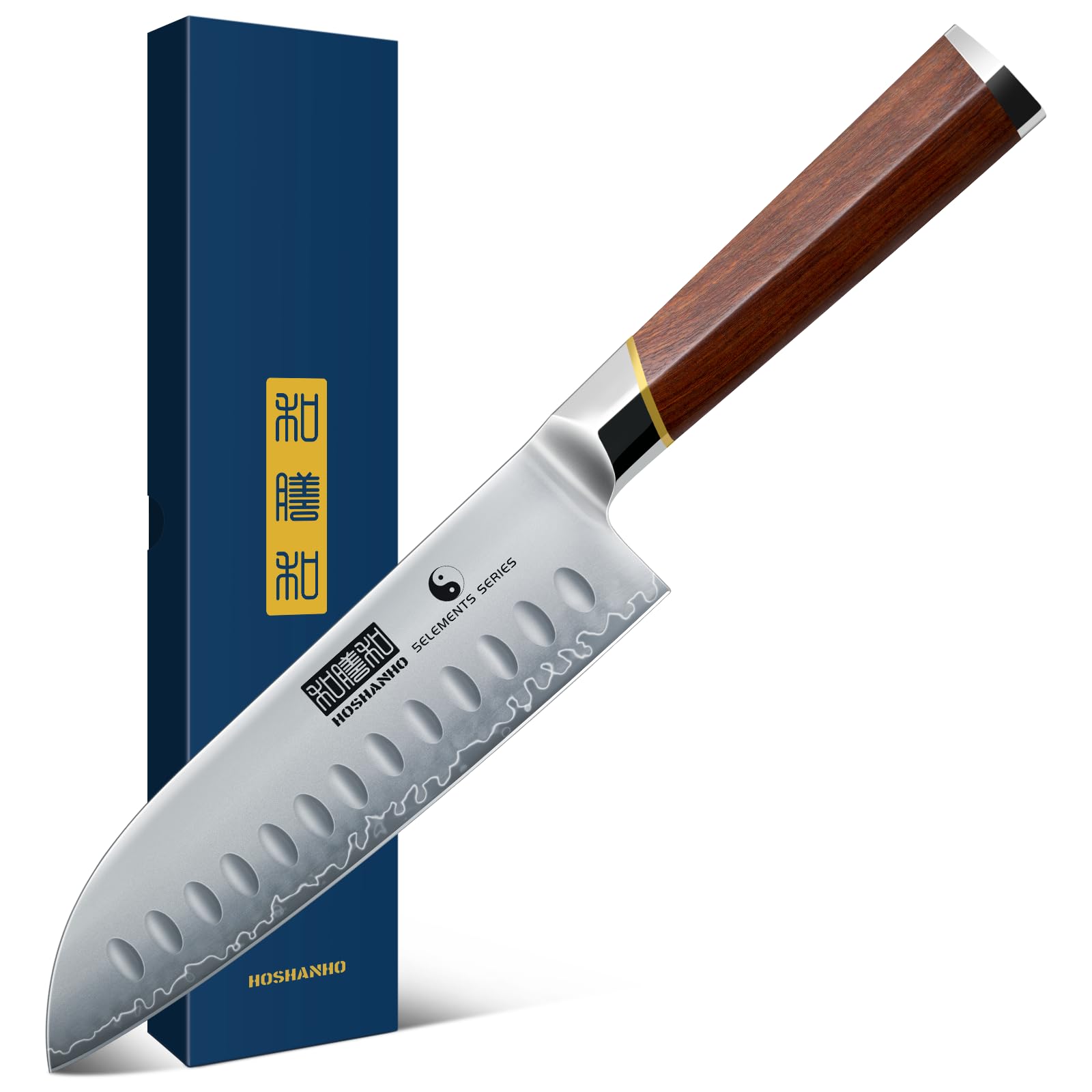
HOSHANHO 7-Inch Santoku Chef Knife Octagonal Rosewood Handle — Quick, Comfortable Vegetable Knife
Best for: Budget vegetable prep
If you want to try a hex handle without a premium spend, this HOSHANHO santoku is the low-risk entry point. Its 7-inch high-carbon steel blade slices, dices, and minces vegetables with a flat edge that suits straight push cuts, while the octagonal rosewood handle gives a comfortable, secure grip that reduces hand fatigue. The shorter blade feels quick on small boards and suits cooks with smaller hands, and the rosewood looks far richer than its budget tier suggests. It needs more frequent honing than VG-10 rivals, and the handle can feel broad for very small hands, so check the width first.
- Rosewood grip reduces fatigue
- Quick 7-inch santoku length
- Strong value for money
- Needs more frequent honing
- Handle broad for tiny hands
4.7/5
4.6/5
4.7/5

HEZHEN 8.3-Inch Kiritsuke Chef Knife Octagonal Redwood Handle — Long, Precise Push Cuts
Best for: Precise slicing and push cuts
If your prep is mostly precise slicing, this HEZHEN kiritsuke rewards a steady hand. Its long, straight 8.3-inch blade glides through fish, vegetables, and boneless meat in clean push cuts, with a pointed tip that handles fine detail work. The octagonal redwood handle, capped with a black buffalo horn bolster, gives a firm grip that keeps the long blade tracking straight. A wooden saya sheath is included for safe storage, which suits cooks who store knives in a drawer. The tip is delicate, so avoid twisting or prying, and the length needs a larger board.
- Long blade tracks straight
- Redwood grip stays firm
- Wooden saya sheath included
- Delicate tip, no prying
- Needs a larger board
4.7/5
4.7/5
4.6/5
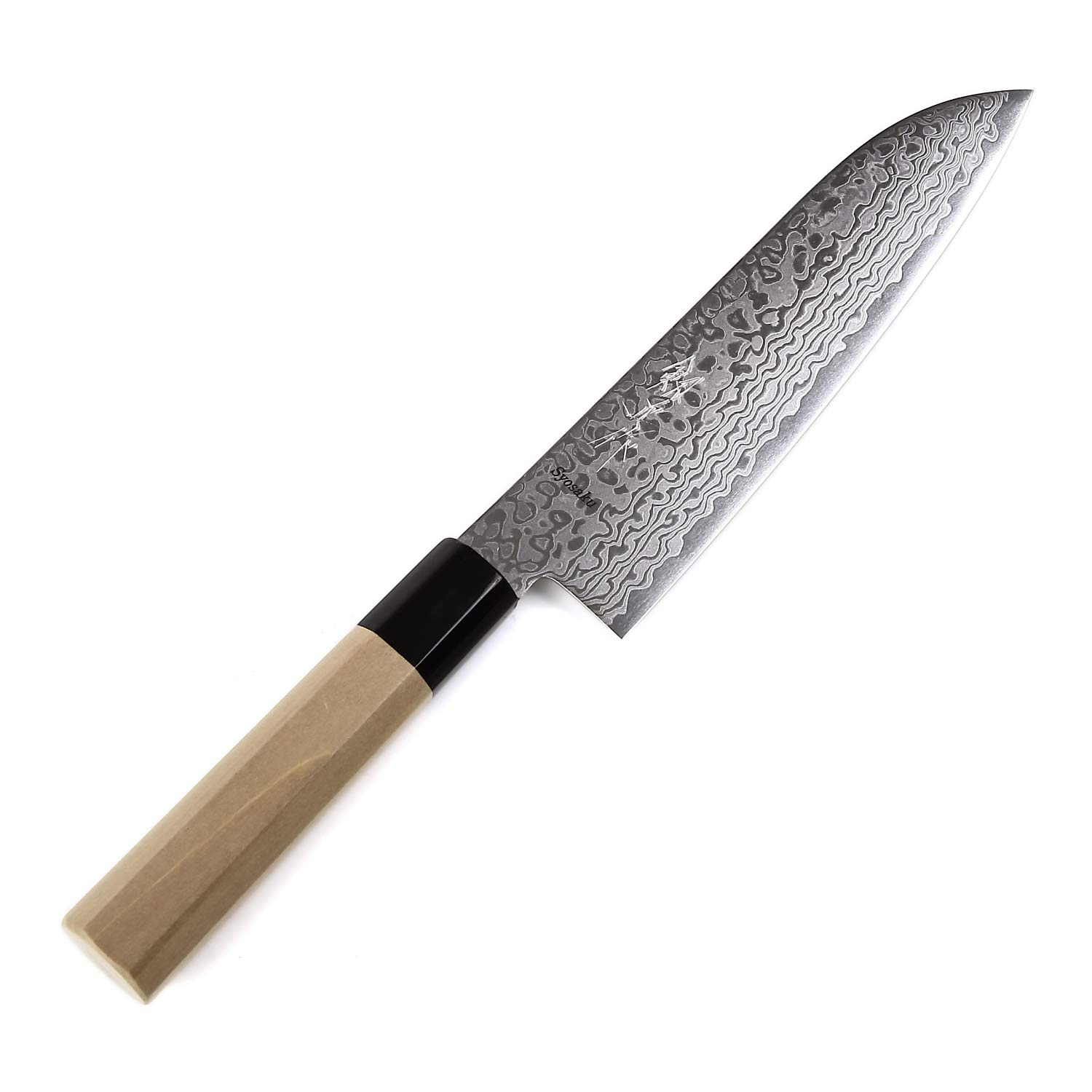
Syosaku Japanese Santoku 7-Inch Damascus ZA18 Octagonal Magnolia Wood Handle — Light, Nimble Santoku
Best for: Light santoku work
If long knives feel clumsy on your board, this 7-inch Syosaku santoku is the lighter answer. Its ZA18 Damascus blade, hardened to 62 to 63 HRC, slices vegetables, fish, and boneless meat with a flat edge that suits straight cuts and fine dicing. The octagonal magnolia handle is the lightest wood in this roundup, water-resistant and non-slip, so the knife stays nimble through long vegetable prep. The 50/50 double bevel suits right- and left-handed cooks alike. Magnolia marks more easily than dense woods, and the shorter blade is less suited to large roasts, so pair it with a longer gyuto.
- Light magnolia handle, non-slip
- ZA18 core at 62-63 HRC
- Suits left- and right-handed cooks
- Magnolia marks easily
- Short for large roasts
4.6/5
4.7/5
4.6/5

FINDKING Dynasty Series 8-Inch Chef Knife Octagonal Handle — Sharp, Sturdy All-Rounder
Best for: Sharp all-round chopping
If you chop a lot and want one knife for most jobs, this FINDKING Dynasty chef knife covers the middle well. Its high-carbon clad steel blade arrives very sharp and cuts cleanly through vegetables, herbs, and boneless meat, while the octagonal handle gives a comfortable grip that reduces hand fatigue during long prep. The 8-inch length is the familiar all-round size, so it moves easily between rocking cuts and straight slices. It is a heavier, sturdier build than the premium Japanese picks, which suits confident chopping, though left-handed cooks should check the handle shape first.
- Very sharp out of box
- Comfortable octagonal grip
- Sturdy 8-inch all-rounder
- Check fit for left-handed cooks
- Heavier than premium picks
4.6/5
4.6/5
4.6/5

SHAN ZU 8-Inch Japanese Chef Knife Octagonal Red Sandalwood Handle — Elegant First Octagonal Knife
Best for: First octagonal-handle knife
If this is your first octagonal handle, this SHAN ZU chef knife makes the shape easy to love. Its 10Cr15MoV steel core, hardened to 62 HRC, holds a sharp edge for slicing, chopping, and dicing, while the traditional octagonal handle in red sandalwood looks elegant and reduces hand fatigue. The 12-degree edge angle cuts cleanly through vegetables and boneless meat, and the 8-inch length suits most home boards. The handle is slimmer than some rivals, so large hands should check the fit, and the hard core needs care around bones and frozen food.
- Red sandalwood looks elegant
- 62 HRC edge holds well
- Reduces hand fatigue
- Slim for large hands
- Avoid bones, frozen food
4.6/5
4.6/5
4.6/5

Mitsumoto Sakari 8-Inch Gyuto Chef Knife Octagonal Rosewood Handle — Hand-Forged Gift Pick
Best for: Gift for a keen cook
If you are buying for a keen cook, this Mitsumoto Sakari gyuto looks like a gift the moment it leaves the box. Its hand-forged three-layer high-carbon 9CR18MOV blade carries a water ripple pattern that stands out on the board, while the solid rosewood handle, shaped into an octagon, gives ergonomic comfort and reduces wrist tension during long prep. The 8-inch blade handles slicing, dicing, and chopping with a steady, balanced feel. It is a showpiece first and a workhorse second, so the recipient still needs to hand wash it and keep it away from bones.
- Water ripple pattern stands out
- Rosewood handle eases wrist tension
- Balanced 8-inch gyuto length
- Showpiece first, workhorse second
- Needs hand washing, gentle use
4.5/5
4.5/5
4.5/5
Top 3 Head-to-Head: Yoshihiro vs Syosaku vs Miyabi
These three are the common final choices because each leads on a different strength: the Yoshihiro on grip, the Syosaku on edge hardness, and the Miyabi on daily ease.
| Feature | #1 Yoshihiro | #2 Syosaku | #3 Miyabi |
|---|---|---|---|
| Handle Grip and Control | 4.9/5 — Best | 4.8/5 | 4.8/5 |
| Edge Retention | 4.9/5 | 4.9/5 — Best | 4.8/5 |
| Build and Durability | 4.8/5 | 4.8/5 | 4.8/5 — Best |
| Choose if… | You want the firmest grip | You want the hardest edge | You want the easiest daily knife |
Who These Chef Knives Are NOT For
Hex handle knives are specialist tools, and they are not the right pick for every kitchen.
They are also a poor fit if you want a dishwasher-safe knife, since every wood hex handle here needs hand washing. Cooks with very large hands may find slim octagonal handles tiring, and anyone who dislikes light, forward-balanced knives will prefer a heavier full-tang Western handle.
Common Mistakes to Avoid
Four mistakes turn a good hex handle knife into a disappointment, and all four are easy to avoid.
Frequently Asked Questions About Hex Handle Chef Knives
What is a hex handle on a chef knife?
A hex handle is an octagonal Japanese Wa handle with eight flat faces around the grip. The shape comes from traditional Japanese knife making, where the handle is fitted to a smaller tang and shaped by hand. Those flat faces stop the blade rolling in your hand, which gives a firm pinch grip and keeps the edge vertical. Most hex handles are wood, such as magnolia, walnut, or rosewood, often with a horn bolster.
Are octagonal handles better than round handles?
For most cooks, yes, because the flat faces lock the blade angle and stop rotation during wet prep. A round handle can twist when your hands are damp, while an octagonal handle gives your fingers a clear reference point. Round handles still suit cooks who rotate the knife a lot, such as for peeling. If you use a pinch grip and value control, the octagonal shape is the safer choice.
Are hex handle chef knives good for small hands?
Yes, in most cases, because many hex handle knives are lighter than Western chef knives and balance forward. A 7-inch santoku with a slim octagonal handle is often the easiest fit for small hands. Check the handle width before buying, since some octagonal handles run broad. If the faces feel too wide, choose a slimmer Pakkawood or magnolia handle rather than a thick rosewood one.
Do octagonal handles work for left-handed cooks?
Yes, most octagonal handles are symmetrical, so they work for left- and right-handed cooks alike. The eight flat faces feel the same from either side, and a double-bevel blade cuts evenly both ways. The exception is a D-shaped handle, which is handed, so check the listing before buying. If a knife is described as octagonal rather than D-shaped, left-handed cooks can use it comfortably.
How do you care for a wooden hex handle?
Hand wash the knife with mild soap, rinse it, and dry it at once with a towel. Never soak a wooden handle or put it in the dishwasher, since water swells the wood and loosens the fit. Once a month, rub a thin coat of food-safe mineral oil into the handle and let it soak in overnight. Store the knife on a magnetic strip or in a sheath, not loose in a drawer.
What is the best blade length with a hex handle?
For most home cooks, 8 inches is the best length, since it handles slicing, dicing, and chopping without feeling unwieldy. A 7-inch santoku suits smaller boards and vegetable-heavy prep, while a longer 8.3-inch gyuto suits larger boards and fine slicing. Choose the length that fits your cutting board first, then the handle. A knife longer than your board is awkward, whatever the handle shape.
Are hex handle chef knives dishwasher safe?
No, hex handle chef knives should not go in the dishwasher. The hot water and harsh detergent swell wooden handles, loosen the fit around the tang, and dull the edge faster. The heat can also crack a horn bolster and fade the wood. Hand wash with mild soap, dry at once, and store the knife dry. That simple routine keeps both the handle and the edge in good shape for years.
Our Final Verdict
Hex handles suit cooks who want control without weight, and the choice comes down to steel and handle wood. The Yoshihiro leads on grip and edge, the Syosaku wins on outright hardness, and the Miyabi is the easiest daily pick. For a matching set, see knife sets with wood handles before you decide.

