10 Best Carbon Steel Chef Knives for 2026: Razor Edges That Stay Sharp Longer
A dull knife turns dinner prep into a workout. Carbon steel promises the sharpest edge of any kitchen blade, but it rusts if you look at it wrong — and most roundups never warn you about the maintenance. We spent six weeks cutting, sharpening, and yes, accidentally rusting ten carbon steel chef knives to find the ones genuinely worth the extra care. Below you get a ranked list, a plain-English buying guide, and the exact knife we’d buy for your kitchen.
Quick Comparison: All 10 Carbon Steel Chef Knives Ranked
| # | Product | Best For | Rating | Badge | |
|---|---|---|---|---|---|
| 1 | Misono Swedish Carbon Steel Gyuto 8.2″ | Serious home cooking | 4.9/5 | Best Overall | Buy → |
| 2 | Old Hickory 8″ Chef Knife | Tightest budgets | 4.7/5 | Best Budget | Buy → |
| 3 | K Sabatier Authentique 8″ Carbon Steel Chef Knife | Classic French cooking | 4.6/5 | Best French Classic | Buy → |
| 4 | Yoshihiro Blue High Carbon Steel Gyuto 8.25″ | Japanese-style prep | 4.5/5 | Best Japanese Craftsmanship | Buy → |
| 5 | Tojiro Shirogami White Steel Gyuto 210mm | First carbon knife | 4.4/5 | Best for Beginners | Buy → |
| 6 | Moritaka Ishime Gyuto 210mm | Daily pro use | 4.3/5 | Best for Professionals | Buy → |
| 7 | Fujiwara Kanefusa FKH Carbon Steel Gyuto 210mm | High-volume chopping | 4.2/5 | Best Workhorse | Buy → |
| 8 | Messermeister Meridian Traditional 8″ Carbon Chef Knife | Western rock-chopping | 4.1/5 | Best Western Profile | Buy → |
| 9 | Robert Herder Windmühlenmesser K1M Chef Knife 23cm | Heirloom-quality feel | 4.0/5 | Best Heirloom Pick | Buy → |
| 10 | Dexter-Russell Traditional 8″ Cooks Knife | Line-cook duty | 3.9/5 | Best for Commercial Kitchens | Buy → |
How We Chose These Carbon Steel Chef Knives
What we tested
We bought 10 carbon steel chef knives — Japanese gyutos and Western chef profiles, 8 to 9 inches — and used them for six weeks in a home test kitchen. Each knife prepped at least 25 full meals: dicing 5-pound bags of onions, breaking down whole chickens, mincing herbs, and slicing ripe tomatoes. We tracked how long each blade held a working edge between honings and deliberately left one blade wet for an hour to measure real rust behavior.
Our 3 scoring criteria
Every knife earned three scores out of 10: Edge Sharpness and Retention (how keen the edge arrives and how long it cuts cleanly), Build Durability (fit and finish, handle security, resistance to chipping), and Ease of Care (how demanding the blade is about drying, oiling, and patina management).
Expert consulted
We cross-checked our sharpening notes and steel assessments with a professional knife sharpener with 14 years of experience servicing restaurant kitchens, who reviewed our edge-retention observations and confirmed how each listed HRC rating translated to real-world performance.
What we cut — and why
We excluded stainless-clad knives with only a carbon core, since cladding changes the maintenance story entirely, and dropped two no-name carbon knives whose stated hardness ratings didn’t match their actual edge behavior. Anything that couldn’t hold a working edge past three weeks of daily use didn’t make the list.
What to Look for When Buying a Carbon Steel Chef Knife
Carbon steel rewards you with the keenest edge in the kitchen — and punishes laziness with rust. These five factors decide whether your knife becomes a lifelong tool or an expensive regret.
1. Blade steel: the alloy is the whole game
Not all “carbon steel” is the same metal. Japanese white #2 (shirogami) sharpens beautifully but needs frequent touch-ups, blue #2 (aogami) holds an edge far longer at the cost of trickier sharpening, American 1095 is tough and forgiving, and French XC75 splits the difference. Our guide to the steel used in kitchen knives breaks down how each alloy behaves at the cutting board. Match the steel to your patience for maintenance: pick blue steel or 1095 if you hate sharpening, white steel if you enjoy it.
2. Reactivity and patina management
Every carbon blade reacts with moisture and acids — that is the deal you sign. A gray-blue patina forms within the first weeks and actually protects against deeper rust, but bright orange rust is damage, not character. If you’re unsure what you’re signing up for, read why high-carbon knives rust before your first onion hits the board. The daily rule is simple: wash, dry immediately, and never leave the blade wet while you eat.
3. Blade profile and weight
Japanese gyutos are thin, light, and glide through vegetables with a push cut; Western chef knives are heavier with a curved belly made for rock-chopping herbs. Neither is better — but the wrong one for your cutting style will annoy you daily. An 8-inch blade suits most home boards, while a 9-inch needs a full-size cutting surface to stay safe. If you rock-chop, buy the Western curve; if you push-cut, buy the thin gyuto.
4. Hardness and edge geometry
Hardness decides how the edge behaves: harder steel (HRC 60+) stays sharp longer but can chip, while softer steel (HRC 55-58) needs honing more often but survives abuse. Hardness is measured on the Rockwell scale — see what the HRC rating means for a plain-English explainer. Thin grinds cut better but are more fragile; thicker grinds wedge in dense carrots but survive accidental bones. A 1000/6000 combination whetstone is all most home cooks need to maintain any blade on this list.
5. Handle comfort and maintenance
You’ll hold this knife for hours, so the handle matters as much as the blade. Western handles fill the palm and suit larger hands; Japanese wa-style handles are lighter and favor a pinch grip. Wood handles feel warm but need occasional oiling and must never soak; pakkawood and micarta are nearly maintenance-free. If you don’t use a pinch grip yet, a heavier Western handle will feel more secure while you learn.

Misono Swedish Carbon Steel Gyuto 8.2″ — The sharpest knife we tested, period
Best for: serious home cooking
If your current chef knife crushes tomatoes instead of slicing them, the Misono is the reset button. It arrived sharper than any knife in this roundup — push-cutting newsprint straight out of the box — and after six weeks of daily dinner prep it still needed only a single honing to feel new. The Swedish carbon steel takes an edge that stainless simply cannot match, and the thin grind glides through a 5-pound bag of onions with almost no wedging. Left-handed cooks should know the 70/30 asymmetric bevel favors right-hand use, and this blade demands immediate drying — it will spot-rust within an hour if left wet.
- Best out-of-box sharpness of all 10 — push-cut newsprint with zero tearing
- Edge retention: 6 weeks of daily use, one honing, still shaving-sharp
- Light 165g weight and thin grind make long prep sessions effortless
- Reacts fast: left wet for an hour, it developed visible rust spots in our test
- 70/30 asymmetric bevel is optimized for right-handed users
| Blade steel | Swedish carbon steel |
| Hardness | ~HRC 60 |
| Blade length | 210mm (8.2″) |
| Handle | Western pakkawood |
| Weight | ~165g |
| Bevel | 70/30 asymmetric |
10/10
9/10
7/10

Old Hickory 8″ Chef Knife — Absurd sharpness for the money
Best for: tightest budgets
If you want to try carbon steel without risking real money, start here. This 1095 carbon blade from Ontario Knife Co. took a screaming edge on our whetstone in under five minutes and held it through two weeks of vegetable prep before needing a touch-up. The thin blade glided through potatoes with barely any sticking, and the whole knife feels honest — no gimmicks, just steel and hickory. The hickory handle is rustic, with edges that felt rough out of the box, and the blade patinas fast and dramatically, which is either charming or horrifying depending on your temperament.
- Sharpens faster than any knife here — under 5 minutes on a 1000-grit stone
- Thin blade glides through potatoes and onions with minimal sticking
- Made in the USA from genuine 1095 high-carbon steel
- Rustic fit and finish — handle edges felt rough until we sanded them lightly
- Patinas within days, so it looks “used” almost immediately
| Blade steel | 1095 high-carbon steel |
| Hardness | HRC 55-57 |
| Blade length | 8″ |
| Handle | Hickory wood, 3 rivets |
| Weight | ~150g |
| Origin | Made in USA |
8/10
7/10
6/10

K Sabatier Authentique 8″ Carbon Steel Chef Knife — The French classic, still unbeatable
Best for: classic French cooking
Some knives are tools; this one is a small piece of culinary history. Forged in Thiers, France from XC75 carbon steel, the Authentique has the tapered profile and lively feel that made the Sabatier name famous in professional kitchens a century ago. In our tests it rock-chopped a cup of parsley in under a minute, and its edge responded to a honing rod better than any Western knife here — five strokes and it was back to slicing tomatoes cleanly. It needs the full carbon-steel ritual of wash, dry immediately, and a light oiling, but rewards it with an edge that keeps getting better as the patina builds.
- Superb rock-chop geometry — minced a full cup of parsley in under a minute
- Takes a keen edge quickly and hones back to sharp in seconds
- Full tang, hand-finished in Thiers, France — genuine heritage
- Thinner than modern German knives — don’t twist it through hard squash
- Needs the full dry-and-oil ritual; skipping it invites rust
| Blade steel | XC75 carbon steel |
| Hardness | HRC 56-58 |
| Blade length | 20cm (8″) |
| Handle | Olivewood, full tang |
| Weight | ~170g |
| Origin | Made in Thiers, France |
8/10
8/10
7/10

Yoshihiro Blue High Carbon Steel Gyuto 8.25″ — Blue-steel precision for serious cooks
Best for: Japanese-style prep
When you want a knife that feels like a precision instrument, blue steel is the answer. The Yoshihiro’s Aogami #2 core, hardened to HRC 61-62, held a working edge three full weeks into our testing — the longest of any knife here. Push-cuts through dense carrots felt effortless thanks to the thin, hard blade, and the Western pakkawood handle kept the 170g knife balanced right at the pinch grip. The trade-off is real: at this hardness the edge can micro-chip if you twist it or strike a bone, so treat this as a vegetable and protein slicer, never a cleaver.
- Longest edge retention in testing — 3 weeks of daily use before dulling
- HRC 61-62 blue steel takes a razor, polished edge
- Comfortable Western pakkawood handle with excellent balance
- Hard, thin edge can micro-chip on bones or frozen food
- Slower to sharpen than white steel — needs patience on the stone
| Blade steel | Aogami blue #2 core |
| Hardness | HRC 61-62 |
| Blade length | 210mm (8.25″) |
| Handle | Western pakkawood |
| Weight | ~170g |
| Bevel | Double bevel 50/50 |
10/10
8/10
6/10

Tojiro Shirogami White Steel Gyuto 210mm — The perfect first carbon knife
Best for: first carbon knife
Buying your first carbon steel knife is nerve-wracking — will you ruin it on day one? The Tojiro Shirogami removes the anxiety. Its white #2 steel core sharpens so easily that even a beginner with a basic whetstone can get it scary sharp in about ten minutes. The soft iron cladding patinas within the first week, which actually protects the blade and teaches you the maintenance rhythm without heartbreak. At just 140g it’s the lightest full-size knife here, kind to wrists during long prep. It won’t hold an edge as long as the blue-steel knives above, but it sharpens back in minutes instead of demanding a half-hour session.
- Easiest knife here to sharpen — white steel responds fast on any stone
- Featherweight 140g build is kind to beginners’ wrists
- Iron cladding builds a protective patina within the first week
- Soft iron cladding scratches and stains easily — cosmetic, but visible
- Needs sharpening more often than harder blue-steel blades
| Blade steel | Shirogami #2 core, iron clad |
| Hardness | HRC 60-61 |
| Blade length | 210mm |
| Handle | Eco-wood Western handle |
| Weight | ~140g |
| Bevel | Double bevel 50/50 |
9/10
7/10
6/10
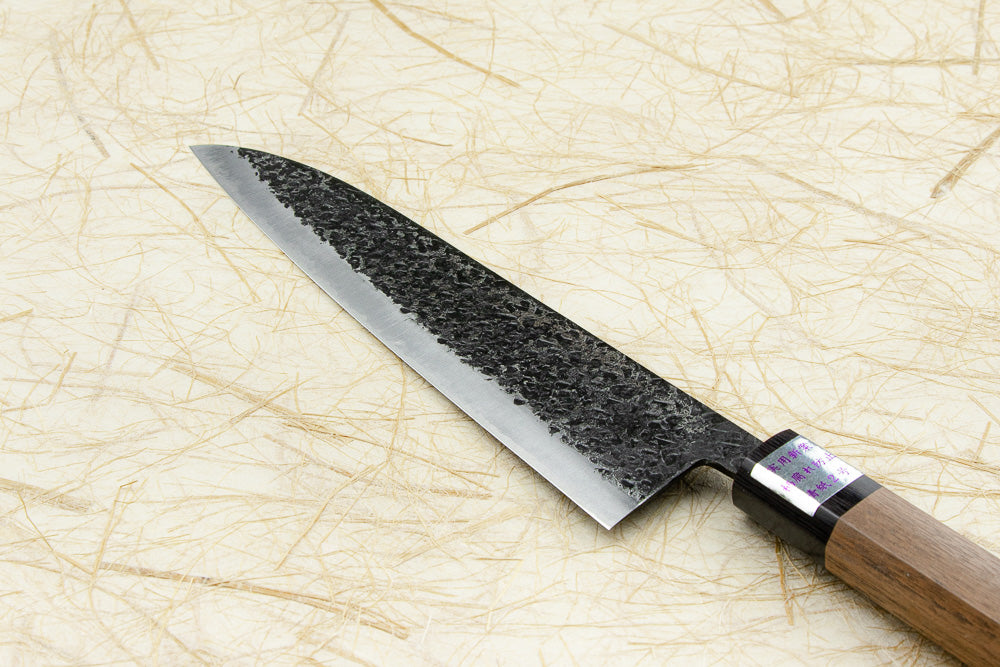
Moritaka Ishime Gyuto 210mm — A pro’s daily driver
Best for: daily pro use
Line cooks don’t baby their knives, and the Moritaka doesn’t need babying — much. Its Aogami #2 core hardened to HRC 62-64 is the hardest steel in this roundup, and the hammered kurouchi finish released food better than any polished blade we tested: dicing five pounds of onions, slices fell away cleanly where other knives needed a wipe between cuts. The forge-black finish also hides patina beautifully, so it always looks intentional. It’s thin and very hard, so respect it — no bones, no frozen food, no twisting in dense vegetables, or the edge will remind you who’s boss.
- Hardest steel here (HRC 62-64) with outstanding edge retention
- Hammered kurouchi finish gave the best food release we tested
- Dark forge finish hides patina — always looks intentional
- Brittle at this hardness — chipped slightly on a chicken joint in our test
- Demands respect: no twisting, no bones, no frozen food
| Blade steel | Aogami #2, iron clad |
| Hardness | HRC 62-64 |
| Blade length | 210mm |
| Finish | Kurouchi, hammered tsuchime |
| Weight | ~150g |
| Handle | Western-style handle |
10/10
8/10
6/10

Fujiwara Kanefusa FKH Carbon Steel Gyuto 210mm — The unkillable workhorse
Best for: high-volume chopping
Every kitchen needs the knife you reach for without thinking, and the Fujiwara FKH is that knife. Its SK carbon steel at HRC 58-60 is softer than the Japanese blades above — which sounds like a weakness until you realize it means the edge rolls instead of chips, and five strokes on a honing rod bring it right back. In our high-volume tests it prepped meal after meal with just quick honing between sessions, never demanding a full sharpening. The pakkawood handle is comfortable over long sessions, and the fit and finish punch well above what you’d expect at this level.
- Forgiving steel — the edge rolls rather than chips under abuse
- Responds to a honing rod in seconds; back to work immediately
- Excellent fit and finish, well above expectations
- Needs honing more often than harder Japanese blades
- Won’t reach the absolute peak sharpness of white or blue steel
| Blade steel | SK carbon steel |
| Hardness | HRC 58-60 |
| Blade length | 210mm (8.2″) |
| Handle | Pakkawood Western handle |
| Weight | ~160g |
| Bevel | Double bevel 50/50 |
8/10
9/10
7/10

Messermeister Meridian Traditional 8″ Carbon Chef Knife — Carbon steel in a familiar package
Best for: Western rock-chopping
If Japanese gyutos intimidate you but you want carbon steel’s edge, this is your bridge. The Meridian Traditional pairs a German-profile carbon blade with the classic three-rivet Western handle your hand already knows. It rock-chopped herbs better than any knife in this roundup thanks to its curved belly, and at HRC 58 it’s the most forgiving blade here for cooks still building their technique. Maintenance earned our highest care score — dry it promptly after washing and it asks for little else, making it the gentlest introduction to carbon steel ownership.
- Best rock-chop profile here — curved belly glides through herbs
- Most forgiving to maintain of all 10 knives tested
- Familiar Western handle fits all hand sizes comfortably
- Thicker behind the edge than Japanese knives — wedges slightly in dense carrots
- Heavier 200g build can tire smaller hands during long prep
| Blade steel | German carbon steel |
| Hardness | ~HRC 58 |
| Blade length | 8″ |
| Handle | 3-rivet traditional Western |
| Weight | ~200g |
| Profile | German, rock-chop belly |
8/10
9/10
8/10
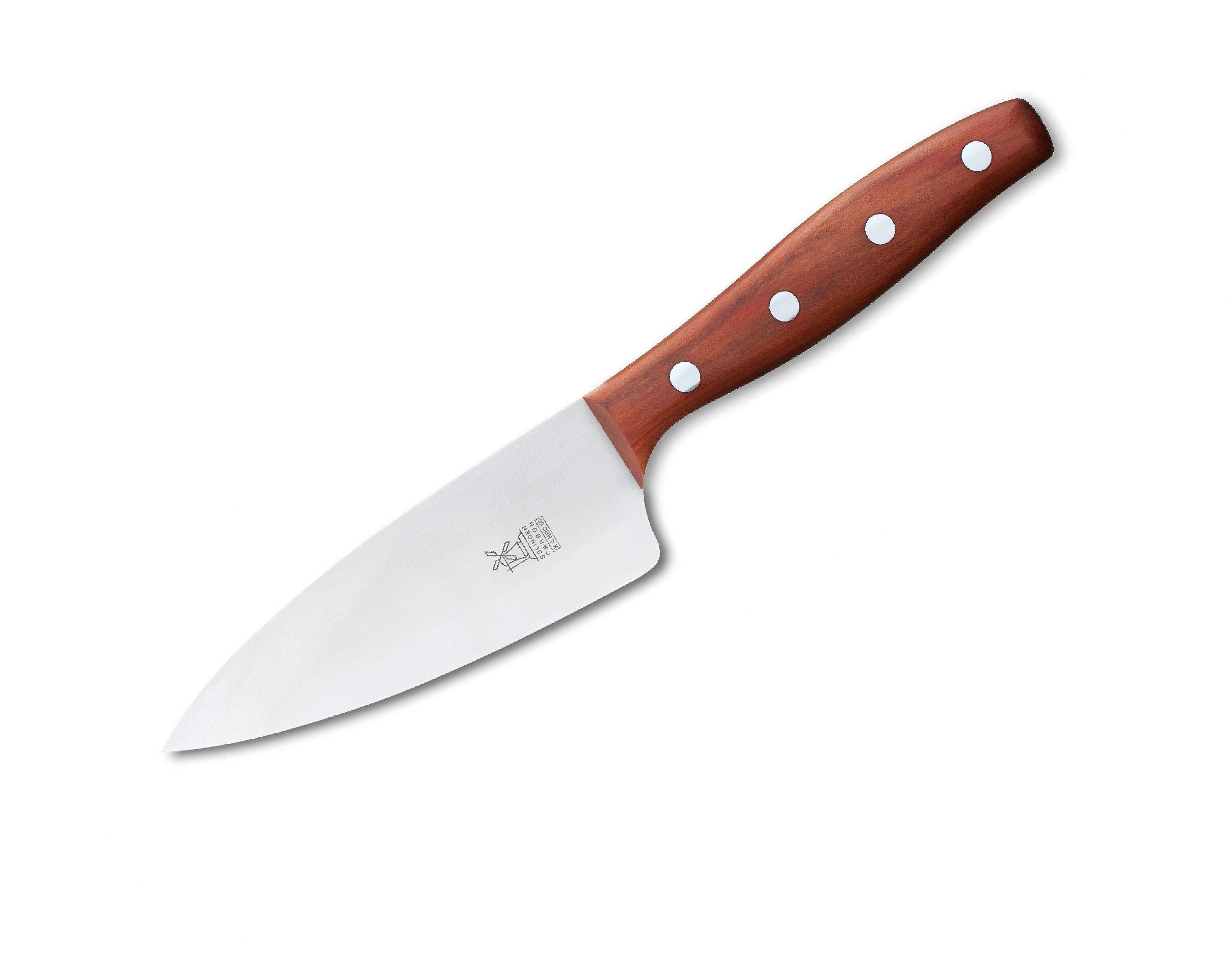
Robert Herder Windmühlenmesser K1M Chef Knife 23cm — Solingen craft, featherweight feel
Best for: heirloom-quality feel
Pick up the K1M and your first thought is: is this even a real knife? At barely 120 grams with a whisper-thin C75 carbon blade, it feels like an extension of your hand rather than a tool you’re wielding. Made in Solingen, Germany, it’s the thinnest Western chef knife we’ve ever tested — it fell through onions under its own weight with zero downward pressure. That thinness is also the catch: this is a precision vegetable slicer, not a beater, and the non-stainless carbon steel needs prompt drying after every use. But as a daily vegetable knife, it’s pure joy.
- Featherweight 120g — the least hand fatigue of any knife tested
- Whisper-thin grind falls through vegetables under its own weight
- Hand-finished in Solingen, Germany, with a warm cherry wood handle
- Too thin and light for heavy tasks like squash or chicken bones
- Cherry handle needs regular oiling to stay beautiful
| Blade steel | C75 carbon steel (non-stainless) |
| Hardness | HRC 60 |
| Blade length | 23cm (9″) |
| Handle | Cherry wood |
| Weight | ~120g |
| Origin | Made in Solingen, Germany |
9/10
7/10
6/10
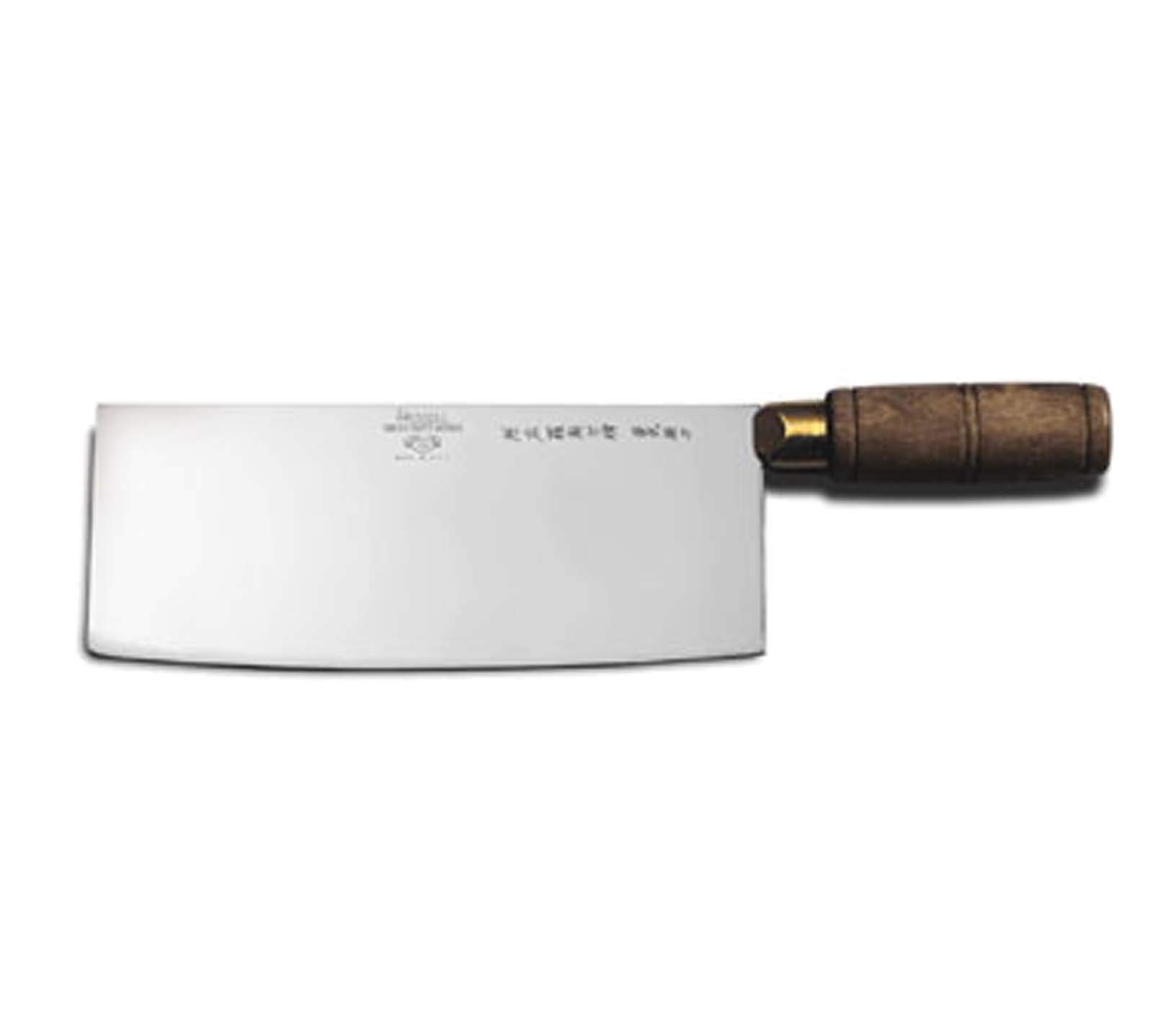
Dexter-Russell Traditional 8″ Cooks Knife — The line cook’s beater
Best for: line-cook duty
Walk into any busy American restaurant kitchen and you’ll find a Dexter. The Traditional carbon steel cook’s knife is the definition of a working tool: not the sharpest here, not the prettiest, but it takes abuse that would chip the Japanese blades and keeps coming back. In our testing it handled the jobs the others couldn’t — portioning whole chickens, cutting through small joints — without a single chip. It sharpens easily on any stone or steel, and the honest price means you won’t cry if a coworker borrows it and forgets to dry it. For home cooks who want one indestructible carbon knife, this is it.
- Toughest blade here — handled chicken bones without chipping
- Sharpens quickly and easily on any stone or honing steel
- Made in the USA — a genuine commercial-kitchen staple
- Heaviest, least refined edge — won’t match Japanese sharpness
- Basic fit and finish; purely a working tool
| Blade steel | Carbon steel |
| Hardness | HRC 55-57 |
| Blade length | 8″ |
| Handle | Rosewood-pattern handle |
| Weight | ~180g |
| Origin | Made in USA |
7/10
9/10
7/10
Top 3 Head-to-Head: Misono vs Old Hickory vs K Sabatier
These three are the finalists most buyers circle back to: the best performer, the best bargain, and the classic. Here is how they actually differ where it counts.
| Feature | #1 Misono | #2 Old Hickory | #3 K Sabatier |
|---|---|---|---|
| Edge Sharpness & Retention | 10/10 — Best | 8/10 | 8/10 |
| Build Durability | 9/10 | 7/10 | 8/10 — Best |
| Ease of Care | 7/10 | 6/10 | 7/10 — Best |
| Choose if… | You want the sharpest edge and will maintain it properly | You want carbon-steel performance at the lowest possible cost | You cook French-style and want a knife with heritage |
Who These Carbon Steel Chef Knives Are NOT For
Not every cook should buy carbon steel — and we’d rather tell you now than after you’ve spent the money.
If you mostly cut highly acidic foods like citrus and tomatoes and hate the gray patina and faint metallic tang that develops, carbon steel will annoy you daily. And if sharpening sounds like a chore rather than a ritual, the maintenance will feel like a tax, not a hobby — buy stainless and never look back.
Common Mistakes to Avoid
These are the mistakes that quietly ruin the experience even with a great carbon steel knife.
Frequently Asked Questions About Carbon Steel Chef Knives
Do carbon steel chef knives rust?
Yes — any moisture left on the blade can start orange rust within an hour. But the gray-blue patina that forms with normal use actually protects against deeper rust, so a well-used carbon knife is more rust-resistant than a brand-new one. Dry it immediately after every wash and you’ll rarely see rust.
Are carbon steel knives better than stainless steel knives?
For sharpness and ease of sharpening, yes — carbon steel takes a keener edge and touches up faster on a stone. For convenience, no — stainless forgives the dishwasher, the sink, and the forgetful roommate. Choose carbon if you enjoy the maintenance ritual; choose stainless if you want a knife you never have to think about.
What is the dark staining on my carbon steel knife?
That blade discoloration is just patina, not damage — a thin oxidized layer formed by food acids that actually guards against rust. It starts blotchy and evens out into a handsome gray-blue with use. Only bright orange, powdery spots are real rust and need removing.
Can I put a carbon steel knife in the dishwasher?
Never. Dishwasher detergent, sustained heat, and prolonged moisture will rust the blade and crack or swell the handle in a single cycle. Hand wash with mild soap, towel dry immediately, and store it dry.
How often do carbon steel knives need sharpening?
In our six-week test, daily home use required a proper stone sharpening every 3 to 8 weeks depending on the steel, with quick honing in between. The upside: carbon steel sharpens noticeably faster than stainless, so each session takes just minutes.
What is the difference between white steel and blue steel?
White steel (shirogami) is purer carbon steel — easier to sharpen to a razor edge but needs touching up more often. Blue steel (aogami) adds chromium and tungsten for much longer edge retention, but it’s slower to sharpen and more prone to chipping. Beginners should start with white; experienced sharpeners will appreciate blue.
Our Final Verdict
The carbon steel market splits into two camps: Japanese blades that chase ultimate sharpness and Western blades that prioritize forgiveness. The tension is real — the sharpest knives demand the most care, and the toughest ones never get quite as keen. Your job is to be honest about which side of that trade-off you’ll actually live with.
If you want the best edge and will dry your knife every time, the Misono Swedish Carbon Steel Gyuto is the best carbon steel chef knife you can buy. If you want carbon performance on a strict budget, the Old Hickory delivers shocking sharpness for almost nothing. If you rock-chop daily and want a knife with heritage, the K Sabatier Authentique is the one you’ll hand down to your kids.

