How to Remove Rust From a Chef Knife: Safe, Step-by-Step Guide
Quick Answer
To remove light rust from a chef knife, wash the blade, dry it, and gently rub the affected area with a cutlery-specific rust eraser or a suitable non-scratch stainless-steel cleaner. Rinse away all residue, dry the knife completely, and apply a thin coat of food-safe mineral oil to a carbon-steel blade before storage. Remove all rust before using the knife for food, as advised by the USDA Food Safety and Inspection Service.
Steps to remove surface rust
- Check the blade: Look for orange spots, rough patches, flaking, or deep pits.
- Clean safely: Use mild dish soap and a soft sponge, keeping your fingers away from the cutting edge.
- Treat the rust: Follow the rust remover’s instructions and work gently on the affected area.
- Rinse and dry: Remove all cleaner residue and dry the entire blade immediately.
- Protect the steel: Use food-safe mineral oil when appropriate, especially on carbon steel.
Important safety check
- Avoid aggressive scrubbing that can damage the blade finish or cutting edge.
- Seek professional help for deep pitting, extensive corrosion, or a damaged blade.
Finding rust on a favorite chef knife can be frustrating, especially when you thought stainless steel couldn’t rust. The good news is that small surface spots are often removable without replacing the knife.
This guide explains how to identify rust, choose a suitable removal method, protect different types of knife steel, and prevent corrosion from returning. The key is to remove the rust without creating scratches, damaging a protective finish, or compromising food safety.
What Is Rust on a Chef Knife?
Rust is corrosion that forms when iron in steel reacts with oxygen and moisture. It often appears as reddish-orange spots, brown patches, or rough areas on a blade.
A chef knife made from carbon steel is particularly susceptible to rust, while stainless steel resists corrosion but isn’t completely rustproof. Stainless steel relies on a protective chromium-rich surface layer, which can become less effective under certain conditions.
Rust vs. patina: How can you tell the difference?
Rust and patina can both change a blade’s color, but they aren’t the same. Rust is generally reddish-brown and may feel rough, while a carbon-steel patina often appears blue, gray, or dark brown.
- Surface rust: Orange or reddish spots that may wipe away or respond to gentle cleaning.
- Natural patina: A relatively even gray, blue, or dark discoloration that develops as carbon steel reacts with food and its environment.
- Deep corrosion: Pits, cavities, flaking, or visibly damaged steel that may require professional restoration.
- Transfer rust: Rust-colored marks that may come from contact with another corroded metal object rather than extensive damage to the blade itself.
Don’t automatically scrub every dark mark from a carbon-steel knife. A stable patina is different from active rust, and unnecessary polishing can remove that surface layer.
Why Does a Chef Knife Develop Rust?
Moisture is one of the most common reasons a chef knife develops rust. Even a stainless-steel blade can corrode when water, salts, food residue, or unsuitable cleaning products remain on its surface.
Identifying the cause helps you select the right cleaning method and avoid repeating the same mistake.
- Leaving the knife wet: Water droplets left on the blade can encourage corrosion, particularly on carbon steel.
- Cutting acidic foods: Ingredients such as tomatoes, citrus fruits, and onions can contribute to staining or surface oxidation when residue remains on the blade.
- Using a dishwasher: Harsh detergents, high temperatures, and contact with other utensils can damage knife finishes and encourage corrosion.
- Storing it in a damp place: Humid cupboards, wet knife blocks, and poorly dried sheaths can expose steel to prolonged moisture.
- Contact with rusty metal: A rusty utensil or contaminated storage surface can leave rust-colored marks on another blade.
If rust keeps appearing in the same location, inspect your cleaning routine and storage conditions before buying a replacement knife.
What Do You Need to Remove Rust From a Chef Knife?
 Save
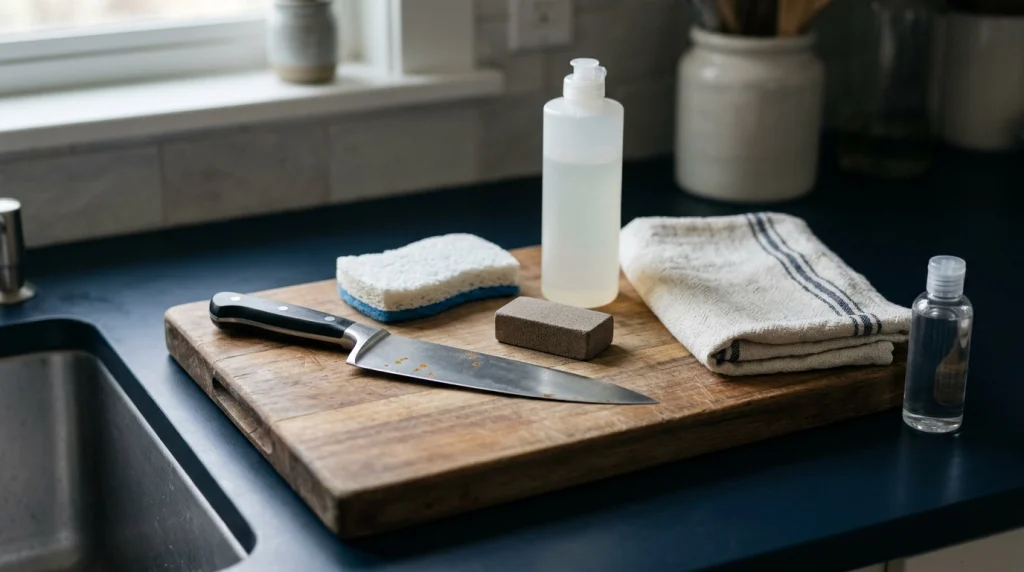
For light surface rust, start with a few basic supplies rather than reaching for the most abrasive cleaner you can find. The best choice depends on the steel, blade finish, and severity of the corrosion.
- A stable cutting board or nonslip work surface.
- Mild dish soap and clean running water.
- A soft sponge or nonabrasive cloth.
- A rust eraser designed for knives or a compatible stainless-steel cleaner.
- A clean, dry towel.
- Food-safe mineral oil for suitable blades, particularly carbon steel.
Before using a specialized cleaner, read its instructions and check the knife manufacturer’s care recommendations. Coated blades, decorative finishes, and certain Japanese knives may need a gentler approach.
How to Remove Rust From a Chef Knife Step by Step
Light surface rust can often be removed at home with a suitable cleaner and controlled, gentle pressure. Work slowly, protect your hands, and stop if the blade’s finish begins to change.
Step 1: Inspect the blade and prepare your workspace
Place the knife on a stable cutting board with the blade securely supported. Keep the sharp edge pointed away from your hands, and never leave the knife hidden in a sink full of water.
Examine the rust under good lighting. If the blade has deep pits, flaking metal, a damaged cutting edge, or extensive corrosion, consult a qualified knife sharpener or professional restorer before proceeding.
Step 2: Wash away dirt and food residue
Use warm running water, mild dish soap, and a soft sponge to clean the blade. Remove food residue before treating the rust so that dirt doesn’t interfere with the cleaning process.
Keep the knife under control throughout the wash. Avoid sliding your fingers along the cutting edge, and never use a loose, aggressive scrubbing motion.
Step 3: Dry the knife before treating the rust
Wipe the blade with a clean towel, including the area near the handle and bolster. Follow the rust remover’s instructions about whether the blade should be dry or damp before application.
Drying also makes it easier to distinguish remaining orange rust from water spots or natural discoloration.
Step 4: Apply a suitable rust remover
For small rust spots, a cutlery-specific rust eraser is a practical starting point. Gently work the affected area using the product’s recommended technique, usually with controlled strokes along the blade’s finish.
If the manufacturer recommends a compatible stainless-steel cleaner instead, apply it as directed with a soft cloth or sponge. Don’t assume that every metal polish, household chemical, or abrasive pad is safe for every knife.
Step 5: Remove the residue and inspect the blade
Rinse the knife thoroughly under clean running water if the product instructions call for rinsing. Remove all cleaner residue, then dry the blade immediately with a fresh towel.
Inspect the treated area under good lighting. If the orange discoloration has disappeared and the steel remains smooth, further abrasion may be unnecessary.
Step 6: Protect the blade before storage
For a carbon-steel knife, apply a very thin coat of food-safe mineral oil to the completely dry blade when appropriate. Follow the manufacturer’s instructions and wipe away excess oil so the blade isn’t left greasy.
For stainless steel, thorough drying is usually the most important everyday precaution. A compatible protective product may help in humid conditions, but it should never replace cleaning and drying.
Food-safety rule: Before using the knife again, make sure all rust has been removed and any cleaning product has been completely rinsed away as directed. Wash the blade with dish soap and clean water, then dry it thoroughly.
Which Rust Removal Method Is Best for Your Chef Knife?
Different methods suit different types of corrosion. A product that’s suitable for a plain stainless-steel blade may scratch a polished finish or damage a coated blade.
| Method | Best use | Main caution |
|---|---|---|
| Cutlery rust eraser | Small surface rust spots | Use gentle pressure and follow the instructions. |
| Compatible stainless-steel cleaner | Light rust or staining on suitable stainless blades | Check compatibility with the blade finish. |
| Soft cloth and mild soap | Initial cleaning and loose residue | May not remove established rust. |
| Professional restoration | Deep pitting or extensive corrosion | Restoration can remove steel and alter the blade profile. |
For a typical orange spot on an ordinary, uncoated chef knife, begin with gentle cleaning and a compatible rust remover. Escalate only if the corrosion remains.
Can You Remove Rust With Vinegar, Baking Soda, or Lemon Juice?
Household remedies are popular, but they aren’t automatically the safest choice for a precision kitchen knife. Acids and abrasive powders can affect the surface finish, and prolonged exposure to liquids can create additional problems.
- Vinegar: Some manufacturers permit vinegar for particular stainless-steel knives, but others recommend specialized cleaners. Check your knife’s instructions before applying it.
- Baking soda: Its mild abrasive action may scratch a polished blade, especially if you rub it forcefully.
- Lemon juice: Its acidity can affect steel finishes, and leaving it on the blade adds unnecessary exposure to moisture and acid.
- Steel wool: Avoid aggressive scouring because it can scratch the blade and may leave particles behind.
- Bleach and harsh cleaners: Don’t use these as DIY rust removers on kitchen knives. They may damage the steel or leave unsuitable residues.
Manufacturer guidance varies by steel and finish. For example, Brabantia’s knife-care guidance discusses particular cleaning approaches, while Yoshikin’s knife-care instructions recommend removing rust promptly and drying blades thoroughly.
When the manufacturer’s instructions are unavailable, a cutlery-specific rust remover is a more controlled starting point than experimenting with several household chemicals.
How Do You Remove Rust From Carbon Steel vs. Stainless Steel?
The most important difference is how much protection the steel provides against corrosion. Carbon steel generally requires more careful moisture control, while stainless steel offers greater resistance but can still develop rust spots.
| Feature | Carbon steel | Stainless steel |
|---|---|---|
| Rust resistance | Usually lower | Usually higher |
| Surface changes | May develop a natural patina | May develop spots or localized corrosion |
| Rust removal | Use a compatible, gentle rust remover | Use a compatible rust eraser or steel cleaner |
| Aftercare | Dry immediately; oil when appropriate | Dry immediately and store in a dry place |
If you own a Japanese carbon-steel chef knife, remember that a dark patina may be normal. Focus on removing active reddish rust rather than trying to make the entire blade look brand new.
For additional context, read our guide to cleaning, sharpening, and maintaining kitchen knives.
When Should You Stop Cleaning and Replace or Repair a Rusty Chef Knife?
Not every rusty knife needs replacing, but severe corrosion deserves more attention than a small surface spot. The condition of the steel matters more than the color alone.
- Light orange spotting: Usually worth treating with a suitable rust remover.
- Persistent surface discoloration: Check whether it is rust, patina, or a damaged finish before using more abrasive methods.
- Deep pits or flaking: Ask a professional sharpener to assess whether safe restoration is possible.
- Severe edge damage: Have the knife inspected before returning it to food preparation.
- Loose handle or structural damage: Stop using the knife until it has been repaired or replaced.
Deep corrosion can remove material from the blade and change its shape. Repeated aggressive polishing may also thin the blade or damage its original finish.
Never assume that washing a heavily rusted knife makes it safe. The USDA advises removing rust from food-contact utensils before use; if you cannot remove all corrosion or verify the blade’s condition, keep the knife out of food preparation until a qualified professional assesses it.
Which Rust Removal Tools Are Worth Buying?
You don’t need a large knife-maintenance kit for a few small rust spots. Choose a product designed for the job, then follow its instructions carefully.
These options are starting points for comparing suitable tools, not claims of personal testing or verified product ratings.
Best for light rust
Knife-specific rust eraser
A compact rust eraser made for cutlery can target small spots without requiring a powered tool. Check the recommended technique and confirm that the product suits your blade finish.
Best for compatible stainless blades
Stainless-steel cleaner
A cleaner specifically approved for stainless-steel kitchen tools may help remove light corrosion and staining. Avoid products that are too abrasive for polished or coated blades.
Best for carbon-steel aftercare
Food-safe mineral oil
A suitable food-safe mineral oil helps protect a clean, dry carbon-steel blade during storage. Apply only a thin film and follow the knife manufacturer’s care instructions.
Before purchasing, check the product label, compatibility, and cleaning instructions. A specialized tool is useful only when it matches the blade you own.
How Can You Prevent Rust From Returning?
 Save
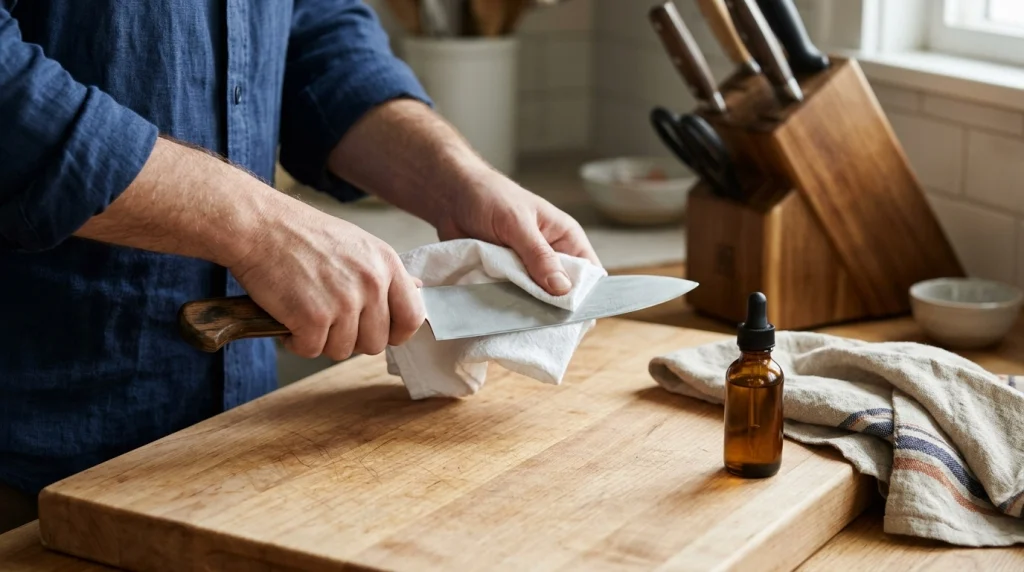
Preventing rust is usually easier than removing it. A short cleaning and drying routine can make a substantial difference, especially for carbon-steel knives and kitchens with high humidity.
- Wash after every use: Remove food residue with mild dish soap and clean water.
- Dry immediately: Use a clean towel rather than leaving the blade to air-dry.
- Clean after acidic foods: Rinse and dry the knife promptly after cutting tomatoes, citrus, onions, or other reactive ingredients.
- Avoid prolonged soaking: Never leave a chef knife submerged in a sink or basin.
- Store it dry: Use a clean knife block, suitable sheath, magnetic strip, or dedicated drawer organizer.
- Oil carbon steel when appropriate: Apply a thin layer of food-safe mineral oil for storage when the manufacturer’s instructions recommend it.
- Inspect the blade: Check for new spots, especially after storing the knife for an extended period.
The same routine also helps protect the knife’s handle and cutting edge. For more guidance, see our instructions on how to clean a chef knife safely.
Frequently Asked Questions
Can I use a chef knife after removing rust?
Yes, if you have completely removed the rust, eliminated all cleaning-product residue, and confirmed that the blade has no concerning damage. Wash the knife with dish soap and clean water, rinse it thoroughly, and dry it before preparing food.
Does stainless steel rust on a chef knife?
Yes. Stainless steel resists corrosion but isn’t completely rustproof. Moisture, salt, acidic food residue, harsh detergents, and damage to the protective surface layer can contribute to rust spots or pitting.
Is vinegar safe for removing rust from a chef knife?
It depends on the knife’s steel and finish. Some manufacturers permit vinegar for particular blades, while others recommend different cleaners. Check the manufacturer’s instructions first, avoid prolonged soaking, and rinse and dry the knife thoroughly if vinegar is approved.
How do I remove rust from a Japanese chef knife?
Identify whether the blade is carbon steel, stainless steel, coated, or clad before choosing a cleaner. Use a compatible rust eraser or manufacturer-approved product for light rust, and avoid aggressive abrasion that could damage the finish or alter the blade’s geometry.
Can deep rust be removed from a chef knife?
Sometimes, but deep pitting can require professional restoration. Removing enough steel to eliminate severe corrosion may change the blade’s profile or compromise its condition. Have a qualified knife sharpener assess the damage before deciding whether restoration is worthwhile.
Final Takeaway: Remove Rust Gently and Keep Your Chef Knife Dry
To remove rust from a chef knife, start by identifying the steel and checking how deeply the corrosion has penetrated. Clean the blade, use a compatible rust remover for light spots, rinse away residue, and dry the knife completely.
For lasting results, make immediate cleaning and drying part of your normal kitchen routine. Carbon-steel blades may also benefit from a thin coat of food-safe mineral oil when appropriate.
If the blade has deep pits, flaking, or structural damage, seek professional advice rather than scrubbing harder. A careful approach protects your knife, preserves its finish, and helps keep it suitable for food preparation.

