10 Best Boning Knife Sharpener for Precise, Effortless Sharpening
A sharp boning knife gives us better control when trimming meat, removing skin, and cutting around bones. A good sharpener helps maintain that edge between professional sharpenings, making food preparation easier and safer.
Boning knives often have narrow, curved blades that require more care than wider kitchen knives. The best sharpener should match the knife’s edge, remove only a small amount of metal, and offer enough control to avoid damaging the blade.
We focused on sharpeners that can maintain a boning knife’s thin edge while remaining easy and safe to use. We tested and compared the leading options to find the best choices for different kitchens, skill levels, and budgets.
Best Boning Knife Sharpeners
We selected the best boning knife sharpeners for keeping blades sharp, safe, and ready for precise cutting. Our list includes options for different sharpening methods, skill levels, and kitchen needs.
RazorSharp Adjustable Knife Sharpener
 Save
SaveWe recommend this sharpener for home cooks who want adjustable control and a stable tool for maintaining boning knives.
Key Pros
- Adjustable angle from 14 to 24 degrees
- Stable, comfortable grip
- Works quickly on dull kitchen knives
Key Cons
- Takes practice to set the right angle
- May remove more metal than careful hand sharpening
- The compact design can feel less refined
We found the angle adjustment useful when working with different knife edges. A boning knife often needs a narrower edge than a heavier kitchen knife, and the guide helped us keep each pass more consistent.
The base stayed steady on the counter, while the rubber grip made the sharpener easy to control. Its diamond-coated ceramic surfaces restored a clean edge on dull knives with only a few passes.
We needed to use light pressure and avoid rushing the process. The angle knob also took some trial and error at first. Once we found the right setting, the sharpener produced a noticeably smoother cutting edge.
The RazorSharp also handles scissors and other kitchen knives, which adds value for households with several tools to maintain. It offers a practical balance of control, speed, and storage-friendly size.
Intelitopia Whetstone Knife Sharpener
 Save
SaveWe recommend this set for home cooks who want a complete, hands-on way to sharpen boning knives and other blades.
Key Pros
- Covers dulling, sharpening, and polishing with four grits
- Includes a base, angle guide, flattening stone, and strop
- Works with many kitchen and outdoor knives
Key Cons
- Whetstone sharpening takes practice
- The stones need water and proper drying after use
- The included leather strop may feel less durable than expected
We found the 400/1000-grit stone useful for bringing a dull boning knife back to a workable edge. The 3000/8000 side then helped smooth and polish it. The angle guide made it easier for us to keep a steady angle, especially during early sharpening sessions.
The bamboo base and rubber supports kept the stone in place on the counter. We also liked having the flattening stone because regular use can wear a groove into a whetstone. The set includes enough accessories for beginners without requiring separate purchases.
This sharpener does have a learning curve. We needed to soak the stones, use steady pressure, and let them dry fully afterward. The kit suits users willing to practice, but those who want quick results may prefer a pull-through sharpener.
Work Sharp MK2 Sharpener
 Save
SaveWe recommend this sharpener for cooks who want fast, repeatable results from boning knives and other tools.
Key Pros
- Flexible belts follow curved knife edges
- Adjustable speed offers better control
- Works with knives, scissors, and garden tools
Key Cons
- Belts wear out and need replacement
- The powered system takes practice
- Some users may prefer a simple manual sharpener
We found the flexible belt useful on a boning knife because it followed the blade’s curve without forcing us to hold the knife against a fixed slot. The guide also helped us keep a steady angle as we worked toward the tip.
The two-speed motor gave us more control when touching up an edge, while the faster setting helped with duller blades. Belt changes took little time, although frequent use can increase the cost of replacement belts.
This model works well beyond kitchen knives. We could also use it on pocket knives, scissors, serrated edges, and garden tools. Its compact design made storage easy, but beginners should practice on an inexpensive knife before sharpening a valued blade.
SHARPAL 202H Sharpening System
 Save
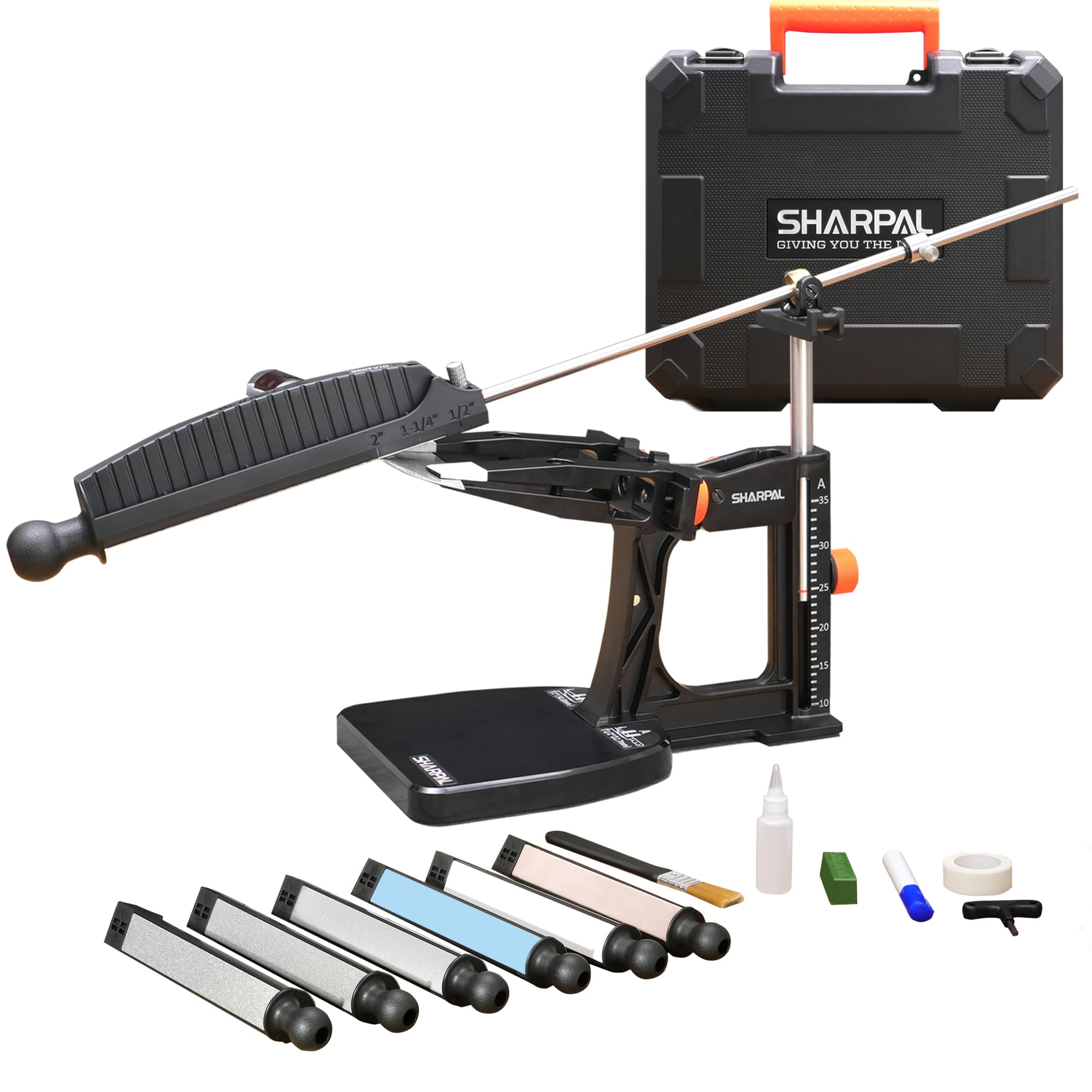
SaveWe recommend this system for anyone who wants precise angle control and a complete setup for sharpening boning knives at home.
Key Pros
- Adjustable angles help us match different blade edges.
- Multiple abrasives handle dull, damaged, and polished edges.
- The clamp and base keep sharpening steady.
Key Cons
- Setup takes longer than using a pull-through sharpener.
- The clamp may take practice with some blade shapes.
- Its large case needs dedicated storage space.
When we used the SHARPAL 202H, the guided design made it easier to keep a consistent angle along a narrow boning knife. The diamond plates removed dull metal efficiently, while the finer stones and leather strop helped smooth the finished edge.
We liked the angle range because it works for both thin kitchen blades and sturdier knives. The clamp holds the blade securely, but positioning requires care, especially with curved or unusually shaped boning knives.
This is not a quick touch-up tool. Changing plates and setting the blade takes time, yet the process gives us more control than a basic handheld sharpener. The sturdy base also stays stable during longer sharpening sessions.
The included case keeps the parts organized and makes storage easier. We would choose this system for cooks who sharpen several knives and want repeatable results rather than a fast, simple solution.
KITCHELLENCE 3-Stage Knife Sharpener
 Save
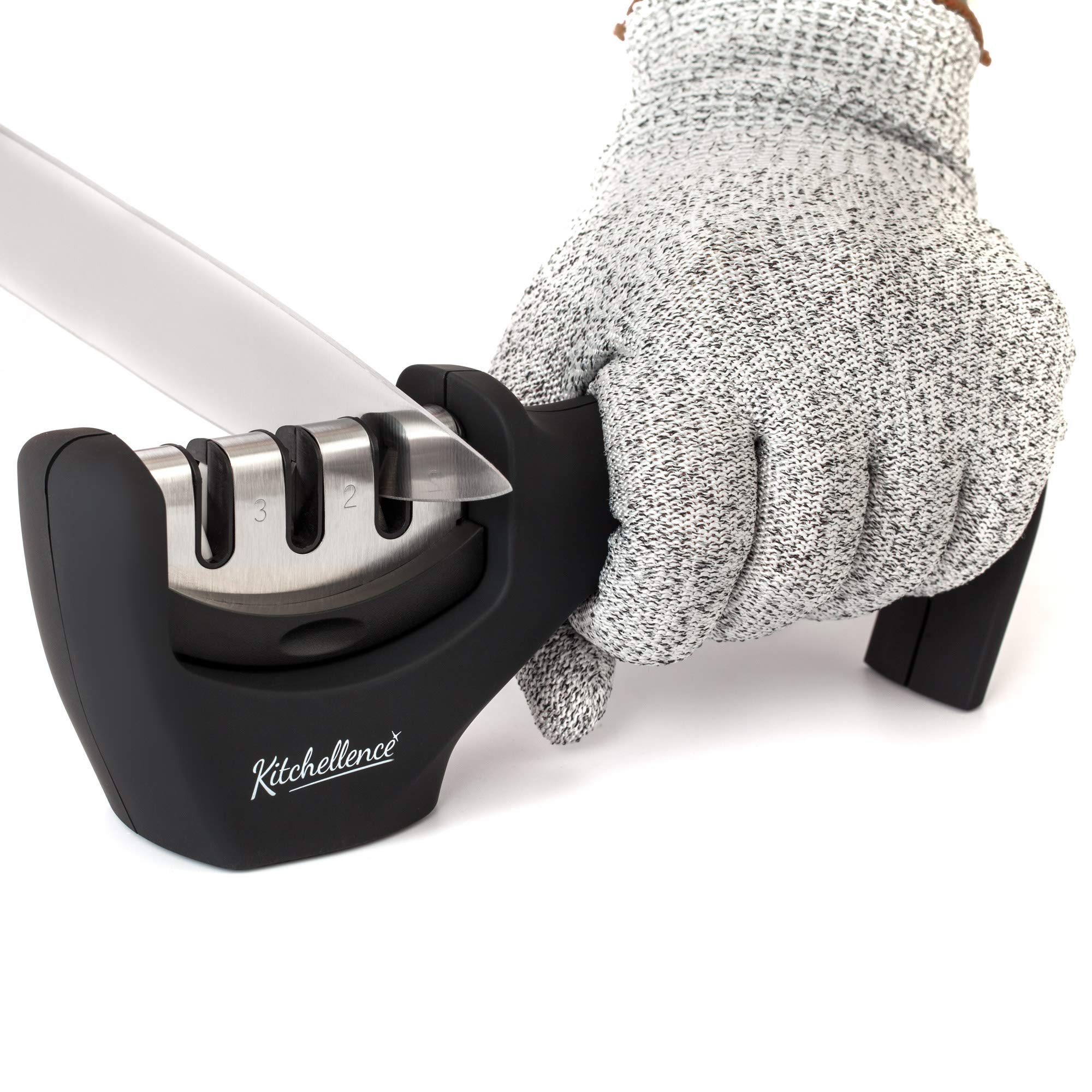
SaveWe recommend this affordable sharpener for quickly improving everyday boning knives, though it may not suit premium blades or lasting, highly polished edges.
Key Pros
- Three sharpening stages handle damaged, dull, and lightly worn edges
- Stable base and comfortable handle make it simple to control
- Includes a cut-resistant glove for added protection
Key Cons
- Results may fade sooner than those from professional sharpening
- The plastic body feels less durable than metal models
- Some buyers reported that the glove was missing
We found the three-slot layout useful when working on a dull boning knife. The first stage helped straighten the edge, while the later slots refined it. A few careful pulls made the knife noticeably more effective for trimming meat and removing skin.
The handle gave us a steady grip, and the non-slip base kept the sharpener from sliding on the counter. Its compact shape also stored easily in a drawer. We appreciated the glove, although reports of missing gloves mean buyers should check the package when it arrives.
This sharpener works best for standard kitchen knives that need regular maintenance. We would avoid using it on high-end or specialty blades, since pull-through sharpeners can remove more metal than careful manual methods. For basic boning-knife upkeep at a low price, it offers a practical option.
Sharp Pebble Precision Adjust Sharpener
 Save
SaveWe recommend this sharpener for boning knives because its adjustable angles make it easier to match the blade’s edge and restore a clean, useful point.
Key Pros
- Five angle settings from 12° to 24°
- Simple pull-through design
- Works quickly on dull straight-edge knives
Key Cons
- Not suitable for serrated knives or scissors
- Thick housing may limit some narrow blades
- The angle dial may feel stiff or fail on some units
We found the Sharp Pebble easy to set up and comfortable to hold. Choosing an angle before sharpening helped us keep the blade steady, which matters when working with a thin boning knife.
After a few gentle passes, the edge felt noticeably sharper. The coarse, medium, and fine stages let us move from repair to polishing without using separate tools. We also noticed some drag while pulling the blade through, so light pressure worked best.
The plastic body feels solid for its low weight, and the rubber base helped keep it stable on the counter. However, the thick slot housing may not accommodate every pocket or narrow blade. We would choose the lower settings for many flexible boning knives and avoid using this sharpener on serrated edges.
Kota Japan Diamond Sharpening Rod
 Save
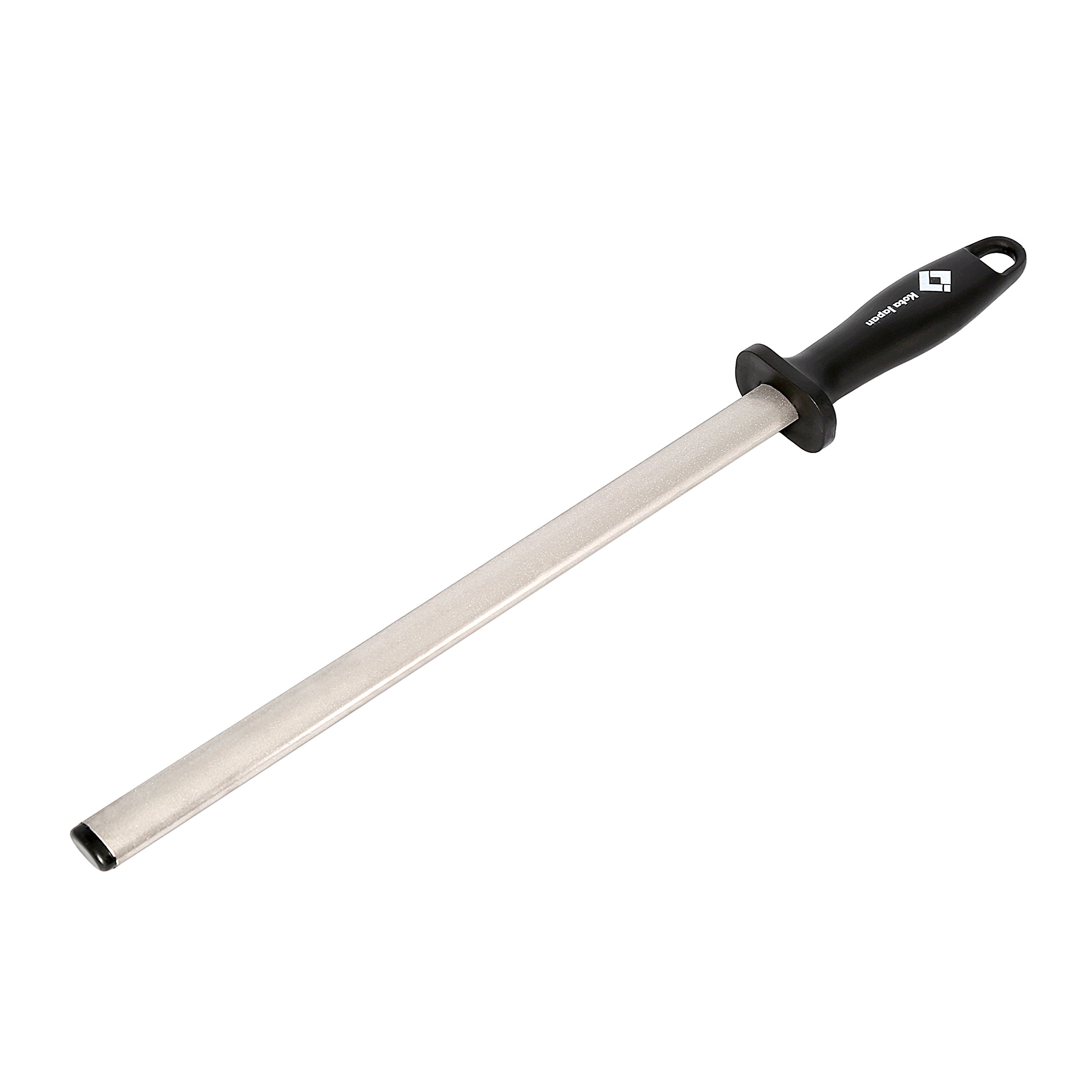
SaveWe recommend this rod for boning knife owners who want quick touch-ups with little pressure and simple handling.
Key Pros
- Diamond coating sharpens with light strokes.
- Oval design offers useful contact with the blade.
- Long handle and rod provide steady control.
Key Cons
- It may remove more metal than a honing steel.
- The diamond surface can wear if used too forcefully.
- It requires practice to hold a consistent angle.
We found the 12-inch rod easy to use on a boning knife. Setting the blade near a 20-degree angle and moving it from heel to tip restored a working edge in only a few passes.
The diamond surface worked with light pressure, which helped us avoid pressing the flexible blade into the rod. Its oval shape also gave us a broad contact area without making the tool feel bulky.
This sharpener suits routine maintenance more than careful edge polishing. We would use it gently and clean it with a non-abrasive brush after use. The long handle made the rod stable, but we still recommend placing the tip on a solid surface for safer sharpening.
Victorinox Manual Knife Sharpener
 Save
SaveWe recommend this compact sharpener for cooks who want a simple way to refresh boning, paring, and other narrow kitchen knives.
Key Pros
- Comfortable, slip-resistant handle
- Sharpens with only a few passes
- Compact and easy to store
Key Cons
- Coarse carbide plates can remove metal quickly
- Requires light pressure for better control
- May not suit delicate or specialty blades
We found the handle easy to hold, even with damp hands. Its finger guard also helped us keep our fingers away from the sharpening area while working through a boning knife.
The carbide plates restored a dull edge with little effort. We got the best results by using light pressure and checking the blade after a few passes. Pressing too hard removed more material than needed.
This sharpener works well for routine kitchen maintenance, but it does not replace professional sharpening for damaged or badly nicked blades. Its small size, low weight, and dishwasher-safe design make it a practical choice for everyday use.
FANERFUN Honing Steel
 Save
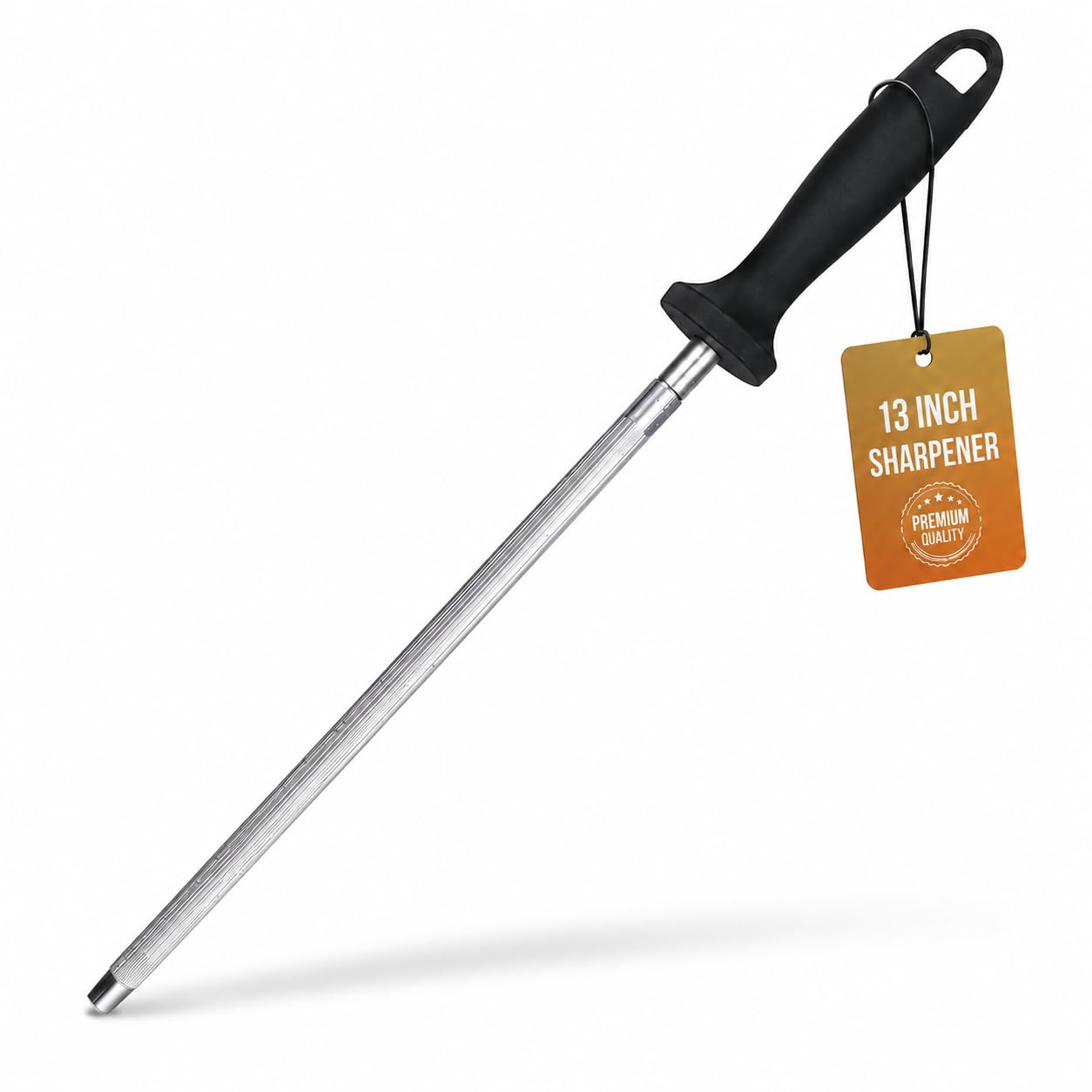
SaveWe recommend this honing rod for restoring the edge on lightly dull boning and kitchen knives without removing much metal.
Key Pros
- Smooth, controlled handling
- Magnetized surface helps collect filings
- Long rod works well on larger blades
Key Cons
- Hones edges rather than fully sharpening very dull knives
- Requires safe, steady technique
- The handle may feel small for larger hands
We found the 13-inch design easy to control while working along a boning knife. The carbon steel rod gave the blade a noticeable improvement after a few careful passes, especially when the edge had bent slightly from regular use.
The textured handle helped us keep a firm grip, and the hanging loop made storage simple. Its light weight also made repeated strokes less tiring than using a heavier sharpening tool.
This rod works best as part of regular knife care. It will not replace a sharpening stone or coarse sharpener when a blade has serious damage, but it can maintain a usable edge between full sharpenings. The magnetized surface may also help reduce loose metal filings during use.
ALLWIN-HOUSEWARE W 12-Inch Honing Steel
 Save
SaveWe recommend this honing steel for daily edge maintenance because it feels sturdy, handles safely, and quickly improves the cutting feel of kitchen knives.
Key Pros
- Sturdy carbon steel rod with a fine honing surface
- Secure grip and tip for controlled use
- Long length suits most chef knives
Key Cons
- Hones edges but does not replace a true sharpener
- Works best with already sharp, fine-edged knives
- Its heavier build may feel large for some users
We found the rod easy to control during light honing strokes. The textured handle stayed secure, while the metal tip helped brace the steel against a cutting board. Its length also gave us enough room to work across a blade without awkward positioning.
After a few passes, our knives felt smoother through common foods such as herbs, vegetables, and meat. The rod realigns the edge rather than removing much metal, so we would use it for regular upkeep instead of repairing a dull or damaged boning knife.
The carbon steel construction feels durable, and the hanging loop makes storage simple. We would wipe it dry after use to help maintain the surface.
Buying Guide
We should choose a sharpener that matches our boning knife’s edge and our sharpening skills. Flexible boning knives often need careful control, so a tool that removes too much metal can shorten the knife’s useful life.
| Feature | What to look for |
|---|---|
| Abrasive type | Ceramic rods suit light touch-ups. Diamond surfaces sharpen dull edges faster but may remove more metal. |
| Angle control | Guided systems help us maintain a consistent edge angle. |
| Grit level | Coarse grit repairs dull edges; fine grit polishes and maintains sharp ones. |
| Safety | A stable base, hand guard, or enclosed design helps protect our fingers. |
| Knife compatibility | We should confirm that the sharpener supports the knife’s edge style and size. |
| Cleaning | Removable or easy-to-clean parts make regular maintenance simpler. |
We should avoid sharpeners that require heavy pressure or feel unstable during use. A comfortable handle and a firm grip can improve control, especially when sharpening narrow or flexible blades.
Electric models can save time, but manual sharpeners give us more control over pressure and movement. Whichever type we choose, we should follow the maker’s instructions and use light, steady strokes.
Editor’s Choice
We choose the Work Sharp Professional Precision Adjust Knife Sharpener for boning knives. Its adjustable clamp holds many blade shapes securely, while the guided abrasive system helps us maintain a consistent angle.
We can set the sharpening angle to match the knife’s edge. This control matters for boning knives because flexible blades need careful handling and light pressure.
| Feature | Benefit |
|---|---|
| Adjustable angle | Matches different edge types |
| Guided sharpening | Helps maintain a steady angle |
| Interchangeable abrasives | Supports sharpening and honing |
| Clamp system | Keeps the knife stable |
The sharpener takes more setup than a pull-through model, but it gives us better control and repeatable results. We recommend it for cooks who sharpen knives regularly and want to protect a thin boning blade.
For occasional use, we should work slowly and check the edge often. A fine abrasive and light finishing strokes can help prevent removing more metal than needed.
Conclusion
We get the best results when we match the sharpener to our boning knife and sharpening skills. A guided sharpener offers steady control, while a whetstone gives us more control over the edge angle and finish. Electric models can save time, but we must confirm that they support the knife’s edge type.
Before buying, we should check these key points:
- Angle control: Helps us create a consistent edge.
- Abrasive type: Diamond, ceramic, and whetstone surfaces suit different needs.
- Knife compatibility: Flexible and narrow blades may need careful handling.
- Ease of use: Simple designs reduce mistakes.
- Safety: A stable base and secure grip help protect our hands.
We should sharpen lightly and often instead of removing too much metal at once. After sharpening, we can test the blade on paper or a food ingredient, then clean and dry the knife before storing it.
FAQs
What type of sharpener works best for a boning knife?
We recommend a fine-grit sharpening steel for regular maintenance and a whetstone for restoring a dull edge. A guided sharpener can also help us keep the blade angle steady.
Can we use an electric sharpener?
Yes, but we should choose a model with settings for narrow, flexible blades. Electric sharpeners can remove more metal than needed, so we should use light pressure and follow the instructions.
What angle should we use?
Most boning knives work well at 15 to 20 degrees per side. We should check the manufacturer’s instructions because the correct angle depends on the blade design.
How often should we sharpen a boning knife?
We should hone the edge after several uses and sharpen the knife when honing no longer improves its cutting ability. Heavy use may require more frequent sharpening.
Should we sharpen a flexible boning knife differently?
We should use extra care with flexible blades. A guided system or sharpening stone gives us better control and helps prevent uneven edges.
How do we know when the knife is sharp?
We can test the edge by slicing a sheet of paper or cutting a soft food safely. We should avoid testing sharpness with our fingers.