10 Best Boning Knife for Chicken Thighs: Top Picks for Precise Cutting
Chicken thighs are flavorful and affordable, but removing the bone can be slow and uneven with a standard kitchen knife. A boning knife has a narrow blade that helps us follow the bone, trim cartilage, and separate meat with better control.
For chicken thighs, we look for a boning knife with a sharp, flexible blade, a comfortable grip, and enough strength to handle joints without bending too much. Blade length, handle safety, and ease of cleaning also matter, especially when preparing several thighs.
We tested and researched boning knives to find the models that make trimming chicken thighs safer, faster, and more precise.
Best Boning Knives for Chicken Thighs
We selected the best boning knives for trimming chicken thighs, removing skin, and separating meat from bone. Our list focuses on sharpness, blade control, comfort, and easy cleaning.
Mercer Culinary 6-Inch Curved Boning Knife
 Save
SaveWe recommend this knife for chicken thighs because its curved, sharp blade gives us good control when trimming meat close to the bone.
Key Pros
- Curved blade helps us follow the bone smoothly
- Comfortable handle provides a steady grip
- Sharp edge works well for trimming fat and sinew
Key Cons
- White handle can show stains from food and spices
- Hand washing takes more care than using a dishwasher
- Six inches may feel slightly long for smaller tasks
When we used this knife on chicken thighs, the curved blade made it easier to separate the meat from the bone without removing too much meat. Its narrow shape also helped us trim small pieces of fat and connective tissue.
The polypropylene handle felt secure during repeated cuts, even when we wore gloves. The textured grip added control, although the white surface picked up marks from seasoning and meat juices.
The blade arrived sharp and handled routine prep with ease. We would wash and dry it by hand after each use to protect the edge and finish. Overall, this Mercer offers strong performance for its price and suits home cooks who want a practical boning knife.
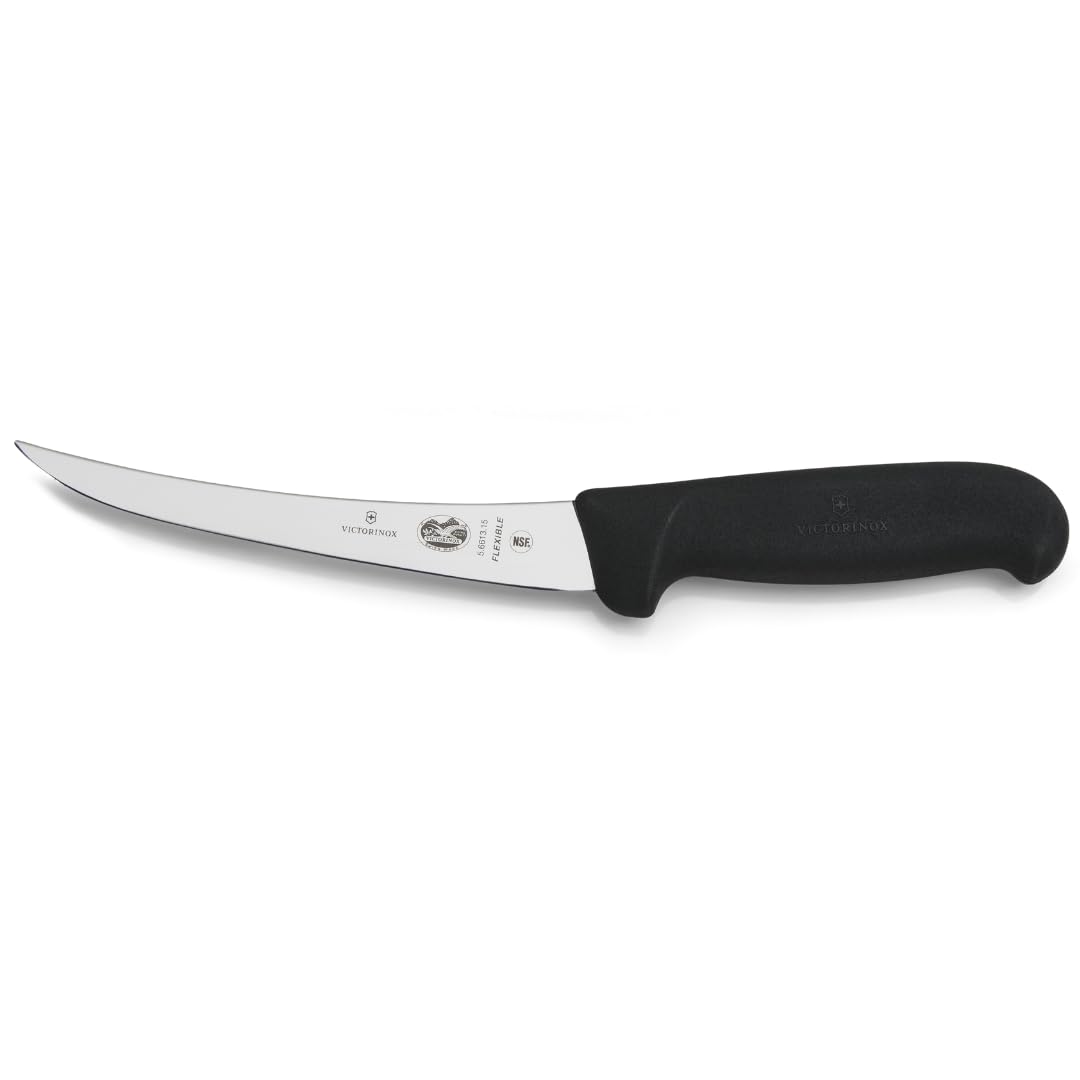
Victorinox Fibrox 6-Inch Curved Boning Knife
 Save
SaveWe recommend this knife for chicken thighs because its curved, flexible blade gives us good control around bones and joints.
Key Pros
- Flexible blade follows the shape of the thigh bone
- Textured handle stays secure with wet or greasy hands
- Lightweight design reduces hand and wrist strain
Key Cons
- No storage sheath comes included
- Flexible steel may feel less familiar to users who prefer stiff blades
- Dishwasher cleaning may shorten the edge’s life
When we used it to separate chicken meat from the bone, the curved blade made it easier to work close to the joint without removing too much meat. The narrow tip also helped us cut through tendons with steady pressure.
The Fibrox handle felt comfortable during repeated cuts. Its textured surface gave us a reliable grip, even when our hands were wet, while the low weight made the knife easy to control.
The blade arrived very sharp and held its edge well during routine prep. We would still hand-wash and dry it after use to protect the edge. Since the knife lacks a sheath, we would store it in a knife block, drawer guard, or other safe holder.
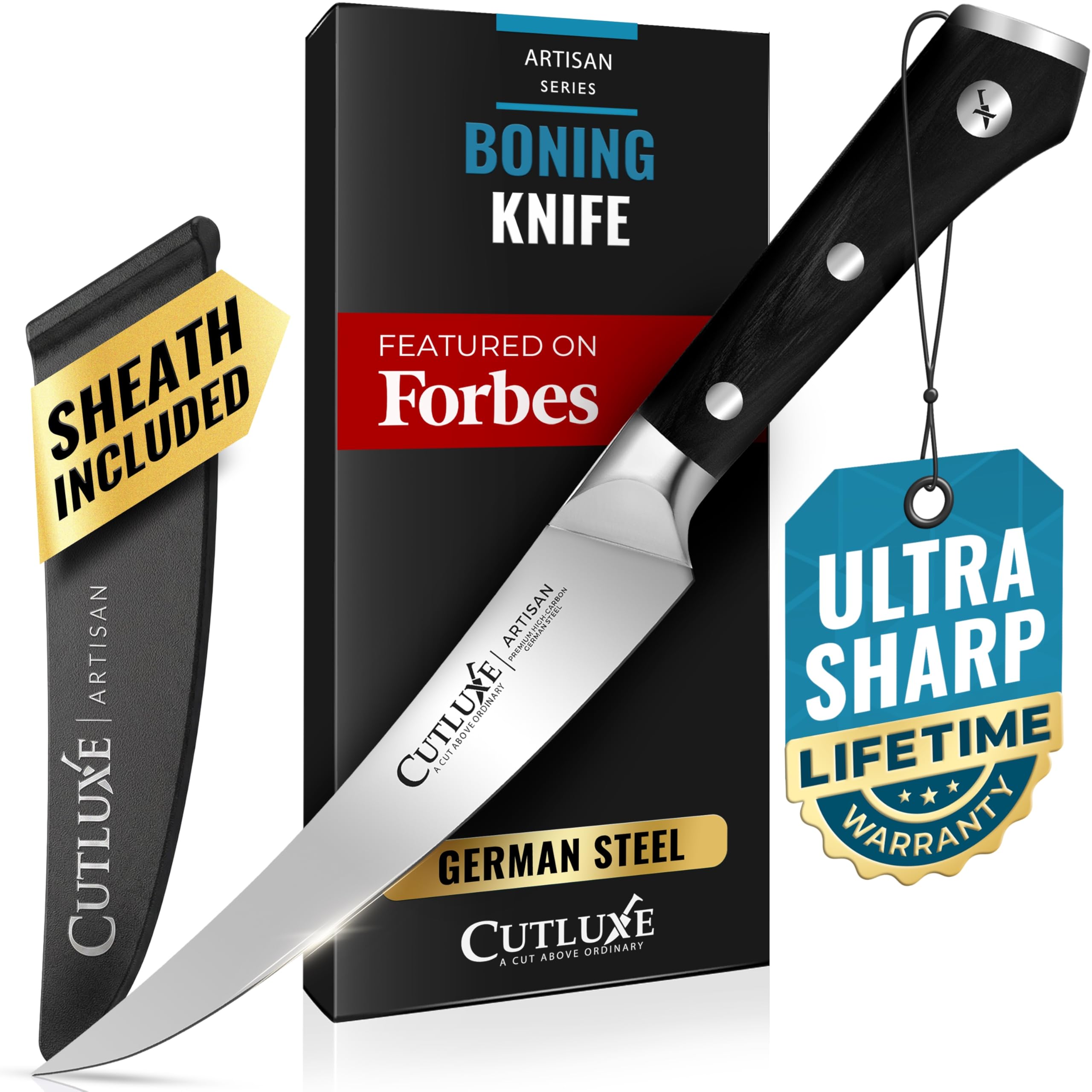
Cutluxe Curved Boning Knife
 Save
SaveWe recommend this knife for chicken thighs because its curved, flexible blade gives us good control around bones and joints.
Key Pros
- Sharp edge makes trimming skin and fat easy
- Curved blade follows bones smoothly
- Comfortable, stable pakkawood handle
Key Cons
- Edge may need regular touch-ups
- Handle requires careful hand washing
- Blade may feel flexible for heavy cutting
When we used the Cutluxe on chicken thighs, the six-inch blade moved neatly around the bone and removed small scraps without wasting much meat. The curve helped us make controlled cuts close to the joint.
The handle felt secure during repeated trimming. Its full-tang design gave us steady control, while the polished surface was easy to wipe clean. We would still wash and dry it by hand to protect the handle and blade.
The knife arrived very sharp and handled skinning, deboning, and butterflying well. Some users may need to sharpen it sooner than expected, but the blade is easy to maintain. Its lifetime warranty also adds useful peace of mind for regular kitchen use.
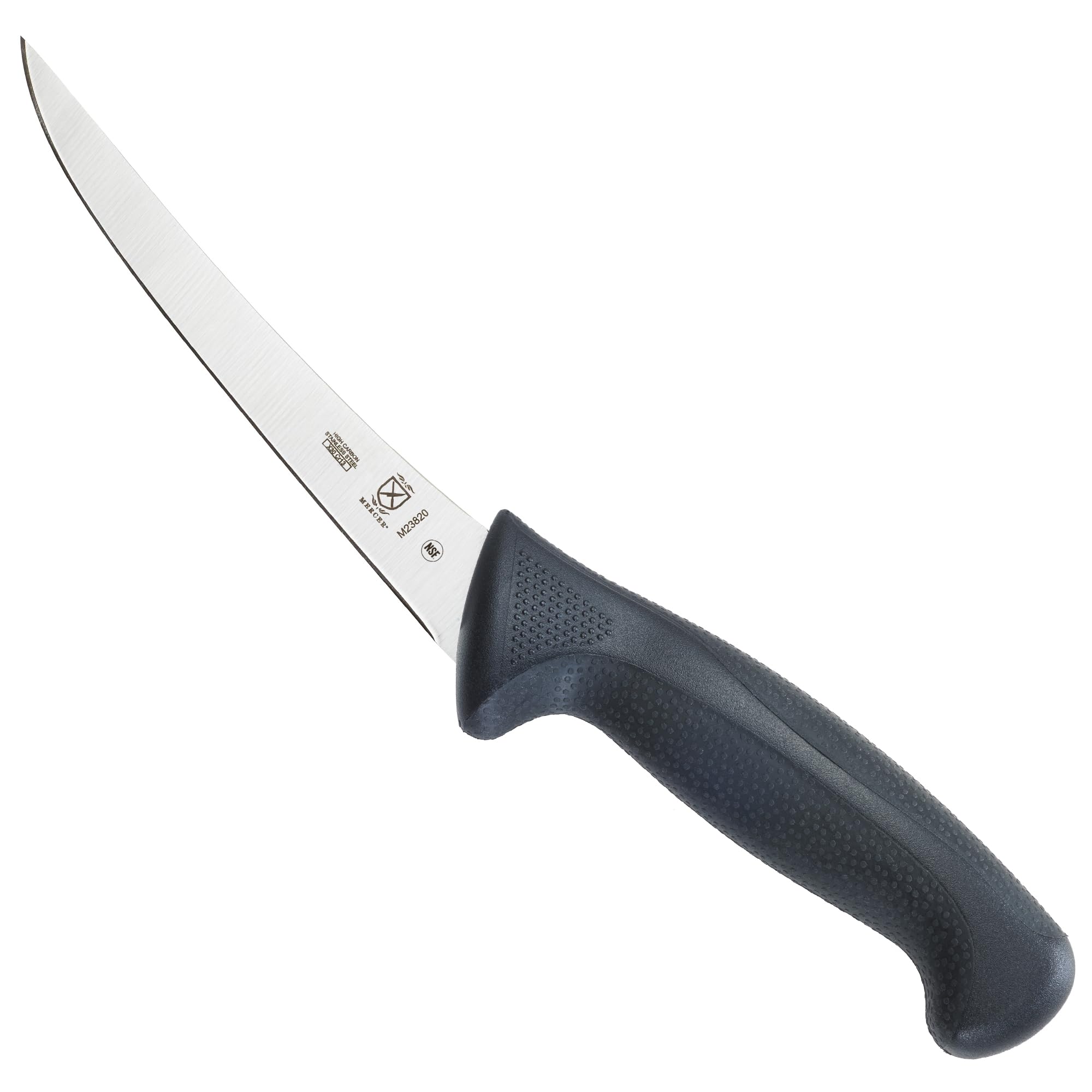
Mercer Millennia 6-Inch Curved Boning Knife
 Save
SaveWe recommend this knife for chicken thighs because its curved blade offers good control when trimming skin, fat, and meat from the bone.
Key Pros
- Sharp edge works well for clean, controlled cuts
- Textured handle feels secure during slippery prep
- Curved shape helps us follow the bone
Key Cons
- Blade has very little flex
- Hand washing takes more care
- Handle may feel less familiar than wood
While trimming chicken thighs, we found the six-inch blade easy to guide around the joint and bone. Its curved shape helped us remove meat without taking off too much, and the edge stayed effective through repeated use.
The Santoprene handle gave us a steady grip, even when our hands were damp or greasy. Its finger points added control, though the firm, grippy texture may not suit cooks who prefer smooth handles.
This knife feels sturdy rather than delicate. The blade has almost no flex, so we used it for direct cuts and trimming instead of forcing it between tight joints. Hand washing and drying after each use should help preserve its edge and finish.
HOSHANHO 7-Inch Boning Knife
 Save
SaveWe recommend this knife for chicken thighs because its sharp, narrow blade trims meat and follows the bone with good control.
Key Pros
- Very sharp edge for trimming and deboning
- Comfortable pakkawood handle
- Light, balanced feel for detailed work
Key Cons
- The blade has less flexibility than some boning knives
- Seven inches may feel long for small cuts
- The wood-style handle needs careful hand washing
We found the blade made clean cuts through chicken skin, fat, and connective tissue. Its narrow shape helped us work close to the bone without removing much meat.
The handle felt secure during repeated cuts, and the knife stayed comfortable in our hand. Its light weight also made it easy to guide around joints and tight areas.
This knife has a fairly rigid blade, so it works best when we want steady control rather than a highly flexible fillet knife. We would wash and dry it by hand to protect the handle and edge.
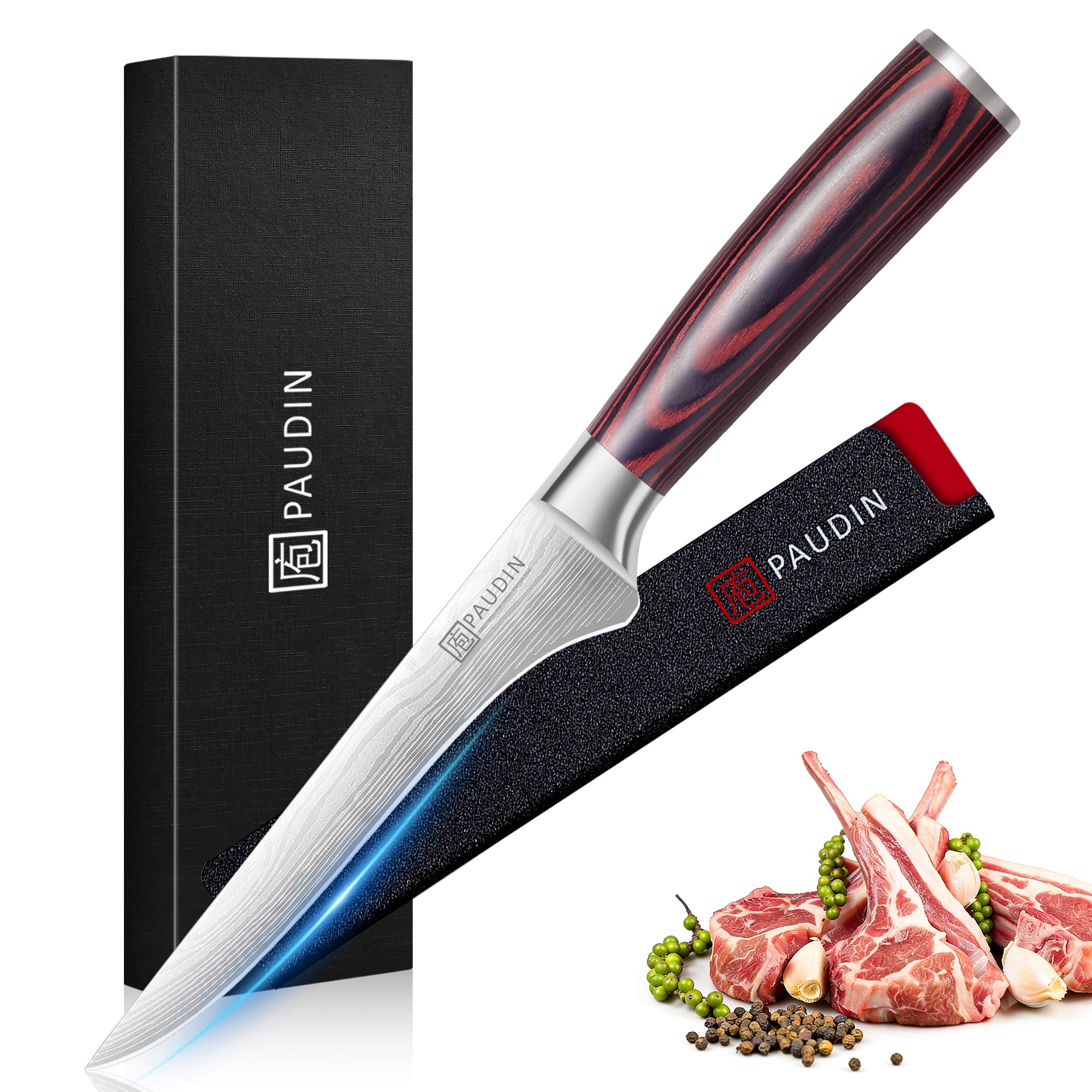
PAUDIN 6-Inch Boning Knife
 Save
SaveWe recommend this knife for cooks who want a balanced, sharp tool for trimming and deboning chicken thighs at a reasonable price.
Key Pros
- Sharp, narrow blade handles trimming with little effort
- Comfortable pakkawood handle feels steady in hand
- Useful for poultry, fish, pork, and other meats
Key Cons
- Blade sharpness may vary between units
- Flexible blade may feel less controlled for heavy cuts
- The patterned finish is decorative, not true Damascus steel
We found the 6.1-inch blade easy to guide around chicken thigh bones. Its narrow shape helped us remove excess skin and fat without taking much meat with it. The flexible design also worked well for separating meat from the bone.
The handle gave us a secure grip during repeated cuts, and the knife felt well balanced rather than handle-heavy. That control matters when trimming small areas or butterflying poultry.
The blade arrived very sharp in many customer reports, though some users found it less sharp than expected. We would also avoid forcing it through joints or frozen meat. With careful hand washing, drying, and regular honing, this PAUDIN knife offers useful performance for everyday kitchen prep.
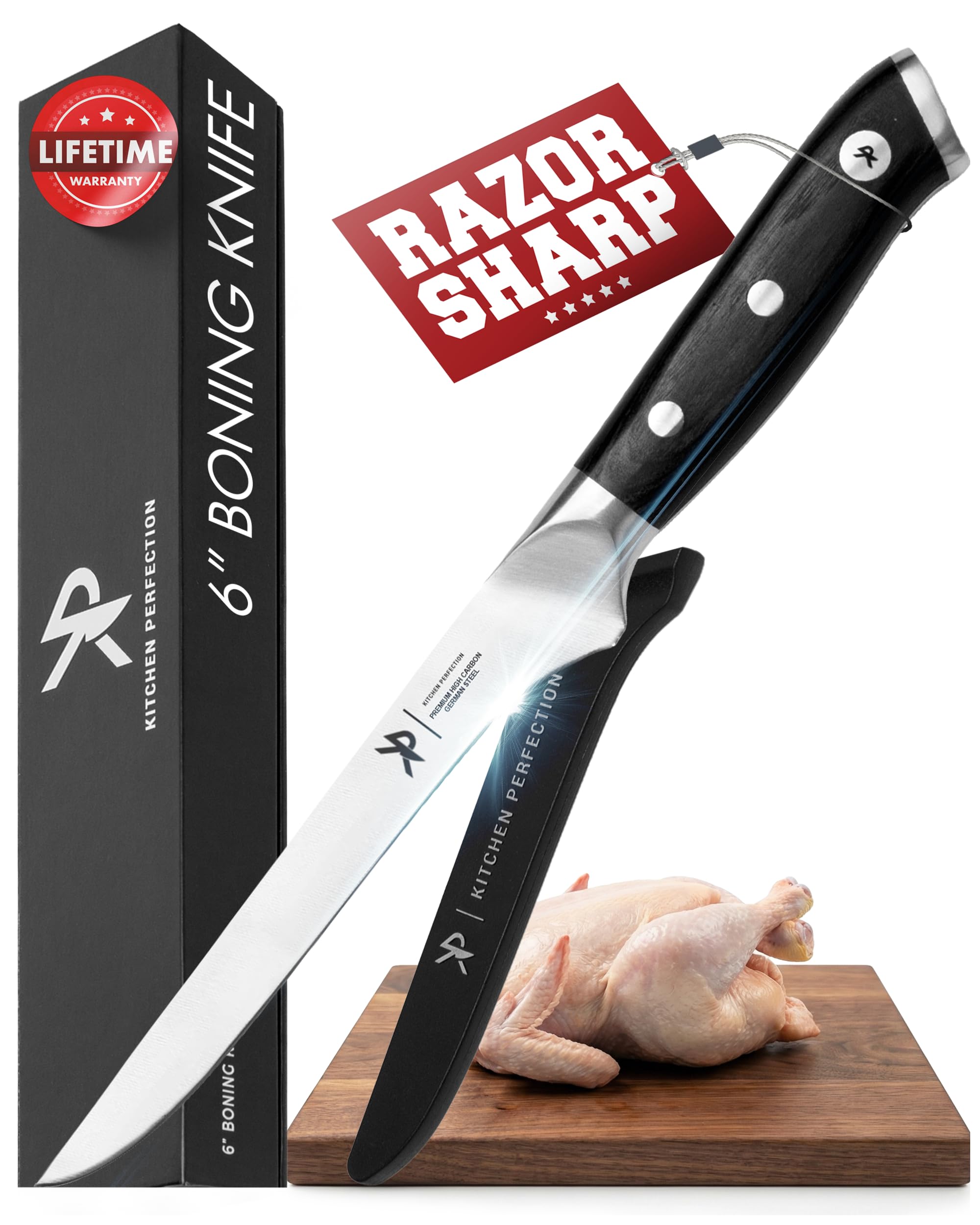
Kitchen Perfection 6-Inch Boning Knife
 Save
SaveWe recommend this knife for chicken thighs because its sharp, narrow blade gives us good control around bones and joints.
Key Pros
- Sharp edge makes clean cuts through meat and skin
- Balanced handle feels secure during trimming
- Includes a protective sheath for storage
Key Cons
- Six-inch blade may feel short for larger cuts
- Pakkawood handle needs careful hand washing
- Very sharp edge requires extra attention
When we used this knife on chicken thighs, the tapered blade moved smoothly along the bone and helped remove small scraps without wasting much meat. Its narrow shape also made it easier to trim excess skin and fat.
The handle felt comfortable and steady during repeated cuts. The knife arrived sharp, so we would use a cutting board with good grip and keep our fingers clear of the blade.
The included sheath makes storage safer and helps protect the edge. We would hand wash and dry the knife after each use, since that care should help preserve the high-carbon steel. The lifetime warranty adds useful support for buyers who want a dependable poultry knife.
Victorinox Fibrox Pro Boning Knife
 Save
SaveWe recommend this knife for chicken thighs because its curved, semi-stiff blade gives us good control when trimming meat from the bone.
Key Pros
- Curved blade follows the bone well
- Fibrox handle stays secure in wet hands
- Sharp edge needs little cutting pressure
Key Cons
- Six-inch blade may feel long for small cuts
- Thin edge needs careful storage
- Dishwasher cleaning can dull the edge over time
When we used it on chicken thighs, the curved blade made it easy to work around the joint and remove leftover meat. Its semi-stiff feel offered enough control for trimming fat without folding against the bone.
The handle felt steady during wet prep, and the light design reduced hand strain over several pieces. We also found the knife easy to guide through skin and connective tissue.
The blade arrived very sharp and held its edge well during regular kitchen use. We would hand-wash it and dry it right away to help preserve the edge, even though the knife is dishwasher safe.
HENCKELS Forged Premio Boning Knife
 Save
SaveWe recommend this knife for chicken thighs because its slim, sharp blade gives us good control around bones and joints at a reasonable price.
Key Pros
- Sharp edge handles trimming and deboning with ease
- Comfortable handle and balanced feel
- Forged construction provides solid support
Key Cons
- Some users report early handle cracks
- The blade may need light honing after use
- Dishwasher cleaning may shorten its life
When we used the 5.5-inch blade on chicken thighs, it moved neatly along the bone and helped remove skin, fat, and small pieces of meat without much effort. Its narrow shape made it easier to reach tight areas than a wider chef’s knife.
The handle felt secure during repeated cuts, while the bolster gave us steady control. The knife arrived sharp and held its edge well through several trimming tasks, though we found that a quick honing session can smooth minor rough spots.
Henckels lists the knife as dishwasher safe, but hand washing and drying should help protect the handle and edge. Some buyers report cracks in the handle after extended use, so this remains a capable budget choice rather than a guaranteed lifetime tool.
Mercer Culinary Millennia 6-Inch Curved Boning Knife
 Save
SaveWe recommend this knife for chicken thighs because its sharp curved blade and secure handle make trimming and deboning simple.
Key Pros
- Sharp blade works smoothly around thigh bones
- Textured handle stays secure with wet hands
- Good value for regular home use
Key Cons
- Handle can feel slippery when covered in grease
- Blade has less flex than some fillet-style knives
- Requires hand washing and careful drying
We found the six-inch curved blade easy to control when separating meat from chicken thigh bones. Its shape helped us follow the bone closely while trimming fat and sinew with limited waste.
The handle felt comfortable during repeated use, and the textured grip provided solid control. However, grease made the handle less secure, so we needed to wipe it during longer prep sessions.
The blade arrived very sharp and handled several pounds of chicken without trouble. We also found that a few strokes on a sharpening steel helped restore its edge. This knife has limited flexibility, but that made it feel steady for trimming and general meat preparation.
Hand washing keeps the blade and handle in good condition. For cooks who mainly debone chicken thighs and want a sharp, affordable tool, this Mercer Culinary knife offers strong everyday performance.
Buying Guide
We should choose a boning knife that gives us control when separating chicken thighs from bones, skin, and connective tissue. A narrow, sharp blade usually works well because it can follow the bone and make precise cuts.
| Feature | What we should look for |
|---|---|
| Blade length | About 5 to 6 inches for good control |
| Blade shape | Narrow and slightly curved for trimming around joints |
| Flexibility | Flexible enough to follow bones, but firm enough for steady cuts |
| Handle | Comfortable, secure, and easy to grip with wet hands |
| Steel | Rust-resistant steel that holds an edge and cleans easily |
| Construction | A strong connection between the blade and handle |
We should select a blade with enough flexibility for meat trimming without allowing it to bend too easily. A stiffer blade may suit us better if we often cut through tougher connective tissue or work with larger pieces.
A textured or contoured handle can improve control during slippery tasks. We should also check that the knife feels balanced in our hand and that the guard helps protect our fingers.
Ease of care matters for regular use. We should look for clear cleaning instructions, dry the knife after washing, and use a knife sharpener or whetstone that matches the blade’s steel.
Editor’s Choice
We choose the Victorinox Fibrox Pro 5-Inch Boning Knife for preparing chicken thighs. Its narrow, curved blade gives us the control needed to follow bones, trim excess fat, and remove small pieces of cartilage.
The stainless-steel blade stays sharp through regular kitchen use and resists corrosion when we wash and dry it promptly. Its non-slip Fibrox handle also gives us a secure grip when our hands are wet or greasy.
| Feature | Why it helps |
|---|---|
| 5-inch curved blade | Follows the shape of the thigh bone |
| Flexible design | Supports precise trimming |
| Textured handle | Improves control during messy tasks |
| Dishwasher-safe construction | Simplifies cleanup |
We recommend using light strokes instead of forcing the blade through joints or bone. A cutting board with a stable surface and a sharpener suited to narrow blades can also make the work safer and more precise.
Conclusion
We should choose a boning knife that feels steady, stays sharp, and gives us control around the joint and bone. For most home cooks, a 5- to 6-inch narrow, flexible blade offers a useful balance of precision and comfort.
A secure handle matters as much as the blade. We should look for a knife with a firm grip, smooth movement, and enough flexibility to follow the shape of the thigh without bending too easily.
| Feature | What to look for |
|---|---|
| Blade length | 5–6 inches |
| Flexibility | Flexible but controlled |
| Handle | Secure, comfortable grip |
| Maintenance | Easy to clean and sharpen |
We should also consider how often we prepare chicken. A higher-quality knife can suit regular use, while a basic model may meet occasional needs. Hand-washing and careful storage will help protect the edge and reduce wear.
FAQS
What type of boning knife works best for chicken thighs?
We usually choose a 5- to 6-inch curved boning knife with a narrow, sharp blade. A semi-flexible blade helps us follow the bone and remove meat without cutting away too much.
Should we choose a stiff or flexible blade?
We prefer a semi-flexible blade for most chicken thighs. A stiff blade offers better control when trimming joints, while a flexible blade works well for separating meat from uneven bones.
Do we need a straight or curved blade?
A curved blade can make it easier for us to move around the thigh bone. A straight blade also works well and may feel more predictable during trimming.
How sharp should the knife be?
Our knife should be very sharp but easy to control. A dull edge needs more force, which can cause slips and uneven cuts.
Is stainless steel a good choice?
Yes. Stainless steel resists rust and handles regular kitchen use well. We should still wash and dry the knife after each use.
How do we clean a boning knife?
We wash it by hand with warm, soapy water and dry it immediately. We also store it in a sheath, knife block, or other secure holder to protect the edge.