10 Best Boning Knife Sharpening Tools for the Right Angle (Hands-On)
A sharp boning knife helps us trim meat, remove skin, and separate meat from bones with control. Its narrow, flexible blade works best when it stays sharp, making the right sharpening angle important for both cutting performance and edge strength.
For most boning knives, we recommend sharpening at about 15 to 20 degrees per side. A thinner angle can improve slicing, while a wider angle may better protect the edge during tougher tasks. The blade’s steel, flexibility, and intended use also affect the best choice.
We considered these factors, along with sharpening tools and ease of use, to identify the angle that works best for most boning knives and the options worth considering.
Best Angles for Sharpening a Boning Knife
We reviewed the best sharpening angles for boning knives to help us find the right balance of sharpness, control, and edge strength. The products below support precise sharpening and work well for maintaining a reliable boning knife.
Wedgek AGM Angle Wedges
 Save
SaveWe recommend these wedges for learning and checking a consistent sharpening angle on a boning knife.
Key Pros
- Covers angles from 10 to 20 degrees
- Helps build steady sharpening habits
- Small, light, and simple to use
Key Cons
- Does not guide the knife during each stroke
- Requires a steady hand
- May cost more than basic angle guides
We found the wedges useful when setting up a whetstone for a boning knife. Choosing an angle before sharpening made it easier to repeat the same position, especially when working near the narrow tip.
The plastic pieces cover several common angles, and we could join them with the included rubber bands for wider settings. We still needed to keep the knife steady because the wedge does not move with the blade.
These guides work best as training aids rather than full sharpening guides. We used one to set the angle, then focused on maintaining that position through each stroke. The compact size also made storage easy, though the small pieces could be misplaced.
RAZORSHARP Adjustable Knife Sharpener
 Save
SaveWe recommend this sharpener for boning knives because its adjustable guide helps us maintain a controlled angle from 14 to 24 degrees.
Key Pros
- Adjustable angle guide suits many boning knives
- Stable grip makes sharpening easier to control
- Diamond-coated ceramic surfaces sharpen quickly
Key Cons
- Takes practice to select the right angle
- May remove more metal than careful hand sharpening
- The compact body can feel narrow for larger hands
When we used it on a dull boning knife, the angle knob made setup simple. We found that a setting near 18 to 20 degrees worked well for a balanced edge that stayed useful during trimming and cutting.
The non-slip base kept the tool steady as we pulled the blade through the sharpening slots. Its small size also made storage easy, although we needed to keep our pressure light to avoid taking off too much metal.
This model also includes a scissors setting, which adds value for general kitchen use. It works best for routine edge maintenance rather than restoring a badly damaged blade.
SHARPAL 194H Angle Guide
 Save
SaveWe recommend this compact guide for beginners who want help holding a steady sharpening angle on a boning knife.
Key Pros
- Helps maintain a consistent angle while sharpening
- Works with angles from 15° to 45°
- Magnetic base stays attached to many flat blades
Key Cons
- Can slip during sudden movements
- Works less reliably on narrow or curved blades
- Small size may take practice to position
We found the SHARPAL 194H useful when learning to sharpen with a whetstone. It lets us check the blade angle during each stroke, which makes it easier to build steady hand control than using a fixed wedge.
The adjustable range suits many boning knives. We would start near 15° to 20° per side for a thin, flexible blade, then adjust based on the knife’s edge design and how it performs during use.
Its magnet held well on wider, flat blades. However, it did not grip every blade securely, especially when we made quick movements or worked with a narrow, curved section. We needed to use slower strokes and check the guide often.
The plastic body keeps the tool light and easy to carry, but it feels more like a training aid than a complete sharpening system. It does not sharpen the knife itself, so we still need a suitable stone and proper technique.
SHARPAL Angle Pyramid Guide
 Save
SaveWe recommend this guide for learning a steady sharpening angle on a whetstone, especially when working with a boning knife.
Key Pros
- Offers four marked angles: 14°, 17°, 20°, and 25°
- Includes magnetic and rubber-backed guides
- Helps us build consistent sharpening habits
Key Cons
- Does not hold the knife in place
- Takes practice to keep the blade aligned
- Works only as an angle reference, not a sharpener
When we sharpen a boning knife, the SHARPAL guide gives us a clear target instead of relying only on hand memory. The 20° or 25° settings suit many boning knives, though we should follow the knife maker’s recommended angle when available.
The orange guide attaches to compatible metal sharpening stones with its magnetic base. We use the black guide on ceramic or traditional whetstones, where its rubber pad helps reduce slipping.
Its small size makes it easy to store, but the tool cannot control the full sharpening motion. We still need to keep the blade steady and use even strokes along the stone. Used with care, it provides a simple way to improve consistency without changing our sharpening setup.
Sharp Pebble 5-Stage Adjustable Sharpener
 Save
SaveWe recommend this sharpener for home cooks who want to test several angles and maintain a straight-edge boning knife without using a whetstone.
Key Pros
- Offers five angle settings from 12° to 24°
- Simple pull-through design
- Works quickly on dull kitchen and hunting knives
Key Cons
- Not made for serrated knives or scissors
- Thick housing may limit access for some pocket knives
- Some users report adjustment or durability problems
We found the angle dial useful when sharpening a boning knife. A narrow, flexible blade often benefits from a careful angle choice, and the settings let us match the edge to the knife instead of relying on guesswork.
The handheld shape felt easy to control during short passes. We used light pressure and checked the edge often, since pulling too hard can remove more metal than needed. The sharpener restored a usable edge quickly on several dull kitchen knives.
Its main drawback is the pull-through design. It does not give us the same control as a guided stone, and the thick plastic body can make certain blades harder to position. We also noticed that the adjustment mechanism may not hold up well for every user.
For a straight-edge boning knife, the 15° or 18° setting offers a practical starting point. We would choose this Sharp Pebble model for fast maintenance, but experienced sharpeners may prefer a whetstone for greater control.
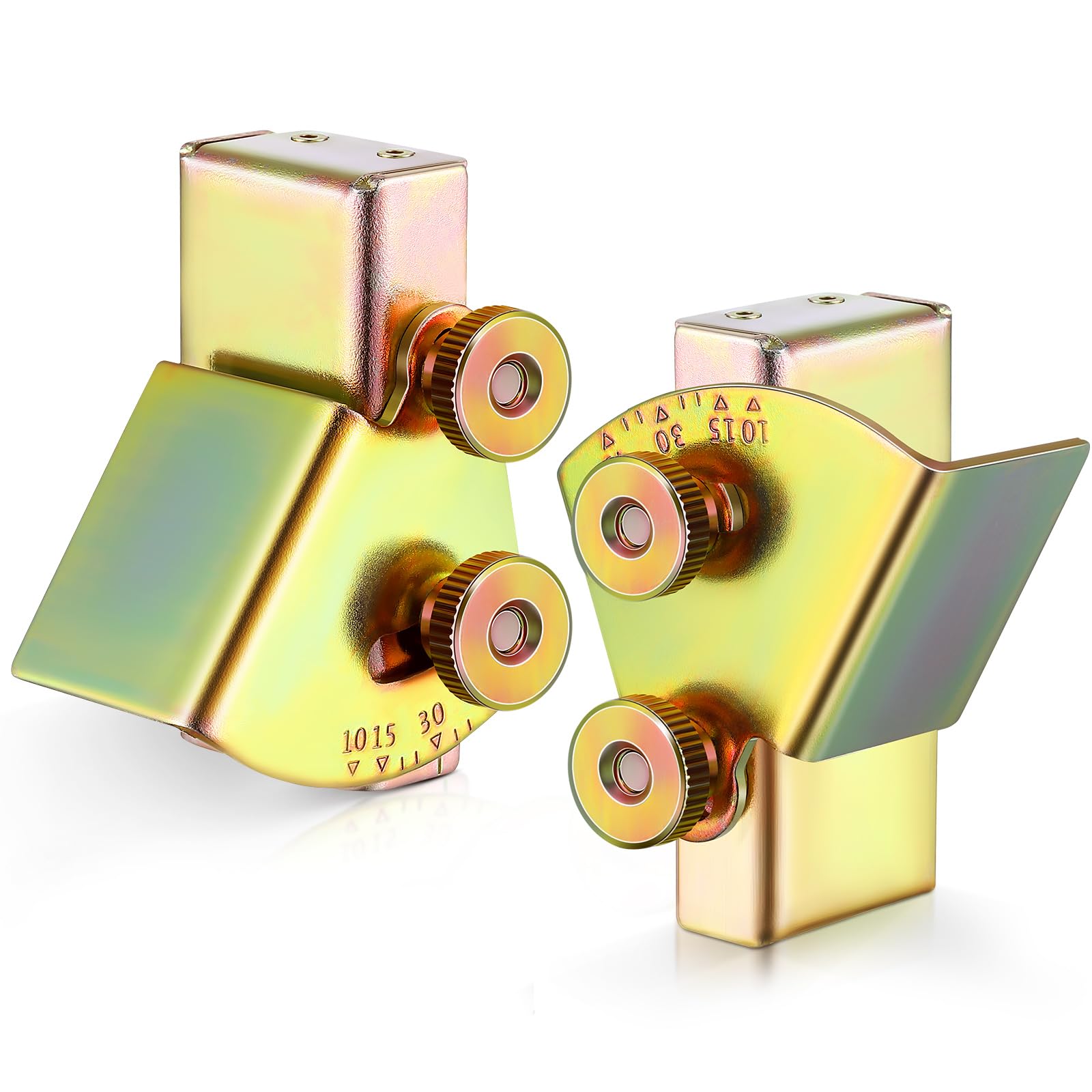
Feekoon Angle Guides for 1 x 30 Belt Sanders
 Save
SaveWe recommend this guide for larger boning knives, but its wide gap can make sharpening narrow blades difficult.
Key Pros
- Adjustable from 10 to 45 degrees
- Fits most 1 x 30 belt sanders
- Offers guides for sharpening into or away from the belt
Key Cons
- Works poorly with blades under 2 inches wide
- May require minor fitting or adjustment
- Can interfere with some platen setups and knife handles
We found the Feekoon guide quick to install on a compatible belt sander. Its angle markings helped us keep a steady bevel, which reduced guesswork when sharpening a larger boning knife.
The metal guide feels sturdy, and the yellow zinc coating should help protect it from wear and corrosion. We also liked having separate options for sharpening into or away from the belt.
Small boning knives are the main concern. The gap between the guide and belt can leave narrow blades unsupported, making the angle harder to control. We may also need to reposition the pressure plate or modify the mounting holes for a better fit.
For larger blades and basic belt-sander sharpening, this guide offers useful control. We would choose another setup for narrow boning, paring, or carving knives.
HMPLL Whetstone Knife Sharpening Set
 Save
SaveWe recommend this set for sharpening a boning knife at about 15 to 20 degrees per side because it offers several grits and helpful angle guides at a low price.
Key Pros
- Four grits handle dull, damaged, and nearly sharp edges.
- The nonslip base and stone holder improve control.
- Includes a flattening stone, leather strop, and angle guides.
Key Cons
- We must soak the stones before use.
- The included angle guides may not suit every knife.
- Sharpening takes practice and patience.
We start with the 400 or 1000 grit side when a boning knife feels dull. For routine edge work, the 1000 grit side removes metal at a steady pace without making the process feel too aggressive.
After setting a consistent angle, we move to the 3000 and 8000 grit sides. These finer surfaces smooth the edge and leave the blade feeling cleaner through meat and connective tissue. We find that light pressure works best on a thin boning knife.
The bamboo base and rubber support keep the stone more stable than using it directly on a countertop. We still place a damp towel underneath for extra security. The stones need water and proper drying after use, so this set requires more care than a pull-through sharpener.
The kit includes useful extras, but beginners may need time to learn the correct angle and stroke. We also noticed that the leather strop has a strong odor, though it does not affect sharpening.
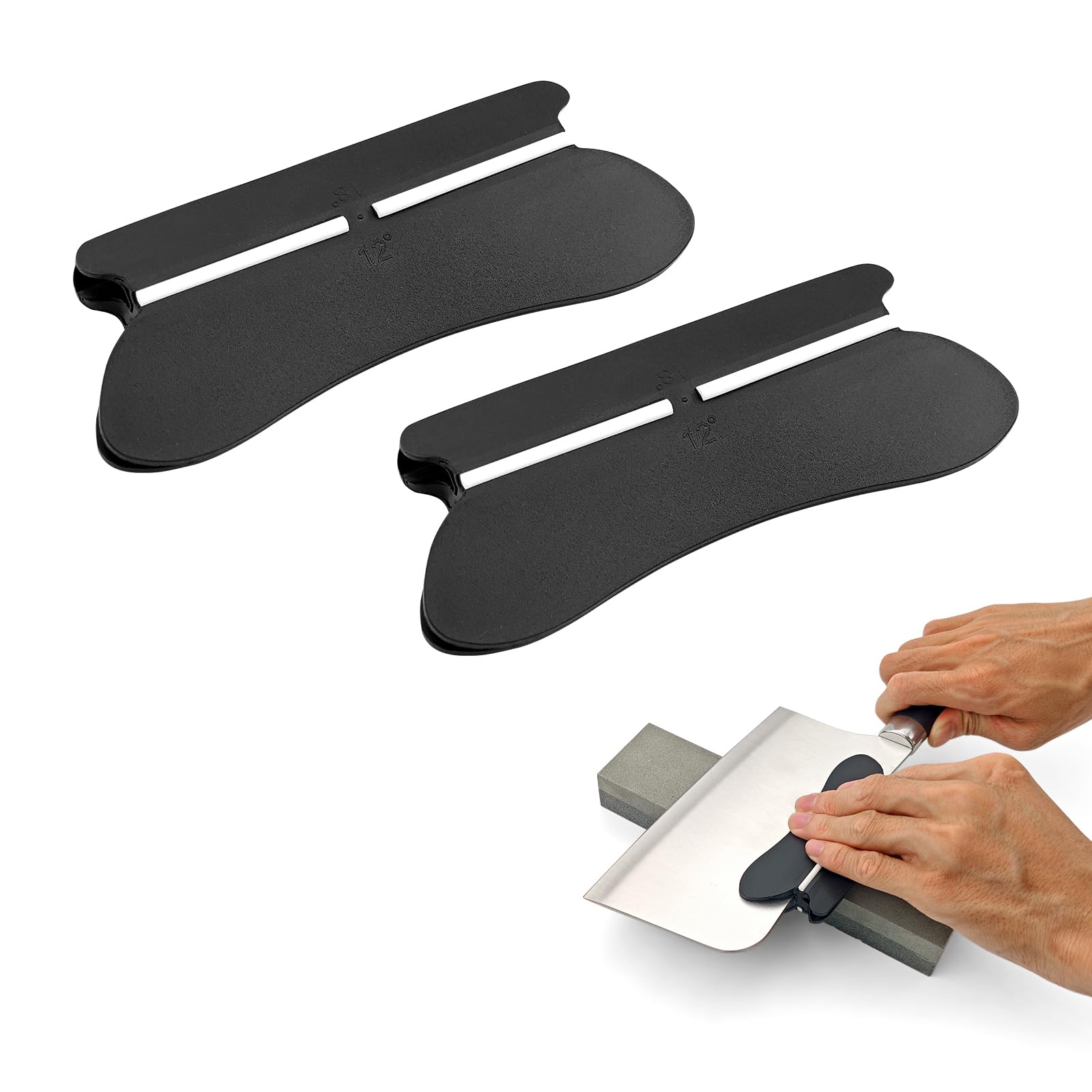
4-in-1 Knife Sharpening Angle Guide
 Save
SaveWe recommend this guide for beginners who want steadier sharpening angles for full-size boning and kitchen knives.
Key Pros
- Offers four angle choices: 12°, 14°, 18°, and 30°
- Ceramic guides move smoothly across a sharpening stone
- Two guides provide useful backup or travel convenience
Key Cons
- The guide can feel loose on some blades
- It does not suit blades shorter than 3.5 inches
- The fixed angles may not match every boning knife
When we used it on a medium-sized boning knife, the guide made it easier to keep each stroke consistent. The ceramic gliders moved well over a wet stone and helped protect the blade from direct contact with the plastic body.
The main issue was movement on thinner blades. We had to hold the knife and guide carefully because extra play can affect the edge. A boning knife with a narrow spine may not fit as securely as a larger butcher knife.
The four settings add flexibility, but the 30-degree option is quite steep for many boning knives. We found the lower settings more useful for a finer edge, while the higher setting suits thicker, tougher blades better. Overall, this two-pack offers practical angle control at a low cost, but experienced sharpeners may prefer a more stable guide.
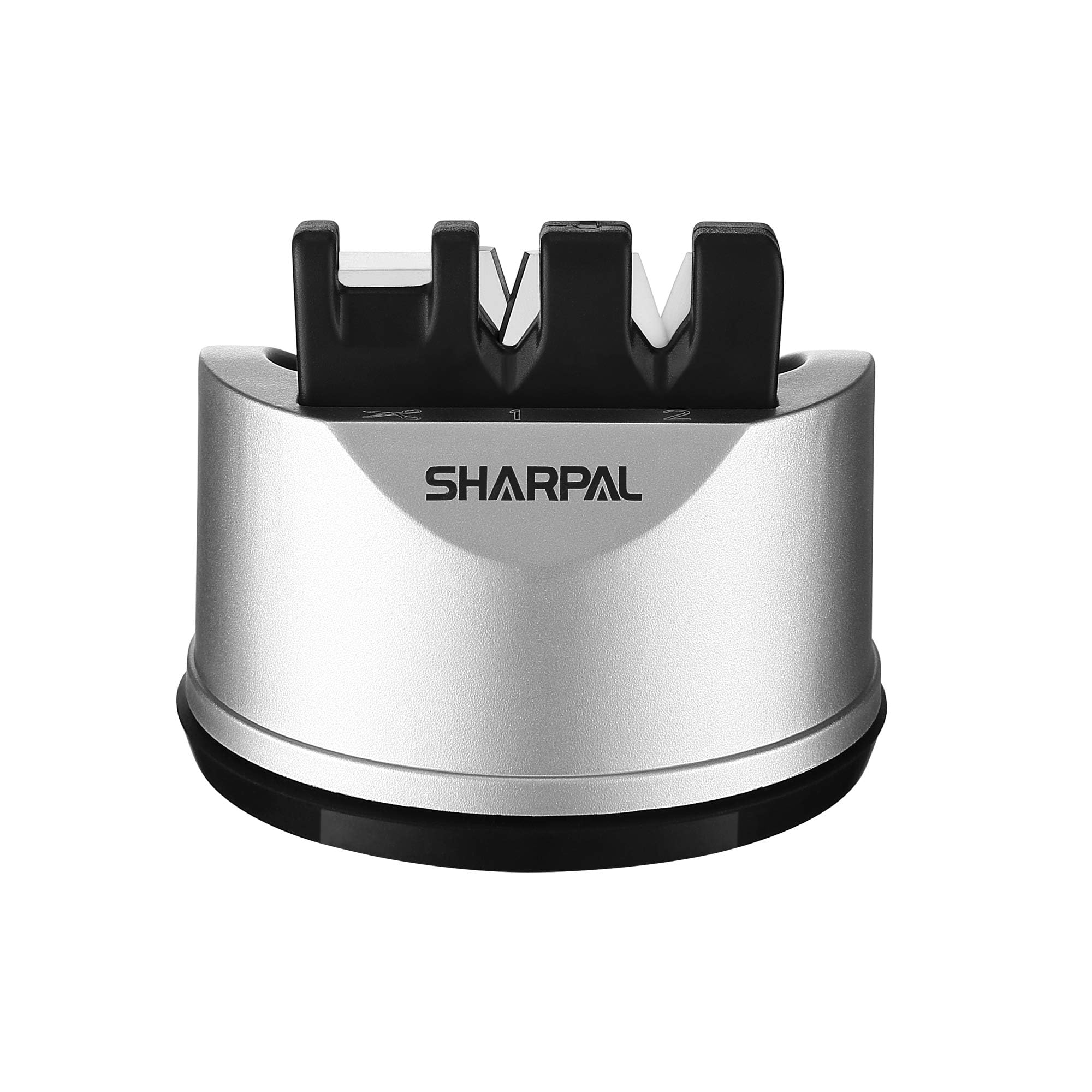
SHARPAL 191H Sharpener
 Save
SaveWe recommend this compact sharpener for home cooks who want a simple way to maintain a boning knife around a practical, repeatable angle.
Key Pros
- Strong suction keeps the tool steady on a smooth counter.
- Three stages handle coarse sharpening and fine honing.
- Small size makes storage easy.
Key Cons
- The fixed guides offer less control than a whetstone.
- The coarse slot can remove more metal than needed.
- The knife tip may contact the housing if we pull it through carelessly.
We found the suction base helpful when sharpening a boning knife because it kept both hands available for controlled passes. The guided slots also made it easier to keep the blade at a consistent angle, which matters when working near bones and joints.
The tungsten carbide stage quickly repaired a dull edge, while the ceramic stage left it smoother for trimming and slicing. We used light pressure and only a few passes, since repeated coarse sharpening can change the knife’s original edge profile.
This tool also sharpened scissors, adding useful versatility. Still, it does not provide the same precision or edge control as a whetstone, so we would choose it for quick maintenance rather than detailed sharpening work.
AccuSharp Gourmet 15° Sharpener
 Save
SaveWe recommend this sharpener for cooks who want a quick, simple way to maintain a boning knife with a 15-degree edge.
Key Pros
- Guides us to a consistent 15-degree angle
- Reversible carbide blades extend its working life
- Finger guard and textured handle improve control
Key Cons
- Coarse sharpening may remove more metal than necessary
- It offers less control than a whetstone
- It may not suit delicate, high-end knives
When we used it on a dull boning knife, the fixed angle made sharpening easier than freehand work. A few steady passes restored a useful cutting edge without requiring special skills.
The tungsten carbide blades work quickly, but we used light pressure to avoid removing too much metal. The reversible design should also help the sharpener last longer with regular kitchen use.
Its compact handle felt secure, and the finger guard added confidence during each pass. Still, this is a coarse sharpener, so we would use it for routine edge repair rather than fine polishing.
For most home cooks, the AccuSharp offers a practical way to maintain a 15-degree boning knife. We would choose a whetstone when we need maximum control over a premium blade.
Buying Guide
When we choose a sharpening tool for a boning knife, we first match the tool to the knife’s edge angle. A 15–20 degree angle per side suits many thin, flexible boning knives, but we should check the maker’s guidance when available.
We should also consider how much control the tool provides. Guided systems help us keep a steady angle, while sharpening stones require more practice but offer greater control over pressure and edge shape.
| Feature | What we should look for |
|---|---|
| Angle control | A guide or settings that support the knife’s target angle |
| Abrasive type | Diamond for fast removal; ceramic for light sharpening and finishing |
| Grit range | Coarse for damaged edges, medium for regular sharpening, and fine for polishing |
| Knife support | A stable base or secure clamp to reduce movement |
| Blade compatibility | A design that fits narrow, curved, or flexible boning blades |
| Maintenance | Easy cleaning and replaceable parts when needed |
We should avoid tools that remove too much metal during routine sharpening. For minor dullness, a fine ceramic rod or fine stone usually gives us better control than a coarse abrasive.
Safety features also matter. We should choose a tool with a non-slip base, a comfortable grip, and enough space to keep our fingers away from the blade.
Editor’s Choice
We recommend a 15–20-degree angle per side for most boning knives. This range creates a sharp edge while keeping enough metal behind it to handle joints, cartilage, and regular kitchen use.
| Knife use | Recommended angle per side |
|---|---|
| Flexible boning and fine trimming | 15–17° |
| General-purpose boning | 18–20° |
| Heavy-duty work | 20–22° |
We should use the lower end of the range for clean, precise cuts through meat. A higher angle gives the edge more support when we work near bones or cut through tougher connective tissue.
To sharpen consistently, we can set the blade at the chosen angle and make light, even passes on both sides. We should avoid pressing hard, since excess pressure can remove too much steel and create an uneven edge.
For most cooks, 18 degrees per side offers the best balance of sharpness, control, and edge strength. We can finish with a fine stone or ceramic rod, then remove any remaining burr before using the knife.
Conclusion
We get the best results from a boning knife by matching the angle to the blade and the task. For most boning knives, we sharpen at 15 to 20 degrees per side. This range keeps the edge sharp while giving it enough strength for controlled work around bones and joints.
We use a slightly lower angle for precise cuts through soft meat and a slightly higher angle when the knife needs more durability. We should avoid forcing the blade through bone, since this can damage even a well-sharpened edge.
- 15–17° per side: Fine, precise cutting
- 18–20° per side: Balanced sharpness and strength
- 20–25° per side: More edge durability for tougher tasks
We keep the angle steady during each sharpening pass and remove the burr before testing the edge. With regular honing and careful cutting, our boning knife will retain its performance longer.
FAQs
What is the best angle for sharpening a boning knife?
We usually sharpen a boning knife at 15 to 20 degrees per side. A 20-degree angle gives the edge more strength, while 15 degrees creates a finer edge for careful trimming.
Should we use the same angle on both sides?
Yes. We should keep the angle consistent on both sides unless the knife has a single-bevel design. Most boning knives use a double-bevel edge.
Does the knife type affect the sharpening angle?
Yes. A flexible boning knife often benefits from about 20 degrees per side because its edge may twist during use. A stiff, narrow blade can often handle 15 to 18 degrees per side.
How can we hold the correct angle?
We can use an angle guide, a guided sharpener, or a marker test. Color the existing edge with a marker, make a few light sharpening passes, and check whether the abrasive removes the ink evenly.
How many strokes should we use?
We should use light, controlled strokes and check the edge often. The exact number depends on the knife’s condition and the sharpener, so we should stop when the edge feels even and forms a small burr.
Can we sharpen a boning knife with a pull-through sharpener?
We can, but it may remove more metal than needed and offer less angle control. A whetstone or guided system usually gives us better results.