10 Best American Made Boning Knife: Top Picks for Precision Cutting
Boning knives help us separate meat from bones, trim fat, and prepare fish with better control than a general-purpose kitchen knife. American-made models add another factor: skilled local production, durable materials, and support from established knife makers.
The best American-made boning knives balance a sharp, flexible blade with a comfortable handle and strong construction. When choosing one, we look closely at blade flexibility, steel quality, edge retention, handle grip, blade length, and ease of cleaning. A stiff blade suits larger cuts, while a flexible blade works better for poultry and fish.
We tested and researched American-made boning knives to find the models that offer the best mix of control, durability, comfort, and value.
Best American-Made Boning Knives
We reviewed American-made boning knives for blade quality, handle comfort, edge retention, and overall value. Below, we list the best options for home cooks, hunters, and professional kitchens.
Mercer Ultimate White 6-Inch Curved Boning Knife
 Save
SaveWe recommend this knife for home cooks who want an affordable, sharp tool for trimming meat, poultry, and fish.
Key Pros
- Sharp, easy-to-control curved blade
- Comfortable, secure handle
- Good value for regular kitchen use
Key Cons
- Requires hand washing
- White handle can show stains
- May feel long for smaller tasks
We found the curved blade useful when working close to bones and trimming fat from brisket, chicken, and steaks. Its six-inch length gave us enough reach without feeling difficult to guide.
The high-carbon steel edge arrived sharp and handled repeated trimming well. We could also restore the edge without much effort, which helps during longer prep sessions.
The textured polypropylene handle stayed comfortable and secure, even with wet hands. Its white surface made it easy to spot food residue, but spices and meat juices may leave marks if we do not wash it promptly.
We would hand wash and dry this knife after every use. For the price, it offers dependable cutting performance, though cooks who prefer a shorter blade may find it slightly large.
Dexter Russell 1483 Boning Knife
 Save
SaveWe recommend this American-made boning knife for cooks who want a flexible blade, steady grip, and reliable control when preparing meat, poultry, or fish.
Key Pros
- Flexible curved blade supports clean cuts around bones and joints
- Textured handle stays secure during wet prep
- Made in the USA and NSF certified
Key Cons
- White handle shows stains quickly
- Large handle may feel awkward in smaller hands
- Flexible blade may not suit heavy chopping
When we used this knife on poultry and fatty cuts, the thin blade moved smoothly along bones and through tight areas. Its flexibility helped us follow the shape of joints without removing more meat than needed.
The handle feels substantial and gives us a firm grip, even during messy prep. The textured surface looks basic, but it improves control. The white plastic also makes dirt easy to spot, though it can discolor over time.
This knife works well for trimming beef, breaking down chicken, and preparing fish. We found it sharp and easy to clean, but users who prefer a stiff boning blade may want a different design.
Old Hickory 6-Inch Boning Knife
 Save
SaveWe recommend this knife for shoppers who want a simple, American-made carbon steel tool that sharpens easily and handles firm cutting tasks well.
Key Pros
- Easy to sharpen and maintain a keen edge
- Solid hickory handle with a classic feel
- Low price for a traditional carbon steel knife
Key Cons
- Blade can arrive needing sharpening
- Carbon steel requires drying and oiling to resist rust
- Stiffer blade may not suit delicate trimming
We found the 6-inch blade sturdy and controlled while trimming meat around joints and bones. Its firm feel works well for users who prefer strength over a thin, flexible blade.
The carbon steel edge sharpens quickly with basic tools. We also noticed that the metal can darken or develop rust spots if we leave it wet, so we wipe it dry after use and apply a light coat of food-safe oil when storing it.
The flame-finished hickory handle gives the knife a comfortable, old-fashioned grip. The blade may need attention before the first detailed job, but this Old Hickory offers dependable performance for cooks who value easy sharpening and simple construction.
Dexter-Russell SANI-Safe Curved Boning Knife
 Save
SaveWe recommend this USA-made knife for precise trimming and deboning, especially when we need a secure grip and easy cleanup.
Key Pros
- Curved blade gives us good control around joints and bones
- Textured handle stays steady when wet
- Sharpens easily and holds an edge well
Key Cons
- Handle may feel large for smaller hands
- Needs regular touch-ups with frequent use
- Sheath is not included
When we used this knife on poultry and larger cuts of meat, the narrow curved blade made it easy to follow bones and remove fat with limited waste. Its flexible design offered enough control for detailed work without feeling flimsy.
The white Grip-Tex handle gave us a steady hold during wet tasks. It felt comfortable during longer sessions, and the smooth, nonporous surface was easy to wash by hand.
The blade arrived sharp and responded well to light sharpening. We found that frequent heavy use required regular touch-ups, but the knife remained dependable for trimming steaks, breaking down poultry, and processing game.
The handle could feel bulky in smaller hands. We also recommend buying a compatible sheath if we need to transport or store the knife safely outside a knife block.
HOSHANHO 7-Inch Fillet Knife
 Save
SaveWe recommend this knife for home cooks who want a sharp, lightweight tool for filleting fish and trimming meat.
Key Pros
- Sharp edge produces clean, controlled cuts
- Comfortable pakkawood handle
- Light, flexible blade suits fish and meat
Key Cons
- Blade may feel too flexible for heavy boning
- Pakkawood needs careful hand washing
- No protective sheath is listed
We found the narrow seven-inch blade easy to guide around fish bones and along the skin. Its light feel helped us make precise cuts without removing much usable meat.
The handle felt secure during repeated cuts, and its smooth shape reduced hand strain. The knife also worked well for trimming meat, removing fat, and butterflying smaller pieces.
The edge arrived very sharp and handled soft foods cleanly. We would still wash and dry it by hand after each use, since moisture can wear down the handle and blade over time.
This knife suits cooks who value control and a comfortable grip. We would choose a stiffer boning knife for large cuts or tasks that require more force.
Victorinox Wood 6-Inch Boning Knife
 Save
SaveWe recommend this knife for hunters and home cooks who want a sharp, narrow blade for careful meat trimming and deboning.
Key Pros
- Very sharp curved blade
- Comfortable maple wood handle
- Light and easy to control
Key Cons
- Wood handle needs careful washing and drying
- Not designed for cutting through bones
- Semi-stiff blade may feel too flexible for some users
We found the narrow, curved blade easy to guide around joints, sinew, and fat. Its 6-inch length gave us good control when breaking down chicken and trimming larger cuts of meat.
The stainless steel blade arrived very sharp and stayed precise through repeated use. We used it for delicate cuts rather than hard tasks, since forcing it through breastbones or large bones can damage the edge.
The maple handle felt comfortable and balanced in our hand. It also gave the knife a more polished look than plastic-handled models, but we would wash it by hand and dry it right away to protect the wood.
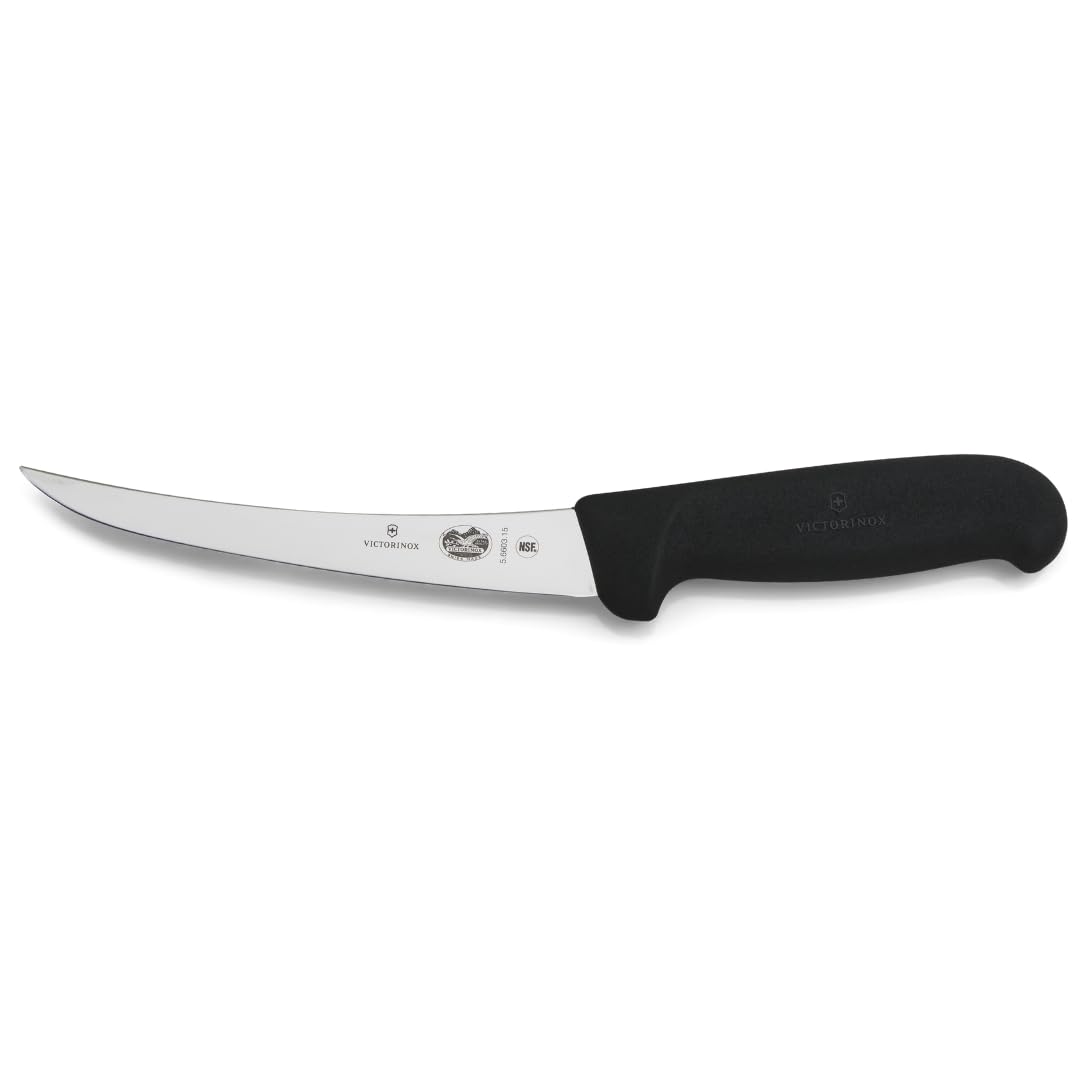
Victorinox Fibrox Pro Curved Boning Knife
 Save
SaveWe recommend this knife for cooks who want a sharp, easy-to-control boning knife for trimming meat and removing silver skin.
Key Pros
- Curved, semi-stiff blade gives us good control around bones.
- Fibrox handle stays secure when our hands are wet.
- Light design reduces hand fatigue during longer prep sessions.
Key Cons
- The blade may feel too stiff for delicate fish work.
- Its sharp edge requires careful storage and handling.
- Imported versions may have different warranty coverage.
The narrow, curved blade made it easy for us to follow bones and trim fat without removing too much meat. Its slight flex helped with close cuts, while the pointed tip pierced thicker sections cleanly.
We liked the handle during wet prep. It felt secure without requiring a tight grip, and the knife stayed light and balanced as we worked through larger cuts.
The blade arrived sharp and handled tasks such as removing silver skin, trimming beef, and separating meat from joints with little effort. We would choose a more flexible knife for fish, but this model suits beef, pork, poultry, and general kitchen prep well.
Victorinox makes this knife in Switzerland and backs it with a lifetime warranty against defects in materials and workmanship. Buyers should confirm the seller and warranty terms, especially when purchasing an imported version.
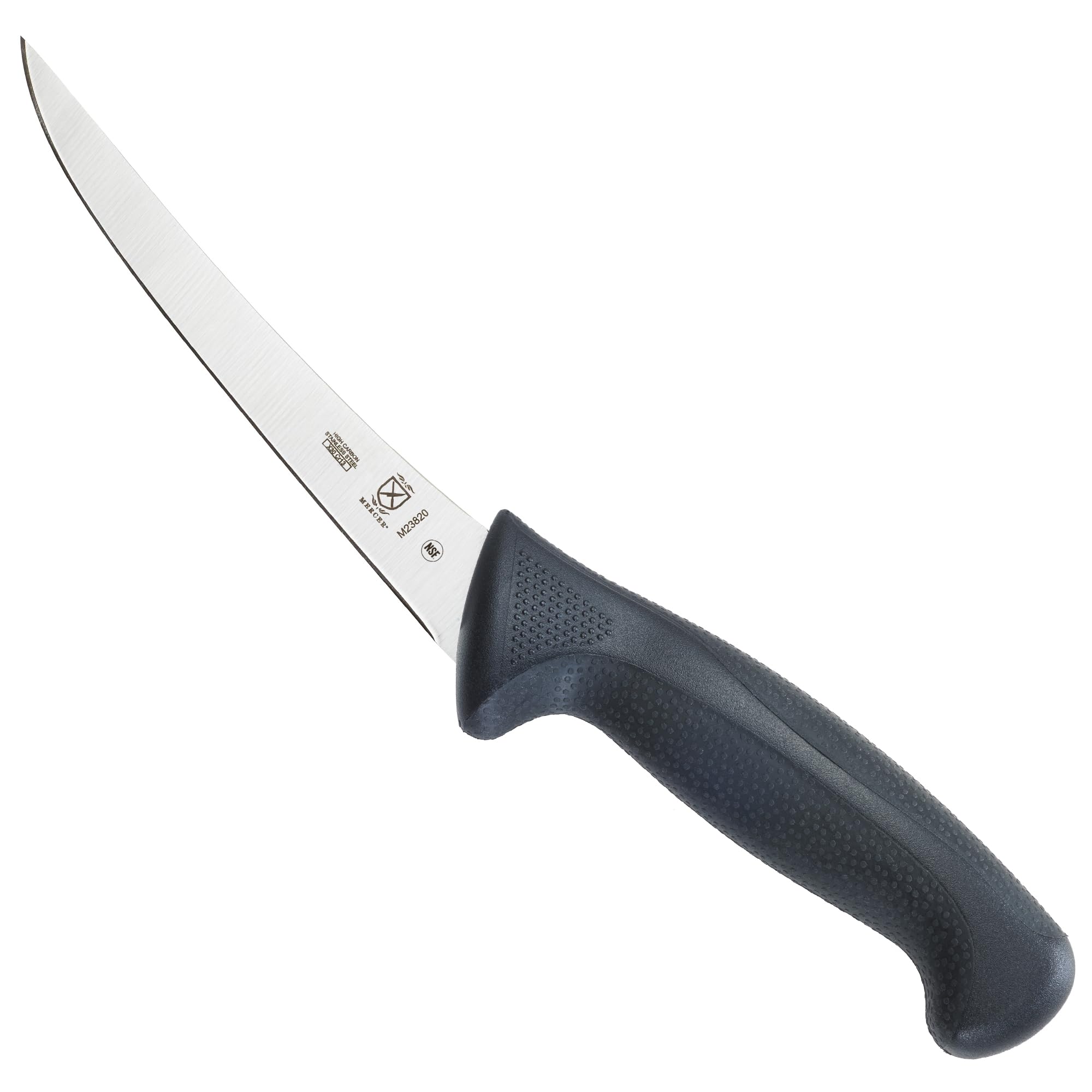
Mercer Culinary Millennia 6-Inch Curved Boning Knife
 Save
SaveWe recommend this knife for trimming meat, deboning poultry, and working around larger bones because it offers a sharp edge, steady grip, and good value.
Key Pros
- Sharp blade handles trimming and deboning with control
- Textured handle stays secure during wet work
- Holds its edge well with regular hand washing
Key Cons
- Blade has very little flex
- Requires hand washing and immediate drying
- Handle may feel less refined than wood
We found the curved blade useful when trimming brisket, pork, and poultry. Its shape helped us follow the meat closely without needing much pressure, while the sturdy blade gave us good control around joints and tougher sections.
The Santoprene handle felt secure during extended use. Its textured surface helped prevent slipping, even when our hands became greasy. The handle also felt comfortable enough for repeated trimming sessions.
This knife arrived very sharp and kept a useful edge through several jobs. Some users may want more blade flexibility, especially when working around delicate fish or small bones. For meat trimming and general home butchery, the firmer blade works well.
We should hand wash and dry it after every use. The Mercer Culinary Millennia offers practical performance at a reasonable price, making it a strong choice for cooks who want an American-brand boning knife without paying for premium features.
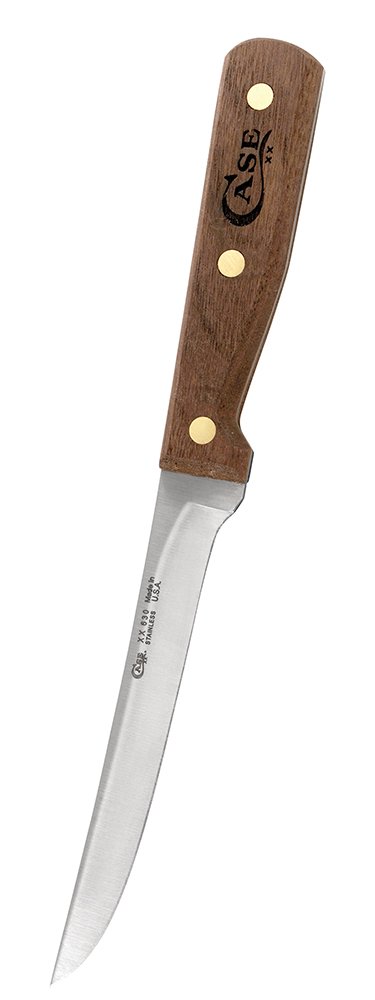
Case Walnut Boning Knife
 Save
SaveWe recommend this American-made knife for home cooks and hunters who want a sharp, compact tool for trimming meat and filleting fish.
Key Pros
- Sharp stainless steel blade
- Comfortable walnut handle
- Made in the USA with a limited lifetime warranty
Key Cons
- Handle color may vary slightly
- Fixed blade needs careful storage
- Six-inch blade may feel short for larger cuts
We found the six-inch blade easy to control while trimming chicken, pork, and ribs. Its narrow shape helped us work around bones without removing too much meat.
The walnut handle felt comfortable during repeated cuts, though its finish and color may not look exactly the same on every knife. The Tru-Sharp stainless steel held an edge well in use and remained easy to sharpen.
This knife works best for everyday kitchen prep, small butchering tasks, and outdoor use. We would choose a larger boning knife for big cuts, but this Case model offers solid control and dependable American-made construction.
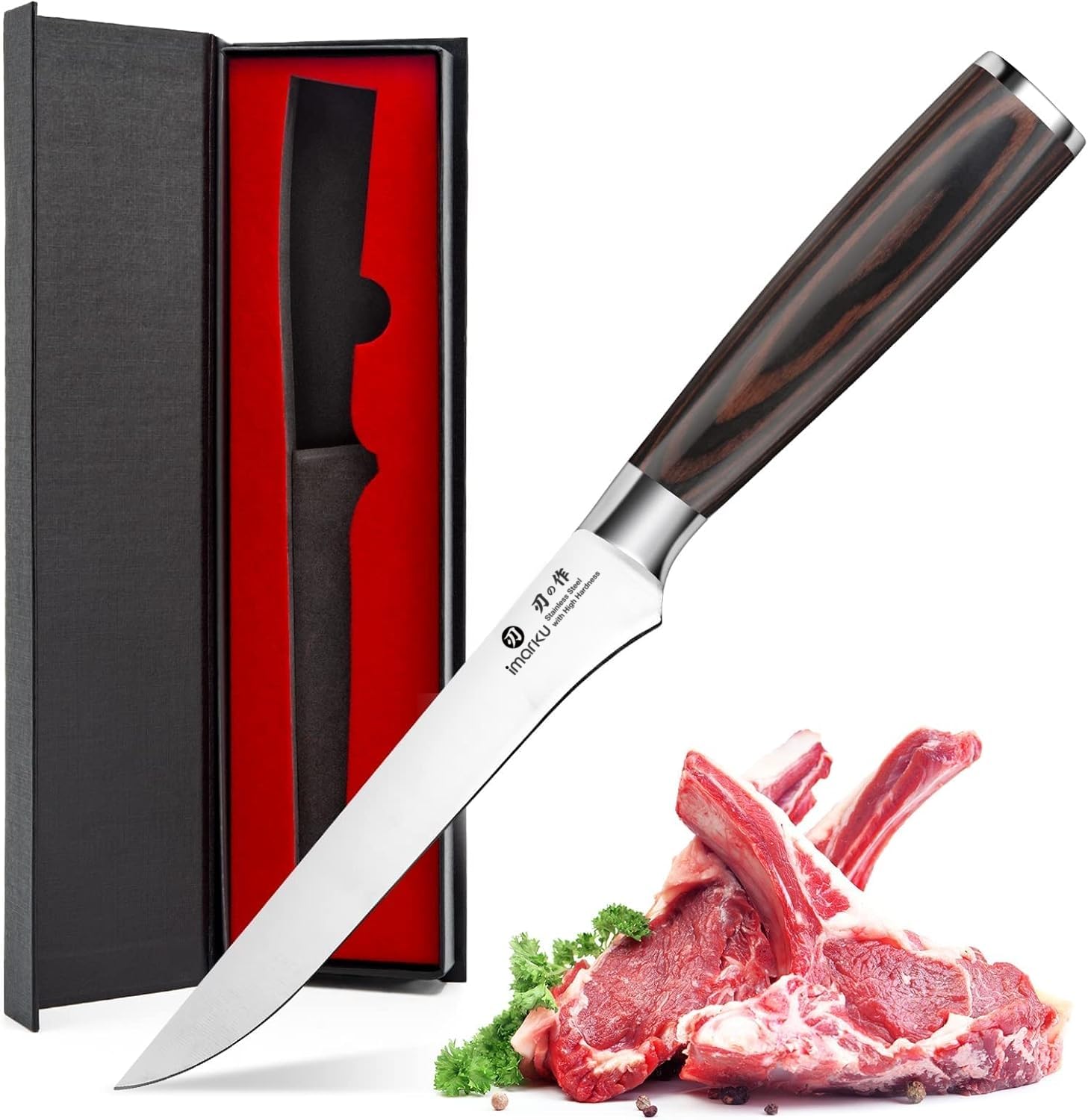
imarku Fillet Knife
 Save
SaveWe recommend this knife for home cooks who want a sharp, light boning knife with a comfortable handle for trimming and filleting.
Key Pros
- Sharp, narrow blade offers good control near bones
- Comfortable Pakkawood handle feels secure in hand
- Light, balanced design reduces hand fatigue
Key Cons
- Requires hand washing to protect the edge
- The flexible blade may not suit heavy cutting
- Handle care may require extra attention over time
We found the 6-inch blade easy to guide around joints and along meat. It made trimming, skinning, and butterflying clean and controlled, while the narrow profile helped us avoid removing too much meat.
The knife felt light without seeming flimsy. Its balanced design and shaped handle gave us steady control during longer prep sessions, and the grip stayed comfortable with wet hands.
The edge arrived very sharp and handled everyday kitchen work well. We would still use a honing rod between uses and wash the knife by hand, since the manufacturer does not recommend a dishwasher.
This knife fits cooks who value precision and low hand strain. We would choose a sturdier, less flexible model for large cuts or frequent heavy-duty use.
Buying Guide
We should start with the knife’s intended use. A narrow, flexible blade suits trimming meat from bones, while a stiffer blade offers better control when working with poultry or larger cuts.
| Feature | What to look for |
|---|---|
| Blade length | Choose a length that matches the cuts we prepare most often. |
| Flexibility | Select flexible steel for close trimming or a stiffer blade for added control. |
| Blade shape | A curved edge can help us follow bones and joints. |
| Handle | Look for a secure grip that feels comfortable with wet hands. |
| Steel | Consider corrosion resistance, edge retention, and ease of sharpening. |
| Construction | Full-tang designs usually provide strong support through the handle. |
We should check the knife’s balance before buying. A well-balanced knife feels steady and reduces hand strain during repeated cuts.
Made in the USA labels can describe different parts of production. We should review the maker’s information to confirm whether the company manufactures the blade, handle, and final assembly in the United States.
Safety also matters. We should choose a blade guard or storage sheath when available, and confirm that the handle provides a reliable grip without sharp seams or loose parts.
Finally, we should consider care requirements. A knife that needs hand washing, regular drying, and periodic sharpening may last longer when we follow those instructions.
Editor’s Choice
We choose the Dexter-Russell Sani-Safe 6-Inch Narrow Boning Knife as our editor’s pick. Its narrow, stiff blade offers the control we need for trimming meat, separating joints, and removing fat with limited waste.
The knife uses high-carbon stainless steel and has a textured, slip-resistant handle. Its American-made construction, NSF certification, and durable design make it a practical choice for home cooks, hunters, and professional kitchens.
| Feature | Details |
|---|---|
| Blade length | 6 inches |
| Blade style | Narrow and stiff |
| Handle | Slip-resistant polypropylene |
| Best use | Trimming meat and poultry |
| Made in | United States |
We like this knife because it balances precise handling with easy upkeep. The stiff blade supports controlled cuts, while the narrow shape helps us work around bones and joints.
Its simple design also makes replacement easy if the blade eventually wears out. We recommend it for users who want a reliable American-made boning knife without extra features or a high-maintenance handle.
Conclusion
We should choose an American-made boning knife based on the type of meat we prepare, the blade shape we prefer, and the handle that feels secure in our hands. A flexible blade suits fish and delicate cuts, while a stiffer blade offers better control with beef, pork, and poultry.
Key factors to check:
- Blade length and flexibility
- Stainless steel type
- Handle comfort and grip
- Ease of sharpening
- Warranty and manufacturer support
A well-made knife should hold its edge, resist corrosion, and remain comfortable during repeated use. We should also clean and dry it after each use, sharpen it with the proper tool, and store it safely. Choosing a knife that matches our cutting tasks will help us work with greater control and consistency.
FAQS
What is a boning knife used for?
We use a boning knife to remove meat from bones, trim fat, and separate joints. Its narrow blade helps us make precise cuts with less waste.
Should we choose a flexible or stiff blade?
We choose a flexible blade for poultry and fish because it follows curved bones. A stiff blade works better for beef, pork, and larger cuts that need more control.
What blade length works best?
Most of us find a blade between 5 and 6 inches easy to control. Longer blades can help with large cuts, while shorter blades offer more precision.
What makes a boning knife American made?
An American-made knife should have its blade and main construction completed in the United States. We should check the manufacturer’s product details because some brands import parts or complete only the final assembly domestically.
How do we maintain the knife?
We should hand-wash and dry the knife after each use. Regular honing helps maintain the edge, while professional or careful home sharpening restores a dull blade.
What safety features should we look for?
We look for a secure handle, a non-slip grip, and a sturdy connection between the blade and handle. A knife that feels balanced gives us better control during detailed work.