10 Best Carbon Steel Boning Knife: Top Picks for Precision Cutting
Carbon steel boning knives give us the control needed to remove meat from bones, trim fat, and separate skin from flesh. Their narrow, pointed blades can follow the shape of poultry, fish, and other cuts more closely than a standard chef’s knife. Carbon steel also develops a patina over time and can take a very sharp edge, but it needs more care than stainless steel.
The best carbon steel boning knife should balance a sharp, flexible blade with a comfortable handle, strong edge retention, and easy maintenance. We also pay close attention to blade length, flexibility, balance, and corrosion resistance. Carbon steel can rust if we leave it wet, so regular drying and light oiling may be necessary.
We tested and compared carbon steel boning knives to find the models that offer the best mix of precision, comfort, sharpness, and long-term value.
Best Carbon Steel Boning Knives
We selected the best carbon steel boning knives based on blade sharpness, flexibility, handle comfort, and edge retention. Our list includes options for trimming meat, separating joints, and removing skin with control.
Zarfand Feather Boning Knife
 Save
SaveWe recommend this knife for cooks who want a sharp, distinctive carbon steel blade for trimming meat, removing skin, and working around bones.
Key Pros
- Sharp edge handles fat, skin, cartilage, and tendons with little effort.
- Full tang construction and multiple rivets give the handle a solid feel.
- Leather sheath makes storage and outdoor use more convenient.
Key Cons
- The handle may feel uncomfortable because of a noticeable gap.
- Carbon steel needs prompt drying and regular care to limit rust.
- Sharpening can take extra effort after the edge dulls.
When we used the Zarfand Feather Boning Knife, the 8.5-inch blade moved cleanly through chicken and trimmed beef fat without removing much meat. Its light balance helped during longer cutting tasks, while the plain edge gave us good control around joints.
The forged high-carbon steel blade arrived very sharp and held its edge well during early use. We found it useful for separating meat from bone, although the narrow blade still requires careful handling around cartilage.
The wooden handle looks attractive and feels sturdy in most grips. However, the gap near the handle can bother some users, and the grip may shift slightly at certain angles. We also recommend washing and drying the blade by hand after each use.
The included leather sheath adds value for camping, barbecues, and safe drawer storage. With a 4.5-star rating from 97 customer reviews, this knife suits buyers who value sharp performance and unusual styling but can accept a handle that may not fit every hand.
Mercer Culinary Ultimate White 6-Inch Curved Boning Knife
 Save
SaveWe recommend this knife for its sharp, easy-to-control blade, comfortable grip, and low price.
Key Pros
- Curved blade helps us work close to bones
- High-carbon steel holds an edge well
- Textured handle feels secure during long prep
Key Cons
- White handle can show stains
- Hand washing takes extra care
- Six inches may feel long for smaller jobs
The curved blade gave us a useful angle when trimming chicken, ham, and brisket. It moved smoothly around bones and handled fat and sinew with good control. The blade felt light in hand without seeming flimsy.
We also liked the handle’s textured grip. It stayed comfortable and secure, even when we wore gloves or worked through a larger cut of meat. The sharp edge arrived ready for use and stayed useful through repeated trimming.
The white polypropylene handle needs prompt cleaning because spices, juices, and smoke-colored residue can leave marks. We would wash and dry it by hand after each use rather than placing it in the dishwasher.
At six inches, this knife suits most home butchering and meat-trimming tasks. However, we would choose a shorter blade for very small cuts or tight work around poultry joints.
Dexter Russell Traditional 6-Inch Boning Knife
 Save
SaveWe recommend this knife for cooks who want a firm, high-carbon blade for controlled deboning, trimming, and fish preparation.
Key Pros
- Stiff, wide blade gives us strong control near bones.
- Beechwood handle feels comfortable during longer tasks.
- Holds an edge well with regular care.
Key Cons
- Carbon steel needs prompt drying to help prevent rust.
- The rigid blade offers less flexibility for delicate filleting.
- The simple handle lacks some modern grip features.
When we used the Dexter Russell Traditional Boning Knife, its stiff blade made it easy to separate meat from poultry and larger cuts. The wide shape also gave us useful leverage when trimming connective tissue.
The handle felt balanced and secure in a wet hand. It has a classic wood finish, but we would wash it by hand and dry it right away. Carbon steel can develop dark marks or rust if moisture remains on the blade.
This knife suits home butchers, fishers, and cooks who prefer a sturdy edge over a flexible fillet knife. We would choose it for beef, pork, poultry, and general trimming rather than precise work on small fish.
Veisky Feather Boning Knife
 Save
SaveWe recommend this knife for shoppers who want a stylish, full-tang carbon steel boning knife with a leather sheath and a strong grip.
Key Pros
- Sharp enough for trimming meat and cutting steaks
- Solid full-tang handle with five rivets
- Includes a useful leather sheath
Key Cons
- Edge sharpness and retention may vary
- Larger size can feel less nimble for detailed cuts
- Some buyers reported small blade dings
We found the Veisky comfortable for larger cuts of meat. Its long, sturdy blade separated meat from bone well, while the full-tang handle gave us steady control during firmer cuts.
The feather-style finish gives the knife a distinctive look, and the included sheath makes it practical for grilling, camping, or storing. The design also makes it a suitable gift for cooks who value appearance as much as function.
Sharpness may need attention before regular use. Some users found the edge only moderately sharp, and reports about blade marks suggest that quality control may not be completely consistent.
At 8.6 inches, the blade offers useful reach but feels larger than a typical boning knife. We would choose it for steaks, roasts, and general meat trimming rather than delicate work that requires a very flexible blade.
HOSHANHO 7-Inch Fillet Knife
 Save
SaveWe recommend this knife for home cooks who want a sharp, lightweight blade for fish and small meat-cutting tasks.
Key Pros
- Very sharp out of the box
- Comfortable pakkawood handle
- Light, precise blade for filleting
Key Cons
- Less flexible than some fillet knives
- Wooden handle needs careful drying
- May feel narrow for larger cuts
We found the 7-inch blade easy to control while removing skin, trimming fat, and working around fish bones. Its thin profile helped us make clean cuts with little waste.
The handle felt secure during repeated cuts, and the balanced weight kept our hand from tiring quickly. The polished edge also handled tomatoes and meat smoothly without needing immediate sharpening.
This knife feels more rigid than flexible, so it suits users who prefer firm control. We would wash and dry it by hand after each use, especially because of the pakkawood handle.
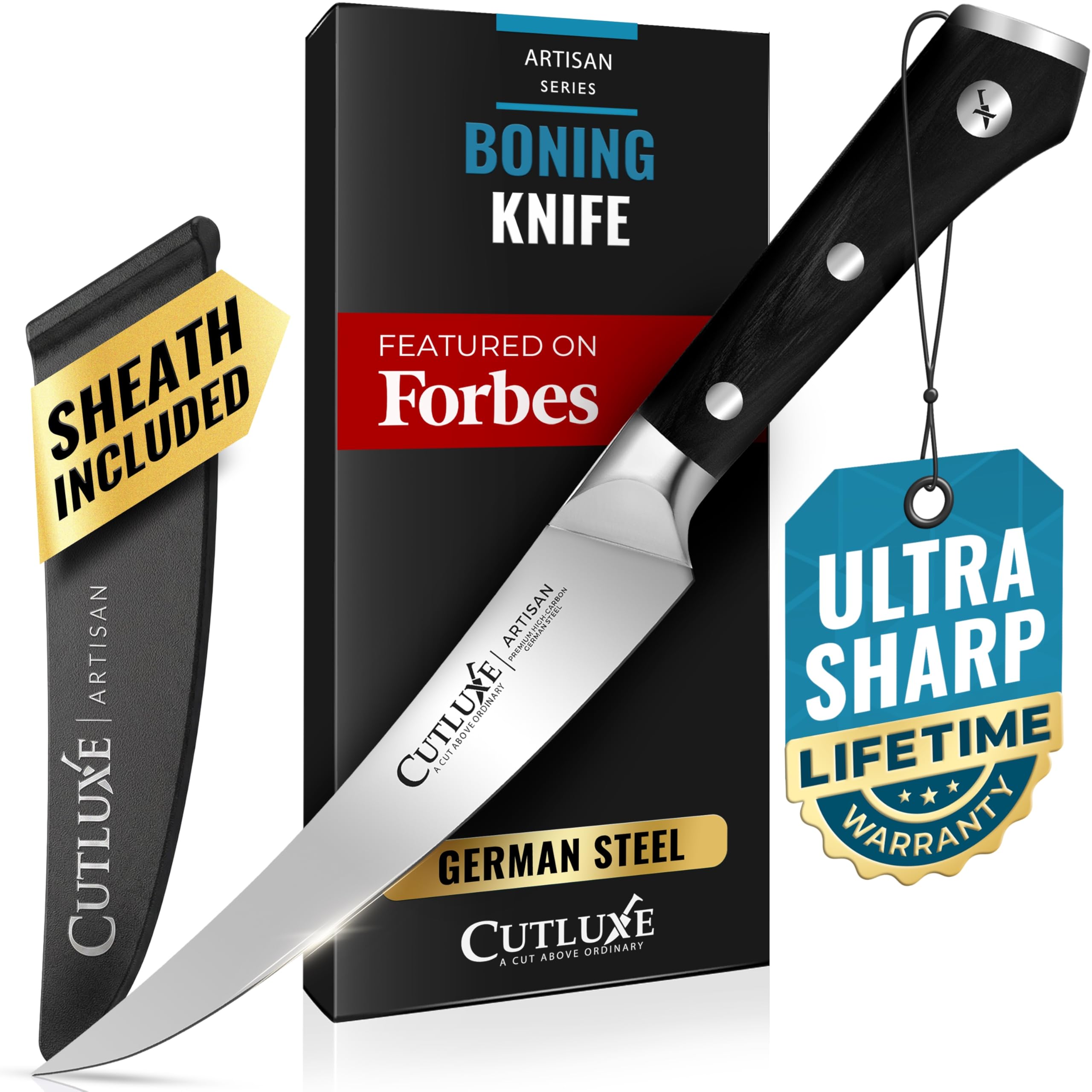
Cutluxe Curved Boning Knife
 Save
SaveWe recommend this knife for cooks who want a sharp, flexible blade for trimming meat, deboning poultry, and filleting fish.
Key Pros
- Sharp, precise edge for detailed cuts
- Comfortable, stable pakkawood handle
- Strong value with a lifetime warranty
Key Cons
- Some users may need to sharpen it before use
- Edge retention can vary with heavy use
- Requires careful hand washing and drying
We found the curved six-inch blade easy to guide around bones and joints. Its flexibility helped us make clean cuts without removing too much meat, while the pointed tip handled tight areas with good control.
The handle felt balanced during longer trimming sessions. Its shape gave us a secure grip, and the full-tang construction made the knife feel steady when we worked through tougher cuts.
The knife arrived very sharp, though reports suggest the edge may not last equally well for every user. We would hand-wash and dry it after each use, then hone or sharpen it when needed.
Overall, the Cutluxe Curved Boning Knife offers capable performance at a reasonable price. It suits home cooks, hunters, and anyone who regularly prepares meat or fish.
Old Hickory 6-Inch Boning Knife
 Save
SaveWe recommend this knife for shoppers who want an affordable, easy-to-sharpen carbon steel blade and do not mind regular care.
Key Pros
- Sharpens quickly and holds a useful edge
- Sturdy forged blade suits firm cutting tasks
- Hickory handle offers a comfortable, traditional grip
Key Cons
- Carbon steel can discolor or rust without prompt drying
- The blade may arrive needing sharpening
- Its firm blade offers less flex for detailed trimming
We found the 6-inch blade steady while working around joints and larger cuts of meat. Its firm feel gave us good control, though it did not flex much for close, curved trimming.
The hickory handle felt secure and balanced in hand. Its simple finish suits the knife’s traditional design, but the wood needs hand-washing and careful drying to stay in good condition.
This knife sharpened easily when the edge needed attention. The carbon steel also showed why maintenance matters: moisture and food residue can darken the blade or lead to rust. We would choose it for cooks who value simple construction and easy sharpening over stainless-steel convenience.
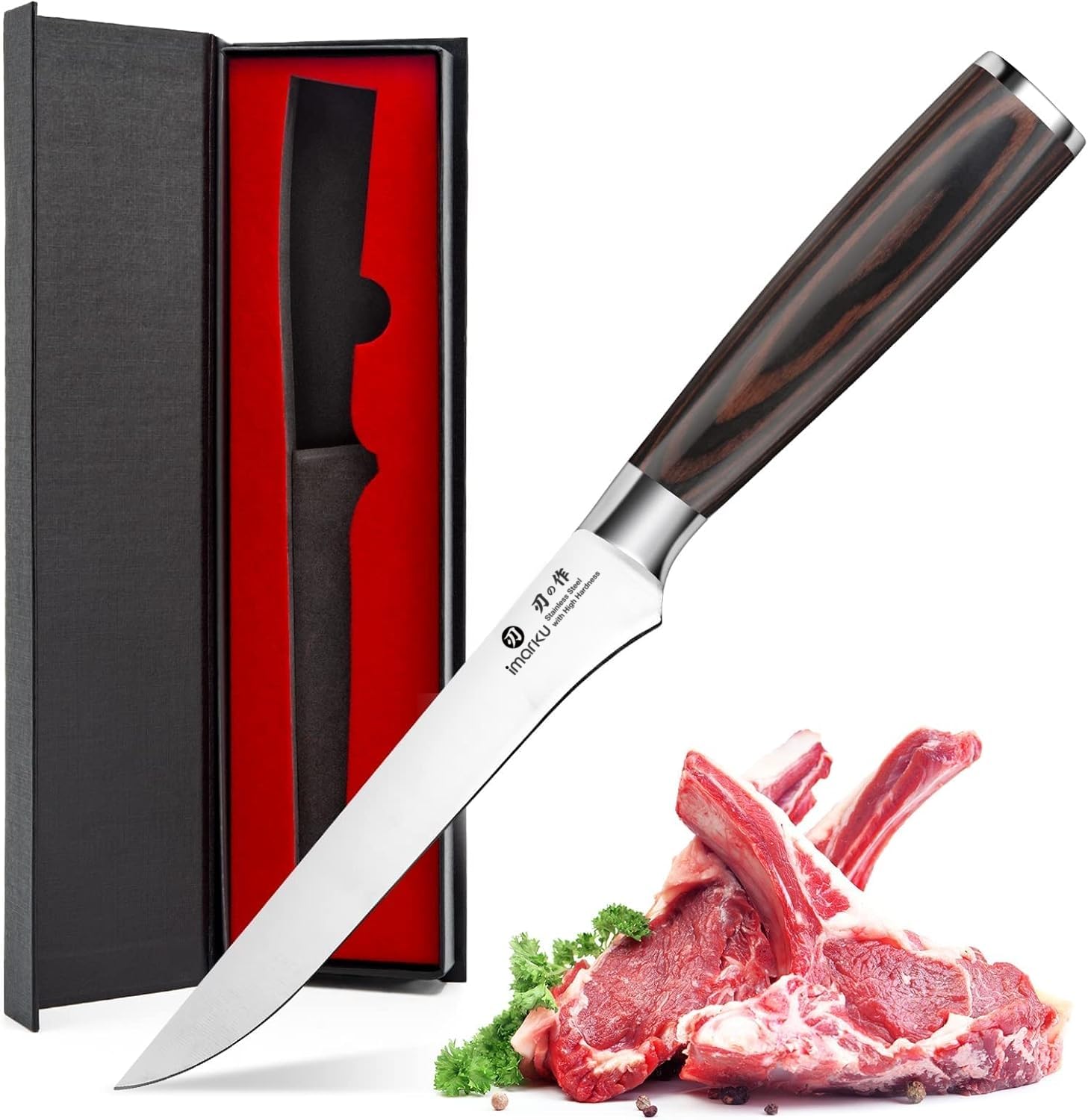
imarku Carbon Steel Boning Knife
 Save
SaveWe recommend this knife for precise trimming and filleting because its narrow, sharp blade offers good control without feeling heavy.
Key Pros
- Sharp, well-balanced blade
- Comfortable, non-slip Pakkawood handle
- Light feel with easy handling
Key Cons
- Requires hand washing
- May need regular honing
- The handle can show wear over time
We found the 6.8-inch blade easy to guide around bones and through meat. Its narrow shape helped us make clean cuts while trimming, skinning, and butterflying.
The knife felt light and balanced in our hand. The polished handle stayed comfortable during longer prep sessions and provided steady control without much pressure.
The blade arrived very sharp and held its edge well during normal kitchen use. We would still hone it between uses to maintain smooth cutting performance.
Hand washing is important because the manufacturer does not recommend a dishwasher. The knife also comes in a protective gift box and includes a satisfaction guarantee.
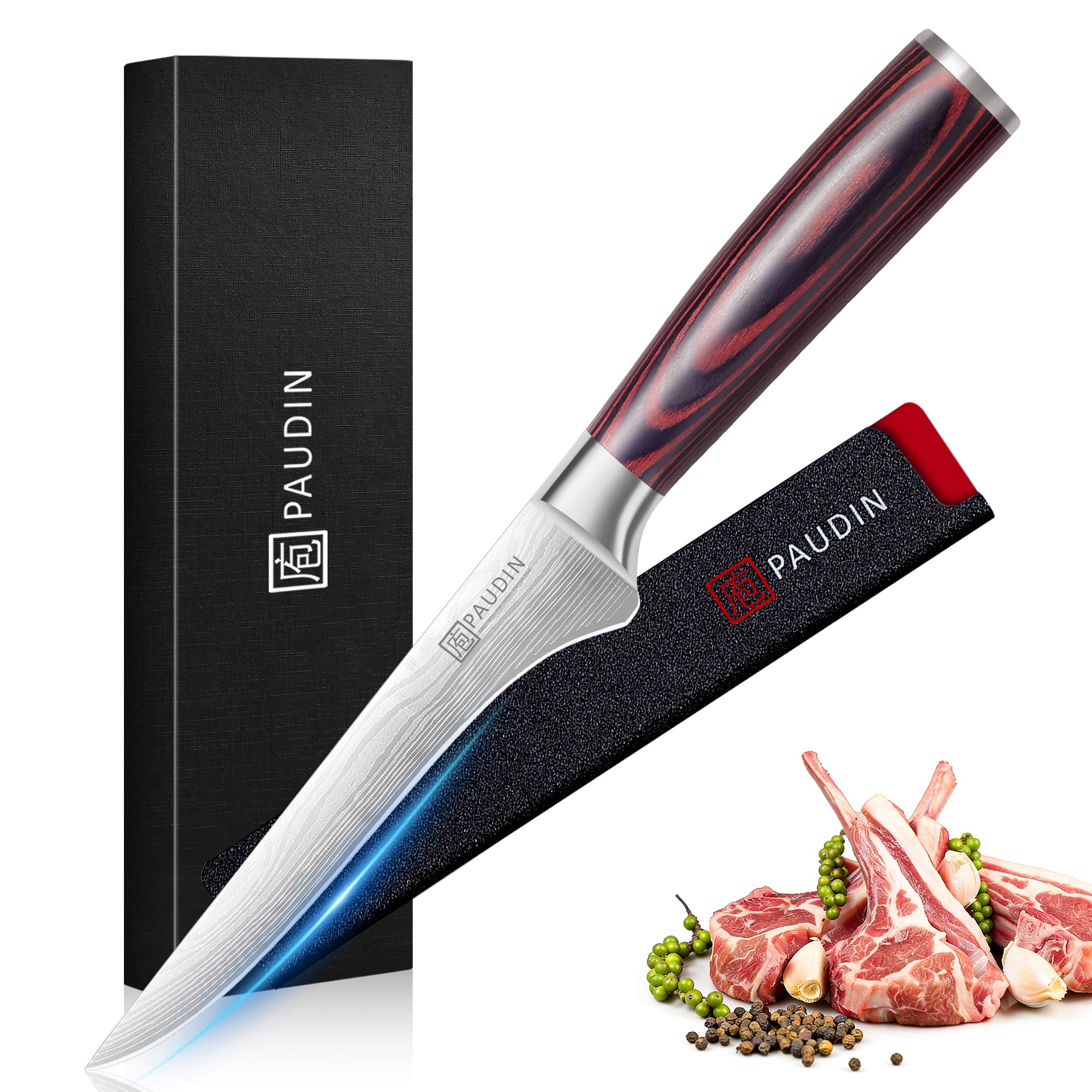
PAUDIN 6-Inch Carbon Steel Boning Knife
 Save
SaveWe recommend this knife for home cooks who want a balanced, flexible blade for trimming meat, poultry, and fish at a reasonable price.
Key Pros
- Comfortable pakkawood handle with steady balance
- Sharp, narrow blade for trimming and filleting
- Useful size for detailed cutting
Key Cons
- Edge sharpness may vary between knives
- The patterned finish is decorative, not true Damascus
- Flexible blade may feel too light for heavy bone work
We found the 6.1-inch blade easy to control when trimming pork, chicken, and smaller cuts of meat. Its narrow shape helped us work close to bones without removing too much meat.
The handle felt secure during longer prep sessions, and the knife had a useful balance between the blade and grip. Its flexibility also made it suitable for filleting fish and removing skin.
The blade arrived sharp, though some users may need to hone it before demanding work. We would also avoid twisting it against large bones, since this knife suits careful trimming more than forceful cutting.
With its stainless steel construction and comfortable handle, the PAUDIN offers good value for everyday kitchen use. We would choose it for home cooks who need one versatile boning knife rather than a heavy-duty butcher’s tool.
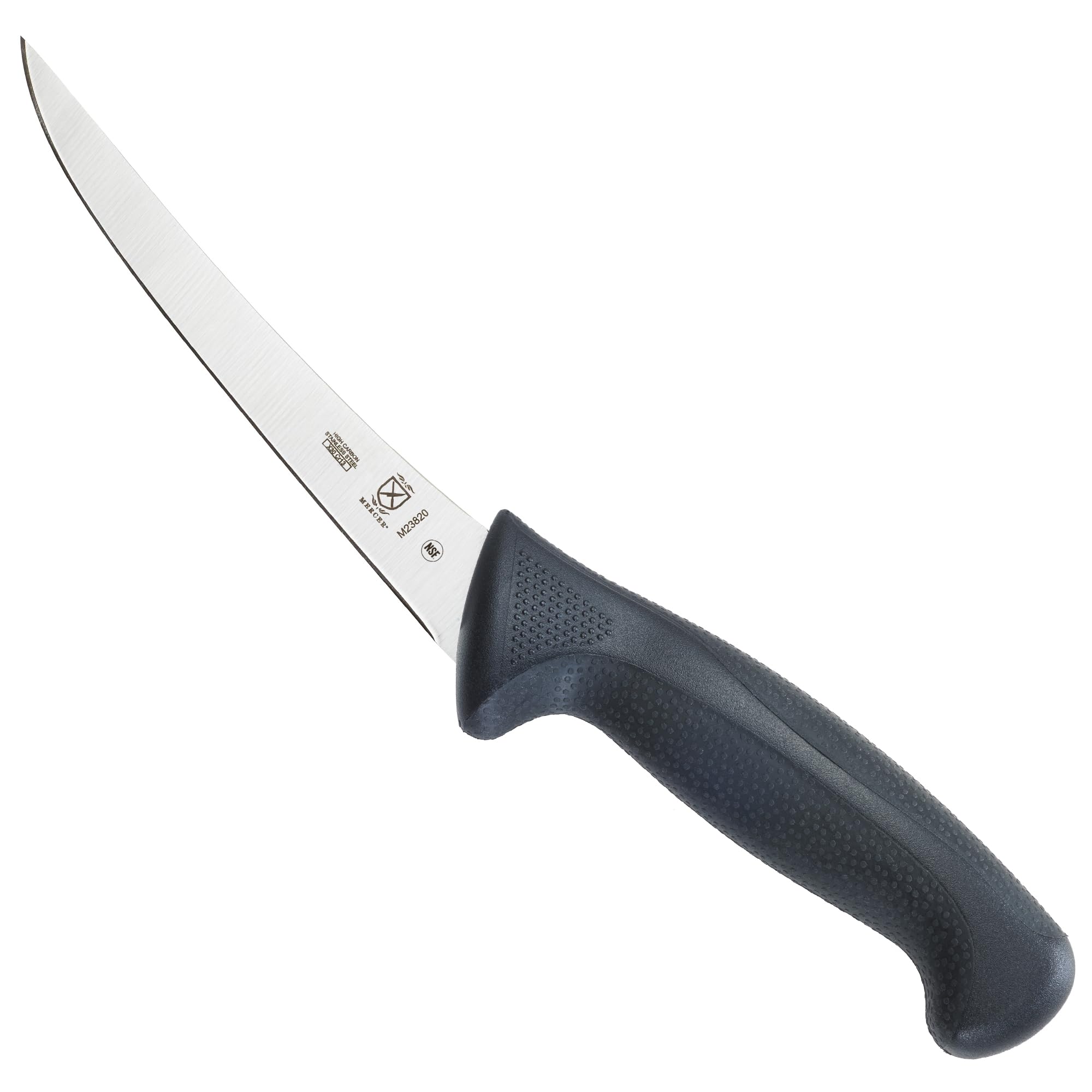
Mercer Culinary Millennia 6-Inch Curved Boning Knife
 Save
SaveWe recommend this knife for home cooks who want a sharp, comfortable boning tool for trimming meat and separating it from bones at a reasonable price.
Key Pros
- Sharp edge that handles meat, fat, and sinew cleanly
- Textured handle stays comfortable and secure during longer tasks
- Light, sturdy design offers good control
Key Cons
- Blade has very little flex
- Hand washing takes extra care
- Some users may want a sharper edge after repeated use
We found the curved 6-inch blade easy to guide around chicken joints, pork cuts, and brisket. Its firm feel worked well for controlled trimming, though it did not bend much around tight curves or smaller bones.
The high-carbon steel blade arrived sharp and kept its edge through several trimming jobs. We liked the Santoprene handle because its textured grip stayed steady even when our hands became greasy.
This knife feels light without seeming flimsy. We would choose it for deboning poultry, trimming roasts, and removing fat or sinew. Those who prefer a flexible boning blade should consider another design.
Hand washing with mild soap and thorough drying will help protect the edge. We would avoid the dishwasher, which can dull the blade and wear down the handle over time.
Buying Guide
We should match the blade shape to the task. A narrow, flexible blade suits delicate trimming, while a stiffer blade offers better control when removing meat from larger bones.
| Feature | What to look for |
|---|---|
| Blade length | Choose a length that feels easy to control for the cuts we make most often. |
| Flexibility | Select flexible steel for curved surfaces or stiffer steel for firm, direct cuts. |
| Blade shape | A curved edge can follow bones, while a straighter edge supports precise trimming. |
| Handle | Look for a secure grip, comfortable balance, and a design that remains stable when wet. |
| Edge quality | Choose an even, sharp edge that holds its shape and can be resharpened. |
| Maintenance | Confirm that we can clean and dry the knife easily after each use. |
Carbon steel can develop a patina and may rust if moisture remains on the blade. We should check the care instructions and be prepared to wash, dry, and lightly oil the blade when needed.
We should also inspect the knife’s construction. A full-tang design can improve balance and strength, while a secure handle fit helps us maintain control during detailed work. A protective sheath supports safer storage and protects the edge.
Editor’s Choice
We choose the Misono Swedish Carbon Steel Hankotsu 145mm as our editor’s pick. Its compact, stiff blade gives us good control when trimming meat close to bone, while the carbon steel edge supports precise cuts.
| Feature | Details |
|---|---|
| Blade steel | Swedish carbon steel |
| Blade length | 145 mm |
| Design | Stiff, narrow blade |
| Best use | Meat trimming and boning |
The blade’s simple profile works well for cooks who prefer direct feedback from a knife. Its carbon steel construction can take a fine edge, but we must dry it immediately after use and apply a light coat of food-safe oil during storage.
We also like the handle’s practical design. It feels secure during controlled cuts without adding unnecessary weight. Since this knife lacks the corrosion resistance of stainless steel, it suits users who will maintain it after each session.
For cooks who regularly break down poultry, trim beef, or prepare smaller cuts of meat, this knife offers a focused balance of control, sharpness, and durability.
Conclusion
We should choose a carbon steel boning knife based on blade flexibility, edge control, handle comfort, and maintenance needs. A narrow, well-balanced blade helps us separate meat from bone with less waste.
Carbon steel rewards careful use. We need to dry the blade after washing, apply a light coat of food-safe oil, and accept that a natural patina may develop. We should also avoid dishwashers, soaking, and acidic foods left on the blade.
Key points to remember:
- Choose flexible steel for fish and delicate cuts.
- Choose a stiffer blade for poultry and larger cuts.
- Look for a secure, comfortable handle.
- Keep the edge sharp with regular honing and careful sharpening.
- Store the knife in a dry, protected place.
When we match the knife to our cutting tasks and care for it properly, carbon steel can provide precise control and reliable performance for years.
FAQS
What makes carbon steel useful for a boning knife?
We value carbon steel for its sharp edge and easy sharpening. It can also develop a natural patina that helps protect the surface.
Does carbon steel rust?
Yes. We should dry the blade after each use and avoid leaving it in water. A light coat of food-safe mineral oil can help during storage.
Can we use a carbon steel boning knife for poultry and meat?
Yes. We can use it to separate meat from bones, trim fat, and remove silver skin. We should choose a flexible blade for delicate cuts and a stiffer blade for larger joints.
How do we maintain the edge?
We can use a fine whetstone or have the knife professionally sharpened. Honing may help align the edge, but it does not replace sharpening.
Should we wash it in a dishwasher?
No. We should hand-wash the knife with mild soap, rinse it, and dry it immediately. Dishwasher heat, moisture, and detergent can damage the blade and handle.
What blade length works best?
| Task | Useful blade length |
|---|---|
| Small poultry and fish | 5–6 inches |
| General meat trimming | 6–7 inches |
| Larger cuts | 7–8 inches |
We should select a handle that feels secure and balanced. A comfortable grip gives us better control during precise cuts.