Western Chef Knife Handle Guide: Materials, Construction & Care
Quick Answer
A western chef knife handle typically features either a traditional Western riveted construction (full tang with pinned scales) or an ergonomic contoured shape designed to provide a secure, comfortable grip using materials like engineered wood, composite resin, or durable polymers.
Understanding the Western Chef Knife Handle
The handle of a western chef knife is more than just a place to hold the blade; it is a critical structural element that dictates balance, control, and comfort during extended food preparation tasks. Unlike traditional Japanese handles, which are often lightweight, cylindrical, and designed for pinch-grip dominance without bolsters, western handles are built with durability, heavy-duty utility, and full-hand security in mind.
When evaluating a western chef knife, understanding how the handle is constructed helps you determine its longevity, maintenance requirements, and how well it will fit your hand during repetitive chopping, dicing, and slicing tasks.
Core Construction Styles of Western Handles
 Save
Western knife handles generally fall into two primary construction categories, each offering distinct advantages in balance and durability.
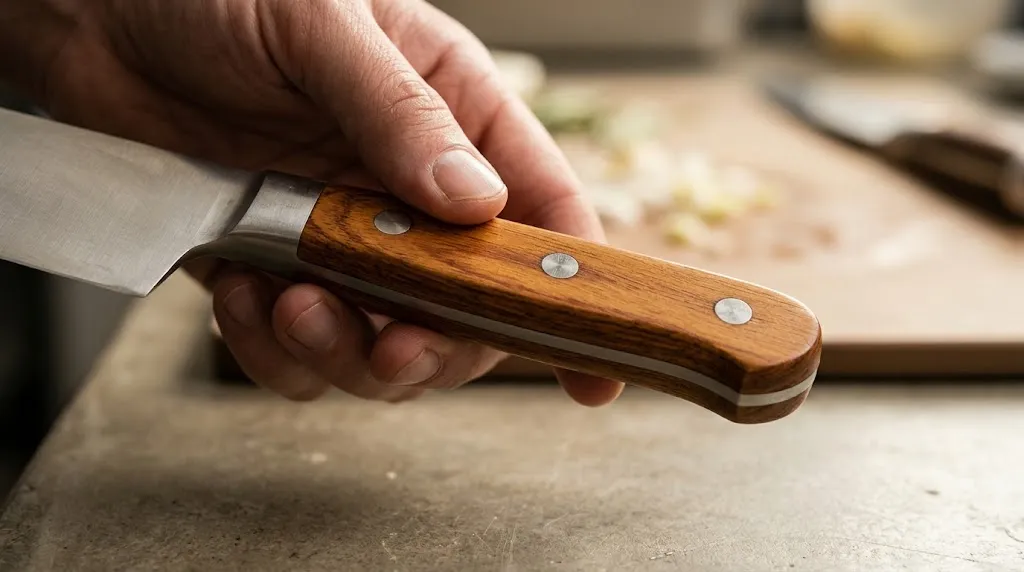
Full Tang with Riveted Scales
The hallmark of traditional western cutlery is the full tang, where the steel of the blade extends continuously through the entire length of the handle. Two handle scales (often made of wood, composite, or bone) are attached to either side of the tang using metal rivets or compression pins.
This design provides exceptional structural strength, preventing the blade from loosening or snapping away from the handle under heavy pressure. The exposed metal spine and rivets also give the knife a classic, weighted feel in the palm.
Molded and Ergonomic Polymer Handles
Many modern western chef knives utilize a molded synthetic handle directly bonded to a partial or encapsulated full tang. These handles are engineered to create seamless transitions between the bolster, guard, and grip.
By eliminating gaps where moisture and food particles can collect, molded synthetic handles offer superior hygiene and require minimal maintenance, making them popular in both professional commercial kitchens and busy home environments.
Common Materials Used in Western Knife Handles
The choice of handle material directly impacts grip security, weight distribution, moisture resistance, and overall aesthetic appeal.
- Pakkawood / Engineered Wood: Wood veneers infused with resin under high pressure. It offers the warm look of natural wood while resisting moisture, warping, and cracking much better than untreated timber.
- Polyoxymethylene (POM) and ABS: High-grade engineering plastics known for extreme impact resistance, dimensional stability, and resistance to kitchen chemicals and high dishwasher temperatures (though hand-washing is still strongly recommended).
- Micarta: A high-pressure laminate made from layers of linen, canvas, or paper soaked in resin. It provides an exceptional, slightly textured grip even when wet or greasy.
- Stainless Steel: Integrated metal handles welded or forged directly to the blade. While sleek and easy to sanitize, they can become slippery when wet and add unwanted weight to the handle unless hollowed out.
Key Insight
The presence of a forged bolster on a western chef knife shifts the balance point closer to the user’s hand, enhancing control during heavy rocking-motion cuts, whereas unbolstered knives feel lighter and more agile.
Ergonomics, Balance, and Grip Security
An effective western handle must accommodate various grip styles, whether you use a standard hammer grip, a professional pinch grip, or an index-finger-extended grip.
Contoured finger grooves may look appealing, but they often restrict your hand to one specific position, which can cause discomfort if your hand size does not match the manufacturer’s mold. Smooth, gently rounded ergonomic profiles allow for natural adjustments and reduce friction hotspots during long food prep sessions.
Weight distribution is equally important. A well-balanced western chef knife should feel neutral when held at the pinch point (where the blade meets the handle), ensuring that neither the blade nor the handle feels overly heavy.
Maintenance and Care for Different Handle Types
 Save
Proper maintenance extends the life of your chef knife handle and prevents premature degradation.
- For Wood and Pakkawood: Never soak wooden handles in water or run them through a dishwasher. Apply food-safe mineral oil periodically to dry wood scales to preserve moisture resistance and prevent splitting.
- For Synthetic and Micarta Handles: Wash with mild dish soap and warm water immediately after use. Dry thoroughly before storing in a block or magnetic strip.
- Checking Rivets: Periodically inspect riveted handles for any microscopic gaps between the metal tang and the scale. If scales begin to lift or loosen, moisture can enter and cause corrosion.
Warning
Never place a kitchen knife with wooden or riveted composite handles into an automatic dishwasher. The high heat and harsh detergent will warp the wood, dissolve adhesives, and cause the metal rivets to rust or loosen.
How to Choose the Right Handle Style for Your Cooking Habits
Selecting the ideal western chef knife handle depends on your personal hand size, kitchen workflow, and maintenance preferences.
If you prefer a classic, substantial weight and traditional aesthetics, a full-tang handle with triple-riveted Pakkawood scales is an excellent choice. If you prioritize low-maintenance hygiene, seamless construction, and a slip-resistant grip in wet conditions, a molded thermoplastic or textured Micarta handle will better serve your needs.
Related Product
Kitchen Knife Sharpening Stones & Maintenance Kits
Keep your western chef knife balanced, sharp, and in peak working condition with a reliable whetstone and care kit.
As an Amazon Associate, we earn from qualifying purchases.
Frequently Asked Questions
Are western chef knife handles interchangeable?
No. Knife handles are permanently pinned, glued, or molded directly to the tang during manufacturing. Replacing a handle requires specialized knifemaking tools, grinding, and reshaping skills.
Why do some western handles have three rivets while others have two?
The number of rivets is primarily a structural and aesthetic choice by the manufacturer. Three rivets provide robust, balanced weight distribution along the length of the handle, while two-rivet designs are often used on shorter handles or specific ergonomic profiles.
Is a heavier handle better on a chef knife?
Not necessarily. Handle weight should balance the weight of the blade. A handle that is too heavy makes the knife feel sluggish, while a blade-heavy knife causes wrist fatigue during prolonged chopping tasks.
Can wooden western handles be oiled regularly?
Yes. Applying food-safe mineral oil or specialized board butter to natural wood or Pakkawood handles every few months prevents drying, cracking, and water absorption.
What is the difference between western and Japanese handles?
Western handles are typically contoured, heavier, and feature bolsters and full tangs with pinned scales. Japanese handles (like the traditional Wa handle) are usually lightweight, octagonal or D-shaped wood fitted onto an invisible partial tang without bolsters.
How do I know if a knife handle fits my hand properly?
When you grip the knife naturally, your fingers should wrap comfortably around the handle without overlapping uncomfortably into your palm, and the bolster or ricasso should not create pressure points against your index finger.
Conclusion
The handle of a western chef knife is a vital component that bridges the gap between your hand and the cutting edge. By understanding the differences between full-tang riveted designs and molded synthetics, as well as the importance of proper material care, you can select and maintain a knife that offers long-lasting comfort, safety, and precision in the kitchen.

