
How to Remove Mold From a Cutting Board Safely
Quick Answer
To remove mold from a cutting board, first identify its material and condition. Replace wooden or bamboo boards with visible mold because contamination may extend into porous areas. A smooth, undamaged plastic board may be cleaned with detergent, sanitized appropriately, and dried completely. Follow these steps and learn how to prevent mold on cutting boards to avoid future problems.
Five quick safety steps
- Stop food preparation: Remove the affected board from service immediately.
- Check the material: Replace visibly moldy wood or bamboo rather than attempting to restore it.
- Inspect plastic carefully: Discard boards with deep cuts, cracks, persistent odors, or embedded growth.
- Clean salvageable surfaces: Scrub intact, nonporous boards with dish soap and water.
- Sanitize and dry: Use an appropriate food-contact sanitizer and dry the board completely.
Important safety reminder
- Never mix cleaning chemicals: Combining bleach with vinegar, ammonia, or other cleaners can release dangerous gases.
- Don’t trust appearance alone: A board that looks clean may still contain contamination inside damaged areas.
Finding a fuzzy spot on your favorite cutting board can make you question whether it’s still safe. I think the most important decision comes before choosing a cleaning product: deciding whether the board is worth saving.
Wood, bamboo, plastic, and composite boards respond differently to moisture and cleaning. This guide explains how to assess mold, clean suitable surfaces, recognize warning signs, and prevent another outbreak.
What Does Mold on a Cutting Board Look Like?
Mold on a cutting board often appears as fuzzy patches, irregular discoloration, or spotted growth. You might notice it near knife marks, seams, corners, or the underside.
Definition: Mold is a type of fungus that grows when moisture and other conditions support its development. Its appearance varies by species and growing conditions.
Common warning signs include:
- Black or green patches: Irregular spots that develop or spread over time.
- White fuzzy growth: A soft-looking coating, sometimes confused with dried residue.
- Musty odors: An unusual earthy smell that may accompany contamination.
- Growth inside cracks: Discoloration concentrated in joints, grooves, or damaged wood.
- Repeated spotting: Visible growth returning after previous cleaning attempts.
Not every dark stain is mold. Wood naturally develops discoloration from moisture, ingredients, and normal aging.
However, you cannot reliably identify a mold species or confirm safety from color alone. When suspicious growth appears on a porous food-contact surface, replacement is the cautious choice.
Can You Safely Remove Mold From a Cutting Board?
Sometimes, but the answer depends on the board’s material and condition. Smooth nonporous surfaces are generally easier to clean than porous or badly damaged boards.
The EPA’s mold cleanup guidance recommends scrubbing suitable hard surfaces with detergent and water, then drying them completely. It also explains that absorbent materials may require disposal.
Cutting Board Material and Mold Removal Comparison
| Material | Mold concern | Recommended action |
|---|---|---|
| Hardwood | Porous fibers, knife marks, and possible hidden growth. | Replace when visibly moldy. |
| Bamboo | Moisture may enter fibers and joints. | Replace when visibly moldy. |
| Plastic | Nonporous body, but grooves may trap contamination. | Clean and sanitize only if intact and fully cleanable. |
| Paper composite | Properties vary by manufacturer and surface condition. | Follow manufacturer guidance; replace if damaged or contaminated internally. |
| Glass | Hard, nonporous surface is usually easy to wash. | Clean and sanitize if intact, although glass is hard on knife edges. |
This comparison describes practical cleaning decisions, not a guarantee that any contaminated board can be restored. If you cannot confidently clean every food-contact area, replace it.
How Do You Clean Mold Off a Plastic Cutting Board?
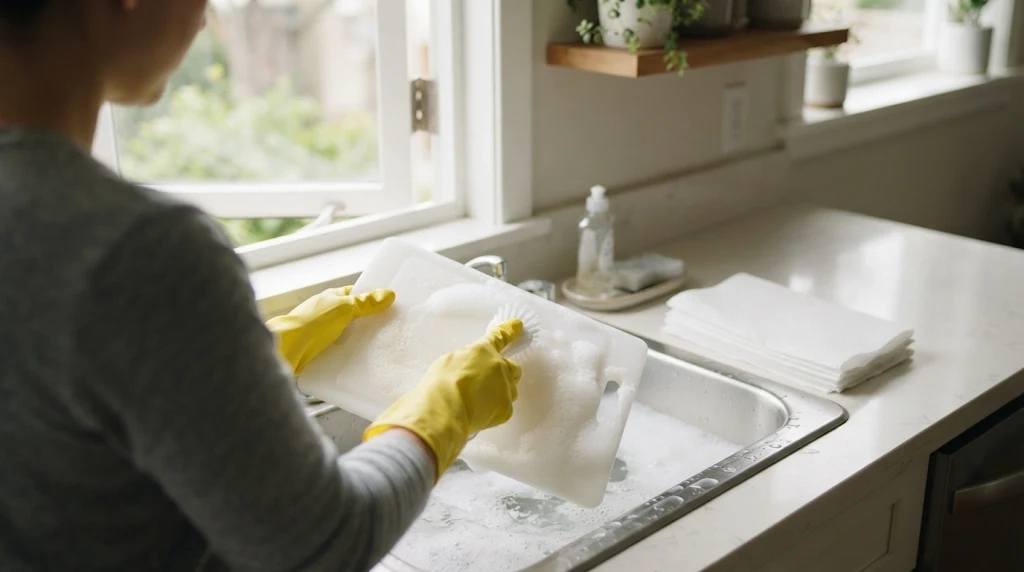
You may be able to clean light surface mold from a smooth, undamaged plastic board. The process must remove visible growth before sanitizing.
Do not attempt to save a board with mold embedded in deep grooves. Sanitizer cannot compensate for a surface that cannot be cleaned thoroughly.
Step 1: Inspect the Entire Surface
Examine both sides, handles, edges, and grooves under good lighting. Look for splits, stubborn discoloration, and areas that remain difficult to scrub.
Discard the board if contamination extends into damage or its condition prevents complete cleaning.
Step 2: Protect Yourself and Your Workspace
Wear cleaning gloves and keep food away from the affected area. Avoid dry brushing, which can disturb moldy debris.
Open a window when practical and protect nearby surfaces from contaminated wash water. Clean the surrounding sink and countertop afterward.
Step 3: Wash With Dish Soap
Use warm or hot water, ordinary dish detergent, and a clean scrubbing brush. Work carefully across the entire board, including edges and shallow grooves.
Rinse away loosened material and detergent. If visible growth remains, do not continue using the board.
Step 4: Sanitize the Cleaned Board
After washing, use a sanitizer suitable for food-contact surfaces and compatible with the board’s material. Follow its label for dilution, application, contact time, and rinsing.
The USDA also provides a household bleach dilution for cutting board sanitation. That method is explained in the next section.
Step 5: Dry and Inspect Again
Remove excess moisture with clean paper towels, then let the board dry completely. Keep both sides exposed to moving air.
Inspect the board before using it again. Any remaining growth, unexplained musty odor, or contamination inside scratches warrants replacement.
What Is the Best Way to Sanitize a Cutting Board?
Cleaning and sanitizing are different processes. Cleaning removes food particles, dirt, and visible contamination, while sanitizing reduces microorganisms on an already cleaned surface.
The USDA cutting board sanitizing guidance describes a diluted, unscented chlorine bleach solution for food preparation surfaces.
USDA Household Bleach Dilution
| Ingredient | Amount |
|---|---|
| Unscented liquid chlorine bleach | 1 tablespoon (about 15 mL) |
| Water | 1 US gallon (about 3.8 liters) |
Apply the properly diluted solution to an already cleaned, compatible surface. Allow the USDA-recommended contact period of several minutes, then dry as directed.
Check the bleach label because formulations and food-contact instructions can differ. Never use this mixture to justify keeping visibly moldy porous wood.
Important Chemical Safety Rules
- Use plain, unscented chlorine bleach suitable for the intended application.
- Never combine bleach with vinegar, ammonia, or other cleaning chemicals.
- Use adequate ventilation while cleaning.
- Follow the product label when determining rinsing requirements.
- Prepare solutions using the correct proportions.
- Keep chemicals away from children, pets, and food.
The CDC mold cleanup recommendations emphasize protective equipment, ventilation, and safe chemical handling. People with certain respiratory conditions or weakened immunity should avoid mold cleanup.
Should You Throw Away a Moldy Wooden Cutting Board?
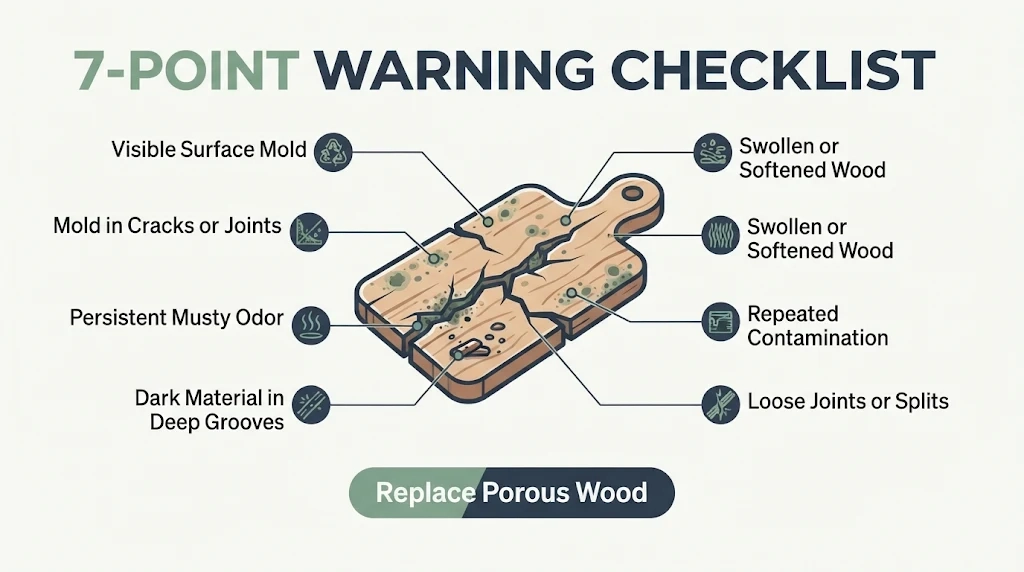
Yes, replacing a visibly moldy wooden cutting board is the safest practical recommendation. Porous wood can contain contamination below the surface or inside difficult-to-reach damage.
Scrubbing might remove what you can see without establishing that the board is suitable for direct food contact.
Signs That a Wooden Board Needs Replacement
- Visible mold growth anywhere on the cutting surface.
- Mold inside cracks, joints, or end-grain areas.
- A persistent musty smell.
- Deep grooves containing dark material that cannot be cleaned.
- Softened, swollen, or deteriorating wood.
- Repeated contamination after cleaning.
- Loose joints or significant structural damage.
Cracks make contamination especially difficult to control. Our guide on repairing a cracked cutting board explains structural problems, but repair is not a reliable treatment for mold contamination.
I would rather replace a questionable board than risk preparing fresh food on it. The cost of a new board is easier to control than an uncertain hygiene problem.
Why Does Mold Grow on Cutting Boards?
Mold grows when favorable moisture conditions persist. Food residue, trapped water, and limited airflow can create problems on frequently used kitchen equipment.
A board may look clean after washing but remain wet underneath. This is especially common when it rests flat against a countertop.
Common Causes of Cutting Board Mold
- Improper drying: Moisture stays trapped beneath the board.
- Food residue: Small particles remain inside scratches or grooves.
- High humidity: Moist air slows evaporation.
- Closed storage: Cabinets and drawers restrict airflow around damp boards.
- Prolonged soaking: Wood absorbs water that takes longer to release.
- Damaged surfaces: Cracks and joints create hard-to-clean spaces.
Think about a wooden board washed after dinner and placed flat on a damp towel overnight. The upper surface might dry, while the underside remains wet.
This simple example explains why drying position matters. Cleanliness alone does not eliminate moisture problems.
How Should You Clean a Wooden Cutting Board That Has No Mold?
Routine care can help protect a clean wooden cutting board from future contamination. Wash it promptly, minimize soaking, and allow complete drying.
These instructions apply to boards without suspected mold. They are not a restoration process for visibly contaminated wood.
- Remove food debris: Scrape off crumbs and leftover ingredients.
- Wash carefully: Scrub both sides with dish soap and warm water.
- Rinse: Remove detergent without soaking the board.
- Towel dry: Wipe the surfaces, edges, and corners.
- Air-dry upright: Keep the board exposed to air until completely dry.
- Inspect: Check for developing cracks, stains, and other damage.
Do not put wooden boards in the dishwasher unless their manufacturer specifically permits it. Prolonged water exposure and heat may contribute to warping or splitting.
For material-specific guidance, read which cutting boards are dishwasher safe before selecting a cleaning method.
Can Vinegar, Baking Soda, or Lemon Remove Cutting Board Mold?
These household ingredients may help with particular cleaning tasks, but none should be treated as proof that a moldy cutting board is safe. Their usefulness differs from proper food-contact sanitation.
White Vinegar
Vinegar can remove some mineral deposits and help with certain household cleaning tasks. However, effectiveness against mold varies, and it cannot guarantee removal of growth inside porous board materials.
Never mix vinegar with chlorine bleach. The combination can generate hazardous chlorine gas.
Baking Soda
Baking soda may help loosen certain residues and manage mild odors. It is not a substitute for a validated sanitizing process.
Scrubbing with baking soda cannot establish that mold inside wood fibers or deep cracks has been eliminated.
Lemon Juice and Salt
Lemon and salt are commonly used to clean superficial stains and odors from wooden boards. They should not be considered dependable remedies for established mold contamination.
Instead, focus on proper cleaning before mold develops. Once visible mold affects porous wood, replacement is safer than experimenting with home remedies.
Can You Sand Mold Off a Wooden Cutting Board?
Sanding is not a reliable way to make a mold-contaminated cutting board safe. Removing the surface does not prove that hidden contamination has disappeared.
Sanding can also disturb mold-containing dust. This adds an exposure concern without resolving uncertainty about the board.
Refinishing can be appropriate for certain clean wooden boards with ordinary surface wear. Our article on how to refinish a cutting board covers that separate maintenance task.
Do not confuse cosmetic repair with decontamination. If mold is established in porous wood, replace the cutting board.
How Can You Prevent Mold From Returning?
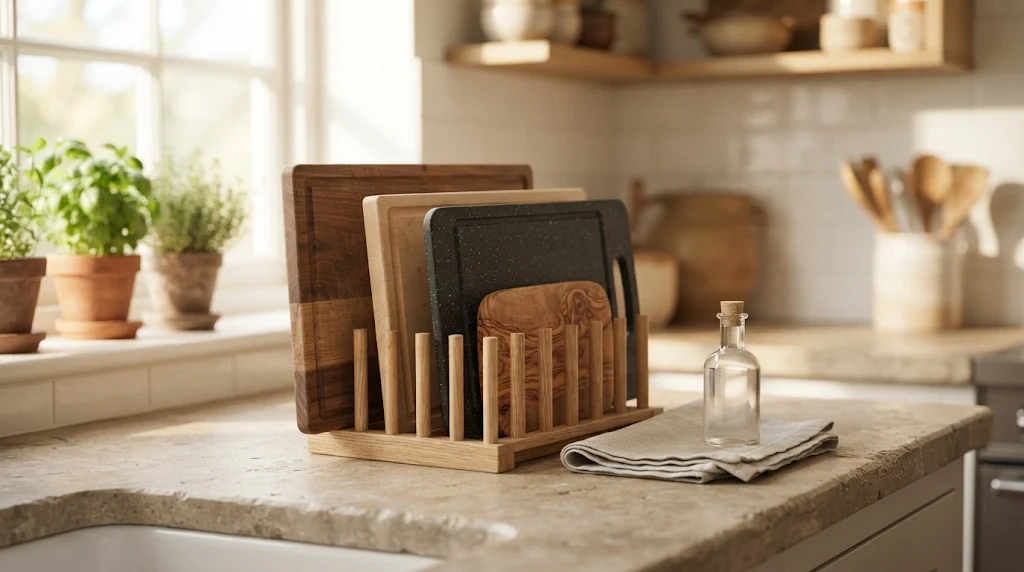
The best prevention strategy combines prompt washing, complete drying, and suitable storage. These habits also make everyday kitchen maintenance easier.
Dry Every Side Before Storage
After washing, remove visible moisture with a clean towel. Then stand the board upright until the surfaces and edges have dried.
A stable rack that allows air circulation is often more useful than a complicated cleaning routine.
Avoid Long Periods of Moisture Exposure
Do not leave wooden boards submerged in water or resting in a wet sink. Avoid stacking freshly washed boards while they are damp.
Clean up leaks and condensation near storage cabinets. Persistent kitchen humidity can make drying take longer.
Keep Wooden Boards Properly Conditioned
Food-grade mineral oil can help maintain clean, dry wooden boards according to manufacturer instructions. It does not disinfect wood or make a surface mold-proof.
Apply the product only after routine cleaning and complete drying. Never oil over suspected mold or contaminated cracks.
Inspect Boards Regularly
Look for excessive scratches, warping, open seams, and discoloration. Small problems are easier to evaluate before the board becomes seriously damaged.
Replace equipment when deterioration prevents reliable cleaning. Preventing contamination matters more than extending every board’s lifespan.
How Often Should You Clean and Replace Cutting Boards?
Clean cutting boards after every food preparation session and between foods when cross-contamination is possible. Replacement depends on condition rather than a fixed calendar date.
| Maintenance task | Suggested timing | Purpose |
|---|---|---|
| Wash with soap | After each use | Remove food residue |
| Dry completely | After every wash | Limit moisture buildup |
| Sanitize when needed | After cleaning following contamination risks | Reduce surface microorganisms |
| Inspect for damage | Regularly and before use | Identify replacement needs |
| Condition clean wood | As needed or manufacturer-directed | Maintain wood condition |
There is no universal replacement interval for every cutting board. A lightly used board may remain serviceable longer than one that experiences heavy daily cutting.
How Can You Prevent Cross-Contamination?
Mold is not the only concern with cutting boards. Raw animal foods can introduce harmful microorganisms that spread to foods eaten without further cooking.
The FoodSafety.gov food safety guidelines recommend keeping raw meat preparation separate from ready-to-eat foods.
- Use one board for raw meat, poultry, or seafood.
- Reserve another board for produce, bread, and ready-to-eat ingredients.
- Wash utensils and cutting surfaces between tasks.
- Sanitize compatible equipment when appropriate.
- Replace excessively worn boards with hard-to-clean grooves.
These practices also encourage regular inspection and cleaning. They work best alongside proper drying and storage.
Helpful Products for Cutting Board Cleaning and Replacement
If your current board needs replacing, consider a dishwasher-safe option that is easy to clean and store. A practical scrubbing brush can also help with routine maintenance.
The following selections are based on published product features and intended uses, not hands-on laboratory testing. The star scores are editorial suitability estimates rather than verified customer ratings.
🏆 Best Everyday Replacement
OXO Good Grips Utility Cutting Board
★★★★☆ 4.5/5
This dishwasher-safe, double-sided plastic board has non-slip feet and a juice-catching groove. I’d prioritize its easy cleaning and stable design when replacing an old, heavily scratched board.
🍽️ Best Lightweight Composite Option
Epicurean Kitchen Series Cutting Board
★★★★☆ 4.3/5
This paper-composite board is thin, dual-sided, and manufacturer-rated dishwasher-safe. I like its practical hanging hole for convenient storage and drying after washing.
🧽 Best Everyday Cleaning Accessory
OXO Good Grips Dish Brush with Scraper
★★★★☆ 4.0/5
Its nylon bristles and comfortable non-slip handle make everyday scrubbing easier. I’d use it for washable kitchen surfaces and routine board maintenance, never as a way to rescue contaminated porous wood.
Frequently Asked Questions
Is it safe to use a cutting board after removing mold?
It depends on the material and the extent of contamination. A smooth, undamaged plastic board may be reusable after thorough cleaning and appropriate sanitation. Visibly moldy wooden or bamboo boards should be replaced because surface cleaning cannot confirm that hidden contamination is gone.
Does boiling water kill mold on a cutting board?
Boiling water is not a reliable solution for restoring a moldy cutting board. Heat may damage wood or warp certain plastics, and surface treatment does not necessarily remove embedded contamination. Follow manufacturer-approved cleaning methods and replace boards that cannot be cleaned completely.
Can black mold on a cutting board make you sick?
Mold exposure can cause allergic reactions or respiratory symptoms in some people. Color alone cannot identify a mold species or establish its toxicity. Avoid using a visibly contaminated food-contact surface, and seek medical advice if concerning symptoms develop after exposure.
How do you remove mold from cutting board grooves?
Shallow grooves in intact plastic may be cleaned with detergent and a suitable brush. However, deep cuts containing visible mold are difficult to clean reliably. Replace boards with embedded growth, damaged surfaces, or persistent contamination instead of relying on aggressive scrubbing.
How can I keep a wooden cutting board from getting moldy?
Wash your wooden board promptly after use, rinse it without prolonged soaking, and dry both sides thoroughly. Store it upright in a ventilated area and inspect it regularly. Use food-grade mineral oil when appropriate, but remember that conditioning does not replace cleaning or sanitation.
Final Takeaway: Choose Safety Over Saving a Damaged Board
Removing mold from a cutting board starts with understanding the material. Smooth, intact, nonporous surfaces may be cleanable, while visibly moldy porous boards are better replaced.
For everyday prevention, keep your routine simple: wash promptly, inspect regularly, and dry every surface completely. These habits help maintain cleaner cutting boards and reduce the chance of future moisture problems.
My final recommendation: If you cannot confidently clean the entire food-contact surface, buy a replacement. A safe, well-maintained cutting board is an important part of everyday food preparation.

