Chef Knife vs Cleaver: Key Differences, Uses, and Which One to Choose
Quick Answer
A chef knife is the better all-around choice for slicing, dicing, mincing, and everyday meal preparation, while a traditional heavy cleaver is designed for forceful chopping and certain meat-cutting tasks. If you mainly cook vegetables, boneless meat, fish fillets, and herbs, start with a chef knife; if you regularly break down meat or need a purpose-built bone-chopping tool, consider the appropriate cleaver. For an important safety distinction, see this kitchen knife safety guide.
Which Knife Does What Best?
- Everyday cooking: A chef knife handles most routine slicing, chopping, and dicing.
- Vegetable preparation: A chef knife or a thin Chinese vegetable cleaver works well, depending on your preferred cutting style.
- Boneless meat: A sharp chef knife usually provides better control for trimming and slicing.
- Bone chopping: Use a suitable heavy meat cleaver only when the task and blade design allow it.
- One-knife kitchen: Choose a comfortable, well-maintained chef knife first.
One Important Buying Tip
- Don’t confuse a thin Chinese vegetable cleaver with a heavy bone cleaver; their blades serve different purposes.
Choosing between a chef knife and a cleaver becomes much easier when you match the blade to the food you prepare most often. Their broad blades may look similar at first, but their weight, edge geometry, and intended cutting techniques can be quite different.
In this guide, I’ll explain how the two knives compare, which tasks suit each one, and what to consider before buying either in 2026. I’ll also cover the safety mistakes that can damage a blade or make kitchen work less controlled.
What Is the Difference Between a Chef Knife and a Cleaver?
A chef knife is a versatile kitchen knife with a tapered blade and a curved cutting edge, designed for controlled everyday food preparation. A traditional meat cleaver has a broad, usually rectangular blade built for heavier chopping, although thinner Chinese cleavers can serve as versatile vegetable knives.
The most important difference isn’t simply blade size. It’s the intended job, the thickness of the blade, and how much force the design can safely handle.
- Chef knife: Prioritizes control, precision, and versatility.
- Heavy meat cleaver: Prioritizes chopping power and a sturdy blade.
- Chinese vegetable cleaver: Often has a thinner edge for slicing and chopping vegetables, meat, and other boneless ingredients.
That last distinction matters. A Chinese cleaver isn’t automatically a bone-breaking knife just because it has a rectangular shape.
Chef Knife vs Cleaver: Side-by-Side Comparison
 Save
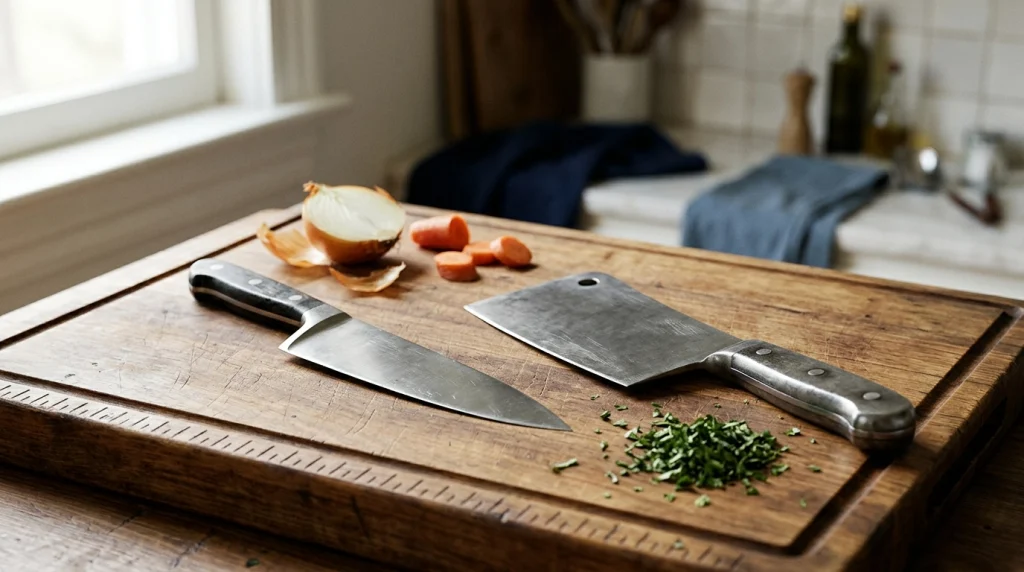
A chef knife generally suits frequent, varied kitchen preparation, while a heavy cleaver suits specialized chopping jobs. The following table compares typical designs rather than every model on the market.
| Feature | Chef Knife | Heavy Meat Cleaver |
|---|---|---|
| Blade shape | Tapered, pointed, curved edge | Broad, often rectangular |
| Typical blade length | 8–10 inches (20–25 cm) | Often around 6–8 inches (15–20 cm), depending on the model |
| Blade thickness | Usually thinner toward the cutting edge | Typically thicker and more substantial |
| Weight and feel | Often lighter and easier to maneuver | Usually heavier, with more momentum |
| Best uses | Slicing, mincing, dicing, and general preparation | Suitable heavy chopping and certain meat-processing tasks |
| Precision cuts | Excellent for most everyday cuts | Possible, but bulk can make delicate work harder |
| Bone cutting | Not suitable for chopping through bones | Only when the cleaver is specifically designed for the task |
| Best first knife | Usually yes | Usually a specialist addition |
These measurements are typical examples, not fixed industry standards. A thin Chinese cleaver can be lighter and more delicate than a large chef knife, so identify the actual knife type before judging it by appearance.
What Is a Chef Knife Best Used For?
A chef knife is designed to handle a wide range of routine cutting tasks without requiring you to change tools constantly. Its tapered profile and curved edge make it useful for both rocking cuts and straightforward slicing.
For most home cooks, a chef knife is the more practical starting point because everyday recipes involve many different ingredients. You can use it for the following tasks when the blade is appropriate and well maintained.
- Vegetables: Dice onions, chop carrots, slice peppers, and cut cabbage into manageable pieces.
- Herbs and garlic: Mince parsley, cilantro, basil, and garlic using controlled chopping movements.
- Boneless meat: Trim fat, slice cooked meat, and cut boneless chicken into strips.
- Fish fillets: Portion firm, boneless fillets, although a flexible fillet knife may offer better control for delicate work.
- Fruit: Slice apples, pears, and melons, using a stable cutting board and suitable technique.
A standard 8-inch chef knife offers a useful balance between reach and maneuverability. If you have smaller hands or limited counter space, a shorter blade may feel easier to control.
When Is a Chef Knife the Better Choice?
Choose a chef knife when your cooking involves several types of ingredients in one session. It can move from slicing onions to dicing peppers and trimming boneless chicken without the bulk of a heavy cleaver.
It also makes more sense for cooks who value fine control. A tapered tip helps with precise cuts, while the curved edge supports a rocking motion for mincing herbs.
However, a chef knife isn’t designed for every job. Avoid using it to chop through bones, pry open containers, or force its edge through frozen food.
What Is a Cleaver Best Used For?
A cleaver is a broad-bladed knife whose best use depends on its design. A heavy meat cleaver handles appropriate heavy chopping, while a Chinese vegetable cleaver is often intended for everyday slicing, chopping, and scooping ingredients.
Before buying one, determine which kind of cleaver you actually need. Two knives can look similar in photographs but have very different edge profiles and safe uses.
- Heavy meat cleaver: Designed for certain heavy-duty chopping tasks and, when specifically rated for it, suitable bones.
- Chinese vegetable cleaver: Designed for precise cuts through vegetables and boneless foods, often with a thinner blade.
- General-purpose cleaver: A broad category that includes designs with different thicknesses, weights, and intended uses.
The wide blade can also help transfer chopped vegetables from the board to a pan. That’s useful, but it doesn’t mean every cleaver should be used for crushing, pounding, or bone chopping.
When Is a Cleaver the Better Choice?
A cleaver makes sense when your cooking regularly requires the specific job its blade was designed to perform. A suitable heavy meat cleaver may help with certain meat-processing tasks, while a thin Chinese cleaver can suit cooks who prefer a broad blade for vegetable preparation.
For example, someone who regularly prepares large cuts of meat may benefit from a purpose-built meat cleaver. Someone who mainly chops vegetables may prefer a thin Chinese cleaver rather than a heavy bone cleaver.
Don’t choose a cleaver based on weight alone. Blade construction, edge geometry, the manufacturer’s instructions, and the food being cut all matter.
Chef Knife vs Cleaver for Vegetables, Meat, and Bones
The easiest way to choose between these knives is to consider what you cut most often. The right blade can make preparation smoother, but using a heavier knife doesn’t automatically make every cut easier.
Which Knife Is Better for Vegetables?
A chef knife is an excellent choice for most home vegetable preparation. Its curved edge supports rocking cuts, and its pointed tip helps with smaller, controlled tasks.
A thin Chinese vegetable cleaver is another strong option, especially if you prefer a broad blade and a straighter chopping motion. A heavy meat cleaver, however, is usually unnecessary for onions, tomatoes, and leafy greens.
For a useful introduction to technique, read this North Carolina State University guide to cutting with a chef knife.
Which Knife Is Better for Meat?
For boneless chicken, beef, pork, and cooked meat, a chef knife generally offers the control needed for slicing and trimming. A thin Chinese cleaver can also handle boneless meat when its design suits the task.
A heavy meat cleaver becomes useful for certain heavier cutting jobs, particularly when processing meat that includes bones. Use a cleaver only for the materials and tasks its manufacturer specifies.
For trimming around joints or separating meat from bone, a boning knife may be more appropriate than either option. Its narrow blade helps you work around connective tissue with greater precision.
Can a Chef Knife Cut Through Bones?
A standard chef knife should not be used to chop through bones. Its thinner cutting edge can chip or suffer other damage when it strikes hard bone.
Choose a purpose-built meat cleaver for suitable bone-chopping tasks, or use kitchen shears, a boning knife, or another appropriate tool when the job calls for it. Never substitute a cleaver designed for vegetables just because its blade looks sturdy.
Which Knife Is Better for Garlic and Herbs?
A chef knife is usually the more convenient option for mincing garlic and finely chopping herbs. Its curved edge allows a controlled rocking motion, and its pointed tip helps with smaller cuts.
A thin Chinese cleaver can also mince herbs and garlic effectively. The choice comes down to the blade profile, your grip, and which cutting motion feels natural.
Why Blade Thickness and Weight Matter
Blade thickness and weight affect how a knife moves through food, how it feels in your hand, and which tasks it can handle. These details often matter more than whether a knife is labeled a chef knife or a cleaver.
Blade Thickness
A thinner blade generally passes through ingredients with less wedging, which helps with precise slicing. A thicker blade can offer greater strength for certain heavy-duty jobs, although thickness alone doesn’t guarantee that a knife is suitable for bone chopping.
For example, a thin Chinese cleaver may slice vegetables more cleanly than a thick meat cleaver. Both have broad blades, but their cutting edges serve different purposes.
Weight and Balance
A lighter chef knife usually allows easy movement between slicing, trimming, and mincing. A heavier cleaver can generate more momentum during a suitable chopping stroke, but its weight may become tiring during extended precision work.
Heavier isn’t always better. If a knife feels awkward or difficult to stop precisely, it’s probably not the right tool for your everyday preparation.
Edge Geometry
Edge geometry describes how the blade narrows toward its cutting edge. It influences cutting performance, durability, and the kinds of food a knife can handle safely.
Before purchasing a cleaver, check its intended use rather than relying on its rectangular shape or advertised weight. Follow the manufacturer’s guidance on suitable ingredients and cutting surfaces.
Can You Use a Cleaver Instead of a Chef Knife?
Yes, a suitable cleaver can replace a chef knife for many tasks, but not every cleaver is designed for general-purpose cutting. A thin Chinese vegetable cleaver can handle many everyday ingredients, while a heavy meat cleaver may feel cumbersome for delicate preparation.
If you want one knife for most home cooking, a chef knife is generally the more straightforward choice. It offers a useful balance of precision, versatility, and ease of handling.
Consider a thin Chinese cleaver if you prefer a broad blade and regularly prepare large quantities of vegetables. Buy a heavy meat cleaver when you have a genuine need for the specific heavy-duty tasks it supports.
How to Choose the Right Knife for Your Kitchen
Before spending money on another knife, consider your cooking habits and the tools you already own. The best choice is the one that suits your regular tasks rather than the one with the most imposing blade.
- Choose a chef knife if: You prepare varied meals, chop vegetables daily, slice boneless meat, and want one versatile kitchen knife.
- Choose a Chinese vegetable cleaver if: You frequently chop vegetables and prefer a broad blade with a relatively thin cutting edge.
- Choose a heavy meat cleaver if: You regularly perform appropriate heavy chopping and need a blade specifically designed for that work.
What Should You Check Before Buying?
Pay attention to these practical details before choosing a model.
- Comfort: The handle should feel secure and balanced in your hand.
- Intended use: Confirm whether the manufacturer designed the knife for vegetables, boneless meat, or bone chopping.
- Maintenance: Check sharpening requirements, cleaning instructions, and corrosion resistance.
- Storage: Make sure you can store the blade safely in a block, sheath, or suitable knife holder.
- Cutting board: Use a stable board appropriate for the knife and cutting task.
For more information about selecting and caring for kitchen knives, the University of Nebraska–Lincoln’s chef knife guide offers useful technique and maintenance advice.
How to Use and Maintain Both Knives Safely
Safe knife handling depends on control, a stable work surface, and choosing the correct blade for the food. A heavy cleaver deserves particular care because its weight can make an uncontrolled movement more consequential.
- Secure the board: Place it on a stable surface and use a damp towel underneath if it slips.
- Use a controlled grip: Hold the handle firmly and keep your fingertips curled away from the cutting edge.
- Prepare stable ingredients: Cut round vegetables into a stable shape before slicing them further.
- Avoid excessive force: Let a suitable, sharp blade do the work rather than forcing it through an ingredient.
- Keep knives clean and dry: Follow the manufacturer’s cleaning instructions and dry the blade before storage.
- Store safely: Keep the blade protected and never leave a knife hidden in a sink full of water.
These habits align with guidance from Penn State Extension’s kitchen knife safety recommendations. A stable board, a controlled grip, and proper tool selection are essential for both knife types.
How Should You Sharpen a Chef Knife or Cleaver?
Sharpening restores a cutting edge by removing a small amount of metal, while honing helps maintain the edge between sharpening sessions. The correct method depends on the steel, edge design, and manufacturer’s recommendations.
Use a sharpening method appropriate for the particular blade. Don’t assume that a heavy cleaver can tolerate every sharpening technique or that a thin Chinese cleaver should be sharpened like a thick bone cleaver.
Inspect the edge regularly for chips, rolling, or damage. If a cleaver has a damaged edge, stop using it for heavy chopping until it’s properly assessed and repaired.
Chef Knife vs Cleaver: Which One Should You Buy First?
For most home cooks, I recommend starting with a comfortable, good-quality chef knife. It covers a wide range of daily tasks and makes more sense than buying a specialized heavy cleaver before you know you need one.
If your cooking involves frequent vegetable preparation, a thin Chinese cleaver can be a useful second option. If you regularly process meat and need to chop suitable bones, choose a purpose-built heavy meat cleaver instead.
In other words, match the knife to the task. A versatile blade is useful for everyday preparation, while a specialized blade earns its place when you regularly need its particular strengths.
Product Recommendations: Chef Knives and Cleavers Worth Considering
 Save
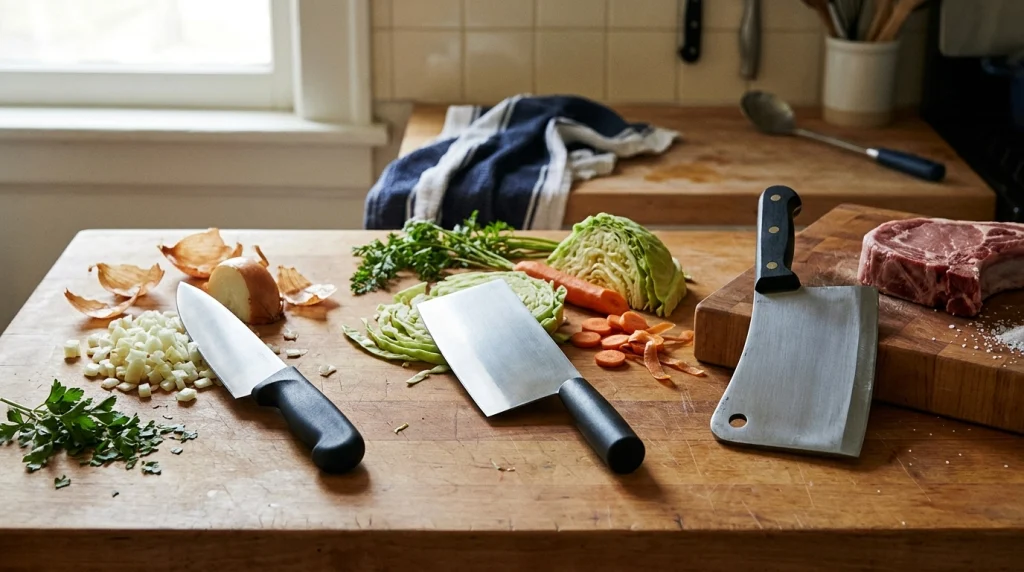
If you’re ready to choose a knife, these established product lines offer useful starting points for comparing blade styles, handle comfort, and intended use. Check the current specifications and manufacturer guidance before buying; these are recommendations based on design and intended use, not claims of hands-on testing.
🏆 BEST EVERYDAY OPTION
Victorinox Fibrox Pro 8-Inch Chef’s Knife
A versatile chef knife with an ergonomic Fibrox handle and a stainless-steel blade. It’s a sensible option for cooks who want one primary knife for vegetables, herbs, and boneless meat.
🥬 BEST FOR VEGETABLE PREP
Mercer Culinary Chinese Vegetable Cleaver
A Chinese-style vegetable cleaver is worth considering if you prefer a broad blade for chopping vegetables and transferring ingredients. Confirm the specific model’s blade thickness and intended use before purchase.
🥩 BEST FOR HEAVY CHOPPING
Dexter-Russell Heavy Meat Cleaver
Consider a purpose-built heavy meat cleaver if your kitchen regularly handles appropriate heavy chopping tasks. Verify the exact model’s construction and permitted uses instead of assuming every cleaver can cut through bones.
Frequently Asked Questions
Is a chef knife better than a cleaver for everyday cooking?
Yes, a chef knife is generally better for everyday cooking because it handles slicing, dicing, mincing, and chopping a wide variety of ingredients. A cleaver is more useful when its specific design matches your regular tasks, such as vegetable preparation with a thin Chinese cleaver or suitable heavy chopping with a meat cleaver.
Can a cleaver replace a chef knife?
A thin Chinese vegetable cleaver can replace a chef knife for many everyday tasks, including slicing vegetables and cutting boneless meat. A heavy meat cleaver is less versatile for delicate preparation, so it usually works better as a specialized tool alongside a chef knife.
Is a cleaver better for cutting chicken?
For boneless chicken, a chef knife usually provides excellent control for trimming and slicing. A suitable cleaver can help with specific heavier poultry-processing tasks, but use only a blade designed for that purpose and follow the manufacturer’s instructions.
Can I use a meat cleaver to chop vegetables?
You can use a meat cleaver for some vegetable-cutting tasks, but its weight and thick blade may make precise slicing less comfortable. A chef knife or thin Chinese vegetable cleaver is generally a better choice for everyday vegetable preparation.
Do I need both a chef knife and a cleaver?
Most home cooks can manage everyday meals with a good chef knife alone. Add a cleaver when your cooking regularly involves tasks that benefit from its particular blade design, such as broad-blade vegetable chopping or appropriate heavy meat processing.
Final Verdict: Chef Knife or Cleaver?
For most kitchens, the chef knife wins as the first purchase because it offers the best balance of versatility, control, and everyday usefulness. It handles the majority of routine preparation without requiring a specialized blade.
Choose a thin Chinese cleaver if you prefer its broad shape for vegetable preparation, or a purpose-built heavy meat cleaver if you regularly need its specific chopping capabilities. The best knife isn’t necessarily the largest or heaviest one; it’s the knife designed for the work you actually do.

