
Can You Use Elm for a Cutting Board? Safety, Pros, Cons, and Better Woods
Quick Answer
Yes, you can use elm for a cutting board, but it is not my first choice for everyday food preparation. Elm is a hardwood with attractive, interlocked grain, yet its relatively open pores can make cleaning more challenging. For a frequently used kitchen board, close-grained maple or walnut is generally more practical. The FDA Food Code favors hard maple or equivalently hard, close-grained wood for cutting boards in food establishments.
What to Know Before Using Elm
- Food contact: Use only correctly identified, untreated wood suitable for the intended purpose.
- Open grain: Elm has visible pores that can complicate thorough cleaning.
- Moderate hardness: Common elm species are reasonably forgiving under kitchen knives.
- Moisture sensitivity: Prolonged wet conditions may encourage movement, warping, or cracking.
- Best practical use: Consider occasional dry-food preparation or suitable serving applications.
My Recommendation
- For daily chopping: Choose a properly made, close-grained hardwood cutting board instead of elm.
Elm has beautiful grain patterns and impressive resistance to splitting. Those qualities make it tempting when you’re planning a homemade cutting board.
However, a wood that performs well in furniture does not automatically make the best kitchen surface. I prefer evaluating wood by its grain, cleanability, construction, and maintenance needs.
In this guide, I’ll explain when elm can work, where it falls short, and which alternatives deserve consideration.
Is Elm Wood Good for Cutting Boards?
Elm can make a usable cutting surface, but its coarse, ring-porous structure makes it less desirable than close-grained hardwoods for regular food preparation.
For occasional slicing, a properly constructed elm board may be serviceable. Heavy chopping and frequent exposure to food juices create more demanding conditions.
What Makes Elm Different?
Elm belongs to the Ulmus genus, which includes several species with different physical properties. Many varieties have interlocked fibers that resist splitting.
This structural feature is useful in woodworking. However, resistance to splitting does not automatically mean resistance to moisture or easy sanitation.
- Distinctive grain: Elm often displays flowing, interlocking patterns.
- Moderate hardness: Several elm species are softer than hard maple.
- Coarse texture: The surface may contain noticeable pores and uneven fibers.
- Working challenges: Interlocked grain can cause tear-out during planing.
- Moisture movement: Poor drying and uneven moisture exposure can affect board stability.
For a broader understanding of wood selection, read my guide on whether any wood can be used for a cutting board.
What Is Elm Wood, and How Hard Is It?
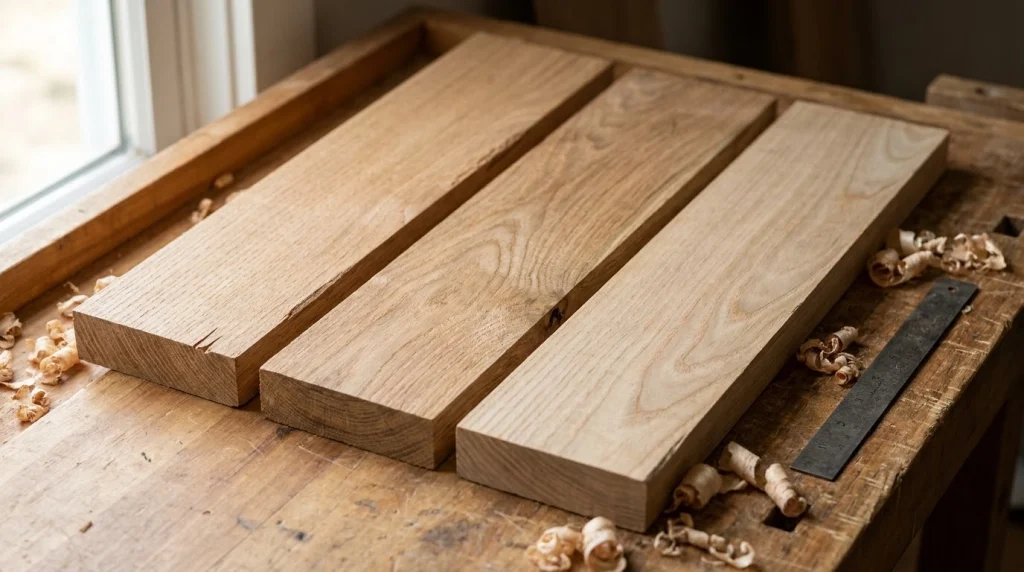
Elm is a deciduous hardwood used in furniture, flooring, joinery, and other woodworking applications. Its physical properties differ considerably between species.
The Janka hardness test measures the force required to indent wood with a standardized steel ball. It helps compare resistance to dents, although it does not measure kitchen knife performance directly.
American Elm vs. English Elm vs. Rock Elm
American elm and English elm are comparatively moderate in hardness. Rock elm is considerably harder and denser.
The Wood Database’s American elm profile documents its ring-porous anatomy, interlocked grain, and approximately 830-pound-force Janka hardness.
| Elm Species | Janka Hardness | Practical Consideration |
|---|---|---|
| American elm | 830 lbf | Moderate hardness; coarse, ring-porous grain |
| English elm | 810 lbf | Relatively forgiving surface; open grain |
| Rock elm | 1,320 lbf | Greater indentation resistance; still requires grain assessment |
These are representative species values, not guarantees for every piece of lumber. Moisture content and natural variation affect individual boards.
One important detail is that harder elm is not necessarily more hygienic. Pore structure remains a separate consideration.
Is Elm Wood Safe for Food Preparation?
Elm is not automatically unsafe for food contact, but an elm cutting board should not be considered food-safe based on its species name alone.
Wood identification, prior chemical exposure, adhesives, finishes, and surface condition all matter. A board must also tolerate repeated cleaning without developing damage.
Does Elm Wood Contain Toxic Substances?
Elm is not generally classified as a highly toxic timber, but some people can develop irritation or sensitivity to elm wood dust.
That is especially relevant when sanding or machining lumber. Wood dust exposure and contact with a finished board are different situations.
- Use untreated lumber: Avoid pressure-treated or chemically preserved wood.
- Identify the species: Do not rely on uncertain or informal lumber descriptions.
- Avoid unknown finishes: Decorative stains and coatings may be unsuitable for knife contact.
- Inspect for contamination: Reject wood with mold, suspicious odors, rot, or unknown exposure history.
- Control dust: Use appropriate dust extraction and respiratory protection when machining.
Old furniture, salvaged construction timber, and mystery wood scraps are poor choices for food-contact projects. Even attractive lumber can have an unsuitable history.
Can Bacteria Get Into Elm Wood?
Elm’s large earlywood pores can hold moisture and residue, particularly when its surface becomes worn. This makes careful cleaning important.
However, visible pores do not prove that an elm board will always harbor dangerous bacteria. Hygiene depends on the complete surface, how it is used, and how it is cleaned.
I would not choose elm for a dedicated raw-meat cutting board. A suitable, easily cleaned separate board is a more practical solution.
The University of Maine Cooperative Extension cutting board guide explains cleaning, drying, conditioning, and replacement practices.
What Are the Advantages and Disadvantages of Elm Cutting Boards?
Elm offers attractive woodworking characteristics, but those strengths come with limitations in the kitchen.
I would consider both before investing time in a custom board.
Advantages of Elm Wood
- Beautiful appearance: Flowing grain creates a distinctive natural surface.
- Split resistance: Interlocked fibers provide good resistance to splitting.
- Moderate knife feel: Many elm species are less hard than hard maple.
- Creative flexibility: Elm can be worked into serving boards and decorative kitchen pieces.
- Refinishing potential: Some superficial surface damage can be sanded away.
Disadvantages of Elm Wood
- Open pores: Food particles and moisture may be difficult to remove completely.
- Surface fuzziness: Interlocked grain can create rough areas during machining.
- Moisture movement: Poorly dried lumber may distort after repeated washing.
- Species variation: Elm types differ in density and hardness.
- Extra maintenance: Regular inspection and careful drying are essential.
The biggest drawback is not hardness. It is the difficulty of achieving and maintaining a consistently clean cutting surface.
Elm vs. Maple vs. Walnut vs. Cherry: Which Is Better?
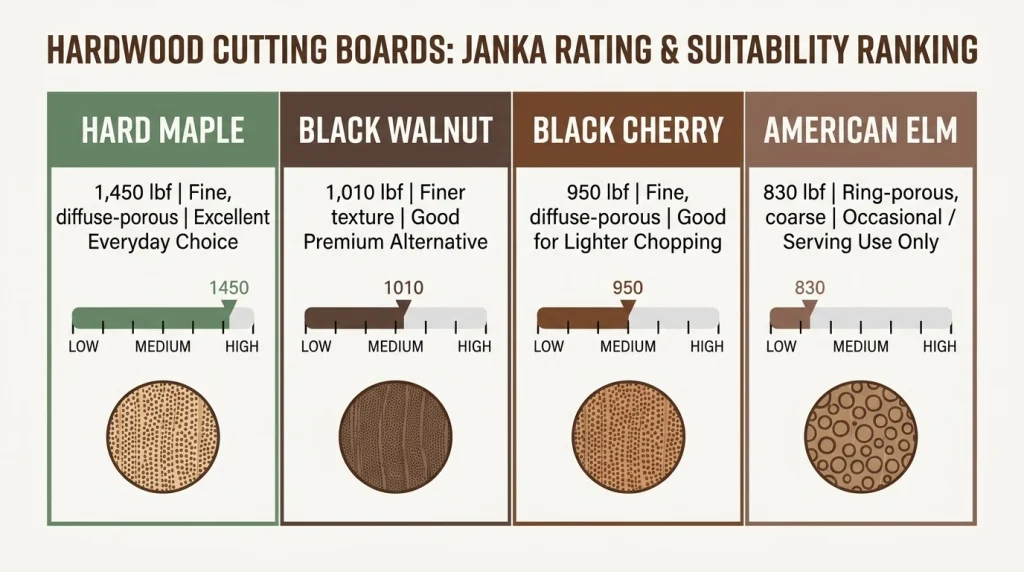
For a frequently used wooden cutting board, I would generally favor hard maple over elm. Walnut and cherry are also established choices for home kitchens.
The comparison below separates measurable hardness from the practical factors that matter during food preparation.
| Wood | Janka Hardness | Grain | My Assessment |
|---|---|---|---|
| American elm | 830 lbf | Ring-porous, coarse | Not my daily-use preference |
| Hard maple | 1,450 lbf | Fine, diffuse-porous | Excellent everyday choice |
| Black walnut | 1,010 lbf | Generally finer texture | Good premium alternative |
| Black cherry | 950 lbf | Fine, diffuse-porous | Good for lighter chopping |
Janka figures are approximate reference values for the named species. They should not be interpreted as direct food-safety ratings.
Is Elm Better Than Maple?
Elm may be more visually distinctive, but hard maple is the more established practical cutting-board material.
Maple combines strong indentation resistance with a fine grain. It is also specifically recognized in food-service wood standards.
Is Elm Better Than Walnut?
I would normally choose walnut for a premium kitchen board. Its texture and proven use in cutting-board manufacturing make it easier to recommend.
Walnut is not maintenance-free, however. If you’re considering a darker board, read my detailed guide to using walnut wood for cutting boards.
Can You Cut Meat and Vegetables on an Elm Cutting Board?
A smooth, clean elm board might be used for limited food preparation, but I recommend a more readily cleanable surface for raw meat.
Different foods create different cleaning challenges. Moisture, animal juices, and extended contact increase the demands placed on a cutting board.
Practical Uses for an Elm Board
- Bread: Light slicing may be reasonable on a clean, suitable surface.
- Dry foods: Occasional preparation creates less liquid residue than wet ingredients.
- Cheese: Serving may be appropriate when the board is confirmed suitable for food contact.
- Vegetables: Routine chopping is better handled by a close-grained board.
- Raw meat: Prefer a separate, easily sanitized cutting surface.
Using two cutting boards is a simple way to manage cross-contamination. Keep raw animal products separate from ready-to-eat food.
The USDA’s cross-contamination guidance recommends washing cutting boards after each food item and before preparing the next.
Can You Make an End-Grain Cutting Board From Elm?
Yes, elm can be arranged into an end-grain board, but this construction does not eliminate its open-pore characteristics.
End-grain cutting surfaces expose the ends of wood fibers. This can produce an attractive pattern and a different cutting feel.
End Grain vs. Edge Grain Elm
- End grain: Shows the ends of wood fibers and can emphasize elm’s visible pores.
- Edge grain: Exposes longer grain surfaces and usually requires fewer construction steps.
- Glue joints: Both styles need appropriate adhesives and accurate joint preparation.
- Surface condition: Neither design compensates for damaged or contaminated lumber.
For elm, I would not assume that an end-grain design improves hygiene. The exposed vessel structure still deserves careful consideration.
If you want to understand the construction process, see my tutorial on making an end-grain cutting board.
How Do You Make an Elm Cutting Board?
Making an elm cutting board requires careful material selection, accurate milling, suitable adhesives, and a smooth surface.
For a first kitchen project, I would recommend using hard maple instead. If elm is already available, consider making a dry-food serving board.
Step-by-Step Construction Guide
- Identify the lumber: Confirm the wood is elm from a trustworthy source and has no chemical-treatment history.
- Inspect for defects: Reject boards with rot, mold, open cracks, or suspicious contamination.
- Check moisture: Use properly kiln-dried or otherwise appropriately seasoned lumber suitable for indoor use.
- Prepare the pieces: Cut and mill straight components, taking care to avoid tear-out from interlocked grain.
- Glue the joints: Use an adhesive whose manufacturer confirms suitability for cutting-board construction and follow its curing instructions.
- Sand carefully: Progress through suitable sanding grits until the surface feels smooth and free of raised fibers.
- Apply a suitable finish: Use food-grade mineral oil or a conditioner specifically intended for wooden food-contact surfaces.
- Inspect the finished piece: Check stability, joints, surface smoothness, and any remaining odors before use.
A practical beginner project is a simple rectangular board rather than a complicated checkerboard pattern. Fewer joints make construction easier to inspect.
For advice on preparing flat hardwood pieces, read my guide to making a cutting board without a planer or jointer.
Which Finish Should You Use?
Food-grade mineral oil is a common conditioner for wooden cutting boards. It helps reduce rapid moisture absorption but does not make wood waterproof or sanitize it.
A suitable mineral-oil-and-beeswax conditioner is another option. Always check its intended use and follow the manufacturer’s application directions.
- Food-grade mineral oil: Easy to reapply when wood becomes dry.
- Suitable board conditioner: May provide additional moisture resistance.
- Unknown furniture varnish: Avoid unless specifically appropriate for direct food-contact and knife use.
- Ordinary vegetable oil: Avoid as a long-term conditioner because it may become sticky or rancid.
No surface oil can reliably close every elm pore. Finishing does not transform elm into hard maple.
How Do You Clean and Maintain an Elm Cutting Board?
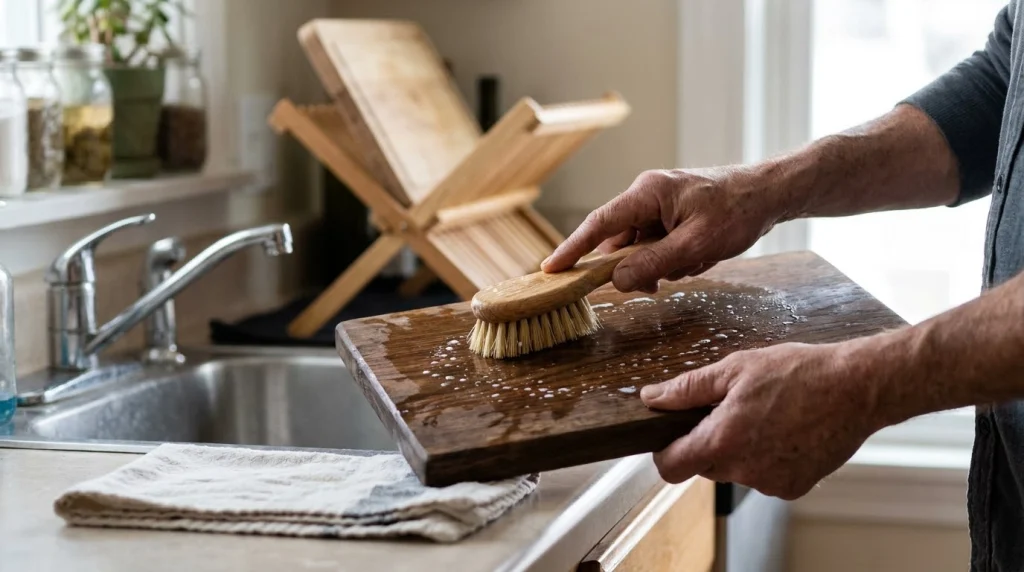
Wash a usable elm board promptly, remove residue thoroughly, and allow it to dry completely. Keeping moisture from lingering is essential.
A good cleaning routine also helps reveal surface damage before it becomes severe.
Daily Cleaning Steps
- Remove crumbs and food particles from the surface.
- Wash both sides with warm water and mild dish soap.
- Use a clean brush to remove residue from visible grain openings.
- Rinse thoroughly without leaving the board submerged.
- Dry immediately with a clean towel.
- Stand the board upright to allow complete air circulation.
Most homemade or glued wooden boards should not go through a dishwasher. Follow the specific manufacturer’s guidance rather than assuming all wood constructions behave alike.
Should You Sanitize an Elm Cutting Board?
Sanitizing can reduce contamination after thorough cleaning, especially following contact with raw animal products. However, it does not repair damaged wood.
The USDA describes a solution of one tablespoon of unscented liquid chlorine bleach per gallon of water for sanitizing food preparation surfaces. Follow the USDA surface-sanitizing instructions, product label precautions, and appropriate drying procedures.
Never combine bleach with vinegar, ammonia, or other cleaning chemicals. Keep sanitizing treatments separate from board-conditioning products.
How Often Should You Oil Elm?
Condition the board when the surface appears dry, following the finish manufacturer’s instructions. There is no universal oiling schedule that guarantees food safety.
Always clean and dry the board before applying conditioner. Wipe away excess oil before returning the board to service.
When Should You Stop Using an Elm Cutting Board?
Stop using a board for food preparation when damage makes cleaning unreliable. That applies to elm and other cutting-board materials.
For an elm board, pay particular attention to rough pores and areas where food repeatedly becomes trapped.
- Deep cracks: Open fractures are difficult to clean and may worsen.
- Persistent odors: Unpleasant smells after proper cleaning warrant investigation.
- Loose glue joints: Failed joints can trap moisture and food debris.
- Splintering: Detached fibers create a physical contamination risk.
- Visible mold: Do not continue food preparation on a contaminated surface.
- Severe grooves: Extensive knife damage can make thorough cleaning difficult.
Minor surface roughness may sometimes be corrected through careful sanding. Structural defects and uncertain contamination are different problems.
I would replace a questionable food-contact board rather than attempt to conceal serious damage with additional oil.
Should You Buy an Elm Cutting Board in 2026?
For most home cooks, I would not prioritize elm when shopping for a primary cutting board in 2026. Better-established materials are readily available.
Elm makes more sense when you already have suitable lumber, enjoy woodworking, and understand its limitations.
What Should You Check Before Buying?
- Actual wood species: Confirm the manufacturer identifies the material accurately.
- Intended purpose: Look for explicit approval for food preparation and knife contact.
- Construction quality: Check the joints, thickness, flatness, and finish.
- Cleaning requirements: Choose a board you can realistically maintain.
- Practical size: Make sure it fits your countertop and washing area.
Here is a useful example: imagine choosing between a decorative elm slab and a professionally made maple board. Both might look attractive.
For daily vegetable preparation, I would choose the maple board because its material characteristics and intended kitchen use are clearer.
Recommended Cutting Boards Instead of Elm
If you want a dependable everyday cutting surface, these three existing products deserve consideration. Each serves a different cooking priority.
Affiliate disclosure: Some shopping links may earn a commission at no additional cost to you. Ratings below are editorial suitability assessments based on published product features, not customer ratings or claims of hands-on testing.
🏆 Best Everyday Hardwood
John Boos Chop-N-Slice Hard Maple Cutting Board
★★★★★
Editorial suitability: 4.8/5
This edge-grain hard maple board is 1.25 inches thick, reversible, and available in several sizes. I would choose it for regular vegetable chopping because hard maple provides a durable, close-grained cutting surface.
🍽️ Best for Large Prep Areas
Teakhaus Traditional Cutting Board 107
★★★★☆
Editorial suitability: 4.5/5
The extra-large model offers a 24-by-18-inch reversible, edge-grain teak surface with a 1.5-inch thickness. I would consider it for spacious kitchens, while accounting for its substantial weight and teak’s potential silica-related knife wear.
🧼 Best for Easy Cleanup
OXO Good Grips Utility Cutting Board
★★★★★
Editorial suitability: 4.7/5
This dishwasher-safe, double-sided nonporous board includes nonslip feet and a juice-catching groove. I would use this style as a dedicated raw-meat preparation board, with proper cleaning between uses.
Product specifications and availability can change. Confirm the exact model, dimensions, materials, and seller before purchasing.
Frequently Asked Questions
1. Is Elm Wood Too Porous for a Cutting Board?
Elm is ring-porous, meaning it contains comparatively large vessel openings in parts of its growth rings. These openings can make thorough cleaning more difficult. A carefully made elm board may serve limited purposes, but I prefer finer-grained hardwoods for frequent food preparation.
2. Does Elm Wood Dull Kitchen Knives?
Elm is generally less rigid than glass or stone and may provide a relatively forgiving cutting surface. However, knife wear depends on wood species, grain orientation, blade steel, and cutting technique. A softer wood is not automatically the best cutting-board material.
3. Can You Make a Cutting Board From American Elm?
Yes, American elm can be machined and assembled into a cutting board. However, its approximately 830 lbf hardness, coarse texture, and ring-porous structure make it less attractive for regular kitchen use than hard maple. Use only suitable untreated lumber and food-contact-appropriate materials.
4. Is Rock Elm Better Than American Elm for Cutting Boards?
Rock elm is harder than American elm, with a representative Janka hardness of approximately 1,320 lbf. It can resist indentation better, but hardness alone does not solve food-safety and cleaning concerns. Its grain, surface quality, finish, and maintenance requirements still matter.
5. Can You Use Elm Wood for a Charcuterie Board?
A smooth, clean elm serving board may be suitable for presenting bread, cheese, or other foods when its materials and finish are appropriate for food contact. Serving does not involve the same repeated knife damage as chopping. Avoid using unknown or chemically treated decorative lumber.
Final Verdict: Should You Use Elm for a Cutting Board?
Yes, elm can be made into a cutting board, but I would not recommend it as the first choice for a heavily used kitchen cutting surface.
Its attractive interlocked grain and useful woodworking properties are appealing. However, its open pores, cleaning demands, and potential moisture movement make it less convenient than established cutting-board hardwoods.
For everyday cooking, I recommend a properly constructed hard maple board. Walnut and cherry are also worth considering when their construction and maintenance requirements suit your kitchen.
If you already have good elm lumber, consider a carefully finished serving board or an occasional dry-food cutting surface. Always prioritize cleanability over appearance.
Ready to choose your next cutting board? Compare the recommended options, select a size that fits your kitchen, and build a reliable cleaning routine from the beginning.

