
Can You Use Cutting Board Oil on Wooden Utensils? A Complete Safety Guide
Quick Answer
Yes, you can use cutting board oil on wooden utensils, provided the product is approved for food-contact surfaces. Food-grade mineral oil works well on wooden spoons, spatulas, and similar untreated kitchen tools. It helps condition dry wood without becoming rancid like many ordinary cooking oils. The same basic principles explained in our wooden cutting board oiling guide also apply to utensils.
Five Steps for Safe Oiling
- Check the label: Choose food-grade oil suitable for wooden utensils.
- Clean thoroughly: Wash the utensil with mild soap and warm water.
- Dry completely: Allow moisture to evaporate before applying oil.
- Apply thinly: Rub a small amount of oil over exposed wooden surfaces.
- Buff before use: Allow absorption, then remove any excess oil.
Important Safety Reminder
- Avoid cooking oils: Olive oil and ordinary vegetable oil can oxidize and develop unpleasant odors.
- Inspect damaged wood: Oil cannot repair deep cracks, mold damage, or loose splinters.
Wooden spoons and spatulas often become pale, rough, or dry after repeated washing. It’s natural to wonder whether the cutting board oil already in your kitchen can restore them.
I recommend understanding the oil’s ingredients before applying anything to food-contact wood. This guide explains safe choices, application methods, maintenance schedules, and mistakes worth avoiding.
Why Do Wooden Utensils Need Cutting Board Oil?
Wooden utensils benefit from occasional conditioning because repeated washing and drying expose their fibers to changing moisture levels. Suitable oil helps limit excessive moisture absorption and maintains a smoother surface.
Wood is a natural, porous material. Its tiny internal spaces absorb and release moisture as surrounding conditions change.
Over time, this cycle can contribute to roughness, splitting, or warping. Oiling helps manage surface moisture, although it cannot make wood completely waterproof.
What Exactly Is Cutting Board Oil?
Cutting board oil is a conditioning product designed to maintain wooden food-preparation surfaces. Many formulas use food-grade mineral oil, sometimes combined with suitable waxes or other ingredients.
Pure food-grade mineral oil is colorless, odorless, and resistant to rancidity. It penetrates unfinished wood without forming a hard, permanent coating.
According to the USDA Forest Products Laboratory’s guidance on wood finishes, mineral oil has a long history of use on wooden food utensils.
What Benefits Does Oiling Provide?
- Surface conditioning: Helps dry wooden utensils feel smoother.
- Moisture resistance: Reduces how readily exposed wood absorbs water.
- Appearance: Restores some natural depth and color to wood grain.
- Maintenance: Supports regular care alongside proper washing and drying.
- Ease of handling: Can improve the feel of slightly dry, rough wooden handles.
These benefits apply primarily to unfinished or oil-finished utensils. Factory-sealed products may require different maintenance.
Is Cutting Board Oil Safe for Wooden Spoons and Spatulas?
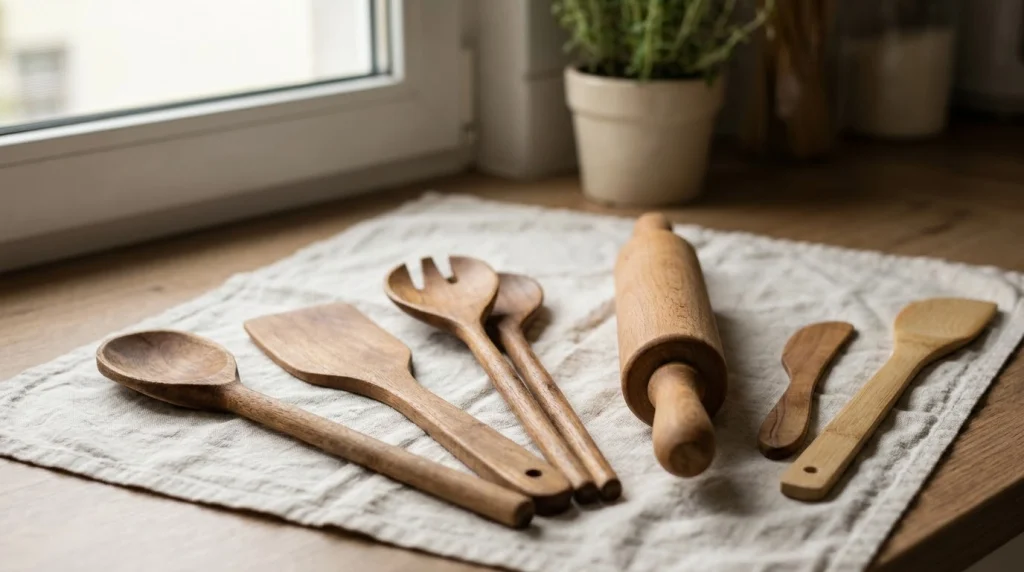
Yes, food-contact-safe cutting board oil is generally suitable for unfinished wooden spoons and spatulas. The important detail is the specific product formulation, not its name alone.
A bottle labeled cutting board oil may contain pure mineral oil or a mixture of conditioning ingredients. Always confirm that the manufacturer recommends it for utensils or similar food-contact wood.
Which Wooden Kitchen Tools Can You Oil?
- Wooden spoons: Condition the bowl, edges, and exposed handle.
- Wooden spatulas: Apply a thin layer to dry, unfinished surfaces.
- Wooden salad servers: Maintain exposed wood with an appropriate food-safe conditioner.
- Wooden rolling pins: Use suitable oil if the manufacturer’s care instructions permit it.
- Wooden butter spreaders: Light conditioning can help maintain exposed wood.
- Bamboo utensils: Some can accept oil, but bonded or factory-finished products require label checks.
When Should You Avoid Applying Oil?
Not every wooden kitchen tool needs additional oil. Some manufacturers apply a durable finish that changes how the utensil should be maintained.
A sealed surface may prevent mineral oil from penetrating. Adding more oil can leave unwanted residue rather than improving protection.
- A utensil with an unknown coating or decorative finish.
- A painted or lacquered surface without food-contact approval.
- A spoon with deep cracks, loose wood fibers, or splinters.
- A utensil showing persistent mold or signs of decay.
- A specialty product whose manufacturer advises against oiling.
If your kitchen tools are bamboo, read our bamboo cutting board oiling guide for related material-specific considerations.
What Is the Best Cutting Board Oil for Wooden Utensils?
Plain food-grade mineral oil is my preferred general-purpose choice for unfinished wooden utensils. It is simple to apply, widely available, and doesn’t become rancid like many pantry oils.
Food-safe mineral oil and beeswax conditioners are another practical option. Wax can provide an additional moisture-resistant surface layer when applied correctly.
Food-Grade Mineral Oil
Choose a product clearly labeled for cutting boards or food-contact wood. Avoid fragrances, unknown additives, and industrial mineral oils lacking appropriate food-contact labeling.
Mineral oil works particularly well for basic maintenance. It requires periodic reapplication because it does not cure into a permanent finish.
Mineral Oil and Beeswax Conditioner
A suitable oil-and-wax blend offers conditioning with an additional surface treatment. Beeswax helps slow moisture movement, but the coating still needs maintenance.
Apply these products sparingly. Too much wax can make a spoon feel tacky or leave unwanted residue.
Are Olive Oil and Vegetable Oil Good Alternatives?
Ordinary olive oil and vegetable oil are not recommended for routine wooden-utensil conditioning. Many edible oils oxidize and can develop sticky residues or unpleasant odors.
Being safe to eat does not automatically make an oil suitable as a long-term wood conditioner. Our guide to using vegetable oil on cutting boards explains the difference.
Cutting Board Oil vs. Other Oils: Comparison Table
| Oil Type | Recommended? | Main Consideration |
|---|---|---|
| Food-grade mineral oil | Yes | Stable, odorless, and suitable for routine conditioning. |
| Mineral oil and beeswax | Yes | Adds a wax-based moisture-resistant layer. |
| Olive oil | Avoid | Can oxidize and develop unwanted odors. |
| Vegetable or canola oil | Avoid | May become rancid or leave residue. |
| Regular coconut oil | Not preferred | Can solidify and may leave residue; formulated blends differ. |
| Furniture or machine oil | No | May contain ingredients unsuitable for food contact. |
The most dependable approach is to buy a product specifically intended for food-contact wood. Check the manufacturer’s instructions before applying it to utensils.
How Do You Apply Cutting Board Oil to Wooden Utensils?
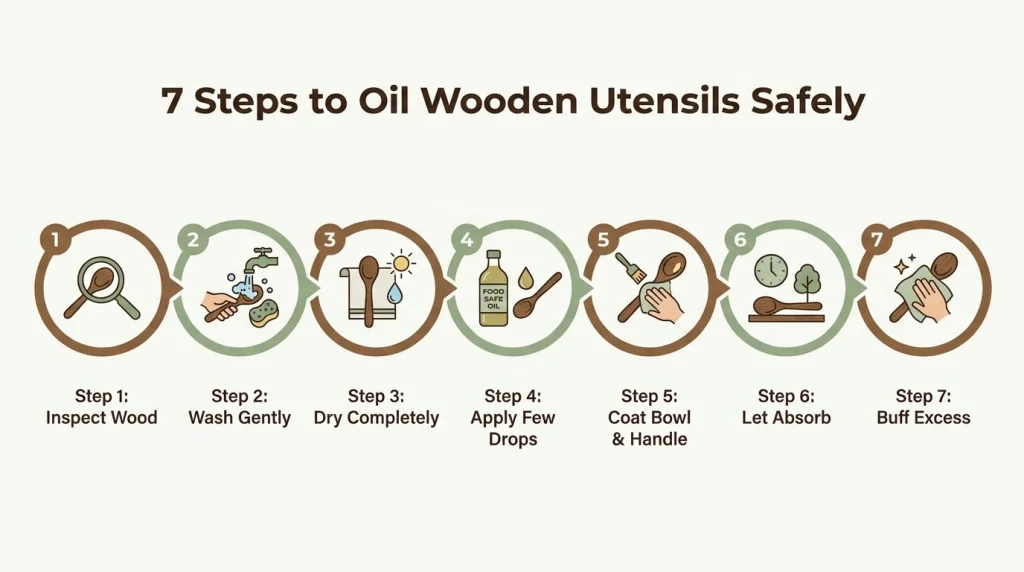
Wash the utensil, allow it to dry completely, and apply a thin layer of suitable oil. Let the oil absorb according to its label, then remove excess residue.
I favor a small, controlled application rather than soaking a spoon in oil. It makes the process easier to manage around curved bowls and narrow handles.
Step 1: Inspect the Wooden Utensil
Examine the spoon or spatula under good lighting. Check for cracks, splinters, discoloration, and damaged finishes.
Minor dryness is suitable for routine conditioning. Serious structural damage requires repair or replacement rather than more oil.
Step 2: Wash with Mild Dish Soap
Clean the utensil using warm water and a mild dishwashing detergent. Gently scrub food-contact areas to remove grease and food residue.
Rinse thoroughly without leaving the wood submerged. Avoid harsh scrubbing that damages its surface.
Step 3: Allow the Wood to Dry Completely
Pat the utensil dry using a clean towel. Place it where air can circulate around every surface.
Drying time depends on wood thickness, humidity, and moisture exposure. Never apply oil while the utensil remains visibly damp.
Step 4: Apply a Small Amount of Oil
Pour a few drops of food-grade mineral oil onto a clean, lint-free cloth. Spread the oil evenly over the exposed wooden surfaces.
Start with less than you think you need. Add another small amount only when the wood absorbs the first application quickly.
Step 5: Cover the Bowl and Handle
Pay attention to the spoon bowl, edges, and handle. These surfaces experience different types of moisture exposure and wear.
Work carefully around carved details. Avoid leaving oil pooled in corners or decorative grooves.
Step 6: Let the Oil Absorb
Place the utensil on a clean, dry surface. Follow the manufacturer’s recommended absorption period.
Some products need only a short resting period, while others recommend several hours or overnight. The product label should guide your timing.
Step 7: Buff Away the Excess
Use a fresh cloth to remove remaining surface oil. Continue wiping until the utensil feels smooth rather than slippery.
Inspect it before cooking. A properly conditioned utensil should not leave visible oily residue on your hands.
How Often Should You Oil Wooden Utensils?
Oil wooden utensils when they begin looking dry, pale, or rough. A lightly used spoon may need attention only occasionally, while frequently washed utensils may need more regular care.
There is no universal schedule that suits every kitchen. Wood type, washing frequency, storage conditions, and product instructions all matter.
Practical Maintenance Guidelines
- Frequently used utensils: Inspect monthly and condition when dry.
- Occasionally used utensils: Check every few months.
- New unfinished utensils: Follow the manufacturer’s initial care instructions.
- Dry-looking utensils: Apply a light treatment after cleaning and drying.
- Already smooth utensils: Avoid unnecessary additional oil.
These are inspection guidelines, not mandatory oiling intervals. The actual condition of the wood should determine whether treatment is needed.
Signs Your Wooden Spoon Needs Conditioning
- The wood looks unusually pale or faded.
- The surface feels dry or slightly fuzzy.
- Water absorbs readily into exposed wood.
- The handle has lost its previously smooth feel.
- The grain looks dry after repeated washing.
These signs suggest maintenance may help. However, deep cracks and loose splinters are damage warnings, not simply signs of dryness.
What Mistakes Should You Avoid When Oiling Wooden Utensils?
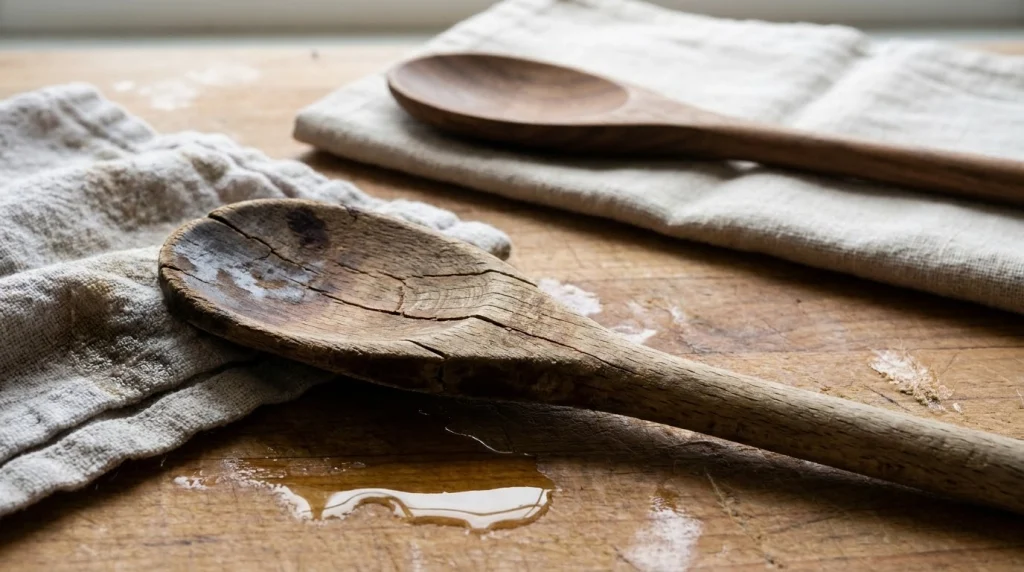
The biggest mistakes involve selecting unsuitable oil, applying too much, or skipping proper cleaning. Even a good conditioner cannot compensate for poor food-handling practices.
Using Too Much Oil
Excess oil can make utensils greasy and uncomfortable to handle. It also creates unnecessary cleanup without guaranteeing better protection.
Apply a thin coat first. Remove any oil that remains on the surface after the recommended resting period.
Applying Oil to Wet Wood
Oiling damp wood can interfere with consistent conditioning. It may also conceal moisture that should evaporate before storage.
Drying matters more than speed. Allow air to reach the entire utensil before treating it.
Using Unknown Wood Finishes
Furniture polish, industrial lubricants, and some woodworking finishes are unsuitable for food-contact surfaces. Labels such as natural or premium do not establish food safety.
Use only products clearly recommended for the intended application. Check ingredient information and any required curing instructions.
Trying to Restore Unsafe Utensils with Oil
Oil cannot disinfect a spoon or repair an unstable crack. Damaged areas may retain food residue and become difficult to clean.
Our article on preventing mold on cutting boards explains why moisture control and proper storage remain essential for wooden kitchenware.
Can Cutting Board Oil Fix Dry or Cracked Wooden Utensils?
Cutting board oil can improve the appearance and feel of mildly dry wood. It cannot permanently repair cracks, replace missing fibers, or restore an unsafe utensil.
A spoon that feels slightly rough may respond to appropriate surface maintenance. A spoon with deep splits needs a different solution.
What If the Surface Feels Rough?
First, inspect for raised grain and splinters. Minor surface fuzziness may be addressed through careful sanding if the manufacturer allows refinishing.
Clean away all sanding dust before applying suitable oil. For related restoration principles, see our cutting board refinishing guide.
What If the Spoon Is Already Cracked?
Do not assume oil will close a crack. Deep splits can weaken a utensil and create areas that trap food.
Replace the utensil if it is structurally compromised, splintering, or impossible to clean effectively. Continued food-contact use is not worth the risk.
What If the Wood Feels Sticky After Oiling?
A sticky surface may indicate excess conditioner or residue from a previous unsuitable oil. Start by buffing away the remaining surface treatment.
If stickiness persists, wash gently and dry thoroughly. Avoid adding fresh oil until the surface is clean and stable.
How Do You Clean Wooden Utensils After Oiling?
Clean conditioned wooden utensils using mild dish soap and warm water after cooking. Oiling reduces some moisture exposure but does not replace washing.
The FoodSafety.gov food safety guidance emphasizes cleaning kitchen utensils and food-preparation surfaces with soapy water.
Simple Daily Cleaning Routine
- Remove visible food immediately after cooking.
- Wash the utensil by hand with warm, soapy water.
- Rinse away all soap and food residue.
- Pat dry using a clean towel.
- Leave the utensil in a ventilated area until fully dry.
- Store it away from standing water and persistent moisture.
For most wooden cooking utensils, avoid dishwasher cleaning unless the manufacturer specifically permits it. Repeated prolonged heat and moisture exposure can damage wood.
Does Oiling Kill Bacteria?
No. Cutting board oil is a maintenance product, not a sanitizer or disinfectant.
Clean utensils properly after contact with food. The USDA guidance on preventing cross-contamination explains why cleaning between food-preparation tasks matters.
Can You Store Wooden Spoons Immediately After Oiling?
Store them only after the conditioner has absorbed and excess oil has been removed. The utensil should feel clean and dry to the touch.
Avoid crowded, damp storage spaces. Proper airflow helps wooden kitchen tools dry after washing.
Recommended Cutting Board Oils for Wooden Utensils
If you’re choosing a conditioner for your wooden kitchen tools, I would start with products that have clear food-contact suitability information. These three options serve different maintenance preferences.
The suitability scores below are editorial assessments based on product descriptions, not verified customer ratings or hands-on test results.
🏆 Best Simple Formula
Howard Cutting Board Oil
★★★★★ Editorial suitability: 5/5
Howard describes this product as pure USP food-grade mineral oil, suitable for wooden kitchen surfaces and utensils. I would choose it for straightforward conditioning without additional wax ingredients.
🪵 Best Established Wood-Care Brand
John Boos Mystery Oil
★★★★☆ Editorial suitability: 4/5
John Boos offers an NSF-certified conditioning oil for wooden boards and butcher blocks. I would consider it for kitchens already using Boos wood-care products, while checking compatibility with individual utensils.
🌿 Best Blended Conditioner
Walrus Oil Cutting Board Oil
★★★★☆ Editorial suitability: 4/5
This NSF-certified food-contact conditioner combines mineral oil with ingredients including beeswax and fractionated coconut oil. I would consider it when a formulated oil-and-wax treatment is preferred over plain mineral oil.
Affiliate disclosure: As an Amazon Associate, we earn from qualifying purchases. Product recommendations are based on published specifications and intended uses; prices and availability may change.
Frequently Asked Questions
Can you use cutting board mineral oil on wooden spoons?
Yes. Food-grade mineral oil intended for cutting boards is generally suitable for unfinished wooden spoons. Apply it only after washing and drying the wood completely. Use a small amount, follow the product instructions, and buff away excess oil before the spoon touches food.
Can you use cutting board oil on bamboo utensils?
Some bamboo utensils can be conditioned with food-safe cutting board oil. However, bamboo products may contain adhesives or factory-applied finishes that require different care. Check the manufacturer’s instructions before oiling, especially if the utensil has a coating or laminated construction.
Is mineral oil safe for wooden utensils used in hot food?
Food-grade mineral oil is commonly used to condition wooden kitchen utensils, including cooking spoons. Allow the oil to absorb and wipe away residue before use. Mineral oil does not make a wooden spoon heatproof, so avoid leaving it against hot burners or exposed flames.
Can you use olive oil instead of cutting board oil?
Olive oil is edible, but it is not recommended for regular wooden-utensil conditioning. It can oxidize and eventually develop unwanted odors or sticky residues. A dedicated food-grade mineral oil offers more predictable maintenance without the same tendency to become rancid.
How long should cutting board oil sit on wooden utensils?
Follow the specific product’s absorption instructions. Some conditioners require a short resting period, while others recommend several hours or overnight. Afterward, wipe away all visible excess and ensure the utensil feels smooth rather than greasy before returning it to normal kitchen use.
Final Verdict: Should You Use Cutting Board Oil on Wooden Utensils?
Yes, cutting board oil is a practical choice for maintaining unfinished wooden utensils when its ingredients are suitable for food contact. Plain food-grade mineral oil is a dependable option for most everyday wooden spoons and spatulas.
Focus on correct cleaning, complete drying, and light conditioning. These habits matter more than applying large amounts of expensive wood-care products.
Inspect your utensils regularly and replace damaged ones when necessary. For more guidance on maintaining wooden food-preparation surfaces, explore the University of Maine Cooperative Extension’s cutting board care recommendations.
My recommendation: Start with a food-grade mineral oil, apply it sparingly, and let the condition of the wood guide future maintenance.

