
Can You Use Both Sides of a Cutting Board?
Quick Answer
Yes, you can use both sides of most flat, reversible cutting boards. Flip only onto a clean, dry side, and wash the board between raw meat and ready-to-eat food — a habit covered in this guide to how to use a cutting board safely.
When flipping works well
- Flat wood boards: Both faces cut the same, so flipping doubles the usable surface.
- Flat plastic boards: Both sides work, and most go straight in the dishwasher.
- Fresh produce prep: Flip for a clean face when one side gets crowded or wet.
- Even wear: Flipping spreads knife marks across both faces instead of one.
- Warp control: Using both sides helps a wood board dry and wear more evenly.
When you should not flip
- Skip the flip if the underside touched raw meat juice, a dirty counter, or a wet sink.
- Skip it on boards with feet, a handle, or a deep juice groove on one face only.
- Wash and dry the board first, then flip with clean hands.
I’ve flipped my cutting board mid-prep more times than I can count. Some flips saved time, and a few taught me a lesson about cross-contamination.
This guide covers when flipping is safe, when it isn’t, and how each board type handles it. You’ll also get a simple cleaning routine and a 30-day test from my own kitchen.
What Does Using Both Sides Actually Mean?
A reversible cutting board is a flat board with two usable cutting faces and no feet, handle, or raised edge blocking one side. You cut on one face, then turn the board over and cut on the other.
A double-sided cutting board is any flat board designed so both faces can touch food safely. One face may carry a juice groove, while the other stays flat for dry prep.
Not every board fits that label. A board with rubber feet, a hanging handle, or a carved serving face works best on one side only.
Check your board before you flip it. If the underside looks finished, smooth, and food-safe, it likely works as a second face.
Can You Use Both Sides of a Cutting Board?
Yes, you can use both sides of a flat, reversible cutting board. Clean the board between different foods, and dry the new top face first.
Flipping gives you a fresh surface without grabbing a second board. It helps most during big prep sessions with lots of chopping.
Wood, plastic, bamboo, and rubber boards can all work two-sided. The key test is simple: both faces must sit flat, feel smooth, and stay stable on the counter.
- Wood: Flip often to spread wear and slow warping.
- Plastic: Flip for light prep, then wash in the dishwasher.
- Bamboo: Flip only if both faces feel smooth and crack-free.
- Rubber: Flip with care, since these boards run heavy.
As of 2026, most brands still sell reversible boards as the default for home cooks. Single-sided boards tend to target carving or serving, not daily chopping.
When Should You Flip Your Cutting Board?
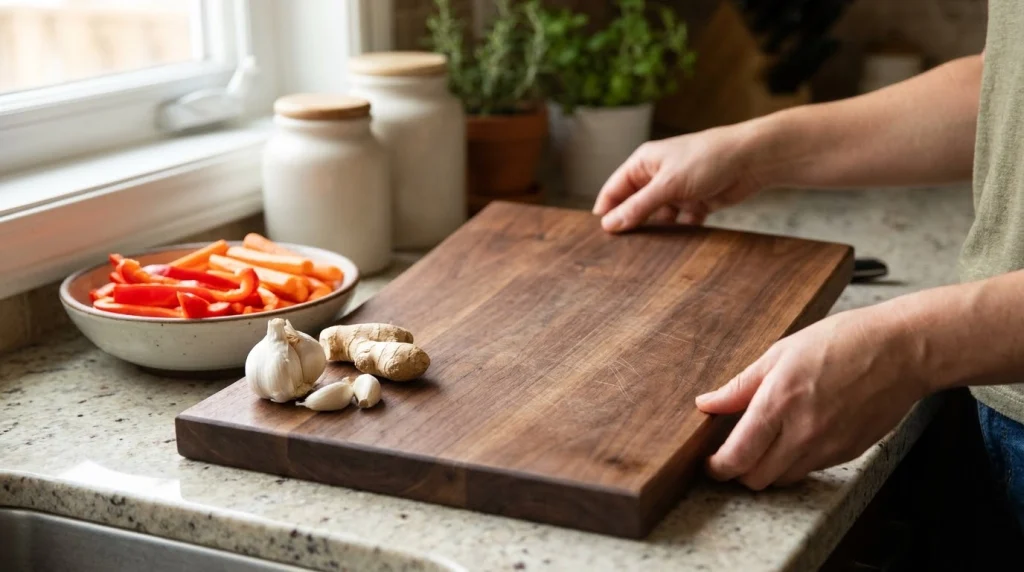
Flip when one side gets crowded, wet, or scored with juice. A clean face keeps herbs dry and stops onion juice from reaching your bread.
I flip most often while prepping a stir-fry. Peppers and carrots fill one side fast, so the second face takes the garlic and ginger.
- Mid-prep reset: Flip for a dry face when the first side turns slick.
- Batch cooking: Flip between two rounds of the same food.
- Even wear: Flip each week so knife marks spread out.
- Drying: Flip a wood board so both faces air out.
Don’t flip just to dodge washing. A flip swaps faces, but it never replaces soap and hot water.
Is It Safe to Use Both Sides for Raw Meat and Vegetables?
No, you should not cut raw meat on one side and salad on the other without washing first. Meat juice can reach the underside through drips, hands, and the counter.
Cross-contamination means germs move from one food to another through a surface, tool, or hand. A flip alone does not break that chain.
The safe order runs from clean foods to raw meat. Prep produce first, then flip or wash before you touch chicken, beef, or fish.
Food safety experts stress separate surfaces for raw meat and ready-to-eat food. FoodSafety.gov lists clean, separate, cook, and chill as the four core steps for home kitchens.
- Produce first: Cut salad, fruit, and bread before meat.
- Meat last: Save raw meat for the final round of prep.
- Wash between: Scrub with hot, soapy water after meat.
- Two boards: Keep one board for meat and one for produce.
The USDA Food Safety and Inspection Service also warns cooks to wash boards, knives, and hands after contact with raw meat. That rule covers both faces, not just the top.
When in doubt, grab a second board. It takes ten seconds, and it beats a ruined dinner.
Which Cutting Boards Are Made to Flip?
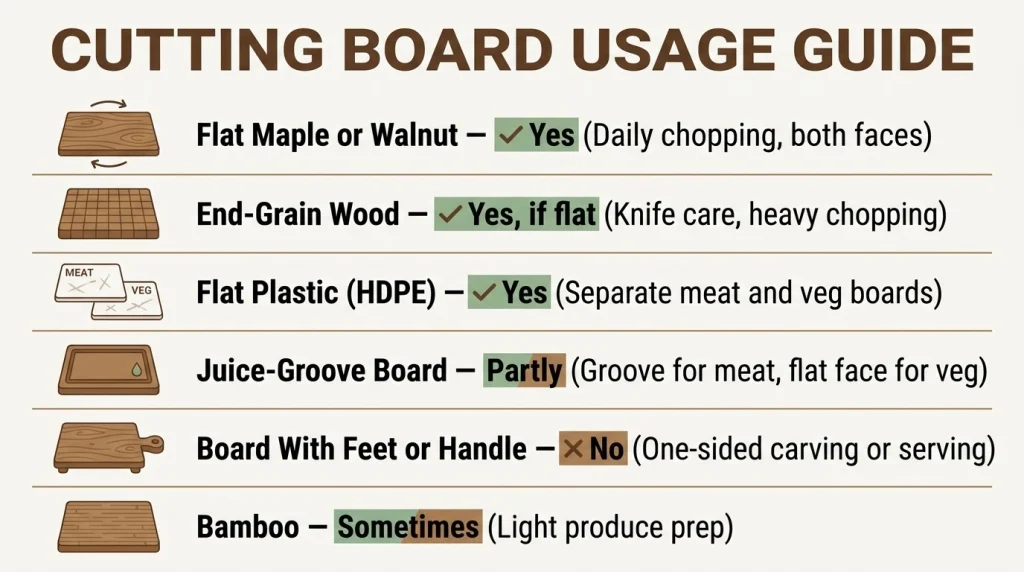
Flat boards flip best, while shaped boards stay one-sided. Use the table below to check your board at a glance.
| Board type | Flip it? | Best use | Watch out for |
|---|---|---|---|
| Flat maple or walnut | Yes | Daily chopping, both faces | Oil both faces to stop drying |
| End-grain wood | Yes, if flat | Knife care, heavy chopping | Heavy, so lift with two hands |
| Flat plastic (HDPE) | Yes | Meat on one board, veg on another | Deep grooves trap germs |
| Juice-groove board | Partly | Groove for meat, flat face for veg | Groove side rocks on flat prep |
| Board with feet or handle | No | One-sided carving or serving | Feet lift the face and wobble |
| Bamboo | Sometimes | Light produce prep | Hard face dulls knives faster |
Juice-groove boards deserve a special note. The groove catches meat juice well, but it makes a poor base for flat cuts.
I keep one groove board for roasts and one flat board for daily prep. That split saves me from flipping a wet board mid-meal.
How Do You Flip a Cutting Board Without Spreading Germs?
Flip with clean hands, a clean counter, and a dry face. That short routine keeps the fresh side truly fresh.
Start by clearing the top face and wiping the counter. A damp towel under the board stops slips on both sides.
- Clear the top: Move cut food to a bowl or plate.
- Wipe the counter: Clear crumbs, juice, and water from the work area.
- Check the underside: Look for juice, stains, or damp spots before you flip.
- Wash if needed: Scrub with hot, soapy water after raw meat or fish.
- Dry the new face: Pat it dry so food grips instead of sliding.
- Set it flat: Press each corner to check for wobble.
Wash your hands after you handle the old top face. Hands carry more germs than the board does.
Does Flipping Help Prevent Warping?
Yes, flipping helps a wood board wear and dry more evenly. One-sided use lets moisture soak one face while the other stays dry.
Warping happens when one face swells and the other shrinks. That gap pulls the board into a curve over time.
Flip your wood board each time you oil or wash it. Both faces then get the same care and the same rest.
Store the board on its edge so air reaches both faces. Flat storage traps damp air under the board.
For a full routine, read my guide on how to prevent a cutting board from warping. It covers washing, drying, and oiling in plain steps.
What About Boards With a Juice Groove, Feet, or a Handle?
These boards work best on one side only. The design that helps carving hurts flipping.
A juice groove traps liquid on the top face. Flip that board, and the groove becomes a wobbly base.
- Juice groove: Use the groove for roasts and the flat face for dry prep, if the board sits flat.
- Rubber feet: Keep the feet down, since they grip the counter and stop slips.
- Handle boards: Cut on the main face and use the handle for lifting only.
- Engraved face: Treat engraving as display, not as a cutting face.
If your board rocks after a flip, stop and turn it back. A rocking board dulls knives and invites slips.
How Do You Clean Both Sides Properly?
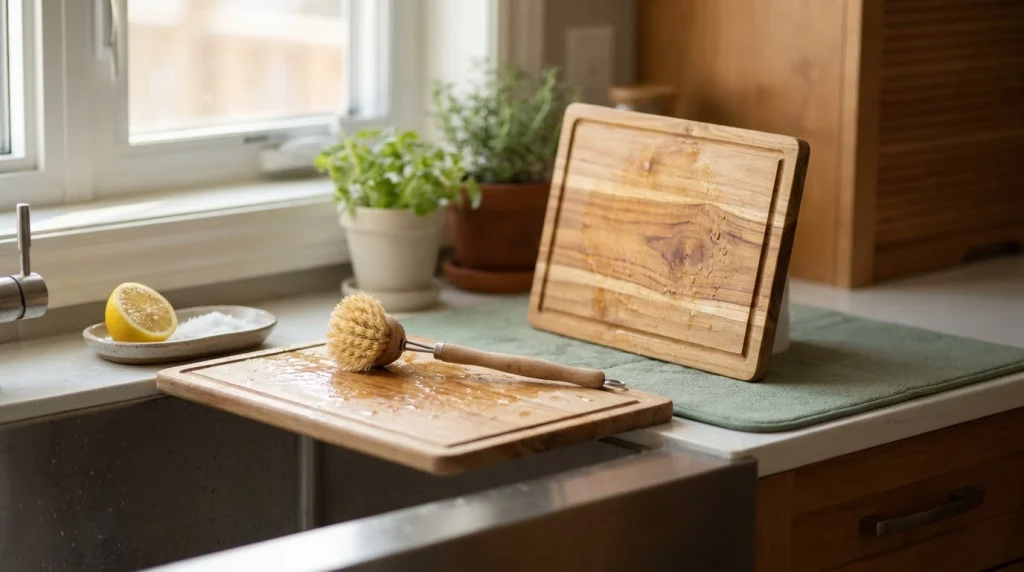
Clean both faces each time you wash the board. Germs and odors cling to the underside just as they cling to the top.
Scrub wood with hot water, dish soap, and a brush or sponge. Rinse well, then stand the board up to air dry.
- Daily wash: Hot water plus soap, both faces, every use.
- After meat: Scrub, rinse, then sanitize with a mild bleach mix or vinegar spray.
- Odor fix: Rub with half a lemon and coarse salt, then rinse.
- Plastic care: Run dishwasher-safe boards on the hot cycle.
The U.S. Food and Drug Administration food safety pages stress washing hands, tools, and surfaces after raw food contact. That habit matters most with a board you flip.
Onion and garlic smells sink into wood fast. My guide on how to remove odors from a cutting board shows the lemon, salt, and baking soda fixes I use most.
Deep knife grooves hold food bits even after a scrub. If your plastic board looks furrowed, check how to resurface a plastic cutting board before you toss it.
When Should You Not Use the Other Side?
Skip the flip when the underside sat in meat juice, sink water, or a dirty counter. Wash it first, or reach for a fresh board.
Skip it when the board shows cracks, mold spots, or deep grooves on that face. Those flaws trap moisture and germs.
- Wet underside: Dry it first, or food will slide.
- Stained face: Beet or turmeric stains can tint pale food.
- Cracked wood: Cracks hold water and split further.
- Warped board: A curved face rocks and cuts unevenly.
The CDC food safety pages link many home food illnesses to cross-contamination and poor cleaning. A quick wash beats a risky flip.
Trust your nose and eyes here. If the second face smells sour or looks grimy, wash it before food touches it.
My Test: I Flipped My Board for 30 Days
I ran a small test in my kitchen last month. I used one flat maple board and flipped it every other day.
Week one felt smooth. The fresh face stayed dry, and my knife marks spread evenly across both sides.
Week two taught me a lesson. I flipped after dicing onions without washing, and the garlic bread picked up onion flavor.
By week four, the board looked better than my one-sided spare. Both faces wore evenly, and neither side cupped or warped.
My takeaway is simple. Flip often for wear, but wash between strong flavors and raw meat. That pair of habits gives you the best of both faces.
Flipping also helped my knives. A fresh, smooth face cuts cleaner than a scored one, and I sharpened less that month. If edge care matters to you, see my picks for the best cutting boards for keeping knives sharp.
Which Reversible Board Should You Buy?
If you’re ready to pick one, here’s what I’d actually recommend. Each board below flips well, sits flat, and holds up to daily use.
🏆 Best Overall
John Boos Chop-N-Slice Maple Wood Cutting Board
★★★★★
Hard maple, 18 x 12 inches, flat on both faces with a juice groove on one side. I use this board most days, and both faces still look even after months of flipping.
💰 Best Budget
OXO Good Grips Utility Cutting Board Set
★★★★☆
Two dishwasher-safe plastic boards with non-slip edges and a drip groove. I keep one for meat and one for produce, which makes safe flipping easy.
🥩 Best for Raw Meat
Joseph Joseph Cut&Carve Plus Chopping Board
★★★★☆
Large plastic board with angled cutting face, juice groove, and non-slip base. I reach for it when carving chicken, since the groove keeps juice off the counter.
Frequently Asked Questions
Can you use both sides of a wooden cutting board?
Yes, flat wooden boards work on both faces if each side feels smooth and sits flat. Oil both faces on the same schedule so the wood dries evenly and resists warping. Wash and dry the board between raw meat and produce.
Is it safe to cut meat on one side and vegetables on the other?
No, not without washing first, since meat juice can spread through hands, drips, and the counter. Prep vegetables first, then wash the board with hot, soapy water before cutting meat. A two-board setup removes the risk completely.
Should you flip a cutting board with a juice groove?
You can flip it only if the flat face sits steady on the counter. Use the groove side for roasts and juicy meat, and the flat side for bread and dry produce. Skip the flip if the groove makes the board rock.
Does using both sides make a cutting board last longer?
Yes, flipping spreads knife marks and moisture across both faces instead of wearing one side down. Even wear slows warping and keeps the surface smoother for longer. Pair flipping with regular oiling for wood boards.
How often should you flip your cutting board?
Flip it whenever one side gets wet, crowded, or heavily scored during prep. For long-term care, flip a wood board each time you wash or oil it. That habit keeps both faces in the same shape.
The Bottom Line
Yes, use both sides of a flat, reversible cutting board. Flip for a fresh face, wash between foods, and skip boards with feet or a single carving face.
Start with produce, save meat for last, and dry each face before you cut. Your board will last longer, and your food will stay safer.

