Can You Use a Chef Knife to Cut Fish? When It Works and When It Doesn’t
Quick Answer
Yes, you can use a sharp chef knife to cut fish, especially for portioning boneless fillets, cutting fish into cubes, or making simple slices. For filleting a whole fish, working closely around bones, or removing skin, a narrow flexible fillet knife usually gives you better control and wastes less flesh.
A chef knife is one of the most versatile blades in the kitchen, so there is no need to switch knives simply because fish is on the cutting board. The important distinction is what kind of fish cutting you are doing.
Cutting a prepared salmon fillet into portions is very different from separating a whole snapper from its backbone. A chef knife handles the first job comfortably. The second exposes the main limitation of its wide, relatively stiff blade.
What Fish-Cutting Jobs Can a Chef Knife Handle Well?
 Save
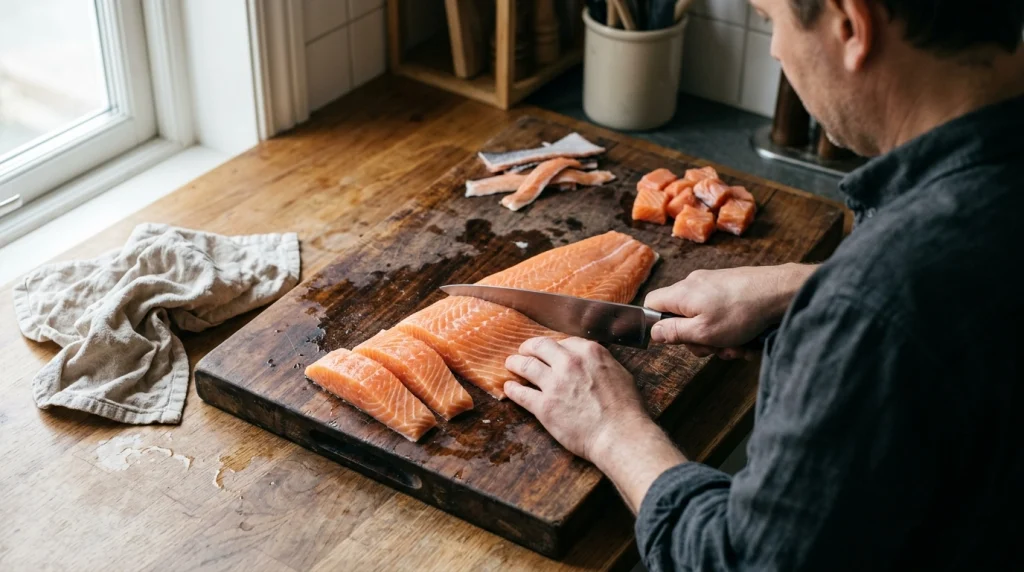
SaveA sharp chef knife works well when you are cutting through fish flesh rather than trying to trace closely around bones. Its broad blade provides stability, while its length makes it easy to create clean portions with decisive strokes.
Good uses include:
- Portioning boneless fillets: cutting a large salmon, cod, halibut, or similar fillet into individual servings.
- Cutting fish into cubes: useful for stews, curries, skewers, or other dishes requiring bite-size pieces.
- Removing ragged edges: trimming uneven flesh from an already prepared fillet.
- Slicing thicker fish portions: especially when extreme precision around bones is unnecessary.
- General prep around the fish: chopping herbs, vegetables, aromatics, and other ingredients without changing tools.
This fits the broader role of the chef knife as an all-purpose blade. Our guide to what a chef knife is used for explains why it performs well across vegetables, boneless meat, fish, and other everyday prep.
Tip
For clean portions, use a sharp edge and make a deliberate slicing motion rather than repeatedly sawing through delicate fish flesh.
Why Is a Chef Knife Less Suitable for Filleting a Whole Fish?
You can fillet a whole fish with a chef knife, but the job becomes harder because of the knife’s geometry. A typical chef knife has a relatively tall, wide, and rigid blade designed for stable chopping and slicing. A fillet knife is narrow and flexible so it can stay close to curved bones.
The Institute of Culinary Education demonstrates fish breakdown using several knives and specifically uses a fish fillet knife for the shallow cuts that follow the fish’s structure. A chef knife can still play a role for firmer cuts, but it is not the most precise tool for every stage.
The practical differences become obvious in three areas:
Following the backbone
The backbone and rib cage are curved. A flexible fillet knife can bend slightly as it travels along those contours. A stiff chef knife cannot conform in the same way, so keeping its edge directly against the skeleton takes more adjustment.
If the blade moves away from the bones, edible flesh can remain attached to the frame.
Working in narrow spaces
A broad chef knife takes up more room. Near fins, rib bones, and the collar, that extra blade height can make small controlled movements awkward.
A narrow knife gives the user a clearer sense of where the cutting edge is traveling.
Removing skin
Skinning generally works best when the blade can travel at a shallow angle between the flesh and skin. A narrow flexible blade is easier to position almost parallel with the cutting surface.
A chef knife can remove skin, particularly from a firm, thick fillet, but its wider blade gives you less room to adjust the angle.
Chef Knife vs. Fillet Knife: Which Should You Use?
The better knife depends on the job rather than on whether one knife is universally superior.
| Task | Chef Knife | Fillet Knife |
|---|---|---|
| Portioning boneless fillets | Very suitable | Suitable |
| Cutting fish into cubes | Very suitable | Usually unnecessary |
| Following a backbone | Possible but less precise | Designed for the task |
| Working around rib bones | More awkward | Better control |
| Removing fish skin | Works in some cases | Usually easier |
| General kitchen prep | Excellent | Too specialized |
If you occasionally buy fish that is already filleted, your chef knife may be all you need. If you regularly buy whole fish, a dedicated fillet knife becomes much more useful because the blade shape matches the job.
A flexible boning knife can also cover some of the same territory. Our guide on how to properly use a boning knife includes fish-related techniques and explains how a narrow blade works close to bone.
How to Cut a Fish Fillet With a Chef Knife
If the fish has already been filleted and your goal is simply to make portions, the process is straightforward.
- Check the knife first. Use a properly sharpened chef knife. Delicate flesh is easier to damage when a dull edge requires extra pressure.
- Place the fish on a stable board. Keep the cutting board from moving. A damp towel or nonslip mat beneath it can improve stability.
- Pat the fish surface dry. Removing excess moisture makes the fish easier to control.
- Decide your portion size before cutting. Make shallow visual reference marks if uniform portions matter.
- Use a smooth slicing stroke. Let the edge cut through the flesh rather than pushing straight down with excessive force.
- Keep your supporting hand clear. Fish can be slippery, so avoid placing fingers in the path of the blade.
- Wash and dry the knife after use. Clean the blade rather than allowing fish residue and moisture to remain on it.
If your knife needs attention before fish prep, see our guide to cleaning, sharpening, and maintaining kitchen knives.
Can You Fillet a Whole Fish With Only a Chef Knife?
Yes, especially if the fish is relatively large and you already have good knife control. It is simply a compromise rather than the ideal setup.
Start with shallow cuts instead of trying to remove the entire side in one deep pass. Keep the edge close to the skeleton and let the bone structure guide the knife. Once resistance or awkward blade angles begin forcing you to use extra pressure, stop and reposition rather than pushing harder.
The biggest challenge is not whether the chef knife is sharp enough. It is whether its wide, stiff blade can reach the angle you need while staying close to the bone.
Key Insight
A chef knife fails at some fish tasks because of blade shape and stiffness, not because fish requires an unusually sharp or powerful knife.
When Should You Switch to a Fillet Knife?
A fillet knife becomes worthwhile when precision close to bones and skin matters more than general-purpose versatility.
Consider switching when:
- You regularly break down whole fish.
- You want to minimize flesh left on the frame.
- You frequently remove skin from raw fillets.
- You prepare smaller or delicate fish where a broad knife feels cumbersome.
- You struggle to keep a chef knife close to the rib cage or backbone.
- Your chef knife blocks your view or forces uncomfortable cutting angles.
Victorinox describes a filleting knife as long, lean, slightly tapered, and flexible enough to work around fish bones. Those characteristics explain why it is easier to control during true filleting work.
If you only prepare a whole fish occasionally, however, buying another knife is not automatically necessary. A sharp chef knife can get the job done with slower, more deliberate cuts.
What Should You Avoid Doing With a Chef Knife on Fish?
 Save
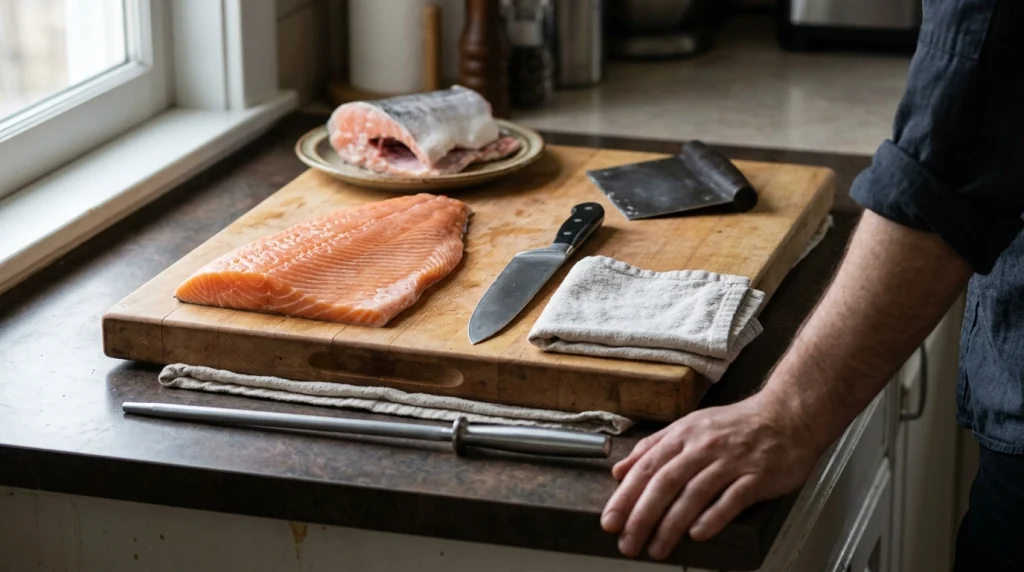
SaveThe versatility of a chef knife does not make it suitable for every hard or delicate structure associated with seafood.
- Do not force the edge through heavy bones. A normal chef knife is intended primarily for slicing and chopping food, not for hacking through thick skeletal material.
- Do not use excessive downward pressure on slippery fish. Reposition the food and improve stability instead.
- Do not keep working with a noticeably dull edge. More pressure reduces control and can crush delicate flesh.
- Do not scrape the sharp edge sideways across the board. If you need to move food, use the spine or another suitable tool.
- Do not leave the knife wet after cleaning. Wash and dry it promptly according to the manufacturer’s care instructions.
Kitchen shears or another suitable heavy-duty tool may make more sense for fins and other awkward structures. The goal is not to prove that one knife can perform every operation; it is to use each tool where it remains controllable.
Related Product
Flexible Fillet Knife
If you regularly break down whole fish or remove skin, a narrow flexible fillet knife can follow bones and contours more easily than a broad chef knife.
As an Amazon Associate, we earn from qualifying purchases.
Frequently Asked Questions
Can you cut salmon with a chef knife?
Yes. A sharp chef knife works very well for cutting a boneless salmon fillet into portions, cubes, or thicker slices. A fillet knife is more useful if you are separating a whole salmon from its skeleton or removing skin.
Can a chef knife remove fish skin?
It can, particularly on a firm, larger fillet, but a narrow flexible fillet knife is generally easier to hold at the shallow angle needed between the skin and flesh.
Do you need a special knife for fish?
Not for every fish task. A chef knife is sufficient for many cuts on prepared fillets. A specialized fillet knife becomes more useful when you regularly work with whole fish, bones, and skin.
Is a boning knife good for fish?
A flexible boning knife can work well for many fish-preparation tasks because its narrow blade can follow contours more closely than a chef knife. A dedicated fillet knife normally offers even more flexibility.
Should a fish knife be flexible or stiff?
For Western-style filleting, some flexibility is useful because it allows the blade to follow the backbone, ribs, and skin. The ideal amount of flex varies with the size and firmness of the fish.
Can a chef knife cut through fish bones?
Small bones may occasionally be encountered during fish preparation, but a standard chef knife should not be treated as a bone-chopping tool. For substantial bones or heavy cutting, use a tool specifically suited to that work.
The Bottom Line
You do not need a special knife simply to cut fish. A sharp chef knife is an excellent choice for portioning boneless fillets, making cubes, trimming, and many everyday fish-preparation jobs.
For filleting a whole fish, tracing the backbone, working around ribs, or removing skin with minimal waste, a narrow flexible fillet knife is the more practical tool. Use the chef knife as the versatile generalist and switch to a fillet knife when blade flexibility and close bone work become the priority.