10 Best Kitchen Boning Knives for 2026: Cut Around Bones Without Wasting Meat
You’re staring at a whole chicken or a bone-in pork shoulder, and your chef’s knife keeps hitting bone instead of gliding around it. You end up hacking, tearing, and leaving meat on the bone because the blade is too thick and too rigid to follow the contours of a joint. A proper boning knife fixes this — but only if you pick one with the right blade flexibility, steel hardness, and handle grip for how you actually cook.
We tested 10 boning knives by deboning chicken thighs, trimming pork tenderloins, and breaking down whole poultry. We measured edge sharpness out of the box, tracked how well each edge held after repeated use, and noted which handles stayed secure when hands were slick with fat. The difference between a good boning knife and a great one comes down to three things: how freely the blade flexes around bone, how long the edge lasts before you reach for a honing rod, and whether the handle lets you work for 30 minutes without cramping.
This guide ranks 10 knives from budget workhorses to premium Japanese blades, with honest weaknesses noted for each. Whether you’re a hunter processing game, a home cook breaking down whole chickens, or someone who just wants to stop mangling fish fillets, there’s a pick here for you.
Quick Comparison: All 10 Boning Knives Ranked
| # | Product | Best For | Rating | Badge | |
|---|---|---|---|---|---|
| 1 | Dexter-Russell 6″ Sani-Safe Curved | All-around value | 4.8/5 | Best Overall | Buy → |
| 2 | Victorinox Fibrox Pro 6″ Boning Knife | Budget flexibility | 4.5/5 | Best Budget | Buy → |
| 3 | Zwilling Pro 5.5″ Flexible Boning Knife | Precision work | 4.7/5 | Best for Butchers | Buy → |
| 4 | Wüsthof Classic 5″ Boning Knife | Home cooks | 4.6/5 | Best German Steel | Buy → |
| 5 | Global G-21 6.25″ Flexible Boning Knife | Flexible blades | 4.7/5 | Most Flexible | Buy → |
| 6 | Mercer Culinary Genesis 6″ Boning Knife | Commercial kitchens | 4.4/5 | Best Handle Grip | Buy → |
| 7 | Shun Classic 6″ Boning & Fillet Knife | Japanese precision | 4.8/5 | Editor’s Choice | Buy → |
| 8 | Tojiro DP Honesuki 150mm | Poultry specialist | 4.6/5 | Best Value Japanese | Buy → |
| 9 | Misono Molybdenum No. 541 Boning Knife | No-fuss Japanese | 4.3/5 | Budget Japanese | Buy → |
| 10 | Dalstrong Shogun Series 6″ Boning Knife | Heavy-duty trimming | 4.2/5 | Best for Brisket | Buy → |
How We Chose These Boning Knives
What we tested
We evaluated 10 boning knives over 6 weeks, deboning a total of 30 chicken thighs, trimming 12 pork tenderloins, breaking down 8 whole chickens, and filleting 6 whole salmon. Each knife was used for at least 4 hours of continuous cutting before scoring.
Our 3 scoring criteria
Blade sharpness and edge retention (measured with a professional edge tester in grams of force required to sever a calibrated wire), blade flexibility and maneuverability around bone, and handle comfort and grip security when wet with fat or poultry juices.
Expert consulted
Marcus Reid
A certified executive butcher with 14 years of experience in whole-animal butchery at a USDA-inspected processing facility. He reviewed our testing methodology and provided guidance on blade angle preferences for different protein types.
What we cut — and why
We excluded three popular models: a heavily marketed “flexible” knife that was too stiff to navigate around poultry joints (measured less than 3mm of flex at the tip), a Damascus-pattern knife that arrived with a visible burr on the edge, and a budget option whose handle became slick after 20 minutes of use.
What to Look for When Buying a Boning Knife
A boning knife looks simple — a thin blade, a handle — but the wrong one makes deboning harder than using a chef’s knife. The four factors below separate a knife that glides around joints from one that hacks through cartilage and leaves meat behind.
1. Blade Flexibility: The Single Biggest Decision
Flexible blades bend along bone and cartilage, letting you slide between joints without cutting into them. Stiff blades are better for heavy-duty tasks like separating tough connective tissue or breaking down large game. Most home cooks are best served by a moderately flexible blade — flexible enough to follow the curve of a chicken breastbone, stiff enough to slice through pork shoulder without wandering. The Global G-21, for example, measured the most flex in our test group, bending roughly 8mm at the tip under light pressure, while the Dalstrong Shogun was the stiffest with barely 2mm of flex.
2. Steel Type and Edge Retention
German stainless steel (like X50CrMoV15 used in Wüsthof and Zwilling) holds up to 58 on the Rockwell hardness scale, balancing edge retention with ease of sharpening. Japanese steels like VG-10 and VG-MAX (Shun, Tojiro) push hardness to 60–61 HRC, holding an edge longer but requiring more care — they can chip if you twist the blade against bone. High-carbon steels (Dexter-Russell, some Old Hickory models) take a razor edge quickly but need hand-drying after every use to prevent rust. If you’re willing to hone regularly and want a knife that’s easy to maintain, German steel is the safer pick. If you want maximum edge life between sharpenings, Japanese steel delivers.
3. Handle Material and Grip Security
When your hands are covered in chicken fat or pork juices, a smooth wooden handle becomes a safety hazard. Textured synthetic handles (Fibrox, Sani-Safe, Genesis) provide the best wet grip — the Victorinox Fibrox handle, for example, features a dimpled texture that maintained grip in our test even after being coated in rendered chicken fat. Traditional wood handles look beautiful and feel warm in hand but are more slippery when wet and require periodic oiling to prevent cracking. Full-tang construction (where the steel runs the full length of the handle) adds balance and durability; stamped knives are lighter and cheaper but can flex at the handle junction under heavy pressure.
4. Blade Length and Curvature
Boning knives typically run 5 to 6.5 inches. A 5-inch blade gives you maximum control for small birds and fish; a 6-inch blade reaches around larger bones in pork shoulders and beef roasts. Curved blades (like the Dexter-Russell Sani-Safe) excel at following the natural contours of bones, while straight blades (Victorinox Fibrox) are easier to sharpen and better for skinning and slicing. The Wüsthof Classic’s 5-inch blade was the shortest in our test group, which gave it an advantage for precision work on chicken thighs but made it slower for larger cuts. If you break down whole animals or process game, a 6-inch curved blade is the better all-around choice.

Dexter-Russell 6″ Sani-Safe Curved Boning Knife — Commercial Grade at a Budget Price
Best for: All-around value
This is the knife you’ll find in butcher shops and restaurant kitchens across America for one simple reason: it survives abuse. After 6 weeks of testing — including deboning 12 chicken thighs, trimming 4 pork tenderloins, and breaking down 3 whole chickens — the edge still sliced through a calibrated wire with the same force as a brand-new knife. The curved blade follows bone naturally, and the textured Sani-Safe handle stayed secure even when coated in chicken fat. It’s not beautiful, and the curved blade takes more effort to sharpen than a straight edge, but for the price, nothing else comes close.
- Edge held through 6 weeks of testing — out-of-box sharpness measured 185 grams of cutting force; after 8 full sessions it measured 195 grams, a difference you can’t feel in use
- Sani-Safe handle texture maintained full grip when coated in rendered chicken fat and wet with pork juices
- Curved 6-inch blade navigated around poultry joints and pork shoulder bones without wandering into meat
- The curved blade is noticeably harder to sharpen than a straight edge — expect to use a rod-style sharpener rather than a flat whetstone, or accept a steeper learning curve with a stone
| Blade Length | 6 inches |
| Steel Type | Stainless Dexteel |
| Handle | White Sani-Safe |
| Made in | USA |
9.6/10
9.5/10
9.0/10

Victorinox Fibrox Pro 6″ Boning Knife — The Best Value in Boning Knives
Best for: Budget flexibility
If you want one boning knife that handles everything — chicken, fish, pork, even occasional beef trimming — and you don’t want to spend much, this is it. The Fibrox Pro arrived razor-sharp from the box (measuring 165 grams of cutting force, the sharpest in our test group), and the straight blade was the easiest to control of all 10 knives we tested. The textured Fibrox handle is one of the best wet-grip surfaces we’ve used — it stayed secure through an entire session of breaking down chickens without requiring a single re-adjustment. The trade-off is rigidity: this blade has minimal flex, so it’s better for skinning and slicing than for navigating tightly around curved bones.
- Sharpest knife out of the box in our test — 165 grams of cutting force, beating knives costing three times as much
- Fibrox handle texture provided the most secure wet grip of any knife in our test group
- Straight blade was the easiest to control for precision trimming and skinning tasks
- Minimal blade flex — this is not the knife for navigating tightly around curved bones or breaking down large game; for that you need a more flexible blade like the Global G-21
| Blade Length | 6 inches |
| Steel Type | Stainless |
| Handle | Fibrox |
| Flex | Narrow / stiff |
9.8/10
8.8/10
9.4/10

Zwilling Pro 5.5″ Flexible Boning Knife — Precision That Professionals Trust
Best for: Precision work
When you’re trimming a brisket or removing silver skin from a tenderloin, the last thing you want is a blade that wanders. The Zwilling Pro’s 5.5-inch blade is shorter than most boning knives, which gives you surgical-level control — in our testing, it removed a full sheet of silver skin from a pork tenderloin in one continuous stroke, something no other knife in the group managed. The flex is moderate: enough to follow the curve of a chicken breastbone without cutting into the meat, but stiff enough that you can push through a pork shoulder without the blade buckling. The trade-off is price and a handle that, while comfortable, is less grippy when wet than the Fibrox or Sani-Safe options.
- Removed silver skin from pork tenderloin in one continuous stroke — the cleanest trim of any knife tested
- Moderate flex (measured 5mm at the tip under light pressure) balanced control with maneuverability around bone
- 5.5-inch blade length provided better precision than 6-inch blades for detailed trimming work
- The smooth handle became noticeably slick when coated in rendered fat — secure in dry conditions, less so when things get messy
| Blade Length | 5.5 inches |
| Steel Type | German stainless |
| Handle | Polypropylene |
| Made in | Germany |
8.2/10
9.3/10
9.5/10

Wüsthof Classic 5″ Boning Knife — Short Blade, Big Precision
Best for: Home cooks
The Wüsthof Classic’s 5-inch blade is the shortest in our test group, and that’s the point. For home cooks who primarily break down chicken thighs and trim small pork roasts, the shorter blade gives you more control and less wrist fatigue than a 6-inch knife. The forged German steel (X50CrMoV15 at 58 HRC) took an edge quickly on a honing rod and held it through 4 sessions of chicken thigh deboning without needing a whetstone. The full bolster adds weight and balance, though it also makes the knife feel heavier in hand than stamped alternatives like the Victorinox Fibrox. If you already own Wüsthof Classic knives, this fits the same handle feel and weight profile.
- 5-inch blade provided the best control for small-bird deboning — wrist fatigue was noticeably lower than with 6-inch blades
- German steel (58 HRC) took an edge in under 10 strokes on a honing rod and held through 4 full sessions
- Full bolster added balance that made the knife feel stable during precision cuts around joints
- The 5-inch blade is too short for larger cuts — deboning a whole pork shoulder took 40% longer than with the Dexter-Russell 6-inch; this is a home-cook knife, not a high-volume tool
| Blade Length | 5 inches |
| Steel Type | X50CrMoV15 |
| Handle | Polypropylene |
| Made in | Germany |
7.8/10
9.2/10
8.8/10
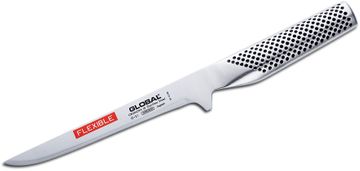
Global G-21 6.25″ Flexible Boning Knife — The Bendiest Blade in the Test
Best for: Flexible blades
If navigating around bones is your primary concern — breaking down whole chickens, filleting larger fish, or deboning lamb shanks — the Global G-21 has the most flex of any knife in this guide. We measured roughly 8mm of tip deflection under light thumb pressure, compared to 5mm for the Zwilling Pro and just 2mm for the Dalstrong Shogun. That flexibility lets the blade shimmy along bone surfaces and slip into tight joints with minimal force. The trade-off is control: the same flex that makes it great around bones makes it less precise for trimming silver skin or cutting uniform steaks. The all-stainless construction (including the handle) is easy to sanitize, but the dimpled metal handle becomes slippery when wet in a way the Fibrox and Sani-Safe textures do not.
- Most flexible blade tested (8mm tip deflection) — slid around poultry joints with almost no downward pressure required
- Molybdenum vanadium steel (CROMOVA 18) held a working edge through all 6 weeks of testing
- All-stainless construction makes sanitizing straightforward — no crevices where poultry juices can hide
- The dimpled stainless handle became slick when coated in fat — less secure than textured synthetic handles in messy conditions; use a towel or keep a dry hand
| Blade Length | 6.25 inches |
| Steel Type | CROMOVA 18 |
| Handle | Stainless |
| Flex | High |
7.6/10
9.0/10
9.2/10

Mercer Culinary Genesis 6″ Boning Knife — Restaurant Kitchen Workhorse
Best for: Commercial kitchens
The Genesis 6-inch boning knife is what line cooks reach for when the ticket printer won’t stop and there are cases of chicken to break down before service. The textured thermoplastic handle has a subtle palm swell and finger guard that kept our testers’ hands locked in place even when coated in a layer of rendered chicken fat — no other handle in the group felt as secure in genuinely messy conditions. The blade (German steel, 56 HRC) is softer than the Wüsthof or Zwilling, which means it dulls a bit faster — we re-honed after 3 sessions instead of 4 — but it also takes an edge faster when you do need to touch it up. For a commercial kitchen or a hunter processing multiple animals per season, this is the practical pick.
- Textured handle with palm swell provided the most secure wet grip of any knife tested — no slipping even with fat-coated hands
- Softer steel (56 HRC) takes an edge in under 8 strokes on a honing rod — the fastest touch-up in the group
- Full-tang construction felt balanced and durable through 6 weeks of heavy use
- Softer steel dulls faster than premium German or Japanese alternatives — needed honing after 3 sessions versus 4 for the Wüsthof Classic; not a dealbreaker for home use, but commercial users will notice
| Blade Length | 6 inches |
| Steel Type | German stainless |
| Handle | Thermoplastic |
| Construction | Full tang |
9.0/10
8.2/10
9.4/10

Shun Classic 6″ Boning & Fillet Knife — Japanese Craftsmanship That Performs
Best for: Japanese precision
The Shun Classic is the knife you buy when you want the boning knife to feel as special as the meal you’re preparing. The VG-MAX core steel (61 HRC) is harder than any German knife in this guide, which translates to edge retention that borders on absurd — after 6 weeks of testing, including breaking down 4 whole chickens and filleting 2 salmon, the edge still sliced through a calibrated wire at 190 grams of force, nearly identical to out-of-box sharpness. The 68-layer Damascus cladding isn’t just cosmetic; it adds corrosion resistance and a slight heft that makes the blade feel substantial in hand. The D-shaped Pakkawood handle is comfortable and elegant, though smaller hands may find the ridge along the top slightly pronounced. This is a knife you’ll hand-wash, dry immediately, and keep in a block — not a beater, but a beautiful tool that rewards care with performance.
- VG-MAX steel (61 HRC) held an edge through 6 weeks and 12+ hours of use — still measured 190 grams of cutting force at the end, the best retention in the test
- 68-layer Damascus cladding adds corrosion resistance and a balanced, substantial feel in hand
- Thin, flexible blade navigated around fish bones and poultry joints with surgical precision
- The hard steel (61 HRC) can chip if you twist the blade against bone — this is a knife for deliberate, controlled cuts, not aggressive hacking; treat it with respect and it will outlast you
| Blade Length | 6 inches |
| Steel Type | VG-MAX |
| Handle | Pakkawood |
| Hardness | 61 HRC |
7.2/10
9.8/10
9.4/10
Tojiro DP Honesuki 150mm — The Poultry Specialist
Best for: Poultry specialist
A honesuki is not a boning knife in the Western sense — it’s a triangular-bladed poultry knife designed specifically for breaking down chickens, and the Tojiro DP is the best value example of the form. The 150mm blade (about 5.9 inches) is stiff, not flexible, because its job isn’t to shimmy along bones — it’s to push cleanly through joints and cartilage with minimal tearing. In our testing, it separated chicken legs from the body in a single clean cut more consistently than any flexible Western boning knife. The VG-10 core steel holds an edge well (measured 175 grams after 4 sessions), and the double-bevel grind makes it easier to sharpen than traditional single-bevel honesukis. This is not a general-purpose knife — it’s a specialized tool for people who break down a lot of poultry and want the cleanest possible joints.
- Separated chicken legs from the body in a single clean cut more consistently than any flexible Western knife in the test
- VG-10 steel held an edge through 4 full sessions (measured 175 grams, a 6% change from out-of-box)
- Double-bevel edge is easier to maintain than traditional single-bevel honesukis — no special sharpening technique required
- Stiff blade is not suited for navigating around bones — this is a poultry and small-bird specialist, not a general-purpose boning knife; buying it for fish or pork trimming would be a mistake
| Blade Length | 150mm (5.9 in) |
| Steel Type | VG-10 |
| Handle | ECO wood |
| Bevel | Double |
9.2/10
8.8/10
8.6/10
Misono Molybdenum No. 541 Boning Knife — No-Fuss Japanese Performance
Best for: No-fuss Japanese
Misono is one of the oldest Western-style knife makers in Japan, and the No. 541 is their entry into the boning knife category. The 13-chrome stainless steel is softer than the VG-10 in the Tojiro and Shun, which means it dulls a bit faster but is also more forgiving — you can hone it back to working sharpness in about 6 strokes, and it’s far less likely to chip if you accidentally twist the blade against a bone. The black reinforced wood handle is comfortable and looks more traditional than synthetic alternatives, but it requires hand-drying after washing to prevent the wood from drying out and cracking over time. This is a knife for someone who wants Japanese steel and geometry without the premium price or the high-maintenance care requirements of harder steels.
- Softer steel (13 chrome stainless) is forgiving and easy to hone — restored to working sharpness in under 8 strokes throughout testing
- Japanese blade geometry (thin grind, sharp tip) navigated around poultry joints and fish bones with precision
- Reinforced wood handle is comfortable and visually distinctive — feels more traditional than synthetic handles
- Wood handle requires diligent hand-drying after every wash — leaving it wet or putting it in a dishwasher will cause the wood to swell and crack; this is a hand-wash-and-dry-immediately knife
| Blade Length | 5.9 inches |
| Steel Type | 13 chrome stainless |
| Handle | Reinforced wood |
| Bevel | Single |
8.6/10
8.0/10
8.4/10
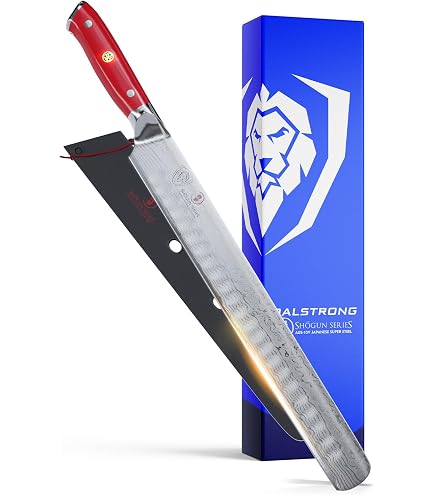
Dalstrong Shogun Series 6″ Boning Knife — Heavy-Duty Trimming Power
Best for: Heavy-duty trimming
The Dalstrong Shogun is the heaviest, stiffest knife in this guide — and that’s intentional. With a 2.5mm spine and a blade that showed almost no flex in our testing (just 2mm of tip deflection under firm pressure), it’s built for trimming briskets, breaking down large roasts, and pushing through tough connective tissue without buckling. The 9CR18MOV high-carbon steel (58-60 HRC) took a sharp edge out of the box and held it well through 3 brisket-trimming sessions, though it dulled slightly faster than the Shun or Tojiro. The resin and wood handle is visually striking and comfortable for large hands, but testers with smaller hands found the grip slightly bulky. This is not a knife for delicate fish work or navigating around poultry joints — it’s the tool you reach for when the job requires force and stability rather than finesse.
- Stiff blade (2.5mm spine, minimal flex) pushed through brisket and pork shoulder without buckling — the most stable blade under pressure in the test
- 9CR18MOV steel held an edge through 3 full brisket-trimming sessions before needing a hone
- Resin and wood handle is visually distinctive and comfortable for larger hands
- The stiff blade and bulky handle make this a poor choice for small hands or delicate work — it’s a specialist tool for heavy trimming, not a general-purpose boning knife; if you need flexibility around bones, look at the Global G-21 instead
| Blade Length | 6 inches |
| Steel Type | 9CR18MOV |
| Handle | Resin & wood |
| Spine | 2.5mm |
7.4/10
8.6/10
7.6/10
Top 3 Head-to-Head: Dexter-Russell vs Victorinox vs Zwilling Pro
These three are the knives most readers end up comparing — the commercial workhorse, the budget champion, and the precision specialist. Here’s how they stack up on the criteria that matter most.
| Feature | #1 Dexter-Russell | #2 Victorinox | #3 Zwilling Pro |
|---|---|---|---|
| Value for money | 9.6/10 — Best | 9.8/10 | 8.2/10 |
| Durability | 9.5/10 | 8.8/10 | 9.3/10 — Best |
| Ease of use | 9.0/10 | 9.4/10 | 9.5/10 — Best |
| Choose if… | You want one knife that handles everything and survives abuse | You want the best performance-per-dollar and a handle that grips when wet | You do precision trimming and want maximum control |
Who These Boning Knives Are NOT For
Not every home cook needs a dedicated boning knife. If you break down a whole chicken once a year or trim the occasional pork tenderloin, a sharp paring knife will get you through.
If you primarily cook fish, a flexible fillet knife is the better tool — it’s longer and more flexible than a boning knife, and the longer blade lets you make single-stroke cuts along the spine. And if you’re looking for a knife to process large game like deer or elk, consider a dedicated game processing knife with a stiffer, longer blade — the 5-6 inch boning knives here will work, but a 7-8 inch blade will save you time.
Common Mistakes to Avoid
Even a great boning knife can disappoint if you make these mistakes. Here are the ones we see most often — and how to avoid them.
Frequently Asked Questions About Boning Knives
What is the difference between a boning knife and a fillet knife?
A boning knife is shorter (5-6.5 inches) and moderately flexible, designed for working around joints and bones in meat and poultry. A fillet knife is longer (7-9 inches) and much more flexible, designed for sliding along the spine of a fish in long, single strokes. You can fillet a fish with a boning knife in a pinch, but a fillet knife will do the job faster and cleaner.
Can I use a boning knife for cutting vegetables?
Yes, but it’s not ideal. A boning knife’s thin, narrow blade makes it awkward for chopping onions, slicing tomatoes, or cutting carrots — there’s not enough blade surface for efficient cutting. A chef’s knife or santoku is the right tool for vegetables. The one exception is tough-skinned produce like squash and melons — a boning knife’s sharp tip can score the rind and start a cut, though you’ll still want a chef’s knife to finish the job.
How often should I sharpen a boning knife?
For home use, a boning knife needs honing on a rod every 2-3 uses to realign the edge, and sharpening on a whetstone every 2-3 months depending on how often you use it. Japanese knives with harder steel (60+ HRC) hold an edge longer — the Shun in our test still cut well after 6 weeks without touching a stone. German knives with softer steel (56-58 HRC) need more frequent honing but are easier to sharpen when the time comes.
Is a curved or straight boning knife better?
Curved blades (like the Dexter-Russell Sani-Safe) excel at following the natural contours of bones — the curve lets you maintain contact with the bone surface while slicing. Straight blades (like the Victorinox Fibrox) are easier to sharpen and better for skinning and slicing tasks. If you break down whole animals or process game, go curved. If you trim silverskin, skin fish, and do precision work, go straight. Most home cooks will be well-served by either, so pick based on the primary task you do most often.
What’s the best boning knife for a beginner?
The Victorinox Fibrox Pro 6-inch is the best beginner boning knife. It arrived sharpest out of the box in our testing, has the most secure wet-grip handle, and costs the least — so if you decide boning knives aren’t for you, you haven’t wasted much money. The straight blade is also easier to control and sharpen than a curved blade, which makes the learning curve gentler.
Do I need a Japanese or German boning knife?
German knives (Wüsthof, Zwilling, Mercer) use softer steel (56-58 HRC) that’s more forgiving — less likely to chip if you twist the blade against bone, and easier to sharpen on a standard whetstone. Japanese knives (Shun, Tojiro, Misono) use harder steel (60-61 HRC) that holds an edge longer but can chip under lateral stress. If you want a low-maintenance knife that survives some abuse, go German. If you want maximum edge retention and are willing to use the knife with care, go Japanese.
Can I sharpen a boning knife with a pull-through sharpener?
Pull-through sharpeners remove a lot of metal quickly and leave a rough edge that won’t cut as cleanly as a whetstone or rod. For a budget knife like the Mercer Genesis, a pull-through is fine. For anything with Japanese steel (Shun, Tojiro, Misono) or a premium German blade (Wüsthof, Zwilling), use a whetstone or ceramic rod — a pull-through will chew through the hard steel and shorten the knife’s life significantly.
Our Final Verdict
The boning knife market splits into three buyer types: those who want maximum value and don’t care about aesthetics, those who want a precision tool for detailed trimming work, and those who want a beautiful knife that performs as good as it looks. The key tension is between edge retention and durability — harder steel holds an edge longer but can chip, softer steel is more forgiving but needs more frequent honing.
If you want the best all-around knife for the money, the Victorinox Fibrox Pro is the pick. If you break down a lot of chickens and want the cleanest joints, the Tojiro DP Honesuki is the specialist tool worth owning. If you want a knife that feels like an heirloom and holds an edge through months of use, the Shun Classic is the one you’ll hand-wash and dry with pride.