10 Best Boning Knife Yellow Handle for Precision Meat Preparation
A boning knife helps us separate meat from bones, trim fat, and remove skin with better control than a general-purpose kitchen knife. Models with yellow handles add high visibility, which can make the knife easier to spot in a busy kitchen or shared drawer.
The best yellow-handle boning knife should combine a sharp, durable blade with a comfortable, secure handle and the right amount of flexibility for the cuts you make. Blade length, stiffness, handle grip, edge retention, and ease of cleaning matter more than color alone. We also look for stainless steel construction and a sheath or other safe storage option.
We compared yellow-handle boning knives for cutting control, comfort, sharpness, and value to find the options that make meat preparation simpler and safer.
Best Yellow-Handle Boning Knives
We selected the best yellow-handle boning knives for handling meat, poultry, and fish. Our list considers blade quality, comfort, flexibility, and ease of cleaning.
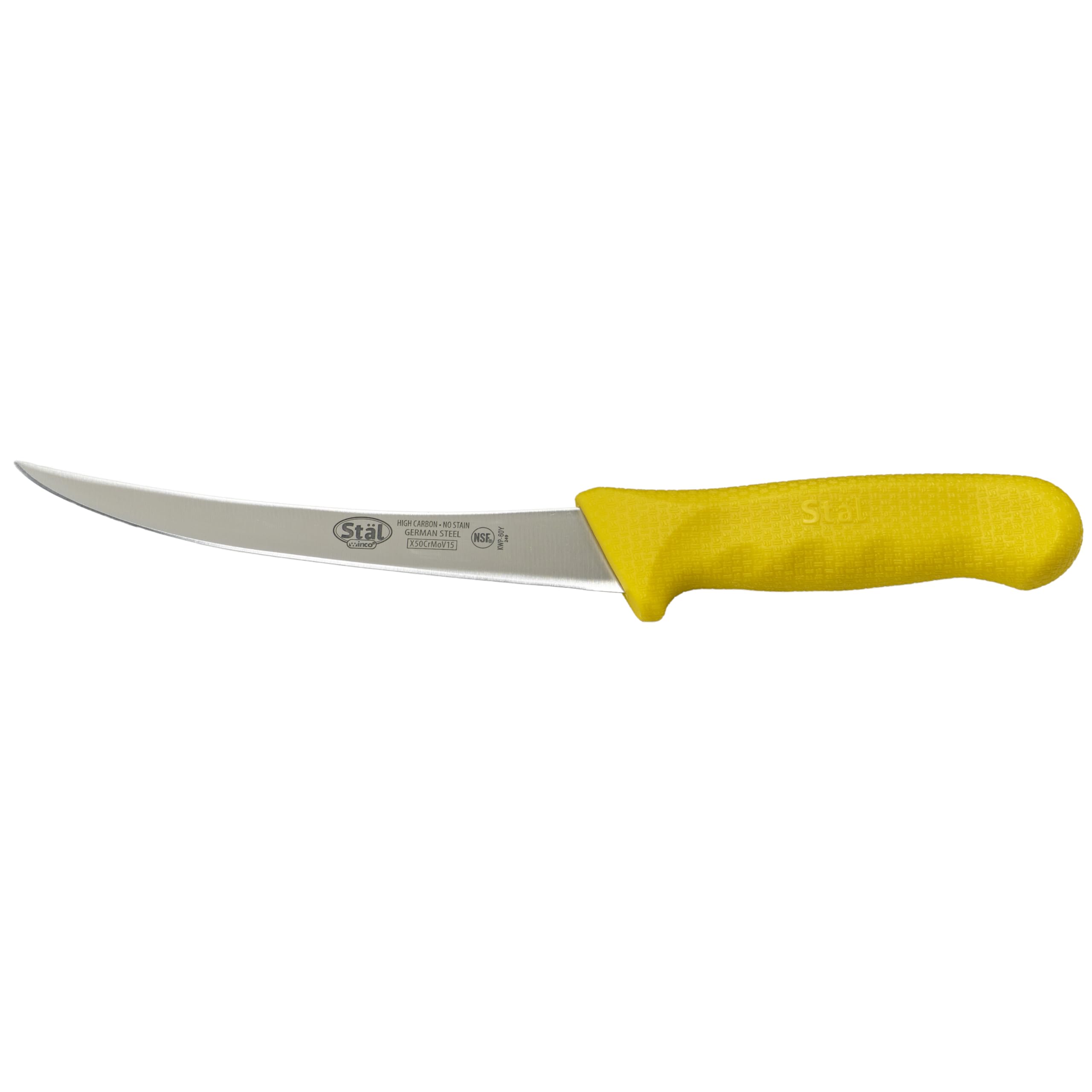
Winco 6-Inch Yellow Boning Knife
 Save
SaveWe recommend this knife for home cooks and food-service workers who want a comfortable, easy-to-spot boning knife at a reasonable price.
Key Pros
- Sharp stainless steel blade handles trimming and deboning well
- Yellow, slip-resistant handle stays comfortable during longer tasks
- Strong build suits regular kitchen or food-service use
Key Cons
- Some users may need to sharpen it before the first use
- The handle does not include a sheath
- Edge retention may not match higher-priced knives
We found the 6-inch blade easy to control when trimming chicken, cutting around joints, and separating meat from bone. Its compact size gives us enough precision without feeling too flexible.
The yellow polypropylene handle stands out in a busy kitchen and offers a secure grip when our hands get wet. Finger indentations add comfort, though the handle may feel basic compared with premium designs.
Sharpness can vary. Some users report a very sharp edge straight from the package, while others needed to hone or sharpen it first. Once prepared, the blade performs well for everyday boning and trimming tasks.
The Winco KWP-60Y is a practical choice for buyers who value grip, visibility, and durability over luxury features. We would store it in a knife guard or storage block because it does not come with a sheath.
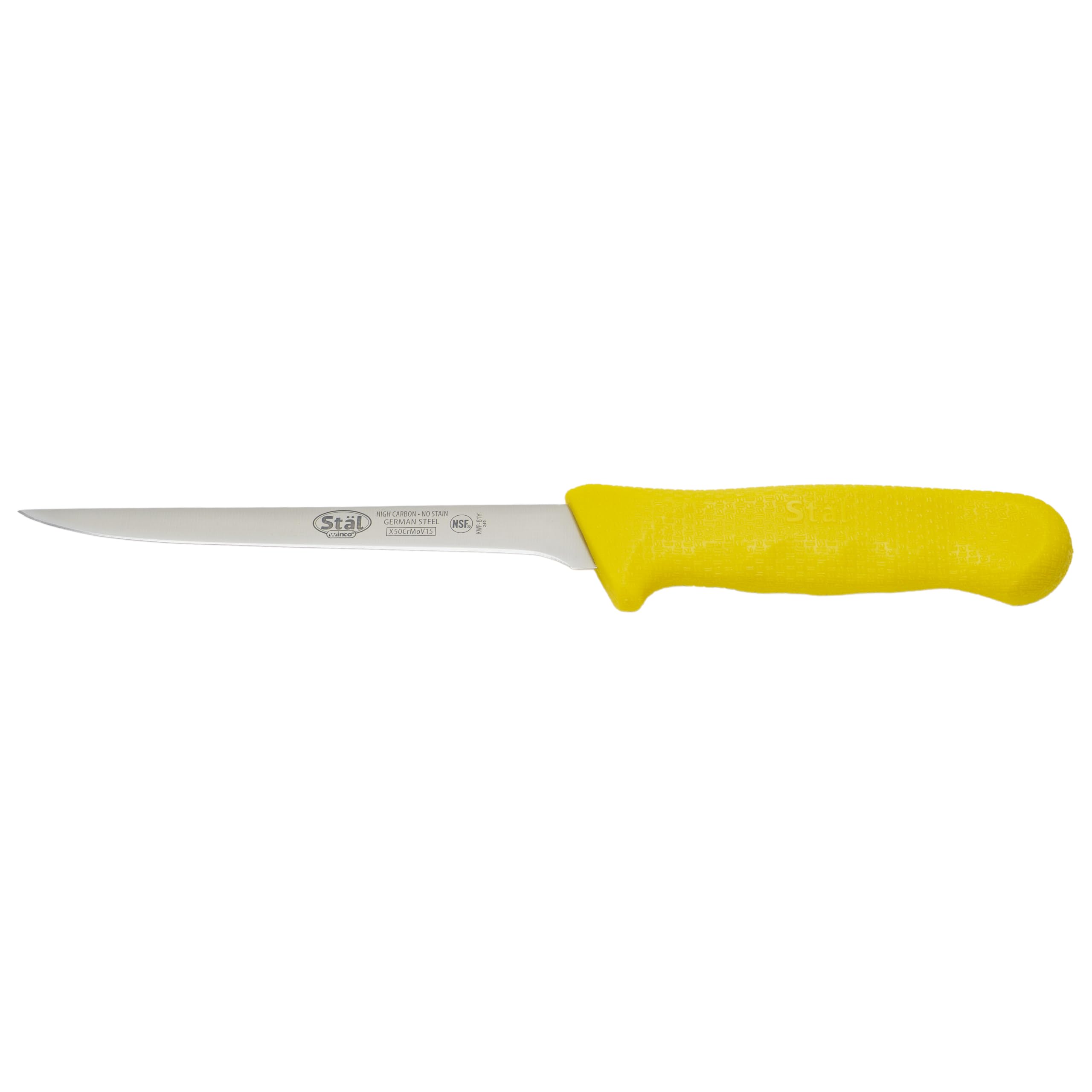
Winco 6-Inch Yellow Boning Knife
 Save
SaveWe recommend this knife for cooks who want a sharp, easy-to-spot boning knife with a comfortable grip for regular meat preparation.
Key Pros
- Sharp blade handles trimming and separating meat well
- Yellow handle is slip-resistant and easy to find
- Sturdy design suits frequent kitchen use
Key Cons
- Blade may feel longer than some users prefer
- Edge sharpness may vary between units
- Plastic handle feels basic
We found the narrow blade useful for working around bones and trimming cuts with control. Its German stainless steel edge started sharp and made routine prep feel smooth.
The handle stayed comfortable during longer tasks, thanks to its finger grooves and textured surface. The bright yellow color also helped us spot the knife quickly among other kitchen tools.
Some users may prefer a shorter blade, especially when working with smaller cuts. We also noted that edge performance may vary, so regular honing and careful storage should help maintain its cutting ability.
For a practical commercial-style option, the Winco 6-Inch Yellow Boning Knife offers a good balance of control, comfort, and visibility.
Mercer Millennia 6-Inch Yellow Boning Knife
 Save
SaveWe recommend this knife for poultry, fish, and light trimming because its sharp, narrow blade and grippy handle offer good control at a modest price.
Key Pros
- Comfortable handle stays secure during wet prep
- Sharp blade handles poultry, fish, and trimming well
- Yellow color helps identify it for poultry use
Key Cons
- Blade may flex during heavier boning tasks
- Edge needs regular sharpening with frequent use
- Hand washing takes extra care
We found the 6-inch blade easy to guide around chicken joints and along fish bones. Its narrow shape also helped us remove fat and sinew without taking too much meat.
The textured Santoprene handle felt comfortable and secure, even when our hands were damp. The yellow color makes the knife easy to spot and supports color-coded kitchen routines.
The blade arrived very sharp, but it did not hold that edge as long as some higher-end knives. We would use it for regular home prep and lighter professional work, but choose a stiffer boning knife for large cuts or tougher jobs.
Hand washing with mild soap and thorough drying will help protect its edge and construction.
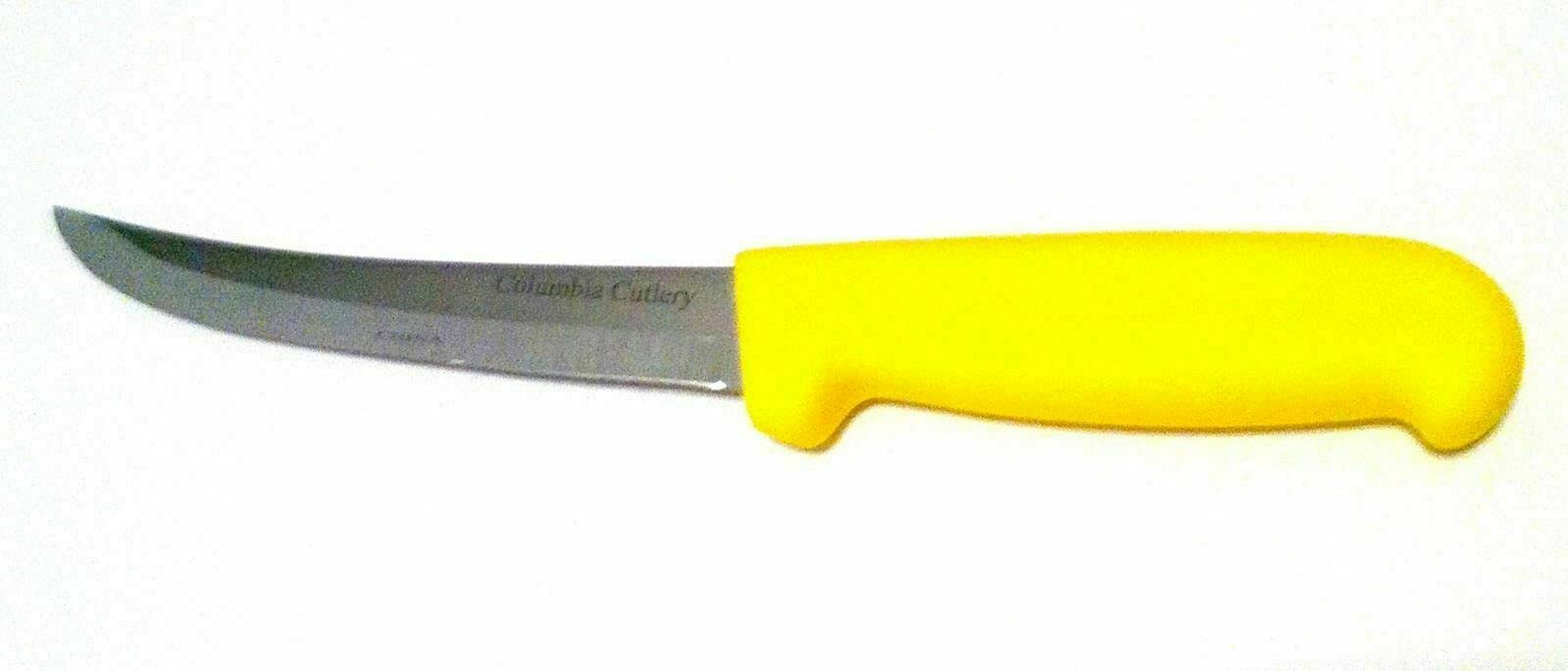
Columbia Cutlery 6-Inch Yellow Boning Knife
 Save
SaveWe recommend this knife for cooks who want a stiff, curved blade and a bright yellow handle for daily meat, poultry, or fish prep.
Key Pros
- Sharp, curved blade guides cleanly along bones
- Comfortable Fibrox handle offers a secure grip
- Dishwasher-safe design suits busy kitchens
Key Cons
- Stiff blade gives less flexibility for delicate filleting
- Six-inch length may feel short for larger cuts
- Limited customer feedback is available
When we used this knife, the curved six-inch blade worked well for trimming chicken and separating meat from bone. Its stiff build provided steady control instead of bending during firm cuts.
The yellow handle stood out on a crowded prep area and made the knife easy to identify. We also found the textured Fibrox grip comfortable during repeated work, even when our hands became wet.
This knife suits commercial kitchens and home cooks who want simple cleanup. We could place it in the dishwasher, but hand washing and prompt drying should help preserve the sharp edge over time.
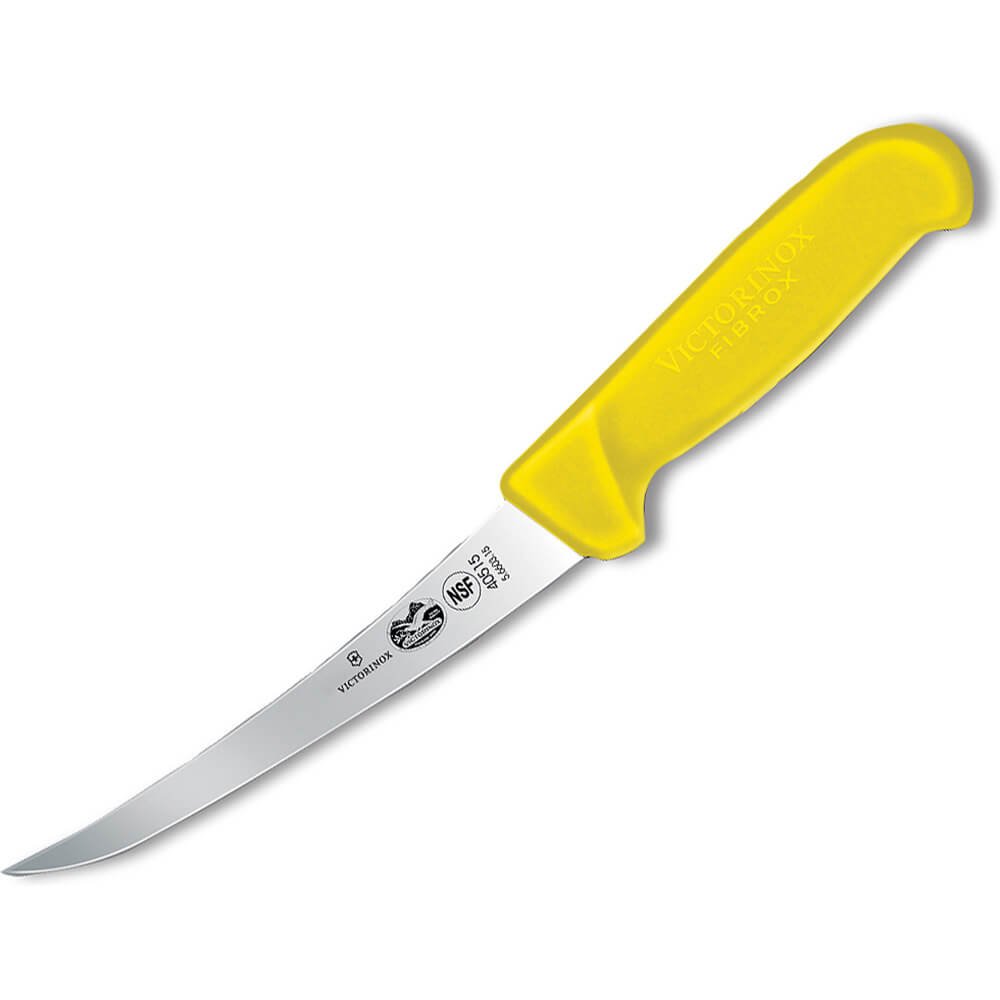
Victorinox Yellow Fibrox Boning Knife
 Save
SaveWe recommend this knife for cooks who want a visible yellow handle and a semi-stiff blade for trimming meat or cleaning larger fish.
Key Pros
- The yellow handle stands out in a busy kitchen.
- The stainless steel blade makes precise cuts.
- The Fibrox handle feels secure during repeated use.
Key Cons
- The semi-stiff blade offers less flexibility for delicate cuts.
- The stamped construction feels lighter than premium forged knives.
- The plain handle design may seem basic.
We found the 5.9-inch blade easy to control while working around bones and joints. Its semi-stiff profile gave us useful support when trimming meat and handling larger fish.
The bright yellow Fibrox handle helped us spot the knife quickly among other tools. It also stayed comfortable during longer prep sessions, though cooks who prefer a heavier knife may find this model too light.
The stainless steel edge cut cleanly, but we would still maintain it regularly for the best results. With a 4.3-star rating from 19 reviews, this Victorinox offers a practical choice for everyday boning work without unnecessary features.
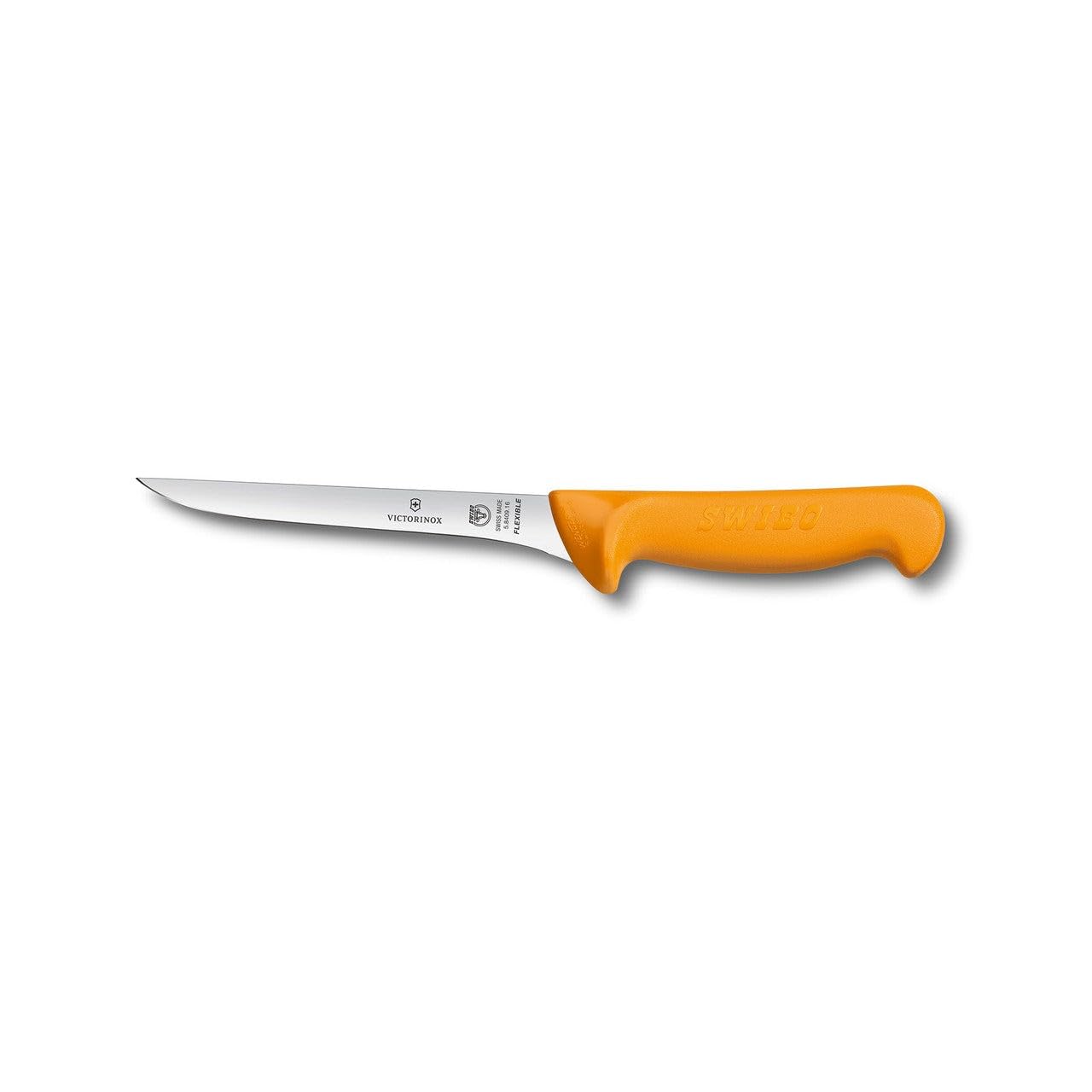
Victorinox Swibo Yellow Boning Knife
 Save
SaveWe recommend this knife for buyers who want a flexible, easy-to-spot boning knife with a comfortable handle and dependable edge.
Key Pros
- Bright yellow handle stands out in busy kitchens
- Flexible, narrow blade handles trimming and deboning well
- Comfortable grip with added protection near the blade
Key Cons
- The plain handle may feel basic to some users
- Flexible blades need careful control around hard bones
- Damascus-style cladding may require more cleaning
We found the 6.3-inch curved blade easy to guide around joints, sinew, and smaller cuts of meat. Its flexibility helped us make clean trimming cuts without forcing the blade.
The yellow handle stayed easy to see on a crowded work surface. It also felt secure in hand, while the extended design gave us more space between our fingers and the blade.
After repeated use, the knife kept a sharp working edge and showed solid construction. The blade did attract some food residue during trimming, so we cleaned and dried it soon after use.
This Victorinox is a practical choice for home cooks, hunters, and small butcher shops. We would choose it for buyers who value control, visibility, and a proven design over a more decorative handle.
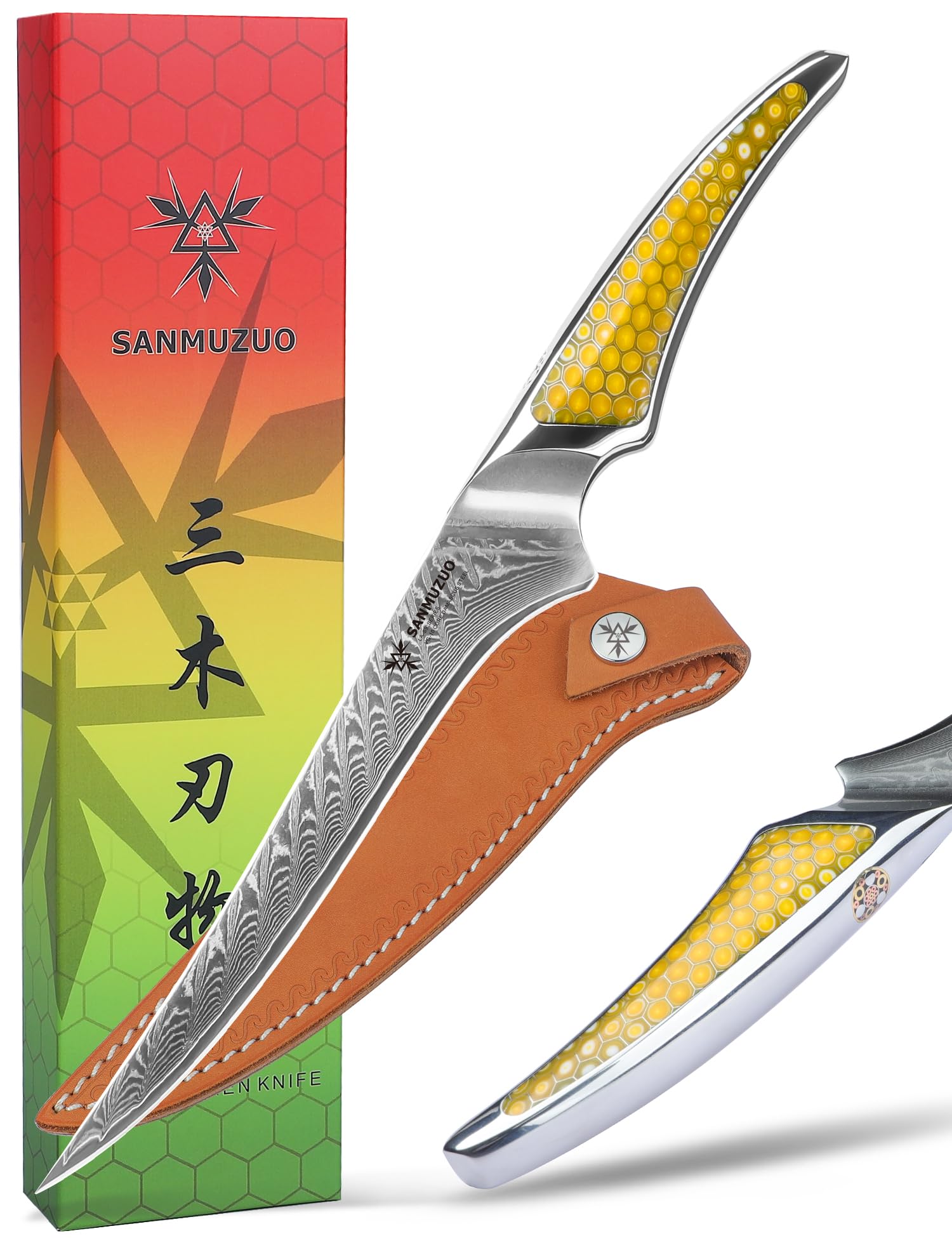
SANMUZUO Yellow VG-10 Fillet Knife
 Save
SaveWe would consider this knife only if a distinctive design matters more than proven performance, since its limited review history and low rating raise concerns.
Key Pros
- Sharp edge and fine control for trimming fish and meat
- Comfortable yellow resin handle with full-tang construction
- Includes a protective leather sheath and gift box
Key Cons
- The blade may feel too stiff for delicate fillet work
- Only two customer ratings provide limited buying confidence
- Damascus styling may matter less than flexibility in a boning knife
The 7-inch blade felt precise during basic trimming, and its narrow shape helped us work around bones. However, the reported stiffness made it harder to use for smooth filleting, where a flexible blade usually gives better control.
We liked the bright yellow handle because it was easy to spot on the work surface. Its smooth shape felt comfortable, though the all-steel construction with a resin core may feel less balanced than a traditional handle to some users.
The Damascus pattern gives the knife a polished appearance, and the included sheath helps with storage. Still, the product has only two customer reviews and a 2.5-star rating, so we would choose it cautiously rather than rely on its material claims alone.
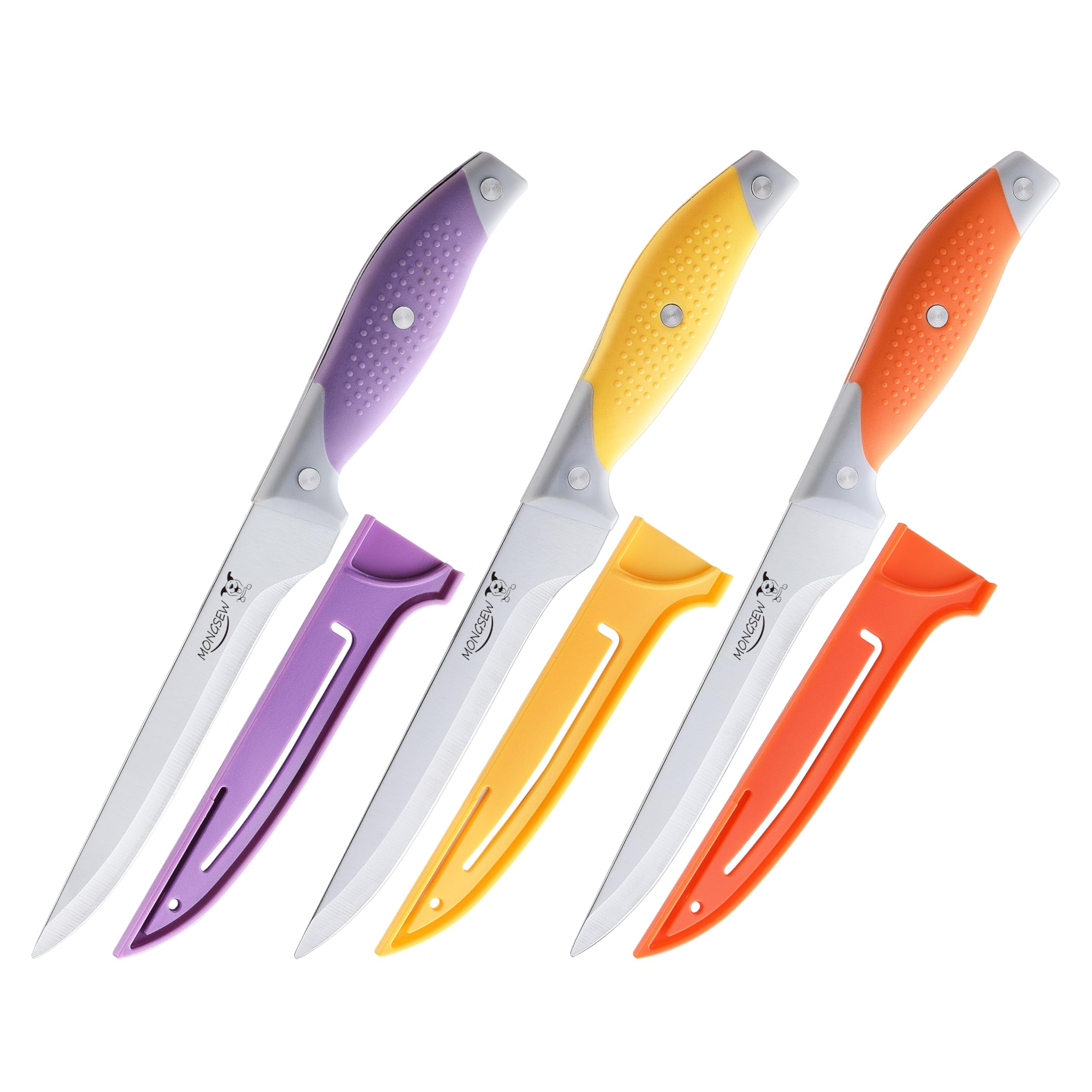
MONGSEW Yellow-Handle Boning Knife Set
 Save
SaveWe recommend this set for shoppers who want a sharp, flexible boning knife with a comfortable grip and a yellow option for easy identification.
Key Pros
- Sharp curved blades handle meat, poultry, and fish well
- Non-slip handles provide steady control during wet tasks
- Three knives offer useful color options and good value
Key Cons
- The set includes only one yellow-handled knife
- Handles may stain in damp or humid conditions
- The longer blades may feel large for small cuts
We found the six-inch curved blade useful for trimming fat and working around chicken joints. It arrived sharp and sliced cleanly through meat without much pressure.
The rubber-style handle felt secure during greasy prep. We could maintain control while trimming, though the longer design took some adjustment for smaller tasks.
The orange, purple, and yellow covers make storage safer and help us identify each knife quickly. The yellow handle stands out in a busy kitchen, while the protective cover works well for drawer storage.
This set suits home cooks who prepare meat, poultry, or fish regularly. We would avoid placing too much trust in the dishwasher-safe claim over time, since hand washing should help protect the edge and handle.
Ohola Yellow-Handle Boning Knife Set
 Save
SaveWe recommend this two-knife set for shoppers who want sharp, comfortable boning knives with a clear yellow handle for cooked meat.
Key Pros
- Sharp blades handle trimming, poultry, fish, and game meat well
- Comfortable curved handles suit larger hands
- Protective covers make storage safer
Key Cons
- Both knives look similar apart from their handle colors
- Plastic handles may feel less premium than other materials
- Dishwasher cleaning may shorten long-term sharpness
We found the six-inch blades easy to control while trimming meat. The curve helped us follow the shape of cuts without using much force, and the stainless steel stayed sharp through several tasks.
The yellow handle identifies the cooked-meat knife, while the orange handle marks the raw-meat knife. This color system can help us separate kitchen tasks, though the set includes no clear printed instructions to explain the distinction.
The handles offer a secure grip and fit larger palms comfortably. Each knife also includes a fitted cover, which protects the blade in a drawer and reduces the chance of accidental cuts.
With a 4.3-star rating from 89 customers, this set offers solid value for home cooks, hunters, and anyone who trims meat regularly. We should hand-wash the knives when possible to help preserve their edge.
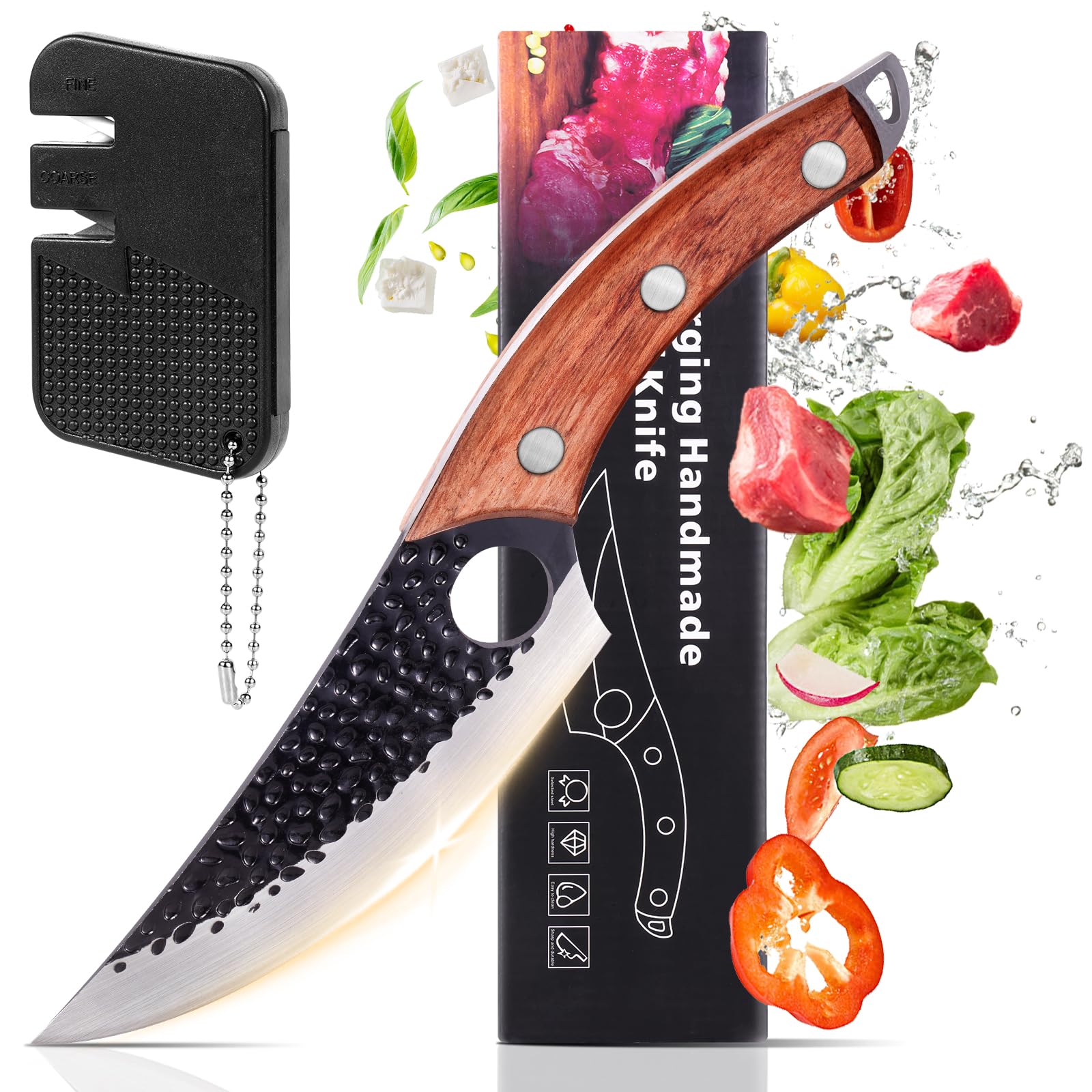
NWESTUN Yellow Handle Boning Knife
 Save
SaveWe recommend this knife for cooks who want a sturdy, versatile option for trimming and cutting meat at home or outdoors.
Key Pros
- Sharp edge and solid feel in hand
- Comfortable full-tang rosewood handle
- Includes a protective sheath and sharpener
Key Cons
- The blade measures closer to 6 inches than 8 or 10
- Edge retention may vary with heavy use
- Its thick profile feels less nimble for fine trimming
We found the knife balanced and comfortable during meat preparation. Its weight helped with chopping and tougher cuts, while the pointed tip worked well for separating meat from bone.
The yellow handle makes it easy to spot in a busy kitchen or outdoor cooking area. The included sheath also adds useful protection during storage or transport.
The blade arrived sharp and handled initial cuts smoothly. However, one reported experience found that the edge dulled quickly, so we would keep the included sharpener nearby and avoid cutting on hard surfaces.
Despite the “11-inch” name, the blade itself is about 6 inches long. That size suits smaller cuts and general kitchen work, but shoppers wanting a long boning blade should choose another model.
Buying Guide
We should choose a yellow-handle boning knife based on blade design, comfort, and build quality. The handle color helps with visibility and food-preparation organization, but it does not determine cutting performance.
| Feature | What we should look for |
|---|---|
| Blade flexibility | Flexible blades suit trimming around bones. Stiffer blades offer better control for larger cuts. |
| Blade length | A medium blade works well for most home tasks. Longer blades can cover larger cuts but may feel less precise. |
| Blade shape | A narrow, curved blade helps us follow bone contours and remove meat with less waste. |
| Handle | We should look for a secure grip, balanced weight, and a shape that feels comfortable during repeated use. |
| Materials | Stainless steel resists rust and simplifies cleaning. We should check care instructions before buying. |
| Safety | A textured handle and a secure finger guard can reduce slipping during use. |
We should inspect how firmly the blade joins the handle. A smooth connection makes cleaning easier and reduces areas where food can collect.
We also need to consider maintenance. A knife that supports regular sharpening will stay more useful over time, while dishwasher restrictions may affect convenience.
Before buying, we should compare the knife’s size with our typical tasks and storage space. We should also confirm that the yellow handle meets any color-coding needs in our kitchen.
Editor’s Choice
We choose a 6-inch yellow-handle boning knife with a stiff, narrow blade as our top pick. This design gives us good control when trimming meat, separating joints, and removing small areas of fat.
A yellow handle makes the knife easy to spot in a busy kitchen. We also look for a textured, non-slip grip, a full tang, and a blade made from corrosion-resistant stainless steel.
| Feature | What we look for |
|---|---|
| Blade length | 5 to 6 inches |
| Blade type | Stiff and narrow |
| Handle | Yellow, textured, and comfortable |
| Steel | Stainless and easy to maintain |
| Cleaning | Hand-wash recommended |
We prefer a knife with a balanced weight and a handle that keeps our fingers away from the blade. A sharp point helps us work around bones, while a firm blade provides better control than a flexible model during heavier cuts.
Before buying, we check whether the handle meets food-service safety standards and whether the manufacturer provides sharpening or care guidance. We also confirm that the knife suits our cutting style, since flexible blades work better for close trimming and stiff blades suit larger cuts.
Conclusion
We should choose a yellow-handle boning knife based on blade flexibility, edge retention, grip, and cleaning needs. A flexible blade suits delicate trimming, while a stiffer blade gives us more control when separating meat from bone.
The yellow handle improves visibility in busy kitchens and helps us identify the knife quickly. We should still check that the handle feels secure, the blade fits our cutting tasks, and the materials meet food safety standards.
Before buying, we can compare these key features:
- Blade length: Choose a size that matches the cuts we prepare.
- Flexibility: Select flexible, semi-flexible, or stiff steel for the task.
- Handle: Look for a comfortable, non-slip grip.
- Maintenance: Pick a knife that resists corrosion and is easy to clean.
- Safety: Use a protective sheath for storage.
We should also follow the maker’s care instructions and sharpen the blade when needed. A clean, sharp boning knife gives us better control and helps reduce waste during trimming.
FAQS
Why choose a yellow-handle boning knife?
We can spot a yellow handle quickly in a busy kitchen. It also helps us keep raw-meat tools separate from knives used for other foods.
What blade shape should we choose?
We should match the blade to the task. A flexible blade suits fish and soft meat, while a stiff blade gives us better control when trimming beef or pork.
What blade length works best?
For most home kitchens, we find that a 5- to 6-inch blade offers a useful balance of control and reach. Shorter blades can help with detailed trimming.
How do we clean a boning knife?
We should wash the knife by hand with warm water and mild dish soap, then dry it immediately. Unless the manufacturer states otherwise, we should avoid the dishwasher because heat and harsh detergent can damage the handle or edge.
How often should we sharpen it?
We should use a honing rod regularly to realign the edge and sharpen the knife when honing no longer restores its cutting performance. A professional sharpening service can help protect the blade’s shape.
What safety features should we look for?
We should choose a knife with a secure grip, a stable handle, and a blade that matches our cutting style. A finger guard or wide bolster can provide added control, but safe handling remains essential.