Chef Knife Staining: Why It Happens and How to Fix It
Quick Answer
Chef knife staining is usually discoloration left by water, minerals, acids, salt, heat, or food pigments, not proof that the knife is ruined. Most stains are on the surface and can be cleaned off, while a smooth grey or dark change on carbon steel is often patina. Wash the blade promptly, dry it fully, and use a gentle cleaner before trying anything abrasive.
A stain can appear after one careless night in the sink, or build up slowly over months of normal cooking. Either way, the colour alone rarely tells the full story. What matters is what caused the mark, whether it sits on the surface or has damaged the steel, and whether the habit that caused it is still happening.
What Staining Actually Means on a Chef Knife
Staining is a broad word for a change in the blade’s appearance. It can mean a mineral deposit left behind when water evaporates, a chemical reaction between steel and food, a heat tint, or the early stage of corrosion. Some marks are only residue. Others are a thin layer formed on the steel itself.
That distinction matters because the fix is different. A water spot may wipe away with a dry cloth, a food stain may need a mild paste, and a stable patina on carbon steel may need no removal at all. Rust, which is rough and orange or reddish-brown, needs prompt attention because it can eat into the surface if left alone.
Why Chef Knives Stain
 Save
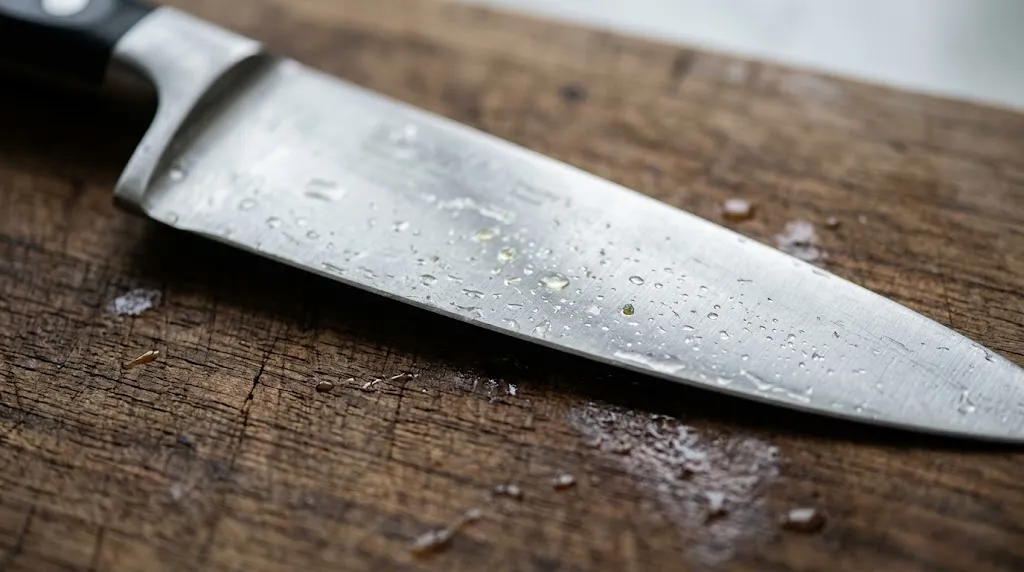
Most stains come from time plus residue. A brief touch of lemon juice or a splash of water rarely damages a blade; problems start when residue stays on the steel, dries there, or is repeatedly heated without being cleaned off.
- Water and minerals: Droplets left to air-dry can leave pale spots, especially in hard-water areas.
- Acids: Citrus, tomato, vinegar, wine, and onion juice react more readily with steel, particularly carbon steel.
- Salt: Salt draws moisture and can speed corrosion, so brine and cured-meat juices should not be left to dry on the blade.
- Heat: High heat can create rainbow-like tints on stainless steel, especially near a burner or in a very hot dishwasher cycle.
- Dishwasher detergent: Strong detergents, long hot cycles, and contact with other items can dull the finish and leave spots.
- Contact with other metals: Knives jostling against other cutlery can pick up marks, and particles from a rusting item can transfer to a clean blade.
- Food pigments: Turmeric, beetroot, and berries can tint the surface if the stain is left to dry before washing.
How to Tell What Kind of Mark You Have
Start with colour, texture, and timing. A mark that appeared right after one ingredient points to that ingredient. A mark that appeared overnight after the knife was left wet points to moisture. A mark that has built up gradually on carbon steel may be patina rather than damage.
| Mark | What it usually looks like | Likely meaning |
|---|---|---|
| Water spot | Pale, round, flat | Dried mineral residue |
| Food stain | Coloured patch matching the food | Surface pigment or residue |
| Patina | Smooth grey, blue, or dark shading | Stable surface layer, common on carbon steel |
| Heat tint | Rainbow or straw-coloured band | Heat-related discoloration |
| Rust | Rough, raised, orange or reddish-brown | Corrosion that should be removed |
Texture is a useful check: patina and most surface stains feel smooth, while rust feels rough or raised. For darkening rather than orange spots, see our guide to why a knife blade turns dark.
Is a Stained Chef Knife Safe to Use?
In most cases, yes, provided the blade is clean. A stain is not the same as dirt: wash the knife with warm, soapy water, rinse well, and dry it before use. That step matters more than the colour of the steel, because residue and moisture left in a stain can harbour bacteria.
Patina on carbon steel is generally a stable surface layer, not flaking rust, and many cooks keep using a patinated blade. Rust is different: remove it before cooking, because a rough, pitted surface is harder to clean and can continue to corrode. If the edge is pitted or flaking, inspect it in good light and get it professionally assessed if the damage looks deep.
Also check the handle and the join between blade and handle, where staining can trap moisture and food residue. Dry that area carefully, and do not soak a wooden handle for long periods.
How to Remove Stains Without Scratching the Blade
Work from gentle to stronger, and stop as soon as the stain lifts. Aggressive scrubbing can leave scratches that trap moisture. Always wipe away from the edge, not along it, and keep your fingers on the spine side of the blade.
- Wash the blade in warm, soapy water with a soft sponge, rinse, and dry it. Many light marks disappear at this stage.
- For a remaining surface stain, make a paste from baking soda and a little water. Rub it lightly with a soft cloth, working along the blade rather than across the edge.
- Rinse thoroughly, then towel-dry immediately. Leaving paste or water on the blade can create a new mark.
- For a stubborn food stain, repeat the paste once rather than switching straight to a coarse pad. If the stain still will not move, a non-abrasive stainless-steel cleaner made for kitchen use is the next step, used exactly as directed.
- For carbon steel, treat patina differently: do not try to polish away a smooth, dark patina just because it looks uneven. Remove only rough rust spots, then wash, dry, and protect the blade.
See our guide to how to clean a chef knife for the full routine. Avoid steel wool, coarse pads, bleach, and oven cleaner: they can scratch the finish and damage the edge. If a stain survives gentle cleaning but still feels smooth, it is usually cosmetic.
Warning
Do not use vinegar or lemon juice as a long soak to remove stains. A brief, gentle clean is one thing; leaving an acidic liquid on steel can etch the surface and create a new stain.
Staining by Steel Type
Stainless steel is stain-resistant, not stain-proof. The name comes from chromium in the steel, which forms a thin protective layer on the surface. That layer helps, but it can be weakened by prolonged moisture, salt, strong acids, harsh detergents, and scratches. Stainless blades therefore tend to show spots and tints rather than deep, rapid corrosion, especially near the edge or bolster where water collects.
Carbon steel has little of that chromium protection, so it reacts faster: acidic foods can leave a mark within a single prep session, and a wet blade can develop spots overnight. The trade-off is that a well-kept carbon blade can develop a stable patina that helps slow further corrosion. See our guide to maintaining a carbon steel chef knife and the background on what patina on a knife is before deciding whether to remove a dark mark.
Clad and Damascus-style blades can stain unevenly, because different layers react at different rates. Clean the whole blade evenly and avoid spot-scrubbing one layer harder than the rest.
How to Prevent Staining in Everyday Cooking
 Save
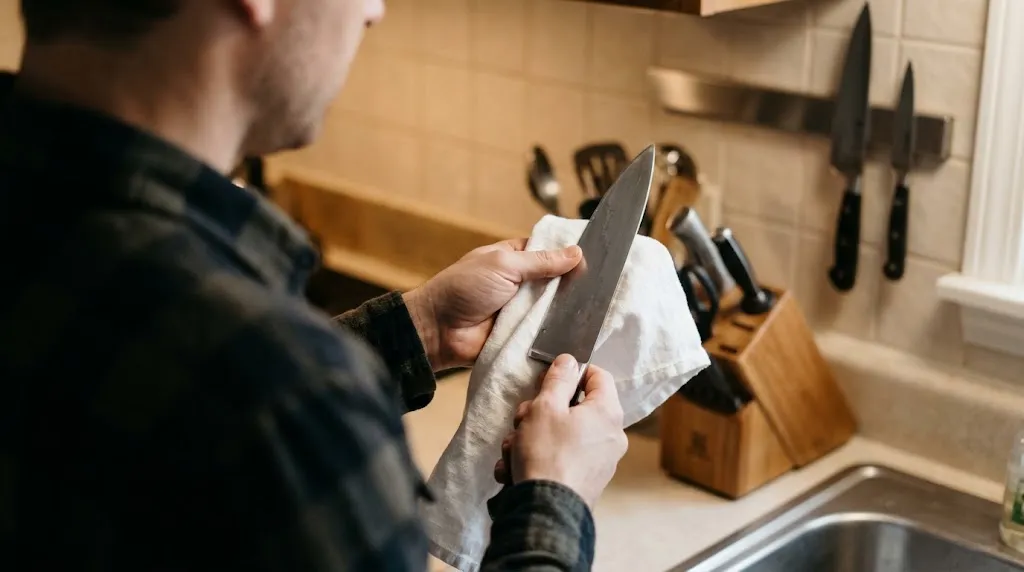
Prevention is mostly a short routine, repeated consistently. The biggest gains come from shortening the time residue and water spend on the steel.
- Wash promptly after acidic, salty, or strongly coloured foods. A quick wash now beats a scrub later.
- Hand-wash with mild dish soap and a soft sponge. WÜSTHOF care instructions give the same basic advice: wash by hand, towel-dry immediately, and avoid abrasive sponges or leaving the knife soaking.
- Dry both sides, plus the bolster and the area where blade meets handle. Our guide to how to dry a chef knife covers the spots people most often miss.
- Store the knife dry, with the blade protected and separated from other cutlery. A block, magnetic strip, or sheath works, provided the blade goes in dry.
- For carbon steel in a humid kitchen, or for longer storage, a very thin wipe of food-safe mineral oil after drying adds a moisture barrier.
- Keep the knife off hot surfaces and out of the dishwasher. Heat, detergent, and rattling against other items all increase staining risk.
Mistakes That Make Staining Worse
Leaving the knife in the sink is the most common one. Soaking gives water, salt, and acid hours to work on the steel and handle, and leaving a wet knife on a board or in a damp block has the same effect, more slowly.
Scrubbing harder after a stain appears is another trap: a coarse pad may remove the colour while leaving scratches that hold moisture. Bleach and harsh cleaners can also discolour steel and handles, and storing a knife while damp seals moisture against the blade.
When Staining Means Something More Serious
Most stains are cosmetic, but a few signs deserve a closer look. Deep pits, a rough or flaking edge, or rust that returns quickly in the same place after gentle cleaning can mean the surface has been damaged beyond a simple stain. Rust near the edge can also affect cutting, because a pitted edge is harder to sharpen cleanly.
If damage is light and only on the flat of the blade, gentle cleaning and a better drying routine may be enough. If the edge itself is pitted, have a professional look at it before continuing to use it for food.
Related Product
Chef Knife Cleaning Kit
A soft-cloth and gentle cleaner kit helps lift surface stains without scratching the blade or dulling the edge.
As an Amazon Associate, we earn from qualifying purchases.
Frequently Asked Questions
Why does my stainless steel chef knife stain if it is stainless?
Stainless means stain-resistant, not stain-proof. Chromium forms a protective layer, but prolonged moisture, salt, acids, harsh detergents, heat, and scratches can weaken it. Once that layer is damaged, spots and tints can form, especially where water collects near the edge or bolster.
Is black discoloration on a carbon steel knife rust?
Not usually. Smooth, grey, blue, or dark shading on carbon steel is often patina, a stable surface layer formed by contact with foods and moisture. Rust is different: it is rough, raised, and orange or reddish-brown, and it should be removed promptly.
How do I remove stains from a chef knife without scratching it?
Start with warm, soapy water and a soft sponge. If a mark remains, use a baking soda and water paste with a soft cloth, rinse well, and dry immediately. Avoid steel wool and coarse pads, which can scratch the finish and make future staining more likely.
Can the dishwasher cause knife staining?
Yes. Hot water, strong detergent, long cycles, and contact with other cutlery can leave spots, dull the finish, and damage handles. Hand-washing and towel-drying immediately after use is the safer routine for most chef knives.
Do stains affect how sharp a knife is?
Surface stains alone usually do not. Sharpness depends on the edge, not the shine of the flat blade. Staining matters for performance only when rust or pitting reaches the edge, because a damaged edge is harder to sharpen cleanly.
How do I stop my chef knife from staining again?
Wash promptly after acidic or salty foods, dry both sides and the bolster area fully, and store the knife dry and separated from other cutlery. For carbon steel, a thin wipe of food-safe mineral oil after drying helps in humid kitchens or during longer storage.
Conclusion
Most chef knife staining is a cleaning and drying problem, not a sign that the knife has failed. Identify the mark first, clean gently, and fix the habit that left residue or water on the blade. Keep carbon steel patina in perspective, remove rough rust promptly, and store the knife dry. With that short routine, the blade stays cleaner, easier to inspect, and ready for the next meal, without needing harsh scrubbing, special products, or a complicated care routine.

