Why Your Chef’s Knife Won’t Cut Tomatoes (And How to Fix It)
Quick Answer
When a chef’s knife struggles to cut tomatoes, it is almost always due to a dull edge that lacks the microscopic micro-teeth required to pierce the slick outer skin without crushing the soft flesh underneath. The immediate fix is usually a quick pass over a fine sharpening stone or honing steel to restore the blade’s bite, followed by proper cutting technique that relies on a smooth slicing motion rather than downward pressure.
Why Tomatoes Are the Ultimate Test for Knife Sharpness
 Save
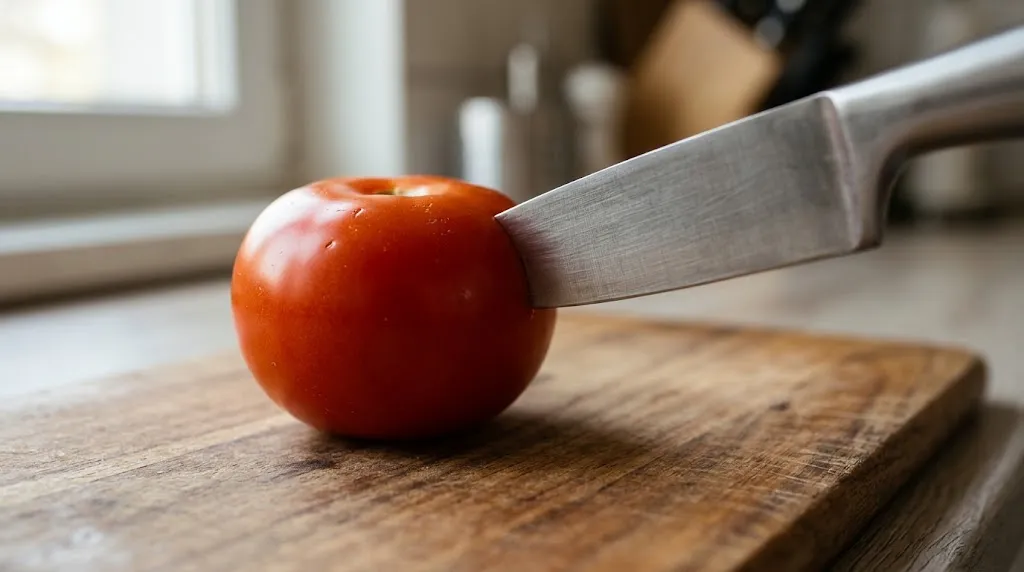
Tomatoes present a unique physical challenge for kitchen cutlery. The combination of a tough, waxy, slippery exterior skin and a delicate, highly watery internal structure means that any imperfection in a knife’s edge is immediately exposed.
When a chef’s knife is sharp, the edge acts as a series of microscopic teeth that catch the tomato skin and slice through it effortlessly before the blade even begins to compress the inner pulp. When that edge wears down, it becomes microscopically rounded or polished flat. Instead of gripping the skin, a dull blade slides across the surface, forcing the user to apply downward pressure.
That downward pressure squashes the tomato cells, releasing juices across the cutting board and resulting in jagged, uneven slices or a mashed wedge rather than a clean cut. Understanding why this happens helps clarify why standard kitchen maintenance makes such a dramatic difference in daily food preparation.
The Mechanics of a Dull Edge Versus a Sharp Edge
Knife sharpness is often misunderstood as a simple thinness at the very apex of the blade. In reality, a properly maintained knife edge features a precise bevel geometry that balances cutting efficiency with durability.
What Happens to Steel Over Time
Every time a chef’s knife contacts a cutting board—whether made of wood, plastic, or composite material—the extreme pressure on a microscopic surface area causes the delicate apex to bend, roll, or chip away. Even cutting soft foods eventually causes microscopic wear because the steel impacts the harder surface beneath.
As the apex flattens, its radius increases. A flattened edge requires significantly more force to initiate a cut. On tough-skinned produce like tomatoes, bell peppers, or eggplants, this lack of initial bite causes the blade to skid.
The Role of Micro-Serrations
Kitchen knives sharpened on fine stones naturally retain microscopic toothiness along the bevel, even when polished to a high grit. These tiny irregularities catch food fibers. When cutting a tomato, these micro-teeth act like a tiny saw, catching the skin instantly. A completely polished, dull blade lacks these teeth entirely, sliding smoothly across the tomato skin like ice on glass.
Key Insight
A knife does not need to look visibly damaged or feel thick to struggle with tomatoes. Just a minor loss of apex crispness is enough to cause slipping on smooth, taut vegetable skins.
How to Fix a Knife That Slips on Tomatoes
Restoring a chef’s knife to peak cutting performance involves addressing the steel at the apex through proper maintenance steps. Depending on how dull the blade has become, routine honing or full sharpening may be required.
- Assess the edge condition: Inspect the blade under good lighting to see if light reflects off the very edge. Any shining line indicates a flat, dull spot where the edge has rolled or worn away.
- Use a honing steel for realignments: If the knife cut well recently, a ceramic or smooth steel honing rod can realign a microscopic rolled edge in less than a minute, restoring immediate bite.
- Sharpen on whetstones when wear is advanced: If honing fails to restore performance, use a medium-grit whetstone (around 1000 grit) to grind away worn steel and form a fresh, clean apex bevel.
- Refine and deburr: Polish the new edge on a finer stone (3000 to 6000 grit) and strop the blade to remove any remaining microscopic burr, ensuring smooth passage through delicate produce.
Technique Adjustments for Difficult Cuts
Even with a sharp knife, poor cutting technique can make slicing tomatoes frustrating. Changing how the knife interacts with the food surface improves results immediately.
Utilize Draw Slicing Instead of Chopping
Pushing straight down on a tomato relies entirely on downward force and initial bite. Instead, use a gentle drawing or slicing motion—pulling or pushing the blade lengthwise across the tomato while applying minimal downward pressure. This lets the length of the edge do the work rather than relying on brute force.
Cut Through the Stem Scar First
The toughest part of a tomato’s skin is often right around the stem scar or areas exposed to direct sunlight during growth. Starting the cut slightly off-center or piercing the skin with the tip of the knife in a controlled puncture motion before completing the slice can prevent slipping on stubborn specimens.
Tip
Always place tomatoes stem-side down or cut them in half to create a stable, flat base on your cutting board before making further slices. Never try to slice a round tomato while it is wobbling on the board.
Common Mistakes That Ruin Knife Edges Quickly
 Save
Certain kitchen habits accelerate edge dulling, causing chef’s knives to struggle with soft produce much faster than normal.
- Using glass, ceramic, or stone cutting boards: Hard surfaces crush and fold microscopic steel edges instantly. Stick to end-grain or edge-grain wood and soft plastic boards.
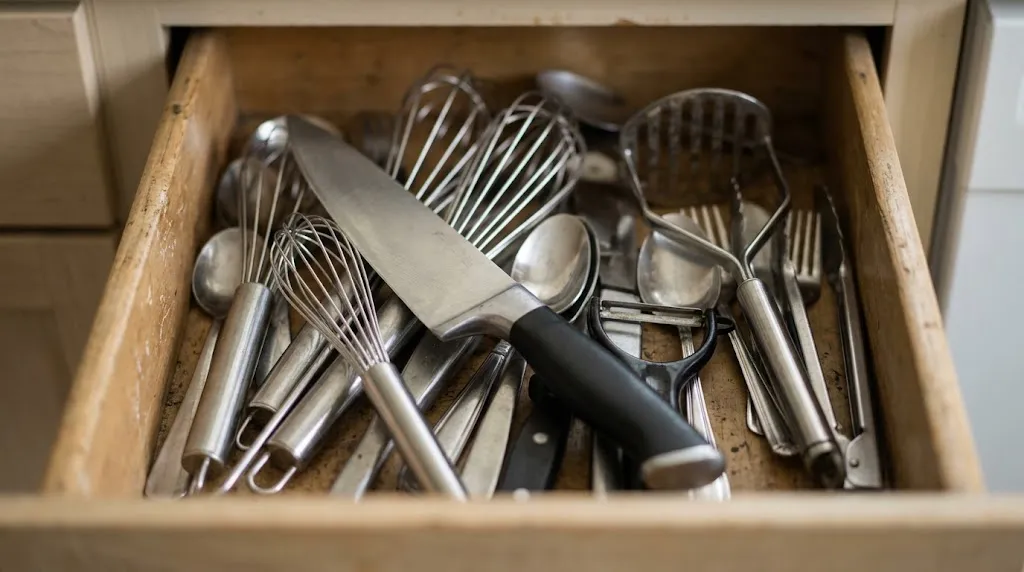
- Storing knives loose in drawers: Allowing blades to rattle against other utensils chips and dulls the apex before you even use them. Use a magnetic strip, block, or blade guard.
- Putting chef’s knives in the dishwasher: High heat, harsh detergents, and bouncing around against other items ruin knife edges and handle integrity rapidly.
- Using chef’s knives for non-culinary tasks: Opening packaging, cutting tape, or prying items bends fine kitchen knife geometry out of alignment.
When to Consider Professional Sharpening
If regular honing on a steel rod does not restore the knife’s ability to cut tomatoes cleanly, the bevel angle may have degraded or the edge may be too rounded for DIY recovery without specialized angle guides.
A professional sharpening service can reset the primary bevels on high-end kitchen knives, restoring the correct factory geometry. Once reset, maintaining that edge at home with occasional whetstone touch-ups keeps the knife performing at its best for years.
Related Product
Whetstone Knife Sharpening Stone Set
A dual-grit whetstone allows you to properly repair dull edges and polish your chef’s knife for effortless tomato slicing.
As an Amazon Associate, we earn from qualifying purchases.
Frequently Asked Questions
Why does my chef’s knife slide off cherry tomatoes specifically?
Cherry tomatoes have a high skin-to-volume ratio with an exceptionally taut, smooth surface. Because they are small and round, they tend to roll under downward pressure, compounding the problem of a dull edge that cannot immediately grip the skin.
Can a serrated utility knife be used if my chef’s knife won’t cut tomatoes?
Yes. A small serrated utility or bread knife relies on sawtooth points that bypass a dull edge by tearing through tough skins mechanically. However, it leaves a rougher cut and crushes more internal pulp than a properly sharp straight-edge chef’s knife.
How often should a chef’s knife be honed?
For home cooks preparing meals a few times a week, honing the blade lightly on a steel rod before every few cooking sessions keeps the edge aligned and reduces how often full sharpening is needed.
Does knife steel hardness affect how quickly it gets dull on tomatoes?
Yes. Harder steels hold a fine edge longer than softer western steels, but they can be more brittle. Softer steels roll more easily and require more frequent honing to maintain tomato-cutting performance.
Is it safe to use a pull-through sharpener to fix a dull kitchen knife?
Pull-through sharpeners can quickly restore a working edge in a pinch, but they often remove excessive steel unevenly and create a toothy, aggressive edge that may dull quickly or scratch the blade finish.
Why do overripe tomatoes make cutting even harder?
Overripe tomatoes have softer internal flesh that offers less internal resistance against downward pressure. Without a sharp edge to pierce the skin first, the entire fruit collapses under the blade before the skin even breaks.
Conclusion
When a chef’s knife fails to cut tomatoes cleanly, it is a reliable indicator that the blade needs attention through honing, sharpening, or refined cutting technique. By understanding how edge geometry interacts with tough produce skins and avoiding common bad habits like hard cutting surfaces, you can maintain a dependable edge that glides effortlessly through delicate ingredients every time.

