Chef Knife Chipping: Why It Happens and How to Fix It
Quick Answer
A chef knife usually chips because a thin, hard edge meets something harder than it can absorb, or is forced sideways. Small chips can normally be sharpened out on a coarse stone, but a honing steel will not remove a chip. Deep chips, cracks, or a broken tip are better left to a professional sharpener.
Finding a nick in a chef knife is frustrating, but a chip does not automatically mean a ruined knife. In many cases, the fix is simply to sharpen the edge back past the damaged area. The harder question is why it happened: if the cause is not changed, the same chip is likely to return after the next repair.
What a Chip Actually Is
A chip is a small piece of steel missing from the cutting edge. Held up to the light, the edge may show a bright spot where the smooth line breaks. If you check it by touch, move a fingertip very carefully across the edge, never along it.
A chip is different from a dull edge. A dull edge is still continuous, but it has become rounded and slides over food instead of biting into it. A rolled edge has folded to one side, which can also make a knife feel blunt. A burr is a thin flap of steel left during sharpening. Those problems respond to honing or ordinary sharpening. A chip does not, because steel is actually missing.
Chips also vary a great deal. A hairline nick may only catch on a tomato skin, while a larger notch can snag on an onion, leave a ragged cut, or make the blade feel as if it is jumping. The size and depth of the damage, not the fact that a chip exists, should decide whether you repair it at home.
Why Chef Knives Chip
 Save
Most chef knives are built around a trade-off. A harder, thinner edge stays sharp longer and slices more cleanly, but it is less able to bend or absorb a shock. A softer, thicker edge is more forgiving, but it dulls faster. That is why a very hard Japanese-style knife can feel superb for precise slicing and still be more vulnerable to chipping than a heavier Western-style knife.
Hardness alone does not explain most chips. The edge is designed mainly for downward cutting pressure. Sideways force, impact, and contact with a harder surface are the usual triggers. When one of those forces concentrates on a very thin section of steel, the edge can break rather than flex.
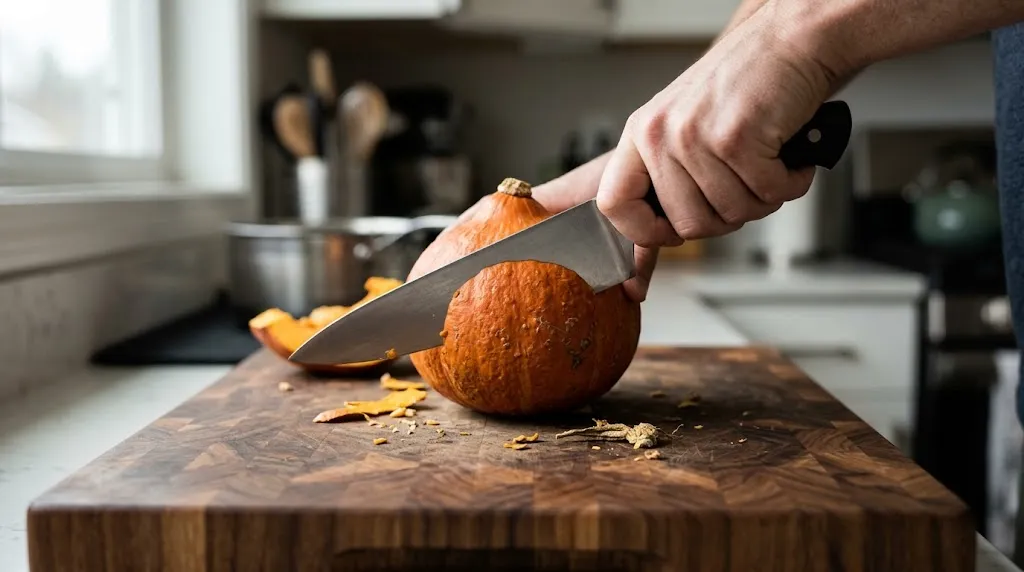
- Cutting bone, frozen food, or very hard rind. A chef knife is not a cleaver. Bone, a frozen block, hard winter squash, or a fruit stone can stop the edge suddenly and break it.
- Twisting or levering the blade. Burying the blade in a squash and forcing it sideways, prying open packaging, or levering out a stone puts lateral load on an edge made to cut straight down.
- Cutting on a hard surface. Glass, stone, ceramic, and some very hard boards are less forgiving than wood or a softer plastic board.
- Scraping food with the edge. Dragging chopped food across the board with the cutting edge is a common habit. Turn the knife over and use the spine instead.
- Knocks in storage or a drop. A loose knife in a drawer can hit other metal every time the drawer moves. A drop often damages the tip first, because that is the thinnest and most exposed part of the blade.
- An edge ground too thin for the work. A very shallow sharpening angle makes a keen edge, but it also leaves less steel behind the edge to support it. If a knife keeps chipping during normal use, the angle may be too fragile for how it is actually used.
Key Insight
A chip is usually a mismatch between the edge and the force it received, not proof that the knife is cheap. The same thin edge that slices cleanly is the edge most likely to break when it is twisted, dropped, or driven into bone.
How to Judge How Bad a Chip Is
Wash and dry the knife, then inspect it in good light. Look along the edge from heel to tip, and check for a crack running up from the edge, a bent tip, or a loose handle. Those are different problems from a simple edge chip, and they change the decision.
| What you find | What it usually means | Sensible next step |
|---|---|---|
| Hairline nick, barely visible | Only the very edge is affected. | Normal sharpening on a coarse-to-medium stone is often enough. |
| Small visible notch, edge still straight | Steel is missing, but the blade profile is intact. | Grind the edge back on a coarse stone, then rebuild it. |
| Deep notch, broken tip, or several large chips | Repair will change the blade shape noticeably. | Get a professional assessment before grinding more steel. |
| Crack, bend, or steel crumbling when sharpened | The blade itself may be compromised. | Stop using it; do not try a home repair. |
If you are not sure which row fits, treat the damage as the more serious one. Grinding is easy to overdo and hard to undo.
Can You Fix a Chipped Chef Knife at Home?
For a small chip, yes, in principle. The repair is not to fill the chip or bend the steel back. It is to sharpen the whole edge down until the new edge sits below the deepest point of the chip, then rebuild a clean, even edge. That is why chip repair removes more steel than routine sharpening, and why it should not be repeated casually.
A honing steel will not do this job. Honing realigns a rolled edge, while sharpening removes steel to create a new edge, a distinction WÜSTHOF’s sharpening guide explains clearly. A honing rod has nothing to realign where steel is missing.
If you already sharpen on a whetstone and the chip is small, the usual sequence is:
- Start coarse. Use a coarse stone to grind the edge back evenly. Keep the pressure steady and work both sides, checking often so you do not create a dip in one spot.
- Follow the existing bevel. Match the angle the knife already has, or follow the maker’s guidance, rather than guessing a much shallower angle. A fragile angle is a common reason for repeat chipping.
- Move to a medium stone. Once the chip has disappeared and the edge is continuous again, refine it. Our guide to chef knife sharpening stone grit explains how coarse, medium, and fine stones fit together.
- Remove the burr and test carefully. Finish the edge, remove any burr left by sharpening, and test on paper or a tomato. If the edge still catches in one place, the chip may not be fully out yet.
The most common home-repair mistake is rushing the coarse stage and leaving a shallow hollow where the chip was. The edge may look sharp, but it will not cut evenly. Another is sharpening only one side to chase a chip, which can leave the edge off-centre and make the knife steer in use.
If you have never used a whetstone, a chipped knife is not the best first project. Practice on an inexpensive knife first, or let a professional handle the first repair. Our chef knife whetstone sharpening guide covers the basic setup and stroke before you tackle damaged steel.
When a Professional Repair Makes More Sense
Some damage is still repairable, but a professional’s value is in keeping the blade profile straight. A sharpener can remove steel evenly along the whole edge, rather than digging out one section. That matters most when the chip is deep, when there are several chips, or when the tip needs reshaping.
A broken tip is the clearest example. Restoring it is a reshaping job: the spine and edge have to be blended into a smooth new curve, and the blade will end up slightly shorter.
Consider professional help if the chip changes the edge curve, if there are several chips, if the tip is broken, or if you suspect a crack. A cracked, badly bent, or crumbling blade is not a candidate for another round of grinding.
How to Stop the Same Chip Coming Back
 Save
Prevention is mostly about removing the forces that broke the edge in the first place. Keep a chef knife for slicing, dicing, and general prep. Use a cleaver or a heavier, tougher knife for bones and hard joints, and let frozen food thaw before cutting it. For hard squash, cut a flat base first so the piece does not roll, then cut with steady downward pressure.
Use wood or a softer plastic board rather than glass, stone, or ceramic, and keep grit off the board, since sand or dirt from unwashed vegetables can act like an abrasive under the edge. Cut straight, without twisting while the edge is buried in food, and move chopped food with the spine, not the edge.
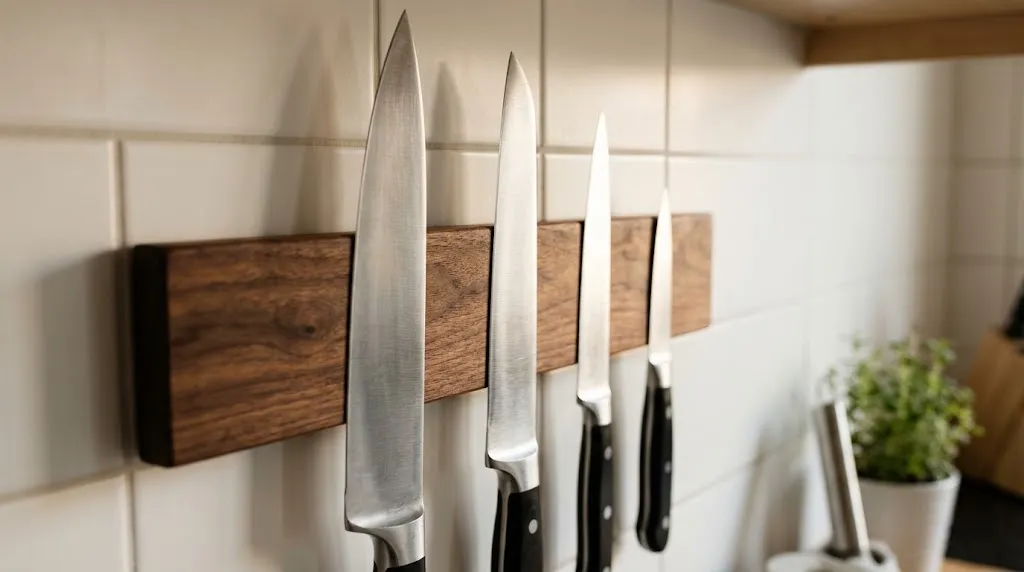
Technique problems often hide behind a chip. If your angle wanders during sharpening, you can leave a fragile edge behind, which is why our guide to chef knife sharpening mistakes is worth reading before the next repair. Finally, store the edge so it cannot knock into metal: a block, magnetic strip, blade guard, or in-drawer organiser prevents the mystery chips that appear days after a drawer was opened and closed.
Warning
Do not try to sharpen out a crack, a bent blade, or a chip that reaches well into the blade body. Grinding more steel will not make a compromised blade safe.
Related Product
Coarse Whetstone for Chip Repair
A coarse stone is the practical starting point for grinding a small chip out evenly before rebuilding the edge on finer grits.
As an Amazon Associate, we earn from qualifying purchases.
Frequently Asked Questions
Can a honing steel fix a chipped chef knife?
No. Honing realigns an edge that has rolled to one side, but it does not replace steel that is missing. A chip needs to be sharpened out on a stone, or repaired by a professional.
Why did my expensive chef knife chip?
Price does not make an edge unbreakable. Harder, thinner edges hold sharpness well but are less tolerant of sideways force, impact, and very hard food or surfaces.
Is it safe to keep using a knife with a small chip?
A very small nick is usually usable with extra care, but it can catch and make cuts less predictable. If the chip snags or the blade may be cracked, set the knife aside until it is inspected or repaired.
Can I fix a chip without a whetstone?
Not reliably. A pull-through sharpener removes steel unevenly and gives little control over the edge profile, so it is a poor tool for grinding out a chip.
Does washing a chef knife in the dishwasher cause chipping?
It can contribute, mainly because the knife knocks against other items and the edge is exposed to prolonged moisture and detergent. Hand washing, drying promptly, and storing the edge protected are safer habits.
How can I tell if a chip is too deep to repair at home?
If the notch changes the blade’s curve, if the tip is broken, if there are several large chips, or if you cannot remove the damage without creating an uneven edge, stop and ask a professional.
Conclusion
Most chef knife chips come from a force the edge was not built to take: bone, frozen food, a hard board, a twist, or a knock. Small chips are usually fixable by sharpening the edge back past the damage, but honing will not fill missing steel, and deep damage is best assessed by a professional. Fix the cause as well as the edge, and the repaired knife should stay in service far longer than the chip suggested.

