10 Best Boning Knife Red Handle for Precision Cutting
Boning knives help us separate meat from bones, trim fat, and work around joints with control. A red-handle boning knife adds a clear visual marker, which can make it easier to find in a busy kitchen and help separate it from other tools.
The best red-handle boning knives combine a sharp, flexible blade with a comfortable, secure handle that supports precise cuts. When choosing one, we look at blade length, flexibility, steel quality, handle grip, balance, and ease of cleaning. A bright handle can also improve visibility, but it should not replace safe handling and proper storage.
We compared red-handle boning knives to find options that balance control, durability, comfort, and value.
Best Red-Handle Boning Knives
We reviewed red-handle boning knives for blade quality, comfort, control, and ease of cleaning. Our list features the best options for trimming meat, poultry, and fish.
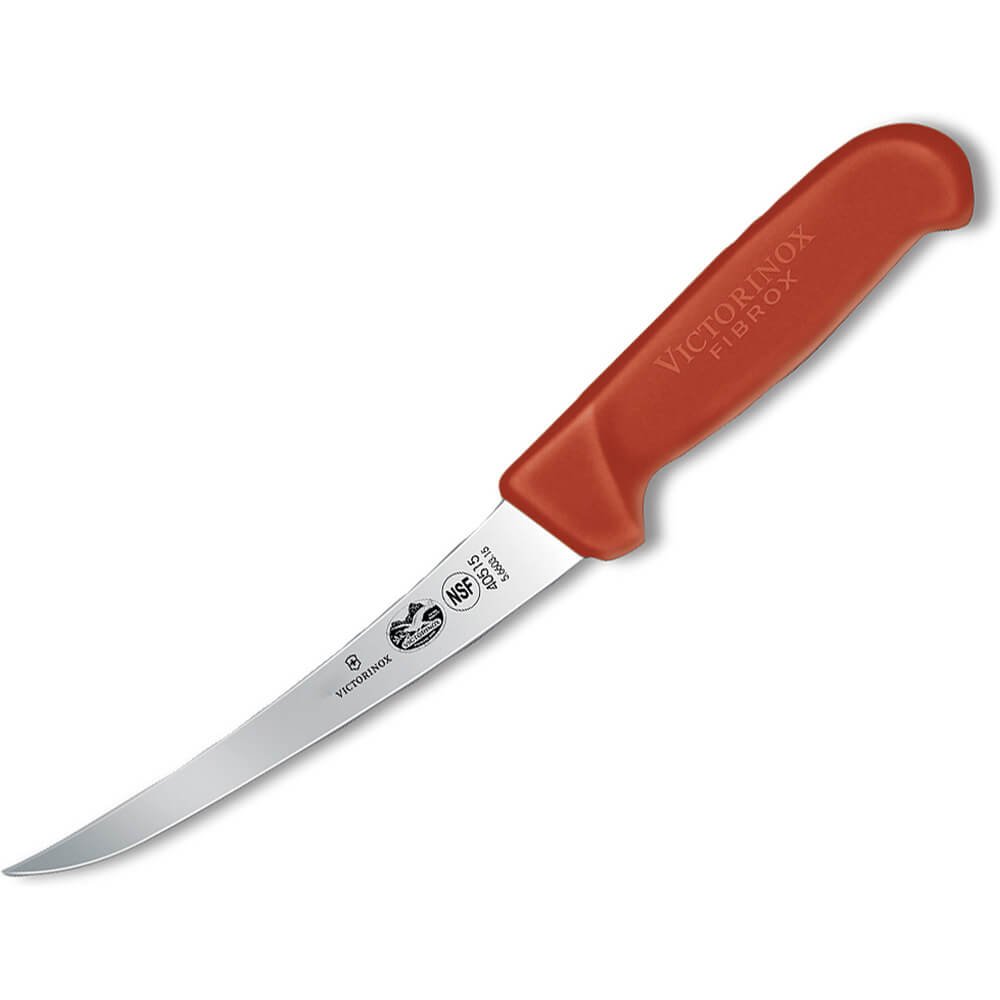
Victorinox Red Fibrox Boning Knife
 Save
SaveWe recommend this knife for meat trimming and deboning because its sharp, curved blade and steady grip make detailed work easier.
Key Pros
- Sharp blade cuts cleanly through meat and connective tissue
- Non-slip handle feels secure during wet work
- Light design holds its edge well
Key Cons
- Semi-stiff blade offers less flex for delicate tasks
- No sheath comes with the knife
- Dishwasher cleaning may dull the edge over time
We found the six-inch blade easy to control while trimming brisket, pork, and smaller cuts of meat. Its curved shape helped us follow bones and remove unwanted tissue without taking too much meat.
The red Fibrox handle stayed comfortable and secure in our hand, even during longer jobs. The knife also felt light, which reduced hand fatigue during repeated cuts.
The blade runs on the stiffer side, so it may not suit users who want a flexible fillet-style knife. It arrived very sharp and continued performing well with regular honing. We would hand-wash it and store it with a blade cover since the package does not include a sheath.
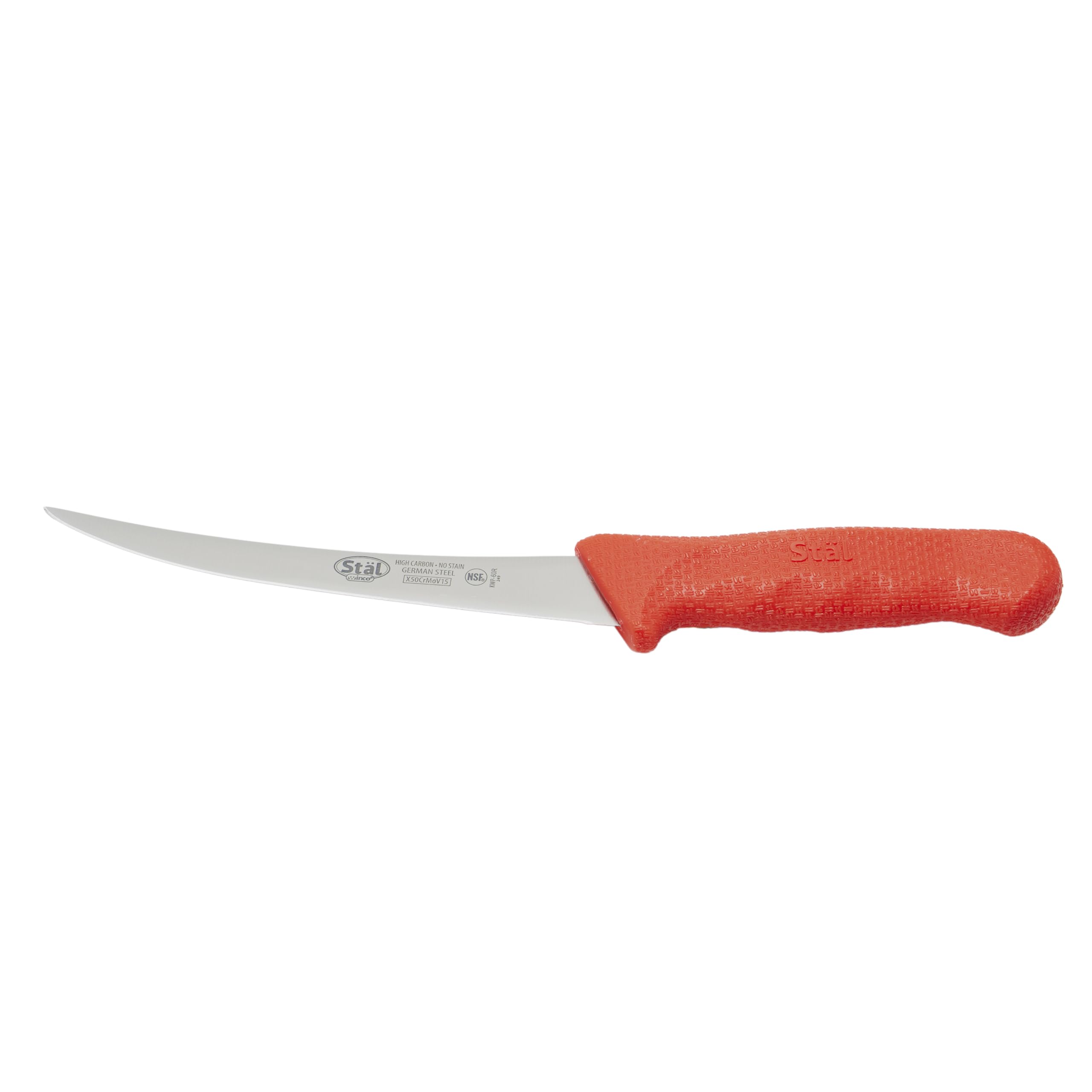
Winco 6-Inch Red Boning Knife
 Save
SaveWe recommend this knife for home cooks and light commercial use because it offers a sharp, comfortable blade at a reasonable price.
Key Pros
- Comfortable red handle with a secure grip
- Sharp blade for trimming meat, poultry, and fish
- Light design works well during longer prep tasks
Key Cons
- Edge may need frequent sharpening with heavy use
- Some users found sharpening more difficult over time
- Plastic handle feels less refined than premium models
We found the curved 6-inch blade easy to control while trimming fat and separating meat from bone. Its light weight helped us make careful cuts without tiring our hand quickly.
The textured handle stayed secure when our hands were wet or greasy. Finger indentations added comfort, though the plastic construction did not feel as polished as a softer rubber handle.
The blade performed well on chicken, fish, brisket, and game. It held its edge through moderate use, but frequent sharpening may be needed for large workloads. This Winco model suits home kitchens, hunters, and anyone who wants an affordable red-handled boning knife.
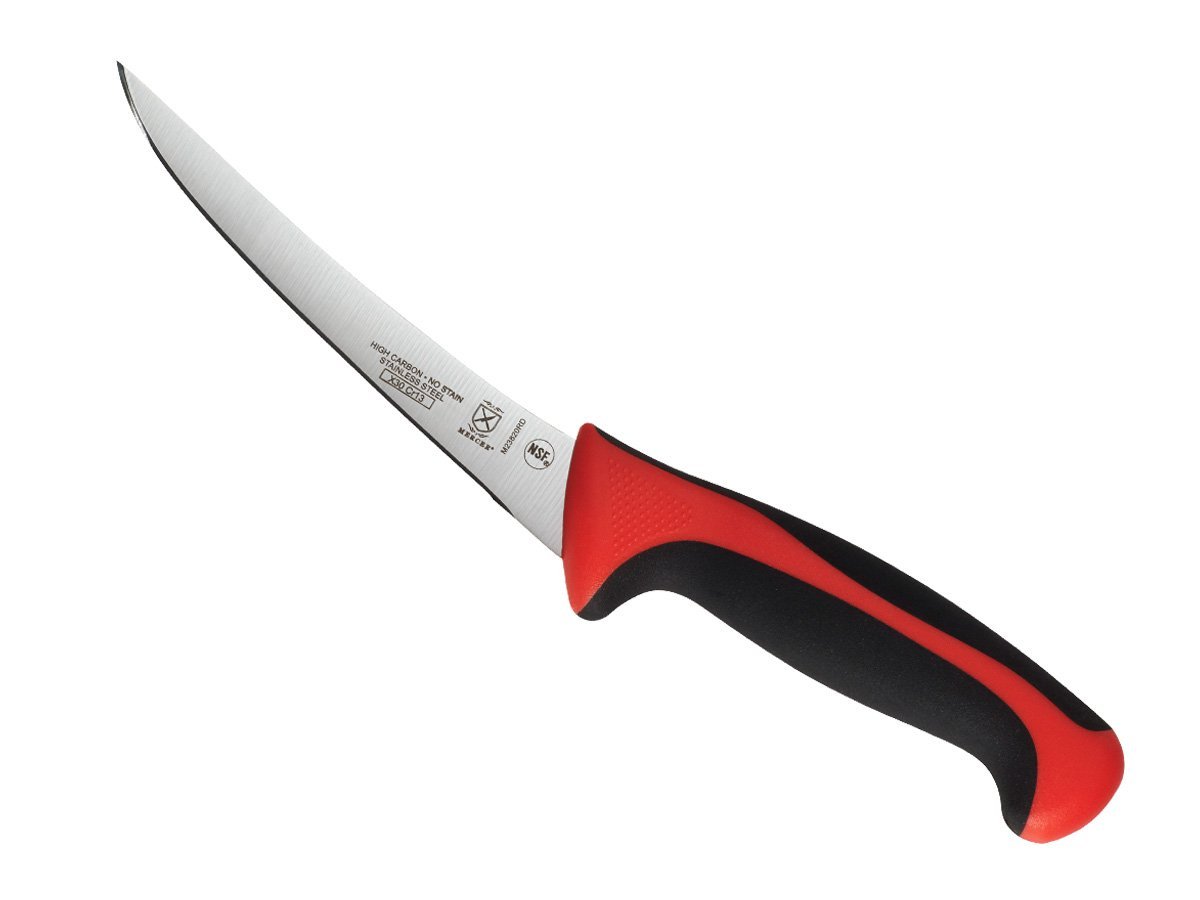
Mercer Culinary Millennia Red Curved Boning Knife
 Save
SaveWe recommend this knife for trimming meat, deboning poultry, and cleaning fish because it offers sharp performance, a secure grip, and a reasonable price.
Key Pros
- Sharp blade that handles meat, fat, and sinew cleanly
- Textured red handle stays comfortable and secure during wet work
- Curved shape improves control around bones and uneven cuts
Key Cons
- Hand washing takes more care than using a dishwasher
- The blade may feel less flexible than some premium boning knives
- The handle could feel large for smaller hands
We found the six-inch curved blade easy to guide when trimming brisket and separating meat from bone. Its high-carbon steel edge made clean cuts through fat and sinew, while the curved profile helped us follow the shape of poultry and larger cuts.
The red Santoprene handle gave us a steady grip, even when our hands became wet or greasy. Textured finger points added control without making the handle uncomfortable during longer prep sessions.
This knife needs hand washing with mild soap, followed by thorough drying. We also noticed that the stamped construction keeps it light and easy to handle, though cooks who prefer a very thin, flexible blade may want a different style.
Victorinox Red Fibrox Boning Knife
SaveWe recommend this knife for shoppers who want a sharp, easy-to-control boning knife with a secure red handle and a useful curved blade.
Key Pros
- Curved, semi-stiff blade offers good control around bones
- Slip-resistant handle feels secure during wet prep
- Sharpens easily and suits trimming, deboning, and sausage work
Key Cons
- Edge may need regular touch-ups with heavy use
- Six-inch blade can feel long for smaller cuts
- Hand washing may help preserve the edge and handle
When we used this knife on beef and pork, the curved blade helped us follow the bone without changing tools often. Its semi-stiff feel gave us enough support for tougher sections while still allowing careful trimming.
The red Fibrox Pro handle stayed comfortable and steady, even when our hands became wet or greasy. Its bright color also made the knife easy to spot among other tools.
The blade arrived sharp and handled steak trimming and pork shoulder prep well. We found that it responds quickly to sharpening, though frequent heavy use may reduce edge retention.
Victorinox lists the knife as dishwasher safe, but we prefer hand washing and drying it after each use. That approach helps protect the edge and keeps the handle in good condition.
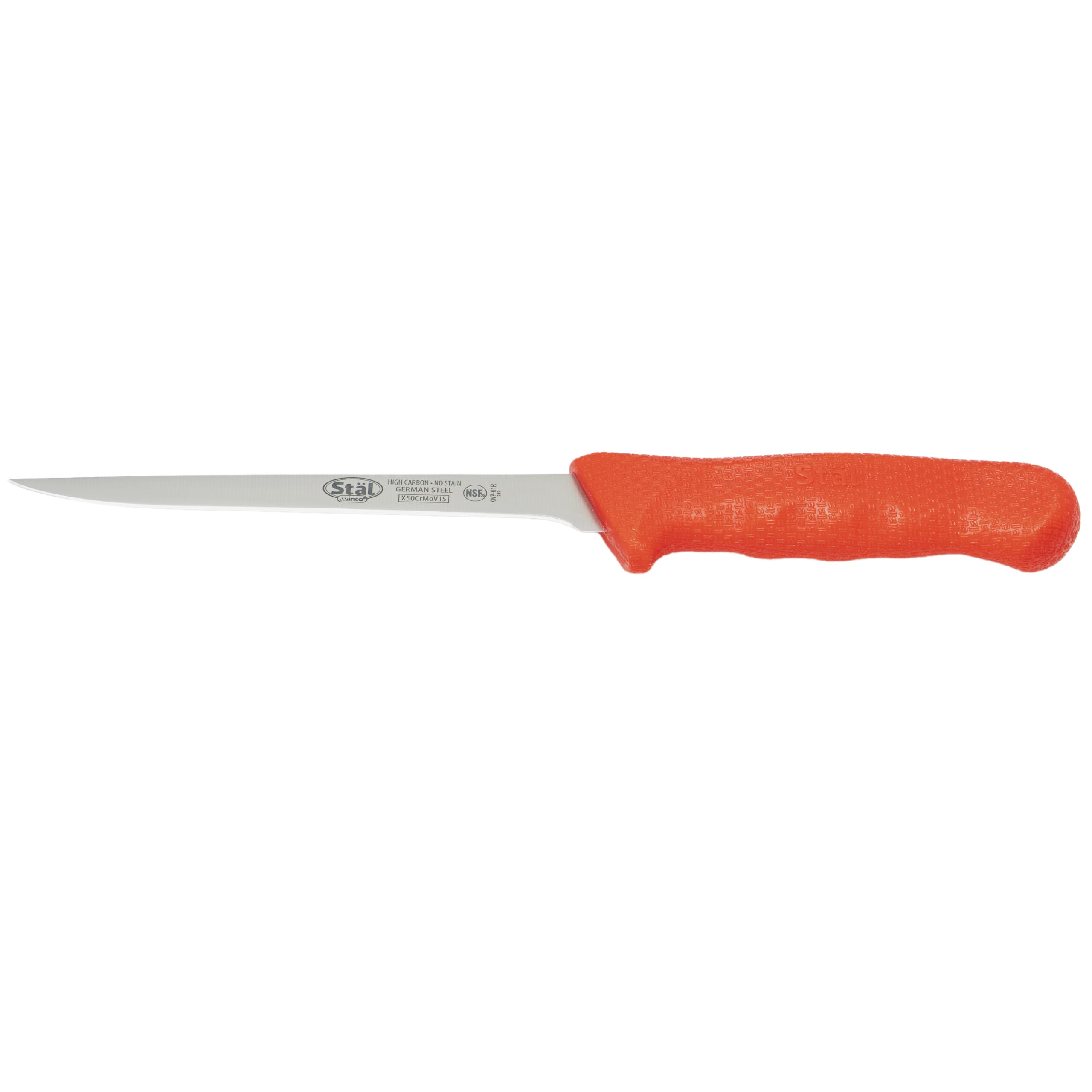
Winco 6-Inch Red Boning Knife
 Save
SaveWe recommend this affordable knife for home cooks and meat trimmers who want a comfortable red handle and a blade that is easy to sharpen.
Key Pros
- Comfortable grip with finger indents
- Sharp, narrow blade for trimming and deboning
- Solid value for frequent use
Key Cons
- Edge sharpness may vary out of the package
- Plastic handle can feel slippery when wet
- Requires regular sharpening
We found the 6-inch blade easy to guide around chicken joints and through small cuts of beef. Its narrow shape gave us good control when trimming fat and separating meat from bone.
The red handle stood out on a busy counter and felt comfortable during longer tasks. The finger grooves helped with control, although we still needed a firm grip when the handle became wet.
Some knives may need sharpening before the first use. After setting the edge, we found it simple to maintain, making this a practical choice for regular meat preparation.
ICEL Red-Handle Stiff Boning Knife
 Save
SaveWe recommend this knife for cooks who want a firm, wide blade and a comfortable red handle for trimming meat, poultry, and fish.
Key Pros
- Stiff, wide blade offers steady control
- Comfortable, slip-resistant red handle
- Easy to sharpen and backed by a lifetime defect guarantee
Key Cons
- Serrated edge may not suit detailed meat trimming
- Stiff blade has limited flexibility
- Handle feels basic rather than refined
While using it, we found the stiff blade helpful when working around larger bones and tougher cuts. Its 5 1/2-inch length gives us good control without feeling cramped, while the extra width adds useful stability.
The serrated edge cuts through meat and some vegetables effectively, but it does not provide the smooth slicing action of a plain-edge boning knife. We would choose this model for general kitchen work rather than precise professional meat processing.
The red handle feels secure during wet tasks and makes the knife easy to spot in a crowded drawer. The high-carbon stainless steel blade also takes a sharp edge well, and its NSF approval suits busy home or commercial kitchens.
ICEL Red-Handle Stiff Boning Knife
 Save
SaveWe recommend this knife for cooks who want firm control when trimming meat, poultry, or fish at a reasonable price.
Key Pros
- Stiff, wide blade supports controlled cuts around bones
- Red handle feels secure during extended prep
- Sharp edge handles meat and general kitchen tasks well
Key Cons
- Blade may flex slightly under heavy pressure
- Plastic handle looks basic rather than polished
- Stiff design offers less flexibility for detailed filleting
We found the 5.5-inch blade easy to guide through chicken and other meat. Its extra width adds useful stability, while the straight edge helps us make clean trimming cuts without using a larger chef’s knife.
The red handle provides a firm, slip-resistant grip. We also liked the balanced size, which felt comfortable for repeated prep work. The knife is compact enough for close control but larger than a typical paring knife.
Its sharp, high-carbon stainless-steel blade held an edge well during normal use and was simple to resharpen. The stiff profile worked best when separating meat from bone, though it was less suited to delicate cuts that require a flexible blade.
The handle and finish look practical rather than premium. Still, the NSF approval and lifetime coverage against manufacturing defects add value for home cooks and kitchen professionals who want a dependable red-handle boning knife.
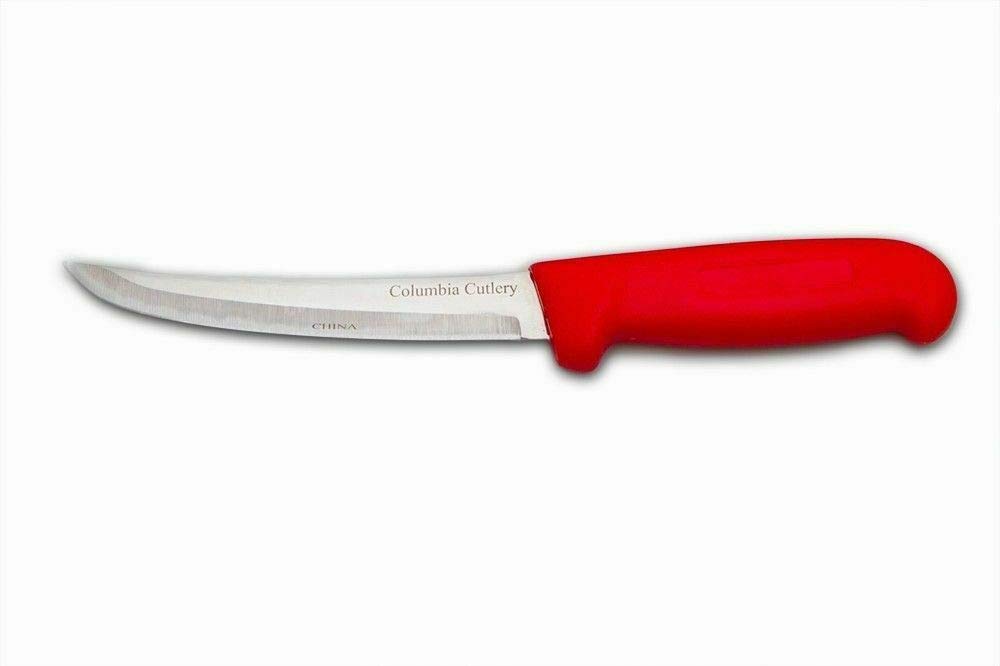
Columbia Cutlery 6-Inch Red Boning Knife
 Save
SaveWe recommend this knife for cooks who want a sharp, stiff blade with a comfortable red handle for regular meat and fish preparation.
Key Pros
- Sharp, curved blade gives us good control around bones.
- Comfortable handle feels secure during repeated cuts.
- Dishwasher-safe design suits busy kitchens.
Key Cons
- The stiff blade offers less flexibility for delicate filleting.
- The plastic handle may feel basic to some users.
- The small review sample provides limited buyer feedback.
The 6-inch blade felt sturdy when we trimmed chicken and worked around pork bones. Its curved shape helped us keep the edge close to the meat while pulling the knife through each cut.
The red handle stayed easy to spot among other kitchen tools. Its shape felt comfortable during longer prep sessions, although cooks who prefer a heavier or more premium handle may find it plain.
This knife makes sense for home cooks, butcher shops, and commercial kitchens that need a reliable work tool. We also like that the blade is professionally sharpened and the knife can go in the dishwasher, though hand washing may help preserve its edge over time.
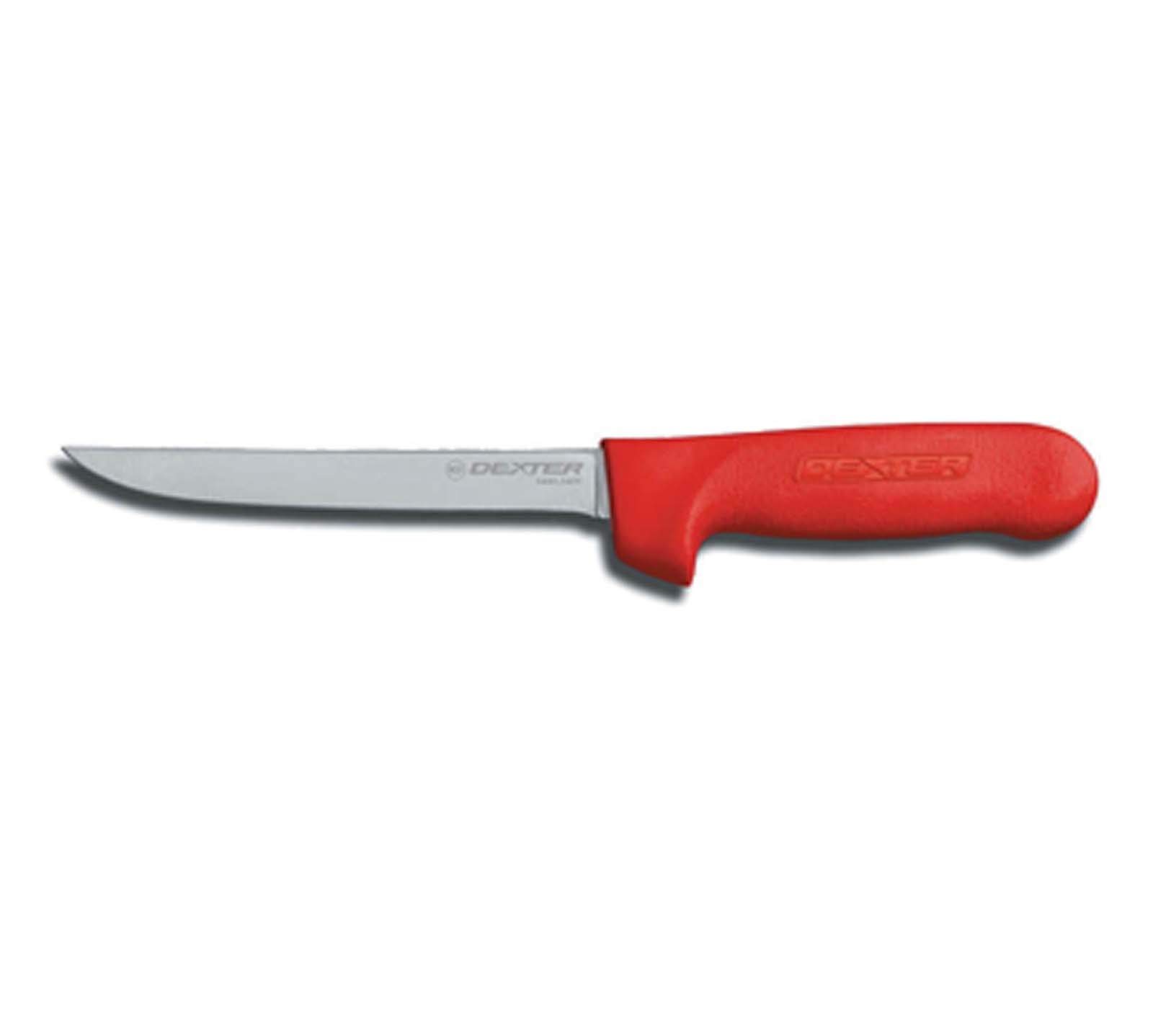
Dexter-Russell 6-Inch Red Boning Knife
 Save
SaveWe recommend this knife for cooks who want a narrow, practical blade with a bright red handle for easy spotting.
Key Pros
- Narrow blade offers good control around bones
- Red handle is easy to find in a busy kitchen
- Made in the United States and NSF certified
Key Cons
- Plain edge needs regular sharpening
- Plastic handle feels basic
- Limited review history
When we used this knife, the 6-inch blade gave us enough reach for trimming meat without feeling bulky. Its narrow shape helped us make controlled cuts close to bones and joints.
The honed alloy-steel blade handled common boning tasks well. We found the finger guard useful when working through firmer cuts, while the polypropylene handle provided a secure, low-maintenance grip.
The red handle stood out on the work surface and made the knife easy to identify. However, the simple plastic construction may feel less refined than a knife with a premium handle.
This Dexter-Russell model suits home cooks and food-service users who value function over appearance. We would choose it for routine meat preparation, but users seeking a softer grip or more flexible blade may prefer another design.
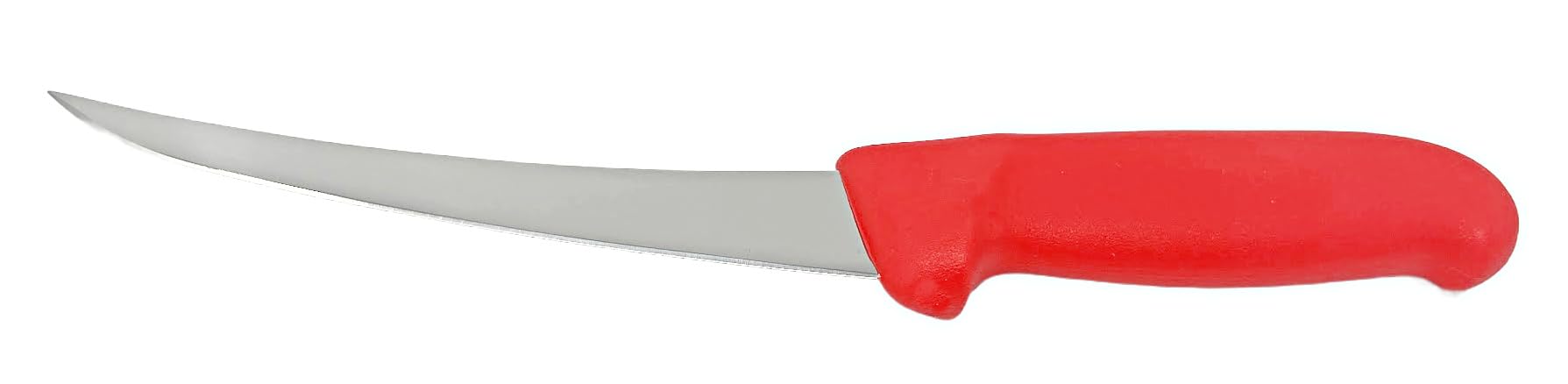
Cozzini 6.5-Inch Red Boning Knife
 Save
SaveWe recommend this knife for trimming meat, poultry, and fish when you want a stiff, curved blade and a secure red handle.
Key Pros
- Curved, stiff blade offers steady control for trimming and deboning
- Slip-resistant handle feels secure during wet prep
- Stainless steel construction is easy to clean and maintain
Key Cons
- The stiff blade may feel less flexible for detailed cuts
- Dishwasher cleaning can dull the edge over time
- Generic branding provides limited product information
The 6.5-inch curved blade gives us good control around joints and thick sections of meat. Its stiff design feels especially useful when breaking down larger cuts, while the plain edge makes routine honing simple.
The red Fibrox handle stays comfortable during extended prep and gives us a firm grip when our hands get damp. Its bright color also makes the knife easy to spot among other kitchen tools.
We appreciate that the knife is listed as NSF certified and dishwasher safe. Still, hand-washing and drying should help preserve the stainless steel and keep the edge sharper for longer. This model suits home cooks, barbecue teams, and busy food-prep areas that prefer a sturdy boning knife.
Buying Guide
When we choose a red-handle boning knife, we should assess the blade, handle, balance, and safety features. A red handle can improve visibility, but it does not determine cutting quality.
| Feature | What we should look for |
|---|---|
| Blade shape | Curved blades suit trimming and separating meat. Straight blades offer controlled, even cuts. |
| Flexibility | Flexible blades follow bones closely. Stiffer blades provide more control with thick cuts. |
| Blade length | A medium-length blade offers a useful balance of reach and control for common kitchen tasks. |
| Steel | We should choose corrosion-resistant steel that holds an edge and remains easy to sharpen. |
| Handle | Look for a secure grip, comfortable shape, and materials that resist moisture and stains. |
| Construction | A full-tang design can improve balance and strength, though handle comfort still matters. |
We should check the handle for a textured or contoured grip, especially if we often work with wet hands. A sturdy bolster or finger guard can help protect our fingers during repeated use.
We should also consider cleaning and storage. Choose a knife that is easy to wash by hand, dry fully, and store safely in a sheath, block, or magnetic holder. Confirm the manufacturer’s care instructions before using a dishwasher.
For frequent use, we should prioritize edge retention, comfort, and balance. For occasional home use, easy maintenance and a reasonable price may matter more than premium materials.
Editor’s Choice
We choose the Victorinox Fibrox Pro 6-Inch Boning Knife with Red Handle for its practical design, reliable performance, and accessible price. Its narrow, curved blade helps us separate meat from bone with control, while the bright red handle makes the knife easy to spot in a busy kitchen.
The stainless steel blade offers good edge retention and resists corrosion when we clean and dry it properly. Its flexible design works well for poultry, fish, and smaller cuts of meat.
Key features:
- 6-inch stainless steel blade
- Flexible, curved profile
- Textured, non-slip red handle
- Lightweight construction
- Dishwasher-safe design, though hand washing helps protect the edge
We also value the handle’s comfortable shape. It gives us a secure grip without adding unnecessary weight, which helps reduce hand strain during longer preparation tasks.
This knife suits home cooks who want a dependable boning knife without paying for specialized features. We recommend using a cutting board, keeping the blade sharp, and storing it safely between uses.
Conclusion
We should choose a red-handle boning knife based on blade flexibility, edge retention, grip, and cleaning needs. A narrow, sharp blade gives us better control when separating meat from bone, while a secure handle helps reduce hand fatigue.
Red handles also improve visibility in busy kitchens and help us spot the knife during cleanup. We should still check the handle design, blade length, and material before buying.
For regular home use, we can select a flexible stainless-steel model with a comfortable, slip-resistant handle. For frequent meat preparation, a sturdier knife with a sharper edge and stronger construction may offer better long-term value.
FAQS
What makes a red-handle boning knife useful?
A red handle makes the knife easy to spot in a busy kitchen. We can also use color coding to separate meat tools from tools used for other foods.
Should we choose a stiff or flexible blade?
We should choose a stiff blade for cutting through larger cuts and a flexible blade for following bones and removing skin. A semi-flexible blade offers a practical middle ground for general use.
What blade length works best?
Most of us find a blade between 5 and 6 inches easy to control. Longer blades can help with larger cuts, while shorter blades offer more precision.
Can we put a boning knife in the dishwasher?
We should check the maker’s care instructions first. Hand washing, drying the blade right away, and storing it safely can help protect the edge and handle.
What should we look for in the handle?
We should choose a handle that feels secure and comfortable when wet. A textured surface, balanced design, and sturdy construction can improve control during repeated cuts.
How do we keep the blade sharp?
We can use a sharpening stone or guided sharpener made for kitchen knives. A honing rod may help maintain alignment, but it does not replace regular sharpening.