10 Best Blade Angle for Boning Knife: A Practical Guide
A boning knife helps us separate meat from bones, trim fat, and remove skin with control. Its narrow blade can reach tight areas that a chef’s knife cannot, making it useful for breaking down poultry, fish, and other cuts of meat.
For most boning tasks, a blade angle of about 15 to 20 degrees per side offers a practical balance of sharpness, control, and edge strength. A lower angle can cut more smoothly but may dull or chip faster, while a wider angle adds durability but may require more force. Blade flexibility, steel quality, handle comfort, and knife length also affect performance.
We compared common blade angles and considered how they suit different meat-cutting tasks to identify the best options and explain what to look for when choosing a boning knife.
Best Boning Knife Blade Angles
We reviewed boning knives with blade angles suited to common meat preparation tasks. Our list highlights the best options for control, sharpness, and clean cuts.
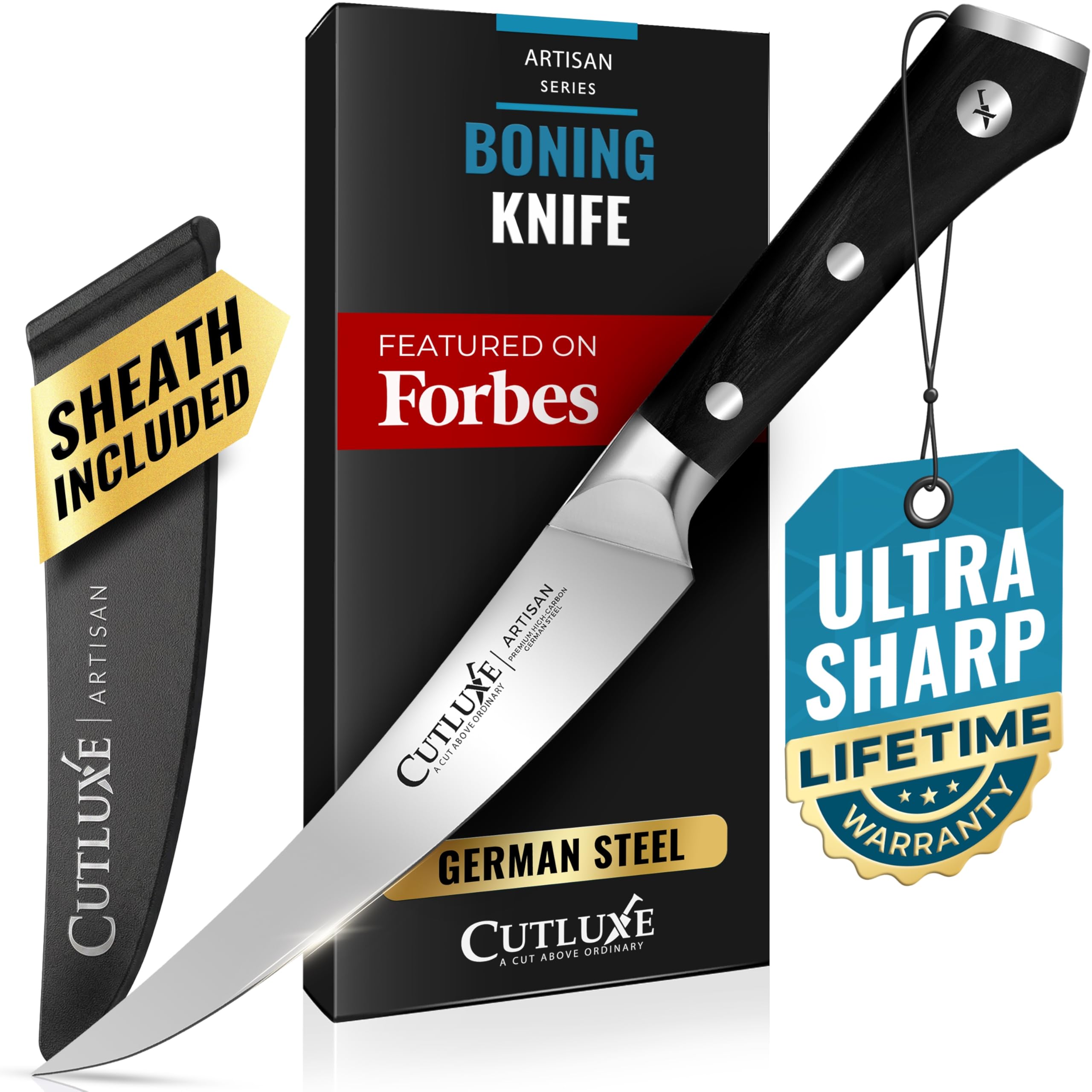
Cutluxe Curved Boning Knife
 Save
SaveWe recommend this knife for cooks who want a flexible blade with a sharp 14–16-degree edge for trimming meat, fish, and poultry.
Key Pros
- Sharp, flexible blade supports close trimming and filleting.
- Pakkawood handle feels stable and comfortable during longer tasks.
- Full-tang German steel design offers solid control.
Key Cons
- Some users may need to sharpen it before use.
- The edge may require regular maintenance with heavy use.
- The curved blade takes some practice to control.
We found the six-inch curved blade easy to guide around joints and bones. Its flexibility helped us follow the shape of cuts without removing too much meat. The narrow profile also worked well for trimming fat and skin.
The 14–16-degree edge gave us clean cuts with little pressure. Out of the box, sharpness may vary, but the blade responds well to sharpening and stropping. We would maintain it regularly when processing large amounts of meat.
During use, the full-tang build felt balanced, while the triple-riveted pakkawood handle provided a secure grip. The knife weighs enough to feel steady without becoming tiring. We would hand-wash and dry it promptly to protect the high-carbon steel.
Mercer Culinary 6-Inch Curved Boning Knife
 Save
SaveWe recommend this knife for cooks who want a practical 15–20° edge angle, a curved blade, and strong control while trimming meat close to the bone.
Key Pros
- Curved profile supports a comfortable working angle
- Sharp high-carbon steel trims meat and fat cleanly
- Textured handle provides a secure grip
Key Cons
- Six inches may feel long for smaller cuts
- White handle can show stains from food use
- Hand washing requires extra care
We found the curved blade easy to guide around chicken joints, brisket, and other uneven cuts. Its shape kept our wrist in a natural position while we worked close to the bone.
The blade arrived sharp and held its edge well during trimming. We could make controlled cuts without forcing the knife, though we would still hone it regularly and sharpen it at a modest angle rather than using a wide edge.
The polypropylene handle felt light and secure, even during longer prep sessions. We would wash and dry it by hand after every use, since the manufacturer advises against dishwasher cleaning and long soaking.
SHARPAL 194H Angle Guide
 Save
SaveWe recommend the SHARPAL 194H for beginners who want to practice a steady boning knife angle while sharpening on a whetstone.
Key Pros
- Helps us maintain a consistent angle from 15° to 45°
- Magnetic base stays attached to many broad, flat blades
- Small, light design is easy to store and carry
Key Cons
- Magnet may not hold well on narrow or curved blades
- Works best when the blade has a flat, wide surface
- Plastic body may feel less durable than metal guides
When we use a boning knife, an angle near 15° to 20° per side usually offers a useful balance of sharpness and edge strength. The SHARPAL 194H helps us set that angle and check it during each stroke instead of relying only on hand memory.
The guide works best on larger, flat sections of the blade. On a narrow, flexible, or heavily curved boning knife, it can slip or fail to stay attached. We need to use light, controlled movements and confirm that the guide remains in place.
Its compact size makes it convenient for learning freehand sharpening. We find it most useful as a training aid rather than a complete sharpening system, since it does not replace a suitable whetstone or careful technique.
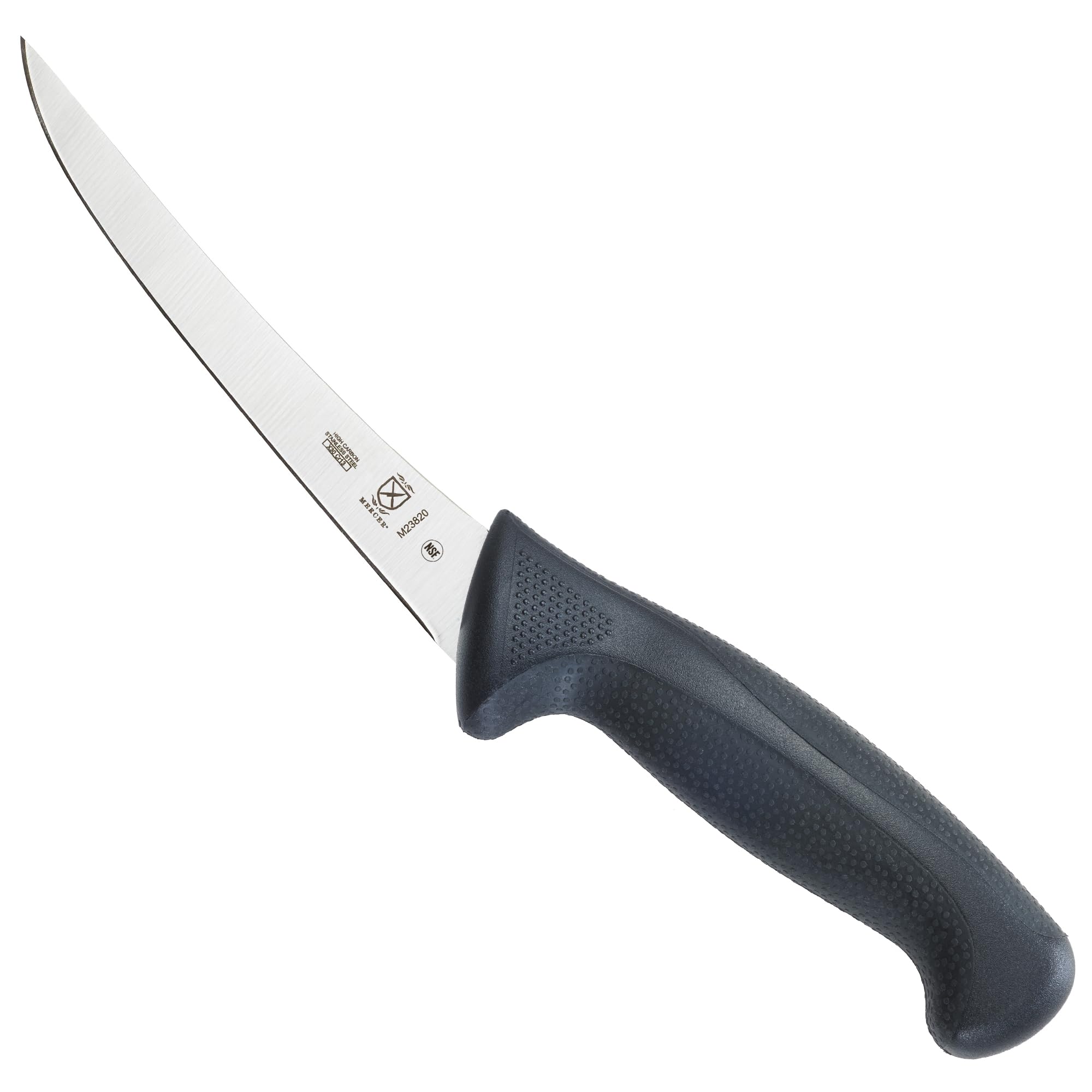
Mercer Culinary Millennia 6-Inch Curved Boning Knife
 Save
SaveWe recommend this knife for boning and trimming when you prefer a firm blade with a practical 15–20° edge angle.
Key Pros
- Holds a sharp edge well during meat trimming
- Textured handle feels secure and comfortable
- Curved shape helps us follow bones and remove sinew
Key Cons
- Offers very little blade flex
- Requires hand washing and careful drying
- The factory edge may vary between units
We found the blade sharp enough for chicken, pork, brisket, and fish work. Its firm feel gave us good control when separating meat from bone, while the curved profile helped with longer trimming cuts.
The handle stayed steady even when our hands became greasy. Its textured surface added grip without feeling overly rough, and the six-inch blade gave us enough reach without becoming awkward in tight areas.
This knife works best with a moderate edge angle around 15–20 degrees per side. That range balances cutting ability with durability, which suits trimming tasks better than an extremely thin edge.
The blade has almost no flex, so it may not suit users who want to closely follow delicate bones. We also recommend washing it by hand, drying it right away, and storing it safely to protect the edge.
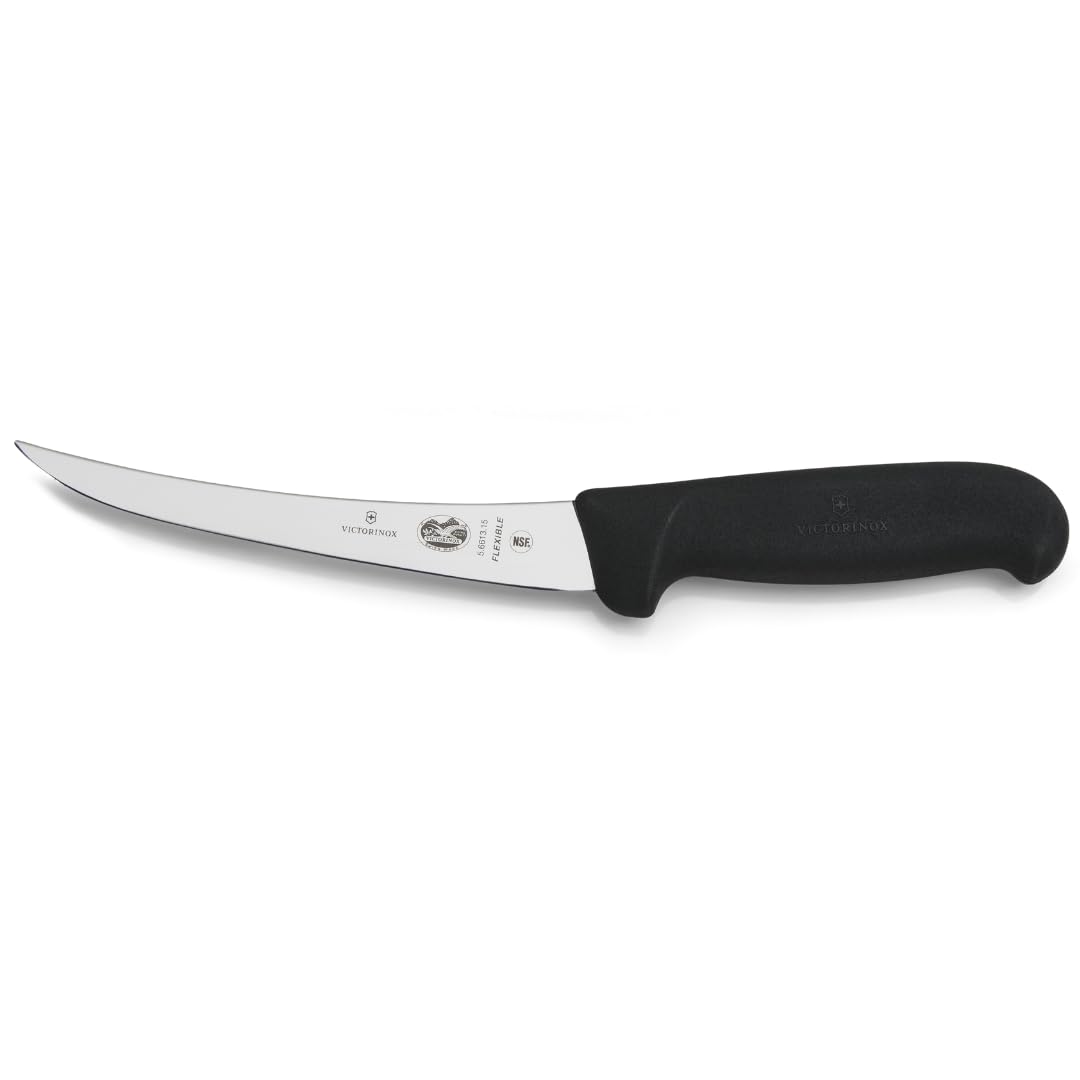
Victorinox Fibrox Pro Boning Knife
 Save
SaveWe recommend this knife for cooks who want a flexible blade and a comfortable angle for precise work around bones.
Key Pros
- Curved blade supports close, controlled cuts
- Textured handle stays secure when wet or greasy
- Light, flexible design works well for meat and fish
Key Cons
- No storage sheath comes with the knife
- Flex may feel too soft for heavy cutting
- Dishwasher use can reduce edge life over time
When we used this knife on chicken and fish, the curved blade made it easier to follow the bone without forcing the wrist into an awkward position. Its flexible edge also helped us make thin cuts around joints and other tight areas.
The handle felt secure during wet work, and its light weight made longer trimming tasks less tiring. We found the grip comfortable in several hand positions, although the flexible blade is better for detailed boning than for splitting through tough joints.
The knife arrived sharp and held its edge well during repeated use. We would choose it for home kitchens, fish preparation, and routine meat trimming, especially when accuracy matters more than cutting power.
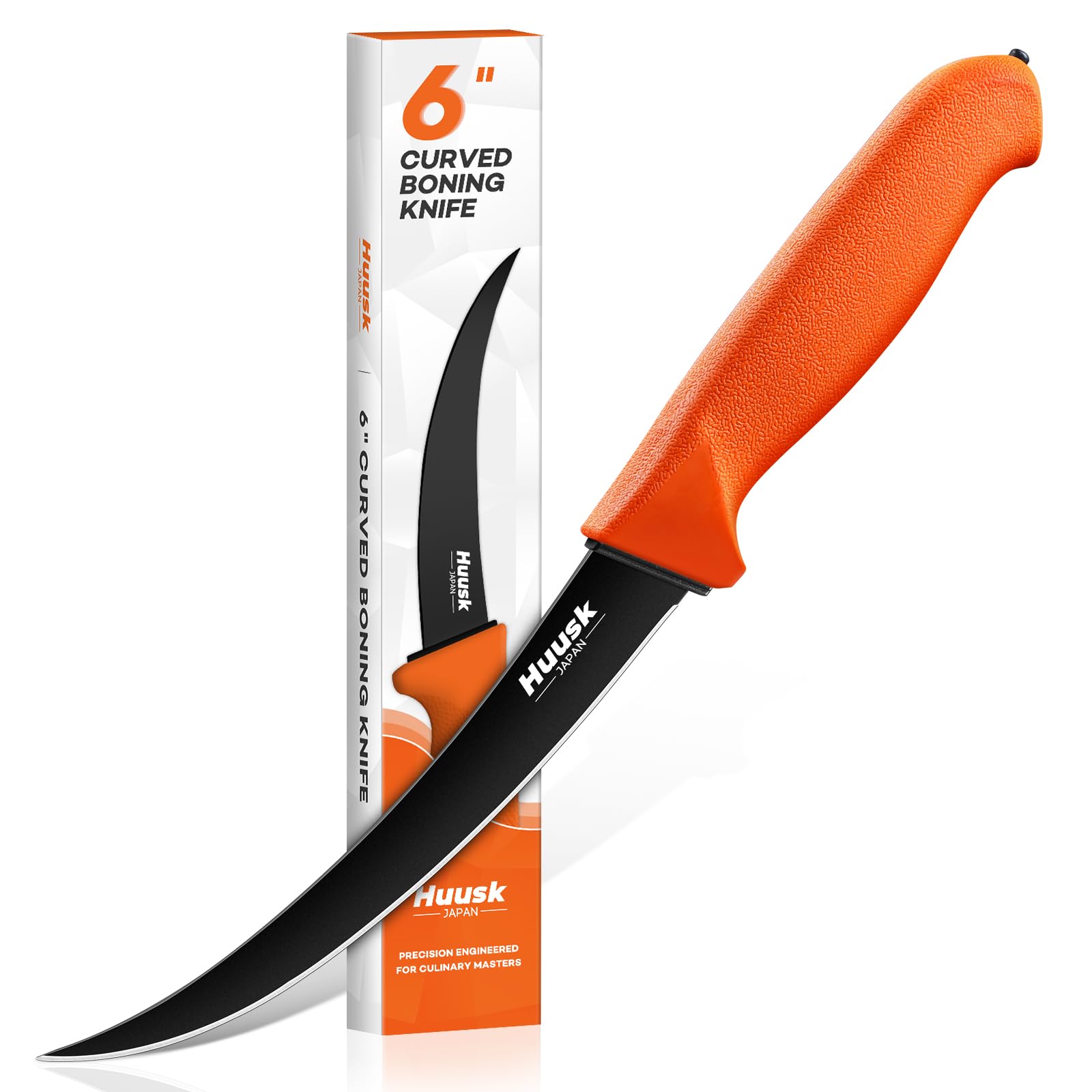
Huusk Curved Boning Knife
 Save
SaveWe recommend this knife for cooks who want a curved boning blade with a sharp edge and a grippy, easy-to-see handle.
Key Pros
- Curved 6.5-inch blade gives us good control around joints and silver skin.
- Orange handle stands out, while the textured grip stays steady with wet hands.
- Sharp edge handles trimming, deboning, and skin removal with little effort.
Key Cons
- The strong blade curve may feel unusual for users who prefer a straighter knife.
- The plastic handle feels less refined than a full-tang premium design.
- It does not include a blade cover or storage case.
When we used this Huusk knife for trimming, the curved blade made it easier to follow bones and remove connective tissue. Its shape worked especially well for detailed cuts, though we needed a short adjustment period before it felt natural.
The stainless steel blade has a black titanium coating and a plain edge. It arrived sharp and handled both meat and silver skin cleanly. We found the 6.5-inch length practical for control without feeling too short.
The bright orange handle helped us find the knife quickly in a busy work area. Its textured surface also gave us a secure grip when our hands became greasy. However, the handle and stamped construction feel more utilitarian than premium.
With a 4.7-star rating from 93 reviews, this knife has strong buyer feedback. We would choose it for home butchery, game processing, and routine trimming, especially when visibility and grip matter.
HOSHANHO 7-Inch Fillet Knife
 Save
SaveWe recommend this knife for fish and light boning work because its 15-degree-per-side edge delivers clean, controlled cuts.
Key Pros
- Sharp edge that handled fish and meat smoothly
- Slim, flexible blade helped reduce wasted meat
- Comfortable pakkawood handle with steady balance
Key Cons
- The blade may feel too flexible for heavy joint work
- The wood handle needs careful hand washing and drying
- Its sharp edge requires regular safe handling
When we used the HOSHANHO 7-Inch Fillet Knife, the narrow blade moved neatly along fish bones and skin. The 15-degree angle per side felt well suited to trimming, filleting, and light boning.
The blade arrived very sharp and made thin, clean cuts through fish and soft meat. Its flexible design gave us good control around curved surfaces, though it did not feel like the right choice for cutting through hard joints or thick bones.
We also liked the balanced feel and textured pakkawood handle. It stayed comfortable during longer prep sessions, but we would hand wash and dry it after each use to protect the handle and edge.
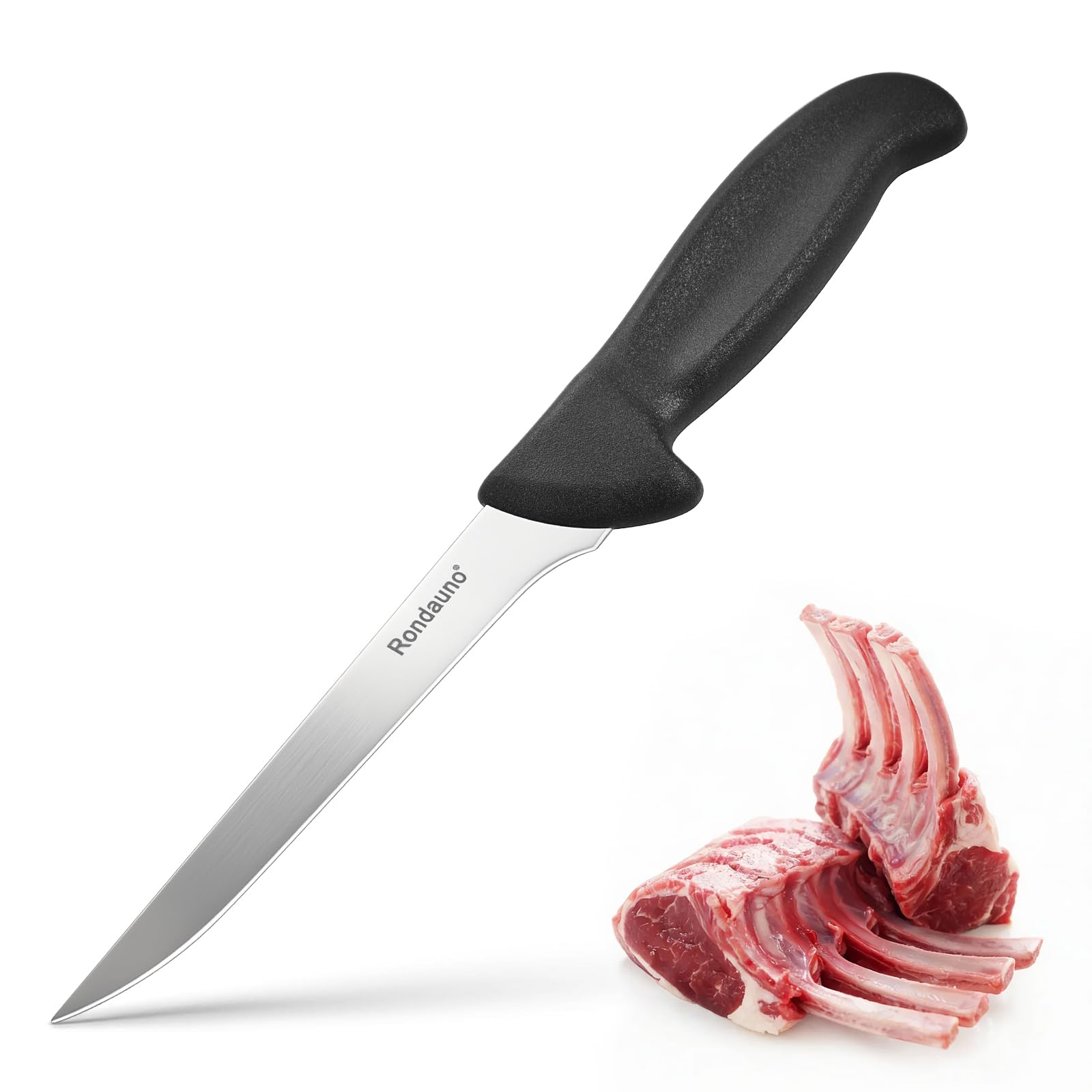
Rondauno 6-Inch Boning Knife
 Save
SaveWe recommend this knife for cooks who want a slim, precise blade with a 15-degree-per-side edge for trimming meat and preparing fish.
Key Pros
- Sharp edge makes clean cuts around joints and bones
- Textured handle feels secure during wet tasks
- Light design offers good control and quick movement
Key Cons
- Thin blade may need regular sharpening
- Small handle may feel cramped for larger hands
- Stamped construction feels less substantial than premium knives
When we used this knife on chicken thighs, the narrow blade moved easily around the bone and removed meat with little waste. Its light weight also made detailed trimming less tiring than using a heavier chef’s knife.
The 15-degree edge suits precise boning work. We found it effective for fish fillets, trimming fat, and slicing small portions, though the fine edge needs careful handling and occasional sharpening to stay at its best.
The ABS handle provides a steady grip, but its compact size may not suit every hand. We would choose the Rondauno for home cooks and budget-minded users who want sharp, controlled cuts without paying for a heavier professional knife.
OUTDOOR EDGE 5-Inch Wild Game Boning Knife
 Save
SaveWe recommend this knife for hunters who want a flexible blade with a practical angle for clean, controlled cuts.
Key Pros
- Flexible 5-inch blade suits deboning and trimming.
- Nonslip orange handle stays secure when wet.
- Sharp edge performs well and is easy to maintain.
Key Cons
- The blade may develop surface rust without careful drying.
- It does not include a sheath or blade cover.
- Frequent use may require regular sharpening.
We found the blade angle well suited to boning work, where control matters more than force. Its moderate bevel lets us guide the edge along bones while the flexible blade follows curves around joints and meat.
The 5-inch length gives us enough reach for larger cuts without feeling awkward during detail work. The pointed tip also helps separate meat from connective tissue and make precise cuts around joints.
The rubberized handle felt comfortable during longer processing sessions. Its bright orange color made the knife easy to spot, while the grip remained steady when our hands were slick.
The stainless steel edge arrived very sharp and responded well to a steel or ceramic sharpener. We would wash and dry it promptly after use, since some users report surface rust after leaving it wet. A blade cover would also improve storage safety.
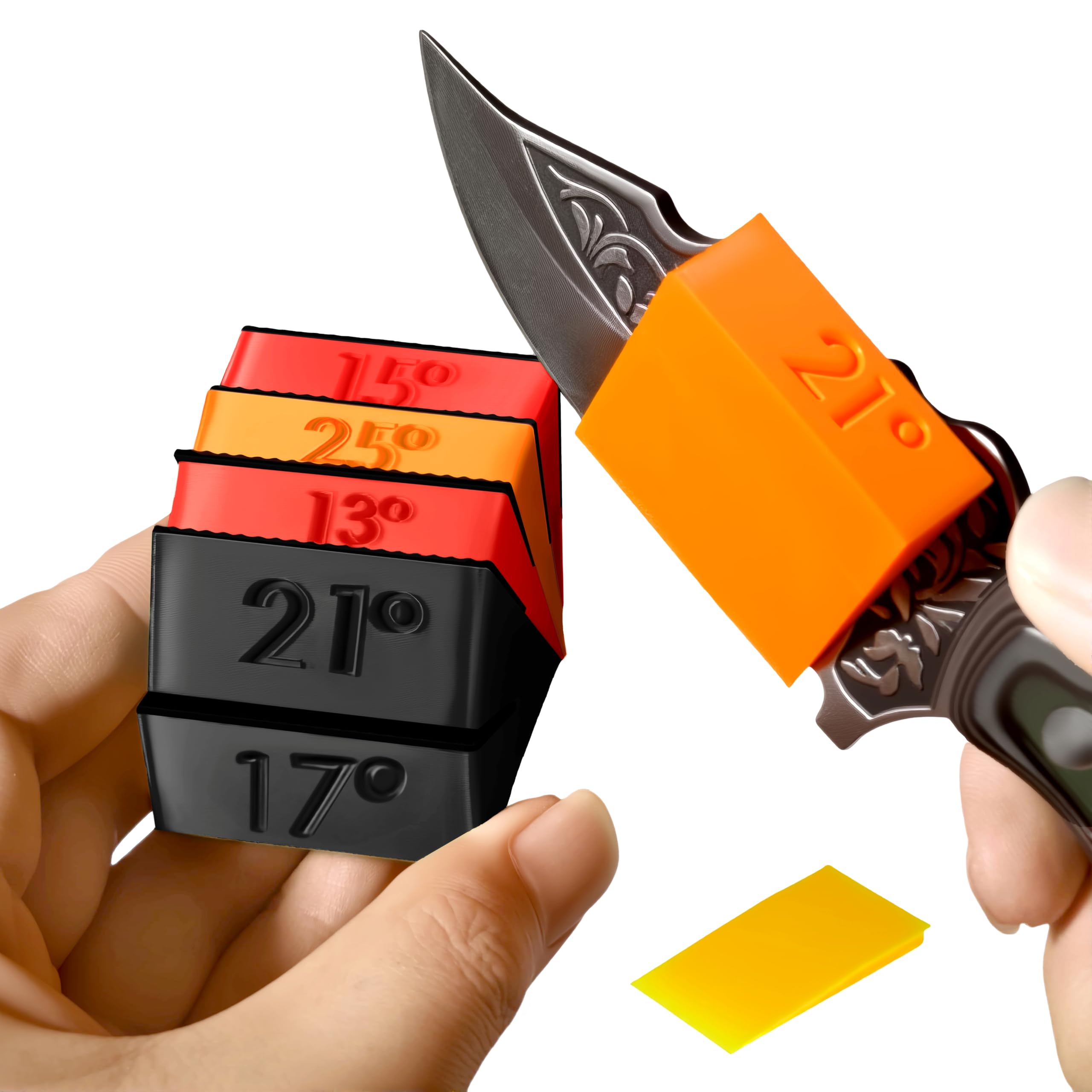
YEVVA Magnetic Angle Guides
 Save
SaveWe recommend these guides for boning-knife users who want help holding a steady sharpening angle on larger blades.
Key Pros
- Magnetic guides attach quickly to the knife.
- Several angle choices support different edge styles.
- The guides can help us build consistent sharpening habits.
Key Cons
- They do not suit small or pocket knives.
- Some users report that the magnets loosen or fall out.
- The plastic build may feel less durable over time.
While using the guides, we found that the magnets made setup quick. The angle options from 13° to 28° cover common sharpening needs, including a controlled angle for many boning knives.
The larger guide worked best on broad kitchen and hunting blades. On a narrow boning knife, we needed to check that the guide stayed flat and did not interfere with the sharpening stroke.
We also noticed that the guide could slide unless we held it in place. That limits its value for users who want a completely hands-free tool. Still, it can help new sharpeners learn steady hand movement when paired with a suitable whetstone.
At a 4.0-star rating from 56 reviews, customer feedback is mixed. We would choose it for larger knives and basic angle practice, but not for small blades or heavy, long-term use.
Buying Guide
When we choose a boning knife, we should match the blade angle to the cutting tasks. An angle of 15–20 degrees per side offers a useful balance of sharpness, control, and edge strength for most meat preparation.
We should also consider the blade shape, flexibility, and length. A narrow, flexible blade suits fish and small cuts, while a firmer blade gives us better control when working around joints and larger bones.
| Feature | What we should look for |
|---|---|
| Blade angle | 15–20 degrees per side for balanced performance |
| Flexibility | Flexible for fish; semi-flexible for general meat work |
| Blade length | About 5–7 inches for control and easy handling |
| Steel | Stainless steel for corrosion resistance and simple care |
| Handle | Secure grip, even when wet |
| Edge design | Smooth, consistent edge for clean cuts |
We should check that the blade has an even grind and no visible gaps near the handle. A full tang can improve balance and strength, while a textured handle helps reduce slipping during use.
If we plan to sharpen the knife ourselves, we should choose a model that clearly states its recommended edge angle. We should also confirm that our sharpening tool can maintain that angle accurately.
Editor’s Choice
We recommend a 15–20° angle per side for most boning knives. This range gives us a useful balance between sharpness, edge strength, and control when cutting around bones and joints.
| Use | Recommended angle per side |
|---|---|
| Delicate trimming | 12–15° |
| General boning | 15–20° |
| Tough connective tissue | 20–25° |
We choose about 18° per side for everyday work. It keeps the edge keen without making it too fragile during contact with small bones.
A flexible blade benefits from the lower end of the range when we make precise cuts through poultry or fish. For beef, pork, or frequent work near hard bones, we use 20–25° per side to improve durability.
We should keep the angle steady along the full edge. Light pressure and regular honing help preserve the bevel, while a guided sharpener can make angle control easier for consistent results.
Conclusion
We get the best results from a boning knife sharpened to about 15–20 degrees per side. This angle gives us a good balance of sharpness, control, and edge strength for separating meat from bone.
A 15-degree angle suits careful work on poultry and soft meat. A 20-degree angle provides more durability for tougher cuts, joints, and regular kitchen use.
We should keep the angle consistent along the full edge. Light pressure, steady strokes, and regular honing help maintain clean cuts without removing excess meat.
| Task | Useful angle |
|---|---|
| Fine, precise trimming | 15° per side |
| General boning work | 15–20° per side |
| Tougher cuts and added durability | 20° per side |
We should also match the angle to the knife’s steel and our cutting habits. A slightly wider angle works better when edge damage occurs often, while a narrower angle suits controlled, delicate cutting.
FAQs
What is the best angle for a boning knife?
We usually recommend 15–20 degrees per side for a boning knife. This range provides a sharp edge for clean cuts while keeping enough strength for work around joints and bones.
Should we use a different angle for a stiff boning knife?
Yes. We can sharpen a stiff blade at 18–22 degrees per side because it handles firmer contact with bones. A wider angle can help reduce small chips and edge damage.
What angle suits a flexible boning knife?
A flexible knife often performs well at 15–18 degrees per side. This narrower edge supports precise cuts through meat, tendons, and connective tissue.
Can we sharpen both sides at the same angle?
Most boning knives use a symmetrical edge, so we should sharpen both sides equally. For example, 18 degrees per side creates a 36-degree total edge angle.
How do we know if the angle is too low?
If the edge rolls, chips, or loses sharpness quickly, we may be using too narrow an angle. Raising it by 2–3 degrees per side can improve durability.
How often should we sharpen the knife?
We should sharpen when the blade starts to drag instead of slicing smoothly. A honing rod may realign the edge between sharpening sessions, but it will not replace sharpening.