Mercer Culinary Ultimate White Review — Best Budget Boning Knife?
Quick Answer
Yes. The Mercer Culinary Ultimate White 6-inch curved boning knife is a strong budget buy for meat trimming and deboning. Amazon shows 4.7 stars from 5,570 ratings. Its main limits are modest blade flex, hand-wash-only care, and reduced grip when grease coats the handle.
Is the Mercer Ultimate White worth buying right now?
- 6-inch curved blade, 15° edge, HRC 56±1
- NSF certified with textured polypropylene handle
- Skip it if maximum blade flex is essential
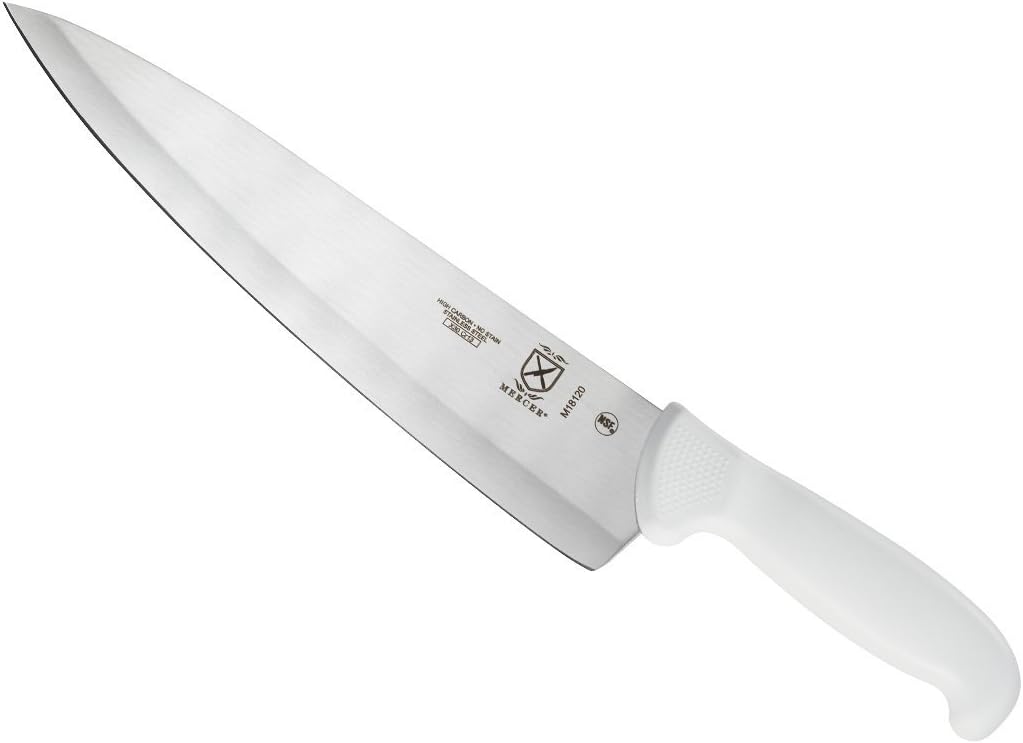 Save
SaveOnly the overall Amazon rating is numeric. Independent category subscores were unavailable, so none are invented.
| ✅ Best for | Budget cooks trimming and deboning meat |
| ❌ Not ideal for | Delicate fish work needing maximum flex |
| 💰 Price | $10.99 tracked Amazon price; availability varies |
Category Evidence
- Sharpness: strong buyer and reviewer consensus
- Bone-tracing control: strong curved-blade advantage
- Flexibility: moderate; stiffer than flexible rivals
- Grip: mixed when grease reaches the handle
- Value: strong at the tracked $10.99 price
Michael here. I reviewed Mercer’s official specs, current Amazon data, retailer listings, price tracking, and hands-on reports. I did not perform a personal cutting test, so I will not claim one. My guide to what a boning knife can do explains why this narrow blade shape matters.
What Is the Mercer Culinary Ultimate White and Who Is It For?
The Mercer Culinary Ultimate White M18180 is a 6-inch curved boning knife for separating meat from bone, trimming fat, and removing sinew. It suits home cooks, culinary students, barbecue users, and value-focused kitchens.
Mercer uses high-carbon Japanese steel, stamped construction, and a polypropylene handle. The knife is NSF certified with a 15° edge and HRC 56±1 hardness. For choosing blade shape, see my guide to curved, straight, flexible, and stiff boning knives.
- Debone chicken, pork, or beef
- Want a low-cost work knife
- Prefer easy sharpening
- You mainly fillet delicate fish
- You want a premium forged knife
- You need dishwasher-safe care
Mercer Culinary Ultimate White Pros and Cons
The biggest strength is value backed by useful professional specs. The biggest weakness is flexibility. Some reviewers also report less handle traction when grease coats the polypropylene grip.
- 6-inch curved blade
- 15° edge, HRC 56±1
- NSF certified
- 4.7/5 Amazon rating
- $10.99 tracked price
- Hand wash only
- Less flexible than some rivals
- Grip can feel slick with grease
- White handle can show stains
- Stamped, not forged
Mercer Culinary Ultimate White Key Features — What Research Shows
Is the 6-inch curved blade good for deboning?
Yes. The curve gives a useful angle around poultry joints, ribs, and meat seams. Hands-on reviewers report clean trimming and good bone tracing. Use the edge beside bone, not through it.
How sharp is the high-carbon Japanese steel?
Published sources consistently praise its out-of-box sharpness. Mercer specifies a 15° edge and HRC 56±1. That moderate hardness supports quick sharpening and practical maintenance.
Does the hollow-ground edge help maintenance?
Yes. Mercer uses a hollow-ground smooth edge designed for easy maintenance. User reports also describe quick recovery after honing. Heavy processing can still require regular touch-ups.
Is the handle safe when wet or greasy?
The design is good but not flawless. Mercer adds textured finger points and a protective finger guard. Some hands-on reviewers still report reduced traction when fat or grease reaches the handle.
Never force this narrow knife through bone or frozen meat. Use short, controlled strokes instead. My boning knife technique guide covers the basic motion.
Why does NSF certification matter?
Mercer lists the M18180 as NSF certified. NSF certification is meaningful in commercial kitchens because it addresses food-equipment material safety, cleanability, construction, and performance requirements.
How should you clean the Mercer M18180?
Hand wash it with warm water and mild soap, then dry it fully. Mercer warns against dishwashers and long soaking. That care protects the edge and polypropylene handle.
How Does the Mercer Culinary Ultimate White Perform in Real Reports?
No standardized laboratory benchmark exists for this exact knife. The available evidence comes from official specs, Amazon buyer data, and hands-on reviewers. The strongest signals are sharpness, curved-blade control, and value; flexibility and greasy-handle grip are weaker areas.
Measured Performance Evidence
Mercer Culinary Ultimate White Full Specifications
These specifications come from Mercer’s official M18180 listing.
The key takeaway is the 15° edge at HRC 56±1. It favors easy maintenance over premium hard-steel edge retention.
How Does the Mercer Culinary Ultimate White Compare to Competitors?
The Mercer wins on price. Victorinox offers more flexibility, while Dexter adds a flexible USA-made commercial option. See my Victorinox Fibrox review for more detail.
Mercer Ultimate White vs Victorinox Fibrox 6-inch Curved
Mercer wins on cost. Victorinox wins for flexible precision. Victorinox lists its curved flexible Fibrox at $40, with a 5.9-inch blade, Swiss construction, and dishwasher-safe care.
Mercer Ultimate White vs Dexter Sani-Safe S131F-6
Mercer wins on price. Dexter wins if you want a flexible USA-made blade. Dexter lists the S131F-6 at $34.25 with a 6-inch curve, DEXSTEEL blade, NSF certification, and lifetime defect warranty.
The table shows the main objective differences.
| Feature | Mercer ⭐ | Victorinox | Dexter |
|---|---|---|---|
| Price | $10.99 tracked | $40 official | $34.25 official |
| Blade | 6 in curved | 5.9 in curved flexible | 6 in curved flexible |
| Origin | Taiwan | Switzerland | USA |
| Best for | Budget mixed-meat prep | Flexible precision | Commercial flexible work |
For sanitation context, review NSF food equipment certification guidance and USDA safe food-handling guidance.
Mercer Culinary Ultimate White Pricing — Is It Worth the Price?
Yes, at the tracked $10.99 price, it is strong value. Price tracking over 68 days shows $10.99 as the current, average, highest, and lowest recorded price. Amazon’s direct page currently shows no featured offer, so seller availability can differ.
Mercer Culinary Ultimate White, 6 inch Curved Boning Knife
The value is strongest for buyers who want performance over premium materials.
Who Should Buy the Mercer Culinary Ultimate White?
Buy it for poultry, brisket trimming, pork, beef, and general meat prep. It makes the most sense when budget matters more than premium construction.
Skip it if fish filleting is your main task or you want dishwasher-safe care. A flexible Victorinox or Dexter model better fits delicate contour work.
What Are Real Buyers Saying About the Mercer Culinary Ultimate White?
Amazon shows 4.7 out of 5 stars from 5,570 ratings. Buyers repeatedly praise sharpness, easy trimming, and value. The main recurring concerns are greasy-handle traction and normal honing needs during heavier use.
⭐ Amazon Buyer Sentiment
4.7/5 from 5,570 ratings. Buyers most often praise sharpness and value. Common complaints focus on grip with grease and the need for periodic honing.
Final Verdict — Is the Mercer Ultimate White Worth the Money?
Yes. The Mercer Culinary Ultimate White is worth buying if you want a true boning knife at a low price. Its best features are the curved 6-inch blade, 15° edge, HRC 56±1 steel, NSF certification, and tracked $10.99 price. Its biggest weakness is lower flexibility than dedicated flexible rivals. Amazon shows 5,570 ratings at 4.7 stars. I recommend it for budget-minded home cooks, barbecue prep, and general meat trimming. Buyers focused on fish should choose a more flexible knife.
If you mainly remove fat and silverskin, compare the roles in my trimming knife versus boning knife guide.
SaveMercer Culinary Ultimate White, 6 inch Curved Boning Knife
If you want useful boning geometry without premium pricing, this is the value play.
👉 Buy Mercer Culinary Ultimate White — $10.99 ↗
Compare Alternatives ↗
Frequently Asked Questions
Is the Mercer Ultimate White boning knife flexible?
It is less flexible than some direct rivals. Reviewers describe it as relatively stiff or moderately flexible. That makes it useful for mixed meat trimming, while fish-focused buyers should choose a more flexible 6-inch blade.
What angle is the Mercer Ultimate White sharpened to?
Mercer lists a 15° blade angle for the M18180. It also specifies HRC 56±1 hardness and a hollow-ground edge. That combination favors easy maintenance and quick touch-ups.
Can the Mercer Ultimate White go in the dishwasher?
No. Mercer recommends hand washing with warm water and mild soap, then drying fully. Dishwasher heat, movement, and harsh detergent can reduce edge and handle life.
Is the Mercer M18180 NSF certified?
Yes. Mercer lists the M18180 as NSF certified. That matters most in food-service kitchens because NSF standards address material safety, cleanability, construction, and performance requirements.
Is the Mercer Ultimate White good for brisket trimming?
Yes. The curved 6-inch blade suits brisket fat and silverskin trimming. Hands-on reviewers report good control on brisket and other meat, while the moderate stiffness helps during thicker beef prep.
Affiliate Disclosure: As an Amazon Associate, I earn from qualifying purchases. If you click a link on this page and make a purchase, I may receive a small commission — at no extra cost to you. I only recommend products I genuinely believe will help you. This helps keep the site free and running. Thank you for your support.