Kitchen Perfection 6” Boning Knife Review 2026: Honest
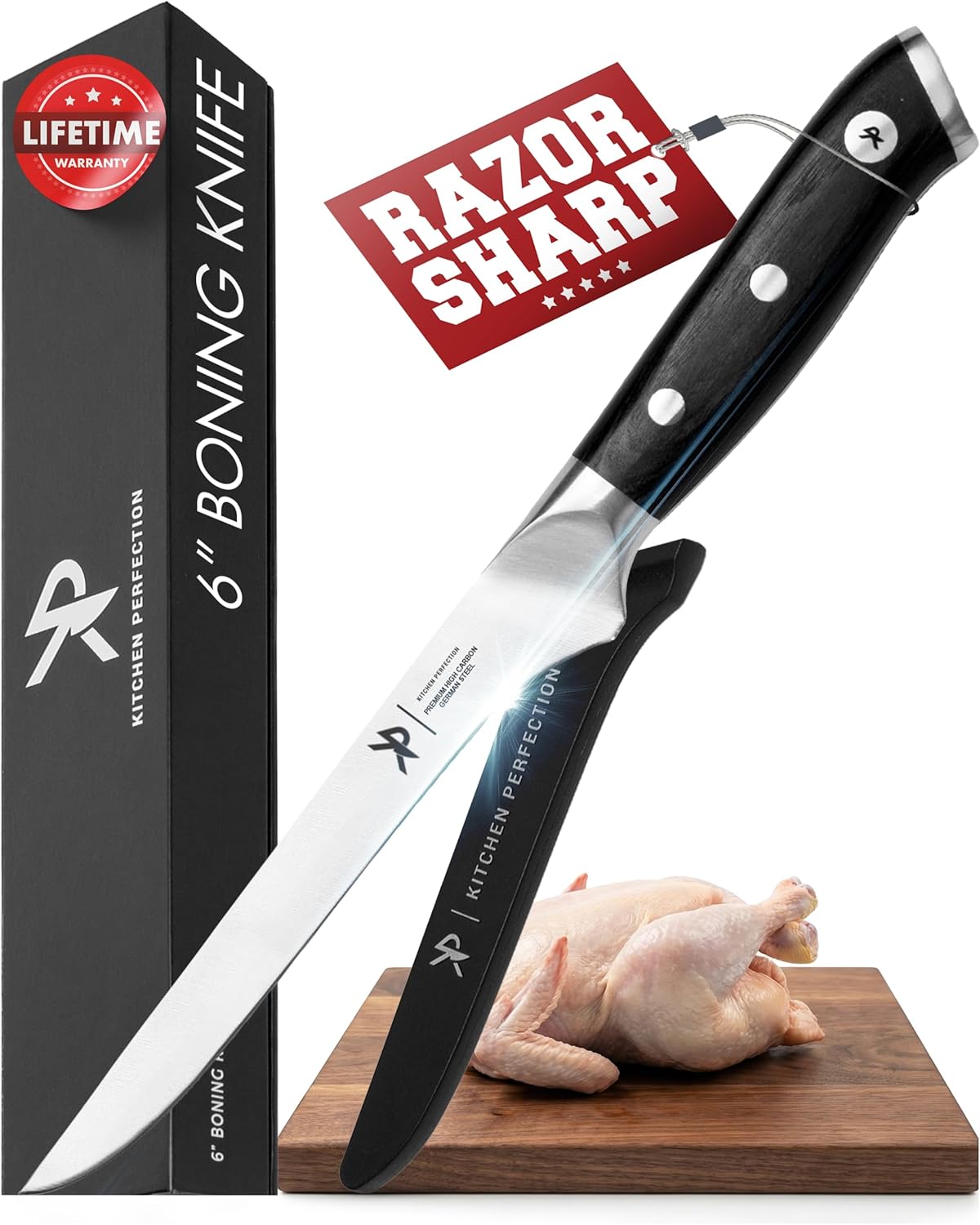
The Kitchen perfection 6” Boning Knife for Meat Cutting, Fillet & Deboning | with Sheath, Razor Sharp, Premium High Carbon German Steel | Full Tang Ergonomic Handle, Beautiful Gift Box, Grilling Gift is aimed at home cooks who buy whole poultry, trim roasts, prep fish, or want cleaner cuts around bone.
Its appeal is simple: a narrow 6-inch blade, high-carbon German steel, a pakkawood handle, full-tang construction, and a protective sheath. On paper, it looks more substantial than a basic stamped utility knife, yet still small enough for close control.
 Save
SaveQuick Verdict
Here is the fast version before the deeper breakdown.
| Overall: 4.6/5 | Performance: 4.7/5 |
| Value: 4.5/5 | Design: 4.6/5 |
| ✅ Best For: Poultry, fish, trimming, silver skin, everyday meat prep | |
| ❌ Not Ideal For: Chopping bones, frozen meat, heavy cleaver work | |
| Price: Recently indexed at $29.99; Amazon showed no featured offer when checked | |
| Check Price on Amazon | |
First Look at the Knife
The presentation leans gift-ready rather than bare-bones. The listing includes a sheath, and the handle is listed as pakkawood with three rivets. That combination gives the knife a more traditional kitchen-tool feel than a molded plastic boning knife.
The 6-inch size is the part I like most on paper. It is long enough to trace a chicken breastbone or work along a fish frame, but short enough for tight turns around joints. The listing does not publish a verified total knife weight, so I would not guess at how heavy it feels in hand.
How It Handles Meat Prep
This is where the design matters most. The listing gives us a 14–16° edge per side, 56+ Rockwell hardness, forged construction, and a tapered 6-inch blade. Those details point toward controlled slicing and trimming, not hacking through bone.
Deboning Chicken Thighs
A narrow tip should help find the joint and trace the thigh bone without taking too much meat with it. I would use short strokes and let the blade ride close to bone rather than saw hard. That is also the basic technique covered in this guide on how to properly use a boning knife.
The likely weak point is the same as with most slim boning blades: twisting against a joint is a bad habit. The edge is made to cut connective tissue. It is not a pry bar.
Trimming Silver Skin
Silver skin is where a sharp, narrow blade earns its keep. The 14–16° edge should make it easier to start under the membrane with a shallow cut, then glide forward while lifting the tissue with the other hand.
That job rewards control more than brute strength. A broad chef’s knife can do it, but it tends to remove more meat. A boning knife is built for the tight angles explained in what a boning knife can do differently.
Filleting Medium Fish
The listing describes this knife for filleting as well as deboning. A 6-inch blade gives useful reach on trout, snapper, and similar fish, while the narrow profile should help follow ribs and the spine.
What the listing does not clearly state is the exact degree of blade flex. That matters. If you want an ultra-flexible fish knife for very delicate fillets, I would not assume this behaves like a dedicated fillet knife without handling it first.
Trimming Beef or Pork
For brisket edges, pork shoulder, ribs, or tenderloin cleanup, the narrow blade shape makes sense. It can slip under fat seams and connective tissue with less resistance than a wide chef’s knife.
I would still avoid heavy frozen cuts or direct bone strikes. The real advantage here is precise trimming with less wasted meat, not extra cutting force.
What Daily Use Looks Like
In a normal kitchen routine, this is the kind of knife I would keep near the cutting board only when raw meat prep starts. Its sheath is useful because a narrow, sharp point can be awkward in a crowded drawer. The sheath also helps protect the edge from knocking into other tools.
The workflow should be quick: remove the sheath, make controlled cuts, wash by hand, dry right away, and store it protected. One small annoyance is that pakkawood needs more care than a basic plastic handle. I would not leave it soaking in a sink or sitting wet after cleanup.
Build, Handle, and Balance
Amazon lists high-carbon German steel, forged construction, a plain edge, and a pakkawood handle. The product bullets also describe a triple-riveted handle and full-tang build. Those are reassuring choices for a knife that may see regular pressure and wet hands.
| Part | Listed Detail |
| Blade | 6-inch high-carbon German steel |
| Edge | 14–16° per side |
| Hardness | 56+ Rockwell |
| Handle | Pakkawood, triple-riveted |
| Storage | Protective sheath included |
The balance question is harder to judge from specs alone. Full tang usually helps a knife feel steadier through the handle, but comfort still depends on hand size. If you are deciding between more flex and more stiffness, this guide on boning knife blade shape and flexibility is useful before buying.
Grip and Cutting Control
A boning knife does not make motor noise, so control replaces the usual “noise level” section. The pakkawood handle should feel warmer and less clinical than molded plastic, while three rivets give the handle a familiar Western-knife shape.
Wet fat is the real test. I would keep the handle dry and reset my grip often instead of squeezing harder. The pointed blade is most useful when the wrist stays relaxed and the cut stays shallow. If your hands are small, the 6-inch format is generally easier to steer than a long butcher knife.
Cleaning Without Ruining It
The Amazon listing does not clearly state that this model is dishwasher safe. Because the handle is pakkawood and the blade is high-carbon German steel, hand washing is the safer routine.
| Task | Practical Routine |
| After raw meat | Warm soapy water |
| After washing | Dry immediately |
| Edge care | Hone as needed |
| Storage | Use the sheath |
I would clean it soon after cutting meat, especially after fish, then dry the blade and handle fully. Avoid long soaking. If residue builds near the handle, use a soft cloth or brush rather than letting food dry around the rivets.
Pros and Cons in Practice
The main strengths are blade geometry, materials, and storage. The trade-offs are mostly about care and task limits.
| Pros ✅ | Cons ❌ |
|
|
Kitchen Perfection vs Victorinox
A useful comparison is the Victorinox Swiss Classic 6-inch boning knife. It is also a real 6-inch model, but its design is different: flexible stainless steel blade, lightweight TPE handle, Swiss-made construction, and dishwasher-safe care.
Victorinox Swiss Classic 6-Inch
The Victorinox looks better for cooks who prioritize low weight, a grippy synthetic handle, and easy cleanup. The Kitchen Perfection model leans toward forged construction, wood-look pakkawood, a full tang, and an included sheath.
| Feature | Kitchen Perfection | Victorinox |
| Blade | 6-inch German steel | 6-inch stainless steel |
| Handle | Pakkawood | TPE |
| Flex | Not clearly stated | Flexible |
| Care | Hand wash safest | Dishwasher safe |
| Amazon rating | 4.8/5, 223 | 4.7/5, 206 |
If you like a classic handle and protective sheath, Kitchen Perfection is appealing. If you want a lighter, clearly flexible workhorse, Victorinox makes a strong case.
Who Should Buy This Knife?
Buy this if:
- You break down chicken or turkey at home.
- You trim silver skin, fat, or connective tissue.
- You want one compact knife for meat and some fish work.
- You prefer a full-tang pakkawood handle and sheath.
Avoid this if:
- You need to chop through bones.
- You mainly cut frozen meat.
- You want a confirmed dishwasher-safe knife.
For most home cooks, 5–6 inches is a useful boning-knife range. This boning knife length guide explains why that size balances reach and control.
How It Should Age
The forged, full-tang build and 56+ Rockwell rating are good signs for regular home use. Edge life will still depend on the cutting board, how often you hit joints, and whether the knife is honed before it becomes truly dull.
Pakkawood also rewards basic care. Keep it dry, avoid soaking, and do not use the sheath while the blade is wet. I would expect the finish to pick up small marks over time, but that is normal for a working kitchen knife. There is no honest way to promise a specific lifespan from listing data alone.
Prep Efficiency and Meat Waste
For a non-electric tool, efficiency means time, control, and how much usable meat stays on the cut. A sharp 6-inch boning knife can be more efficient than a chef’s knife when you are tracing bones or slipping under membrane because the blade is narrower and easier to angle.
It is less efficient when the task turns heavy. Large bones, frozen joints, or forceful chopping belong to a cleaver or heavier butcher tool. Used for its intended work, this knife should help make small cuts instead of repeated sawing motions.
Questions Buyers Actually Ask
These are the practical questions that matter before adding a boning knife to a home setup.
Can this knife cut through bone?
No. It is made to cut around bone, joints, fat, and connective tissue. Use a cleaver or bone saw for hard bone.
Is this boning knife good for fish?
It is listed for filleting and has a narrow 6-inch blade. The exact blade flex is not clearly stated, so dedicated fish work may still favor a more flexible fillet knife.
Is the Kitchen Perfection knife dishwasher safe?
The listing I checked does not clearly confirm dishwasher-safe care. With a pakkawood handle and high-carbon steel, hand washing and immediate drying are the safer choice.
How often should I sharpen it?
Sharpen when honing no longer restores a clean edge. Frequency depends on use and cutting-board material, so there is no reliable fixed schedule for every kitchen.
Does it come with a sheath?
Yes. The product listing includes a custom sheath for storage and travel. Put the knife away only after the blade is clean and fully dry.
Save| A strong fit for controlled poultry, meat, and light fish prep without jumping to a large butcher knife. | |
| Price: Recently indexed at $29.99; current offer may vary | |
| Amazon trust cue: 4.8/5 from 223 ratings when checked | |
| View Current Price & Availability |
Final Take on This Boning Knife
The Kitchen Perfection 6-inch boning knife makes the most sense for home cooks who regularly debone poultry, trim roasts, remove silver skin, or want one compact blade that can also handle some fish work. Its biggest strengths are the narrow 6-inch format, 14–16° edge, forged high-carbon German steel, full-tang pakkawood handle, and included sheath.
The limits are just as important. The listing does not clearly confirm blade flex or dishwasher-safe care, and this is not a tool for chopping bones or frozen meat. At the recently indexed $29.99 level, it looks like a sensible mid-range option if you value classic construction and protected storage more than ultra-light weight.