How to Dice with a Chef’s Knife: Easy Step-by-Step Guide
Quick Answer
To dice food safely and efficiently with a chef’s knife, anchor the tip of the blade to the cutting board, use a claw grip to stabilize the ingredient with your non-dominant hand, and make uniform lengthwise cuts, crosswise cuts, and vertical slices down.
Understanding the Basics of Dicing with a Chef’s Knife
Mastering the dice is one of the most fundamental culinary skills. A proper dice requires control, consistency, and knife safety. When you know how to handle a chef’s knife correctly, food cooks more evenly and dishes look more professional.
The process relies on three distinct cuts: slicing into planks, cutting those planks into matchsticks (julienne), and finally cutting across to create cubes. Whether you are working with onions, carrots, or potatoes, the mechanics remain the same.
Essential Knife Grip and Posture
 Save
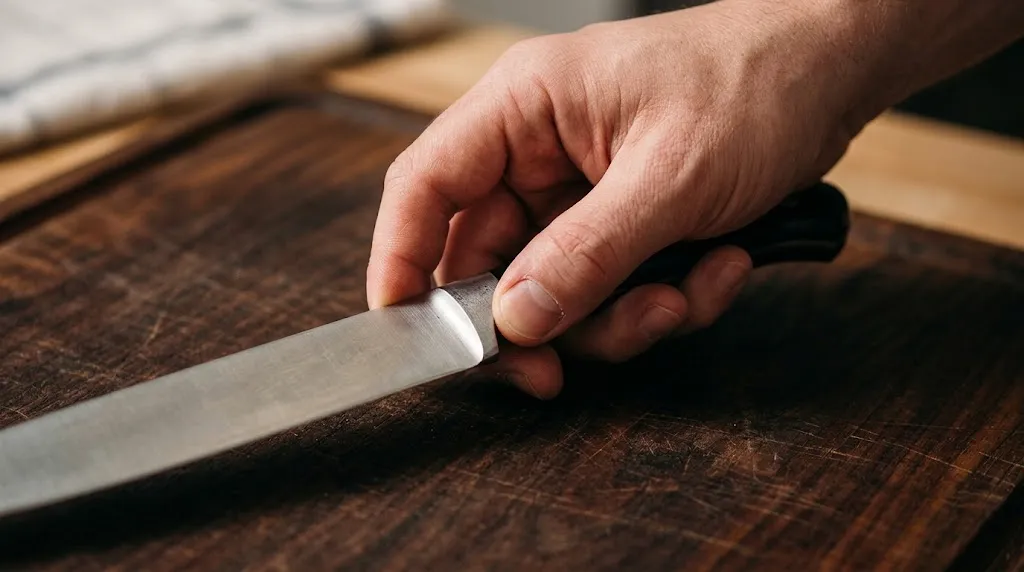
Before making your first cut, your hand placement and posture dictate your safety and speed. Improper grip leads to hand fatigue and increases the risk of slipping.
The Pinch Grip
Instead of wrapping all four fingers around the handle like a hammer, use the pinch grip. Place your thumb and index finger on either side of the blade just forward of the bolster. Wrap your remaining three fingers securely around the handle. This provides maximum control and turns the knife into a natural extension of your arm.
The Claw Grip
Your non-dominant hand guides the ingredient and protects your fingers. Curl your fingertips inward toward your palm, resting your knuckles gently against the flat side of the knife blade. Your thumb and pinky tuck behind to stabilize the food. The knife blade slides smoothly against your knuckles, ensuring your fingertips stay safely out of the path of the edge.
Step-by-Step Guide to Dicing
Follow these structured steps to achieve uniform cubes every time.
- Create a stable base: Slice rounded vegetables like onions or potatoes in half so they sit flat on your cutting board. A stable ingredient never rolls while you cut.
- Make parallel lengthwise cuts: Slice vertically through the ingredient at your desired width, stopping just short of the root if you are cutting an onion.
- Make horizontal cuts: Cut across the lengthwise slices parallel to the cutting board to establish the height of your cubes.
- Slice across vertically: Cut perpendicularly across your previous cuts using a rocking motion with your chef’s knife to release uniform cubes.
Tip
Keep the tip of your chef’s knife anchored to the cutting board during standard dicing motions. Lifting the entire blade wastes energy and reduces precision.
Common Dicing Mistakes to Avoid
Even experienced home cooks sometimes fall into bad habits that compromise knife work. Recognizing these errors helps improve your technique quickly.
- Rushing the rhythm: Speed develops naturally through muscle memory. Trying to chop too fast leads to uneven pieces and potential slips.
- Using a dull blade: A dull chef’s knife slips off food surfaces easily. Keep your blades honed and sharpened regularly.
- Flat fingers: Allowing your fingertips to point upward exposes them to the blade. Always maintain the curled claw grip.
Choosing the Right Dice Size
 Save
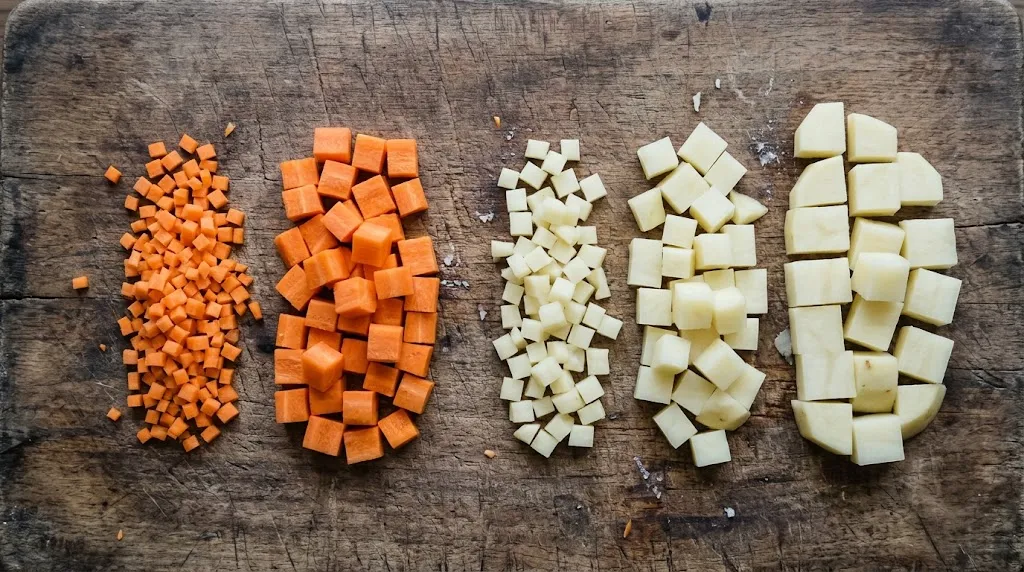
Different recipes call for different dice sizes. Matching the cut to the cooking time ensures balanced flavor and texture.
| Dice Type | Dimensions | Best Used For |
|---|---|---|
| Brunoise | 1/8 inch | Garnishes, fine sauces, soups |
| Small Dice | 1/4 inch | Salsas, vinaigrettes, sweating aromatics |
| Medium Dice | 1/2 inch | Stews, hearty vegetable side dishes |
Understanding these dimensions allows you to control how fast vegetables break down while cooking.
Related Product
Chef’s Knife and Sharpening Stone Sets
A sharp, well-balanced chef’s knife paired with a whetstone helps you maintain clean cuts and effortless control.
As an Amazon Associate, we earn from qualifying purchases.
Frequently Asked Questions
What is the best knife size for dicing vegetables?
An 8-inch chef’s knife is the most versatile choice for home cooks, offering enough length for large produce while maintaining agile control for smaller items.
Should I rock the blade or use a push-cut when dicing?
Both methods work well, but a gentle rocking motion where the tip stays near the board is standard for standard dicing workflows.
How can I keep my cutting board from sliding while I cut?
Place a damp paper towel or a non-slip rubber mat underneath your cutting board to lock it securely in place on your countertop.
Why do onions slip apart while I am trying to dice them?
Leaving the root intact holds the layers together while you make your horizontal and vertical cuts, preventing the pieces from scattering.
How often should I sharpen my chef’s knife?
Honing your knife with a steel rod before every few uses keeps the edge aligned, while professional sharpening or a whetstone session is typically needed every few months depending on usage.
Is it safe to wash a chef’s knife in the dishwasher?
No, dishwashers dull blades rapidly, damage wooden handles, and expose the knife to corrosive detergents. Always wash and dry your chef’s knife by hand.
Conclusion
Mastering the art of dicing with a chef’s knife transforms kitchen preparation from a chore into an efficient, enjoyable process. By focusing on proper hand positioning, utilizing the pinch and claw grips, and maintaining uniform cuts, you ensure consistent cooking results across all your favorite recipes. Regular knife maintenance and proper board stability will keep your prep work safe and precise over time.

