Cutluxe Curved Boning Knife 6-Inch: Honest 2026 Review
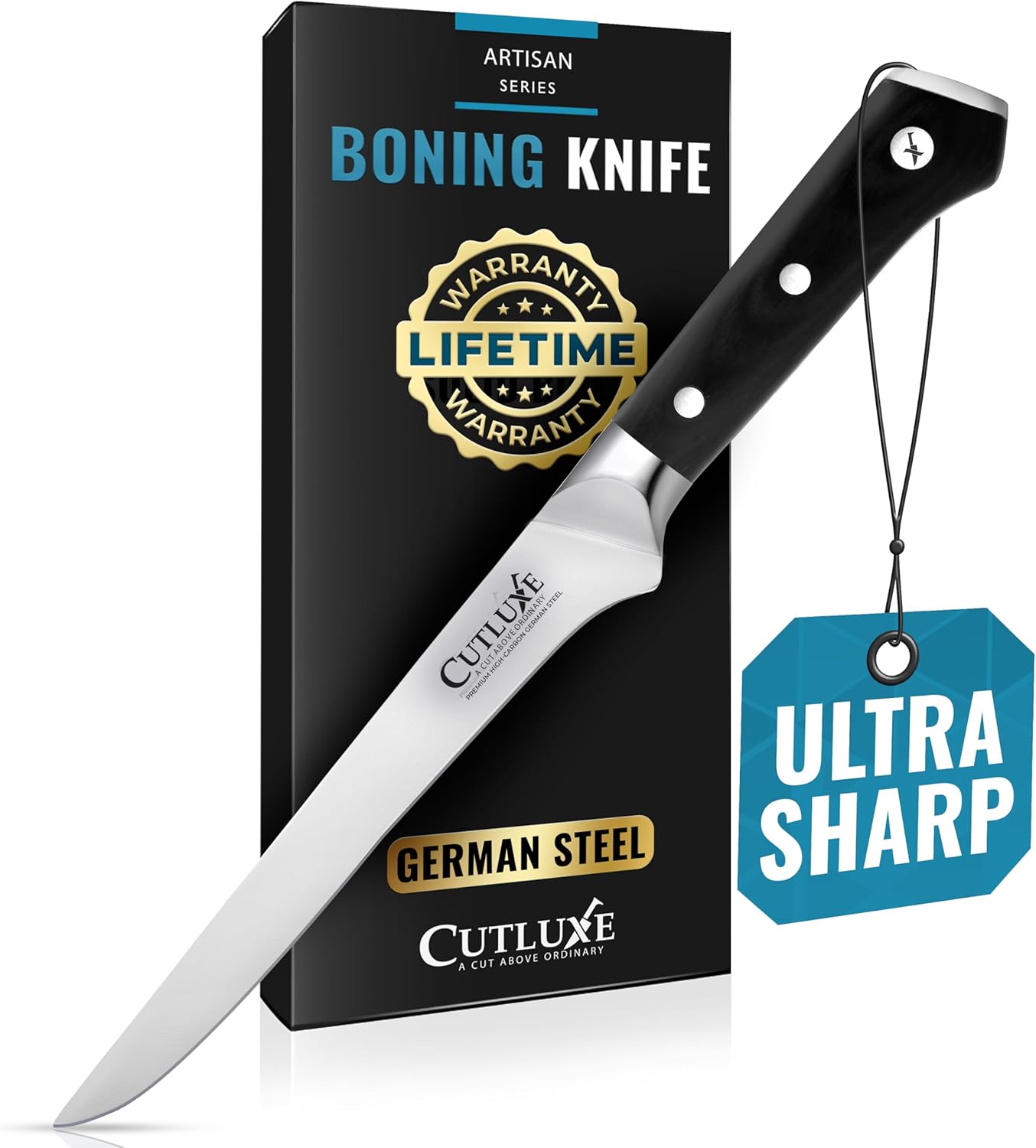
The Cutluxe Curved Boning Knife, 6″ for Meat Cutting & Trimming – Fillet Knife | High Carbon German Steel, Full Tang Ergonomic Handle Design for Brisket & Deboning, Artisan Series is aimed at cooks who break down chicken, trim brisket, clean pork, or work around rounded joints. Its main draw is the curved 6-inch blade, which is shaped to stay close to bone without the bulk of a chef’s knife.
This is not a do-everything kitchen knife. It makes the most sense when close trimming and deboning are regular jobs. The German-steel blade, full-tang build, and Pakkawood handle give it a more traditional feel than many budget boning knives, while the current Amazon rating remains strong.
 Save
Save| Overall: 4.6/5 | Performance: 4.7/5 |
| Value: 4.5/5 | Design: 4.6/5 |
| ✅ Best For: chicken joints, brisket trimming, pork, and detail work | |
| ❌ Not Ideal For: cutting through bone or buyers who want a very flexible fish knife | |
| Price: no featured Amazon offer when checked; recently tracked near $19.99 | |
| Check Price on Amazon | |
First Look at the Cutluxe
The presentation is straightforward: a narrow meat-prep knife with a polished steel blade and dark Pakkawood handle. The full tang and three-rivet handle feel more substantial than many molded-plastic alternatives. There is no setup beyond washing and drying it before use.
Amazon lists a 6-inch blade and an overall length of 11.5 inches. Its listed 0.38 kg item weight seems unusually high for this size, so I would treat that number cautiously. More useful is the curved edge, which gives room to draw through meat without lifting the tip too soon.
How the Curved Blade Works
The most useful way to judge this knife is by the jobs its shape is meant to solve. A curved boning knife should stay close to joints, trim cleanly, and give enough control that you are not carving away good meat. For a broader look at what this style is built to do, see this guide to what a boning knife does differently.
Breaking Down Chicken Thighs
A chicken thigh is where the curve makes sense. The blade can follow the rounded bone and work into the joint with short strokes. The 14–16 degree-per-side edge listed by Cutluxe is fine enough for membrane and connective tissue, while the blade stays more controlled than a long fillet knife. The key is to cut beside bone, not through it.
Trimming Brisket Fat
On brisket, the narrow profile helps lift hard fat or slide under silver skin. The curved belly gives a useful angle, though long sweeping trims take more passes than with a larger butcher knife. For corners and tight seams, the short length is an advantage.
Working Around Pork Joints
Pork shoulder and similar cuts ask for more control than flex. Cutluxe describes this curved model as mostly rigid, which suits cartilage and rounded bone better than a soft fillet blade. That matches the general rule explained in this guide to curved, straight, flexible, and stiff boning knives. You still need light pressure; forcing the tip is where slips happen.
Skinning and Fine Trimming
The pointed tip can get under skin or thin connective tissue with a small opening. That helps on poultry and roast cleanup. Still, this model is not as bendy as a dedicated fillet knife, so Cutluxe’s thinner or longer fillet options make more sense for delicate fish.
What Daily Use Feels Like
In a normal prep routine, this knife is quick to grab for chicken thighs, rib trimming, and roast cleanup. The short blade also feels less clumsy in a crowded prep area than a 10-inch breaking knife.
The small annoyance is care. Pakkawood rewards hand washing and prompt drying, and grease can make a smooth handle feel less secure. If you are learning technique, this boning knife use guide covers grip and short, controlled cuts.
Steel, Handle, and Balance
The build is the strongest part of the value story. Cutluxe uses high-carbon German steel, a full tang, and a triple-riveted Pakkawood handle. Amazon also lists the blade at 56+ Rockwell hardness, which is a practical middle ground for a working meat knife.
| Part | Verified detail |
| Blade | 6-inch German steel |
| Edge | 14–16° per side |
| Handle | Full-tang Pakkawood |
| Overall length | 11.5 inches |
The polished finish should wipe clean easily, though it will show smears during greasy prep. The handle has a more finished look than textured commercial rubber, but that also means it may not feel as locked-in when wet. The design favors traditional feel and balance over maximum traction.
Grip and Control Near Bone
Noise is irrelevant for a manual knife, so control is the better question. The moderate curve helps keep the edge engaged as your wrist changes angle around a joint, meaning fewer awkward resets than with a wide chef’s knife.
The trade-off is that the smooth Pakkawood surface cannot match the aggressive grip of a textured Fibrox-style handle when your hand is oily. Dry hands and a clean handle matter. The knife should also never be used to chop through hard bone or frozen meat; a cleaver or heavy shears are safer for that job.
Cleaning the Pakkawood Handle
Cleanup is simple, but the routine matters. Cutluxe recommends hand washing only, drying immediately, honing regularly, and storing the knife where the edge cannot bang against other utensils.
| Task | Best practice |
| After raw meat | Wash right away |
| Drying | Dry immediately |
| Edge care | Hone as needed |
| Storage | Block, strip, or guard |
Fat can collect near the bolster and rivets, so give those areas a quick wipe rather than just rinsing the blade. Avoid a dishwasher even if it feels convenient. Heat, detergent, and rattling are hard on both a fine edge and a wood-based handle. This also matches the care advice in the site’s slicing knife vs boning knife guide.
Cutluxe Pros and Cons
The Cutluxe gets the important basics right, but it is still a specialist knife. Its value depends on whether you actually debone and trim meat often enough to use the curved shape.
| Pros ✅ | Cons ❌ |
|
|
Cutluxe vs Victorinox Fibrox
The closest useful comparison is the Victorinox Fibrox 6-inch curved boning knife. Both target meat and poultry work, but they take different approaches to handle feel, construction, and maintenance.
Which One Fits Better?
Victorinox uses a textured TPE handle and a stamped Swiss-made blade. Its official 5.6603.15 model has a 5.9-inch curved blade, weighs 3.4 ounces, is dishwasher safe, and lists at $40. Cutluxe leans toward a heavier traditional build with Pakkawood, full tang construction, and a hand-sharpened German-steel edge.
| Feature | Cutluxe | Victorinox |
| Blade | 6 in curved | 5.9 in curved |
| Handle | Pakkawood | Textured TPE |
| Construction | Full tang | Stamped blade |
| Cleaning | Hand wash | Dishwasher safe |
Choose Cutluxe if you want the wood-handle feel and full-tang build. Choose Victorinox if wet-hand grip and easy cleanup matter more. The site also has a focused Victorinox Fibrox boning knife review for a deeper look at that style.
Who Should Buy the Cutluxe?
Buy this if:
- You trim brisket or pork often.
- You break down chicken at home.
- You prefer full-tang wood handles.
- You want a curved, fairly rigid blade.
Avoid this if:
- You mainly fillet delicate fish.
- You want dishwasher cleanup.
- You need to cut through bone.
How It Should Hold Up
The blade is forged from high-carbon German steel and listed at 56+ HRC, so it should be straightforward to hone and resharpen. The polished surface is described as rust and stain resistant, but immediate drying is still the safer habit. The Pakkawood handle should age well if it is kept out of the dishwasher and not left soaking.
Cutluxe backs the knife with a lifetime warranty against material or workmanship defects. That is useful, but it is not a substitute for edge care. Expect normal dulling from cutting-board contact. A wood or plastic board, regular honing, and proper storage will matter more to lifespan than any marketing claim.
Prep Efficiency and Food Waste
There is no energy use to measure, so efficiency here means time, effort, and how much good meat stays on the cut. A narrow curved blade can reduce the need to hack around joints with a chef’s knife. That is especially helpful on chicken thighs, ribs, and rounded pork bones.
For occasional prep, the difference may feel small. If you buy bone-in meat often, a dedicated boning knife can make the job faster and cleaner while reducing unnecessary cuts into usable meat.
Cutluxe Boning Knife FAQ
These are the practical questions that matter most before buying or using this model.
Is the Cutluxe curved boning knife flexible?
It has a curved, narrow profile, but Cutluxe positions this regular curved model as more rigid than its thin curved and dedicated fillet knives. That makes it better suited to joints and meat trimming than highly flexible fish work.
Can it cut through chicken bones?
No. Use it to separate meat, cartilage, and joints, not to chop through hard bone. A cleaver or sturdy kitchen shears are better for bone cutting.
What angle is the blade sharpened to?
Cutluxe lists the edge at 14–16 degrees per side. That is a fine edge intended for clean slicing and close trimming.
Is the Cutluxe boning knife dishwasher safe?
Cutluxe recommends hand washing and immediate drying. That protects both the edge and the Pakkawood handle from heat, detergent, and movement inside a dishwasher.
What is the Amazon rating?
At the time checked, Amazon showed 4.7 out of 5 stars from 432 ratings. Ratings can change as new reviews arrive, so confirm the latest figure on the listing before publishing or buying.
Save| A strong value if your prep involves joints, brisket, and close trimming. |
| Price: no featured Amazon offer when checked; recently tracked near $19.99 |
| Amazon feedback: 4.7/5 from 432 ratings when checked |
| View Current Price & Availability |
Final Take on the Cutluxe
The Cutluxe Curved Boning Knife makes the most sense for home cooks and BBQ fans who regularly work around joints, trim brisket, or clean up pork and poultry. Its biggest strengths are the 6-inch curved German-steel blade, full-tang Pakkawood handle, fine 14–16 degree edge, and lifetime defect warranty.
The weaknesses are practical rather than dramatic. The handle is not as grippy as textured commercial rubber, the knife should be hand washed, and the standard curved blade is not the best choice for very flexible fish filleting. If those trade-offs fit your routine, this is a focused, well-built meat-prep knife that offers strong value without pretending to replace every blade in your kitchen.