Chef Knife vs Paring Knife: Differences, Uses, and Which to Choose
Quick Answer
A chef knife is a large, versatile kitchen knife for chopping vegetables, slicing boneless meat, dicing onions, and mincing herbs. A paring knife is smaller and lighter, making it better for peeling apples, trimming strawberries, removing blemishes, and other precise tasks. If you can buy only one knife, choose a chef knife first, then add a paring knife for detailed work. Learn more in this guide to what a chef knife is used for.
Which Knife Should You Use?
- Chef knife: Choose it for larger ingredients, repeated chopping, slicing, dicing, and mincing on a cutting board.
- Paring knife: Choose it for peeling small produce, trimming, coring, and detailed cuts that require close control.
- Blade length: Chef knives commonly measure 6–10 inches, while paring knives generally measure 2–4 inches.
- Best first purchase: Start with a comfortable 8-inch chef knife for everyday meal preparation.
- Best combination: Keep both knives available so you can switch between broad cutting tasks and delicate preparation.
- Safety tip: Use a stable cutting board for chopping and keep your fingertips curled away from the cutting edge.
Choosing between a chef knife and a paring knife becomes easier when you understand what each blade does best. Both can cut fruits and vegetables, but their size, shape, and handling make them suitable for different jobs.
In this guide, I’ll explain their differences, compare everyday kitchen tasks, and show you when each knife makes the most sense. You’ll also learn what to buy first and how to use both tools safely.
What Is the Difference Between a Chef Knife and a Paring Knife?
 Save
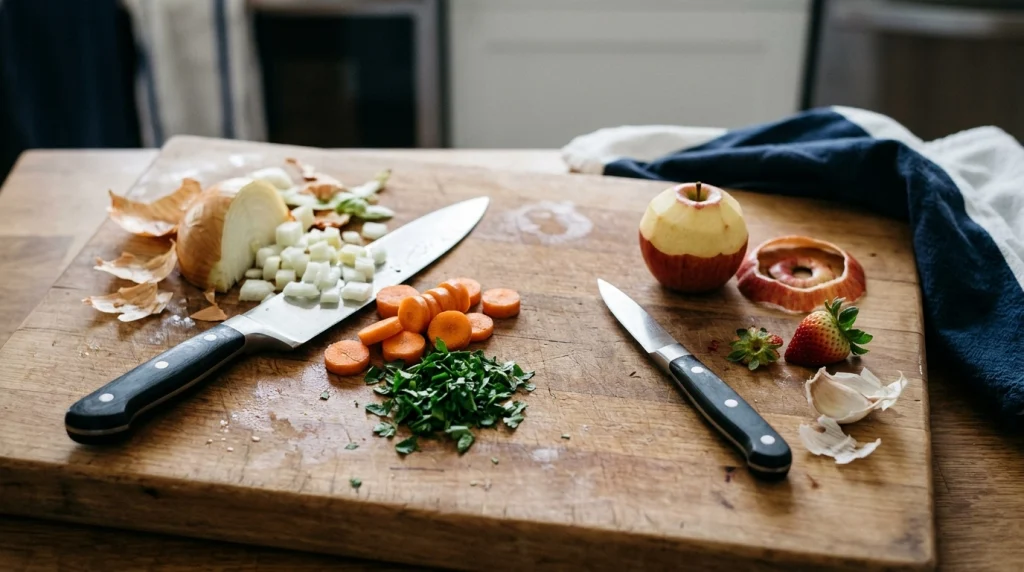
A chef knife is an all-purpose kitchen knife designed for preparing larger quantities of food, while a paring knife is a compact blade made for precise cutting and trimming. The main difference is the amount of cutting space and control each knife provides.
A chef knife usually has a broad blade with a curved cutting edge. That shape supports chopping, rocking cuts, slicing, and mincing on a cutting board.
A paring knife has a short, narrow blade that feels easier to maneuver around small ingredients. Its pointed tip helps remove stems, cores, blemishes, and other unwanted parts without cutting away too much food.
- Chef knife: Best for general food preparation and larger cutting jobs.
- Paring knife: Best for detailed work and small ingredients.
- Both knives: Useful for everyday cooking, but neither replaces every specialized kitchen knife.
Chef Knife vs Paring Knife: Side-by-Side Comparison
The table below compares common characteristics of the two knife types. Exact dimensions, weight, and balance vary by manufacturer and model.
| Feature | Chef Knife | Paring Knife |
|---|---|---|
| Typical blade length | 6–10 inches | 2–4 inches |
| Blade design | Broad, longer blade | Short, narrow blade |
| Best cutting area | Cutting board | Cutting board or carefully controlled hand-held work |
| Ideal tasks | Chopping, dicing, slicing, mincing | Peeling, coring, trimming, small cuts |
| Large vegetables | Usually more convenient | Less convenient |
| Small, intricate cuts | Can feel cumbersome | Usually easier to control |
| Best first knife | Yes, for most home cooks | Better as a complementary knife |
These ranges describe common kitchen knives rather than strict standards. For example, a compact 6-inch chef knife may suit a small kitchen, while a 10-inch version can offer more reach for larger ingredients.
What Is a Chef Knife Used For?
A chef knife is a multipurpose kitchen blade used for chopping, slicing, dicing, and mincing a wide range of ingredients. Its longer cutting edge makes repeated cuts more efficient, especially when preparing meals for several people.
Think of it as your main preparation knife. You can use it for most routine cutting tasks without repeatedly changing tools.
Best uses for a chef knife
- Chopping vegetables: Cut onions, carrots, cabbage, bell peppers, and celery into manageable pieces.
- Dicing ingredients: Create evenly sized cubes of potatoes, onions, and other produce.
- Mincing herbs: Chop parsley, cilantro, and other herbs into small pieces.
- Slicing boneless meat: Portion chicken breasts, cooked meat, and boneless cuts when the blade is appropriate for the task.
- Preparing fruit: Slice melons, apples, and other larger fruits on a stable board.
The broad blade also makes it convenient to move chopped ingredients from a cutting board into a bowl. Use the spine or back of the knife to gather food rather than dragging the sharp edge sideways across the board.
When does a chef knife make more sense?
Choose a chef knife when you have several ingredients to prepare or need consistent cuts across a larger quantity of food. Its longer edge gives you room to work through a large onion, cabbage, or bunch of herbs efficiently.
However, don’t force it into tasks that need a different blade. Peeling a small apple or trimming the stem from a strawberry is often easier with a paring knife.
For more details about the blade’s working areas and cutting techniques, see this guide to using the tip of a chef knife.
What Is a Paring Knife Used For?
A paring knife is a small kitchen knife designed for precise work on fruits, vegetables, and other small ingredients. Its short blade lets you make controlled cuts where a full-size chef knife may feel awkward.
It’s particularly helpful when the goal is to remove a small amount of material rather than chop an entire ingredient into pieces.
Best uses for a paring knife
- Peeling produce: Remove the skin from apples, pears, potatoes, and other small fruits or vegetables.
- Hulling strawberries: Remove the leafy tops and unwanted center portions with controlled cuts.
- Coring fruit: Remove cores or small damaged areas from suitable fruits.
- Trimming vegetables: Cut away blemishes, stems, and rough edges.
- Preparing garnishes: Make small decorative cuts in fruit and vegetables.
- Cutting small ingredients: Slice a garlic clove or trim a chili pepper when its compact size offers better control.
A paring knife can also handle small dicing tasks on a cutting board. However, using it to chop a large pile of vegetables quickly can become tiring and inefficient.
Why is a paring knife better for detailed work?
The shorter blade is easier to guide around curves and small surfaces. You can see the cutting area more clearly, and the pointed tip helps you remove unwanted sections with less unnecessary waste.
Some cooks hold a paring knife while peeling, but this technique requires careful control. If you’re inexperienced, peel the ingredient on a stable cutting board instead of holding it in your palm.
For a beginner, the biggest benefit is not speed. It’s having a tool that matches the size of the task.
Which Knife Should You Use for Different Foods?
The best choice depends on the ingredient’s size, firmness, and the cut you want to make. A simple rule is to use the chef knife for larger preparation jobs and the paring knife for small, detailed cuts.
| Food or task | Recommended knife | Reason |
|---|---|---|
| Dicing a large onion | Chef knife | Long edge supports repeated, even cuts. |
| Peeling an apple | Paring knife | Compact blade follows the fruit’s curves. |
| Chopping a bunch of parsley | Chef knife | Broad edge handles repeated mincing efficiently. |
| Removing strawberry stems | Paring knife | Small tip allows localized trimming. |
| Slicing a large bell pepper | Chef knife | Long blade handles the main cutting work. |
| Trimming a small blemish | Paring knife | Precise tip limits unnecessary cutting. |
| Cutting a large melon | Chef knife | A suitable long blade can handle larger sections. |
| Making small garnish cuts | Paring knife | Short blade offers detailed control. |
These are practical recommendations, not rigid rules. You can use a chef knife for a small ingredient if it feels comfortable, but don’t use a long blade when its size makes a delicate cut difficult to control.
Is a Chef Knife or Paring Knife Better for Beginners?
A chef knife is usually the better first purchase because it covers more everyday kitchen tasks. A paring knife becomes a valuable second tool when you regularly peel fruit, trim vegetables, or prepare small garnishes.
For a practical starting point, consider an 8-inch chef knife. It offers a useful balance between cutting length and maneuverability for many home cooks, although a 6-inch model may feel better in a compact workspace.
Once you have the main knife, add a 3- to 4-inch paring knife. You don’t need a large knife set to prepare most home-cooked meals.
How can you tell which knife fits your needs?
- Choose a chef knife first if you cook daily and prepare vegetables, meat, and larger ingredients.
- Prioritize a paring knife if you already own a suitable chef knife and frequently do detailed trimming.
- Consider comfort if a large blade feels unwieldy; a shorter chef knife may be a better fit.
- Check the handle for a secure, comfortable grip before buying whenever possible.
My practical recommendation is to judge a knife by the jobs you repeat most often, not by how impressive it looks in a block. A comfortable, well-maintained knife is more useful than an expensive blade that feels awkward in your hand.
Can You Use a Paring Knife Instead of a Chef Knife?
Yes, a paring knife can replace a chef knife for some small cutting jobs, but it is not an efficient substitute for larger preparation tasks. Its shorter edge requires more individual cuts and gives you less room to work through large ingredients.
For example, you can dice a small garlic clove or trim a carrot with a paring knife. Chopping several onions or slicing a large cabbage is generally easier with a chef knife.
Using a small knife for a job that requires awkward force or repeated cuts can reduce control. Switch to an appropriately sized knife rather than compensating with extra pressure.
Can You Use a Chef Knife Instead of a Paring Knife?
Yes, a chef knife can handle many small cutting tasks when you have enough space and can control the blade comfortably. However, peeling small fruits and removing tiny blemishes often becomes more difficult with a long blade.
Consider peeling an apple as an example. A paring knife can follow the fruit’s curve closely, while a chef knife has more blade length to manage around the same small surface.
For small tasks, the chef knife’s extra length doesn’t necessarily provide an advantage. Choose the blade that makes the cut easiest to control.
How Do You Use Both Knives Safely?
Safe knife work depends on a stable cutting surface, a controlled grip, and a blade suited to the task. Neither a small blade nor a large blade eliminates the need for careful technique.
Follow these basic practices whenever you prepare food:
- Stabilize the cutting board. Use a nonslip board or place a damp towel underneath it to prevent movement.
- Keep your guide hand safe. Curl your fingertips inward and keep them behind your knuckles when cutting on a board.
- Use controlled movements. Cut at a manageable pace instead of forcing the blade through food.
- Keep the knife sharp. A well-maintained edge cuts more predictably than a dull blade that needs excessive pressure.
- Cut away from your body when appropriate. Never position your fingers in the path of the blade.
- Wash and store knives carefully. Clean them according to the manufacturer’s instructions, dry them when needed, and store them where the exposed edge cannot injure someone.
For additional guidance, consult the University of Illinois Extension’s knife and cutting-tool safety advice. It covers choosing appropriate tools and reducing common kitchen hazards.
Never use either knife to cut through hard bones or frozen food unless the specific tool is designed for that job. A standard chef knife or paring knife can chip, slip, or become damaged under inappropriate force.
Which Chef Knife and Paring Knife Should You Buy?
 Save
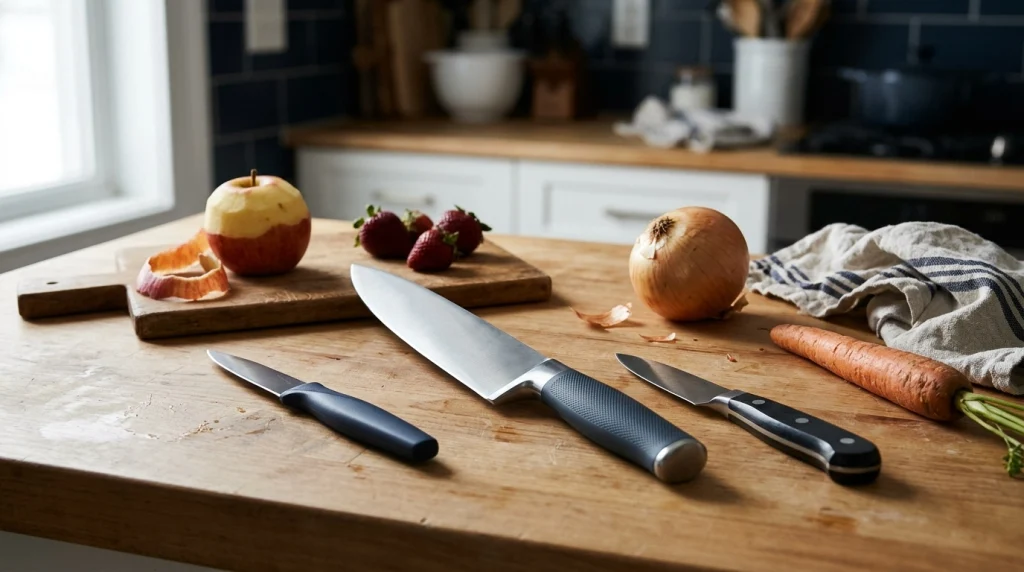
You don’t need matching knives or an expensive collection to get started. Focus on a comfortable handle, appropriate blade length, reliable construction, and straightforward maintenance.
The following models offer different approaches to everyday cutting and detailed preparation. The links lead to Amazon search results so you can check current listings, specifications, and prices before buying.
🏆 Best Everyday Chef Knife
Victorinox Fibrox Pro 8-Inch Chef’s Knife
★★★★☆
This popular workhorse has an 8-inch stainless-steel blade and a textured Fibrox handle. I’d consider it for someone who wants one practical knife for everyday chopping, slicing, and dicing; the stars here indicate editorial fit, not a verified customer rating.
💰 Compact Budget Option
Victorinox Swiss Classic 3.25-Inch Paring Knife
★★★★☆
Its compact stainless-steel blade and lightweight handle suit peeling, trimming, and small produce preparation. I’d pair it with a chef knife rather than expect it to handle every cutting task; the stars reflect editorial suitability, not a verified customer rating.
✨ Premium Alternative
WÜSTHOF Classic 3.5-Inch Paring Knife
★★★★☆
This forged German-style knife has a 3.5-inch blade and a traditional riveted handle. I’d consider it for frequent precision work and cooks who prefer a more substantial knife, but compare its price and grip with less expensive alternatives; the stars are editorial, not a verified customer rating.
Before ordering, confirm the exact model, blade length, handle material, seller, and current price. Product availability and prices can change, and individual comfort matters more than brand reputation alone.
Frequently Asked Questions
Is a chef knife more versatile than a paring knife?
Yes, a chef knife is generally more versatile for everyday meal preparation because its longer blade handles chopping, slicing, dicing, and mincing. A paring knife is more specialized for peeling, trimming, coring, and precise small cuts, where a large blade can feel cumbersome.
What size paring knife is best for everyday cooking?
A 3- to 4-inch paring knife is a practical choice for most home cooks. This length provides enough blade for peeling fruit and trimming vegetables while remaining compact enough for detailed work. Choose a model that feels secure and comfortable in your hand.
Can I chop onions with a paring knife?
Yes, you can chop a small onion with a paring knife if you can control the blade safely. However, a chef knife usually makes the job easier because its longer edge supports repeated cuts and more efficient dicing. For larger quantities, choose the chef knife.
Should I buy a chef knife or a paring knife first?
Buy a chef knife first if you need a general-purpose kitchen blade. An 8-inch model is a useful starting point for many home cooks, while a paring knife makes a good second purchase for peeling, trimming, and precision work. Choose the size that suits your workspace and comfort.
Can I peel potatoes with a chef knife?
You can peel potatoes with a chef knife, but its longer blade can make small, curved cuts less convenient. A paring knife offers better control for detailed peeling. For frequent peeling, a dedicated vegetable peeler may be faster and reduce unnecessary waste.
Final Verdict: Chef Knife vs Paring Knife
A chef knife and a paring knife serve different purposes, and both can improve your kitchen workflow. The chef knife handles larger preparation tasks, while the paring knife makes delicate cuts and trimming easier.
If you’re building your kitchen from scratch, start with a comfortable chef knife and add a paring knife when your cooking routine calls for one. You don’t need to choose a single winner because the most useful setup often includes both.
In short, match the blade to the task, keep it in good condition, and prioritize control over speed. Those simple habits will make everyday food preparation more efficient and safer.

