
Can You Make a Cutting Board Out of Pine? Safety, Pros, Cons, and Better Options
Quick Answer
Yes, you can make a cutting board out of pine, but I don’t recommend it for regular food preparation. Pine is relatively soft, scratches easily, and may release sticky resin or unwanted odors. For an everyday cutting surface, hard maple or another suitable close-grained hardwood is a better choice. Learn more about choosing wood for a cutting board.
Five things to know before using pine
- Soft cutting surface: Pine develops knife grooves and dents faster than hard maple.
- Resin concerns: Some pine boards contain pitch pockets that can create sticky spots.
- Cleaning challenges: Deep scratches can trap food residue and become difficult to clean.
- Limited suitable uses: Untreated, clean pine may work for decorative boards or carefully maintained dry-food serving projects.
- Better alternative: Choose hard maple for a durable, dependable everyday cutting board.
Pine is affordable, attractive, and easy to work with, so it’s understandable why many DIY enthusiasts consider it for cutting boards. But a successful woodworking project isn’t automatically a good kitchen tool.
I judge cutting board materials by how well they handle knives, moisture, cleaning, and repeated food contact. In this guide, I’ll explain where pine falls short, when it might work, and which alternatives make more sense.
What Is Pine Wood, and Why Is It Used for Woodworking?
Pine is a softwood from trees belonging to the genus Pinus. Woodworkers commonly use it for furniture, shelves, trim, decorative projects, and other applications where easy shaping matters.
The term softwood describes its botanical category, not a fixed hardness level. However, many commonly sold pine species are considerably softer than hardwoods used for kitchen cutting boards.
Common properties of pine wood
- Low cost: Pine lumber often costs less than furniture-grade maple or walnut.
- Easy machining: Most pine species cut, drill, and sand without demanding specialized equipment.
- Lightweight construction: A pine board is generally easier to lift than a similarly sized dense hardwood board.
- Distinctive appearance: Pale coloring, knots, and visible grain create a rustic look.
- Variable resin content: Certain boards contain noticeable pitch pockets or resin-rich knots.
- Lower dent resistance: Frequent knife impacts can quickly leave visible marks.
These properties make pine useful for many household projects. They don’t necessarily make it suitable for daily chopping.
Is Pine Wood Safe for Cutting Boards?
Pine isn’t my recommended material for a cutting board intended for regular food preparation. The main concerns are softness, surface deterioration, resin, and uncertainty about the lumber’s treatment history.
That doesn’t mean every piece of pine is automatically poisonous. The important distinction is between an untreated piece of wood and a durable, hygienic surface designed for repeated knife contact.
What does the FDA recommend?
The FDA Food Code offers a useful benchmark for selecting wood used in food establishments. The 2026 edition, Section 4-101.17, identifies hard maple or equivalently hard, close-grained wood as suitable for cutting boards.
The Food Code is a model for commercial food-safety regulation, not a blanket prohibition covering every home kitchen. Still, its emphasis on hardness and cleanability supports choosing hardwood instead of typical construction-grade pine.
Does pine resin make a cutting board unsafe?
Pine naturally produces resin, sometimes called pitch. Resin can collect around knots, appear on the surface, or become sticky under certain conditions.
Not all pine boards release noticeable resin. However, I would reject a board with active pitch seepage or a persistent resinous smell for direct food preparation.
Resin can create practical problems:
- Sticky patches may collect dirt or food residue.
- Strong pine odors can be unpleasant during food preparation.
- Resin may interfere with predictable finishing.
- Pitch pockets may become exposed during cutting or sanding.
A food-grade oil doesn’t remove these underlying problems. If resin appears repeatedly, choose a different piece of wood or change the project’s intended use.
What about bacteria and food contamination?
Wooden cutting boards aren’t inherently unsafe simply because wood absorbs moisture. Both wood and plastic boards can support safe food preparation when properly maintained.
The challenge with pine is how quickly its relatively soft surface can become damaged. Deep knife marks and rough areas create places where food residue may remain after ordinary washing.
The University of Maine Cooperative Extension recommends replacing cutting boards with severe wear, cracks, or grooves that prevent effective cleaning.
My practical rule is simple: if I can’t confidently clean the entire cutting surface, I wouldn’t keep using it for food preparation.
Why Is Pine Not Ideal for Everyday Cutting?
Pine’s biggest disadvantage is its relatively low resistance to repeated knife impacts. Even a carefully finished board can develop noticeable wear during ordinary kitchen tasks.
1. Pine scratches and dents easily
Every knife stroke applies force to the board. A softer surface compresses and develops grooves more readily than a suitable dense hardwood.
Shallow knife marks are normal on many cutting boards. Deep, ragged grooves are different because they make thorough cleaning harder.
2. The surface can become uneven
Wood contains areas with different grain structures and densities. In pine, the contrast between softer earlywood and denser latewood can contribute to uneven wear.
Over time, heavily used sections may become rougher than surrounding areas. This can make food preparation less comfortable.
3. Moisture requires careful management
Pine can absorb water during washing and food preparation. Uneven wetting and drying may encourage cupping, twisting, or cracking.
These problems aren’t exclusive to pine. Still, proper drying and wood conditioning cannot compensate for unsuitable construction or persistent surface damage.
For a broader explanation, see our guide on preventing cutting board warping.
4. Pine may introduce unwanted aromas
Some pine lumber has a distinct scent, especially around resin-rich areas. That smell may be undesirable when preparing ingredients with delicate flavors.
I would avoid using noticeably resinous pine around foods that contact the surface directly. A neutral-smelling, food-preparation-grade board is a more dependable option.
Pine vs. Maple vs. Walnut: Which Wood Makes the Best Cutting Board?
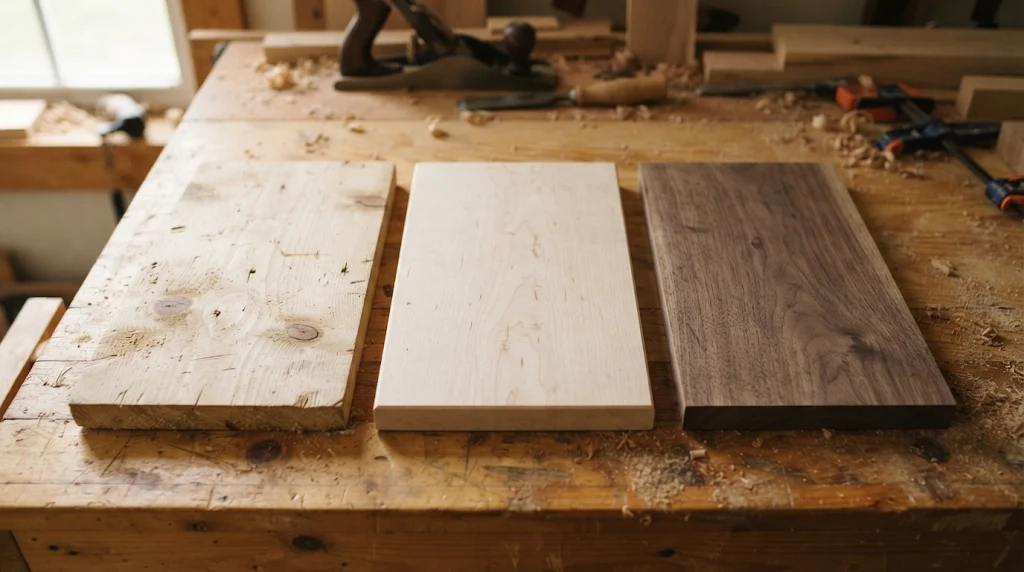
Hard maple is generally the strongest everyday choice among these three woods. Walnut is also popular, while typical soft pine is better reserved for projects that don’t involve frequent chopping.
The Janka hardness test measures a wood species’ resistance to indentation. It provides a useful comparison, although grain structure, construction, and maintenance also influence cutting board performance.
| Property | Eastern White Pine | Hard Maple | Black Walnut |
|---|---|---|---|
| Janka hardness | 380 lbf | 1,450 lbf | 1,010 lbf |
| Dent resistance | Low | High | Moderate to high |
| Frequent chopping | Not recommended | Excellent choice | Good choice |
| Resin concerns | Possible | Not a typical issue | Not a typical issue |
| Best application | Decorative projects | Daily cutting | Daily cutting and serving |
These hardness values refer to the named species, not every variety sold under each common wood name. Different pine species can have substantially different hardness ratings.
For most home cooks, I would choose hard maple first. Its combination of durability, close grain, and established kitchen use makes it a sensible long-term investment.
Can You Make a Pine Cutting Board for Light Use?
Yes, you can construct a pine board, but I would limit its intended use. A decorative bread board or dry-food presentation project is more reasonable than an everyday chopping surface.
Even for occasional food contact, the wood must be appropriately sourced, clean, untreated, and free from active resin or questionable coatings. Never assume ordinary lumber is suitable simply because it looks clean.
What can you safely make with pine instead?
- Decorative kitchen boards: Create wall displays or countertop decorations without using them for food preparation.
- Rustic presentation pieces: Use carefully selected, food-contact-appropriate material for limited dry-food service.
- Woodworking practice boards: Learn shaping, sanding, and edge finishing techniques before working with expensive hardwood.
- Kitchen signs and organizers: Enjoy pine’s attractive grain without exposing it to repeated knife damage.
If your goal is to cut vegetables, fruit, or meat, I would switch to a purpose-made board. The price difference is easier to justify than repeated repairs or replacement.
How Do You Make a Pine Board Step by Step?
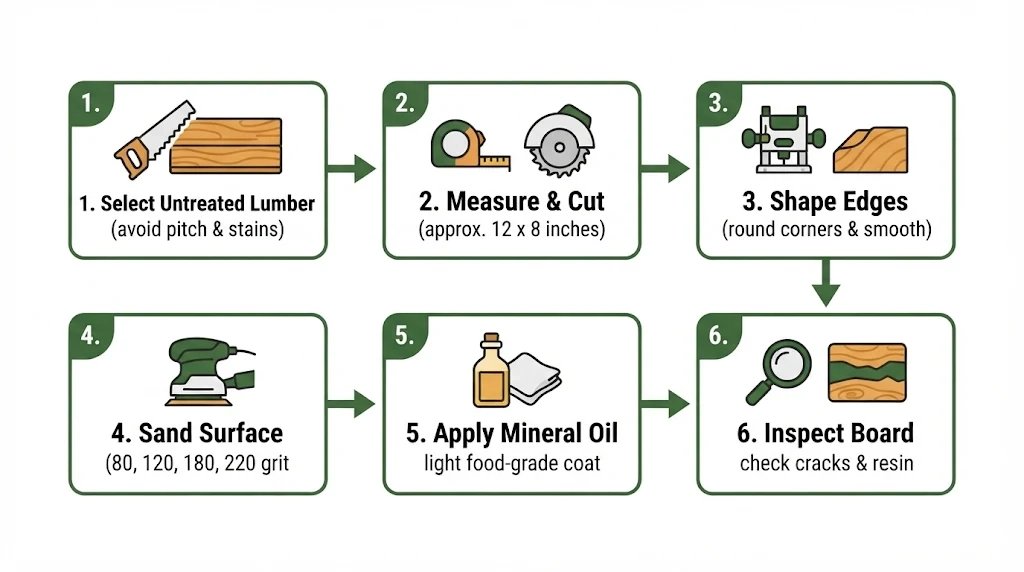
If you still want to build a pine board for decorative or limited dry-food use, start with verified untreated wood. The following process focuses on creating a smooth, stable project rather than promising commercial cutting-board suitability.
Tools and materials
- Clean, untreated, well-dried pine lumber
- Measuring tape and pencil
- Table saw, circular saw, or appropriate handsaw
- Clamps, if joining multiple boards
- Adhesive explicitly suitable for the intended application, if required
- Sandpaper in approximately 80, 120, 180, and 220 grits
- Dust removal brush or vacuum
- Food-contact-safe mineral oil for appropriate unfinished wood surfaces
Step 1: Select suitable lumber
Choose wood with a known source and no preservative treatment. Avoid painted, stained, pressure-treated, reclaimed, or chemically contaminated lumber.
Inspect knots and resin pockets carefully. Reject boards with active pitch seepage, large cracks, splinters, or an unknown treatment history.
Step 2: Measure and cut the board
A small project measuring approximately 12 by 8 inches offers enough room for decorative presentation. Use an appropriate saw and follow its safety instructions.
Wear eye protection and control dust during cutting. Keep hands away from blades and use suitable workholding equipment.
Step 3: Shape the edges
Round sharp corners and ease the edges with sandpaper or a router. Smooth edges make the board easier to handle and reduce splintering.
If joining multiple pieces, use properly fitted joints and an adhesive rated for the intended use. Allow the glue to cure fully according to the manufacturer’s instructions.
Step 4: Sand the surface
Start with coarse grit only when the surface needs leveling. Progress through finer grits until the board feels consistently smooth.
- Use approximately 80 grit to correct significant roughness.
- Continue with 120 grit to remove coarse sanding marks.
- Use 180 grit to refine the surface.
- Finish near 220 grit for a smooth texture.
- Remove sanding dust thoroughly before applying a finish.
Sand with the grain wherever practical. Check for splinters and exposed resin pockets before moving forward.
Step 5: Apply an appropriate finish
For suitable unfinished wood intended for food contact, use a product specifically labeled for that purpose. Food-grade mineral oil is a common choice for wooden cutting boards.
Apply a light, even coating and follow the product instructions. Wipe off excess oil before the board returns to service.
A finish doesn’t turn questionable lumber into a safe cutting surface. It also won’t eliminate pine’s softness or prevent deep knife damage.
Step 6: Inspect the finished project
Check the entire surface for rough areas, cracks, resin, adhesive residue, and loose fibers. Remove the board from food-contact use if you cannot resolve those issues.
My preference is to treat a pine project as a learning experience. For a serious kitchen cutting board, I would apply the same woodworking skills to hard maple.
What Is the Best Finish for a Pine Board?
For an appropriately sourced, unfinished wooden food-contact surface, food-grade mineral oil is a practical conditioning treatment. A board-specific mineral-oil-and-wax conditioner may also be suitable.
Neither treatment forms an indestructible barrier. Pine still needs careful washing, drying, inspection, and replacement when damaged.
Finishes I would consider
- Food-grade mineral oil: Commonly used to condition unfinished wooden cutting boards.
- Board-specific wax conditioner: Usually combines suitable oil with beeswax or other food-contact-appropriate waxes.
- Manufacturer-approved finish: Acceptable when its instructions specifically support the intended food-contact application.
Finishes I would avoid
- Unidentified furniture polish or wood sealers
- Ordinary construction stains and preservatives
- Unknown paints or coatings
- Unverified finishes from reclaimed wood
- Ordinary vegetable oils that may oxidize or develop unpleasant odors
For detailed maintenance steps, read our guide to oiling a wooden cutting board.
How Should You Clean and Maintain a Wooden Board?
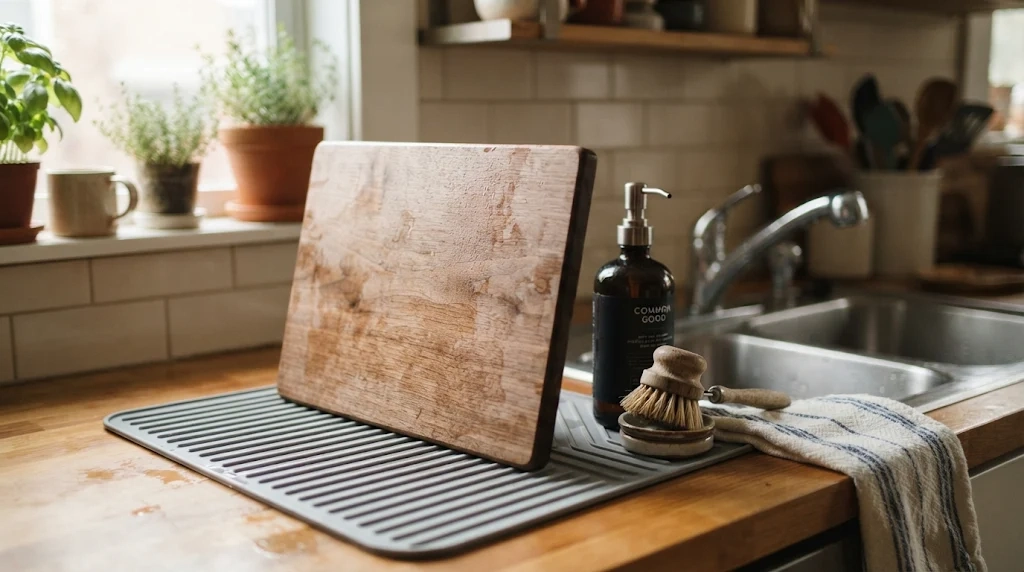
Clean a wooden board promptly after every food-preparation session. Proper cleaning matters more than relying on the wood species or oil finish alone.
The USDA Food Safety and Inspection Service advises washing boards thoroughly and replacing those with excessive wear.
Daily cleaning routine
- Remove loose food scraps immediately after use.
- Wash the surface using warm water and dish soap.
- Scrub gently with a clean brush or sponge.
- Rinse thoroughly with clean water.
- Dry both sides using a clean towel.
- Store upright until completely air-dried.
Avoid prolonged soaking and don’t assume your wooden board is dishwasher safe. Follow the manufacturer’s care instructions whenever available.
When should you sanitize the board?
Sanitizing is particularly important when a surface may have contacted raw animal products. The USDA describes a sanitizing mixture containing one tablespoon of unscented liquid chlorine bleach per gallon of water.
Follow appropriate food-contact sanitizer instructions, including required contact time and rinsing. Never mix bleach with other cleaning chemicals.
For additional guidance on cutting-board cleaning and replacement, see Iowa State University Extension’s cutting board recommendations.
When is it time to replace the board?
Replace a board when deep grooves, cracks, splinters, or persistent contamination make effective cleaning difficult. A damaged surface isn’t worth preserving merely because it started as a successful DIY project.
Minor surface scratches on suitable hardwood may sometimes be addressed through refinishing. Our cutting board refinishing guide explains when that approach makes sense.
What Are the Best Alternatives to a Pine Cutting Board?
For everyday food preparation, I would prioritize hard maple, appropriate walnut boards, or easy-clean plastic cutting boards. Each option solves a different problem that pine struggles with.
Hard maple for regular chopping
Hard maple offers strong dent resistance and a relatively close grain. It’s an established choice for wooden cutting boards and butcher blocks.
Choose a board designed for direct food contact. Maintain it according to the manufacturer’s instructions rather than assuming all maple products need identical care.
Walnut for chopping and presentation
Walnut combines an attractive dark appearance with useful cutting-board performance. It is generally softer than hard maple but considerably harder than eastern white pine.
I’d consider walnut when appearance and everyday usability both matter. The board still needs regular cleaning and careful drying.
Plastic for convenient cleaning
A food-grade plastic cutting board is worth considering when easy cleaning is your priority. Many plastic models are dishwasher safe, although you should confirm the manufacturer’s instructions.
For a broader material comparison, see wood vs. plastic cutting boards.
Recommended Cutting Boards and Maintenance Products
If you’re deciding what to buy instead of making a pine cutting board, these are three products I’d consider. The scores below are editorial suitability assessments, not verified customer-review averages or claims of hands-on testing.
🏆 Best Everyday Hardwood Board
John Boos Maple Chop-N-Slice Cutting Board
★★★★★ 4.8/5
This reversible edge-grain board uses northern hard rock maple and comes in multiple sizes. It offers a much more appropriate surface for frequent chopping than pine.
I favor this style when durability and a traditional wooden cutting surface matter most.
💰 Best Easy-Clean Alternative
OXO Good Grips Carving & Cutting Board
★★★★☆ 4.6/5
This nonporous, double-sided board includes a grooved side, a solid side, and non-slip feet. Its design suits regular kitchen preparation without wooden-board oiling.
I’d consider it when convenient cleaning and stable handling matter more than traditional wood grain.
🪵 Best for Wood Maintenance
Howard Butcher Block Conditioner
★★★★☆ 4.5/5
This conditioner combines food-grade mineral oil with beeswax and carnauba wax. It is intended for maintaining appropriate wooden cutting boards and butcher blocks.
I’d use a board-specific conditioner for routine hardwood maintenance, not to disguise unsuitable or damaged pine.
Frequently Asked Questions
Can you use pine wood for a cutting board?
You can physically make a cutting board from pine, but it isn’t a good choice for frequent chopping. Pine is relatively soft, may contain resin, and can develop deep knife grooves. I recommend untreated, suitable hard maple for a dependable everyday cutting surface.
Is untreated pine safe for food contact?
Untreated pine isn’t automatically toxic, but untreated doesn’t necessarily mean suitable for repeated food preparation. You still need to consider the wood’s source, resin content, cleanliness, and surface durability. For routine chopping, choose a purpose-made cutting board using appropriate materials.
Will pine resin contaminate food?
Resinous pine can leave sticky deposits or unwanted odors on surfaces. The amount depends on the species and individual piece of wood. Avoid direct food contact when pitch is actively seeping, and don’t assume mineral oil will prevent future resin release.
Can you seal pine to make it a better cutting board?
A food-contact-safe conditioning treatment may reduce moisture absorption, but it cannot make pine as hard as maple. It also won’t fix problematic resin pockets, deep grooves, or chemically treated lumber. Choose an appropriate hardwood when repeated knife contact is expected.
What is the best inexpensive wood for a DIY cutting board?
Hard maple is an excellent starting point when you want a durable wooden cutting surface. Prices vary by lumber grade and location, so compare locally available food-contact-suitable hardwoods. A smaller, properly constructed maple board is often preferable to a larger pine board.
Final Verdict: Should You Make a Cutting Board Out of Pine?
You can make an attractive board from pine, but I wouldn’t choose it for everyday food preparation. Its softness, potential resin problems, and tendency to develop knife grooves create avoidable maintenance challenges.
For decorative woodworking, pine still has a place. For frequent chopping, hard maple is a more practical choice.
Before starting your next DIY project, consider how often the board will contact food and knives. Choosing a suitable material from the beginning can save you time, effort, and unnecessary replacement costs.

