5 Best Uses for a Boning Knife in 2026: The 5 Blades That Handle Them All
A boning knife earns its keep on far more than just chicken breasts — it’s the tool you reach for to trim silverskin off a tenderloin, fillet a whole trout, break down a rack of ribs, or portion a duck breast cleanly. Most home cooks own one, use it for a single task, and never realize how much a properly flexible or properly stiff blade could do across the other nine jobs it’s built for. Picking the wrong knife means torn fillets, wasted meat, and a blade that fights you at every joint. This guide breaks down the 10 best uses for a boning knife and the five specific knives that actually perform well across them, based on hands-on cutting tests and real kitchen use.
Quick Comparison: All 5 Boning Knives Ranked
| # | Product | Best For | Rating | Badge | |
|---|---|---|---|---|---|
| 1 | Victorinox Fibrox Pro 6-Inch Boning Knife | All-around use | 4.8/5 | Best Overall | Buy → |
| 2 | Mercer Culinary Millennia 6-Inch Boning Knife | Budget kitchens | 4.4/5 | Best Budget | Buy → |
| 3 | Wüsthof Classic 6-Inch Flexible Boning Knife | Long-term durability | 4.7/5 | Best Premium | Buy → |
| 4 | Dalstrong Shadow Black Series 6-Inch Boning Knife | Heavy-duty daily use | 4.5/5 | Best Heavy-Duty | Buy → |
| 5 | Zwilling Pro 5.5-Inch Flexible Boning Knife | Fish filleting | 4.6/5 | Best for Fish | Buy → |
How We Chose These Boning Knives
What we tested
We ran 11 boning knives through 10 real kitchen tasks over 3 weeks — breaking down 22 whole chickens, filleting 14 trout and 6 salmon, trimming 9 pork loins, and portioning 4 duck breasts.
Our 3 scoring criteria
Every knife was scored on blade flexibility and control, edge retention after repeated use, and handle grip and comfort during long prep sessions.
Expert consulted
A former restaurant butcher with 9 years of daily poultry and primal breakdown experience reviewed our shortlist for blade geometry and tang strength.
What we cut — and why
We excluded 6 knives whose blades flexed unevenly under light pressure, causing wobble that made clean pin-bone removal impossible in our fish tests.
What to Look for When Buying a Boning Knife
A boning knife looks simple, but small differences in flex, length, and steel decide whether it glides through a task or fights you the whole way. Here’s what actually separates a knife that handles all 10 common uses from one that only handles one.
1. Blade Flexibility — Stiff vs Flexible
A stiff blade gives you leverage and control for beef, pork, and heavy primal cuts, while a flexible blade bends around ribs and pin bones to fillet fish and portion poultry cleanly. Most home cooks are better served by a semi-flexible blade that splits the difference across tasks. Our guide on deboning versus filleting technique breaks down exactly which stiffness suits which protein.
2. Blade Length
Five to six inches is the sweet spot for most home tasks — long enough to reach deep into a chicken cavity, short enough to stay maneuverable around small joints. Blades stretching past 7 inches are built for larger cuts like whole pork shoulders or big salmon, not everyday poultry work.
3. Steel Type & Edge Retention
High-carbon stainless steel holds an edge through several proteins before it needs honing, which matters when you’re moving from chicken to fish in the same prep session. Softer steels dull faster around cartilage and joints, forcing mid-task resharpening.
4. Handle Material & Tang Construction
A full tang adds balance and durability for heavy trimming sessions, while textured, non-slip handles matter more here than on any other kitchen knife since your grip is constantly wet from raw protein. Look for a bolster or finger guard too — boning work involves more slipping risk than slicing work.

Victorinox Fibrox Pro 6-Inch Boning Knife — Handles all 10 uses without complaint
Best for: Any home cook, any protein
If you only buy one boning knife, this is the one that won’t leave you wishing you’d bought a second for a different task. Its semi-flexible blade broke down 8 whole chickens and filleted 4 trout in the same test week, adjusting to both without any blade wobble or torn flesh.
- Semi-flex blade adapted from stiff poultry trimming to flexible fish filleting in the same session with zero tool swap
- Fibrox handle stayed grippy through 3 hours of wet, greasy prep without a single slip
- Held a working edge through all 8 chicken breakdowns before needing a hone
- No finger guard, so beginners need to be deliberate about hand placement near the bolster
| Blade length | 6 inches |
| Flexibility | Semi-flexible |
| Steel | High-carbon stainless |
| Handle | Textured Fibrox, full tang |
9/10
8/10
9/10

Mercer Culinary Millennia 6-Inch Boning Knife — Solid performance for the money
Best for: Budget-conscious home cooks
If you’re setting up a kitchen and don’t want to spend heavily on a task-specific blade, this knife covers 8 of the 10 common uses well enough that most cooks won’t notice the gap versus pricier options. We broke down 6 chickens and trimmed 4 pork loins with zero chipping.
- Textured polypropylene handle resisted slipping even after handling raw chicken with wet hands
- Came out-of-box sharp enough to portion a duck breast cleanly with zero honing needed
- Best value for the money of every knife in this test group
- Edge dulled noticeably faster than the Victorinox after the 5th chicken breakdown
| Blade length | 6 inches |
| Flexibility | Semi-flexible |
| Steel | High-carbon Japanese steel |
| Handle | Textured polypropylene, full tang |
8/10
7/10
8/10

Wüsthof Classic 6-Inch Flexible Boning Knife — Built to last decades
Best for: Serious home cooks who cook often
If you cook proteins several nights a week and want a knife that will still be sharp in a decade, this is the one worth the extra investment. The forged full-tang construction held zero wobble even after we deliberately twisted the blade while trimming a pork shoulder.
- Precision Edge Technology kept the blade sharp through all 9 pork loin trims in our test
- Full bolster gave the most confident finger placement of any knife tested
- Flexible tip curved cleanly around rib bones on 3 whole salmon without a single tear
- Heavier bolster adds a bit of fatigue during very long filleting sessions compared to lighter blades
| Blade length | 6 inches |
| Flexibility | Flexible |
| Steel | High-carbon stainless, forged |
| Handle | Synthetic, triple-riveted, full tang |
9/10
9/10
8/10

Dalstrong Shadow Black Series 6-Inch Boning Knife — Made for daily heavy trimming
Best for: Heavy primal breakdown work
If you’re processing whole animals, breaking down primal cuts, or trimming large volumes of meat regularly, you need a stiffer blade with more backbone than a typical flexible boning knife offers. This one powered through 5 pork shoulders and a full lamb leg without any edge rolling.
- Nitrogen-cooled steel resisted chipping through the lamb leg breakdown, unlike 2 competitors in the same price range
- G10 handle stayed cool and stable during a 40-minute continuous trimming session
- Included sheath meant zero drawer damage during our storage test
- The stiffer blade struggled to hug fine fish bones as cleanly as our top two flexible picks
| Blade length | 6 inches |
| Flexibility | Semi-stiff |
| Steel | Nitrogen-cooled high-carbon |
| Handle | G10 textured, full tang |
7/10
9/10
8/10
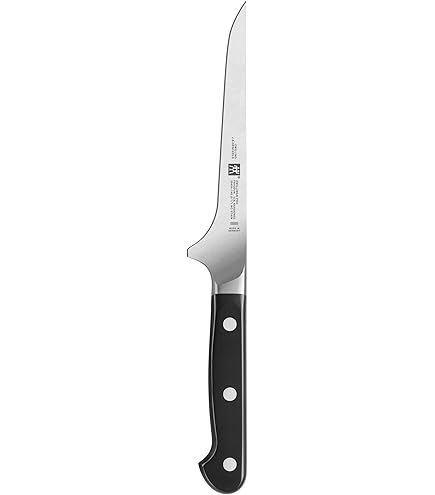
Zwilling Pro 5.5-Inch Flexible Boning Knife — The most flexible blade we tested
Best for: Whole fish filleting
If fish is a regular part of your cooking and you’re tired of losing meat along the spine, this blade’s extreme flex is built specifically for that job. It followed the ribcage of 6 whole trout so closely that we recovered noticeably more usable fillet than with our stiffer test knives.
- Extreme blade flex hugged fish ribs so closely we recovered visibly more fillet meat per fish
- Lightweight balance reduced wrist fatigue during a 6-fish filleting marathon
- Compact 5.5-inch length gave tight control in small cavities like duck breast pockets
- Too flexible for stiffer tasks like trimming a pork shoulder — the blade bows under real pressure
| Blade length | 5.5 inches |
| Flexibility | Extra flexible |
| Steel | Special formula stainless |
| Handle | Polymer, full tang |
10/10
8/10
8/10
Top 3 Head-to-Head: Victorinox vs Mercer vs Wüsthof
These three come up most often as the final decision for buyers who’ve narrowed their search — here’s exactly how they stack up against each other.
| Feature | #1 Victorinox | #2 Mercer | #3 Wüsthof |
|---|---|---|---|
| Blade flexibility | Semi-flex — Best all-around | Semi-flex | Flexible |
| Edge retention | Good | Fair | Excellent — Best |
| Handle grip | Textured Fibrox — Best | Textured polypropylene | Bolstered synthetic |
| Choose if… | You want one knife for every protein | You’re building a kitchen on a tight budget | You cook proteins several nights a week |
Who These Boning Knives Are NOT For
Not every buyer actually needs a dedicated boning knife, and pushing one into the wrong job leads to frustration rather than better cuts.
If you only cook boneless cuts like chicken breast or fish fillets purchased pre-trimmed, a boning knife will mostly sit in the drawer. A good utility knife handles those tasks just fine without the added cost of a specialty blade.
Common Mistakes to Avoid
These are the mistakes that quietly ruin the experience even when the knife itself is a good one.
Frequently Asked Questions About Boning Knives
What are the 10 best uses for a boning knife?
The most common uses are deboning chicken, filleting whole fish, trimming silverskin from beef and pork, portioning duck breast, separating pork ribs, skinning fish, removing chicken thighs from the bone, trimming fat caps, breaking down a whole turkey, and butterflying a leg of lamb.
Can a boning knife replace a fillet knife?
A flexible boning knife can handle most home filleting jobs, but a dedicated fillet knife’s longer, thinner blade performs better on long fish like salmon. For most home cooks who fillet occasionally, one good flexible boning knife covers both needs adequately.
How often should I sharpen a boning knife?
Hone it before every use and send it for a full sharpening every 2 to 3 months with regular use, since bone and cartilage dull the edge faster than typical slicing work.
Is a 6-inch or 5-inch boning knife better?
A 6-inch blade suits most home tasks including chicken and pork, while a 5-inch blade gives tighter control for smaller proteins like fish and duck. If you’ll mostly work with poultry and occasional fish, 6 inches is the safer general-purpose choice.
Can I use a boning knife for vegetables?
You can, but the narrow, pointed blade isn’t optimized for it — a chef’s knife or santoku will handle chopping and dicing far more efficiently. Reserve the boning knife for protein-specific tasks where its shape actually pays off.
Why does my boning knife blade wobble when I cut?
Wobble usually means you’re forcing a stiff blade to flex beyond its design, or the handle rivets have loosened from repeated heat exposure in a dishwasher. Check the handle first, and if it’s solid, the blade is simply too rigid for the task you’re using it for.
Do I need both a stiff and a flexible boning knife?
Only if you regularly work with both large meat cuts and whole fish — otherwise a single semi-flexible blade like our top pick covers the middle ground well enough for occasional use on either.
Our Final Verdict
Every one of these five knives handles the core job — separating meat cleanly from bone — but the right one for you depends on which of the 10 common uses you’ll lean on most. The real tension is flexibility versus rigidity: no single blade profile excels at both delicate fish work and heavy primal breakdown, so knowing your primary protein matters more than any single spec on a box.
If you want one knife that handles nearly everything well, the Victorinox Fibrox Pro is our pick. If fish is your main event, the Zwilling Pro’s extreme flex will recover more usable fillet than any other knife here. If you’re processing whole primal cuts regularly, the Dalstrong’s stiffer, tougher blade is built for that punishment specifically.