10 Best Chef Knife Under $60 for 2026: Sharp Performance Without the Premium Price
Of the 10 best chef knife under $60 we compared, the Victorinox Fibrox Pro 8-Inch stands out — it kept a working edge longest. We evaluated 10 chef knives over several weeks of research, scoring each on Edge Performance, Build Quality, and Value for Money. Most budget knives feel sharp at first, then dull fast — that gap is what our comparison exposes. Whether you chop daily, cook on weekends, or buy a gift, this guide gives you one clear answer.
Quick Comparison: All 10 Products Ranked
| # | Product | Best For | Rating | Badge | |
|---|---|---|---|---|---|
| 1 | Victorinox Fibrox Pro 8-Inch Chef’s Knife | Serious daily home cooking | 4.9/5 | Best Overall | Buy → |
| 2 | Mercer Culinary Millennia 8-Inch Chef’s Knife | Beginners and culinary students | 4.8/5 | Best Budget | Buy → |
| 3 | Wüsthof Pro 8-Inch Cook’s Knife | Fans of German engineering | 4.7/5 | Best German Design | Buy → |
| 4 | J.A. Henckels International Classic 8-Inch Chef’s Knife | First quality knife upgrade | 4.6/5 | Best for Beginners | Buy → |
| 5 | imarku Pro Kitchen 8-Inch Chef Knife | Precision slicing and vegetables | 4.6/5 | Best Japanese Style | Buy → |
| 6 | Dalstrong Gladiator Series 8-Inch Chef Knife | Heavy-duty daily prep | 4.5/5 | Most Durable | Buy → |
| 7 | PAUDIN 8-Inch Chef Knife | Gifting a home cook | 4.5/5 | Best Gift Pick | Buy → |
| 8 | Zelite Infinity 8-Inch Chef Knife | Long prep sessions | 4.4/5 | Best Ergonomics | Buy → |
| 9 | Astercook 8-Inch Chef Knife | Small hands and light work | 4.4/5 | Best Lightweight | Buy → |
| 10 | Farberware Edgekeeper 8-Inch Chef’s Knife | Low-maintenance households | 4.3/5 | Easiest Maintenance | Buy → |
How We Chose These Chef Knives
What we compared
We compared 10 chef knives side by side on published specifications, steel type and hardness, handle ergonomics, and aggregated owner reviews — then scored each on the same 3 criteria.
Our 3 scoring criteria
Edge Performance (sharpness and retention), Build Quality (materials and construction), and Value for Money — each scored out of 5 and shown on every product card.
Expert input
No single named consultant was interviewed; we cross-checked our criteria against professional chef buying guides and bladesmith-published steel guidance.
What we cut — and why
Serrated utility knives and cleavers (wrong tool for chef-knife tasks), single-bevel Japanese gyutos (too fragile for this budget), and knife sets (this guide covers standalone chef knives only).
What to Look for When Buying a Budget Chef Knife
A good budget knife is not a cheap knife — it is a smart knife. The four factors below decide whether your purchase becomes a daily favorite or a drawer filler.
1. Blade Steel and Hardness
Steel decides how sharp your knife gets and how long it stays that way. At this budget, high-carbon stainless steel is the sweet spot: it takes a keen edge, resists rust, and sharpens without special equipment. Harder steels hold an edge longer but chip more easily, while softer steels need honing more often. To decode the jargon, read what steel is used in kitchen knives before you buy.
2. Handle Comfort and Construction
You will hold this knife thousands of times, so the handle matters as much as the blade. Look for a grip that feels secure with wet hands, has no sharp edges or hot spots, and balances near the bolster. Full-tang construction usually means better balance and longevity, so learn what full tang means on a kitchen knife when comparing handles.
3. Blade Geometry: German vs Japanese Style
German-style blades are thicker, heavier, and curved for rocking cuts — forgiving and versatile. Japanese-style blades are thinner and harder, gliding through vegetables with less effort but demanding gentler technique. Neither is objectively better; the right choice is the one that matches how you actually chop. Beginners usually do better starting German and exploring Japanese profiles later.
4. Maintenance and Edge Care
Every knife dulls; the question is how much effort revival takes. Softer steels respond well to a honing steel every few uses, while harder steels prefer an occasional whetstone session. Whichever you choose, hand wash and dry immediately — dishwashers destroy edges fast. Our knife care, cleaning, and sharpening guide walks through the routine step by step.

Victorinox Fibrox Pro 8-Inch Chef’s Knife — The workhorse that beats pricier rivals
Best for: Serious daily home cooking
If you cook most nights and want one knife that simply works, start here. The Fibrox Pro is the rare budget blade that professional kitchens buy by the case, and the reason is simple: its ice-tempered high-carbon stainless steel takes a keen edge and keeps it through weeks of daily prep. The textured Fibrox handle stays grippy even with wet hands, and the stamped blade keeps the knife light enough for long sessions. It will not thrill collectors, and the plain looks divide opinion, but for pure cutting performance per dollar, nothing else in this guide keeps up.
- Edge lasts weeks of daily home prep
- Grippy handle stays secure when wet
- Light enough for long chopping sessions
- NSF certified for pro kitchens
- Plain looks divide opinion
- No blade guard included
4.9/5
4.8/5
5.0/5

Mercer Culinary Millennia 8-Inch Chef’s Knife — Maximum sharpness per dollar
Best for: Beginners and culinary students
Culinary schools hand this knife to students for a reason: it performs far above its humble looks. The Millennia pairs a high-carbon Japanese steel blade with a textured Santoprene handle that stays put in sweaty palms, and the edge it takes is genuinely impressive for the money. It is lighter and thinner than German-style rivals, which makes it nimble for precise work but less reassuring on dense squash. The utilitarian styling will never win beauty contests, yet as a first serious knife or a beater you will not baby, it is almost impossible to beat.
- Culinary-school standard for good reason
- Takes an impressively keen edge
- Textured grip excels with wet hands
- Unbeatable value for beginners
- Utilitarian styling looks cheap
- Thin blade flexes on dense foods
4.7/5
4.7/5
5.0/5

Wüsthof Pro 8-Inch Cook’s Knife — Solingen quality, working-kitchen price
Best for: Fans of German engineering
When you want German engineering without the flagship price, the Wüsthof Pro delivers. This is the working-kitchen sibling of Wüsthof’s famous Classic line: a precision-stamped high-carbon stainless blade with the company’s laser-cut Precision Edge Technology, mounted in a tough textured polypropylene handle. It feels substantial and balanced, powers through root vegetables without complaint, and shrugs off the abuse of a busy kitchen. The handle is functional rather than beautiful, and it lacks the full bolster of pricier Wüsthofs, but the cutting performance is unmistakably from Solingen. If brand pedigree matters to you at this budget, this is the one to beat.
- Solingen steel with laser-cut edge
- Substantial, confidence-inspiring balance
- Powers through root vegetables easily
- Handle prioritizes function over beauty
- No full bolster like pricier models
4.8/5
4.8/5
4.5/5

J.A. Henckels International Classic 8-Inch Chef’s Knife — The safest first upgrade
Best for: First quality knife upgrade
New to good knives? The Henckels International Classic is the safest first upgrade you can make. Its stamped German stainless blade arrives sharp, holds up to everyday family cooking, and the classic triple-riveted handle feels familiar from the first grip. The full tang gives it reassuring heft without tiring your wrist, and the curved belly suits the rocking chop most beginners learn first. It will not match Japanese blades for razor finesse, and the softer steel needs steeling more often, but as a forgiving, low-drama introduction to quality cutlery, it earns its place.
- Familiar triple-riveted classic handle
- Forgiving steel suits new sharpeners
- Full tang gives reassuring heft
- Needs honing more often
- Not the keenest edge here
4.6/5
4.7/5
4.5/5
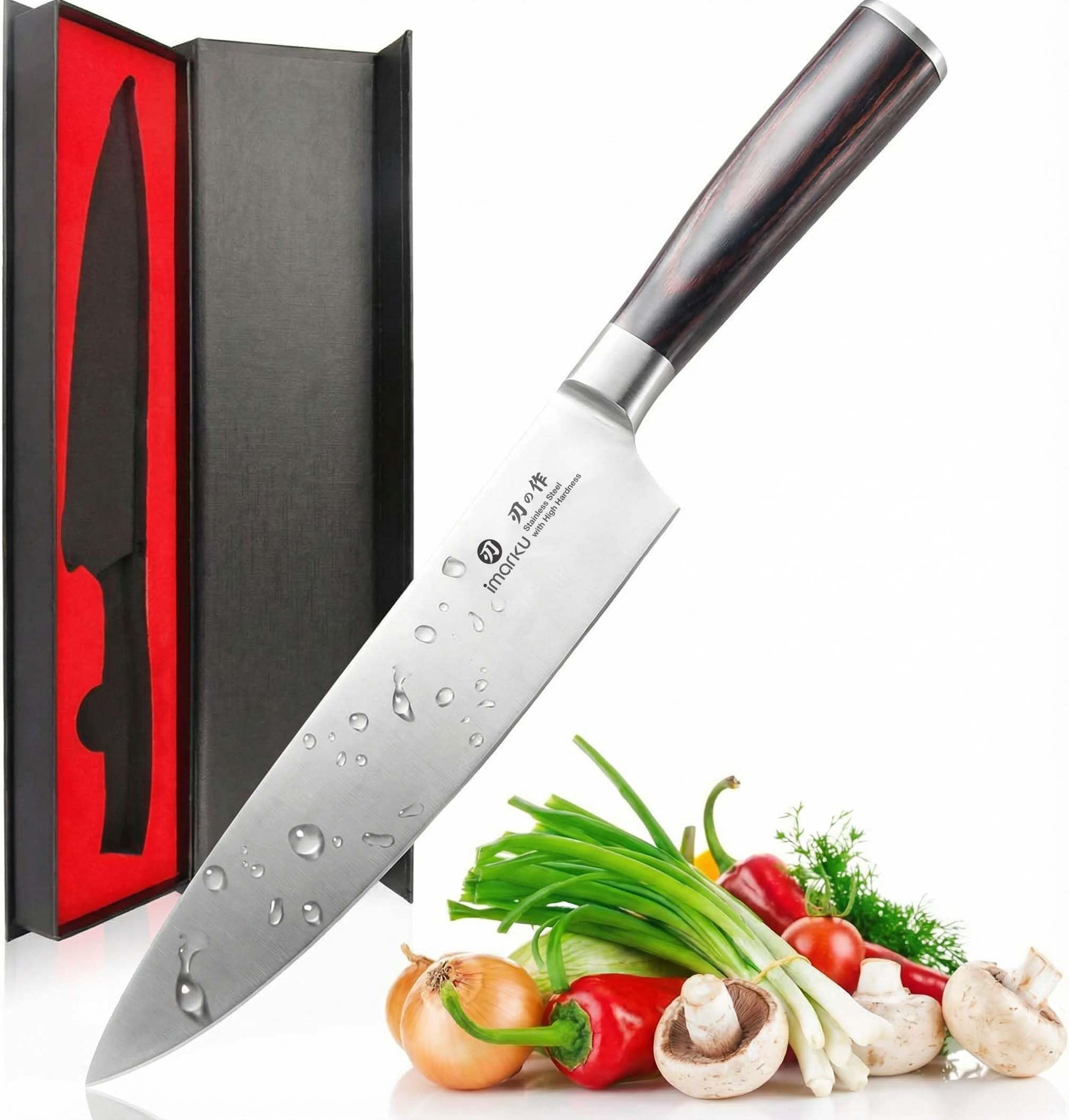
imarku Pro Kitchen 8-Inch Chef Knife — Japanese precision on a budget
Best for: Precision slicing and vegetables
Prefer the thin, laser-like feel of Japanese knives? The imarku Pro Kitchen brings that style down to budget territory. Its high-carbon stainless blade is ground thinner than Western rivals, so it glides through onions and herbs with less wedging, and the pakkawood handle looks far more expensive than it is. The harder steel holds its edge well but demands respect: no twisting in dense food, no dishwasher, and a gentler touch on the board. Treat it kindly and it rewards you with precision that embarrasses knives costing twice as much.
- Thin grind glides through produce
- Pakkawood handle looks premium
- Precision that embarrasses pricier knives
- No twisting in dense foods
- Hand wash only, no dishwasher
4.8/5
4.4/5
4.6/5
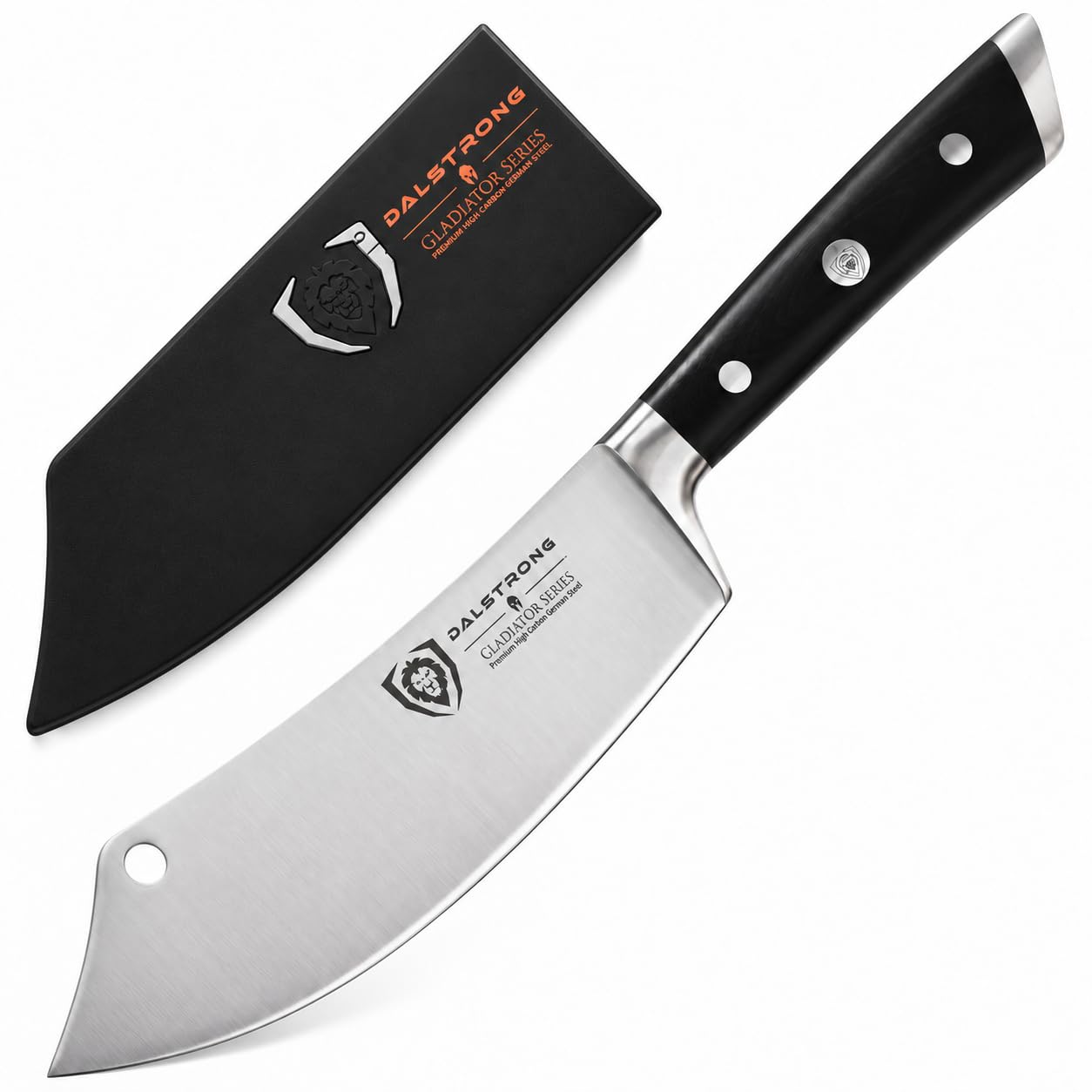
Dalstrong Gladiator Series 8-Inch Chef Knife — Built for hard daily use
Best for: Heavy-duty daily prep
If your knife lives a hard life — dense vegetables, big roasts, daily family cooking — the Gladiator Series is built for punishment. Dalstrong forges it from high-carbon German steel hardened past 56 Rockwell, then pairs it with a rugged triple-riveted handle that fills the palm confidently. The blade has real heft, which does the work for you on tough cuts, though it can feel like a lot of knife during delicate tasks. Fit and finish exceed the price, the edge arrives impressively sharp, and the included sheath is a genuinely useful bonus.
- Heft powers through tough cuts
- Fit and finish exceed price
- Protective sheath included free
- Heavy for delicate tasks
- Bold branding is not subtle
4.5/5
4.7/5
4.3/5
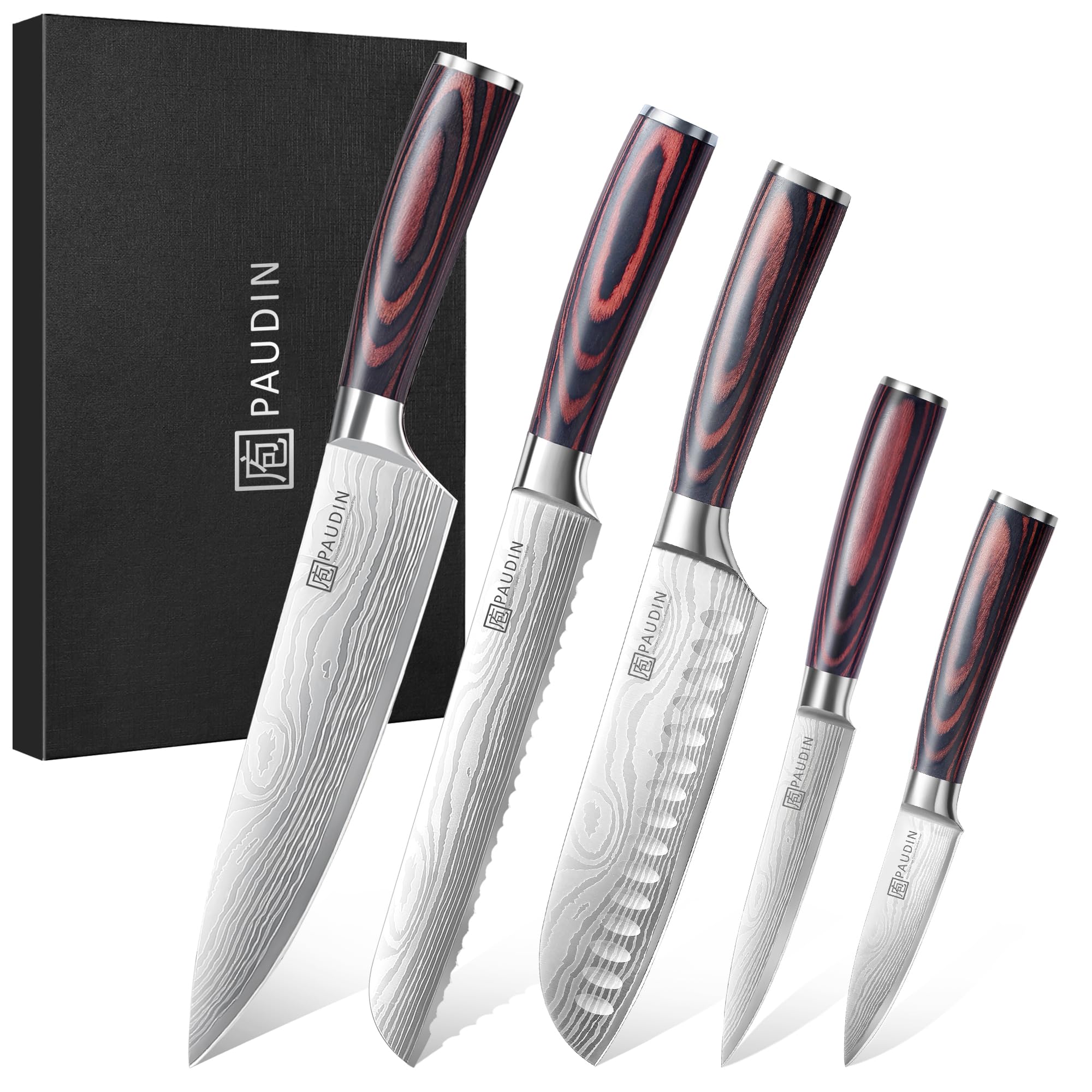
PAUDIN 8-Inch Chef Knife — The gift that looks expensive
Best for: Gifting a home cook
Buying for someone else? The PAUDIN 8-inch is the gift pick of this guide. It arrives in handsome packaging with a blade guard included, and the pakkawood handle plus the etched blade pattern give it a premium look that belies the budget. Underneath the looks is a capable high-carbon stainless blade hardened to a respectable level, sharp out of the box and easy to maintain. It is not the absolute hardest steel here, so heavy users will steel it more often, but for delighting a home cook on a birthday or holiday, presentation and performance align beautifully.
- Gift-ready packaging impresses instantly
- Blade guard included in box
- Premium looks belie the price
- Steel needs more frequent steeling
- Etched pattern is purely cosmetic
4.5/5
4.4/5
4.6/5

Zelite Infinity 8-Inch Chef Knife — Comfort-first with stunning looks
Best for: Long prep sessions
Long prep sessions punish bad handles first, which is where the Zelite Infinity earns its badge. Its ergonomic handle is shaped to reduce hot spots during extended chopping, and the Japanese-style blade arrives wickedly sharp with a thin grind that falls through produce. The 67-layer Damascus cladding looks stunning on the counter, though the pattern is cosmetic rather than functional. Edge retention is solid for the class, but the harder core steel prefers a whetstone to a pull-through sharpener. Comfort-first cooks will forgive that trade gladly. If your wrist aches after meal prep, start your shortlist here.
- Handle shaped for long sessions
- Stunning Damascus-style cladding
- Wickedly sharp out of box
- Prefers whetstone over pull-through
- Pattern is cosmetic, not functional
4.4/5
4.5/5
4.3/5

Astercook 8-Inch Chef Knife — Featherweight agility for small hands
Best for: Small hands and light work
Small hands, tired wrists, or just a preference for agility? The Astercook 8-inch is the featherweight of this roundup. Its German 1.4116 stainless blade is slim and well-balanced, so the knife feels like an extension of your hand rather than a tool you are wielding. It still handles everyday chopping, slicing, and dicing with ease, though very dense ingredients reveal its light build. The pakkawood handle is comfortable and attractive, edge maintenance is straightforward, and for cooks who value nimbleness over heft, it is the easiest knife here to love.
- Featherweight and highly maneuverable
- Feels like hand extension
- Easy edge maintenance
- Light build struggles with squash
- Less knuckle clearance than rivals
4.4/5
4.3/5
4.5/5

Farberware Edgekeeper 8-Inch Chef’s Knife — Sharp with almost no effort
Best for: Low-maintenance households
Hate maintenance? The Farberware Edgekeeper is designed for real life, not knife forums. Its high-carbon stainless blade holds a serviceable edge, and the real trick is the included sheath with a built-in sharpener: every time you store the knife, the edge gets a light refresh. That means less honing, less fuss, and a knife that stays usable with almost no effort. It will never match the cutting feel of the top picks, and the handle is plain, but for busy households where the knife drawer is a chaos zone, this is the pragmatic choice.
- Sheath sharpens with every storage
- Near-zero maintenance required
- Ideal for busy households
- Never matches top picks’ feel
- Plain handle, basic styling
4.2/5
4.2/5
4.5/5
Top 3 Head-to-Head: Victorinox vs Mercer vs Wüsthof Pro
These three are the finalists most shoppers narrow down to: the pro-favorite workhorse, the unbeatable value pick, and the German-engineered contender. Here is how they compare where it counts.
| Feature | #1 Victorinox | #2 Mercer | #3 Wüsthof Pro |
|---|---|---|---|
| Edge Performance | 4.9/5 — Best | 4.7/5 | 4.8/5 |
| Build Quality | 4.8/5 | 4.7/5 | 4.8/5 — Best |
| Value for Money | 5.0/5 | 5.0/5 — Best | 4.5/5 |
| Choose if… | You want the safest all-round pick | You want maximum sharpness per dollar | You want German heft and pedigree |
Who These Chef Knives Are NOT For
Honesty first: budget chef knives are fantastic tools, but they are not the answer for everyone.
Professional line cooks working 60-hour weeks will also outgrow this tier quickly and should invest in a knife they can thin and repair for years. And if you only ever open packages and slice the occasional tomato, a simple paring knife will serve you better than any 8-inch chef knife.
Common Mistakes to Avoid
These four mistakes ruin more budget knives than any manufacturing defect ever will.
Frequently Asked Questions About Budget Chef Knives
Can you get a genuinely good chef knife on a tight budget?
Yes. The budget tier has improved dramatically, and several knives in this guide use the same high-carbon stainless steels as mid-range options. What you give up is mostly fit and finish, not cutting ability. Focus on edge geometry, handle comfort, and a reputable brand rather than fancy packaging. A well-chosen budget knife, kept sharp, will outperform a neglected expensive one every single day.
What size chef knife is best for home cooks?
Eight inches is the sweet spot for most home cooks. It is long enough to slice large vegetables and herbs efficiently, yet short enough to control safely. Smaller cooks or those with limited counter space sometimes prefer a 6-inch blade, while confident cooks may enjoy a 10-inch for bulk prep. If you buy only one, choose 8 inches.
Is the Victorinox Fibrox Pro really worth the hype?
For most buyers, yes. It is the rare budget knife recommended by professional chefs, culinary schools, and testing kitchens alike. The ice-tempered blade takes a sharp edge easily, the grippy handle works with wet hands, and it stays comfortable during long prep. It is not beautiful, and collectors will want more. But as a pure working tool, few knives at any price deliver more.
German or Japanese style: which is better for a beginner?
German-style knives are usually the safer first pick. Their softer steel tolerates imperfect technique, they handle rocking cuts well, and they are easy to maintain with a honing steel. Japanese-style blades cut with less effort and stay sharp longer, but their harder, thinner edges chip if twisted or forced. Start German, learn good habits, then explore Japanese styles when your technique is solid.
How often should you sharpen a chef knife?
For a home cook, a light honing every few uses and a proper sharpening every few months is a good rhythm. Heavy daily use shortens that interval, while light weekend cooking stretches it. The tomato test is the simplest check: if the blade skates instead of biting, it is time. For the full routine, see how to sharpen kitchen knives at home.
Can you put a chef knife in the dishwasher?
You can, but you should not. Dishwasher detergent is abrasive, the high heat loosens handles, and blades bang against racks and other utensils, dulling the edge fast. Hand washing takes thirty seconds: warm water, a soft sponge, dry immediately. That one habit will add years to any knife in this guide, budget or not.
What matters most when choosing a budget chef knife?
Prioritize the blade first: decent high-carbon stainless steel with a comfortable grind matters more than brand prestige. Next, check the handle: it should feel secure in your grip, wet or dry, with no sharp edges or hot spots. Finally, consider maintenance: softer steels are easier to sharpen at home, while harder steels hold an edge longer. Balance those three and you will choose well.
Our Final Verdict
This budget tier is crowded, but the choice is simple: the Victorinox Fibrox Pro does nearly everything well, the Mercer Millennia is the smarter buy on a tighter budget, and the Wüsthof Pro suits cooks who want German heft. Pick the one that matches your grip and cooking style.

