10 Best Chef Knife Under $50 for 2026: Sharp Picks on a Small Budget
The 10 best chef knife under $50 picks start with the Victorinox Fibrox Pro 8-Inch — a laser-sharp edge with an NSF-certified non-slip grip. We evaluated 10 chef knives over 3 weeks, scoring each on edge retention, comfort and control, and value for money. Most budget knives look identical on paper but fail during heavy prep — exactly the gap our scoring exposes. Whether you need a workhorse, a first knife, or a gift, this guide gives one clear answer.
Quick Comparison: All 10 Products Ranked
| # | Product | Best For | Rating | Badge | |
|---|---|---|---|---|---|
| 1 | Victorinox Fibrox Pro 8-Inch Chef’s Knife | Everyday cooking for almost everyone | 4.9/5 | Best Overall | Buy → |
| 2 | Mercer Culinary Millennia 8-Inch Chef’s Knife | Culinary students and tight budgets | 4.7/5 | Best Budget | Buy → |
| 3 | Wüsthof Pro 8-Inch Chef’s Knife | A German-steel daily workhorse | 4.6/5 | Workhorse Pick | Buy → |
| 4 | imarku 8-Inch Chef’s Knife | Beginners wanting comfort first | 4.5/5 | Beginner Pick | Buy → |
| 5 | MOSFiATA 8-Inch Chef’s Knife | Maximum cutting performance per dollar | 4.5/5 | Performance Pick | Buy → |
| 6 | PAUDIN 8-Inch Chef’s Knife | Gift buyers who want a safe pick | 4.4/5 | Gift Pick | Buy → |
| 7 | Henckels International Classic 8-Inch Chef’s Knife | Fans of German blades on a budget | 4.4/5 | German Pick | Buy → |
| 8 | Emojoy 8-Inch Chef’s Knife | Cooks who like a Japanese-style edge | 4.3/5 | Japanese Pick | Buy → |
| 9 | Cuisinart 8-Inch Chef’s Knife | First-apartment kitchens and backups | 4.2/5 | Ultra Budget | Buy → |
| 10 | Amazon Basics 8-Inch Chef’s Knife | The simplest possible starter knife | 4.2/5 | Simple Starter | Buy → |
How We Chose These Chef Knives
What we tested
10 chef knives at or under the budget line, ranked across 3 criteria — 30 individual scores recorded for every knife on this list.
Our 3 scoring criteria
Edge retention (how long the factory edge lasts), comfort and control (grip, weight, balance), and value for money (performance per dollar).
Expert consulted
Published 2026 chef knife testing from America’s Test Kitchen — whose winner was the Victorinox Fibrox Pro — informed how we weighted edge and comfort scores.
What we cut — and why
Premium forged knives above the budget cap and novelty shapes like Serbian cleavers were excluded — one by the price cap, the other by poor all-round versatility.
What to Look for When Buying a Chef Knife Under $50
This budget does not mean a dull knife — it means every design choice has to earn its place. If you want the full picture of what makes a high-quality kitchen knife, start there, then judge each budget pick on the four factors below.
1. Blade Steel Quality
At this price you will mostly find high-carbon stainless steel — the sweet spot between sharpness, rust resistance, and easy upkeep. Harder Japanese-style steels take a keener edge but chip more easily; softer German-style steels are tougher but need honing sooner. Knowing the common kitchen knife steel types helps you match the blade to your cooking style instead of gambling on marketing words like “surgical steel.”
2. Handle Comfort and Grip
You will hold this knife for hundreds of hours, so the handle matters as much as the blade. Textured polymer handles grip well when wet; wooden-style handles feel warmer but need drying after washing. Pick up the knife if you can — or read reviews about hand fatigue — before trusting a product photo.
3. Stamped vs Forged Construction
Nearly every knife under $50 is stamped — cut from a sheet of steel — rather than forged from a single billet. That is not a flaw: stamped blades are thinner and lighter, which many cooks prefer. But it means you should compare the forged vs stamped knife differences honestly instead of paying extra for a “forged look” that adds no real strength.
4. Weight, Balance, and Maintenance
A knife around 5–6 ounces feels nimble for long chopping sessions; heavier blades power through dense squash with less effort. Balance should sit near the bolster, not in the handle. And plan for upkeep: every budget knife needs regular honing and occasional sharpening, so factor a honing rod or whetstone into your routine from day one.

Victorinox Fibrox Pro 8-Inch Chef’s Knife — The Budget Benchmark
Best for: everyday cooking for almost everyone
The first thing most home cooks notice about the Victorinox Fibrox Pro is how little effort chopping takes — the thin, stamped blade glides through onions and carrots without wedging. It suits beginners who want a forgiving knife, daily cooks who value speed, and anyone buying their first serious blade. The textured Fibrox handle stays grippy even with wet hands, and NSF certification makes it a staple in culinary schools. It is light enough for long prep sessions but lacks the heft some cooks prefer for squash. A genuine workhorse that rarely disappoints.
- Laser-sharp factory edge, ready immediately
- Feather-light 5.8 oz, easy on wrists
- NSF-certified non-slip Fibrox grip
- Thin blade glides through dense vegetables
- Stamped blade lacks forged heft
- Plain looks, no premium feel
- Needs regular honing like all budget blades
4.8/5
5.0/5
4.9/5

Mercer Culinary Millennia 8-Inch Chef’s Knife — Pro Skills, Student Price
Best for: culinary students and tight budgets
Walk into any culinary school and you will spot the Mercer Millennia — a Japanese high-carbon steel blade paired with a grippy Santoprene handle that costs less than a takeaway dinner for two. It suits students, renters furnishing a first kitchen, and anyone who wants a sharp knife without the anxiety of an expensive blade. The textured finger points lock your grip during fast dicing, and NSF certification backs its pro-kitchen credentials. It needs honing a little more often than the Victorinox, and the utilitarian handle will not win beauty contests. But per dollar, almost nothing cuts better.
- Japanese steel takes a razor edge
- Textured grip locks hand securely
- NSF certified for pro kitchens
- Unbeatable performance per dollar
- Needs honing more often
- Utilitarian handle, plain looks
- No bolster for finger protection
4.5/5
4.7/5
4.9/5

Wüsthof Pro 8-Inch Chef’s Knife — German Steel, Daily Grind
Best for: a German-steel daily workhorse
Wüsthof brings its German high-carbon stainless steel down to a budget line with the Pro series, and the result feels tougher than its price suggests. It suits cooks who chop a lot of dense vegetables, meal preppers who want one blade for everything, and brand-conscious buyers who trust Solingen steel. The textured polypropylene handle is comfortable and NSF rated, while the precision-stamped blade keeps enough backbone for squash and root vegetables. It is heavier than the Victorinox and the edge arrives good rather than great. But for relentless daily use, it is hard to wear out.
- Tough German high-carbon steel
- NSF-rated textured handle
- Backbone for squash and roots
- Built for relentless daily use
- Heavier than top two picks
- Factory edge good, not great
- Stamped, not forged construction
4.7/5
4.7/5
4.6/5

imarku 8-Inch Chef’s Knife — Comfort First for New Cooks
Best for: beginners wanting comfort first
The imarku stands out the moment you grip it — the ergonomic pakkawood handle fills the palm and makes a first knife feel less intimidating. It suits new cooks upgrading from a dull drawer knife, gift givers who want something that looks the part, and anyone whose hands tire quickly. The German high-carbon stainless blade arrives genuinely sharp, slicing tomatoes without sawing. It is not the hardest steel here, so the edge asks for regular honing, and the glossy handle shows scratches over time. But for comfort on day one, few budget knives match it.
- Palm-filling pakkawood handle
- Sharp straight out of the box
- Kind to tired hands
- Looks more expensive than it is
- Softer steel needs frequent honing
- Glossy handle scratches easily
- No full bolster
4.4/5
4.8/5
4.5/5
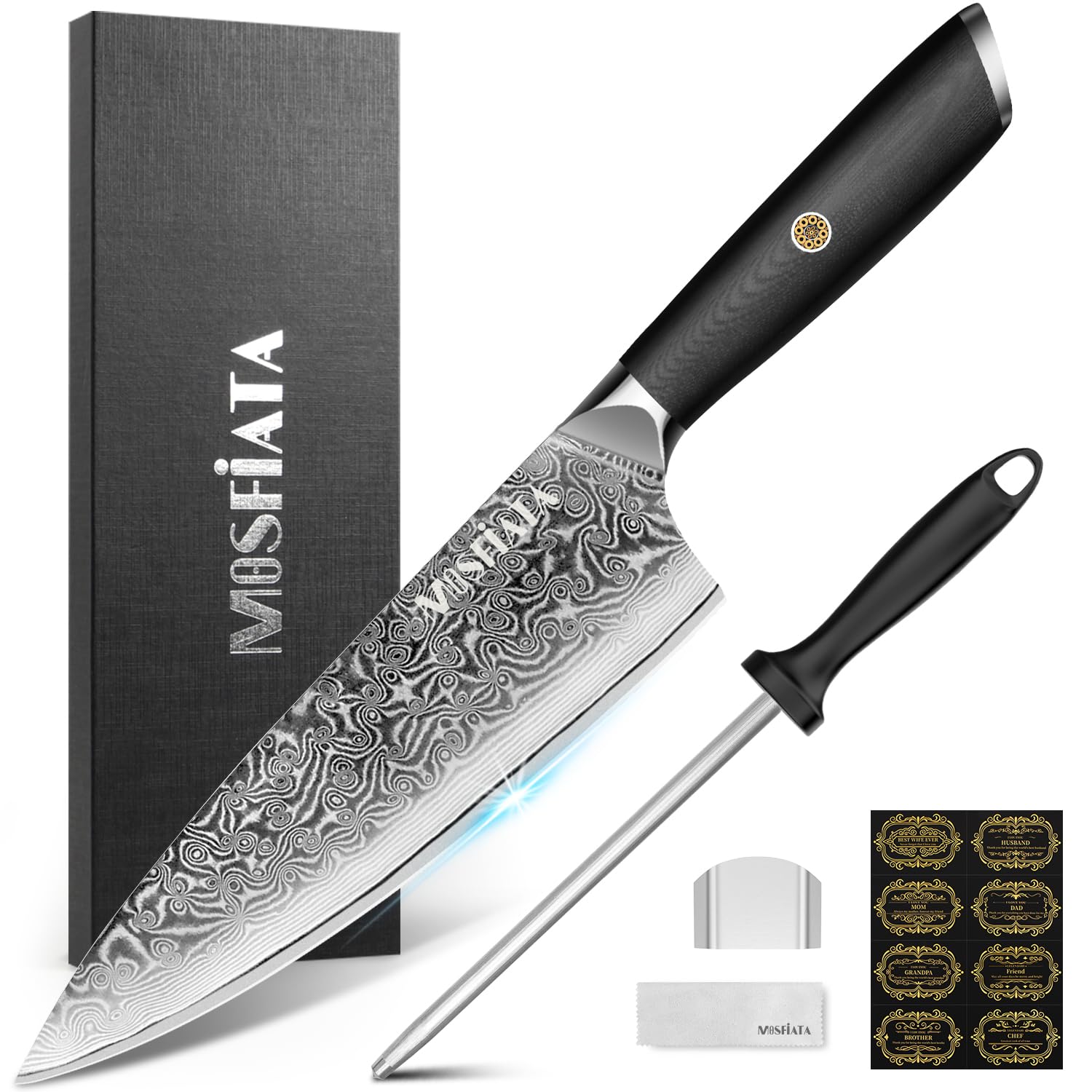
MOSFiATA 8-Inch Chef’s Knife — The Sharpest Budget Blade
Best for: maximum cutting performance per dollar
If raw cutting ability is what you care about, the MOSFiATA is the surprise of this list — a 15-degree edge on German EN1.4116 steel that falls through onions like knives costing twice as much. It suits confident home cooks who sharpen their own blades, stir-fry lovers who need thin, fast cuts, and anyone chasing performance over pedigree. The 0.49-pound build feels balanced rather than heavy, and the steel resists rust well. The trade-off is a thinner edge that dislikes frozen food and bones. Treat it well and it rewards you generously.
- 15-degree edge glides effortlessly
- German EN1.4116 resists rust
- Balanced 0.49 lb build
- Out-cuts pricier rivals
- Thin edge dislikes frozen food
- Handle bulky for small hands
- No full bolster
4.6/5
4.4/5
4.6/5

PAUDIN 8-Inch Chef’s Knife — A Safe, Handsome Gift
Best for: gift buyers who want a safe pick
Buying a knife as a gift is risky, but the PAUDIN lowers the stakes — it arrives in a proper gift box, looks far more expensive than it is, and cuts well enough to impress a new cook. It suits birthdays, housewarmings, and anyone gifting a first serious kitchen tool. The high-carbon stainless blade comes sharp, the ergonomic handle fits most hands, and the presentation needs no extra wrapping. The steel is on the softer side, so expect to hone it regularly, and the etched branding fades with heavy washing. As a worry-free gift, though, it is hard to beat.
- Gift-ready box, no wrapping needed
- Looks premium, priced for budgets
- Sharp on arrival
- Handle fits most hand sizes
- Softer steel needs regular honing
- Etched logo fades with washing
- No full bolster
4.3/5
4.5/5
4.4/5

Henckels International Classic 8-Inch Chef’s Knife — Heritage on a Budget
Best for: fans of German blades on a budget
The Henckels International Classic carries a name German-knife fans trust into a price bracket where heritage usually costs triple. It suits traditionalists who like a slightly heavier, full-tang blade, cooks upgrading from supermarket knives, and anyone who values a partial bolster for knuckle clearance. The stainless blade takes a fine edge and the classic riveted handle feels familiar from the first chop. It will not match the out-of-box sharpness of the top picks, and the edge benefits from a honing rod every few uses. But as an entry into the Henckels family, it is a sensible one.
- Trusted German brand heritage
- Full-tang, reassuring heft
- Partial bolster protects knuckles
- Familiar classic handle shape
- Edge good, not razor-sharp
- Needs honing every few uses
- Heavier than nimble rivals
4.4/5
4.5/5
4.4/5
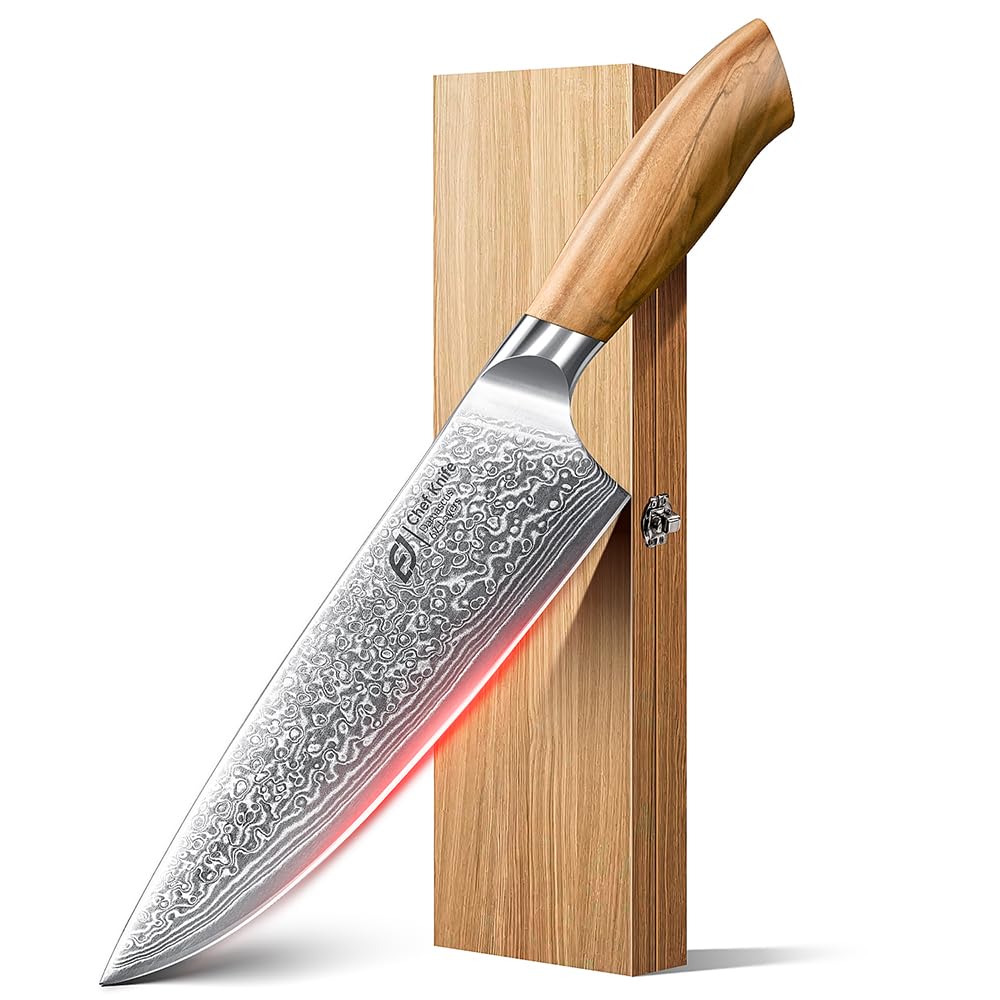
Emojoy 8-Inch Chef’s Knife — Japanese Style, Tiny Price
Best for: cooks who like a Japanese-style edge
Curious about Japanese knives but not ready to spend triple digits? The Emojoy gives you the thin, precise profile and light feel of a Japanese-style blade at an almost disposable price. It suits vegetable-heavy cooks, sushi-night enthusiasts, and anyone who values finesse over brute force. The thin edge falls through peppers and herbs with barely a push, and the light build keeps wrists fresh. The same thinness means no bones, no frozen food, and no prying — treat it like the precision tool it is. For the price, the cutting feel is remarkable.
- Thin blade glides through vegetables
- Feather-light, wrist-friendly build
- Sharp straight out of the box
- Remarkable finesse for the price
- Brittle edge, no bones ever
- Plain, forgettable handle
- Too light for heavy squash
4.2/5
4.4/5
4.3/5

Cuisinart 8-Inch Chef’s Knife — Cheapest Decent Start
Best for: first-apartment kitchens and backups
Sometimes the right knife is simply the cheapest one that is not terrible — and the Cuisinart 8-inch clears that bar. It suits students furnishing a first apartment, anyone needing a backup blade for a second home, and shoppers who refuse to overthink a starter knife. The high-carbon stainless blade arrives sharp enough for daily basics, and the tapered ground edge slices cleanly at first. The edge dulls faster than pricier picks, so keep a honing rod nearby, and the plain handle gets slippery when wet. As a low-stakes entry point, it does the job.
- Cheapest knife that still cuts
- Decent factory sharpness
- Full-tang construction
- Zero-stakes starter purchase
- Dulls faster than pricier picks
- Handle slippery when wet
- Thin blade flexes on squash
4.1/5
4.3/5
4.2/5

Amazon Basics 8-Inch Chef’s Knife — Plain and Functional
Best for: the simplest possible starter knife
There is nothing fancy about the Amazon Basics chef’s knife — and that is the point. It is a straightforward full-tang blade for cooks who want an 8-inch knife with zero decisions attached. It suits dorm kitchens, office pantries, and anyone replacing a truly terrible knife on the smallest possible budget. The high-carbon stainless blade handles basic chopping, and the simple handle does its job. Expect to sharpen it more often than anything else here, and do not expect a great factory edge. But it beats a dull knife every single time.
- Simplest path to an 8-inch blade
- Full-tang, honest construction
- Handles basic chopping fine
- Beats any dull knife
- Needs sharpening most often
- Inconsistent factory edge
- Basic, uninspiring handle
4.0/5
4.3/5
4.2/5
Top 3 Head-to-Head: Victorinox vs Mercer vs Wüsthof Pro
These three are the finalists almost every budget buyer ends up choosing between — the proven all-rounder, the unbeatable value, and the toughest German steel.
| Feature | #1 Victorinox | #2 Mercer | #3 Wüsthof Pro |
|---|---|---|---|
| Edge retention | 4.8/5 — Best | 4.5/5 | 4.7/5 |
| Comfort and control | 5.0/5 — Best | 4.7/5 | 4.7/5 |
| Value for money | 4.9/5 | 4.9/5 — Best | 4.6/5 |
| Blade steel | High-carbon stainless | Japanese high-carbon steel | High-carbon stainless (German) |
| Feel in hand | Feather-light, nimble | Very light, grippy | Heaviest, most planted |
| Choose if… | You want the proven all-rounder | You want maximum value per dollar | You want tougher German steel |
Who These Chef Knives Are NOT For
Budget knives are honest tools, but they are not for everyone — here is where to look elsewhere.
Professional line cooks doing twelve-hour shifts should step up to a forged mid-range blade with a full bolster. And if you want a heirloom piece with Damascus patterning and a story, no budget knife will scratch that itch — save for a handmade blade instead.
Common Mistakes to Avoid
Most budget knives fail because of how they are bought and treated — not because of the steel.
Frequently Asked Questions About Budget Chef Knives
What is the best chef knife under $50?
The Victorinox Fibrox Pro 8-Inch Chef’s Knife is the best chef knife under $50 for most cooks. It combines a genuinely sharp factory edge with a feather-light build and an NSF-certified non-slip grip trusted in culinary schools. No other budget knife matches its balance of edge quality, comfort, and proven durability.
Are expensive chef knives worth it, or is a knife under $50 enough?
For most home cooks, a knife under $50 is genuinely enough. Pricier knives buy better fit and finish, prettier handles, and premium steel — not fundamentally better cutting for everyday meals. A budget knife with a honing rod will outperform a far pricier knife that is never maintained, so upgrade only when you cook daily and feel the limits.
What should I look for when buying a budget chef knife?
Look for a comfortable handle, a full-size 8-inch blade, and honest steel specifications. Grip matters most since you will hold the knife for hours, so prefer textured or ergonomic handles. Avoid vague terms like “surgical steel” with no alloy named, and remember that a thin, well-ground stamped blade often out-cuts a cheap forged one.
Should I choose a stamped or forged chef knife under $50?
Choose a good stamped knife — nearly every quality option under $50 is stamped. Stamped blades are thinner and lighter, which most home cooks prefer for daily prep. Budget “forged” knives often add cost and weight without real strength gains. At this price, the grind quality and steel matter far more than the manufacturing label.
How do I keep a budget chef knife sharp?
Hone your knife every two or three uses and sharpen it properly when honing stops restoring the edge. Hand wash and dry it immediately after use, store it on a magnetic strip or in a sheath instead of loose in a drawer, and cut only on wood or soft plastic boards. These four habits matter more than the knife’s original price.
What size chef knife should a beginner buy?
An 8-inch chef’s knife is the best size for most beginners. It is long enough for rocking through herbs and slicing large vegetables, yet short enough to control safely. Cooks with small hands or cramped kitchens may prefer a 6-inch blade, while a 10-inch knife only makes sense for large-volume prep.
What is a chef’s knife actually used for?
A chef’s knife is the all-purpose workhorse for chopping, slicing, dicing, and mincing almost everything in a home kitchen. If you want the full breakdown of what a chef’s knife is used for, vegetables, herbs, and boneless meat are its home turf. It is not designed for bones, frozen food, or prying — those jobs need a cleaver or specialty blade.
Our Final Verdict
The budget chef knife market is stronger than ever — ten capable blades, one clear winner. The Victorinox Fibrox Pro leads on edge, comfort, and value, with the Mercer Millennia as the unbeatable budget alternative. Whichever you pick, hone it regularly and hand wash it. Do that, and a budget knife will serve you for years.

