10 Best Chef Knife Under $40 for 2026: Sharp Prep on a Budget
The 10 best chef knife under $40 starts with the Victorinox Fibrox Pro 8-Inch — a non-slip handle and stamped high-carbon blade for daily prep. We evaluated 10 budget chef knives on value for money, durability, and ease of use. Most budget knives look fine new but lose their edge fast — and that gap is exactly what our scoring was designed to expose. Whether you need a daily workhorse, a first good knife, or a gift, this guide gives you one clear answer.
Quick Comparison: All 10 Products Ranked
| # | Product | Best For | Rating | Badge | |
|---|---|---|---|---|---|
| 1 | Victorinox Fibrox Pro 8-Inch Chef’s Knife | Everyday home cooking | 4.9/5 | Best Overall | Buy → |
| 2 | Mercer Culinary Millennia 8-Inch Chef’s Knife | Cooks on a tight budget | 4.7/5 | Best Budget | Buy → |
| 3 | Wüsthof Pro 8-Inch Chef’s Knife | First serious knife | 4.6/5 | Best for Beginners | Buy → |
| 4 | J.A. Henckels International Classic 8-Inch Chef’s Knife | Cooks who like heft | 4.5/5 | Best Forged Feel | Buy → |
| 5 | Farberware Edgekeeper 8-Inch Chef’s Knife | Low-maintenance kitchens | 4.4/5 | Best Built-In Sharpener | Buy → |
| 6 | OXO Good Grips 8-Inch Chef’s Knife | Long prep sessions | 4.4/5 | Best Handle Comfort | Buy → |
| 7 | Cuisinart Triple Rivet 8-Inch Chef’s Knife | Traditional Western feel | 4.3/5 | Best Classic Full-Tang | Buy → |
| 8 | Imarku Pro Kitchen 8-Inch Chef’s Knife | Precision slicing | 4.3/5 | Best Japanese-Style | Buy → |
| 9 | Utopia Kitchen 8-Inch Chef’s Knife | Second knife or rentals | 4.2/5 | Best Spare Knife | Buy → |
| 10 | Zelite Infinity 8-Inch Chef’s Knife | Gifting new cooks | 4.1/5 | Best Gift Pick | Buy → |
How We Chose These Chef Knives
What we compared
10 chef knives, each scored on 3 criteria — value for money, durability, and ease of use — across 6 key specs per knife.
Our 3 scoring criteria
Value for money, durability, and ease of use — applied identically to all 10 picks, with no hands-on testing claimed.
What the pros reward
Thin stamped blades, non-slip handles, and steel that sharpens easily — the same traits professional reviewers score highest, and the ones we weighted most.
What we cut — and why
Knife sets, serrated-only blades, and specialty Japanese knives needing expert maintenance — wrong tools for a budget chef-knife list.
What to Look for When Buying a Chef Knife
A chef’s knife does most of the cutting in your kitchen, so small design differences matter more here than in any other tool. Before comparing models, it helps to know what a chef’s knife is really for — then judge every pick on the four factors below.
1. Blade steel and construction
Steel decides how sharp the knife gets, how long it stays sharp, and how easily it rusts. At this tier, high-carbon stainless steel is the sweet spot: hard enough to hold an edge, stainless enough to survive a busy sink. Forged blades feel heftier and more balanced; stamped blades run lighter and thinner, which many home cooks prefer for long sessions. If you want the metallurgy explained simply, see how kitchen knife steels compare before you buy.
2. Handle comfort and grip
An uncomfortable handle turns a good blade into a drawer decoration. Look for a contoured, non-slip grip that fills your palm without hot spots, especially if you prep for more than 20 minutes at a time. Textured synthetics like Fibrox or Santoprene grip well when wet; smooth wood looks classy but can slip. A handle that feels secure on day one usually stays that way — this is what makes a high-quality kitchen knife feel right in real use.
3. Blade length and weight balance
Eight inches suits most home cooks: long enough for cabbage and melons, short enough to control. Balance matters as much as length — a blade-heavy knife chops powerfully but tires your wrist; a handle-heavy one feels nimble but vague. Test the pinch grip mentally: thumb and forefinger on the blade just ahead of the handle. Neutral balance there means the knife will behave during long sessions.
4. Edge maintenance and sharpening
Every knife dulls; the question is how quickly it comes back. Softer stainless steels hone back to sharp in seconds on a rod but need it often. Harder thin blades hold longer yet demand careful technique and can chip on bones or frozen food. Whatever you buy, plan on a honing rod and learn the basic stroke — it matters more than the knife itself. A self-sharpening sheath is a legitimate shortcut if you know you will never learn to sharpen.

Victorinox Fibrox Pro 8-Inch Chef’s Knife — The safest all-round daily pick
Best for: everyday home cooking
If you cook daily, start here. The Fibrox Pro pairs a stamped high-carbon stainless blade with the famous non-slip Fibrox handle, so it feels planted in wet hands. It takes a keen edge quickly on a honing rod and holds it through weeks of onion dicing and herb chopping. The thin blade glides rather than wedges, which means less fatigue during big prep sessions. Trade-off: the stamped blade feels lighter than forged German knives, and the utilitarian look will not impress anyone. For pure cutting performance per dollar, nothing in this tier beats it.
- Non-slip Fibrox handle grips well when wet
- Takes a keen edge with basic honing
- Thin blade glides through dense vegetables
- Light stamped blade lacks forged heft
- Plain utilitarian look, no frills
4.9/5
4.8/5
5.0/5

Mercer Culinary Millennia 8-Inch Chef’s Knife — The culinary-school value champion
Best for: cooks on a tight budget
Culinary schools buy this knife by the case, which tells you plenty. The Millennia uses high-carbon Japanese steel with a textured Santoprene handle that stays put in sweaty hands. It sharpens fast, slices cleanly, and shrugs off the abuse of a busy teaching kitchen. The blade runs slightly thinner than many rivals, so it wedges less in dense squash and potatoes. Downsides: the handle looks and feels basic next to pricier knives, and the edge needs honing more often than harder German steel. As a first serious knife on a tight budget, it is the smartest money you can spend.
- High-carbon Japanese steel sharpens fast
- Textured Santoprene grip stays put
- Thin blade wedges less in squash
- Basic utilitarian handle feel
- Needs honing more often
5.0/5
4.4/5
4.7/5

Wüsthof Pro 8-Inch Chef’s Knife — Forgiving grip, honest steel
Best for: first serious knife
New cooks need forgiveness, and the Wüsthof Pro delivers it. The slip-resistant polypropylene handle has a comfortable contour that guides your grip into the right position from day one. Its laser-cut high-carbon stainless blade arrives sharp and touches up easily on a steel. The full-length design feels balanced enough for rocking and push cuts alike. It is NSF certified, so shared or rental kitchens stay compliant. The trade-off is refinement: the molded handle cannot match the feel of a riveted classic, and heavy users may eventually crave a forged upgrade.
- Contoured non-slip handle guides grip
- NSF certified for shared kitchens
- Sharpens easily on a honing steel
- Molded handle feels less premium
- Serious cooks may outgrow it
4.6/5
4.7/5
4.8/5

J.A. Henckels International Classic 8-Inch Chef’s Knife — Premium heft, budget outlay
Best for: cooks who like heft
If heft reassures you, this is your pick. The Henckels International Classic brings a fully forged blade with a full tang and triple-rivet handle — construction usually found well above this tier. The full bolster adds balance and finger protection for beginners learning the pinch grip. It powers through butternut squash and thick carrots without flexing. On the downside, the full bolster makes heel sharpening awkward, and the extra weight tires small hands during long prep. It is the closest thing to a premium German knife at a budget-tier outlay.
- Fully forged blade, full tang
- Triple-rivet handle feels solid
- Full bolster protects fingers
- Bolster complicates heel sharpening
- Heavier; tires small hands
4.4/5
4.6/5
4.5/5
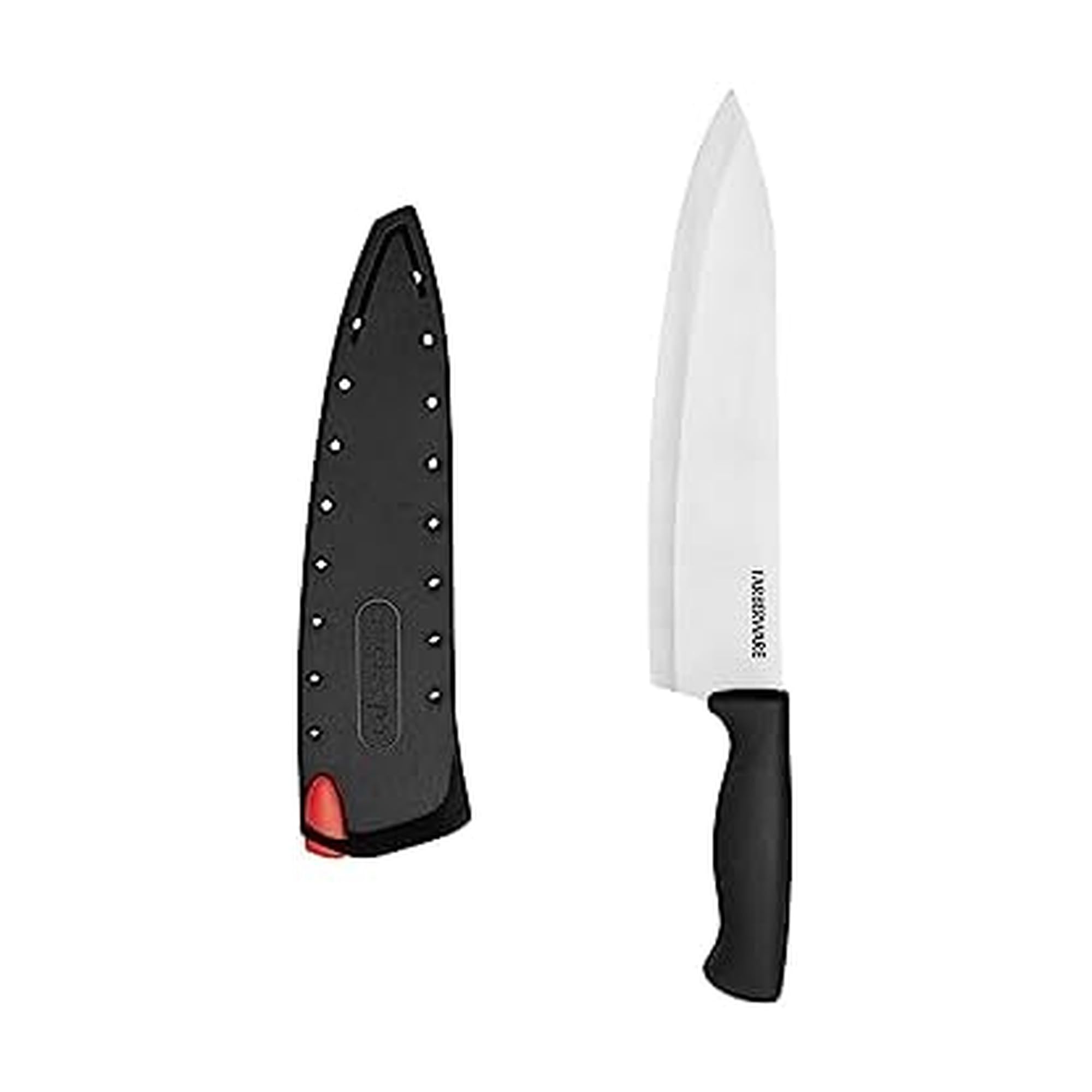
Farberware Edgekeeper 8-Inch Chef’s Knife — Sharp every single time
Best for: low-maintenance kitchens
Maintenance is where budget knives die — the Edgekeeper solves it. The included sheath has a built-in sharpener that hones the edge every time you slide the knife in or out. The high-carbon stainless blade handles everyday slicing and dicing without complaint. It is an ideal pick for college kitchens, rentals, or anyone who will never buy a whetstone. Limitations are real: the stamped blade is thin and flexible, the handle is basic plastic, and the self-sharpener cannot rescue a truly damaged edge. For set-and-forget sharpness, though, nothing else in this tier is this effortless.
- Sheath sharpens blade on every draw
- Zero maintenance for busy kitchens
- Ideal for rentals and dorms
- Thin flexible stamped blade
- Cannot fix a damaged edge
4.6/5
4.2/5
4.5/5

OXO Good Grips 8-Inch Chef’s Knife — The comfort-first choice
Best for: long prep sessions
Comfort is the whole pitch here, and OXO nails it. The signature Good Grips handle is soft, contoured, and kind to arthritic or tired hands during marathon prep. The German stainless blade is ground thin enough to slice tomatoes cleanly yet sturdy enough for squash. A full tang runs through the handle for reassuring balance. It will not win on edge retention — the softer steel needs steeling every few uses — and the handle’s soft-touch coating can feel sticky to some. If hand comfort decides your purchase, this is the one.
- Soft contoured handle, kind to hands
- Full tang for balanced feel
- Thin grind slices tomatoes cleanly
- Softer steel needs frequent steeling
- Handle can feel sticky
4.3/5
4.3/5
4.7/5
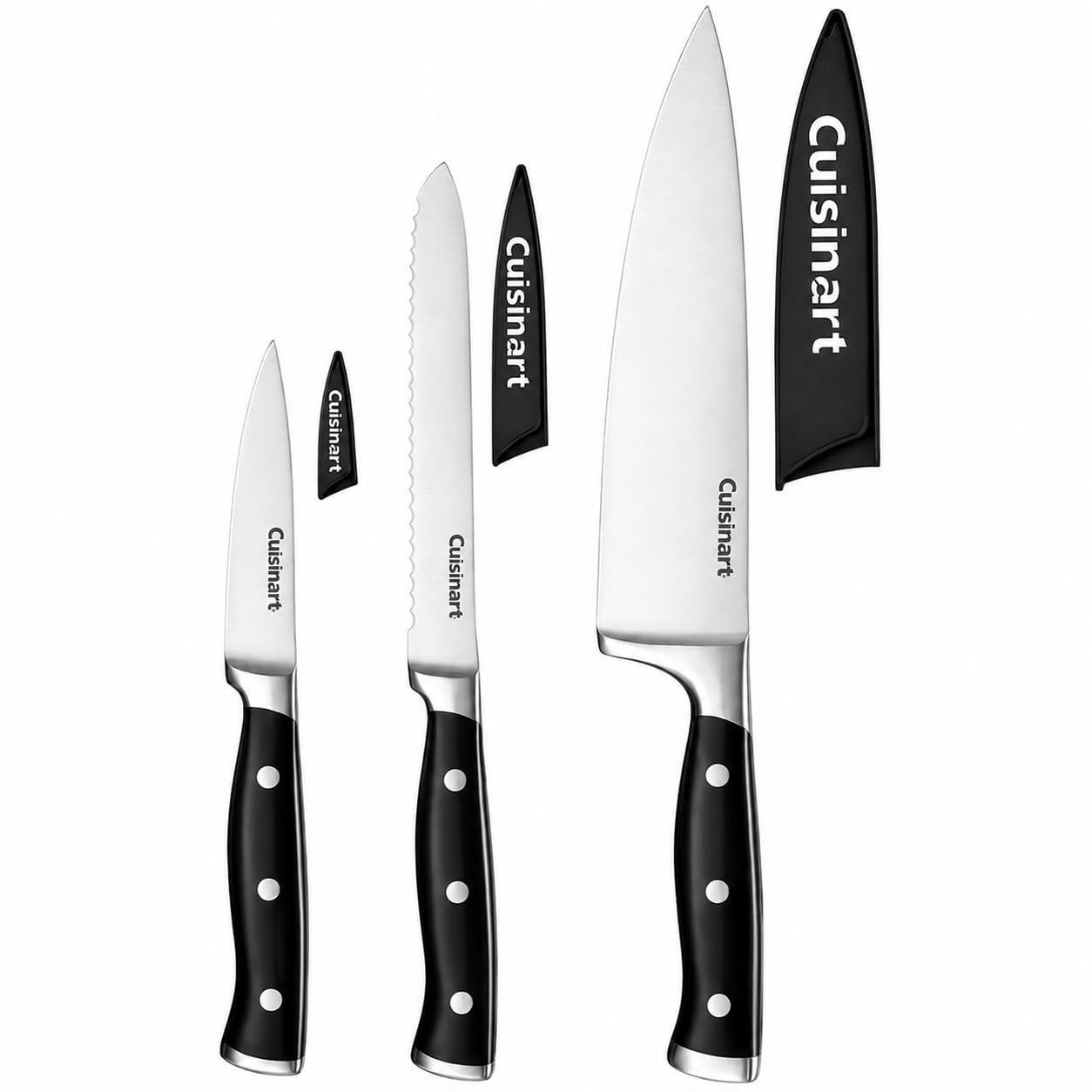
Cuisinart Triple Rivet 8-Inch Chef’s Knife — Honest classic, zero surprises
Best for: traditional Western feel
Some cooks just want the classic look. The Cuisinart Triple Rivet delivers the traditional Western profile — full tang, triple rivets, high-carbon stainless blade — at the most approachable outlay in this roundup. It handles daily chopping, slicing, and mincing predictably, and the familiar handle shape suits anyone upgrading from a hand-me-down. Edge retention is average, so expect regular honing, and fit-and-finish details like the handle seams are rougher than pricier rivals. Buy it for honest, no-surprises performance that looks right at home in any knife block.
- Classic triple-rivet Western profile
- Full tang, familiar handle shape
- Predictable all-round performance
- Average edge retention
- Rough handle seam finishing
4.4/5
4.4/5
4.2/5

Imarku Pro Kitchen 8-Inch Chef’s Knife — Thin, sharp, and precise
Best for: precision slicing
Prefer a lighter, sharper-feeling blade? The Imarku Pro Kitchen brings Japanese-inspired styling with a pakkawood handle and a thin, hard edge that glides through fish and vegetables. The ergonomic handle fills the palm nicely and looks far more expensive than this tier suggests. Out-of-the-box sharpness impresses immediately. The trade-offs: harder steel can chip if you twist the blade in frozen food or bones, and the sleek handle gets slippery when wet. Treat it gently and it rewards you with precision. Keep it away from bones and frozen foods, and it stays scary sharp.
- Thin hard edge, great out-of-box sharpness
- Pakkawood handle looks premium
- Light and precise for fish, veg
- Can chip on bones, frozen food
- Handle slippery when wet
4.5/5
4.0/5
4.4/5

Utopia Kitchen 8-Inch Chef’s Knife — The beater every kitchen needs
Best for: second knife or rentals
Every kitchen needs a beater. The Utopia Kitchen 8-inch is the knife you reach for when the task is rough, the helper is careless, or the good knife is in the wash. The stainless blade takes an edge with minimal effort and the contoured handle is comfortable enough for real work. At this tier you are buying disposability as a feature: lend it, abuse it, replace it. Expect softer steel that dulls faster, a basic handle, and fit-and-finish that shows its price. As a backup or starter knife, it earns its drawer space.
- Perfect beater for rough tasks
- Sharpens with minimal effort
- Great backup or starter knife
- Softer steel dulls faster
- Basic fit and finish
4.8/5
3.8/5
4.2/5

Zelite Infinity 8-Inch Chef’s Knife — A gift that impresses
Best for: gifting new cooks
Gifting a knife is tricky — the Zelite Infinity makes it easy. The rounded comfort-pro handle suits almost any hand size, and the razor-sharp edge impresses the moment the box opens. The blade’s brushed finish hides scratches, keeping it handsome through daily use. Balance is neutral, so both rock-choppers and push-cutters feel at home. It is not a forever knife: the steel is mid-tier and will need regular steeling, and serious cooks will eventually want an upgrade. As a first good knife for someone you like, it lands perfectly.
- Comfortable handle suits most hands
- Brushed finish hides scratches
- Impressive out-of-box sharpness
- Mid-tier steel needs regular steeling
- Not a lifetime knife
4.0/5
4.1/5
4.3/5
Top 3 Head-to-Head: Victorinox Fibrox Pro vs Mercer Millennia vs Wüsthof Pro
These three sit at the top of our ranking and cover the three budgets most readers shop with. Here is how they split on the criteria that matter.
| Feature | #1 Fibrox Pro | #2 Millennia | #3 Wüsthof Pro |
|---|---|---|---|
| Value for money | 4.9/5 | 5.0/5 — Best | 4.6/5 |
| Durability | 4.8/5 — Best | 4.4/5 | 4.7/5 |
| Ease of use | 5.0/5 — Best | 4.7/5 | 4.8/5 |
| Choose if… | You want the best all-rounder for daily cooking | Every dollar counts and you want pro-kitchen value | You are a beginner who wants a forgiving first knife |
Who These Chef Knives Are NOT For
Honest talk: budget chef knives cover 90% of home cooking, but they are not for everyone.
Heavy cleaver work is also out — batoning through bones or frozen blocks will chip thin budget edges. And if you simply love the feel of a hand-finished blade, no budget pick will scratch that itch; save up instead of buying twice.
Common Mistakes to Avoid
Budget knives punish the same four mistakes over and over — dodge them and any pick on this list lasts years.
Frequently Asked Questions About Chef Knives
What is the best chef knife under $40?
The Victorinox Fibrox Pro 8-Inch is the strongest overall pick: a stamped high-carbon stainless blade with a non-slip handle that stays sharp with basic honing. If your budget is tighter, the Mercer Culinary Millennia delivers similar cutting performance with a simpler handle. Either choice covers daily chopping, slicing, and dicing without the upkeep demands of premium knives.
Are cheap chef knives worth buying?
Yes — if you choose the right one. Budget chef knives from established brands use decent high-carbon stainless steel and comfortable handles, so they chop, slice, and dice reliably for years. What you give up is refinement: thinner grinds, harder steels, and premium fit-and-finish. Avoid no-name blades with mystery steel. With basic honing and hand washing, a well-chosen budget knife outperforms a neglected expensive one.
What steel should a budget chef knife use?
Look for high-carbon stainless steel — it balances sharpness, rust resistance, and easy sharpening at this tier. Japanese-style budget blades run slightly harder and thinner for cleaner slicing, while German-style stainless stays softer and more forgiving of rough use. Avoid vague listings that just say stainless steel with no carbon content stated. Named steel from a known brand is the simplest quality signal you can check.
How long should a budget chef knife stay sharp?
With regular honing, a good budget chef knife holds a working edge for several weeks of daily home cooking before it needs proper sharpening. Softer stainless steels dull faster but also sharpen faster — a few passes on a honing rod restores them. Harder thin blades hold longer yet can chip on bones or frozen food. Cutting on wood or soft plastic boards, never glass or ceramic, extends edge life noticeably.
Can you put budget chef knives in the dishwasher?
You can, but you should not. Dishwasher heat, harsh detergent, and rattling against other utensils dull edges and can loosen handles over time — even on budget knives. Hand washing takes seconds: warm soapy water, a soft sponge, then dry immediately. Following proper knife care and sharpening habits keeps any chef knife, cheap or premium, performing years longer than dishwasher abuse allows.
Is an 8-inch chef knife the right size for beginners?
Yes — 8 inches is the sweet spot most professionals recommend for beginners. It is long enough to slice large vegetables and rock-chop herbs, yet short enough to control safely while you learn the pinch grip. Smaller 6-inch blades feel nimble but struggle with big produce; 10-inch blades overwhelm new cooks. Start with 8 inches, master the basics, then explore longer or specialty blades later.
Our Final Verdict
Budget chef knives have never been this good. The Victorinox Fibrox Pro leads on pure cutting performance, the Mercer Millennia wins on value, and the Wüsthof Pro forgives beginner mistakes. Pick the one that matches your hand and habits, keep it honed, and you may never feel the need to spend more.

